Essay from Z.I. Mahmud

Young South Asian man with short dark hair, reading glasses, a black coat, white shirt, and tie.

Pouring the Isle of “You smile all the time” in Titanic Chugged Cruiser: ‘The Way We Were’—-A Decanter of Obituaryfest Through Filmic Literature


Z I Mahmud, Alma Mater, English Department, University of Delhi, India


Silver screen mountain lion of Utah—Robert Redford and lioness glamour girl—Barbra Streisand manifest character arcs within claustrophobic debonair … As Rooseveltian romantic lovers, the chameleon couple is exposed to being infested and pestered through an ensemble of aural-visual on-screen framework enculturated within psychodrama ; thus marooned within the shipwreck of unamnesiac anathema. Sydney Pollack embodies francophone aboriginality and diasporic expatriate postnationalist postcoloniality Bunyanesquing— [Bunyanesquing is a neologism, insomuch and inasmuch of psychologizing and sexualizing filmic repertoire and that is this line of argument can be phrased as projections of extended personalities from curatorial directorship perspectivity] a laurel wreathed in romantic tenor filmic production. Erens, Patricia, and Sydney Pollack. “SYDNEY POLLACK: THE WAY WEARE.” Film Comment 11, no. 5
(1975): 24–29.


Katie Morosky puts forth the rhetoric of Rooseveltistic welfarism and unionization —raking over the coals anti-Cold War tensions and anti-McCarthyism in controversial conversation with fellow travelers and socialist compatriots of the motion picture industry.
Without cineversing hat on a hat, Barbra Streisand roasts arguments to watch their melting faces drip off their worthless faces as explained in the article by Matelski, Marilyn J. “‘The Way We Were. . .’ and Wish We Weren’t: A Hollywood Memoir of Blacklisting in America.” Studies in Popular Culture 24, no. 2 (2001): 79–98. Herein the interpolation of Rooseveltistic sympathizer cast Streisand in highlights of liberalistic Americanism.


Her husband is dead! Dead!!! Yes, Mrs. Roosevelt went down into the mines. And when they asked her why, she said, “I am my husband’s legs.” Did you tell the crippled jokes, too? Is there anything that isn’t a joke to you people?”
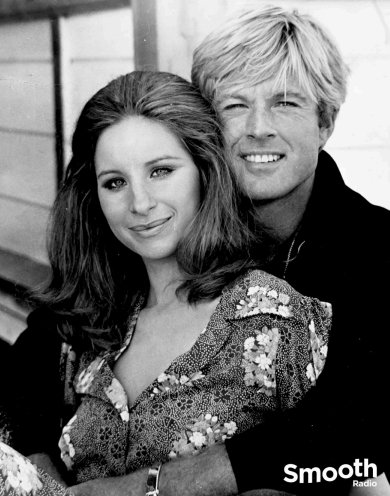
Young middle aged white man embracing a white woman in a flowered blouse.


Hubbell and Morosky star studded casts pacifist egalitarianism transition toward flashforwards of retrospective grain of salt : ‘but making a blessed buck’ and ‘PEOPLE—are more important than any goddamn witch-hunt’.


Crystalline Jewishness of Katie Morosky [Barbra Streisand] surmountingly triumphs with conquest of a bagel of appreciation. Because of her creditworthy work ethics, passion, intelligence and marvel —- heartmelting observance of Jewish American lady persona in Hubbell Gardner [Robert Redford] backstage is fruitified in PICKETTE, SAMANTHA. “‘When You’re a Funny Girl’: Confirming and Complicating Accepted Cultural Images of Jewish Femininity in the Films of Barbra Streisand.” In Jews and Gender, edited by Leonard J. Greenspoon, 245–70. Purdue University Press, 2021. Both masculinization and feminization are characteristic traits of wave of womanist revolutionary blueprint of Jewishness and Samantha Pickette situates Streisand framework consolidating ‘feminine’ and ‘masculine’ to undermine ideals of a hierarchical society governed by hegemonic gendered expectations.

However, commie to saddie stock caricature imperils this governance of femininity. For the sake of argumentative emphasis, castration threat faced by the heroine is an unheimlich torrent in the vein of imaginary eugenics agrophobia—- superimposed upon the hero’s egomaniacal masculinity and psychic virility.
‘You and me. Not causes. Not principles’—-depoliticizes her political partisanship and disenfranchises female empowerment. After all, undertones and undercurrents of power struggles derelict the relationship between the couple with Katie’s clash of counterback, “Hubbell, people are their principles.” For Hubbell Katie’s reformer sage-like personality for thriving and striving the way of the world is a utopian idealism. Despite platonic romance Hubbell-Katie is a doomed pair—- stranded in dysfunctional marriage—– recoils into a shuddered wedding. If Katie doesn’t sell her soul for the sake of the American dream as extrapolated from the literary critic Letty
Cottin Pogrebin’s point of view, then I wish to argue what Samantha Pickette’s illustrative scholarship eschews. Hubbell Americanizes Judaism to the hinges and fringes of Christianity for the sake of the American Dream by permutation of plot twist and storyline. The transposition of a divorce petition springs forth within the cellar of the fourth wall.
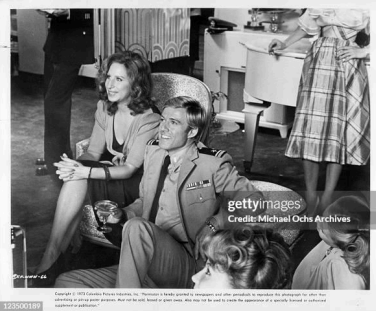
Middle aged white man and woman, dressed up in a suit and coat and a dress, and coat, seated on a couch in a room with a few other people.


Wasn’t Samantha Pickette walking on egg shells with confession in the performative gender of bolstering feminine body polity that after all she shrugs off her standpoint in the teleological ontology tracing Barbra Streisand’s happy endings— as transgressive nature of
feisty womanist Jewishness betide through poetic justice in the consequential aftermath of breaking off ritualization of interreligious institution.

Later the erudite scholarly critic nails the coffin in Katie Morosky’s everywoman struggles for restoration of family building by sheltering in the refuge of lyrical poetic fairy tale tradition of angel of the hearth. Dissolution of marriage coincided since salt of the earth Hubbell wanted care-free reliable family reconciliation within screen writing career; however Hubbell’s angel of the hearth was always waiting for the next shoe to drop in this mores of the nuclear disarmament campaign. In a nutshell, nostalgic glorification behind succumbment of the rack and ruin pair is likewise opening a can of worms amongst star-crossed and unrequited lovers.


The Way We Were transcendentally nostalgizes as symbolic epitome —in the heartfelt memoiristic reminiscences of Barbra Streisand for being cultural lightning in a bottled remembrance—memorial services of star-studded goodbye Hollywood has seen in decades. We are talking about a man who didn’t just act. He discovered talents. He nurtured careers. He changed the entire landscape of independent filmmaking. After all, as much as you can and as long as you can, philosophy floods with the memorabilia chemistry of this on-screen
couple—outlasting impressions of idolization of the entertainment industry alongside film studies and film criticism. ‘The double helix of the star wattage heyday lionizes tussled blonde locks, granite jaw and million dollar smiles’ as star cast reviewed by Robert Redford’s Funeral, Barbara Streisand’s TRIBUTE Is STUNNING!
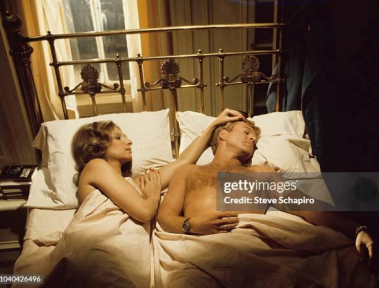
Middle aged man and woman in a bed together.

Robert Redford elevated the powerhouse actress like Streisand through the enduring magical caprice of the popcorn classic The Way We Were. ‘That film, that performance, that chemistry between Redford and Streisand, it captured something eternal about love and loss, and the way time changes everything … As Barbra Streisand takes her leather gloved hand and pushes her summer boy Sandie blonde hair from Robert Redford’s forehead and he clasps her
wrist gently pulling her into a final embrace. An inevitable farewell, the audience sobbed.’


Redford resurrects in her epitaphic memorial as the times she remembered the fun they had commenting upon the Oprah Winfrey interviewing him, “I remember liking her energy and her spirit. It was wonderful to play off of. I also really enjoyed kidding her. She was fun to kid.”


From touching every corner of the entertainment industry, the actors he worked with, the directors he discovered and causes he championed…devotion to conservation, life, vision and
lasting contribution to Utah…feelings he inspired, dreams he encourages, independent voices he amplified through Sundance, lives he touched, careers he launched, the storytelling craft…loyalty, trustworthiness, principles, looks, commitment to excellence… and so on and so forth. Streisand’s onscreen heroization of Redford shall outlive real marriages through the relationship strands between Katie-Hubbell pair—-beauty with substance and stardom with
purpose helming the filmworld—-recognizing his worth, celebrating his talent, maintaining the everlasting bond throughout decades.
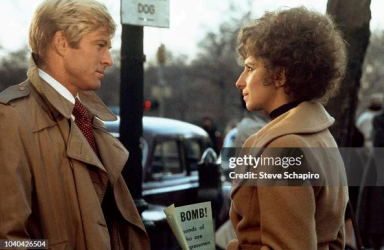
Middle aged man in a brown coat talking with a woman in a brown coat with dark curly hair.


Photography Acknowledgement
THE WAY WE WERE Starring Barbra Streisand & Robert Redford. October 16, 1973. Picture, taken on set during the filming in 1972. Eoghan. Barbra Streisand Fan’s World Page
Robert Redford and Barbra Streisand, who starred together in 1973’s ‘The Way We Were’.


💜Smooth Radio
Robert Redford In ‘The Way We Were’
Barbara Streisand and Robert Redford sit smiling looking forward in a scene from the film ‘The Way We Were’, 1973. (Photo by Columbia Pictures/Getty Images)


Streisand & Redford In ‘The Way We Were’
View of American actors Barbra Streisand and Robert Redford as they lie in bed in a scene from the film ‘The Way We Were’ (directed by Sydney Pollack), Los Angeles, California, 1972. (Photo
by Steve Schapiro/Corbis via Getty Images)


Redford & Streisand In ‘The Way We Were’
View of American actors Robert Redford and Barbra Streisand as they face one another in a scene from the film ‘The Way We Were’ (directed by Sydney Pollack), Los Angeles, California, (Photo by Steve Schapiro/Corbis via Getty Images) 1972.

Z. I. Mahmud [email: zimahmud_anan@yahoo.com] is a Bangladeshi scholar, creative writer, and B.A. (Honours) alumnus in English from Satyawati College, University of Delhi. He has recently submitted an essay for the Keats Shelley Memorial Prize titled, The Utopian Enlightenment of Romantic Sublime Dissolves Into Dystopian Apocalypse Within Mary Shelley’s Last Man. His research and creative work explore literature’s intersections with history, imagination, and cultural reception. Mahmud’s abstract, Dungeon-Castle and Demonic Downfall: Traumatizing Horroresque Gothicization of the Medievalist Halloween, has been selected for panel presentation at the virtual conference Confound the Time: Reception in Medieval & Early Modern Studies, 24–25 January 2026.
Poetry from Brajesh Kumar Gupta

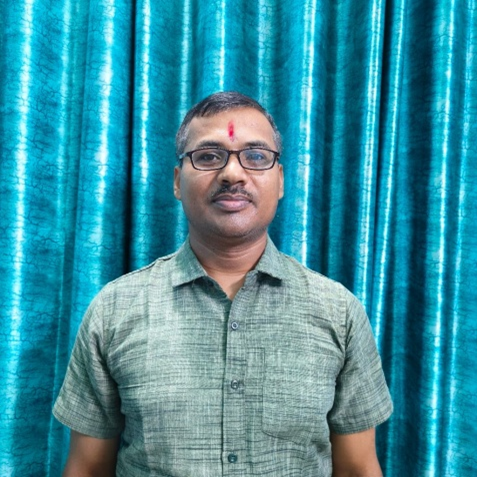
Middle aged South Asian man with short dark hair, reading glasses, and a trimmed mustache and light gray collared shirt in front of a blue curtain.

FEELING OUT OF SIGHT
Versatile love in life
Arrange feelings with emotions
Raise your love for me
State it, even when times are darkest
How we suffer despite this
And let me count the ways
Before the sun rises
Reasonably I have to make you mine
And when you’re with me
Joys that seem to boggle the mind
Equal by its tears, and clear
Sweet feelings of true love
Has touched our lives, our souls forever.

Dr. Brajesh Kumar Gupta ‘Mewadev’, Banda (U.P. – India)

Dr. Brajesh Kumar Gupta, also known as “Mewadev,” has been recognized on several prestigious platforms for his contributions to literature and the arts. Notably, the state of Birland commemorated him with a special edition postage stamp. He is the recipient of the Presidency of the International Prize De Finibus Terrae (IV edition), awarded in memory of Maria Monteduro in Italy. Dr. Gupta has been honoured with an honorary Doctorate of Literature (Doctor Honoris Causa) by both The Institute of the European Roma Studies and Research into Crimes Against Humanity and International Law in Belgrade, Republic of Serbia, and the Brazil International Council CONIPA and ITMUT Institute.

In addition to his literary achievements, Dr. Gupta was awarded the Uttar Pradesh Gaurav Samman in 2019, further solidifying his impact on regional and international platforms. Currently, he holds the position of the 3rd Secretary-General of the World Union of Poets, serving from December 30, 2017, through December 31, 2024. His role in this organization is pivotal, reflecting his commitment to advancing the global literary community.

Dr. Gupta is an accomplished author of eight books and the editor of twenty-seven volumes, showcasing his extensive contribution to literary scholarship. Beyond his literary pursuits, he serves as the principal of S.K. Mahavidyalaya, Jaitpur, Mahoba (U.P.), and resides in Banda, Uttar Pradesh, India. For further engagement, he can be reached via his social media profiles at facebook.com/brajeshg1, or through email at dr.mewadevrain@gmail.com. His work and legacy are also featured on www.mewadev.com.

Poetry from Lakshmi Kant Mukul

Middle aged South Asian man with short dark hair, clean shaven, white tee shirt.

First Flight 

The plane races along the runway 

like a blue-eyed stag bounding step by step, 

its beak raised, wings unfurled, 

rising straight into the sky. 

Through the window— 

high-rises, trees, roads, 

shrinking into toy-like shapes, 

fields spreading like flat plates, 

ponds boxed into tiny squares, 

sheep and goats no bigger than ants. 

The earth recedes behind 

as the aircraft tilts its wings 

to take a sudden turn— 

just as we stray off a path 

onto some slanting trail, 

towards Fork, towards trail. 

At thirty-three thousand feet 

I peer downward into the haze: 

black mist hides winding threads, 

surely they are rivers, 

holding in their flow 

the innocence of our hearts. 

Clouds appear— 

flower-clusters, white, azure, 

soft as carded cotton; 

hills draped in blue veils of mist, 

summits locked in embrace with drifting vapors, 

and far beyond— 

snow-mountains, ascetic, still, 

their serenity like sages in meditation. 

Overhead stretch white canopies of cloud, 

and when the plane strikes them 

its wings glisten, damp, 

as if even the passengers’ souls 

had been washed in a secret rain. 

Then—enter the air hostesses, 

voices honeyed, 

words spilling with laughter— 

smiling lips, eyes alive, 

whispering through the hush of turbines, 

fragrant as fresh jasmine. 

At night, midair, 

I glance below— 

scattered glimmers blink back, 

like stars shining 

from the depths of earth itself. 

Descending into darkness, 

the city spreads in long-shot frames: 

a dazzle of lights, 

shimmering, blinding, 

pulling you into wonder, 

but also planting 

an unfamiliar dread, 

like a lone wayfarer on a highway 

who, hearing a vehicle thunder close behind,

instinctively edges 

toward the safety of the curb.

Lakshmi Kant Mukul is an Indian writer, poet, critic, rural historian and serious scholar of folk culture, born on 08 January 1973 in a rural family in Maira village, District Rohtas, Bihar province, India. His literary journey began in 1993 as a Hindi poet and since then, he has published three books in Hindi and has been published in more than two dozen anthologies and hundreds of journals. Apart from Hindi, he also writes extensively in Urdu and Bhojpuri and also translates them into English himself. His two published poetry collections are- “Lal Chonch Wale Panchhi” and “Ghis Raha Hai Dhan Ka Katora”. His published book on rural and local history is- “Yatrion Ke Najriye Mein Shahabad”. He has received many awards for his work, including Aarambh Samman for his poetry writing in Hindi language, the prestigious Hindi Sevi Samman of Bihar Hindi Sahitya Sammelan. His English poetry has been published in many international anthologies and translated into many languages. The notable achievements of his literary career are – recognition as a farmer poet and expertise on the changes taking place in the rural environment in the global era. Having studied law, he has adopted the modern style of farming. postal address -LAKSHMI KANT MUKUL Village _ Maira, PO _ Saisar, SO _ Dhansoi, Buxar, Bihar [ INDIA] Mob.no._6202077236 Postcode – 802117 Email – kvimukul12111@gmail.com mob.no

Essay from Faleeha Hassan

Middle aged woman in a pink headscarf and black top and black and white patterned sweater inside in front of a photo of a pink rose.

How to Read a Boring Novel

Since my teenage years, I’ve been addicted to reading books, particularly novels, because they allow me to explore worlds that were previously difficult for me to recognize in my limited reality at the time. I often turned to novels to heal or recover from certain illnesses and ailments that would suddenly overtake me. I remember one time when I was struck by a high fever, which confined me to bed for several days, shivering beneath the covers, eating or drinking nothing but water, with sweat pouring from my face. Then my eyes fell upon a novel stacked atop its counterparts in the corner of my room. I forced myself to walk weakly over to it, held it up, and began reading it while lying on my sickbed. Its title remains etched in my memory to this day: “Spotted Dog Running at the Edge of the Sea ” by Chingiz Aitmatov. As soon as I finished, my fever subsided, and I awoke feeling well, as if it had provided me with the energy of recovery.

However, sometimes I long to get hold of a particular novel, because its author is a famous writer. This writer may have won an important international literary award, or they may have a surprising title, such as “How a Ghost Fetus Forms in a Goose’s Belly.” I think that’s a shocking title, isn’t it?! Perhaps one day I will use it in one of my novels—who knows? Titles like this when my appetite to immerse myself more in reading. But sometimes—I say sometimes, thank God—I fall into the trap of boredom, this heavy thing that tries to creep in and prevent me from continuing my reading pleasure.

The reason for my boredom may lie in the novel’s emptiness and its lack of an amazing opening that can captivate its reader and keep him in his chair until the end, so that he remains throughout the reading searching for the hidden link between it and the events of the novel. An opening like, “After many years, in front of the firing squad, Colonel Aureliano Buendía remembered that distant day when his father took him to introduce him to ice,” or “Suddenly, as if a hurricane had planted its roots in the centre of town, the banana company arrived, pursued by a storm of leaves.” Openings like these made me fall in love with García Márquez’s novels. They are rich, they awaken my curiosity, and therefore they leave no pore for boredom to creep in.

Another reason that opens the door to boredom for me is a slow or overly descriptive beginning. I remember almost choking when I started reading Tolstoy’s The Brothers Karamazov. The author elaborated on the introduction, detailing the family backgrounds and philosophical analyses of the characters, using complex language. This made it seem truly overwhelming, especially for first-time readers—and classic literature lovers will surely hate me.

Another reason that makes reading a novel boring for me is the postponement of the main event, leaving the reader feeling as if the dramatic action is absent or flat from the start. For example, in Thomas Hardy’s The Return Home, the actual events begin about 100 pages into the novel, and this is not something readers can easily tolerate. If we leave aside the many reasons for boredom with reading and try to find a cure for it, then certainly every reader has their own way of doing so.

As for me, the cure I rely on consists of several steps, the first of which is postponing reading, not abandoning it. As soon as I feel that this novel is boring, I put it on the table, whispering to it, “I will meet you tomorrow.” Yes, tomorrow. In my opinion, it is not appropriate to leave a novel you have started reading without completing it for more than two days. So, when the next day arrives and my sacred time comes—I mean, the one designated for reading—I prepare a cup of tea and begin talking to myself, gently encouraging it to complete what I started the day before, saying, “Since I do not believe in the existence of coincidence, then certainly the arrival of this novel to me does not fall within the circle of coincidence. Rather, it wants to tell me something.” If I am unable to convince it of what I have told it, I continue talking to it in a language that carries within it a kind of focused motivation based on imagination, saying, “Perhaps this novel is hiding its secrets from the recipient.” It takes patience to master it.

After a conversation that may last ten to fifteen minutes, I sit on the couch and begin reading. Boring novels force their readers to sit on couches. Otherwise, how can you adjust your posture whenever you want, and how can you relax in any position you wish if you’re not sitting on a couch?

Sitting on a chair doesn’t allow you to do that. And every time I finish a few pages, I insist on continuing reading to reach the lost secret I’ve longed to discover. It’s inconceivable that a novel written in, say, a hundred pages should be devoid of an important sentence. If I reach the middle and don’t find what I’m looking for, I remove the lens of the explorer to continue reading with the eye of a critic. At that point, I ask myself, “Why was this novel written?” Or, “What did its author intend by writing it?” I cannot imagine him waking up one morning and saying to himself, “Today I intend to write a novel that will annoy readers, without any real purpose.”

In this case, the annoyance itself is the purpose or goal behind writing this novel, isn’t it? If this seems to me to be the case, I have no choice but to connect the events of the novel with my imagination, and I try to become one of its heroes. Of course, I will choose to be the main hero, upon whose character development the dramatic escalation of the event is built. I begin to project my own feelings onto his character, and then I will become emotionally attached to the novel, ensuring that I will not stop reading until I discover the ending of my chosen character.

Even if the novel’s ending is superficial, lacking psychological, philosophical, or symbolic depth, or a traditional ending in which the hero marries or dies, or the narrator provides us with a religious or moral sermon, saying, for example, “And so we learned that greed is useless,” or the novel’s ending is a direct report, such as, “Those events were lessons of patience,” then I will have overcome my boredom and continued reading.

Poetry from Priyanka Neogi

Women will go to Play Cricket

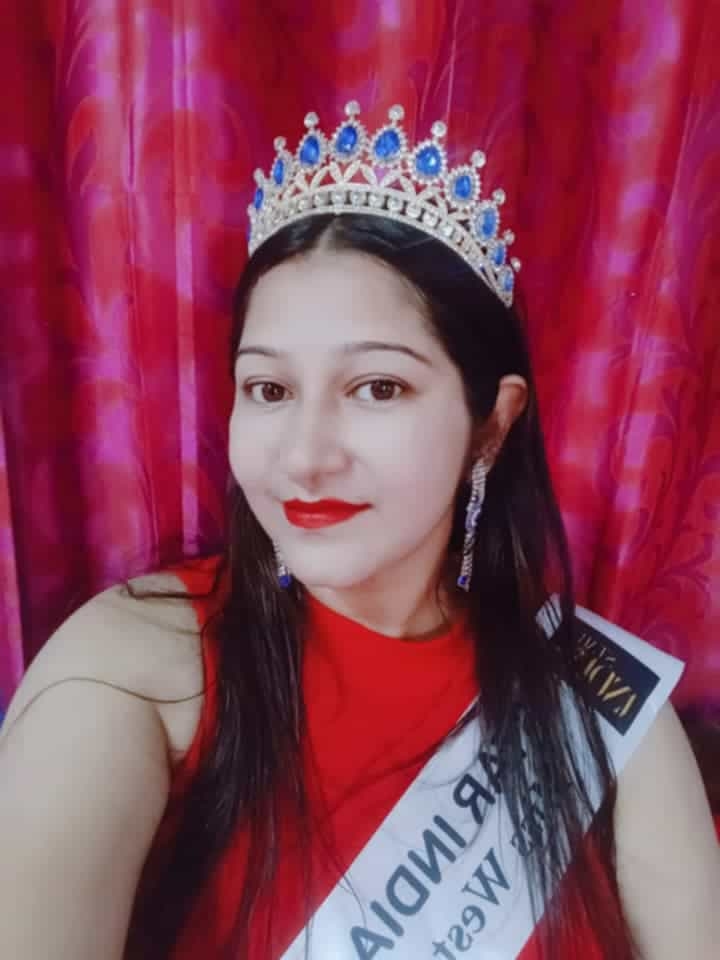
South Asian woman in a ceremonial crown and red top and sash. She has long dark hair and stands in front of a purple curtain.

The days are coming easily, 

Women will also go. 

morning noon evening night, 

From here and there, 

band together, 

to play cricket 

no one can stop 

No one will come to knock.

Female cricketers will be born. 

In every lane. 

women can do it all 

In each chapter, 

Women will show.

Short biography: Amb. Dr. Priyanka Neogi from Coochbehar. She is an administrative Controller of United Nations PAF, librarian, CEO of Lio Messi International Property & Land Consultancy, international literacy worker, sports & peace promoter, dancer, singer, reciter, live telecaster, writer, editor, researcher, literary journalist, host, beauty queen, international coordinator of the Vijay Mission of Community Welfare Foundation of India.

Poetry from Dr. Ashok Kumar

The Essence of Oneness 

Middle aged bald South Asian man in a plaid collared shirt seated in a plush chair in front of a desk.

In the depths of existence, a truth resides, 

A unity that binds, where hearts abide. 

Oneness is fundamental, a cosmic refrain, 

Echoing through eternity, a love that remains. 

Beyond the veil of differences, we stand as one, 

Connected threads in the fabric of life, forever spun. 

The same breath that stirs the trees, stirs the human heart, 

A shared essence that pulsates, a single work of art. 

In the mirror of the soul, reflections shine, 

A multitude of faces, yet a single divine. 

No separate streams, but rivers flowing free, 

Merging into the ocean, where unity is the sea. 

Let’s break the chains of division’s might, 

And recognize the oneness, shining with delight. 

For in embracing our shared humanity, we find, 

A world where love is the answer, and peace of mind. 

May we walk the path of unity and light, 

And in our hearts, may oneness be our guiding sight.

Dr. Ashok Kumar is an international mystical bilingual poet from India. His philosophical, spiritual poems are published in various anthologies in different languages including Urdu, English, Spanish, Polish, Hindi, and Chinese. He’s working as a principal in a reputed institution of India . He’s a universal poet appealing for love, Unity and integrity

BECOMING A POET…… Your touch of love making me a great poet in the entire society Troubles and sufferings can’t break mystic poet’s heart and soul This valuable vehicle of universal experience helping poet for strong emotions and true beauty Social, political and psychological changes are mystic divine goal This wild rose helping poet spreading fragrance on this planet earth for humanity and integrity Together we can be hopeful, optimistic in this journey of lovely life Purpose of poet is to carry duties and responsibility for the entire society Together we can understand each others to cope with stress and strife

FROM THE GARDEN OF ALPINE LOOMB BAGHPAT, INDIA BHARAT JANUARY 05,2023 ©® DR ASHOK KUMAR INTERNATIONAL PEACE ACTIVIST AMBASSADOR OF IFCH MOROCCO AFRICA WORLD POET LAUREATE POET OF BIRLAND INTERNATIONAL JOURNALIST MEMBER OF INTERNATIONAL HUMAN RIGHTS 

Poetry from Olga Levadnaya

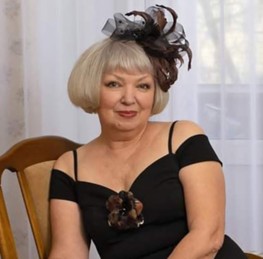
Eastern European woman with short blonde hair, a large black bow, and a sleeveless off the shoulder black dress, seated in a wooden chair.

MEMORIES GROW OUT OF THE CRIES OF BIRDS

I love white-faced Kazan,

whose feet

are washed by life-giving waters,

a Kremlin kissed by snow

still fragrant with autumn foliage

and the proliferation of the squares

like passionate farewells,

and the freckled houses

under the manes of silver poplars,

and the devout luminescence

of city streetlamps,

and people

grandly carrying their past

and the cries of birds

from which grow –

our memories.

Olga Levadnaya, Russian visionary poet, world-famous public figure, Honored Worker of Culture of the Republic of Tatarstan, laureate of more than 20 republican, all-Russian, international literary awards, member of republican, Russian and international literary unions, author of 17 books of poetry and prose published in Russian, English, Tatar, Turkish, translated into 14 languages, author of more than 500 publications in magazines, anthologies in Russia and abroad, participant in numerous festivals, conferences, readings, member of the Assembly of the Peoples of the World, Ambassador of Peace, European Poetry, poetry of International Literature ACC Shanghai Huifeng (Shanghai, Huifeng), Department of Arts and Cultures, Plenipotentiary Representative for Culture in Russia of the Republic of Birland (Africa), literary consultant of the Academy of Literature, Science, Technology of Shanxi, the Zhongshan Poets’ Community (China), honorary founding member of the World Day of K. Cavafy (Greece, Egypt), coordinator of the International Literary Festival in Russia “Woman in Literature” (Mexico), creator and director of the International Music and Poetry Festival “Handshake of the Republics”, the Forum-Battle “Tournament of Poets and AI. RR”, the International TeleBridge RR, the International Youth Music and Poetry Competition-Festival “On the Fairytale Shore of Kazanka” based on the works of Olga Levadnaya, artistic director of the Kazan Poetic Theater “Dialogue”.