
Essay from Abdukahhorova Gulhayo

My impressions of the work The Affairs of the World
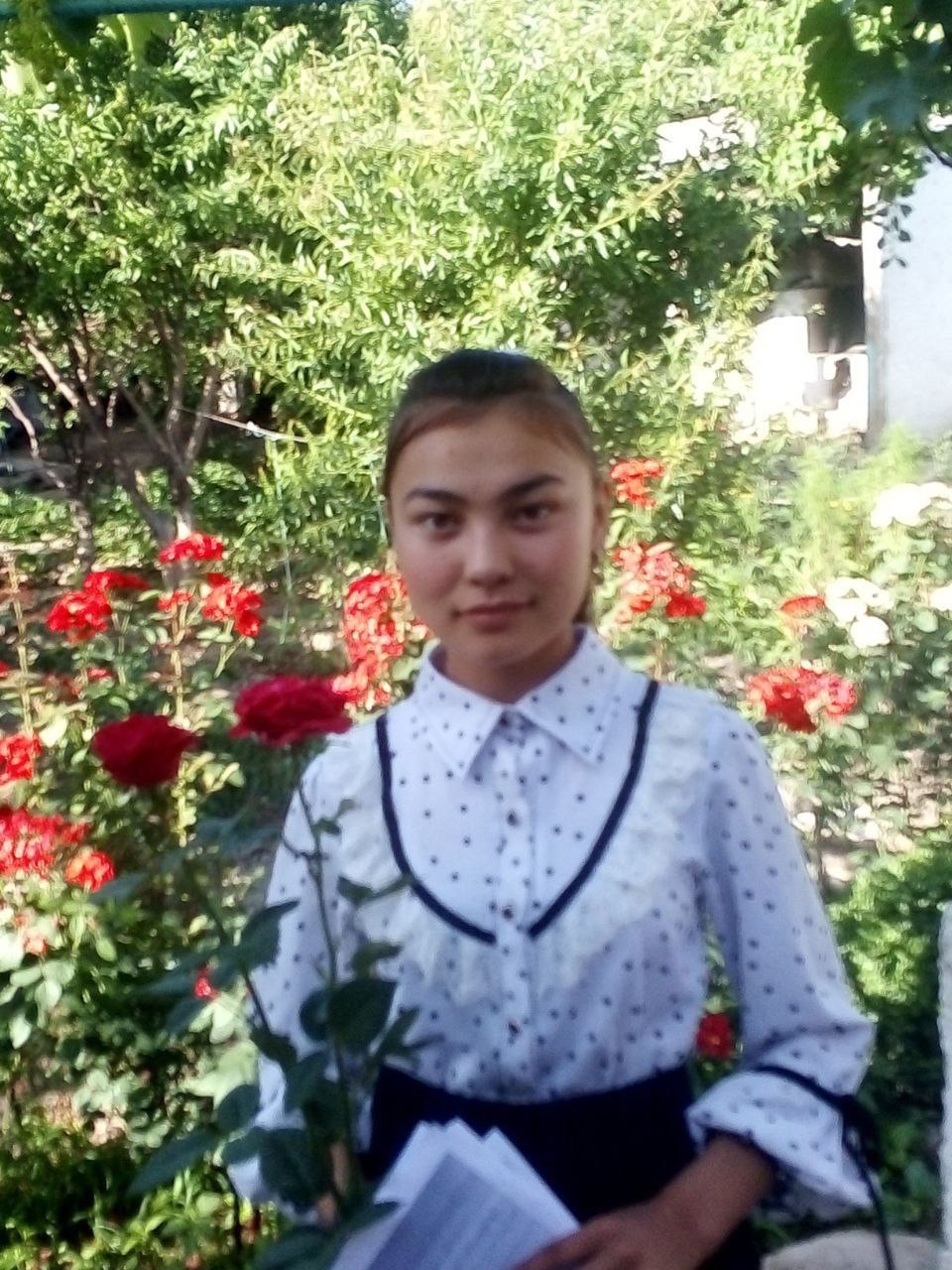
Young Central Asian woman in a white collared blouse dotted with blue, in a rose garden on a sunny day.

The Affairs of the World is a work by the author of more than a dozen novels and short stories, many touching stories, and several exciting dramatic works. In his 2005 publication, Otkir Hoshimov described his work as follows: “This story consists of short and long novels. However, in all of them there is the figure of the most important, dear person – my mother. Only the names of some have changed. The fate of these people is also connected to my mother in some way.”

Utkir Hoshimov, the People’s Writer of Uzbekistan, is a writer who has his own place and style in 20th-century Uzbek literature. His works are distinguished from the works of other writers by their simplicity and folkloric nature.

The work The Works of the World, which is famous throughout the world and loved by all readers, is also a work that stands out from other works with its folkloric nature. This work was translated into English by translator Mark Rees in 2024. While living in the world, we think that we need to think about one thing first. The one who created us from nothing, the one who brought us into the world and the one who brought us to this point now, the one who does not eat, drink, wear, does not say hot or cold, and even forgets their names for our benefit, are our parents.

We can safely say that Otkir Hoshimov’s The Works of the World is truly about mothers. Because in this work, the writer cites short stories and stories about mothers, big and small. Everyone who reads this work will cry at some points and laugh at others. It will certainly bring gratitude and change their attitude towards their mother in a positive way. The story I liked the most while reading this work was the story of “Iltijo” and “Gilam Saypoq” given at the very end of this book.

When I read the story of “Iltijo”, I was convinced that the writer went to his mother’s grave, what his mother loved, and that this book was dedicated to his mother. “Iltijo” uses so many sincere and warm words that it is impossible not to cry after reading them. Even if you cry, crying gives you such relief, you feel spiritually relieved.”Iltijo” begins like this.

Mom, I’m here… Do you hear, mom, I’m here…Look, my blue eyes have come again. Do you remember, every year when spring comes, I would take you out to the field. You would be happy to see the bright sun, the clear sky, and the blue grass. Do you remember, you would rub the marigolds that your grandchildren had picked into your eyes and say, “Goodbye, honey”…Today… marigolds have grown on you… No, no, I’m not crying, mom. I know that if I cry, you will be upset. Now… it will pass now. That’s it. In the morning, it rained heavily. It rained heavily. You taught me how to love spring rain… Then the sun came out. Look, the sun is shining… Do you remember, you told me a story about the sun. That sun is shining…

You see. I cry every time I read this story. After reading this story, I can say that no matter what we do, a person who displeases his parents will never achieve any of his goals and dreams. We often see this in life and in books. Through this work, I learned that we should all appreciate our parents and respect them while they are alive.

Abdukahhorova Gulhayo Uzbekistan University of Business and Science, 2nd year student, Uzbek Philology major
Essay from Shahina Olimova

Alexandr Feinberg is one of the Best Uzbek Poets

Kaljanova Gulmira         

EFL teacher of Uzbekistan State World Language University                               

Olimova Shahina Botirjon qizi 

Student of Uzbekistan State World Language University

Abstract: Alexandr Feinberg is a national poet, connector of Uzbek and Russian literature. The poet wrote not only about Uzbek culture, nationality and history but also the personality and character of the Uzbek people. Because of his importance, his poems became popular among other nations. He translated Uzbek poems and novels that helped Russian people to get to know Uzbek literature.

Аннотация: Александр Файнберг – народный поэт, связующее звено узбекской и русской литературы. Поэт писал не только об узбекской культуре, национальности и истории, но и о личности и характере узбекского народа. Благодаря своей значимости его стихи стали популярными среди других народов. Он переводил узбекские поэмы и романы, что способствовало знакомству россиян с узбекской литературой.

Annotatsiya: Aleksandr Faynberg — xalq shoiri, oʻzbek va rus adabiyotining bogʻlovchisi. Shoir nafaqat o‘zbek madaniyati, millati, tarixi, balki o‘zbek xalqining shaxsiyati va xarakteri haqida ham yozgan. Ahamiyati tufayli uning she’rlari boshqa xalqlar orasida mashhur bo’ldi. U rus xalqining oʻzbek adabiyoti bilan yaqindan tanishishiga xizmat qilgan oʻzbek sheʼr va romanlarini tarjima qilgan.Key words: uzbek literature, nationality, connection between literatureКлючевые слова: узбекская литература, национальность, связь между литературами

Tayanch so‘zlar: o‘zbek adabiyoti, millat, adabiyot o‘rtasidagi bog‘liqlik

Introduction: Various measures have been taken in Uzbekistan to preserve the literary heritage of Alexandr Feinberg and perpetuate his name. In 2004, he was awarded the title of People’s Poet of Uzbekistan, and in 1994, the title of Honored Worker of Culture of Uzbekistan was given to him. Additionally, a monument to Alexander Feinberg was erected in recognition of his important practical work to enhance the prestige of our homeland in the international arena and strengthen cultural ties between the Russian and Uzbek people through his work.

Many events, competitions and conferences dedicated to the life of the writer, his creative legacy and his contribution to the spiritual world of our people are being held at UzSWLU. During the events, participants read and discuss Alexander Feinberg’s poems, learn about his life, and analyze his works. Moreover, the university organizes an Alexandr Feinberg stipendium every year to award students for their scientific work. Various events related to Alexander Feinberg are held in the Alley of Writers.

I am drifting, love, far away, Smoke rises from distant fires. A star takes a kiss from you, From this shore, I depart today. Along the river flows the untamed stream, You gaze at the sky — at the birds that gleam. Even the waves seem to feel the pain of parting, As if they embrace each other, softly departing.

Alexander Feinberg, as an Uzbek and Russian poet, won many hearts with his creativity and poetry. He was able to show the nationality and culture of the Uzbek people not only in Uzbek literature, but also in his poems, glorifying the Uzbek people in Russian literature. The immortal creativity of the writer, his works translated and set to music, will live forever in our hearts.

Poetry from Adrina Esparas-Hope 

Knocking Against The Ribs

What is a heart?

Is it just the sign of being exhausted 

Does it feel like you’re falling apart

Or is it in the middle of being frosted?

If I cut open your chest, would I see it?

Or would I have to climb my way in

To find nothing but a darkened pit

Because perhaps, it would be lost within.

Does your heart knock against you quietly?

Or perhaps, it just fell into the litter

Does it feel like you’re screaming silently?

When it happens to get bitter.

Now, if I were to search and find your heart

Would it be intact, or would it have fallen all apart?

Poetry from Daniela Chourio-Soto

The sailor

I hold myself back, I hold myself back
While they leap on ropes of flowers,
I remain seated on the old wooden bench.

I know they see me as a living shadow.
I sense it, I perceive it.

I want to escape,
I want to run desesperately,
But I’m stuck and cursed to be on this bench.

My feet have no motivation
Against this painful, bipolar breeze
My words,
Confused and clumsy,
Is an old gray chain of lies
That only sinks and sinks deeper into the sea.

I see it,
Every time the chain experiences
Different layers of state and light.

When it’s deep,
It wants to return to its ship,
But it’s stuck,
And every creature will know.

The sailor, owner of the chain,
Watches how all sailors and pirates
Have their chains beside them,
Clear and new.

They explore more of the sea without stopping,
But the sailor is stuck.

She believed that by talking more
About his treasure chest,
She could got on others ships,
So she searched thinking in just one place to find a chest,
With abundance,
“The things the sailor doesn’t have”
Simply to make other sailors’ eyes shine,
And finally be accepted

Among their luxurious suits and ships.

The sailor looks around.

Around her,
Some wait for the expected treasure,
But all the sailors around are slowly leaving.

Sure,
And now they leave and are free,
While the sailor is stuck.

The sailor regrets and wishes extreme happiness for them through clenched teeth.

Dystopian norm

We are programmed robots; when the time comes, we just walk, following what the norm order.
“Norms” says: do all we say in a few seconds and devastate your fingerprints until there’s
nothing left.
Don’t close your eyes and follow one method.
“Norms” says: have the same brain, with red lines intertwined, full of memories, genetics, and
experience equal to the others.
Keep it, Keep it to yourself.

For the, we have bunnies red ayes,
Machinery that needs to be fixed.
For us they are gluttons.
The more robots they create, the more they cover the country with their bodies.
Then we are stuck to these invisible webs.
Then what will happen?
We will sink into the dirty earth we didn’t create.


Underground

They cover their eyes involuntarily,
and walk over them as if they were earth.
You, the ones who will never consider yourselves nothing,
float slowly in turbulent water.

No one is born to not be seen.
While they laugh in luxury,
you, the invisibles, work in the shadows
behind their big backs,
only to receive a step on the hand, something admirable.

Oh, nobody’s, you keep living in filth.
And no one will stop the rage I feel
when clenching my teeth and closing my mouth.
Not only in me: between blood and blood,

the rage of their avengers and descendants
will become more fulminescent
and will explode on their pretty and rare porcelain

Poetry from Moustapha Misau

I’LL  WRITE YOU A LETTER 

I’ll write you a letter

Not to remind you of your 5-daily prayers

Or your morning and evening Azkar

But to gist you about the heavy thought that occupied the bulk of my time.

I’ll write you a letter

Not to tell you how long I became an ardent worshipper of Love

But to finally tell you the words I whisper million times to the air

Hoping that one day, just one day

Those cool words would caress your ear like the evening breeze sweeping through a grass field.

I’ll write you a letter

Not just with an ink on paper

But with a mixture of blood and tears

Hoping that they’ll send my hearty request to you;

That I seek to make You and I – US!

And that one day, we could play and dance the “Nā cika buri na” song in our home.

I’ll write you a letter

Not to showcase my feeble knowledge of love and romance

But to connect with your soul so that when you excitedly read this letter

You’d hear my voice solidly pleading my case,

For somewhere in me, I feel the need to kiss your soul.

I’ll write you a letter

Not because I can write one

But because I wanna remind you of how You and I fit like a pair of gloves

And together we’d play a tune that’ll never register a discordant note.

I’ll write you a letter

Not to display the obvious elation that cover my face as I write this

But to tell you how your name is scribbled all around my diary.

And when far from the world I am,

I open each page and whisper your name to God, praying that He makes you mine.

And when I’m done, I place the diary on my chest, imagining it was your hand.

I’ll write you a letter

Not minding others calling me an old-fashioned lover

But to just send you these three words “I LOVE YOU”

After much struggling, I’ve cancelled many words

Just to show how lost I am in your world.

I hope these three words could do the magic!

I’ll write you a letter

Not because people didn’t call me Majnun already.

But for you to come to my rescue before life finishes rendering me useless.

However, if after you came, you found me on my grave;

Just know that, I’ll still be waiting for your reply.

WHEN I’M GONE

When I’m no longer here,

When far from this world I go

Just let me go

Don’t weep thinking of me

Because I’ve the Beloved to meet and the eternal garden to explore.

When I’m no longer here

Be grateful for the beautiful years we spent

During which I gave you my whole

Now is the time for me to travel alone

To leave for a joyfully distant race of no return.

When I’m no longer here

Trust me, we’ll only be separated for a while

So, smile knowing precious memories remain behind;

Lingering love that’s hard to find.

When I’m no longer here

Don’t go to my grave crying

I ain’t there, I am with the Beloved.

He’ll make me the star that shines at night

And the awakening of the birds in the calm morning.

Mohammad Babangida Ibrahim is the guy behind the pseudonym Moustapha Misau. He is a Nigerian poet that grew up traversing the globe through the pages of books. When he is not sorrounded by books, you find him at the gym working out to have a better physique. He has his poems published at williwans.express and an anthology by Young Creative Writers. He can be contacted via +2348060807042 or Moustapha Misau on socials.

Essay from Amonboyeva Shahnoza Yusupboy

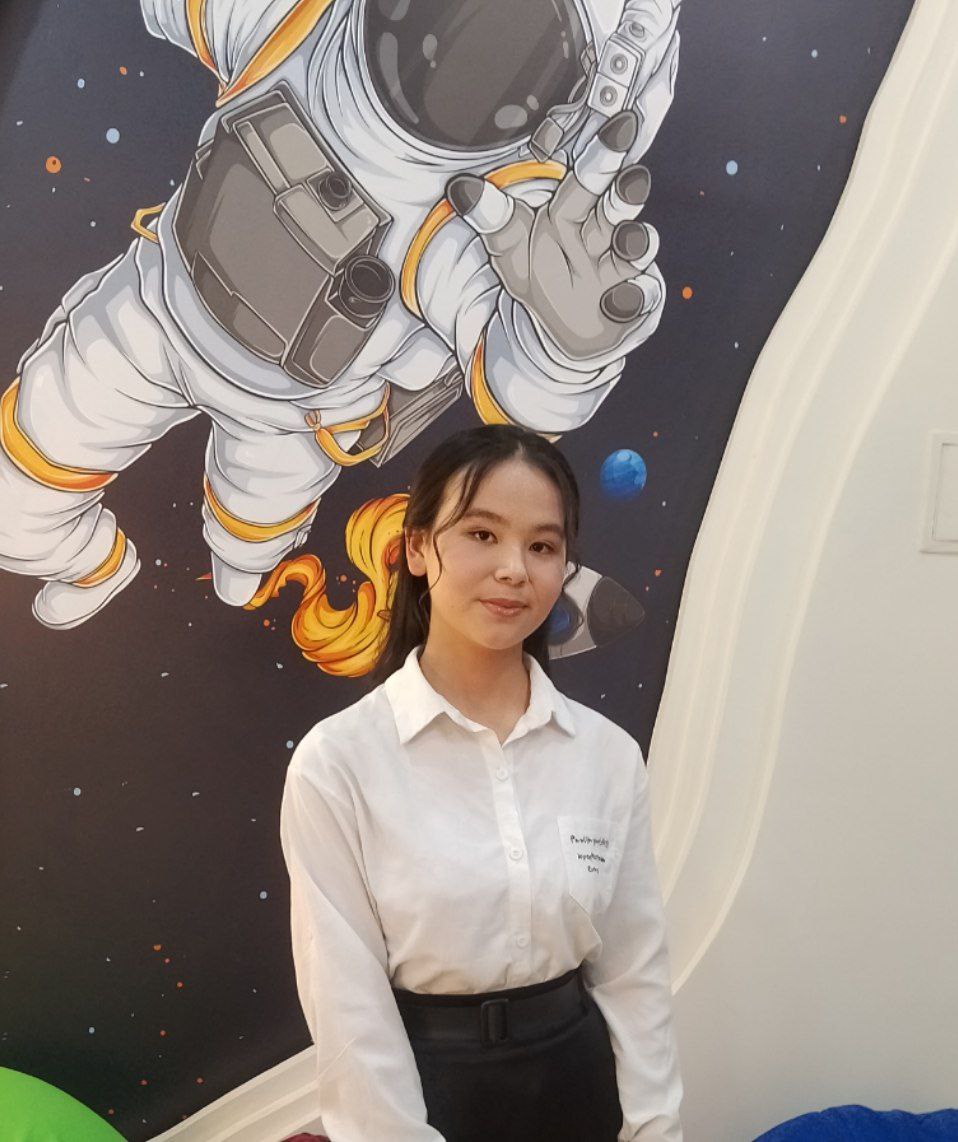
Young Central Asian woman with straight dark hair behind her head and a white collared shirt, standing in front of a photo of an astronaut.

Student Life – The Harmony of Dreams and Hard Work

There comes a time in every person’s life that becomes not only a period of learning but also a school of dreams, perseverance, labor, and life experience. This period is student life. Student life is the most beautiful, meaningful, and responsible stage of youth. It represents a turning point in a person’s life, a serious step toward the future.

Today, when we speak of a student, we do not only mean young people sitting in lecture halls, reading books, or preparing for exams. A student is someone who harmonizes their dreams with effort, contributing to the development of society. A student is the owner of tomorrow — a person who is laying the foundation for the future of the nation today.

No dream can be achieved easily. Behind every success lies sweat, dedication, and endless striving. Therefore, student life is not a dream without effort, but labor infused with dreams. Every day, a student wakes up early to attend classes on time, stays in the library after lectures, conducts research, and explores additional resources through the internet. With each of these daily efforts, they lay the groundwork for future achievements.

The years of student life strengthen a person and prepare them for real life. During this period, one learns to think independently, value time, and overcome obstacles. Especially when dreams and hard work are combined, the result is always bright. Work opens the way to dreams, and dreams give meaning to work. Every student has their own dream: some wish to become doctors who bring healing to people, others aspire to be engineers creating new technologies, and some hope to be teachers nurturing the next generation. Yet all these dreams come true only through diligence and perseverance.

Student life is a test — but in this test, a person discovers themselves. The moments of fatigue, the sleepless nights, the hours devoted to study — all of them later turn into a source of pride. Because this hard work is the foundation of one’s dreams, the beginning of future success.

Today’s students are tomorrow’s scientists, engineers, teachers, and leaders. In their hands lies the future of the nation, the trust of the people, and the hope of progress. Therefore, if every student harmonizes their dreams with their labor, our country will confidently move toward a brighter future. For wherever dreams and hard work unite, there will always be success, happiness, and a prosperous tomorrow.

Amonboyeva Shahnoza Yusupboy qizi was born on august,2007,in Gurlan District, Khorezm region, Republic of Uzbekistan. She graduated from her local school. She is currently a first-year student at the Urgench State University.

Essay from Dildora Toshtemirova

Dreams will definitely come true

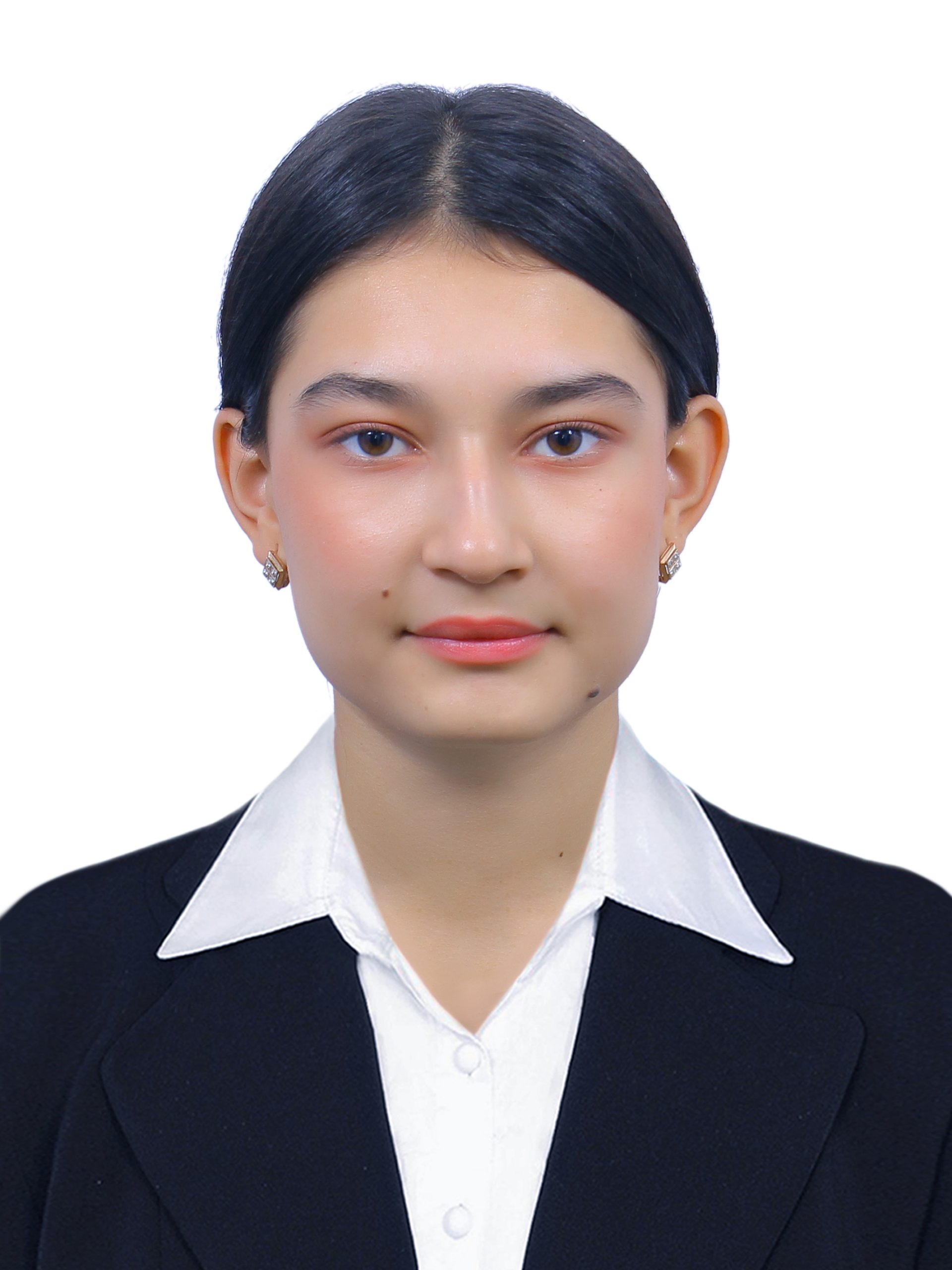
Young Central Asian woman with straight dark hair up in a bun behind her head. She's wearing small earrings and a black coat over a white collared shirt.

You can always achieve your dreams. You just have to believe and act. It’s true that sometimes you get depressed, things may not seem like it, but your efforts will pay off one day. You just have to sincerely believe in dreams.

I also have many dreams and I am gradually achieving these dreams.

 You know, many years ago, when I was 6 or 7 years old, my parents used to take us to many festivals and theaters, and I was envious of those who participated in the festival or those who acted on stage. I used to say to myself that I wish I could go to the stage and take part in the celebrations. I dreamed of being like them, thinking that maybe I would be like them when I grow up. I had forgotten this dream of mine. But when I was young, I was so envious that I was able to play a role in the theater at the age of 14 and at the age of 15 to perform on the big stage at the festival. After a long time, I achieved my dream.

True, some people may say that this is both a job and a dream, but I am very happy that I have achieved my dream from my youth and I once again believed that if a person really wants something, that dream will come true. Your dream may not come true when you want it, but your dream may come true at an unexpected time.

Believe in your dreams and keep moving. Because you can’t make dreams come true.

Toshtimirova Dildora Hakim qizi, Navoi city