harry k stammer lives in Santa Barbara, CA USA. His books include tents – 2007 Otoliths, grounds – 2013 Otoliths, tocsin – 2019 Otoliths, –48 – 2021 Sandy Press, sidewalkss – 2021 Concrete Mist Press, walls’t’s – 2021 Sandy Press, alleys’t’ – 2023 Concrete Mist Press, and Getting to One with Eileen Tabios – 2023 Sandy Press. harry’s sound/poem pieces can be found at https://harrykstammer.bandcamp.com
Ecotourism: A Journey Not Only to Nature, but to Ourselves
In today’s rapidly globalizing world, travel has become more than just a hobby – it is a lifestyle, a symbol of freedom, and an exploration of identity. Millions of people cross borders each year to see new places, breathe in new air, and collect memories that last a lifetime.
Yet, behind the growing excitement of tourism lies a silent cry — the cry of nature struggling to breathe under the weight of human footsteps. Forests shrink. Rivers lose their purity. Wildlife retreats into silence. In such a moment, tourism cannot remain the same. The world no longer needs tourists who only consume nature — it needs travelers who protect it. This is where ecotourism rises as a new philosophy of travel.
Ecotourism is not about luxury resorts or crowded entertainment parks. It is about visiting nature with care, respect, and love. Ecotourists step lightly, listen carefully, and learn deeply. They seek not only beauty, but meaning; not only adventure, but responsibility. To travel responsibly means to understand that every leaf has value, every bird song is a story, and every river is a pulse of life.
Ecotourism reminds us that nature is not a backdrop for photos — it is the foundation of our existence. Environmental crises are no longer distant warnings; they are our daily reality. Climate change, soil degradation, water scarcity, and species extinction threaten the balance of our planet. Ecotourism is one of the most effective ways to connect humans back to the earth, raise awareness, and create economic incentives for conservation. In many countries, this industry has become a model of sustainable development. Local communities gain employment, protected areas receive funding, and travelers return home with a renewed respect for the planet.
Uzbekistan is blessed with natural diversity — from the ancient sands of Kyzylkum to the majestic Chimgan mountains, from the mysterious Ustyurt Plateau to the rising hope of the Aral Sea ecotourism zone. These places are not just landscapes; they are national treasures.
Yet natural beauty alone is not enough. We must nurture it. Promote it wisely. Protect it fiercely. A single careless campfire can turn a forest into ash; a single plastic bottle can pollute a river for decades. Ecotourism teaches us that loving our homeland begins with caring for its nature. A tree planted today becomes a shade for tomorrow. A river kept clean becomes life for generations. Protecting nature is not a duty — it is an honor.
Ecotourism shapes a culture where humans and nature grow together, hand in hand, heart in heart. Travel, but travel responsibly. Discover, but do not destroy. Touch the earth, but with kindness. Because while nature has sheltered humanity for thousands of years, now it is humanity’s turn to shelter nature.
Dildora Xojyozova is a young geography student and environmental enthusiast from Uzbekistan. Passionate about sustainable development and nature conservation, she actively participates in academic, social, and ecological initiatives. Dildora promotes environmental awareness among youth and dreams of contributing to global eco-tourism development. With a strong dedication to education and research, she aims to become a leading specialist in geography and sustainable tourism.
This article analyzes the role and impact of artificial intelligence technologies on the process of learning English in the modern era.
Today, intelligent applications such as ChatGPT, Grammarly, Duolingo, Ibrat Farzandlari, and Elsa Speak provide language learners with opportunities to practice independently, improve pronunciation, correct grammatical errors, and create an effective communicative environment. At the same time, the article discusses both the positive and negative aspects of these tools — such as increasing learners’ motivation and supporting teachers, while also highlighting the potential risk of decreased independent thinking and creativity. The research explores the importance of artificial intelligence in English language education, the effective ways of integrating it into the educational system, and its possible future impact. The findings emphasize the necessity of using AI technologies purposefully and in a limited manner.
Keywords: artificial intelligence, English language learning, digital education, ChatGPT, Duolingo, language competence, technological approach.
Annotatsiya Ushbu maqolada zamonaviy davrda sun’iy intellekt texnologiyalarining ingliz tili o‘rganish jarayoniga ko‘rsatayotgan ta‘siri va o‘rni tahlil qilinadi. Bugungi kunda ChatGPT, Grammarly, Duolingo, Ibrat farzandlari, Elsa Speak kabi intellektual dasturlar til o‘rganuvchilarga mustaqil mashq qilish, talaffuzni takomillashtirish, grammatik xatolarni tuzatish hamda foydali muloqot muhitini yaratish imkonini bermoqda. Shu bilan birga, maqolada bu vositalarning ijobiy va salbiy jihatlari, ya‘ni o‘quvchilarda ishtiyoq, motivatsiyani oshirish; o‘qituvchilarga yordam berish bilan bir qatorda, mustaqil fikrlash va ijodkorlik darajasining pasayish xavfi ham yoritiladi.
Sun‘iy intellektning ingliz tili ta‘limidagi ahamiyati, uning ta‘lim tizimiga samarali integratsiya qilish yo‘llari hamda kelajakka qanday ta‘sir qilishi haqida ilmiy tahlil olib boriladi. Tadqiqot natijalari AI texnologiyalaridan cheklangan holda va maqsadli foydalanish zarurligina ko‘rsatadi.Kalit so‘zlar: sun’iy intellekt, ingliz tili o‘rganish, raqamli ta’lim, ChatGPT, Duolingo, til kompetensiyasi, texnologik yondashuv.
Аннотация В данной статье анализируется роль и влияние технологий искусственного интеллекта на процесс изучения английского языка в современную эпоху. В настоящее время такие интеллектуальные приложения, как ChatGPT, Grammarly, Duolingo, Ibrat Farzandlari и Elsa Speak, предоставляют изучающим язык возможность самостоятельно тренироваться, совершенствовать произношение, исправлять грамматические ошибки и создавать эффективную коммуникативную среду. Вместе с тем в статье рассматриваются как положительные, так и отрицательные стороны этих инструментов — в частности, повышение интереса и мотивации учащихся, помощь преподавателям, а также риск снижения уровня самостоятельного мышления и креативности. В исследовании проводится научный анализ значения искусственного интеллекта в обучении английскому языку, способов его эффективной интеграции в систему образования и возможного влияния на будущее. Результаты исследования показывают необходимость целенаправленного и ограниченного использования технологий ИИ.Ключевые слова: искусственный интеллект, изучение английского языка, цифровое образование, ChatGPT, Duolingo, языковая компетенция, технологический подход.
INTRODUCTION
In the current era of globalization, the English language occupies a leading position in the fields of international communication, education, science, and technology. Therefore, learning it effectively has become an essential need for every young generation. In recent years, the rapid development of information technologies, particularly artificial intelligence (AI) systems, has brought about fundamental changes in the process of language learning. AI-based programs not only expand students’ opportunities for independent learning but also assist teachers in organizing interactive and learner-centered lessons.
The main advantage of AI technologies lies in their ability to allow learners to practice the language anytime and anywhere, automatically assess pronunciation, detect grammatical errors, and develop communication skills. At the same time, excessive reliance on artificial intelligence may reduce learners’ capacity for independent thinking, creativity, and real-life communication, which has become a subject of discussion among educators and researchers.
From this point of view, studying and analyzing this topic is extremely relevant today. Proper and purposeful use of AI technologies plays a crucial role in improving the quality of English language learning, advancing the digitalization of education, and enhancing modern teaching methods.
Moreover, this topic has attracted the attention of many foreign and local scholars. Among them are Enik Rukiati, Tek Mani Karki, Abdullah Alenezi, and Ali Hekmat, as well as Uzbek researchers such as R. Murodov, D. Saidkodirova, M. Baxtiyorova, and A. M. Kasimova, who have conducted significant studies and contributed valuable insights to this field.
Review of the Literature
In recent years, the role of artificial intelligence (AI) technologies in the process of learning English has grown remarkably. Numerous foreign and local studies have comprehensively examined the effectiveness of this field and its pedagogical implications. In their 2024 study, Nigora Khodjamqulova and Rano Murodova emphasized that modern technologies, including AI-based tools, have helped create an interactive learning environment for studying English in Uzbekistan. According to their findings, such tools not only increase students’ motivation and engagement but also broaden their opportunities for independent learning.
In 2023, Dilnoza Saidkodirova analyzed the influence of AI technologies on teachers’ professional activities, evaluating them not as a “threat,” but as an innovative means that enhances creativity. She concluded that AI reduces teachers’ workload and assists in selecting methods tailored to the individual needs of learners. Similar conclusions have been drawn in international research. In 2025, Tek Mani Karki and Bishal Karki explored the opportunities and challenges of integrating artificial intelligence into the English language teaching system. Their research suggested that while AI increases the efficiency of the learning process, it cannot completely replace human interaction.
Likewise, Abdullah Alenezi (2025) investigated teachers’ and students’ perceptions of AI technologies. His study revealed that these tools contribute to the personalization of lessons and support learners in identifying and correcting their mistakes. Overall, the reviewed sources demonstrate that artificial intelligence technologies are elevating English language education to a new level. However, many researchers emphasize the importance of using these tools wisely and in moderation. Overdependence on AI could potentially diminish students’ interpersonal communication, critical thinking, and creativity. Therefore, the gradual and balanced integration of artificial intelligence into English language education is considered the most effective approach.
Analysis and Results
During the research, a survey was conducted among 20 respondents aged between 17 and 37 to determine the impact of artificial intelligence on English language learning. The participants were individuals connected to the field of English studies, including students, teachers, and professors. The survey results indicated that artificial intelligence technologies have a significant influence on the educational process.
The first question asked was: “How has artificial intelligence affected your English learning?” According to the findings, 81% (13 respondents) stated that AI tools were useful and effective in improving their English learning experience. However, 19% (3 respondents) reported that they had not used such technologies during their studies. This suggests that some learners still rely on traditional teaching methods and have yet to integrate modern digital tools into their language-learning process.
The second question asked participants: “Which skill do you think can be improved with the help of AI?” According to the results, 62% (12 respondents) believed that artificial intelligence is more effective in developing writing skills, while 38% (6 respondents) considered it more beneficial for enhancing speaking abilities. These findings indicate that AI tools—such as ChatGPT and Grammarly—are more frequently used to refine writing performance, particularly in correcting grammar, style, and structure.
The third question was: “Do you think the disadvantages of artificial intelligence outweigh its advantages?” The responses showed that 6 participants answered “yes,” highlighting certain negative aspects of AI technologies. Another 6 participants responded “no,” emphasizing that the benefits prevail over the drawbacks. Meanwhile, 4 respondents expressed a neutral opinion, noting that the advantages and disadvantages of artificial intelligence are balanced.
Overall, these results suggest that while AI is viewed positively in language education, its use should remain purposeful and balanced to maximize benefits without diminishing human creativity and interaction. Overall, the results of the survey demonstrate that artificial intelligence has a positive impact on the process of learning English. However, for its effective use, it is essential for users to develop technological literacy, independent thinking, and critical reasoning skills. Based on statistical data, individuals who utilize AI technologies tend to master grammar more quickly, yet human interaction remains an important component in spoken communication.
According to the research, the most effective aspects of AI tools include:1. Creating exercises tailored to the learner’s proficiency level;2. Quickly analyzing mistakes and offering appropriate corrections;3. Simulating real communication environments artificially;4. Removing limitations of time and place in the learning process.
The findings confirm that artificial intelligence cannot completely replace the human factor in English language education but can serve as a highly effective support tool for teachers.
Conclusion
In conclusion, English remains one of the most recommended languages to learn for various reasons. The study revealed that artificial intelligence provides substantial support in mastering the language effectively. Nevertheless, if learners use AI without a clear purpose, structured plan, and discipline, it may lead to wasted time, distraction, and decreased productivity.
Therefore, it is advisable to approach AI tools and technologies with rationality, balance, and mindfulness. In general, integrating artificial intelligence technologies with well-designed educational strategies can significantly enhance the quality of English language learning and strengthen the overall effectiveness of modern education.
References
1. Nigora Khodjamqulova, Rano Murodova. Modern Technologies in Teaching English in Uzbekistan: The Role of Artificial Intelligence. // Uzbek Journal of Foreign Philology. – 2024.2. Dilnoza Saidkodirova. Artificial Intelligence in Teaching and Learning English: Opportunities and Challenges for Teachers. // International Scientific Journal of Education and Innovation Studies. – 2023.
3. Tek Mani Karki, Bishal Karki. Integration of Artificial Intelligence in English Language Teaching: Opportunities and Challenges. // Dristikon: A Multidisciplinary Journal. – 2025. – Nepal Journals Online (NepJOL).4. Abdullah Alenezi. Teachers’ and Students’ Perceptions of Artificial Intelligence in English Language Education. // Arab World English Journal (AWEJ). – 2025.
5. Ali Hekmat. Artificial Intelligence and the Future of Language Learning: A Pedagogical Approach. // Journal of Educational Technology and Innovation. – 2024.6. Enik Rukiati, Tek Mani Karki. AI-Based Learning Approaches in Developing English as a Foreign Language Learners’ Skills. // Asian Journal of Education Research. – 2023.7. Rahim Murodov, Dilnoza Saidkodirova, Muxayyo Baxtiyorova, Aziza Murodjon qizi Kasimova. Advantages and Challenges of Teaching English Based on Artificial Intelligence. // Journal of Language and Education (Til va ta’lim ilmiy-amaliy jurnali). – Namangan, 2024.
There are many trials in life, but if a kind mother is by your side, all of them turn into lessons. Nishona is an eighth-grade student. Life has taught her many things. Sometimes she comes home tired from school, sometimes with a sad heart because of her friends’ betrayal. But for her, the greatest support in life is her mother and grandmother.
For Nishona, her mother is not only a mother but also a great person who replaces a father. She works tirelessly and gives her daughter love. Nishona knows for sure that in every step of her mother there is devotion, patience, and dreams. Her mother encourages her, saying that after every trial, happy moments will come. Nishona always strives forward to see a smile on her mother’s face.
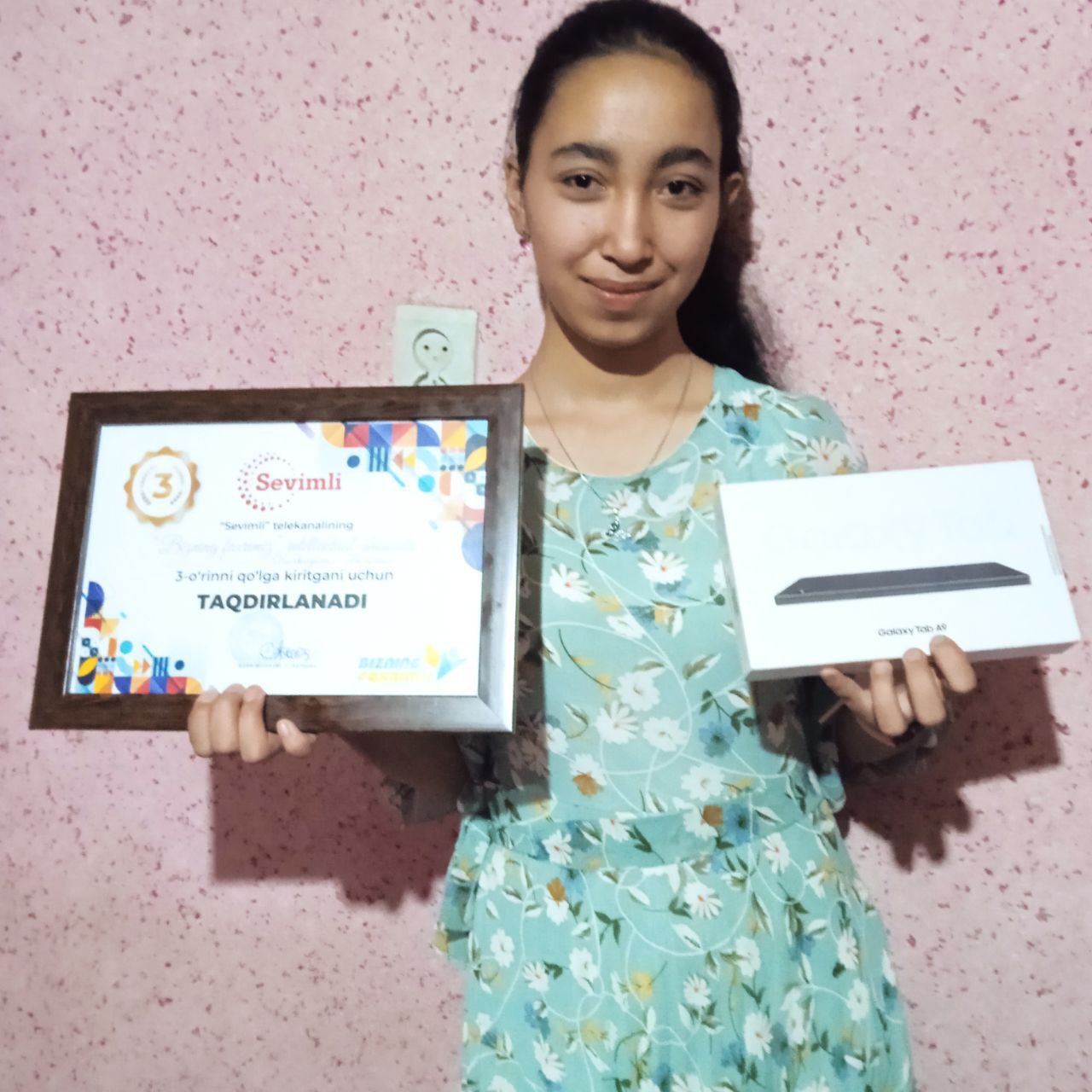
The girl’s first achievement was winning third place in a national TV program. At that time, when all her family members saw her on television winning third place, tears of joy came to their eyes. Nishona felt unlucky then because she wanted to win first place and gift the main prize — a “Spark” car — to her mother. But she did not give up and continued to participate in many projects and contests, winning top places. She still has many dreams. If she works hard, she will surely achieve them. She firmly believes that with her mother’s prayers, she will reach her goals.
This story shows that those who are patient through life’s trials and work hard for their dreams will definitely achieve them. Every young person can decorate their life with beautiful dreams and honest work.
My name is Zarina Oʻrinboyeva. I was born in 2011 in Oqdaryo district, Samarkand region. In 2018, l went to school No. 43 in Oqdaryo district to begin, my education. I am currently an 8th-grade student at this school, and I am 14 years old. My favorite subjects are English, Russian, chemistry, my native language, literature and law. In my free time, l enjoy reading books and writing stories. With my knowledge and hard work l have won several high places in various Republican competitions .I still have many dreams, ahead of me, and insha’Allah l will achieve them one by one.