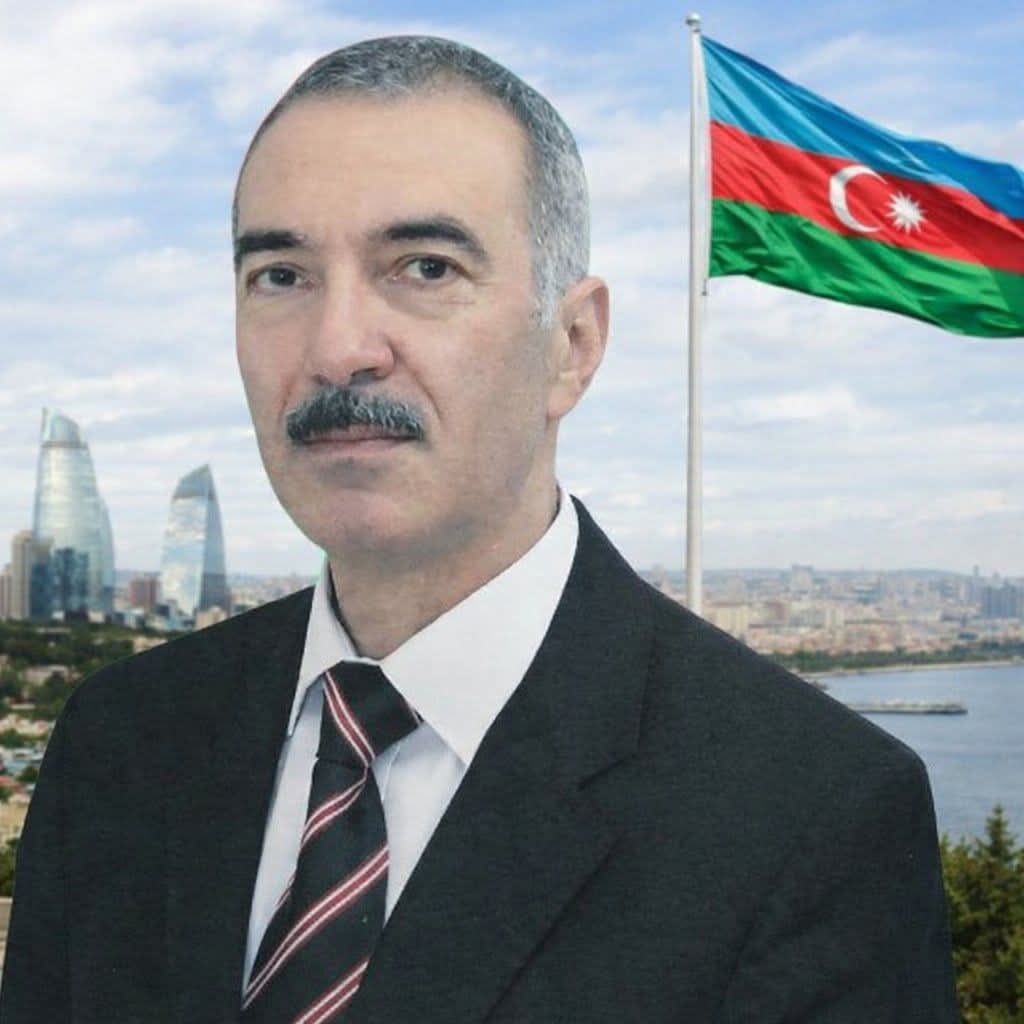
Essay from Kurbanova Mohinur Abdumuxtor qizi  

CHALLENGES IN THE TRANSLATION OF IDIOMATIC EXPRESSIONS BETWEEN ENGLISH AND UZBEK: A LINGUISTIC ANALYSIS

Kurbanova Mohinur Abdumuxtor qizi  

2nd-year Master’s Student 

“English Language and Literature” program

Faculty of Foreign Languages, Uzbekistan 

Pedagogical University named After Nizami

       Abstract: This study explores the challenges involved in translating idiomatic expressions between English and Uzbek languages. Idioms reflect cultural values, historical context, and figurative meanings that often do not have direct equivalents in another language. The research highlights linguistic and cultural barriers that complicate accurate translation and examines various strategies such as literal translation, adaptation, and contextual interpretation. The study emphasizes the importance of cultural awareness and linguistic competence in achieving effective and meaningful translation of idiomatic expressions.

Keywords:

idiomatic expressions, translation challenges, English language, Uzbek language, cultural differences, figurative meaning, equivalence, translation strategies

Annotatsiya: Ushbu tadqiqot ingliz va o‘zbek tillari o‘rtasidagi idiomatik iboralarni tarjima qilishda yuzaga keladigan muammolarni o‘rganadi. Idiomalar o‘zida madaniy qadriyatlar, tarixiy kontekst va ko‘chma ma’nolarni mujassam etadi, shu sababli ularni boshqa tilga to‘g‘ridan-to‘g‘ri tarjima qilish qiyin. Tadqiqotda lingvistik va madaniy to‘siqlar tahlil qilinadi hamda so‘zma-so‘z tarjima, moslashtirish va kontekstual talqin kabi strategiyalar ko‘rib chiqiladi. Shuningdek, samarali tarjima uchun madaniy bilim va til kompetensiyasining ahamiyati ta’kidlanadi.

Kalit so‘zlar:

idiomatik iboralar, tarjima muammolari, ingliz tili, o‘zbek tili, madaniy farqlar, ko‘chma ma’no, ekvivalentlik, tarjima strategiyalari

Аннотация: Данное исследование посвящено изучению трудностей перевода идиоматических выражений между английским и узбекским языками. Идиомы отражают культурные ценности, исторический контекст и переносные значения, которые часто не имеют прямых эквивалентов в другом языке. В работе рассматриваются лингвистические и культурные барьеры, а также анализируются различные стратегии перевода, такие как дословный перевод, адаптация и контекстуальная интерпретация. Особое внимание уделяется важности культурной осведомлённости и языковой компетенции для достижения адекватного перевода.

Ключевые слова:

идиоматические выражения, трудности перевода, английский язык, узбекский язык, культурные различия, переносное значение, эквивалентность, стратегии перевода

INTRODUCTION

Language is not merely a tool for communication but a reflection of the sociocultural landscape of its speakers. Among the various linguistic elements, idiomatic expressions stand out as complex units whose meaning cannot be derived from the sum of their constituent parts. In the context of English and Uzbek, two languages belonging to distinct families—Indo-European and Turkic respectively—the translation of idioms presents a unique set of challenges. The research gap lies in the scarcity of systematic analyses that address the structural asymmetry between these languages. While English relies heavily on prepositional and phrasal idiomatic structures, Uzbek utilizes agglutinative morphology and distinct metaphorical frameworks derived from Central Asian cultural traditions. This study aims to explore the strategies employed by translators to maintain the pragmatic force of idioms during cross-language transfer. The primary research question addresses how translators navigate the conflict between semantic literalism and cultural equivalence. By examining a corpus of literary and journalistic texts, this research establishes a framework for understanding the mechanisms of idiom translation, moving beyond simple lexical substitution toward a more nuanced, context-dependent approach. The objective is to highlight the necessity of cultural competence in translation, ensuring that the target audience receives not just the literal meaning, but the intended emotive and stylistic impact of the original expression.

RESEARCH METHODOLOGY

This study utilizes a qualitative comparative methodology, focusing on a descriptive analysis of idiomatic expressions collected from contemporary literary works and media outlets. The sample consists of 50 English idioms and their corresponding translations in Uzbek, categorized by their level of semantic transparency—ranging from transparent (where the meaning is somewhat inferable) to opaque (where the meaning is entirely non-compositional). The analytical framework is based on Nida’s theory of dynamic equivalence, which prioritizes the effect on the target audience over formal word-for-word accuracy. Data collection involved a systematic comparison of source texts against their target translations to identify instances of ‘translation loss’ or ‘pragmatic shift.’ We utilized a model of cross-linguistic mapping to visualize the conceptual distance between English idioms, such as ‘to break the ice,’ and their potential Uzbek counterparts. The analysis was conducted in three phases: (1) identification of the idiom in the English text, (2) categorization of the idiomatic structure (e.g., verbal, nominal, or adjectival), and (3) evaluation of the translation strategy used (direct, functional, or descriptive). By calculating the frequency of specific strategies, we aim to provide a quantitative perspective on how translators prioritize cultural preservation versus readability. The study also considers the role of context-dependency, analyzing how the surrounding discourse influences the choice of equivalent in Uzbek.

ANALYSIS AND RESULTS

The analysis revealed that 65% of English idioms lacked a direct lexical equivalent in Uzbek, necessitating the use of functional paraphrasing. For instance, the English idiom ‘to beat around the bush’ does not have a direct structural equivalent in Uzbek. Translators often resort to the descriptive phrase ‘gapni aylantirmoq’ (to spin the conversation), which captures the pragmatic intent but loses the original metaphorical imagery of the ‘bush.’ Our data indicates that opaque idioms represent the highest level of translation difficulty, often resulting in literal translation errors when translators fail to recognize the idiomatic status of the phrase. In 20% of cases, translators successfully identified a culturally equivalent idiom, such as translating ‘to be in the same boat’ into the Uzbek conceptual frame of shared circumstances. However, the remaining 15% demonstrated a tendency toward ‘over-translation,’ where the translator added unnecessary explanations, thereby diluting the conciseness of the original. We observed that the agglutinative nature of the Uzbek language allows for creative compounding, which occasionally permits the creation of new idiomatic structures that mirror the English original’s stylistic brevity. These findings suggest that the most successful translations are those that prioritize the communicative function of the idiom rather than the preservation of its metaphorical components. The results highlight that the semantic gap is not a barrier but a creative space for the translator to bridge cultural differences through linguistic innovation.

CONCLUSION

The translation of idiomatic expressions between English and Uzbek is a complex task that demands a high degree of cultural and linguistic synthesis. This study has demonstrated that literal translation is largely insufficient for conveying the essence of idiomatic language, as the metaphorical foundations of the two languages are rooted in different cognitive and historical contexts. Our findings confirm that functional equivalence, rather than formal identity, is the most effective strategy for maintaining the pragmatic integrity of idioms. Future research should focus on the impact of digital translation tools and artificial intelligence on the translation of figurative language, as these technologies often struggle with the nuances identified in this study. Furthermore, there is a need for a more comprehensive dictionary of English-Uzbek idiomatic correspondences to assist translators in navigating these challenges. Ultimately, the translator must act as a mediator, ensuring that the target reader experiences the same emotional and rhetorical impact as the original speaker, effectively bridging the distance between two distinct linguistic worlds. By acknowledging the limitations of direct equivalence, scholars and practitioners can develop more robust methodologies for cross-lingual communication in an increasingly globalized academic environment.

 REFERENCES

1. Baker, M. (2018). In Other Words: A Coursebook on Translation. Routledge.

2. Bassnett, S. (2014). Translation Studies. Routledge.

3. Cowie, A. P. (2001). Phraseology: Theory, Analysis, and Applications. Oxford University Press.

4. Kakhkhorov, S. (2020). Comparative Linguistics of Turkic and Germanic Languages. Tashkent Academic Press.

5. Nida, E. A. (1964). Toward a Science of Translating. Brill.

6. Vinay, J. P., & Darbelnet, J. (1995). Comparative Stylistics of French and English. John Benjamins.

7. Yusupov, O. (2015). The Problems of Idiomatic Translation in Uzbek Literature. Journal of Philological Studies.

8. Zokirov, M. (2021). Linguistic Challenges in Modern Translation. International Journal of Language.

9. Moon, R. (1998). Fixed Expressions and Idioms in English. Oxford University Press.

10. Newmark, P. (1988). A Textbook of Translation. Prentice Hall.

Poetry from J.J. Campbell

Middle aged white man with a beard standing in a bedroom with posters on the walls
J.J. Campbell

sensitive

i grew up listening to the indigo girls

i believe that made me sensitive

i wore a slayer shirt to a tori amos

concert

that got a few weird looks

especially when i knew all the lyrics

always the odd one

the one standing out in the crowd

but i never craved that spotlight

never wanted to be famous or hell,

even rich

just wanted my own little slice

of reality

a place where i could paint naked

while listening to classical music

and the cops would understand

that of course, he has a little pot

in him

of course, there’s a loaded shotgun

in the corner

of course, a few empty bottles on

the floor, holes in the carpet

all the bent spoons are hidden

——————————————————————————-

no longer fit to breathe

a glass of vodka and

two muscle relaxers

must be a thursday

love, that fleeting

myth

lost in air that is no

longer fit to breathe

cursed under a cherry

moon by the most

beautiful woman that

bothered to take your

soul

you never learned

that you don’t have

to suffer to find joy

that you can work

harder and smarter

at the same time

she told me to meet

her on the other side

of the moon

try to decipher that

code when we no

longer have space

alone, listless

wasting away in

pain

waiting for the demons

or the ragged angels

to say hello

at least someone is

still buying books

——————————————————-

midnight

a crisis of confidence

when you shouldn’t

have any

play with your words

like the children play

with their food

eventually, we all go

hungry

dancing at midnight

as the world slips

off its axis

and we all could

see this coming

elect the crazy

and expect

something

else

this is what happens

when no lessons

are ever learned

rinse and repeat

hope is insanity

with a smile

a hill to go

die on

—————————————————————

a fresh kill

loneliness greets you

like a cat bringing in

a fresh kill

it wants the fucking

treats

but we’ve entered

the stage of life

where no fucks

are given

the glue of society

is off polishing the

participation prize

somewhere in the

distance nero is

playing the violin

you smile when

you remember

mozart died

poor

hazy with a dash

of sunshine today

eventually, rain

in the evening

misery to sleep

with

how did that cat

kill the rabbit

twice its size

sweet dreams

embrace the pain

like it was meant

to be

————————————————————–

tied your innocence into a knot

she had a sense of grace

a certain elegance in the

way she would saunter

over to you at three in

the morning

slightly drunk and

always horny

she made you a man

long before you were

ready to become one

tied your innocence

into a knot

and all you could

ever think was what

else could that tongue

do

eventually, even love

moves on

finds a better soul

something more than

it could ever be

memories only last as

long as you allow them

time settles all these

feuds in the mind

ceases to exist on

a spring morning

many years too soon

J.J. Campbell (1976 – ?) is old enough to know where the bodies are buried. He’s been widely published over the years, most recently at The Beatnik Cowboy, Yellow Mama, The Rye Whiskey Review, Night Owl Narrative and Disturb the Universe Magazine. His latest book, to live your dreams, is available at Amazon.com. you can find it by going here: https://a.co/d/0aS2cXSX

Poetry from Stephen Jarrell Williams

Canopy of Dreams

When I first learned to fly

in a quiet place of trees and grass

and the open sky above me

whispering blue

light as feathers

and I knew I had to try

lifting my feet as I walked

believing I wound rise

a little at a time

until my steps did not touch the earth

I smiled gazing up

into flight

heavenward

over the waving trees

and some sparrows flying beside me.

Essay from Ilya Ganpantsura

Pushkin’s Inner Exile: Life Under Autocracy

By Ilya Ganpantsura

Do not praise him. In our vile age
Hoary Neptune is the earth’s ally.
In every element man is — 
A tyrant, a traitor, or a prisoner.

— Pushkin, to Vyazemsky, 1826, regarding the death sentence imposed on the Decembrist Nikolai Turgenev.

Free-minded dissidents in the Soviet era — or today, in the climate of constrained freedoms in twenty-first-century Russia — may recall the stories of Chaadaev, Herzen, Pushkin: people who, too, confronted the oppression of thought. They may draw from their example strength for life and for resistance in the present. But how, in his turn, did Pushkin — the first great poet of Russia — find the strength to defend freedom? With what great image could he identify himself, in order to find respite from his inner contradictions?

Pushkin is rightly regarded as the first great poet of Russia. Such an opinion, for example, was expressed by the foremost literary critic of his time, Vissarion Belinsky. Yet this does not mean that Pushkin stood alone among unremarkable figures. On the contrary, he developed intellectually within a society with many people who could surpass him in education and in the courage to dissent from the realities of Russia at the turning point of the eighteenth and nineteenth centuries. Many of the bold individuals who surrounded Pushkin would later join the Decembrist uprising against autocracy, supporting liberal ideas.

And although many of these brave men made history on the battlefields of 1812 and during the uprising on Senate Square, their destinies and that of Pushkin represent two opposite kinds of immortality: historical and mental. Here lies a paradox: the vast uprising of December 1825 — unshakable in the sincerity of its sacrifice — has been treated by history like an old monument overgrown with moss, defining not ideas or personality, but merely a date: December 14.

Pushkin, by contrast, who was neither a soldier nor a member of the Decembrists’ secret societies, left behind a creative legacy whose multiple levels — from the aesthetic to the semantic — contributed to the moral consciousness of his era. His influence is felt even today, at the level of a person’s existential experience.

Despite the authoritarianism and inherent lack of freedoms in Russia during the reigns of Alexander I and later Nicholas I, a politically conscious society formed. And despite the failure of the uprising, the tightening of censorship, and the atmosphere of suspicion, there remained within society a demand for dynamic political thought. Intellectuals began to develop this secretly in poetry. And Pushkin, as one of the first poets, was discussed more than anyone else in the attempt to discover a politically vital position. Here Pushkin offered not only a sense of freedom but also examined it from the sharpest moral angles.

In Pushkin’s life, the influence of the Decembrist circles to which he gravitated shaped his vocabulary with terms defining unfreedom and despotism. They formed his language of resistance. But he himself formed the vocabulary of his personal sensations from life in disgrace and exile. This feeling is unlike the monument of Peter I looming over St. Petersburg. It resembles someone walking almost just behind you — an invisible figure whom, when you turn around, you neither see nor hear, for like fear, he exists only in your mind. And in reality he is merely an unnoticed piece of clothing that strikes against you as you move, creating the sensation that someone is following.

And, illumined by the pale moon,
Stretching forth his hand on high,
Behind him rushes the Bronze Horseman
On a loudly galloping steed;

Fear, as an experience, does not exist only for the active participants of the Decembrist movement. Nor does it exist merely for some abstract future. If you are a minor official living quietly, without active participation in public life, it is unrealistic to feel yourself at the sharp edge of repression and to worry as though you were a victim of the regime. Far more painful is the feeling of an incomplete life — a feeling that is all-consuming. And although many factors may produce such a sensation, we shall consider it here as the essence of living in an unfree and backward country — backward not for lack of thinkers, but because of authoritarianism.

It was precisely such a country that Russia was as it entered the nineteenth century and passed through the Napoleonic Wars. Throughout the nineteenth century, revolutionary and liberal ideas constantly arose within the empire. Hence it would be incorrect to imagine tsarist Russia as an iron cage of thought. One need only recall the publication of Chaadaev’s Philosophical Letters, for which he was declared insane. Or the open promotion of liberal ideas by Nikolai Ivanovich Turgenev in the literary salons and evenings of St. Petersburg — after which he wrote to his brother: “It was not for this that we embraced liberal ideas, in order to make concessions to boors.” And he, in turn, encountered what every person who opposes an authoritarian regime encounters — fear, misunderstanding, and condemnation from those around him. Often this fear was disguised as concern: “What are you saying? That’s dangerous.” But in reality it was less a condemnation of the other than an admission of one’s own unfreedom and dependence on limits and fear.

Pushkin understood this with remarkable clarity. In his works he described precisely the psychology of society, without descending into theatrical generalizations. He diagnosed the age not by merely observing its symptoms, but, like a true philosopher, he struck at the cause. And for him the cause was not the ruler but an eternal dilemma of human nature: anxiety before unfreedom and the impossibility of fully realizing oneself.

But whatever happened, Pushkin wrote for people, and his characters, for the sake of deeper understanding, also had to be human. In the Boldino autumn of 1833, Pushkin composed the epic poem The Bronze Horseman. After its publication, this would become the name by which the sculpture of Peter I on horseback in St. Petersburg — mentioned by Pushkin — came to be known.

In the poem, St. Petersburg is devastated by a flood, and the Emperor of All Russia, Alexander I, justifies himself before the people for his helplessness in the face of catastrophe. Then he steps away from the balcony and weeps, now justifying his powerlessness to himself. He had a throne, authority, and the image of a reformer. But he lacked either resolve or talent. He possessed the image of a sovereign, yet in reality he was merely a hero. And over every hero fate holds dominion:

The late Tsar still ruled Russia
With glory. Onto the balcony,
Sad and troubled, he stepped forth
And said: “Against God’s elements
Even Tsars cannot contend.”

Pushkin subconsciously anticipated this shame. As a lyceum student of the Tsarskoye Selo Lyceum, he had been personally acquainted with the emperor in his youth. Evidence of this is the “Ode to Liberty,” in which the theme of the murder of Paul I is addressed. And although the ode contained no evaluative positions, the mere mention of this event unsettled the Tsar. This is clearly seen in Pushkin’s reflections from his personal diary titled “An Imaginary Conversation with Alexander I,” in which Pushkin writes the following remark on behalf of the Tsar:

“Of course, you acted unwisely… I have noticed that you are trying to discredit me in the eyes of the people by spreading absurd slander;”

Pushkin deliberately places into the mouth of Alexander I a phrase in which the emperor speaks of his mission in the plural: “Against God’s elements even Tsars cannot contend.” He says Tsars, not a Tsar, although in Russia he alone is the sovereign with a single word of authority. Here one senses the psychology of an incomplete man — that same anxiety before unfreedom mentioned above. If in an ordinary person it manifests as fear of failing to conform to a totalitarian society, then in the Tsar a similar problem arises from the absence of genuine subjectivity — the very quality that ought to belong to a sovereign.

The tragedy of history: Alexander I was not allowed to realize himself. Even his father, Emperor Paul I — killed as the result of a palace coup — possessed the courage to pursue his own, albeit contradictory, policy. Alexander I was granted power and a voice. Yet it seems that neither a single individual nor the elites alone but an entire epoch closed before him the path to the true realization of the ideas that had long formed within his soul. Fate placed him upon the throne of real authority burdened with ambition and with the confidence that he had already triumphed over his father, with whom he had a competitive relationship. Yet fear of angering the elites again, and guilt over his complicity in the murder of his own father, drained his strength and limited his power.

The people in this poem drift like tin soldiers, watching the catastrophe and the death of the city. They are like figures on parade, marching in formation at the front, but in times of crisis losing their shape and, in fear and without finding themselves, being carried away by the storm.

A universal characteristic of the human being deprived of genuine culture is inward isolation. An uncultivated person has no true communion with others. A paternalistic, authoritarian regime, in order to control people, sets before them the goal of the state — for example, duty to the motherland. The ordinary person must identify with it in order to find belonging. Yet in moments of crisis, when the state can no longer unite society around this sense of duty, a whirlpool of events begins in which people can drift only as victims. For without an identity rooted in duty to the state, and in the absence of culture, they close themselves off inwardly and at best become passive observers. At worst — like hungry predators infected with petty ideas — they turn against culture itself.

The tragedy of Alexander I is the tragedy of every Russian of that era. And if we generalize politically, we arrive at a characterization of autocracy and authoritarianism in two words: constraint and incompleteness. In contrast stands the idea of independent philosophical thought, which unites people with views opposed to the regime and allows them to move together through crisis without the constraints of fear of conforming to it.

His dream… Or in a dream
Does he behold it? Or is all our life
Nothing but an empty dream,
Heaven’s mockery of the earth?

In studying Pushkin’s biography, we must boldly acknowledge: Pushkin was not a combat machine for the reform and liberalization of Russia. He had a relationship with Emperor Alexander I. And deep within, he judged him as more than merely “a ruler who failed to meet expectations.” Pushkin also owned several hundred serfs. And unlike some of his Decembrist friends — for example, the Turgenev brothers — he did not receive a foreign education.

Yet no one today has the right to condemn Pushkin for any aspect of his creation or life that at the time may have appeared complimentary to the authorities. In the twenty-first century, we cannot criticize Pushkin in the way his contemporaries did. He was a complex man in a complex epoch. Nikolai Turgenev once wrote: “it is not for him to judge progressive ideas.” But we cannot speak so. For in that case, it would amount to disrespect toward his biography and his efforts to navigate a fraught political situation.

Answering the central question of this essay: precisely because Pushkin was one of the first poets of Russia, it fell to him to be the first to look clearly at the political condition of the empire and hope for change. If in contemporary Russia a person seeks a freer form of life and relies on poets such as Pushkin, then in his own time Pushkin relied upon the hope of sustaining “encouraging impulses” within himself. And his hope was indeed justified: he didn’t transform the political system, but he did establish a tradition of thinking against and beyond a authoritarian regime. And that tradition, in turn, opens the way to defining new forms of community.

“Oh, how many wondrous discoveries
Mind and Labor still prepare for us.”

— Pushkin, 1829.

This article was written with the aid of notes from lectures by Y. M. Lotman.

Poetry from Adalat Gafarov Izzet oglu

THE WORLD DOES NOT AGE

The world gets younger, the world does not age,

The sky that makes the world old does not rise,

Which person does not draw strength from God?

I am focused on your gaze.

What a good world you have created, God,

What a good, good thing you have created, God!

What a good world you have introduced to me, God,

I am drawn to your gaze.

You have a pure gaze in our mysterious world,

You have many unknown patterns,

You have a shower of light that will wash the world,

I am drawn to your gaze.

Life ends, the world does not grow old,

Not every person rises in your presence,

Does Justice not gain strength from this servant?

I am drawn to your gaze.

Poetry from Mark Young

Atmospherics

Then the lights came on; &,

in the glare, a handful of 

singers squabbling over

who was the first to use

those lyrics in a song.

For Varg Veum

Almost as if there was a

paragraph, or a page, or

a chapter in the book in

which the identity of the

perpetrator was heavily

hinted at, but that partic-

ular part seems to have

been omitted, & you are

left puzzled by the ease

with which the detective 

identified the culprit with 

no obvious facts at hand.  

The Spice Girls Regroup

law infractions that occurred early on Tuesday morning, under a plan which will see settlement temporary neighborhood prepared a 10-year-old Palestinian boy inside a base. Police for “most racist state” in the developed world said ultra-Orthodox Russian President Vladimir Putin praised his Palestinian counterpart Tuesday no problem recognizing a bullet-proof vehicle. Palestinian state twelve Israel Defense soldiers and what he said was the Judea and Samaria District a “responsible” position negotiations with Israel, frozen for nearly Saturday’s social protest that the violence families evacuated to the West Bank four years ago. Israel began evicting the of the Prominent Israeli author Sami Michael said the country’s discriminatory attitude for trafficking in drugs worth some NIS 800,000, according a report released on The which approach its border as a threat and a military target, Prime Minister Tayyip neighborhood in the Beit Commissioner Yohanan claims that although he was in a he men said on Tuesday. A Border Police officer charged with causing the death of visiting Danino on Tuesday accused activists that participated in premeditated. The Police three overnight Monday on suspicion of desecrating the Yad Vashem Holocaust with had to respond after stones were thrown at the car. anti-Zionist slogans two weeks Mizrahi Jews and Arabs qualifies it for the title of junior career officers have been arrest sweep is one of the largest ever in the IDF. Türkiye will treat any Syrian units.

The fence around the moon

Is sometimes hard to see, but a

wooden post & rail fence runs

rings around the moon. There’s

a minimal gap between the fence 

& the lunar surface that deters 

goats or other space inhabitants 

from pushing beneath it. A var-

iety of media — plasma bursts,

lithium batteries, ouija boards, 

Barbra Streisand recordings — 

were tried, but none proved as 

efficacious as wood in keeping 

polka dots out of its displays.

Noted in passing

Rain for several days;

& in the water lying

across the driveway

the reflection of an 

ibis flying by.

Poetry from Sim Wooki

The Brook


Sim Woo Ki

It looked shallow—

crossing,
I slipped,

both ankles caught.

실개울

심우기

너무 얕아 보여  

내를 건너다, 그만 

두 발목을 빠뜨리고 말았다

The Stake


Sim Woo Ki

For a young black goat,
strength is the stake.

Even when horns sprout
and its coat grows coarse,
it cannot cross the tether tied to the stake.

With powerful hind legs
and broad shoulders,
it still cannot pull it out—
the stake is God.

Though it knows
it is a losing battle,
stubbornness—
that is a goat’s way.

It circles back, round and round,
even if the rope winds tight around its neck
until it can no longer move,

it goes as far as it can.

For a goat whose world
is only the length of the rope,
the stake is the center of the world.

It is power.

Still,
the goat goes round and round.

말뚝

어린 흑염소에겐 힘은 말뚝이다

뿔이 나고 털이 억세져도

말뚝의 끈을 넘지 못한다

강한 뒷다리와 넓은 어깨로도

뽑지 못하는 말뚝은 신

늘 지는 싸움인 줄 알지만

고집은 염소고집

돌아와 빙글빙글 돌다

제 목을 감아 옴짝달싹 못하게 될지라도

갈 데까지 가고 본다

밧줄의 길이만큼이 세상인 염소에게

말뚝은 세상의 중심이다

권력이다

그래도 염소는 뱅글뱅글 돈다

Black Man
Sim Woo Ki

Because the skin was black,
there was an ignorance
that believed even the blood would be black.

The gaze that did not retreat
even before the red muzzle—
we have long misunderstood it,
hiding behind the name Africa.

Descriptions of thick lips and heavy hair
were, in truth,
cowardly adjectives
summoned to conceal the invader’s fear—
this we know only now.

Before a language we could not understand,
before an unfamiliar laughter,
we always stood closer to guns
than to understanding.

When sunlight slips
across skin like black velvet,
even that praise—“its sheen”—
was a metaphor we had stolen.

We said only the teeth and palms were white,
that clapping made the primal rhythm—
but in truth,
it was not a place untouched by civilization,
but where arrogant civilization had stalled.

The fathers of fathers—
time flowing above them,
an erased chronicle, unrecorded.

Calling the scent of sweat and soil “savage,”
we hid, with effort,
the stench of blood
that came from our own side.

Those whose hearts were darker than skin
set fire to forests and raised their guns;
God was silent,
the forest became a table,
and people returned to the earth
before beasts did.

What was called a scream,
what was written as a howl—
it was the oldest tactic,
reading the trajectory of bullets
with the whole body.

When barefoot warriors drew circles of blood and danced,
they were not calling God
they were calling
the names that must survive.

Africa, Africa—
this repetition is not incantation
but a desperate calling
not to be erased.

When the earth trembles
like the ankle of an elephant,
when history charges
like a rhinoceros,
those who stand, precarious,
between god and beast—
they are not savages,
but those who first chose to be human.

When poisoned arrows are loosed at invaders,
when broad-chested women dance,
it is not a cry of victory,
but a solemn gesture
postponing their own funerals.

I still speak of Africa,
but perhaps
I am only tracing, at last,
the shadow
of the darkness within me.

블랙맨


피부가 검으니
피조차 검을 것이라 믿어온 무지(無知)가 있었다
붉은 총구 앞에서도 물러서지 않던 그 눈빛을
우리는 오래도록 오해해 왔다,
아프리카라는 이름 뒤에 숨어


털이 많고 입술이 두텁다는 묘사는
사실 침입자의 두려움을 감추기 위해 동원된
비겁한 형용사였음을 이제야 안다


알아들을 수 없는 언어와
낯선 웃음 앞에서 우리는 늘 이해보다
총에 더 가까이 서 있었다
검은 비로드 같은 피부 위로 햇살이 미끄러질 때
그 ‘윤기’라는 찬사조차
우리가 훔쳐온 비유였음을 고백한다


하얀 것은 이빨과 손바닥뿐이라며
박수로 태초의 리듬을 만든다고 말했지만
사실 그것은 문명이 닿지 않은 곳이 아니라
오만한 문명이 멈춰 선 자리였다


아버지의 아버지, 그 위로 흐르는 시간은
기록되지 못한 채 지워진 연대기
땀과 흙의 체취를 야만이라 부르며
내 쪽에서 흐르는 피비린내를 애써 숨겼다


피부보다 더 시커먼 마음을 가진 자들이
숲에 불을 놓고 총을 들 때
신은 침묵했고 숲은 밥상이 되었으며
사람은 짐승보다 먼저 흙으로 돌아갔다


괴성이라 불린 소리, 울부짖음이라 적힌 목소리
그것은 날아오는 탄환의 궤적을
온몸으로 읽어내는 가장 오래된 전술이었다


맨발의 전사들이 피의 원을 그리며 춤출 때
그들은 신을 부른 것이 아니라
서로의 살아남을 이름을 불렀을 뿐이다


아프리카, 아프리카 이 반복은 주술이 아니라
지워지지 않기 위한 처절한 호명(呼名)


코끼리의 발목처럼 땅이 진동하고
역사가 코뿔소처럼 돌진해 올 때
신과 동물의 경계에 위태롭게 선 이들은
야만이 아니라 가장 먼저 인간이기를 선택한 존재들


침입자를 향해 독화살을 날리고
가슴 큰 여자들이 춤을 출 때
그것은 승리의 환호가 아니라
자신의 장례를 잠시 미루는 비장한 몸짓이었다


나는 아직도 아프리카를 말하고 있지만
사실은 내가 가진 검은 마음의 그늘을
겨우 더듬고 있는지도 모른다

Biography of Poet Sim Wooki

Poet Sim Wooki was born on July 4, 1964, in Hamyeol, Jeollabuk-do, South Korea. He completed his doctoral coursework in English Literature at Gachon University in 2013.

His literary debut came in 2011 with the publication of his work in Poetry Literature. In 2012, he was awarded a creative writing grant from the Seoul Foundation for Arts and Culture. In 2013, he published his first poetry collection, Thirteen Ways of Seeing a Black Flower, which was selected as a Sejong Outstanding Book in 2014.

In 2016, he expanded his literary reach with the publication of his poetry collection in English, Read My Love, You. Over the years, he has authored several additional works, including his second collection Secret Envoy, as well as Ice Pillar of Fireand The Day the First Snow Falls, the latter co-authored.

In addition to his writing, Sim Wooki has contributed to academia by teaching at Kyungwon University, Inha Technical College, and Gachon University.