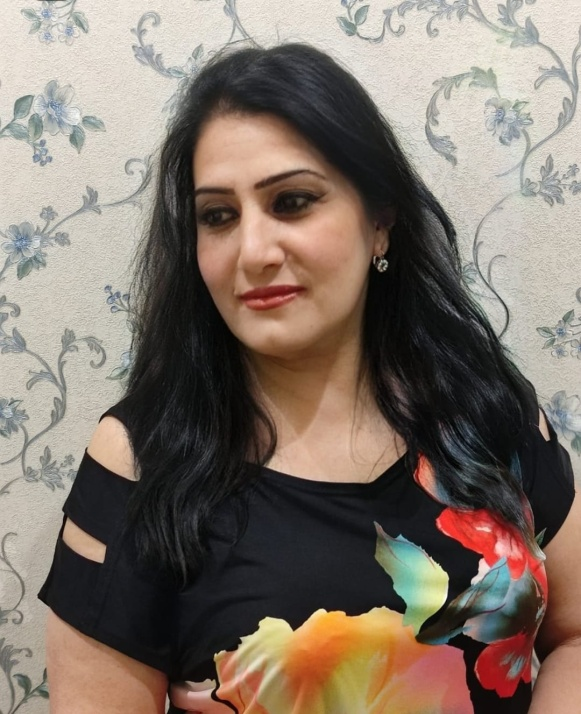
Poetry from Eshmatova Charos

A RIGHTEOUS DAUGHTER’S PRAYER

A thousand thanks to God, my endless prayer

For giving me a mother kind and rare

My crown in Heaven, Eden’s brightest part

My loveliest moments live within your heart, Mom

My faith, my pride, my honor standing tall

My greatest , mountain – you above them all 

When I take flight, you are my wings to soar

My finest song, my strength forevermore, Dad

Eshmatova Charos is one of the most inquisitive students, deeply studying linguistic theory, and a holder of international certificates. She was born on August 18, 2007 in Uzbekistan. She is studying at Denau Institute of Entrepreneurship and Pedagogy Fields of activity: in depth of study the Uzbek language, gaining detailed knowledge of Turkish languages, and Early Achievements and Educational Path. She has obtained a national certificate in Uzbek language and literature (B level) and holds several international certificates. She graduated from secondary school with excellent grades and achieved notable positions in several academic subject Olympics.

Essay from Halilova Ruxshona Abdufattohovna

A SCHOLAR WHO LEFT A MARK IN MY FIELD (AL-FARABI)

Abstract: This article highlights the scientific legacy of Abu Nasr al-Farabi, a great thinker of the Eastern Renaissance, and his influence on the development of modern fields. The scholar’s ideas on logic, philosophy, education, and society are analyzed, with special emphasis on his role in the processes of speech, thinking, and scientific analysis. The article demonstrates the relevance of al-Farabi’s views to today’s scientific and practical activities and emphasizes that his legacy is an important source in the formation and development of my field.

Key words: Scholar, scientific heritage, thought, education, speech culture, Eastern Renaissance, logic.

The development of every field is closely connected with the research, scientific ideas, and heritage of great scholars who lived and created in their time. One of the scholars who had the greatest influence on my field is Abu Nasr al-Farabi, who was honored with the high title “Muallim as-Sani” — the “Second Teacher” of the East. Al-Farabi’s ideas about human thinking, science, and the development of society have remained relevant not only in his own time but also today.

In 941, the scholar began living in poverty in Damascus. Despite this, he continued to pursue knowledge and conducted research in philosophy and other sciences. He gained the respect and patronage of the ruler of Aleppo, Sayf al-Dawla Hamdanid (reigned 943–967), who was known as a supporter of scholars. Although the ruler invited al-Farabi to his palace, he preferred to live a free and independent life. Nevertheless, his life in Aleppo was productive, and he wrote many of his works there. Between 949–950, al-Farabi lived in Egypt and later returned to Damascus, where he spent the last years of his life. He was buried in the Bab al-Saghir cemetery in Damascus. According to available sources, al-Farabi wrote more than 160 works, although many of them have not survived. Even the existing treatises prove his greatness as a scholar.

Al-Farabi created during the early Middle Ages, in the period of the Eastern Renaissance, which was characterized by the growth of productive forces, the development of crafts, irrigation systems, the construction of new cities, and the flourishing of cultural and spiritual life. Trade expanded in the 9th–10th centuries, especially with India, China, Byzantium, and African countries. Although the period was not free from conflicts, al-Farabi’s philosophical views reflected both the achievements and the contradictions of his time.

One of his greatest contributions to science was interpreting and enriching the works of Greek philosophers with new ideas. Al-Farabi wrote commentaries on Aristotle and was known as a promoter and continuer of his natural philosophical ideas. He also commented on the works of Plato, Alexander of Aphrodisias, Euclid, Ptolemy, and Porphyry. Moreover, he was familiar with the works of Hippocrates, Epicurus, Anaxagoras, Diogenes, Chrysippus, Aristippus, Socrates, and Zeno, and had a deep understanding of Epicurean, Stoic, Pythagorean, and Cynic schools.

Al-Farabi developed a comprehensive classification of sciences, considered perfect in the Middle Ages. In his treatises “On the Origin of the Sciences” and “On the Classification of the Sciences,” he described nearly thirty fields of knowledge known in his time. One of his important ideas is his doctrine of the universal intellect and universal soul, which he considered eternal. According to him, the human soul and intellect do not disappear after death but unite with the universal intellect and soul. In this teaching, there are profound ideas about the eternity of the world, the immortality of human essence, and the continuity of human knowledge and spiritual culture. Al-Farabi also substantiated the rational method of knowledge and emphasized observation, debate, sensory perception, and scientific reasoning.

One of the qualities that made al-Farabi great was his boundless love for knowledge and his belief that knowledge is the main criterion of life. He created major works in logic, philosophy, music, mathematics, linguistics, and political science. His logical ideas later had a strong influence on European science and helped deepen the understanding of Aristotle’s works.

Why do we need al-Farabi?

First, because he established the fundamental principles of science in fields such as logic, philosophy, politics, music, pedagogy, and psychology. Much of modern scientific thinking is based on his ideas.

Second, because he presented ideas that lead humans toward perfection. His work “The Virtuous City” discusses the ideal society and the perfect human being, and its ideas about education, morality, and governance remain important today.

Third, because he unified knowledge by emphasizing the interconnection of all sciences, which forms the basis of modern interdisciplinary studies.

Fourth, because he teaches us how to think — to analyze logically, rely on evidence, and study knowledge systematically, which is essential for success in any field.

Fifth, because his legacy still addresses modern problems such as justice, governance, morality, and education, proving that his ideas remain timeless.

In my field — language, literature, and scientific analysis — al-Farabi’s greatest contribution is his scientific explanation of the relationship between thought and speech. Through logical categories such as concept, judgment, and conclusion, he developed a methodology for correctly understanding and interpreting texts. Today, concepts such as text analysis, argumentation, and logical speech are rooted in al-Farabi’s works. Furthermore, his ideas about society in “The Virtuous City” correspond to many aspects of modern democratic principles, and his views on education continue to influence modern pedagogy.

The scholar’s legacy strengthens my love for knowledge, deepens my thinking, and reminds me that every word and every idea must have a logical foundation. Al-Farabi teaches the eternity of knowledge and the limitless nature of human thought. Therefore, I consider it an honor to follow his path in my field and draw inspiration from his scientific heritage.

References:

1.National Encyclopedia of Uzbekistan, Vol. 1, “Farabi,” Tashkent, 2000, p. 412.

2.Jumaboyev, Y. From the History of the Development of Philosophical and Ethical Thought in Uzbekistan, Tashkent, 1997, p. 187.

3.Al-Farabi, The Virtuous City, Tashkent: Yangi Asr Avlodi, 2010, p. 164.

4.Yuldashev, M. Al-Farabi’s Philosophy and the Eastern Renaissance, Tashkent, 2005, p. 214.

Halilova Ruxshona Abdufattohovna was born on October 16, 2007, in Sariosiyo district of Surkhandarya region. She is currently a first-year student at the Denov Institute of Entrepreneurship and Pedagogy, Faculty of Philology, majoring in Uzbek Language and Literature. She holds a National Certificate in her native language. In addition, she has obtained more than 100 international and local certificates. She is a member of the Argentine “Science and Literature Writers” Association and has a membership certificate. Her articles are indexed on Google, and her creative works have been included in many anthologies. She has also participated in several prestigious competitions.

Poetry from Kholbekov Ozodbek Makhammatovich

Sons of Turan

Soft winds caress the silent groves,
Along the roads thin pine rows rise.
A raven circles — distant envoy,
A lone horse wanders under open skies.

Here mountains stand and valleys widen,
Among a thousand lands on earth —
No place has ever been more precious,
No soil of greater sacred worth.

The ruins of forgotten cities,
Old fortresses of ancient days,
The lands once held by noble peoples —
Massagetae and Saka ways.

So many wars we fought for freedom —
No count can hold the tears we’ve known:
For land and honor, truth and homeland,
For sacred right to guard our own.

Here came the early Arab marches,
Met by lions proud and brave.
Here rode the khans of Genghis’ empire,
And blood was spilled in every wave.

Yet through the storms and burning ages,
Through iron will and destiny,
The sons of sacred Turan guarded
Their living flame of liberty.

From grief, from chains and bitter sorrow
Rose simple fighters, firm and strong.
Fathers and Jadids stood together,
Side by side where they belong.

Unbroken stands our spirit, rising,
High and steadfast through the years.
Wide-hearted, open, kind and noble —
The Uzbek people persevere.

Kholbekov Ozodbek Makhammatovich


Essay from Dildora Xoʻjyozova

The Responsibility Behind Recognition

There are moments in life that become turning points. They are not just memories, but milestones that shape a person’s character, confidence, and future goals. For me, March 1, 2025, was one of those unforgettable days.

On that day, during a large meeting with students in the Khorezm region, I was unexpectedly given a question in an intellectual discussion. The atmosphere was serious, and more than a thousand students were present. Despite the excitement and nervousness, I managed to answer the question correctly. That moment changed everything. Shortly after, I was awarded a certificate of appreciation and a laptop by the Governor of Khorezm region, Jo‘rabek Raximov.

However, what made this event truly meaningful was not only the award itself, but the responsibility that came with it.

Recognition is often seen as a reward for past achievements. But in reality, it is also a challenge for the future. When a young person receives public recognition, especially in front of many peers, it becomes a symbol of trust. It sends a message: “We believe in your potential.” That belief creates a new level of responsibility.

For me, the laptop was not just a device. It became a tool for further academic growth. It supported my research activities, helped me write scientific articles, prepare presentations, and participate in academic competitions. More importantly, it reminded me every day that I must continue working hard and justify the trust placed in me.

In many societies, youth are considered the driving force of development. Uzbekistan is no exception. In recent years, special attention has been given to supporting talented and active young people. Meetings between leaders and students are not only formal events; they are platforms of dialogue, motivation, and inspiration. When young people see that their knowledge and initiative are valued, they become more confident and ambitious.

This experience taught me an important lesson: opportunities often come unexpectedly, but preparation must be constant. If I had not spent years reading, participating in intellectual games, and improving myself, I would not have been ready for that spontaneous question. Success in that moment was not accidental; it was the result of continuous effort.

Recognition also changes how a person sees themselves. After that day, I felt a stronger sense of purpose. I understood that every achievement creates expectations. People start to look at you differently. Younger students may see you as an example. Teachers may trust you with more responsibility. Society may expect greater results from you.

At first, this pressure can feel heavy. But over time, I realized that responsibility is not a burden; it is a privilege. Not everyone receives the chance to represent their peers or to be publicly acknowledged for their knowledge. Therefore, instead of fearing expectations, I decided to transform them into motivation.

During the year that followed, I focused even more on self-development. I worked on academic research, participated in university activities, and aimed for higher achievements. Every time I felt tired or doubtful, I remembered that day. It reminded me that one confident answer can open unexpected doors.

Another important aspect of recognition is gratitude. No achievement is entirely individual. Behind every success, there are teachers who guide, parents who support, and friends who encourage. That day was not only my victory; it was a shared success with everyone who believed in me.

Today, one year later, I look back with gratitude and forward with determination. The certificate and the laptop remain symbols, but the real reward was internal growth. I learned to believe in my preparation, to stay calm under pressure, and to accept responsibility with dignity.

Recognition is not the final destination. It is the beginning of a new stage. It raises the standard you must meet in the future. It reminds you that talent alone is not enough — discipline, consistency, and humility are equally important.

For young people everywhere, my message is simple: always be ready. Read more. Learn continuously. Participate actively. You never know when a single moment will test your knowledge and courage. And when that moment comes, your preparation will speak for you.

The responsibility behind recognition is not something to fear. It is something to embrace. Because true success is not measured only by awards, but by how we grow after receiving them.

One year has passed since that memorable day. Yet its impact continues to shape my journey. And I am confident that this is only the beginning.

Xoʻjyozova Dildora, Uzbekistan 

Essay from Alimqulova Munisa Abdurayimovna

Alimqulova Munisa Abdurayimovna
11th Grade Student

Determinants of Success in Winning International Scholarships: Preparation, Motivation, and Strategic Planning

Abstract

International scholarships play a significant role in promoting global academic mobility and equal access to higher education. Despite the growing number of scholarship programs, competition remains intense, and many qualified students fail to secure funding. This paper examines the main determinants of success in winning international scholarships, focusing on academic achievement, language proficiency, personal statements, and extracurricular engagement. The study argues that scholarship attainment is strongly associated with early preparation, clarity of goals, and strategic self-presentation rather than academic excellence alone.

Keywords: international scholarships, academic mobility, grant application, higher education, student preparation


1. Introduction

The globalization of higher education has expanded opportunities for students to pursue academic studies abroad. Governments and universities increasingly invest in scholarship schemes to promote international mobility and cross-cultural exchange (Altbach & Knight, 2007). However, scholarship selection processes remain highly competitive, often requiring more than strong academic records.

While many students believe scholarships are awarded solely based on grades, research suggests that selection committees adopt a holistic evaluation approach (Perna et al., 2014). This paper explores the key determinants that increase the likelihood of winning international scholarships and highlights the importance of systematic preparation.


2. Literature Review

Academic mobility has been widely discussed in higher education research. According to Altbach and Knight (2007), internationalization enhances knowledge exchange and institutional development. Financial assistance programs play a crucial role in ensuring that talented students from diverse socio-economic backgrounds can access global education opportunities.

Perna et al. (2014) emphasize that scholarship decisions are influenced not only by academic merit but also by leadership potential and long-term impact. Similarly, studies on application essays indicate that clarity of motivation and alignment with program objectives significantly affect outcomes (Hirschman & Berrey, 2017).

Furthermore, language proficiency is recognized as a critical predictor of academic success in international contexts (Andrade, 2006). Students with strong communication skills are more likely to adapt successfully to foreign academic environments.


3. Methodology

This study employs a qualitative analytical approach based on secondary data. It synthesizes existing literature on academic mobility and scholarship selection criteria from publicly available international funding programs. The objective is to identify recurring patterns and determinants associated with successful applications.


4. Key Determinants of Scholarship Success

4.1 Academic Achievement

Academic performance remains a foundational requirement. High academic results reflect discipline, intellectual ability, and consistency. However, evidence suggests that academic excellence alone does not guarantee selection (Perna et al., 2014).

4.2 Language Proficiency

Standardized language assessments such as IELTS and TOEFL are common prerequisites for English-medium programs. Language competence supports both academic performance and social integration (Andrade, 2006).

4.3 Personal Statement and Motivation

The personal statement functions as a narrative of professional identity. Successful applicants demonstrate coherence between their academic background, career goals, and the mission of the scholarship program (Hirschman & Berrey, 2017).

4.4 Leadership and Social Engagement

Participation in community initiatives, volunteering, and leadership roles strengthens applications. Scholarship committees often prioritize candidates who demonstrate social responsibility and future contribution potential (Perna et al., 2014).

4.5 Strategic Preparation

Early planning, document organization, and awareness of deadlines significantly improve competitiveness. Applicants who understand evaluation criteria are better positioned to align their profiles accordingly.


5. Discussion

The analysis indicates that scholarship success results from a combination of academic competence, language proficiency, leadership experience, and strategic self-presentation. Rather than rewarding isolated excellence, selection processes favor well-rounded individuals whose achievements align with program objectives.

Resilience also plays an important role. High rejection rates reflect intense competition rather than applicant inadequacy. Continuous improvement and reapplication may increase the probability of success.


6. Conclusion

International scholarships serve as vital mechanisms for promoting global education and professional development. Success in obtaining such funding depends on multiple interconnected factors, including academic performance, language skills, leadership qualities, and systematic preparation.

Students who approach scholarship applications strategically and demonstrate clear future goals significantly enhance their chances of securing international grants.


References

Altbach, P. G., & Knight, J. (2007). The internationalization of higher education: Motivations and realities. Journal of Studies in International Education, 11(3–4), 290–305. https://doi.org/10.1177/1028315307303542

Andrade, M. S. (2006). International students in English-speaking universities: Adjustment factors. Journal of Research in International Education, 5(2), 131–154. https://doi.org/10.1177/1475240906065589

Hirschman, D., & Berrey, E. (2017). The elite university admission process: Narrative evaluation and merit construction. Sociology of Education, 90(4), 300–315. https://doi.org/10.1177/0038040717724818

Perna, L. W., Orosz, K., & Jumakulov, Z. (2014). Understanding the programmatic and contextual factors that influence participation in scholarship programs. Higher Education, 67(3), 363–385. https://doi.org/10.1007/s10734-013-9654-3

Essay from Bonu Jurayeva

Books – The Source of Knowledge

It is no secret today that the world can only be conquered through knowledge. The key to acquiring deep knowledge is simple—reading books.

We say, “Books are the source of knowledge.” This is an undeniable truth that requires no proof. A person gains knowledge through books, and their upbringing is shaped by them as well. When we young people read literary works, our worldview expands, our speech develops, and our imagination grows.

Indeed, books are the light of the heart and the wings of thought. In our culture, there are numerous proverbs about achieving great things through reading books.

However, in today’s world, almost no one reads books anymore. Everyone is busy with their phones…

A large portion of books nowadays consists of e-books. However, the unique pleasant smell that books give off cannot be found in electronic versions. Moreover, it is hard to replicate the mysterious rustling of a physical book in its digital counterpart. In my opinion, it is better to print more physical books.

So, tell me, which version of books do you consider to be better?

Bonu Jurayeva was born in 2011 in the Bukhara region of Uzbekistan. She has a keen interest in reading books and performing poetry. Her articles have been published in international journals, and she continues to explore various literary genres and contribute to the world of writing.