Poetry from Mandy Pistikou

Young Italian woman with long dark curly hair, a small necklace, and a black top.

YOU TAUGHT ME HOW TO LOVE

I thought I knew how people love.
  But I was mistaken.

While I was wandering, searching to find you,
  you were walking the very same path—
  pausing at different places,
  treading the same ground,
  searching too, just as desperately.

And when I found you, I believed
  that I knew more about love than you,
  that I would be the one to teach you
  what it truly meant.

But I was wrong.

You taught me how people love!

Without ever speaking the words.
  Without ever demanding a thing.

You taught me how to step outside
  the castles I had fortified myself within,
  how to shatter my foolish pride into pieces—
  simply because standing beside you
  was my only choice.

 …..

 2

The Handcuffs of Love

That night, you were beside me.
  And I was proud to be at your side.

No one knew about us.
  Nor did anyone care to know.

You were beside me, yet I could not touch you—
  except with my eyes.
  And you embraced me with yours—
  protectively, claiming your place next to me,
  unwilling to let anyone take it away.

Nor did I wish it so.

And though you had placed no handcuffs on me,
  I was bound to you.

Then you followed me,
  and you led me to the Palace of Love—
  where you could fasten me with your own handcuffs,
  as if you wished I would never leave your side.

“Release me!” I cried to you.
  And you searched for a way to set me free.

Yet when you freed me,
  I bound myself to you even tighter—
  for you had managed to imprison
  both my body and my soul,
  with handcuffs I had locked myself.

 ….

 3

INEVITABLE

Some say that people meet by chance in life.
  That by chance they fall in love
  and bind themselves by Fate’s own knot.

Parallel roads
  that at some point finally converge.

And I wonder how all  those that you desired
  had already been mine,
  long before I ever knew you.

Perhaps that is what made our union
  something…
 Inevitable.

…….

 4

FAITH

I trusted you from the very first moment.
  I believed in you—
  even when my reason screamed for me to leave.

I believed in you,
  as if I were a lost fragment of your soul.

I felt the cry of your heart,
  even though you were silent,
  even though you claimed you had settled.

Free hearts do not settle
  for conventional bonds.
  They crave openness. Growth. Play. Variety.

But more than anything,
  they crave Faith—
  as all things do.

It is faith that keeps the flame alive,
  that makes it grow
  even under adverse conditions.

And if it falters for a moment…
  let it always smolder—
  so that with a single breath of hope
  it may return,
  just as strong as before…

Essay from Sabo Jurayeva

Person in a long brown coat and hood holding a large bouquet of red and white roses standing in a field of trees that are just budding.

Not Rushing into Marriage: The Key to a Strong Family

Today, one of the most painful issues in our society is the steadily increasing divorce rate. At first glance, these may seem like mere statistics; however, behind every divorce lies a shattered destiny, tearful eyes, and most tragically, the uncertain future of children. After all, the family is the heart of society. When the heart is ailing, the entire body becomes weak.

A Woman’s Suffering

Life events often show that even young couples who marry for love find themselves parting ways far too soon. One woman’s story serves as a poignant example: a life that began with beautiful dreams gradually turned into darkness due to in-law conflicts, neglect, and betrayal. The husband’s unreasonable and persistent demand for a second wife was the final straw. She was forced to return to her father’s home. This is not just one woman’s tragedy; it is a reality for hundreds of families.

Why Are Families Breaking Up?

Experts and life experiences highlight several primary causes for family breakdowns:

 * Haste: Many individuals make life-altering decisions based on fleeting emotions without understanding the weight of family responsibility.

 * Distrust: Doubt and suspicion act like a virus, eroding the very foundation of the family.

 * External Interference: Excessive meddling by parents or relatives in a young couple’s private affairs poisons the domestic environment.

 * Violence and Betrayal: Physical or psychological pressure on a spouse, along with infidelity, are unforgivable mistakes that destroy trust.

A Lesson for Youth and Parents

Choosing a life partner is not like choosing clothes. One should look beyond external beauty and value the inner world and character of a person. Love is not merely a beautiful word; it is the commitment to stand shoulder to shoulder during difficult times, practicing patience and forgiveness.

We also appeal to parents: do not pressure your children into marriage simply because “they are getting older” or because the suitor is “wealthy.” A forced choice is often the first step toward lifelong unhappiness.

The Man as the Pillar of the Family

The stability of a home depends greatly on a man’s wisdom, integrity, and humility. A real man is one who protects and cherishes his wife, not one who seeks to dominate her. Every word that wounds a woman’s heart slowly dismantles the peace of the home.

Conclusion

Divorce should serve as a lesson, not just a tragedy. The best path, however, is to preserve the family by learning from mistakes rather than repeating them. Where there is loyalty and genuine affection, any hardship can be overcome. Ultimately, saving a marriage requires both courage and profound wisdom.

Essay from Egamberdiyeva Diloromxon

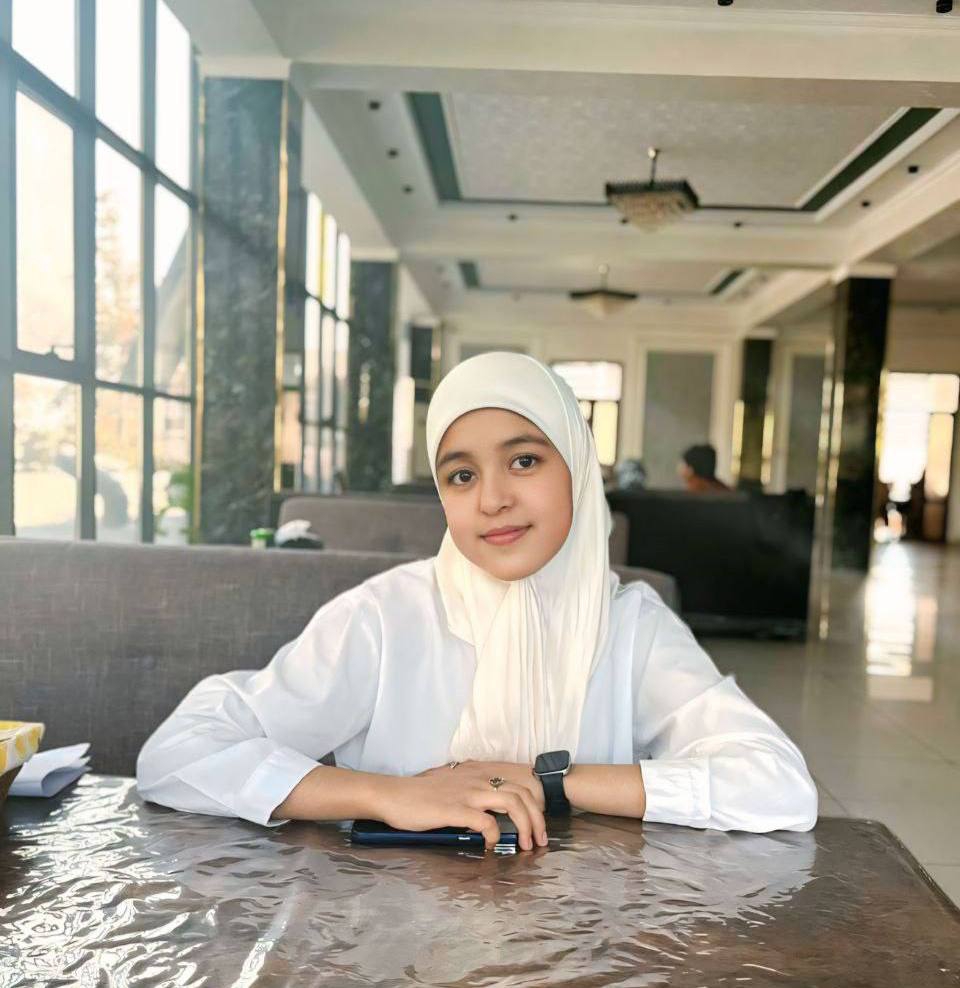
Young Central Asian woman with a white headscarf and outfit wearing a medal around her neck and posing next to a certificate and flag.

The great Eastern sage Abu Ali ibn Sina, when asked, “Why is there so much evil in the world?”, replied: “The cause is you and us. By abandoning the struggle against evil due to ignorance or incompetence, we ourselves open the way for the widespread growth of evil.” Indeed, ignorance and indifference are among the greatest obstacles to the development of society. Therefore, in preventing such vices, it is of paramount importance first and foremost to thoroughly study the Constitution and to comprehend its essence and meaning.

The Constitution is the most important political and legal document of every state and the juridical expression of the will of the people. It reflects everything from the foundations that define the structure of the state, the form of governance, the principle of separation of powers, and the guarantees of human and civil rights and freedoms, to the general criteria that ensure social stability. The Constitution of the Republic of Uzbekistan is of particular significance because it embodies the ideas of building a democratic state governed by the rule of law, forming a free civil society, and prioritizing human interests. For this reason, it is recognized as a solid foundation of freedom, justice, and prosperity.

The term “Constitution” is derived from the Latin word constitutio, meaning “establishment” or “structure.” That is, the Constitution is the fundamental document that defines the structure of society and the state, the form, principles of operation, and powers of authorities and administrative bodies, as well as the basic rights and duties of citizens. The fact that all laws, codes, decisions, and decrees in the country are adopted in accordance with the Constitution is clear evidence of its supreme legal force.

The Constitution directly influences all spheres of social life—political, economic, spiritual and moral, domestic, and labor relations. The following words of President Shavkat Mirziyoyev vividly express the invaluable role of the Constitution: “It can be said with full confidence that the Constitution of the Republic of Uzbekistan is a high example of our people’s political and legal thought. It has been and continues to be a legal guarantee of living freely and independently, peacefully and securely, and in prosperity, without dependence on anyone. It serves as a solid foundation for building a legal democratic state based on market relations and a strong civil society.”

The significance of studying the foundations of constitutional law lies in the fact that a citizen clearly understands his or her rights and obligations, distinguishes between actions permitted and prohibited by law, and becomes aware of the ways and means of protecting legitimate interests. Most importantly, such knowledge instills firm confidence that justice can be achieved by observing the law.

In conclusion, the Constitution of the Republic of Uzbekistan is a noble document that regulates the life of the state and society, ensures the legal protection of every individual, and lays the foundation for a prosperous and just life.

Egamberdiyeva Diloromxon,

2nd-year student, Group 24-04,

Department of Philology, Uzbek Language.

Poem from Akramova Sarvinoz

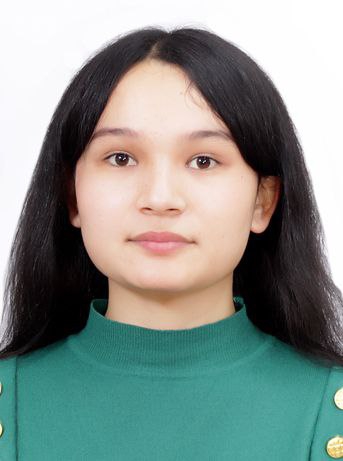
Young Central Asian woman with brown eyes, long straight brown hair, small earrings, and a black coat over a white collared top.

Akramova Sarvinoz Boboyor qizi,

Student of Navoi State University

Orcid ID: 0009-0003-9780-3976

Email: akramovasarvinoz53@gmail.com

Parents

My father is my mountain-strong support,
My mother, a river of love and joy.
While they are here, the world shines bright,
From them are born my love and delight.

My father’s labor is patience and might,
My mother’s prayer — the greatest light.
From two pure hearts, love was made,
A lifelong torch that lights my way.

Their words are lessons, their glances — bliss,
In every breath, their traces exist.
While they are here, the world shines bright,
From them are born my love and delight.

Poetry from James Tian

Young East Asian man in a white suit and red tie with a floral corsage posing on a balcony in front of a window.

When the Candy Is Picked Up

When a piece of candy is picked up,

Sweetness at once becomes the theme of the world.

One person is listening to two others talking:

“You absolutely must submit!

Otherwise bad things will happen—

To yourself and to those around you.

It’s very unlucky…”

Another person says:

“You must be devout!

Not a single detail can be wrong,

Otherwise it’s a sin,

And even your next life will be bad…”

The first person speaks again:

“You must follow!

By following, you can avoid misfortune.

The whole family must follow—

This is redemption and hope…”

The other person adds again:

“You must place its image everywhere!

As if it must watch over us at all times,

To prevent us from failing to keep in step—

With what has been prescribed.

The meaning of this world has already been set—

It lies precisely in this…”

The listener grows frightened,

And quickly goes up to ask them:

“This gang you’re talking about is terrifying,

And so evil.

Where’s it?

Tell me, so I can avoid it.”

The two of them widen their eyes,

Facing him with horrifying expressions and words:

“What gang?

What terror?

We’re talking about faith.

We’re talking about religion.

This is humanity’s true good and hope.

Do you understand?

You’re really pitiful—

One look and it’s clear you have no faith…”

Essay from Jalolova Charos

Young Central Asian woman with a black and gray striped sweater and black pants and long dark hair posing in front of a painting of a distinguished gentleman in a suit and standing near a flag.

In recent years, rapid urbanisation has forced governments and city planners to reconsider how cities should be designed. While some people argue that living and working in a vertical city with numerous high-rise buildings is more beneficial, others believe that a horizontal city with fewer tall structures offers a better quality of life. This essay will discuss both perspectives before presenting my own opinion.

On the one hand, supporters of vertical cities claim that this model is a practical solution to overpopulation and limited land availability. High-rise buildings allow a large number of people to live and work within a compact area, which helps to reduce urban sprawl. As a result, essential facilities such as offices, shopping centres, and public services can be located close to residential areas, saving time and increasing productivity. Moreover, vertical cities often encourage the use of public transportation, which can alleviate traffic congestion and lower carbon emissions. From an economic standpoint, concentrating businesses in tall buildings can also stimulate innovation and collaboration by bringing professionals closer together.

On the other hand, opponents argue that horizontal cities provide a healthier and more sustainable living environment. Cities with fewer tall buildings usually have more open spaces, parks, and low-density housing, which can significantly improve residents’ physical and mental well-being. Living in such environments reduces stress levels and promotes a stronger sense of community, as people are more likely to interact with their neighbours. In addition, horizontal cities are often associated with better air quality and less noise pollution. Critics of vertical cities also point out that high-rise living may lead to social isolation and overreliance on elevators and artificial environments.

In my opinion, although horizontal cities offer a more comfortable lifestyle, vertical cities are a more realistic and efficient solution for modern urban development. Given the continuous growth of the global population and the scarcity of land in major cities, building upwards is often unavoidable. However, this does not mean that vertical cities should ignore human well-being. By integrating green spaces, recreational areas, and sustainable design into tall buildings, cities can combine efficiency with livability.

In conclusion, both vertical and horizontal cities have distinct advantages and drawbacks. While horizontal cities prioritise comfort and community, vertical cities address the urgent challenges of population density and land limitation. Ultimately, a balanced approach that incorporates the strengths of both models is the most effective way to design future cities.

I am Jalolova Charos. I was born in Kashkadarya region of Uzbekistan. Now, I am studying at Uzbekistan State World Language University. My hobbies are reading books, playing table tennis and listening to music.