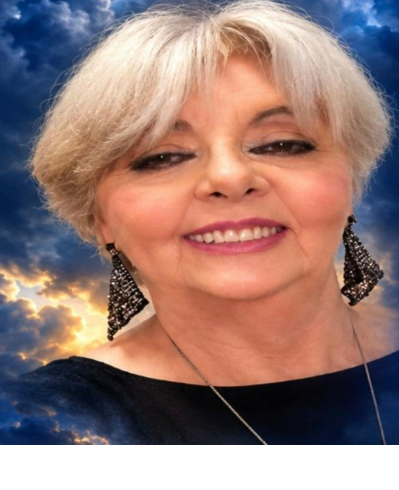
Alex S. Johnson profiles artist and activist Nina Hartley

Nina Hartley’s public life spans more than four decades, but the clarity with which she speaks about autonomy, consent, and the politics of the body suggests a through‑line that began long before her first appearance on camera. Born Marie Louise Hartman in 1959 in Berkeley, California, she grew up in a household shaped by political trauma and intellectual rigor. Her father, Louis Hartman, was a popular San Francisco radio announcer whose career was destroyed during the McCarthy era. As she recounts it, he would find work, settle in for a week or two, and then “some guys show up, and he would get fired.” The blacklisting left the family economically destabilized and left her father, once a public figure with a thriving career, working as a short‑order cook and eventually becoming a stay‑at‑home parent in the 1960s, long before such a role was culturally legible for men. “I grew up in the aftermath of the destruction,” she says, describing a childhood marked by her father’s depression and her mother’s long hours as the family’s primary breadwinner.

Her mother’s side carried its own political history. Hartley’s maternal grandfather was a civil‑rights activist in 1930s Alabama, appearing in major histories of the period such as Hammer and Hoe. She notes that he was “beaten up by goons and left for dead in a field,” and that one of those goons was a young Bull Connor, years before he became the infamous segregationist police commissioner of Birmingham. The family’s politics remained firmly leftist and activist; Hartley recalls being taken to anti‑war and civil‑rights marches in a stroller. Religion, however, was absent. “I was not raised in a religious household. No church, no temple, no religious instruction at all. From age eight I realized it was all a story.” This early secularism, combined with the family’s political history, shaped her lifelong skepticism toward moral authoritarianism and her insistence on bodily autonomy as a fundamental right.

Before entering adult film, Hartley pursued nursing, earning a Bachelor of Science in Nursing from San Francisco State University and graduating magna cum laude in 1985. Her intention was to become a nurse‑midwife, influenced by the natural birth movement and by the somatic theories of Wilhelm Reich, whose concept of “body armor” resonated with her. “The birth industry in this country is deeply flawed,” she says, pointing to the United States’ comparatively high maternal and infant mortality rates among industrialized nations. Although she never practiced nursing professionally, the training shaped her understanding of the body as a site where trauma, repression, and liberation all manifest. “The body is stuck forever in the present moment. It cannot leave the present moment,” she explains. “Worry we feel in the body. Anger we feel in the body. Grief we feel in the body. Rage we feel in the body. And it can only be resolved in the body.” Her later work in adult film and sex education, far from being a departure from this somatic framework, became an extension of it. “Sex energy is just hyper‑charging the other physical modalities. When we help a person realign their relationship to pleasure… all their demons show up.”

Hartley entered adult entertainment in 1984 with Educating Nina, quickly becoming known not only for her performances but for her articulate advocacy of sexual freedom, sex‑positive feminism, and performer rights. By 2017 she had appeared in more than a thousand films, making her one of the most prolific figures in the industry. She also produced a series of instructional videos that became foundational texts for sex education outside traditional academic settings, and she lectured at universities including Dartmouth and multiple UC campuses. Her mainstream visibility increased with her role in Paul Thomas Anderson’s Boogie Nights (1997), but her influence has always been rooted in her educational work and her political clarity.

When asked to define sexual autonomy, Hartley answers without hesitation. “Autonomy is being able and supported in making decisions about what happens to your own body. Do I have the right to my own body or not?” She connects this directly to contemporary politics, noting the consequences of recent legislative rollbacks. “The rollbacks for women’s physical autonomy are quite severe and far‑reaching. We’re already seeing increased deaths, increased infant death, permanent disability through botched obstetrical emergencies.” Her critique of religious influence on policy is equally direct. “I get that your religion tells you not to do these things. But how does your religion give you the right to tell me not to do those things?” She traces the current political climate back to the alliance between the religious right and Ronald Reagan. “Up until Reagan, the religious right stayed away from politics. Falwell and Reagan realized there was a sleeping giant. Forty‑five years later, here we are with Christian nationalists really working the agenda.” Yet she also sees a counter‑movement emerging. “What we do have on our side is the under‑40 exvangelicals — young people raised in that system who realized, ‘Oh hell no. Oh hell to the fuck no.’”

Hartley’s approach to consent is grounded in ethics, not aesthetics. She articulates the distinction between consensual kink and public imposition with characteristic precision. “Do I have the right to beat your ass? Yes. Do I have the right to do it in front of people who didn’t agree to be there? No, I don’t.” She continues, “Do I have the right to lead you around on a collar and a leash? Yes. Do I have the right to do it in public? No. I cannot involve other people in my scene who did not agree to be part of the scene.” On breath play, she draws one of her few absolute boundaries. “I do not do neck compressions. It’s not ‘choking.’ External pressure applied to the throat is strangulation. Strangulation is by nature super‑duper violent.” She adds, “As a dom, I get to not do things. A sub can beg and beg — you can hold your own breath. I am not restricting your airway.” Her reasoning is grounded in legal and ethical realism. “All you need is one dead person. ‘She said yes.’ Yeah — and now you’re going downtown to the station. It’s not a thing.”

Her understanding of sexuality is informed by evolutionary biology as much as by feminism. “Female sexual response was important — we have an organ that just does that,” she notes, referring to the clitoris. “We’ve been human for a lot longer than we’ve been monogamous or treating women as property.” Pleasure, in her view, is not frivolous but a bonding mechanism, a stress‑release system, and a tool for resilience. This perspective aligns with anthropological research on early human social structures, which suggests that cooperative child‑rearing, fluid kinship networks, and non‑monogamous sexual practices were common in pre‑agricultural societies.

Across her career, Hartley has served on the board of the Woodhull Freedom Foundation, one of the leading organizations advocating for sexual freedom as a human right. She has been a consistent advocate for performer labor rights, medically accurate sex education, and the decriminalization of consensual adult sexual expression. Her public persona has remained remarkably consistent: articulate, informed, unapologetic, and grounded in the belief that bodies are not political abstractions but lived realities.

She summarizes her philosophy succinctly: “Autonomy is the right to eat what I want, fuck who I want, risk, control, terminate a pregnancy, carry a pregnancy — the basics.” And, as she adds, “Pleasure is an altered state of consciousness. Pleasure connects us.”

In a culture that remains deeply conflicted about sexuality, pleasure, and bodily autonomy, Hartley’s voice stands out not because it is provocative but because it is coherent. Her life — from a politically scarred Berkeley childhood to a pioneering career in adult film and sex education — forms a continuous argument for the centrality of bodily autonomy in any free society. She speaks not as a provocateur but as someone who has spent a lifetime thinking seriously about the body as a site of power, vulnerability, and possibility. Her work, in all its forms, returns to the same essential question: Do we have the right to our own bodies or not?

Alex S Johnson bio

Dubbed “the Baudelaire of our time” by cyberpunk godfather John Shirley, co‑screenwriter of The Crow (1994), Alex S. Johnson is an internationally published author whose work spans horror, surrealism, speculative fiction, and cross‑genre experimentation. His writing has been translated into Greek, Chinese, and Spanish, with his story “El Funeral del Mundo” (“World Funeral”) appearing in Microficciones y Cuentos, curated by Argentine editor Sergio Gaut vel Hartman. Other Microficciones-published authors include Cat Rambo (former SFWA President and Nebula Award winner), Paul Di Filippo (steampunk and slipstream pioneer), Lewis Shiner (World Fantasy Award winner, original cyberpunk figure), and Anna Taborska (multiple Bram Stoker award‑winning British horror writer and filmmaker).

Johnson’s collaborations include the New York Times bestseller Seeing Lessons with Tom Sullivan, the blind actor, author, and motivational speaker known for his appearances on WKRP in Cincinnati, Mork & Mindy, MASH*, Highway to Heaven, and in Airport ’77 with James Stewart. His work with Sullivan — and with Betty White, who supported Sullivan’s disability advocacy and collaborated with him on two other books— helped inspire the 2025 anthology Neurospicy!, featuring contributors such as Synchronized Chaos’s Cristina Deptula and acclaimed speculative fiction author Caitlín R. Kiernan, winner of the World Fantasy and Bram Stoker Awards and praised by Clive Barker as “an original.” On his Substack The Smol Bear Review, Johnson recently published exclusive essay by Kiernan, “Finding Mr. Barker,” after the piece was orphaned in an authorization boondoggle with Clive Barker’s official channels. The remainder of the work will see publication in issues of Black Diadem magazine.

Johnson’s latest major release is Dreams of Fire and Steel 2: A Sword and Sorcery Anthology, continuing his commitment to independent, cross‑genre literary ecosystems. He lives with his family in Carmichael, California.

Prose from Brian Barbeito

Tuna Fish Sandwich Led Zeppelin Balcony

Built well also. the two thirds rule is that the I-beams that support a balcony like that need to be,- two thirds into the cement wall and one third out. Seemed so. Lasted forever. Still lasts though I don’t go there. I sat there near the end of growing up and I think for some reason it was spring but different than the other springs…

It was the first house that saw the ravine, and I had then four rooms altogether. I had made a tuna fish sandwich and was that week listening to Led Zeppelin. But I turned off the music and brought the food outside and sat down. I could have easily brought a chair, but I think I sat on the wooden floor of the balcony above the paving stones and gates and old plum tree that bloomed always in September. 

A guy used to walk by there and steal one or two plums and think nobody saw him. He’d pull a plum slowly but strongly so the branch went out the space in the iron fence and then suddenly, pluck-boon-boom,- a plum in his hand and the branches would fly back into place like they were part of the whole secret and would not then let on that anything had happened. A quick furtive glance around he took but he forgot to look up. I am like an eagle or hawk and see much, most of it true. But I didn’t say anything. Let him have a plum. Plus, I knew who he was. He wasn’t a bad guy. There were a lot worse people and things going on in the world. 

That day though. What was wrong? I couldn’t figure it out at first. Overcast weather didn’t help. But it was more. I shrugged and sighed. Then I realized slowly. A lot of people had moved away. A lot had changed. Or maybe they weren’t really known to begin with. Sports and schools and cycles and seasons of time had ended. The fun bright worlds of bike riding and forts, comics and street hockey and so on, were basically over. 

I finished my sandwich, stood up, and looked around a bit more. The trees had certainly grown. But things even in lieu of that seemed more grey than green. Bad. Untoward. There was trouble in the wind, but I couldn’t exactly figure out what. I glanced at the wooden planks. I never liked their colour anyhow. Some weird red so dark, some real base chakra choice. Yuk. Maybe the balcony was not enjoyable but just for show. Osho says most people didn’t have a golden childhood as he did, that it’s just that what came after for many was so bad that their childhood seemed golden in comparison…

Food for thought as the old saying went. And fish they claimed was good for the brain so maybe I would be able to figure it all out. I went in and hit play. Robert Plant was singing that it was time to ramble on.

Fourth Installment of Otherwise: The Children’s Crusade by Christopher Bernard

Fourth Installment of Otherwise: The Children’s Crusade
by Christopher Bernard
     
Chapter Twelve: The Subway Stop That Time Forgot

“. . . and we were just starting to explore the books in the burned down library when she found us,” Petey said, finishing his description of the boys’ adventures since riding Dr. Sazerac’s balloon to a crash the day before. 
A look passed between a tall, black-haired, serious-looking young man, vaguely Eurasian, maybe seventeen, who Petey guessed was the Ruhtra the girl had mentioned to the guard, and Yram as Petey completed his tale.
“Command of Germanglish theirs not strong be,” Yram said to the young man. “Speak they like books the war in Acirema before.”
“Old Anglish! To its memory all praise!”
“To its memory all praise!”
The three boys and the young man and girl sat around a rickety metal table in a long, low-ceilinged room just beyond the metal door near the abandoned subway station bizarrely crowded with children like refugees from a pillaged school district. The room seemed part of some sort of headquarters or office. Other young people—some very young indeed, yet all of them with the grimly determined looks on their faces of grownups under pressure—were hard at work. They gave the boys little looks of alarm and the air was heavy with tension and hurry, as if something of great moment was pending yet the new arrivals were not so much interrupting the mission as throwing a wrench in it that needed immediate addressing.
The boys had been introduced to the young man as “boys from elsewhere,” a word that seemed to be part of a mysterious code the two seemed to fall into and out of while conferring with each other. The three boys had given their names and the specifics of where they were from, but these drew blank stares and seemed to mean nothing to the other two at the table.
Petey hesitated at the end of his story, but he had heard what they said and saw the look passing between the two and decided to ask the fateful question that had been on the end of his tongue almost as long as the crash.
“Is this Otherwise?”
The young man seemed startled by the question.
“What this ‘Otherwise’?”
Petey had memorized the description he had been given already twice before during his visits, or hallucinations, or psychotic breaks, or whatever they had been, years ago.
“Otherwise is where everything that might have happened but didn’t in the real world, in Howtiz, does happen. With,” he added, “all the consequences.”
The young man looked coolly at him.
“Boy, in your world would I wish to be. Why so sure you from where you come not this ‘Otherwise’?” he said. “How know you this real nicht be? And this be not ‘how it is’?”
Bumper’s eyes seemed to bug out of his head, and Petey detected the tell-tale signs of brain freeze.
The answer shocked Petey as well. The idea had never occurred to him, though he immediately saw how plausible it might look to someone from outside. 
It might even be true.
The thought cut through him like ice.
Chace turned very pale.
“How . . . could . . . ?” Bumper tried to get out. Petey had never told Bumper about Otherwise, so this was all new to him.
Chace leaned toward him.
“Don’t even try,” he whispered in Bumper’s ear. 
The young man ignored them and turned to Petey.
“Where you are from I do now know,” he said, with a glance at Yram, who gave him a pained look. “Though, admit I, with a long lost past my heart it aches.” He got up and walked around the table. He seemed to get a hunch, and stopped.
“Who the last war won?”
“Which one?” Petey returned.
“Last big one, all the world covering.”
Petey considered. He must mean World War II—that was the last “really big” war that everybody knew about.
“That’s easy,” he said stoutly. “The United States of America.”
Another look, this time more piercing, passed between the young man and Yram.
“Have the Permanent Emergency heard of?”
	“Never.” Petey turned to Chace. “Have you?”
	“Only what the mater sometimes calls the pater,” Chace replied coolly.
	“The Permanent Emergency since the Year of Victory in place.”
	“And when was that?” asked Petey, feeling his throat go dry.
	“1948.”
	“But the Allies won in 1945.”
	The young man snorted.
	“In 1943 the Alliance, to be precise, lost. Where did you your history learn?”
	“In school, like everyone else. America and the Allies won against the Fascists and the Nazis. They stopped the Holocaust! They freed Europe and Asia! It was the greatest victory in the history of the world!”
	Petey’s conscience nagged him for exaggerating, after all he couldn’t be certain what he had just said was exactly true, but this guy was so exasperating, he deserved it!
	“What this ‘America’? ‘Acirema,’ of course, you mean. Everything backwards you have. The United States of Acirema until 1948 were not pacified.”
	“What do you mean,‘pacified’?” Petey demanded. “By who?”
	“By Izan, of course. All states disbanded and the name changed to Night Reich of Acirema. The country a kolonie of the Germanish empire ever since has been. You fellows from ‘elsewhere’ truly be!”
	“An elsewhere like our own past, most strangely,” said Yram.
	Even Chace looked shocked at this.
	“Impossible,” said Ruhtra. “And yet so.”
	He frowned and tapped the fingers of one hand against the knuckles of the other, then walked a few paces away and motioned Yram toward him. They stood whispering for a minute or two while looking uncertainly at the boys. 
	“I thought the expression ‘deciding their fate’ was one you only saw in books,” Chace muttered to Petey.
	As they talked, the girl said, in a louder whisper, “But Ruhtra, what if . . .”
	“Live by ‘ifs,’” the young man replied, “and ‘when’ we never shall reach.”
	A moment later they returned. 
	“Gentlemen,” Ruhtra said, almost apologetically, “To have to do this sorry I am. Your existence more in danger be than you possibly can know. In safekeeping we must for the time being place you . . .”
	“Safe!” said Petey. “From who? From what?”
	Ruhtra gave him an ironic look.
	“From yourselves first. Not for long it will be, we promise.” He added, almost to himself, and somewhat enigmatically: “Either way.” He motioned to Yram, who nodded and took out the Luger she had put in her pocket on entering the subway maze.
	“Sorry, fellows, I be,” she said, then motioned the pistol toward an inner door. “Please.”
	There are offers one can’t refuse, as Petey had learned from the movies, so the boys reluctantly left the long dimly lit room under the eyes of the busy young people there, watching them curiously as they trailed out into a dark, fusty jungle of brackets and piping, walls of rebar and metal gridding, clumps of hanging wires, dust-covered light bulbs, curtains of spider web, and the sounds of scurrying rats till, after what felt like they had been wandering through a labyrinth of mid-twentieth-century industrial technology for a quarter of an hour, they reached a small door under a dim light from a grid of thick glass in the sidewalk twenty feet above, with a defaced sign displaying a triangle in red and the words “DANGER 20,000 VOLTS.” 
Which the girl ignored, opening the door with one hand and motioning the boys inside. The door was so small, they had to crawl to get in, though once they were past the door, they found themselves in a cement-walled room, a cell just big enough for the three of them. A single bulb hung from the center of the ceiling. On the floor, there were the remains of someone’s supper.
	“Later back I will be,” said the girl, taking the dish from the floor. “To bring you something to eat actually you are able.” 
	“Can I have a coke?” asked Bumper, with nervous politeness. Bumper’s parents had bred good manners in their boy almost to a fault. He responded to danger with a politeness that grew more exaggerated with the extremity of the danger. 
“Yes,” said Yram. “Bring you a coke I can.”
Well that’s a nice surprise! thought Petey. At least it isn’t pronounced “ekoc.”
“How terrible feel we – how terrible feel I – about doing this to you I wish you to know,” the girl said as she stood at the door. “The danger you be in you cannot know. Or the danger we be in. And better to be safe it be . . .”
	“‘. . .  than sorry,’” said Chase. “Some clichés are the same even in Otherwise.”
	Petey gave Chace a rueful look. Now maybe he’d believe in it, wherever it actually was, if they ever got home.
	“But just how sorry you do not know you could be,” she said sternly at Chace’s quip. “And if you lucky you be, find out you will never.”
	Then she closed the door.
	“Now do you believe it?’ Petey said to Chace as they stood under the bleakly burning light bulb. Though he immediately regretted it.
	Chace shrugged.
	“Believe what?” asked Bumper.
	“Now I’d believe in the tooth fairy,” said Chace.
	Bumper was mystified.
	“You mean you don’t believe in the tooth fairy?” Bumper asked, appalled.
	Chace patted Bumper on the back.
	“Far be it for me to insult the tooth fairy,” he said. “But I have to admit: there are times I have my doubts.”
	Bumper nodded gravely.
	“Sometimes I do too,” he said. “Even about Santa Claus . . .”
	Chace frowned and mimicked Bumper’s nod.
	Petey felt he was about to burst. What did the tooth fairy and Santa Claus have to do with Otherwise? And he was haunted by what Ruhtra had said. Everything that had happened to them, and that had struck him as uncanny and horrible, fell into place if what the young man said was true. 
Yet, what if everything Petey had ever lived had been a mirage, and this horror (because it was a horror, almost beyond imagining, yet just possible enough to have been true all the time) what if this was “reality” . . . ?
	But what was this? A world where the greatest evil he had ever heard of had won? How could that be possible? 
	“Well, I can’t believe it,” he said, following his own thoughts.
	“What?” said Chace, with an ironic look at his friend. “You mean you’re the one who doesn’t believe now?”
	“Not that,” Petey said. “This. I can’t believe where we are. I can’t believe this is real.”
	“Well, if it’s your fancy Otherwise after all,” said Chace, “it’s just one possibility among a fabulous infinity of them all. Though it’s a pretty awful one.”
	“But you heard what Ruhtra said. What if where we’re from is ‘just one possibility’ and what if this is the ‘real world’ and we’ve managed somehow to, I don’t know, miss it—not live in it, never have lived in reality at all? What if we’re just some kind of dream that managed to escape into the real world?”
	“Watch it, old son,” said Chace. “You’re getting philosophical.”
	“No, I’m not, life is,” said Petey, more philosophically than he realized. “I’m just waking up.”
	“Dangerous thing,” Chace muttered. “Waking up.”
	Bumper looked back and forth between the two of them.
	“What are you two guys talking about?”
	“Oh to be young again,” said Chace (who was fourteen), with a nostalgic sigh. “When we were fancy free and not haunted by unanswerable questions.”
	Bumper scowled. He was old enough to know when he was being patronized.
	“I may be little,” he said, which is how he interpreted “young,” “but I’m not stupid!”
	“I didn’t say you were stupid, I said . . .’
	“Yes, you did! That’s what you meant!”
	“How do you know what I meant?”
	“Because I’m not stupid!” And Bumper looked like he was about to tear Chace’s eyes out or perish trying.
	“Stop it!” shouted Petey. “Behave yourselves! Don’t fight!” he added, echoing a mantra he had heard often enough from his parents. “Or we’ll never get home again.”
	Bumper slumped down on the cement floor and suddenly started whimpering. The other boys looked at him in dismay.
	Petey crouched down next to him and put his arm around the little boy’s shoulder.
	“I miss home!” Bumper sobbed.
	“Me too,” said Petey.
	Chace was about to say something sarcastic, but wisely kept it to himself.
	“We’ll get there,” said Petey.
	“Oh?” asked Bumper, between sobs. He gave Petey a skeptical look. “Just how, smarty pants?”
	“I don’t know how. But I know one thing.”
	“What’s that?”
“We got here.”
“That’s irrefutably true,” said Chace from the airy heights above them.
“So there’s a way back there. It’s like we slipped through a crack. We just have to find the crack again.”
“The miracle of reverse engineering, as the pater says,” said Chace.
Petey thought: And slip through even if it’s back to an illusion.
	But no: he must not let himself think that. This was the illusion, whatever people here thought. Where he and his friends had come from was reality. They had to get back to the real world. Though the journey might be a long one.
	Bumper wiped his eyes.
	“But what’s Otherwise?” he said. “And how can ‘otherwise’ be a place?”
	Chace groaned as he remembered having the same endless, irresolvable debate with Petey years ago.
	“Don’t even think about asking that question!” he said.
	“But I already did,” said Bumper innocently.
	“That doesn’t mean it gets an answer,” said Chace, definitively closing the discussion. 
Chapter Thirteen: The Link

	Petey, making himself as comfortable on the cement floor as cement would allow, told Bumper about his two visits to Otherwise (while Chace twisted his lips into a glossary of skeptical pouts, groaning at intervals to express the munificence of his self-denial in not crushing Petey’s claims with sarcasm): the first “when I was almost your age,” on a crooked yellow trolley to the land of the gentle Paonas invaded by the barbarous and brutal Korgans, about Sharlotta (he sighed a little when he remembered her, and his voice gave a little squeak), and how the two of them saved her parents and  ended the invasion in a great conflagration. 
Then the second time when he and “a friend” (he gave Chace a reproachful glance; Chace, who had never recovered from his “amnesia” about the adventure, suddenly looked as innocent as the snow) were swept out to sea and captured by old-time pirates, then held captive in the brig with a gruff bulldog and a fancy cat until a battle sank the pirate ship, and Petey and his friend and the cat and dog spent days clinging to a piece of wreckage until they were cast on an island ruled by foxes, and Petey and his friend were tried by a court of animals for the crimes of humanity against the animal kingdom over the centuries . . .
	“Wow,” said Bumper, “that sounds harsh! My mom’s vegan. But she lets me eat meat because she says if I don’t, I won’t grow.”
	Bumper, of course, was little. Chace gave him a look that suggested he might benefit from a diet that was strictly carnivorous.
“Do you think they would have put me on trial?”
	“I was eleven,” said Petey, letting that sink in. Age wouldn’t exactly have protected his young friend.
	Bumper blinked.
“So,” he asked somberly, “did they hang you?” 
“No,” said Petey. “The cat and dog testified in our favor, and we eventually escaped from the island.”
	Bumper grew contemplative.
	“And so you think we’re in Otherwise now.”
	“Yes. Though I keep hoping,” said Petey, “I’ll wake up and realize this is just a bad dream. But after what Ruhtra said, I’m not so sure I want to wake up, now, at all, ever.”
	Bumper put on his best daddy look.
	“What do you think, Chace?”
	Chace’s eyes perceptibly darkened.
	“Whether or not we’re in Otherwise,” he said, “we’re someplace that’s really, as the pater would say, ‘fookéd up.’” 
 	Bumper looked shocked when he realized exactly what Chace had just said. His mom, though she was lenient about what he put into his mouth, was not about what came out.
	“Oh!” said Bumper. 
	The boys settled down for a long wait, Petey in a corner with his forehead against his drawn-up knees, Chace sprawled near the opposite wall and staring at the ceiling, Bumper crouched near the door and absent-mindedly picking his nose. 
	Petey, for the hundredth time, went over what had happened since they launched in Dr. Sazerac’s balloon an eternity ago. Everything here was so familiar and yet so eerie! He couldn’t be just dreaming (which everyone had accused him of when he had tried to describe Otherwise to them), and yet it couldn’t be real! It was like the world he was used to, but everything was upside down. And backwards! 
	“Do you know what spiders do after they make their cobwebs?” Chace suddenly asked philosophically as he stared up at the ceiling.
	“Spiders?” Bumper asked with a quivering voice. He stopped mid nose-pick. He was scared of spiders.
	“They,” said Chace giving a deep yawn and stretching his arms as far as they would go, “take a lonnnng nap.”
	“How do you know that?”
	Chace pointed toward the ceiling.
	Bumper looked up.
	The ceiling’s four corners were veiled with cobwebs, with several more connecting three of them and one solitary web luffing like a sail mysteriously in the airless cell. A spider lay curled up in the web, asleep. Around it were the remnants of several ingested flies. 
	Bumper was about to yell in panic when there was a noisy clanking from the cell door. A moment later, it opened with a squeal, and Ruhtra and Yram entered, crawling through the small door.
	They stood up under the single hanging bulb and looked down solemnly at the boys, who remained on the floor. The cell felt suddenly very crowded.
	Ruhtra glanced away and cleared his throat.
	“An apology to you I feel I owe,” he said. “Who you are I couldn’t be sure, and our position here precarious be. Even we about spies must worry. About you I had absolutely sure to be. But all our researches with nothing about any of you.came up. According to all official records, you not to exist.”
	Chace pinched his arm hard.
	“Ouch!” he said. “I exist, all right. I feel pain, therefore I am. Not sure about you guys,” he added, giving the other two boys a glance. “You could be figments of my imagination. Though if so, I never knew it was so weird.”
 	“Oh you, truly, exist,” said Ruhtra. “Though best it might be if we all figments of someone’s imagination were and not in the cage of reality locked. But the three of you in a peculiar state be—both here and not here. Officially nonexistent, but, in all practical respects, the most real thing there be, precisely because not recognized as being at all.” He paused, looked hard at them before continuing. “Dissidents to the occupation we be. To a network called the Link dedicated to liberating Acirema from Izan we belong.. Dedicated to the destruction of Izan, to the liberation of Acirema. Because not possible it is in a world with them in it to live. At all.”
	He paused and gave them a long stare. Yram gave him a worried look, but said nothing.
	“This you need to know about us: that we of children are entirely made, from as young as four and five to as old as myself, seventeen, and a few even older, but kept among the young so suspected we not be by Izan. The adults to Izan rule long have capitulated, calling this ‘to be mature,’ to ‘grow up,’ to ‘accept reality.’ But our position be that certain realties there are to accept one must never. And that to change those realities we can and must—to them overthrow and new realities to create, out of imagination, passion, ingenuity, determination, and, not least, out of memories of a kinder and freer way of life before our conquest, brief as it shall be, by this evil. And with a little luck, the chance be that our way goes. That the lesson of history be, over and over, down the ages: just when despair most justified seems, a stubborn good seizes and takes. Our memories and our dreams to us give hope and us keep alive. This, we believe, the lesson of life itself be, down upon us millions of years: the life that the earth itself be, has been and shall be, until the end of time. And we a duty have—some call the blessing of reality itself—on that lesson to act. In our case, this dictatorship to bring down.”
“Do they call it fascism here?” asked Petey.
“To Fascismo allied it is, it divides with it Eporue, across the Eastern Sea. Our duty is our world from both Fascismo and Izan to liberate. The adults childish call us. We it call—”
	Suddenly the roar of an explosion echoed down the tunnels outside.
	“Tihs yloh!” Ruhtra said to Yram in alarm. “That ours be?”
	“Not that one,” said Yram.
	All five of them froze and listened. At first there was a long, deep silence, strangely hollow and empty, as though the elaboration of steel and concrete that surrounded them were waiting for another explosion. Then a muted sound of screaming, as of a mass of panicking children, rolled by in a muddy roar just outside closed door of the cell. Petey heard one word in the white noise: “Poliz!” that immediately washed away.
	The young man and woman—looking suddenly much younger than their actual years, more vulnerable than their pretense of competent command had led them to appear to the boys—stared at each other with faces drained pure white. 
	“A mole!” Ruhtra said in a strangled voice. 
	A distant sound of tumult, shots, shouting echoed through the subway tunnels.
	“Izan,” said Ruhtra, having retained control of himself.
	“Plan . . .,” Yram ventured, with a look of despair, “. . . Zero?”
	“Not enough bombs primed,” the young man replied coolly. “Only a platoon’s worth with us take down.”—He sniffed at the air, reminding Petey of his family’s pet retriever smelling something undetectable to his human owners. Then Petey smelled it too, smoke penetrating from the tunnels outside, mingling with the noise. Every so often a single scream pierced the tumult.—“Burning the papers at central.” Ruhtra paused. “Betrayed we may be but no excuse to play martyrs to betray the cause.”
	The blood in the faces of the three boys suddenly drained away to the dead white of the other two. The thought dawned bleakly on Petey: Is Plan Zero to blow themselves up, to take down the attacking Izan with them? 
	 Ruhtra carefully opened the metal door and he and Yram crawled through and led the boys out to the tunnels, which were quickly filling with smoke and clearer echoes of the rough clangor of attack and high-pitched screaming punctuated by sounds of shots.
 	A small mass of the children had already filled the main, dimly lit tunnel that the Izan had not yet found; they were eerily silent, disoriented and lost. At the sight of Ruhtra and Yram they stopped and stared at them, half hopefully, half despairingly.
	Ruhtra seemed to fully regain his authority at the sight of the frightened children. The distant noises were coming closer. Hard decisions had to be made fast.
	Attack the attackers and face near certain annihilation—or try to escape, with possibly the same result? Petey could see the bleak choice at war in the older boy’s countenance.
	Then Ruhtra’s face slackened into a look of grim seriousness.
	“For more survivors we cannot wait,” he muttered in an aside to Yram. “If to save these we can.” 
Yram looked appalled but said nothing.
Ruhtra gestured toward a hefty fourteen-year-old nearby.
 	“Ganzor,” Ruhtra said in a stage whisper, “your battalion take to the old storm reservoir, and for instructions wait.” 
	“All day we have not eat. At least lunch can we have?”
	“And where that be? White Castles our style not just yet.”
Ruhtra looked at a beautiful Slavic girl standing just behind Ganzor. 
“Tatiana, your troops take through the West Village sewer to the Chelsea warehouse.”
Tatiana nodded unsmilingly.
“What if already it they have took?”
“Then it burn down,” he said. “And your people scatter. If hear from you I do not, I will know.”
She again nodded unsmilingly.
“Where Dewitt?”
	A thin squinting fifteen-year-old who looked more like a math nerd than a militant, waved from the back of the crowd.
“Your people hide in the service tunnel from the Little Flower’s days that never on any map was found, then south move after the Izan the station clear and in the old Staten Island ferry landing take cover.”
	“What about Chingu’s people?” asked Ganzor with a reproachful look.
	“Go back now we cannot go,” Ruhtra said. “Who we can we save. And the best for them hope.”
	“The survivors they will torture!” Tatiana blurted out.
	“Quiet!” Ruhtra said. “All of us they will kill if here they us find. Now, everyone, go!”
	“Where you go?” asked Dewitt.
	“Better for you, better for us, you not to know. Now move. But our motto remember: ‘Silent, secret, sudden—success!’”
	Petey watched as various motley groups of kids—this may have been Otherwise, or maybe it was the Real World after all, but kids, it seemed, were kids, all different and all alike, everywhere and at all times; they were all a bit like Bumper, in fact—a combination of silliness, vulnerability and innocence, everyone looking a little lost and wearing clothes never the right size and always a few years out of fashion, with awkward limbs and soft faces and shining eyes that betrayed an obstinate clarity, like an unforgiving mirror—all of them faded away, in eerie silence, down the tangle of shadows that made up the abandoned subway tunnels. As suddenly as the tunnels had filled, they were now empty, though the distant noise from the abandoned station had not let up.
The three boys followed Ruhtra and Yram down a service tunnel they hadn’t noticed just across from them. Darkness, oil and dust closed around them as the metal door shut behind them with a hollow clang.  
_____

Christopher Bernard is a prize-winning author of both poetry and fiction. The two earlier stories in the “Otherwise” series are If You Ride A Crooked Trolley . . . and The Judgment Of Biestia (winner of the Independent Press Award in Preteen Fiction and short-listed for the K M Anthru International Literature Award).

Poetry from David and Emile Sapp

The Egret

This singular morning

Begins as any other

Three vivid apparitions

Pale nearly transparent

Two habitual and one

Ephemeral contradiction

Cross my way

The usual roiling white

Clouds rushing from

Or gathering for a storm

Just beyond either horizon

The usual moon a flimsy

Remnant a shift mislaid

In the night

Pallid in sunlight

Sheer against blue

And the egret more

Elusive strayed inland

From the Erie estuary

Feathers the complexion 

Of a drift of new snow

A miniature iceberg wandering

Up from Antarctica

Striking an elegant pose

Exotic 50s haute couture

Striding at the edge 

Of the pond patient for 

Delicious frog hors d’oeuvres

Takes flight its wings

As graceful and fluid as a doe 

Leaping through wheat – a thin

Model fleeing the runway

David Sapp

When I Want a Great Blue Heron

I peer at the river from the parallel trail. Crane my head to the left only to see great egret after great egret—massive white birds with necks like S’s. One will lift up effortlessly, take off with the wind, its yellow beak held high, its legs tucked in. With no pomp, no circumstance, they are suddenly in the air and in motion. Outstretched in time. I try to count, seven, eight, nine—there have to be more than ten trailing ovals along the river, mating after each other, white feather after white feather. The box turtles line up on logs, snuggled up to thirteen. Heads and tails indistinguishable from each other as they watch the dance unfold. Two Canadian geese fall from the sky with an obnoxious splash and a horrible honking. My heart skips a beat as I spot a flash of blue—the torso of the great blue heron stands stiller than a tree. Its long legs creep in the shallows, wading stoically through the muck and the algae. From the body of the great bird, a plop of yellow shoots into the water. The rushing current churns and mixes it in the muddy waters, and I remember all of the times that I have touched this river in wonder. The great bird, like a princess in a ballgown, is shitting on the dance floor. Yet it remains regal even in its own excrement. It notices me watching, but it does not care. Mallard ducks, their heads nestled into their own bodies, sleep on the log beside it. The electricity snaps in the heron’s brain, and in a single blink it has lunged down—caught a shining fish in its long black beak before swallowing it whole. I see the shape of the fish as it slides down its gullet. It inches closer on the log, waking the ducks, who fall awkwardly into the water below. My binoculars hang limply from my neck. I am still just the birdwatcher. Staring from afar, searching for some meaning in the air and the shit.

Emile River Sapp

Poetry from Elmaya Jabbarova

Questions await answers

From the dawn of the morning until the white night,

You don’t leave my sight, you don’t leave my heart,

Hey, you’re spinning around in my head,

O questions that do not like the decorated world!

Everything was perfect when the universe was created.

The law of nature was known to every creature,

When Man was born, his deeds changed,

He made mistakes on the one hand, and prayers on the other.

As long as we live, we see the size of our breath,

Joy and love disappear, sorrow fills the heart,

Tell me, why are you living your life in danger?

You are supposedly very friendly, “Clone” friends!

The questions say that the world is angry, offended,

Those who live an oppressed life are very tired of this life,

Those with a lot of money don’t like Earth, they’ve already chosen a place on Mars.

They are destroying the world, greedy people!

I need to find an answer to every question,

I will put the sinner in a saddle or a sack,

Mounted and sent to the mill on a gray donkey,

I will grind them into flour, sift them, let them come to faith.

Elmaya Jabbarova was born in Azerbaijan. She is a poet, writer, and translator. Her poems from 2019 to date were published in the regional and foreign newspapers, magazines, books, websites, and anthologies. She has been awarded many certificates, diplomas, and medals. She is the department manager of Hekari newspaper of Azerbaijan. She is a honorary member of the Writers of Kazakhstan and the Kyrgyzstan World Association of People’s Creators, Honorary member of the International Academy of Literature, Art, Culture and Social Sciences of Uzbekistan. She is an Academic Appointed Coordinator by the Secretary General of Azerbaijan, Argentina. She is presented in the book Famous Personalities MultiArt – 5, Argentina. She was a member World Poetic Fraternity. She was awarded the title of Global Poet of 2023; 2024. She was awarded the title of World Poet Laureate from Azerbaijan as one of 55 poets selected by Pentasi B Friendship Poetry for 2025.

Poetry from Sumana Bhattacharjee

Lightworker 

Life is too short to ponder over the silly matter 

If you really want to be happy…

Make others happy, be the lightworker,

Who brings happiness to others.

U don’t need any reason to be happy 

Happiness is there within your mind actually,

Even the greatest moment can’t make you happy,

If your mind and heart  are not ready. 

In this chaotic world, each and every one 

Struggling with some issues, it’s not about you,

If you enter into a room and the room become full of people.

You’re a human- magnet, you’re soulful.

You never know what is going on behind the screen…

Sabotaging their feelings some people always do smile,

Their smile become their innate style,

They know how to make others smile.

It’s not so difficult to be happy,

It takes little effort only,

There must not be any regret..

To be happy, you don’t need a life great.

Holding onto the past 

Gazing towards the greener grass…

Why to play with life’s plus and minus,

If you earn peace, it’s surplus. 

Have faith on your fingers 

Pick up the dry painting -brush,

Put some colour in your life,

Waiting for you the empty canvas. 

Sumana Bhattacharjee 

13/6/2026

Author’s Bio 

Sumana Bhattacharjee is a bilingual poetry writer from India. She born and brought up in city Kolkata in a family of teachers. From her childhood she has had keen interest in music, poetry and drama. She is a published poetry writer, and her poems have been published in more than twenty national and international anthologies. She is a regular contributor of ezines like Glomag Raven-Cage Ezines, Spillword. com, and Cultural Reverence. She founded two online literature group and she is working as an assistant executive editor at Global Nation Newspaper, Bangladesh. She is the peace ambassador of WHMP. She is passionate about poetry and she thinks this is the only way she can spread her thought around the world.