
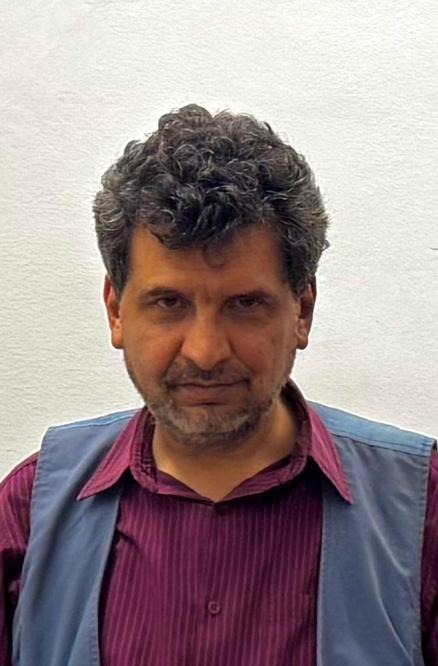
Juan Vadillo reviews “Lucid Breathing”

Reviewer Juan Vadillo

Lucid Breathing of Light by the Mexican poet Beatriz Saavedra Gastélum, reviewed by Juan Vadillo

Lucid Breath of Light

    Juan Vadillo

This book opens like a halo of light.

In a travelogue, light breathes and takes shape as it draws form.

The theme of this collection of poems is the journey of light, its memory, its becoming, its breath. In these verses, light, captured in an instant, is freed from its essence to create the shadow that—paradoxically—is also its root. Between shadow and light—as in Genesis—a single verb creates the world; hence, the book abounds in monostics, verses of a single word, where—among the multiple possibilities of reading—punctuation, what precedes it, and what follows are irrelevant; what matters is the fact that the verse stands alone, with all its connotative power. When a verse is shorter, it tells us more. This is especially evident in the monostic “deaf” of the poem “Silent Light,” which not only expresses the balance between light and silence, but also the kinship—in a Brahmanic sense—between silence and shadow. Everything arises from silence and everything returns to silence.

Between shadow and light, a single word creates the world.

These brief verses by Beatriz Saavedra tell us that a single word is more real than reality itself, because reality was born from a single word. In that very instant, light was born, the delirium of form, the evocation of contour, the imagination of color.

In this book, light appears in all its senses, in all its directions, in all its seeds, in all its voices: the light that filters into dreams, the light that expands in the air, brushing against the skin, the light that unfolds like a fan. The most lucid light in the sculpture of Apollo, but also in the hallucination of Dionysus.

Intoxicating light that blurs the contours in an Impressionist painting, light that draws the contours in a Renaissance portrait. Light of delirium and reason. Light as a metaphor for days and nights, light as a metaphor that reconnects the world as it scatters it. Light that erases itself, that escapes from itself in order to be light.

The book contains 18 poems, each one (except for three of them, “Fugitive Gravity of the Instant,” “Immense Form of Light,” and “Natural Impulse”) includes its respective sections numbered with Arabic numerals. We are struck by the ample spacing between both the lines and the stanzas. In general, the stanzas are very brief, like brushstrokes of light. In most of the eighteen poems, light is the protagonist, appearing in its various facets of synesthesia and kinesthesia, as well as in its mythical and evocative possibilities.

In the poem “Lucid Nakedness,” the wound of light unfolds, converging with lyricism. The formula is: light, beauty, pain for beauty, lament, song, voice with a crack, strumming, light of delirium, all immersed in silence.

In this poem, light is a simile that builds bridges between objects; it is a metaphor that creates identity between the most dissimilar beings, connecting all forms, so that we feel that we are all touched by a single light, that we are all wounded by touching each other, even though we are distantly separated. “All matter of light / exposes its analogies,” read two verses by Beatriz that complement this idea.

In the poem “Invocation,” light is a question that has no answer; we think of Cernuda’s desire (“Because desire is a question whose answer no one knows”), of Ives’s symphonic work (the unanswered question).

In its mystery, light asks us what color is, what form is. The entire poem also feels like a question: why does light become another light once it touches us, while remaining constantly the same? This paradox is one of the central themes of the collection. From this paradoxical thought, many questions arise: “From what light does form hastily spring forth? / Into what cistern is your thought reintegrated?” two lines of the poem tell us. Here, the still water of the cistern bridges the mystery of light and thought. Let us recall that *Lucid Breath of Light* is the title of the collection. The light that breathes in the mystery illuminates thought, gives it vigor, but in turn, the clearer the thought becomes, the more it hides in the shadow at the bottom of the cistern.

The interplay between silence-shadow and the word light unfolds not only in this poem but also throughout the entire collection.

“An atom contains the universe,” Beatriz tells us with a cadence that reveals the infinite and eternal essence of every tiny thing that exists.

If everything contains the universe, the body also contains it; the body, wounded by light, extends beyond the word, which is also body.

In this collection of poems, paradoxical thought invites us to navigate between dream, wakefulness, and the state of semi-sleep. These three forms of experience are traversed by the translucent word, which, fleeting, finds everything only to lose everything. We lose ourselves in all its essences, on the well-trodden paths of light. Light unfolds to infinity on a horizon full of nuances; for an instant, we discover the mystery in the deepest spark of darkness. Light reaches itself when it reaches the most intimate night. It has the virtue of being all forms and none. At the same time that it divides, it also unites.

This collection of poems presents all the diversity of light and momentarily reveals its mystical qualities. Light is flesh because it is also the word that creates flesh; light is the beginning of everything because it is also its end, beginning and end in a snap, beginning and end like a lament for the expulsion from paradise; when the woman bites the fruit, the light begins to wound our skin.

These are the coordinates of a collection of poems that is infinite in each of its words, because in each syllable it evokes the universe that manifests itself in light.

The diaphanous light, the light refracted through a poetic prism, the light found in the darkest depths. Inner light, light that we imagine and that imagines us; light that illuminates an illusory world.

Lucid breath of light, a paranomasia that links the light of thought with the light of wakefulness and sleep, with the light of half-sleep and inner light, with the light of the poem.

Juan Vadillo

He was born in Mexico City in 1970. In 1995, he earned a diploma in jazz composition from Berklee College of Music in Boston. In 1996, he received a grant from the National Fund for Culture and the Arts (FONCA) to pursue postgraduate studies in contemporary improvisation at the New England Conservatory under the direction of Ran Blake. He taught guitar at the Escuela de Música Creativa in Madrid.

In 2020, Bonilla Artigas Editores and the Humanities Coordination of the National Autonomous University of Mexico (UNAM) published his book of literary criticism, *El romancero gitano, de la tradición a las vanguardias* (The Gypsy Ballads: From Tradition to the Avant-Gardes). In 2023, Bonilla Artigas Editores published his second book of poetry, *Tu cuerpo es un jardín de mil instantes* (Your Body Is a Garden of a Thousand Moments). Since January 2020, he has been a Level 1 National Researcher in the National System of Researchers. He currently teaches literature at the Faculty of Philosophy and Letters of UNAM, where he has been a professor for eight years.

Beatriz Saavedra Gastélum

Beatriz Saavedra Gastélum

A Mexican, she is a writer, academic, researcher, journalist, lecturer, and poet. She holds two master’s degrees from Spain and has been awarded four honorary doctorates. To date, she has published more than 30 books in Mexico and abroad, and her work has been translated into more than 10 languages. She is a columnist for the Diario de Madrid, Diario Siglo XXI in Spain, and the newspaper El Capitalino. Among her most recent awards are the Pavlovich Korolev Medal in Russia 2023, the Alejandra Pizarnik International Literature Prize in Spain 2024, the Il Canto di Dafne Prize in Italy 2024, the Mexico Journalism Prize in 2024 and 2025, the Anaïs Nin International Erotic Literature Prize in Spain 2025, and the “Aristotle” Essay Prize in Spain 2025. She is the Director of the Center for Women’s Studies and the International Festival “Women in Letters” at the National Academy of History. Geography UNAM and President of the Mexico chapter in the North American Academy of Modern Literature.
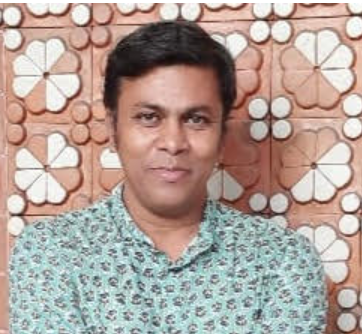
Poetry from John Grey

CAFFEINE

It’s just me and my morning coffee here.

And the light through the kitchen window of course.

Not forgetting the chill in the air

that the warm is starting to get around to.

But, in lieu of company, I have this cup.

Instead of conversation, I sip.

In the world of anatomical animation,

this caffeine juice is paramount.

My mouth creases upwards into a smile.

My eyes flick aside the sleep detritus,

open wide.

I am coming into my body, into my own. 

Soon I will be ready for the world.

Who knows?

I might even, in my own way, shape it.

WELCOME 

The baby draws her first breath.

A nurse’s brown eyes look down on her.

It’s all good now they say

but just you wait.

The doctor takes no side.

He’s here to do his job.

Some woman meekly asks,

“Can I see her.”

Her glass body lies in pieces.

But at least her heart is intact.

For now.

The nurse camps a red face 

inches from the pillow.

The baby waves her arms like wings.

Through the blur of pain,

she’s soft enough

to be an angel.

An angel that’s fishing for compliments.

So soon. So young.

TOM

Tom’s body just developed sooner

than the skinny frames of the rest of us.

He arms and legs grew muscles 

while our limbs could have cleaned pipes.

No wonder he was school sports star: 

best player in the rugby and cricket teams,

fastest in the hundred and two hundred,

records in the long jump and javelin.

His school work was below average.

He hated to read

and he struggled with geometry.

But we made him class captain anyhow.

He was never a smartass, never a bully.

Kids looked up to him,

figuratively and literally.

But things didn’t go so well for him

once he left school.

Most of us caught up with him

in size if not in speed.

He worked in his father’s garage,

liked a drink, lost two teeth in a fight,

got a girl pregnant and married her,

divorced, took over the business 

when his father died,  then learned

to really love a drink, went bankrupt,

lost track of his kid, ended up on

the streets and sleeping on a park bench,

spent the rest of his days as an example

for mothers to point at when they were 

out with their children.

I saw Tom not long before he died.

He was unshaven, dressed in torn t-shirt

and greasy jeans, and sneakers that

flapped at the toes.

Most people avoided him.

I just bent my head down 

as he cried out, “Hey, don’t I know you?”

I remembered so many times 

when guys were picking sides 

and Tom was always first one called

and I was near last.

Now life had chosen me well ahead of him.

But that did nothing for my pride, my ego.

If it was a game 

than it was one that didn’t feel right,

wasn’t worth playing.

He staggered onward.

I just kept walking.

ODE TO HOLLY

Here’s a sharp air to match its claws, 

a chilly white to shimmer its dark blood, 

a wind to blow the ilex blue 

at a Christmastime of gloved hands plucking.

But here’s a survivor in a hard-bitten land,

a stem of insurrection,

leaves defiantly evergreen,

branches bone-brittle

but militant against the freeze.

GREEN MAN

I walk where hills lean into sky, 

where green is a language all its own.

My lungs, grateful. My mind, 

rinsed clean by lordly pine 

and patient moss.

What else is there but to wander – 

to listen for the shy rustle of brush, 

the flit of wings, the soft syllables spoken

by trees to the wind?

My boots speak in twig-snaps and stone-taps, 

but even they fall silent when the breeze arrives, 

a gentle visitor brushing my cheek.

The forest stirs. And I, no longer needing to speak, 

am blessed by the quiet.

Honestly, it knows more than I do.

John Grey is an Australian poet, US resident, recently published in Midnight Mind, Novus and Abbey. Latest books, “Bittersweet”, “Subject Matters” and “Between Two Fires” are available through Amazon. Work upcoming in the MacGuffin, Touchstone and Willow Review.

Poetry from Anindya Paul

Whispers from the Heart 

I wish to touch—just once—

your words, 

your melodies,

and all that is miraculous.

I wish to listen—just once—

with my whole consciousness,

to the heartbeat of every single letter 

you utter. 

And if you have no objection,

I wish to lift upon my fingertip

that single drop of the universe

lingering upon your lips. 

Then, if you choose to erase 

my blooming world,

I will vanish without a trace—

like the sunshine of the night… 

Those Who Depart 

Those who depart— 

do they truly dissolve into darkness, 

becoming utterly devoid of light?

Those who depart never return, 

yet they leave behind their pen, 

resting beside the throes of death.

Tucked away in the hem of a tattered 

sheet, they conceal all the strange 

wonders of their lives.

They move a little further ahead, 

even though there remains nothing left 

to look back upon.

Those who depart—in some other world, 

they fill the naked, blank 

expanse of white paper… 

Poetry from Yongbo Ma


The Legend of Loquat Island

1. You Bring All of Yourself

When the sun has fully turned to summer,

you are still there,

among the indistinct clouds.

You do not come,

do not step on any of the seven strings,

rhythmically stepping out of the unclear clouds.

Nor do I go.

The stop sign is yellow, hidden by pagoda blossoms;

I fear I might lose my way.

The wind runs along the shadows of flowers till noon,

and noon shatters in the sound of the qin.

Flowers are like eyes, gazing at fruits from afar.

Leaves and sails turn brown gradually —

summer is growing old.

For loneliness is a game of Go,

played by the left hand against the right.

In a throat murmur, I paint rust over your name,

walk near the fence, bend with the grapevines and peer.

It is already summer, so much summer.

Soon the flowers will put on yellow jackets.

The last bus always writes ugly novels,

yet cannot write your warm name.

You are my summer.

When you come, summer stays.

Let maple leaves burn themselves out.

As long as you bring all of yourself.

2. Perhaps I Do Not Love You

Perhaps I should not speak this obscure sentence.

Your drizzle is about to damp my swaying steps again.

Your story moves me,

moves the vast seasonal moods in my heart.

A liquid landscape rises on our cheeks, a curved theme.

Your eyelashes, scattered with chinaberry flowers,

take me as your future.

Yet from your small figure, I revisit my past.

In this summer with a mischievous sun,

innocent fruits stir the noise of old days.

It is only that we are too gentle, like water,

fond of waiting and remembering.

All from one moment’s attention

grew into the whole secret of my life.

I love you — the shadow of my childhood in you.

Please love me too — your promised autumn in me.

Let us be two mirrored Z’s,

lyrical on either side of a single sentence.

3. Duet

We walk into a night without a title,

into a bumpy alley.

The moon, a yellowish raven,

holds the burning road behind us.

One easily grows emotional in the dark.

You say it’s nothing — we’re poets,

so I am no longer shy.

I take your hand and walk past the lamps of misunderstanding.

Alley connects to street; the alley is a solo.

We are a bumpy duet,

perhaps all duets are like this.

We laugh secretly, and our laughter turns to flowers on branches.

We cannot turn back; the moon still lingers,

we have lingered too.

That year we both lost love, both looked pale.

It is fate, you say, pressing your lips

and holding me tighter.

I only lift my head and whistle a clumsy tune.

The alley leads to the long street.

We count the stop signs one by one and do not stop.

In every tree shadow, two pairs of eyes catch each other.

The duet behind us spreads into a clear mixed forest.

You imitate my whistle,

then scare yourself away.

On the main street,

we give away our bumpy heartbeats

to all the lingering figures of Pisces.

4. Loquat Island

Loquat Island lies where God does not reach.

Invitations are rejected,

stamps are rejected.

Even the temperamental typhoon

cannot land on Loquat Island.

Loquats on Loquat Island never ripen.

Summer flowers only bloom for crowded music.

All numbers from one to seven love lyricism.

Loquat Island, Loquat Island, far out at sea.

Tender green coconuts are lifted by tides to keep balance.

Drift bottles carry distant questions.

We pass through the typhoon.

We land gently, on each other’s coastal lips.

Since we came, the moon has hidden in the bird’s nest in the tree,

the sun has lost its way in our eyes,

and drizzle always murmurs softly.

Since we came, loquats no longer turn sour.

We occupy the date of waves and rocks,

the date of moon and sun.

We link our hands into a rainbow and claim sovereignty.

With a wave of the sleeve,

we snap the rope of the canoe,

wave away the one-way wind and rain.

Let us stay on Loquat Island —

be two loquat trees growing ten leaves each,

standing in a season where even stones can bloom.

Loquat Island, Loquat Island, abundant in love.

Let us pretend to be mountain spirits,

cloaked in litchi leaves, greedy and playful.

If one day the sea is stuffed full of loquats we shake down,

will you invite the lovelorn typhoon

to come to our Loquat Island

and taste authentic loquat love?

May 24, 1985

Poetry from Pat Doyne

ARC DE TRI-UMP
He wants to build a monument, so time
will not erase his clout– acclaim will last.
Napoleon’s great arch, built centuries past,
draws tourists still. His polls will surely climb
if he constructs a shrine that shouts his name
and carves in stone his face, his wealth, his deeds.
Hotels are not enough. A landmark speeds
prestige, and guarantees ongoing fame.
Who needs another vintage obelisk?
One shape sums up his powerful impact:
a novel icon– it just might redact
fake news of war crimes, loss, and nuclear risk.
His war affects the whole world’s oil supply.
Proposed: a golden gas pump, built sky-high!

Copyright 4/2026 Patricia Doyne

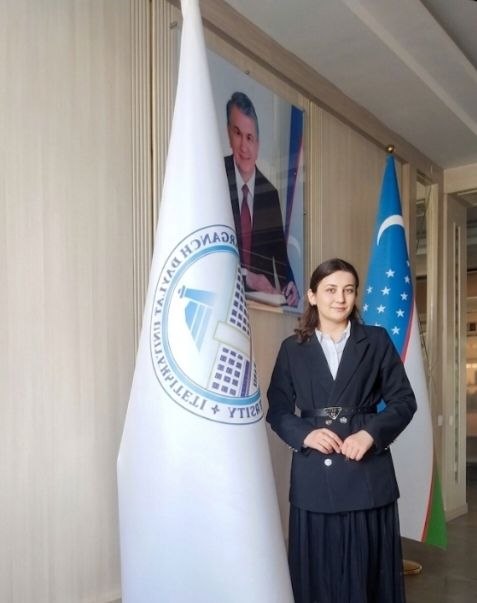
Essay from Nozimova Shukrona

The Power of Books: How Reading Shapes Our Minds

Books are more than just words on pages—they open doors to new worlds, ideas, and experiences. From the moment we learn to read, books begin to shape our minds, expand our imagination, and help us understand the world. Every story teaches us something about people, cultures, and emotions. Reading encourages curiosity, empathy, and broader thinking.

Books also develop creativity and critical thinking. While reading, we imagine scenes, interpret meanings, and connect ideas. Reading also improves vocabulary and helps us express thoughts clearly. In today’s fast-paced information age, books provide a space for deep thinking and reflection that short messages or headlines cannot replace.

Reading affects not only personal growth but also society. Readers tend to be open-minded, empathetic, and more understanding of other cultures. Knowledge gained from books helps individuals contribute more thoughtfully to their communities.

In conclusion, reading enriches our minds, hearts, and lives. It opens doors to knowledge, nurtures empathy, and strengthens creativity and critical thinking. Books are not just a form of entertainment—they are a powerful force shaping personal and social development.

My name is Nozimova Shukrona, and I was born on January 31, 2011, in Oltiariq district of the Fergana region. Currently, I am a 9th-grade student at the Fergana branch of the specialized school named after Muhammad al-Khwarizmi.

Despite my young age, I have a strong interest in science and creativity. Since my early school years, I have actively participated in various academic competitions. For example, in grades 5–7, I took part in the Hippo English Olympiad and the Kangaroo Mathematics competition, where I had the opportunity to test and improve my knowledge.

In 8th grade, while studying at Specialized School No. 4 in Oltiariq, I was also a member of the “Zakovat” intellectual team, and together with my team, we achieved 4th place in the district competition. During the same year, I ranked among the top 10 in the district stage of the Al-Khwarizmi Olympiad. I have also taken part in many subject Olympiads and achieved high results.

Currently, I am participating in the provincial stage of the History Olympiad, where I continue to demonstrate my knowledge and abilities. In addition, I am a member of my school’s “Zakovat” intellectual team, and we are competing at the provincial level. Recently, I achieved a B+ level in the National Certificate exam in Uzbek Language and Literature. I am also interested in sports. When I was younger, I practiced gymnastics and won several competitions.

I actively participate in different initiatives and projects, where I not only show my eagerness to learn but also develop my leadership skills. I have clear goals for the future, and my dreams are high.

Essay from Nurmatova Charosxon Pirnazar qizi

The Application of Artificial Intelligence and Digital Technologies in Education and Society

Nurmatova Charosxon Pirnazar qizi

Annotation:

This article attempts to conduct a fundamental analysis of how artificial intelligence (AI) and digital ecosystems—one of the greatest technological and ontological turning points of human civilization—are reshaping the global architecture of society. The paper scientifically substantiates the inefficiency of traditional educational paradigms and the emergence of adaptive algorithmic systems that expand human cognitive abilities.

The central idea of the research is to interpret AI not merely as a technical tool, but as a “catalyst” that enhances the intellectual potential of society. The findings present innovative strategies for personalizing the educational process, eliminating the digital divide, and adapting to transformations in the labor market. In the context of technological determinism, the concept of a “Humanistic Digital Society” is proposed, which prioritizes the human factor and digital ethics.

Main Part:

Today, the educational process has moved from the stage of “information transmission” to the stage of an “intellectual ecosystem.” Artificial intelligence (AI) here functions not only as a tool but also as a personalized learning companion.

Digital technologies enable a transition from vertical (hierarchical) governance systems to horizontal (network-based) structures in society. Society is now measured not by geographical boundaries, but by “data flows.” In modern governance, digital models of cities, transport systems, and even social groups are being created.

With the help of AI, optimizing resources (energy, water, logistics) not only increases economic efficiency but also systematically eliminates corruption and subjectivism associated with human factors. According to research, by 2030, AI will perform up to 85% of tasks such as data entry, standard calculations, and basic diagnostics. This leaves humans responsible mainly for empathy, creativity, negotiation (soft skills), and ethical judgment.

Conclusion:

In conclusion, artificial intelligence and digital technologies are not merely the next innovation, but a new chapter in the intellectual evolution of human civilization. This study shows that transformation in the education system is not just about replacing textbooks with tablets—it is about creating a “personal intellectual environment” that elevates each individual’s potential to an unlimited level and expands their cognitive abilities.

Nurmatova Charosxon, Uzbekistan