
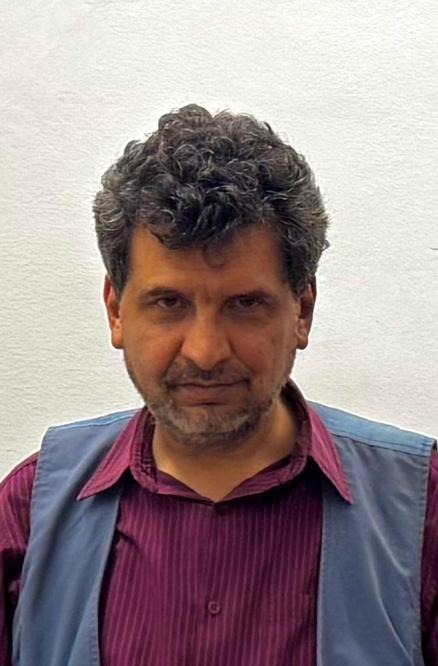
Lucid Breathing of Light by the Mexican poet Beatriz Saavedra Gastélum, reviewed by Juan Vadillo
Lucid Breath of Light
Juan Vadillo
This book opens like a halo of light.
In a travelogue, light breathes and takes shape as it draws form.
The theme of this collection of poems is the journey of light, its memory, its becoming, its breath. In these verses, light, captured in an instant, is freed from its essence to create the shadow that—paradoxically—is also its root. Between shadow and light—as in Genesis—a single verb creates the world; hence, the book abounds in monostics, verses of a single word, where—among the multiple possibilities of reading—punctuation, what precedes it, and what follows are irrelevant; what matters is the fact that the verse stands alone, with all its connotative power. When a verse is shorter, it tells us more. This is especially evident in the monostic “deaf” of the poem “Silent Light,” which not only expresses the balance between light and silence, but also the kinship—in a Brahmanic sense—between silence and shadow. Everything arises from silence and everything returns to silence.
Between shadow and light, a single word creates the world.
These brief verses by Beatriz Saavedra tell us that a single word is more real than reality itself, because reality was born from a single word. In that very instant, light was born, the delirium of form, the evocation of contour, the imagination of color.
In this book, light appears in all its senses, in all its directions, in all its seeds, in all its voices: the light that filters into dreams, the light that expands in the air, brushing against the skin, the light that unfolds like a fan. The most lucid light in the sculpture of Apollo, but also in the hallucination of Dionysus.
Intoxicating light that blurs the contours in an Impressionist painting, light that draws the contours in a Renaissance portrait. Light of delirium and reason. Light as a metaphor for days and nights, light as a metaphor that reconnects the world as it scatters it. Light that erases itself, that escapes from itself in order to be light.
The book contains 18 poems, each one (except for three of them, “Fugitive Gravity of the Instant,” “Immense Form of Light,” and “Natural Impulse”) includes its respective sections numbered with Arabic numerals. We are struck by the ample spacing between both the lines and the stanzas. In general, the stanzas are very brief, like brushstrokes of light. In most of the eighteen poems, light is the protagonist, appearing in its various facets of synesthesia and kinesthesia, as well as in its mythical and evocative possibilities.
In the poem “Lucid Nakedness,” the wound of light unfolds, converging with lyricism. The formula is: light, beauty, pain for beauty, lament, song, voice with a crack, strumming, light of delirium, all immersed in silence.
In this poem, light is a simile that builds bridges between objects; it is a metaphor that creates identity between the most dissimilar beings, connecting all forms, so that we feel that we are all touched by a single light, that we are all wounded by touching each other, even though we are distantly separated. “All matter of light / exposes its analogies,” read two verses by Beatriz that complement this idea.
In the poem “Invocation,” light is a question that has no answer; we think of Cernuda’s desire (“Because desire is a question whose answer no one knows”), of Ives’s symphonic work (the unanswered question).
In its mystery, light asks us what color is, what form is. The entire poem also feels like a question: why does light become another light once it touches us, while remaining constantly the same? This paradox is one of the central themes of the collection. From this paradoxical thought, many questions arise: “From what light does form hastily spring forth? / Into what cistern is your thought reintegrated?” two lines of the poem tell us. Here, the still water of the cistern bridges the mystery of light and thought. Let us recall that *Lucid Breath of Light* is the title of the collection. The light that breathes in the mystery illuminates thought, gives it vigor, but in turn, the clearer the thought becomes, the more it hides in the shadow at the bottom of the cistern.
The interplay between silence-shadow and the word light unfolds not only in this poem but also throughout the entire collection.
“An atom contains the universe,” Beatriz tells us with a cadence that reveals the infinite and eternal essence of every tiny thing that exists.
If everything contains the universe, the body also contains it; the body, wounded by light, extends beyond the word, which is also body.
In this collection of poems, paradoxical thought invites us to navigate between dream, wakefulness, and the state of semi-sleep. These three forms of experience are traversed by the translucent word, which, fleeting, finds everything only to lose everything. We lose ourselves in all its essences, on the well-trodden paths of light. Light unfolds to infinity on a horizon full of nuances; for an instant, we discover the mystery in the deepest spark of darkness. Light reaches itself when it reaches the most intimate night. It has the virtue of being all forms and none. At the same time that it divides, it also unites.
This collection of poems presents all the diversity of light and momentarily reveals its mystical qualities. Light is flesh because it is also the word that creates flesh; light is the beginning of everything because it is also its end, beginning and end in a snap, beginning and end like a lament for the expulsion from paradise; when the woman bites the fruit, the light begins to wound our skin.
These are the coordinates of a collection of poems that is infinite in each of its words, because in each syllable it evokes the universe that manifests itself in light.
The diaphanous light, the light refracted through a poetic prism, the light found in the darkest depths. Inner light, light that we imagine and that imagines us; light that illuminates an illusory world.
Lucid breath of light, a paranomasia that links the light of thought with the light of wakefulness and sleep, with the light of half-sleep and inner light, with the light of the poem.
Juan Vadillo
He was born in Mexico City in 1970. In 1995, he earned a diploma in jazz composition from Berklee College of Music in Boston. In 1996, he received a grant from the National Fund for Culture and the Arts (FONCA) to pursue postgraduate studies in contemporary improvisation at the New England Conservatory under the direction of Ran Blake. He taught guitar at the Escuela de Música Creativa in Madrid.
In 2020, Bonilla Artigas Editores and the Humanities Coordination of the National Autonomous University of Mexico (UNAM) published his book of literary criticism, *El romancero gitano, de la tradición a las vanguardias* (The Gypsy Ballads: From Tradition to the Avant-Gardes). In 2023, Bonilla Artigas Editores published his second book of poetry, *Tu cuerpo es un jardín de mil instantes* (Your Body Is a Garden of a Thousand Moments). Since January 2020, he has been a Level 1 National Researcher in the National System of Researchers. He currently teaches literature at the Faculty of Philosophy and Letters of UNAM, where he has been a professor for eight years.
Beatriz Saavedra Gastélum

A Mexican, she is a writer, academic, researcher, journalist, lecturer, and poet. She holds two master’s degrees from Spain and has been awarded four honorary doctorates. To date, she has published more than 30 books in Mexico and abroad, and her work has been translated into more than 10 languages. She is a columnist for the Diario de Madrid, Diario Siglo XXI in Spain, and the newspaper El Capitalino. Among her most recent awards are the Pavlovich Korolev Medal in Russia 2023, the Alejandra Pizarnik International Literature Prize in Spain 2024, the Il Canto di Dafne Prize in Italy 2024, the Mexico Journalism Prize in 2024 and 2025, the Anaïs Nin International Erotic Literature Prize in Spain 2025, and the “Aristotle” Essay Prize in Spain 2025. She is the Director of the Center for Women’s Studies and the International Festival “Women in Letters” at the National Academy of History. Geography UNAM and President of the Mexico chapter in the North American Academy of Modern Literature.