
Gastric Juice

What is a woman if not fluid

cursed and born bubbling up the esophagus

meeting fingers at the uvula and spewing

heated siren songs of stomach acid and

torn-up lemon slices and cucumber bile.


if not trapping and festering life

with eyes of gold and silver-plated teeth,

they cover tobacco stains under lips stapled tight

shrouding their deadbeat heart

with red right-hand knuckles.


What is a woman if not a frame imagined

too plump, if not a figure

malnourished from longing, yet so full

from desire, of indentured servitude

to their own stomach rumbling

with craze and clouded appetite.


A woman, if not

A sickly yellow vomited like

a scream amplified

From the depths of the womb.
Poetry from Mark Young
Antelope Field

There are antelope
in the field down
the road. Okay,
well maybe not
antelope, but nyala
or oryx. & maybe
it’s not a field
but a patch of
garden which in
reality is too small
for the eland &
in reality is not
even a garden but
a window box in
which the cat sits
soaking up the sun.
& since I don’t have
a window or a cat
it’s quite possible
that this scene
from the wilds is
nothing more than a
screensaver that
comes on after
I’ve been away from
the PC for at least
three minutes. Which
I haven’t been, I’ve
been sitting here
all the time. So maybe,
just maybe, it all
comes down to
a plasma rectangle
that is framed by
tool- & scroll-bars
but is otherwise
entirely white except
for the two words
floating at the top.
Field. Antelope.


Putsch

He picked
up whatever
thoughts
were upper-
most in
his mind at
the time

ran with them
for a while

& then
discarded them
as if they were the
children of
a past regime.


Nijinski reminisces

Exuberance
is in an eye
much more

beholden
to the magic
of the mo-

ment than to
the pattern
of the dance.


Inside knowledge

Or:
knowing where
the bodies are
buried.

Or:
knowing when
the berries are
bodied.


On Journeys

The shape of the journey
has something to do
with color. A small part
but important. The color
has to do with the shape
of those things you are
looking for. Also important,
not so small. The taste lies

on your tongue. Sound is
restricted by allowing one
album to come along with
you. Either earphone music
or that playlist in your mind
cycling through an endless loop.
Duane Vorhees reviews Jacques Fleury’s collection You Are Enough: The Journey To Accepting Your Authentic Self

Jacques Fleury marches in the long parade headed by drum major Walt Whitman. But many observers from the street are still uncertain of the spectacle. One of Whitman’s early literary friends and admirers, John Townsend Trowbridge, recalled that he found in the poet’s first (1855) edition of Leaves of Grass “much that impressed me as formless and needlessly offensive; and these faults were carried to extremes in the second and enlarged edition of 1856” and that much of the early criticism centered on “his unrhymed and unmeasured lines.” And Trowbridge also referred to Ralph Waldo Emerson’s remark on Whitman’s later work: “No more evidence of getting into form.” Whitman was ignored by the establishment for most of his writing career, and when noticed he was reviled and ridiculed, but his work was the beginning of what is known as free verse.
While free verse has become the dominant form of contemporary American poetry, and has largely shucked its socially “offensive” character, it still has many detractors among those who relish what Whitman called the “ballad style,” with its emphasis on rhythm and rhyme. Although he also indulges in rap-style rhyming, Fleury reflects on this dichotomy between acceptable and unconstrained poetry (imposed by “an all-white order” with its “long history” of imposing its “cultural values and / Socio-political power” in his free verse poem, “Random Musings about Submission,” in which he reflects on the rejection of one of his poems by a nameless publication, “Thank you for your submission. But your work is not a good fit for our publication.” In response, Fleury launches into a racially-charged defense of his identity as a non-binary non-WASP poet, writing as “an ignoble omnivorous muskrat.” After tracing his poetic heritage back to the epics of Gilgamesh, Beowulf, and Roland, he demands an “all-inclusive literary faction / Where ALL postulatory voices are worthy of publication” and he vows to continue to submit but NEVER to their behest for submission!!!”
In “Who Am I?” Fleury further defines his identity as a “multilayered entity … / a building block of heterogenity.” (He briefly adopts an effective set of off-rhyme couplets, “I am a malady / I am a remedy / I am a rainbow / I am a shadow”), while in another poem, “Possible Causes and Effects of Cited High Blood Pressure,” he itemizes standard medical data (family history of heart disease, poor dietary and sleep habits) and adds racism to the list. However, despite the bitterness expressed in much of his work, he also notes, in “The Only Way to See the Stars…,” that such seeing is “through the darkness.”
So Fleury’s free verse is free enough to incorporate occasional diversions into “ballad style” renderings. But, again according to Trowbridge, even Whitman’s own pioneering “writings became … more consciously literary in their aim.” Or, as Emerson remarked, in a different context, “A foolish consistency is the hobgoblin of little minds.”
Jacques Fleury is a Boston Globe featured Haitian-American Poet, Educator, Author of four books and literary arts student at Harvard University online. His latest publication “You Are Enough: The Journey to Accepting Your Authentic Self” & other titles are available at all Boston Public Libraries, the University of Massachusetts Healey Library, University of Wyoming , Askews and Holts Library Services in the United Kingdom, The Harvard Book Store, The Grolier Poetry Bookshop, amazon etc… He has been published in prestigious publications such as Muddy River Poetry Review, the Cornell University Press anthology Class Lives: Stories from Our Economic Divide, Boston Area Small Press and Poetry Scene among others…Visit him at: http://www.authorsden.com/jacquesfleury.
Duane Vorhees is an American poet in Thailand. He is the author of THE MANY LOVES OF DUANE VORHEES, HEAVEN, GIFT: GOD RUNS THROUGH ALL THESE ROOMS, MEMORIES ARE LINKED LIKE OASES, A CONSIDERABLE SHARE OF FELICITY, and THE WOMB AND THE BRAIN. Born in Farmersville, Ohio, USA, he graduated from Bowling Green State University with a doctorate in American Culture Studies. He has taught at Seoul National University, Korea University, and the Asian Division of the University of Maryland University College (now the University of Maryland Global Campus).
Essay from Jorabayeva Ezoza Otkir

Water and fire
Since time immemorial, the four elements of the world – water, fire, earth and air – have been highly revered among the people. According to the story, fire and water have their own history. Thousands of years ago, these two elements lived without conflict and respected each other. Water did not prevent the fire from burning cheerfully, did not extinguish it, and fire did not stop the water from flowing, did not evaporate it. Until feelings arise between them that other elements do not understand. This feeling that breaks the ties between them is Hate. Another elements analyzing this and the rest of they could not oppose this work, and they decided the Water that extinguished the Fire absorbed to the Earth, and the Fire that caused the Water to evaporate became incombustible without Air. Hate is such a subtle emotion that it can change the whole being. Hate is an emotion that leads to weakness and dependence and ends up being abstract. There is weakness as fire does not burn without air, and abstraction as water soaks into the soil.
Scientists say that all the objects around us are colorless. The green, red, blue and other colors that we see are all from our imagination. So, I want to say that how person looks to the environment, the environment looks like that to him. The positive and negative view is in our hands. They say that a cow collects milk and a snake collects poison from the same grass. If we make our thoughts and minds beautiful and enrich our thinking with wonderful things, we have the opportunity to make life beautiful not only for ourselves, but also for those around us. Therefore, as mentioned above, we should try to make our eyes and mind beautiful. Try what I said based on your own experience and may be you come to say “Thank you”.
Jorabayeva Ezoza Otkir was born on March 16, 2006 in Chirchik, Tashkent region. Secondary education. After graduating from the 28th general secondary school in the Qibray district of Tashkent region, in 2023 she became a student of the “Management of Culture and Art” field of the State Institute of Arts and Culture of Uzbekistan. participated with her article on the subject and was awarded with a certificate. In 2023, at the “Young border guards” military-sports competition held by the State Security Service of the Republic of Uzbekistan, she ran 100 meters and set a record with a result of 14.1 seconds, winning the nomination “The strongest girl”. 2nd place in the national stage of the “Patriots” military-sports competition among non-organized youth for the cup of the Minister of Defense under the slogan “Our National Army – in the eyes of the youth” for 2022, “Science researchers center” on December 20, 2023 took an active part in the “Student of the Year” competition, organized in cooperation with the scientific press center and the “Ziyoli pedagoglar” channel, and became the winner, awarded with a statuette and a certificate, within the framework of the 2024 neighborhood youth 5 initiative Olympiad, table tennis type of sport won the 1st place in the sector and district stages of the competition held on awarded. Her works have been published in international and republican magazines and newspapers.
Essay from Michael Robinson
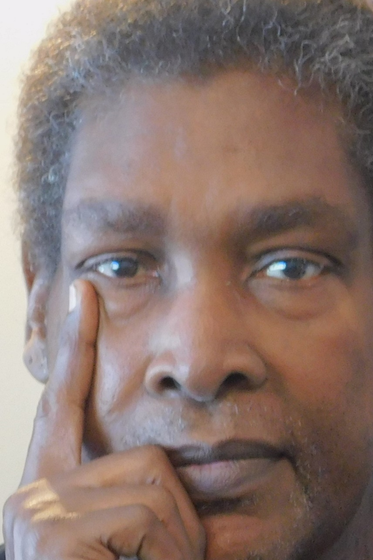
Faith In Walking With Jesus
Scripture: Hebrews 11:6 (MSG) – “It’s impossible to please God without faith. Anyone who wants to approach God must believe both that he exists and that he cares enough to respond to those who seek him.”
Message: My Christian walk started in childhood. I felt alone in the middle of the street, not knowing where I was to go. I was about eight or so at the time.
I remember that night and the fear and the confusion and the uncertainty. My foster mother, Dee, spoke of Jesus often. In my fear and loneliness, Jesus came to me. I thought about dying. There were many times since then that I felt alone.
The tears often fell down my cheeks. Throughout the years I always prayed for God to “Help me!” I can only describe a sense of peace and comfort as I prayed. This feeling remains with me to this day at the age of sixty-seven.
I always thought that only God could give me the sense that I was not alone when I prayed my “Help me!” prayer. The comfort and peace and wholeness was strongest in the sanctuary of my heart.
Today, no matter where I am I know Jesus is walking with me. I often return to the sanctuary of my heart seeking His comfort and peace which came that night as a child standing on the corner. It is there where I still find His comfort, His peace and His guidance for which I am most grateful.
Prayer: My Heavenly Father who created me, You have given me Your Holy Son to walk with me throughout my life. You have never forsaken me, nor have You left me to die in the streets. You have poured out Your love for me and placed it in my heart. I praise You and vow to continue to love and cherish You for all eternity.
Amen.
Poetry from Oz Hartwick
Checking In
In the anteroom, the muzak’s too close for comfort. I mean, I can tolerate its sick-sweet breath at the rim of my ear, but I don’t want it in my head. Synthesised drums and a voice that could never identify all images containing traffic lights. A lyric tossed off by a minimum wage chatbot on a Friday afternoon. And why, after all, am I here, surrounded by fish tanks, and waist deep in picture papers from the early twentieth century? There was, I recall, a black-bordered invitation, an urgent but ambiguous phone call, and a tip-off from a carnival card reader who saw tall dark strangers and profound transformations. It was, perhaps, written in the stars at the bottom of my primary school homework. It’s all, of course, immaterial to the point of phantasm, as the muzak sticks on a low-pitched drone, and a small door opens with a sound like a breaking bone. In the darkness beyond, a dog’s eyes flash both welcome and warning.
The Sunrise Arc
The garden shifts when we turn away, with daffodils becoming dahlias, roses becoming rhododendrons, and other seemingly chance transformations governed by nothing but the laws of alliteration. The lawn becomes a lake, the paths become planets orbiting a star that, last time we looked, had been nothing but a snowdrop. And the glasshouse is a gas nebula some 700 light years from where we stand, fleeting nodes of awareness in the exhalation of spacetime. A black hole becomes a bee, humming its way from singularity to sunlight on purple petals. It is precisely fourteen steps to the gate and, 28 billion light years beyond that, Earendel shines a million times brighter than our humble Sun.
The La La Log
Having lately retired to a small village in the hills, I am struck by the shifts in what passes for real. Houses are painted like bathing huts and are larger on the inside than out, with each room opening onto fields and distant mountains, and staircases winding into clouds. Cobbled streets breathe like the spine of the serpent that circles the world, and car wheels spin in clear air so as not to wake it. Everyone exhibits aspects of the spectral, walking through walls and through each other, and speaking in dead languages which, though weighted with bulk and portent, approximate the harmony of angels. Signposts gesture to a glistening Yes, and time, as it said in the guidebooks I once dismissed as mere fantasy, runs backwards.
24/7
The chemist opens her heart to let the children in. Grazed knees and ears that ring like cracked church bells. Throats raw as condemned buildings. She doles out lint and lozenges, with gloved hands and loving eyes that say: Yes, I have sat alone, watching moths circle the antiseptic flame. Many burn, but those which survive are transformed for the remainder of their brief and beautiful lives. We are all sisters and brothers of the powdery wing; all flirtatious with the rush of extinction. The children all love her, kissing the hem of her white coat before erupting back into the sun. They will remember her when they have children of their own. They will remember her when their wings turn to dust.
Oz Hardwick is a European poet who stumbled into academia through not paying attention. He has published “a dozen or so” collections, most recently the chapbook Retrofuturism for the Dispossessed (Hedgehog Poetry Press, 2024). He has won many prizes, mostly for an extensive knowledge of 70s music trivia, but some for poetry. Oz is Professor of Creative Writing at Leeds Trinity University.
Essay from Federico Wardal

“The Amazonian culture supports our life ” by Federico Wardal
Claudia M. Costa, with Latin and North American and Italian roots, through her travels, in the Amazon forest and indigenous populations of fundamental importance, has been combining for years deep spirituality, nature and health and visual and poetic art in a very strong and beneficial synergy.
Here are some comprehensive answers from Claudia Costa, which deeply tell her very interesting Amazonian experience from 2019 to August 2024, with my comments on the synergies between spirit, art and nature, lost for millennia in our world and which it is time to integrate, in the total interest of our health, culture and better quality of life.
Claudia Costa introduces for us: Yawanawa Dietas in the Brazilian Amazon
Acre is a state located in the North West region of Brazil where some of the most dense jungles of the Amazon forest are found. Along the Rio Gregorio lives an ancient Tribe known as the Yawanawa which means People of the wild boar. I’ve had the privilege of visiting them since fall of 2019 when I first went with a group during the inauguration of Sacred Village or Aldea Sagrada. This is where Chief Biraci Nixiwaka and his wife the first woman Paje Putanny reside along with their children and a few other members of their extended family. It’s a relatively smaller village with fewer than a hundred residents, all relatives of the Chief who carry the Shamanic lineage inherited by blood. They are descended from the best hunters, woodworkers, herbal foragers and healers and they take this work very seriously while still maintaining a playful nature. “
Here Claudia Costa, did her first Kambo diet or Kapü diet in Sacred Village where she asked Nixiwaka permission to work with his nephew who became her teacher and their frog medicine. She also had the honor more recently of doing her Mama dieta in Nova Esperança village which is an hour downstream from Aldea Sagrada.
An experience that Claudia says changed her life, regenerating it also from a spiritual point of view.
“The tribe’s signature phrase is “So Alegria” or “Only joy” which they yell at the peak of the effects of the medicine during their Ayahuasca or Uni ceremonies. When the “Força” or mind-altering peak gets very strong they yell, “Segura Firme” or “Hold on tight” a phrase coined by the chief of “Nova Esperança” or “New Hope” Village named Iskukua. He’s one of Nixiwaka’s thirty-six children, eighteen boys and eighteen girls. Putanny is the mother of four of his youngest children. Their youngest son Mukaveine is also known as Caçiquiño or Little Chief as he is next in succession for leadership. In addition to Sacred Village Nixiwaka is also the Main Caçique for all ten Villages though each also has their own leadership, such as Rasu in Mutum Village about two hours downstream and Shaneihu Chief of Yawarani Village. “
Mutum, Claudia says, is a popular place for celebrities and entrepreneurs to visit but she has found the sister villages of Nova Esperança and Aldea Sagrada to be exceptionally traditional and therefore more aligned with her needs.
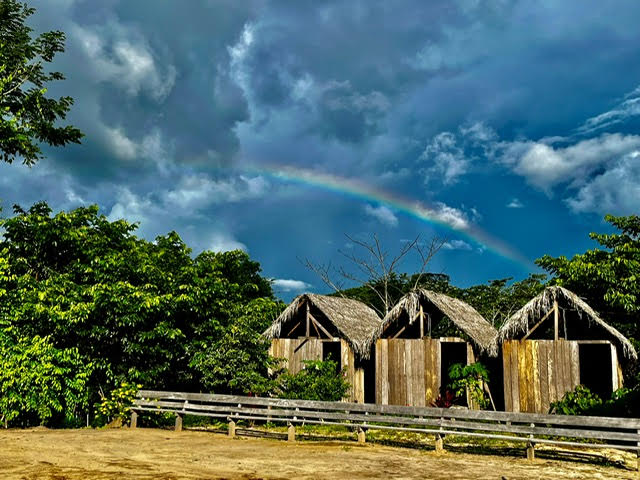
In these two villages they place more emphasis on their ancestral language and herbal healing, both of which pique her interest.
And here the musical dimension joins the rest to enhance the healthy aspect.
Their wisdom is said to be handed down through music especially when these songs are learned during their ritual rites of passage known as Dietas or Samakei in their language. During this time one doesn’t drink water, have sex or sensual thoughts, there’s no eating salt, sweets, fruit or oil. There are exceptions with fruits that aren’t sweet such as Açai berry known here as Panaiça or a tart fleshy relative of the cacao called Cupuaçou. Lemon and lime are ok too along with Passion Fruit. Each dieta is different and they are considered a spiritual sacrifice allowing one time to self reflect in isolated introspection without the distractions of life’s carnal pleasures. When embarking on most of these one has to have some period of isolation with the exception of the Kambo dieta. The others vary and the teacher or teachers are always checking in on the student so it’s not really complete isolation, more a time for a concentrated one on one study.
Diets serve to purify the body and here are some:
Kambo or Kapü – is a frog medicine used for cleansing the body, mind and soul especially in preparation for other dietas. It can range anywhere from two weeks to a month long depending on how many applications were received during a moon cycle.
No fruits or sweets are consumed and primarily lemon water is drunk. It does not require any isolation and tests one’s will power by resisting the sweet temptations of the world around you.
Mama – is corn or yucca blended slurry also known as Caiçuma that is the main thick nourishing liquid consumed. The ancestral yellow corn (Sheke), or in the autumn the mandioca or yucca root (Atsa) are boiled to make the Caiçuma beverage. It’s meant to prepare one for other dietas, connect you to the dream realm and with the plants. This dieta lasts one month during which time minimal food is eaten. It requires three days of isolation in the beginning. No water can be drunk for two weeks after which açai juice, lemon water and cinnamon tea are ok.
Nanna or Genipapo – is a dark bluish black skin paint which can also be drunk to achieve a mind altering and cleansing process. It’s a form of deep spiritual protection. It comes from a palm fruit which is grated then pressed to produce the dark dye. It’s applied all over the body except the pelvic area and reapplied during the entirety of the dieta. It turns darker with time until almost black then fades to a dark blue. During the other dietas Nanna is also used to paint ornate patterns on the face or body which are meant to guard the participant from negative forces. This dieta is a minimum of three months and isolation is required in the beginning.
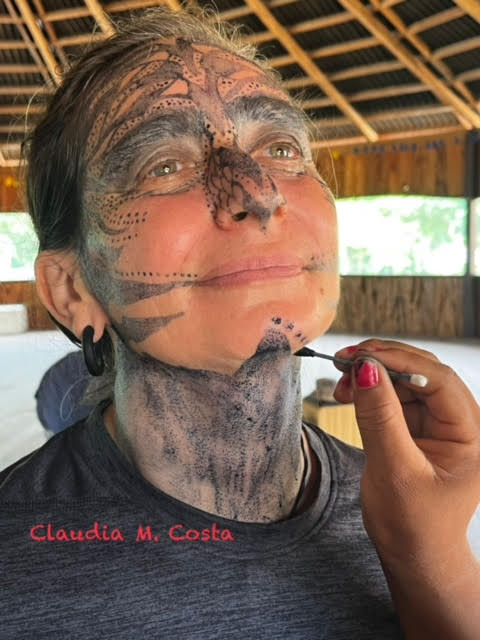
Muka – Their most sacred plant which is a long brown root. Its tall bush produces a long pod. The name Muka means bitter and provides connection with the world of the Yuxin or spirits. It is meant to show the energy in the environment and people’s bodies when doing their healing prayers. It’s the longest of the dietas after which one is considered a Paje or spiritual elder. This plant teaches the Paje how to work with the Vukush or prayers blown on the back of the head and over the heart along other parts of the body as well depending on the healing needed. This dieta lasts a minimum of one year and usually requires complete isolation in the initial stages.
Runa – Is the snake dieta where the saliva from a water Boa is extracted after which it’s consumed by the Paje. The serpent is then released and the Paje remains connected to it through the spirit world. The snake then guides them for the rest of their lives through the physical and ethereal realms. This dieta is at least one year long and requires isolation.
Claudia continues: “ Mama – is corn or yucca blended slurry also known as Caiçuma that is the main thick nourishing liquid consumed. The ancestral yellow corn (Sheke), or in the autumn the mandioca or yucca root (Atsa) are boiled to make the Caiçuma beverage. It’s meant to prepare one for other dietas, connect you to the dream realm and with the plants. This dieta lasts one month during which time minimal food is eaten. It requires three days of isolation in the beginning. No water can be drunk for two weeks after which açai juice, lemon water and cinnamon tea are ok.
Xinaya , Claudia says , is a person with knowledge and another name for Paje. Even after the completion of these dietas one is not truly considered a Xinaya until after years or decades of practice and proving one’s humility and healing abilities.
Here clearly the concept of humility in connection with healing is introduced.
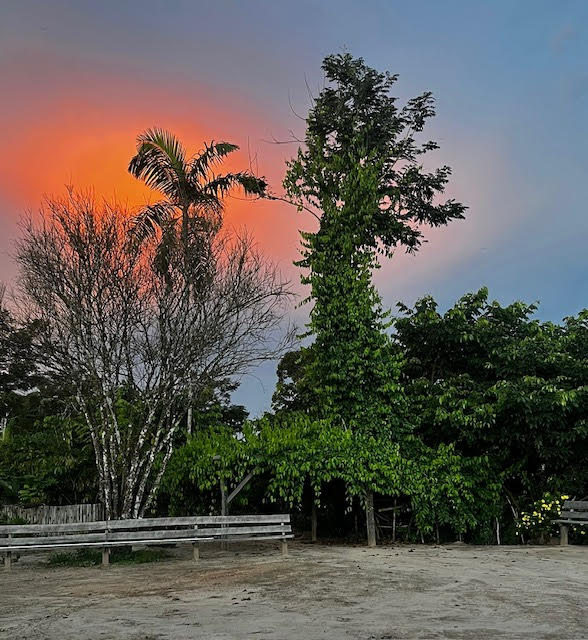
And then : “ Egos are kept in check and it’s considered distasteful to be boastful or use one’s power in the wrong way. “
Therefore if non-humility does not satisfy healing, an excessive EGO uses power in a wrong way: the combination of the two aspects, therefore, leads to disease .
In the following Claudia’s paragraph, the basic themes of catharsis, of the purification of encounters, of the action of tobacco, as a masculine value, which helps in prayer since ancient times, to recall upon oneself, healthy and positive energy, are discussed.
Claudia tells : “ There are also specialized shorter dietas recommended after drinking Uni which is their name for Ayahuasca and even Rapeh to help connect one more to those sacred plants. Uni is consumed frequently during all of the dietas above to connect one to the spirit world, their environment and their own intuition. Rapeh is a tobacco snuff which is made by mixing dry and powdered tobacco leaf with the ash of a tree called Tsunu. It’s used to focus and cleanse as well as to pray by placing an intention before blowing the tobacco in the nose. This is done with a Kuripe or self blower or sometimes with a Tepi or two person blower where one receives the fine powder on one end as another person blows on the mouthpiece. This is one way to share the essence and knowledge of the person blowing it by the recipient so ideally it’s done by someone whom you have a very strong connection with. The process is only slightly mind altering or more accurately described can make one dizzy. Spitting or blowing your nose after provides a sense of release both spiritually and physically. The intention is made before each nostril is blown by communicating with the tobacco silently. After a brief period of lightheadedness one feels focused and overall lighter.
There is sometimes a purge after depending on the quantity consumed and the strength of the blow. It can stimulate bowels or make one sweat profusely often invoking an emotional release. Spiritually tobacco is considered a gateway towards communicating with other plants therefore talking with the tobacco is also a guide in teaching one to pray with this ancient masculine spirit. Rapeh is said to be one of the oldest ways to pray or sit with tobacco long before it was smoked. It makes much more sense to consume it frequently in the humid climate of the Amazon where bacteria and respiratory conditions can be more prevalent in the sinuses. It is also used to make one’s awareness more keen which is extremely necessary in the high risk environment of the Amazon jungle . “
Let’s talk about Kambo again, a medicine of which Claudia Costa is a special expert
Kambo is a frog medicine extracted from Waxy or Monkey tree frog, Phyllomedusa bicolor.
This substance contains peptides which are an incredible healing tool against cancer, dementia, immune deficiencies, hormone imbalance, inflammation, infertility, viruses, bacteria, fungus and lethargy among other ailments.
Claudia tells : “ The Chief’s descendants are the only ones allowed to apply Kambo or Kapü in Yawanawa territory. Knowing all of this I humbly asked permission to work with his nephew who is the current Kambo elder. In Yawanawa tradition your teacher is kept secret so I won’t reveal his name here. Chief Nixiwaka granted it to me under the condition that I do everything exactly as taught to me.
In indigenous bureaucracy, it is difficult to get permission before undertaking any serious work or collaborating with anyone in the tribe.
The Brazilian mining and logging industry has a bad reputation of trespassing indigenous territories and taking resources without permission so the tribal leaders are the guardians in charge of making sure that doesn’t happen on their watch. “
The Healing Value of Music and the Sugar-Free Diet : Claudia says in this last paragraph confirms some aspects of our cultural knowledge, but certainly broadens it .
“Through my teacher I have learned not just Kambo but basically got an immersion of their entire culture including the language. His son is teaching me their chants or Saitis as they’re known here along with the guitar which is a new instrument for me. I picked it up while trying to heal my wrist fracture to build back my finger and hand strength. During my Mama dieta I had alternating language and music lessons every day where I was taught the complex pronunciation of their phrases and chants. I immersed myself in this while abstaining from life’s subtle pleasures. The most difficult part I thought would be not being able to drink water but I was wrong. It was actually being surrounded by fruit trees at peak season without being able to eat any of the nature’s bounty that surrounded me. It makes total sense to abstain from sugars, even natural ones. The bacteria in the body feeds off of it therefore not consuming them for an extended period resets your body on a cellular level. Though I tend to go down this more scientific way of thinking, the truth is it’s a spiritual sacrifice which is just as important as doing it for health reasons. It’s aligned with the indigenous concept of reciprocity where one has to give in order to receive. The last day of my dieta my teacher’s daughter prepared and gave me my plant bath. Afterwards I received the Vukush prayer from him which felt very powerful.
Thank you Yawanawa tribe! Haux Haux.
Poem by Claudia Costa
Tributaries of the Amazon
Rio Gregorio leads me towards the ancient
wisdom of the Yawanawa tribe
upon its clay-colored waters
The air fills my lungs with its thick humid breath
We slowly snake down the river
mimicking the Anaconda’s slithering patterns
Drops splash us from above and below
as we avoid the driftwood and sandbars
Vultures soar showing off their majestic wingspan
while gliding in resonance with the earth’s magnetic field
Tall grass grows on layers of sand and clay
Bird nests resemble baskets hanging from the tallest trees
The rain stops and the sun beats down its warm rays upon my skin
Small palm frond thatch roofed huts peek from behind the foliage every so often
as the children wave at us
Fluffy nebular sky scape ahead of us and above
We descend upon the warm sand.