Some built great cities where nothing once had stood, Some remained faithful, proving friendship true and good. Some gave their lives in search of wisdom’s light— Whose descendants are we? What have we become? We raised grand palaces, one after another, We filled our weddings with endless wealth and honor. Yet never asked if our neighbor slept in hunger— Whose descendants are we? What have we become?
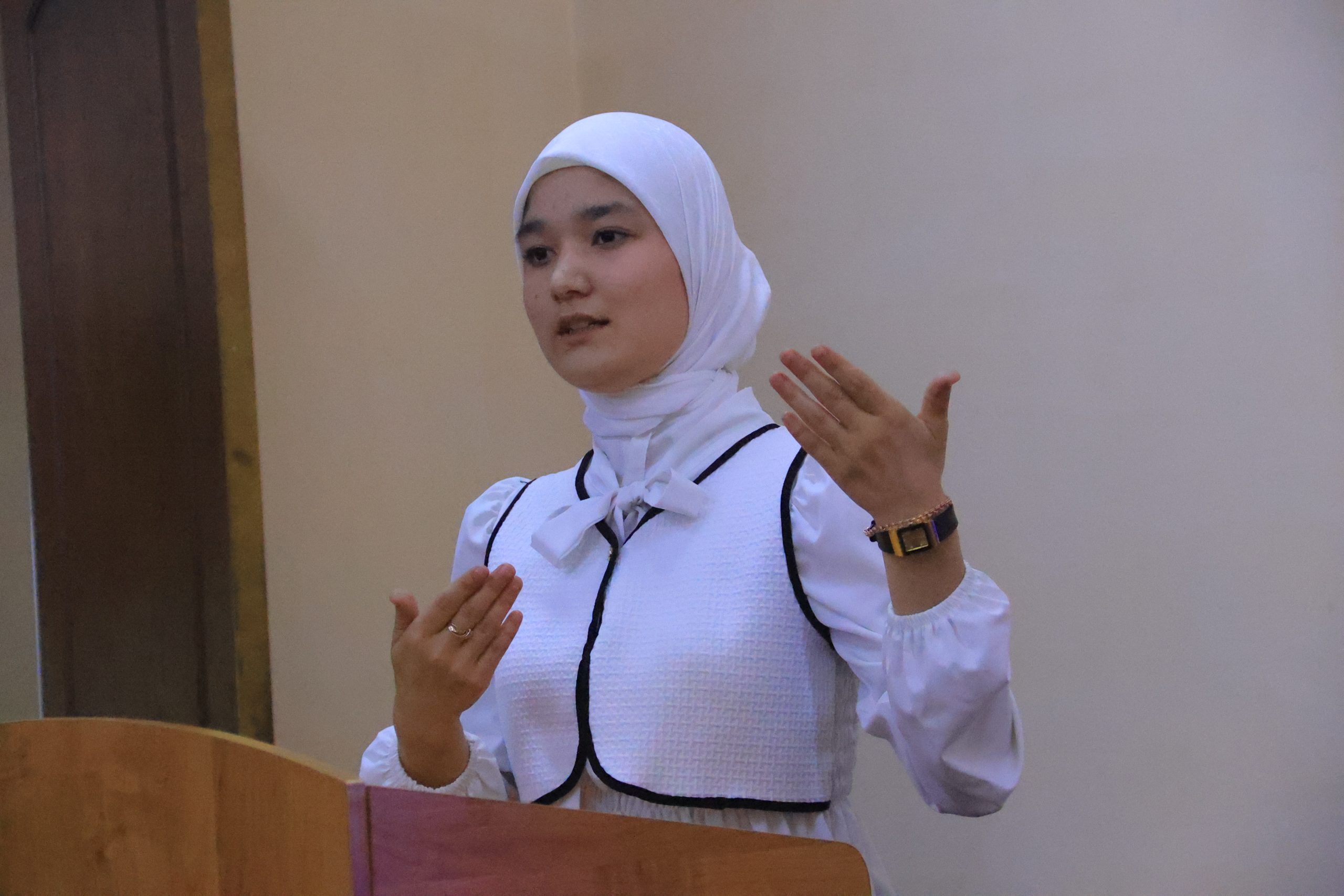
My name is Sharifova Saidaxon. I was born into an ordinary family in Kaldushon Village, Furqat District, Fergana Region, Uzbekistan. I am currently a university student.
I have participated in numerous anthologies and prestigious projects. My poems and articles have been published in various countries. I was an active participant in the regional stage of the Zulfiya State Award competition. I am the author of more than 100 fairy tales and articles.
On the outskirts of the city lay an old park, covered not with people, but with fallen leaves. The wind carried them gently from one place to another, as if each leaf were wandering in search of the place where it truly belonged. At the far end of the park stood an old wooden bench, worn smooth by the passing years. Every single day, an old man sat there. No one knew who he was. He was neither a beggar nor a merchant, nor did he look like an ordinary retiree. His clothes were always neat, his hair snow-white, and his eyes remained fixed on some distant point beyond the trees. Beside him rested the same old leather bag every day. People walked past him. No one paid him much attention. Except for one boy.
Ozod, an eight- or nine-year-old schoolboy, passed through the park every afternoon on his way home. For reasons he could not explain, he found himself drawn to the old man.
One day, he finally approached him.
“Sir, why do you come here every day?” The old man smiled.
“I’m waiting.”
“For whom?”
“Perhaps for someone… perhaps for the chance to be forgiven…”
The boy did not understand his answer. Even so, he began sitting beside him every day after school. Weeks passed. They did not talk much. Sometimes they would sit together for an entire hour without saying a single word. Silence, somehow, became their conversation.
Eventually, winter arrived. Snow began to cover the park. One afternoon, Ozod ran to the bench as usual. It was empty. Two days passed. Then three. A week. The old man never returned. Unable to bear his curiosity, Ozod asked the elderly groundskeeper who was sweeping the paths.
“Where is the old man who always sat here?” The groundskeeper let out a quiet sigh.
“He won’t be coming back, son.”
“Why?”
“His time came.”
The boy lowered his head. For reasons he could not explain, it felt as though something inside him had quietly broken.
“Who was he?” The old man gazed into the distance before answering.
“Twenty years ago, there was a terrible car accident right here in this park. A drunk driver struck a young family. The parents died instantly. Only their little daughter survived. The driver was imprisoned. When he was finally released, he searched everywhere for that little girl. He wanted to ask for forgiveness, but he never found her. So every day… he came back to this bench. Day after day, he held on to the hope that she would one day appear.”
“That she would look into his eyes and simply say…”
“I forgive you.”
“But she never came.”
Years passed. Ozod grew up. He graduated from university and began building his own life. Life, however, tested him in ways he had never expected. One evening, while returning from a business trip, he became involved in a traffic accident through a moment of carelessness. Fortunately, no one was seriously injured. But the owner of the other car stormed toward him in anger. Ozod apologized repeatedly. Nothing seemed to calm the man’s fury. Then, suddenly, the image of the snow-covered bench flashed before his eyes. The old man’s quiet voice echoed in his memory:
“Perhaps for someone… perhaps for the chance to be forgiven…”
Without another word, Ozod took out a piece of paper and wrote down his phone number. “I will pay for every bit of the damage,” he said quietly. “And even if you cannot forgive me today, I understand. But I hope that someday you’ll remember there was once a stranger who was truly sorry.”
The fury in the man’s eyes slowly melted away. Neither of them spoke again. Sometimes sincerity speaks louder than words ever can.
Many years later, on another autumn afternoon, Ozod returned to the same park, this time holding his grandson’s hand. The old wooden bench was still there. Only now, it stood empty. His grandson looked up at him.
“Grandpa… why are you staring at that bench?” Ozod smiled faintly.
“A person’s shadow disappears when the sun sets, but the shadow of their deeds remains in the lives of others forever.”
The child looked at him without understanding. Ozod turned his eyes toward the falling leaves. The wind lifted them gently into the air. This time, they no longer looked lost. They seemed to know exactly where they belonged. And for the first time in many years, the empty bench no longer looked lonely.
My name is Kozimjonova Saidaxon Alisher qizi. I was born on November 27, 2007, in Asaka District, Andijan Region, Uzbekistan. I am currently a third-year student majoring in Economics at the Faculty of Economics and Management, Andijan State Technical Institute.
From an early age, I have been passionate about numbers, analytical thinking, and economics. To me, economics is more than just an academic discipline—it is a vital field that helps us understand the development of society and improve people’s lives. For this reason, conducting research and pursuing lifelong learning have become an integral part of my life.
To date, I have published more than 30 scientific articles in national and international publications. I have also presented my research at six scientific and practical conferences. During my academic journey, I became the regional winner of the Economics Statistics and Data Analysis Olympiad and later represented my region at the national stage. In addition, I won first place in the institute stage of the “Zukko Kitobxon” (Intelligent Reader) competition, participated in the national “Munozara” (Debate) tournament, and have been an active participant and winner in numerous academic and intellectual competitions.
After entering university, my interests expanded beyond academic research to include creative writing. Reading books, participating in literary events, and creating stories that touch people’s hearts have become an important part of my life. The Shadow, the story you are about to read, is my first work of fiction. I believe that every story I write should encourage readers to reflect, inspire kindness, and promote universal human values.
I am also actively involved in community service. I participate in volunteer initiatives and am the founder of a volunteer-focused startup initiative under Ko’ngilli.uz. To me, contributing to society is more valuable than any personal achievement.
Reading is one of my greatest passions. So far, I have read more than 50 books, each of which has broadened my knowledge, enriched my perspective, and inspired me to pursue greater goals.
My guiding principle is: “Seek knowledge from the cradle to the grave, acquire it, and share it with others.” I firmly believe that knowledge elevates individuals, while education has the power to transform society.
My greatest ambition is to become one of the leading specialists in the field of economics, further develop my academic career, and use my knowledge and experience to benefit others. If my writing or my work can make a positive difference in even one person’s life, I will consider that my greatest achievement.
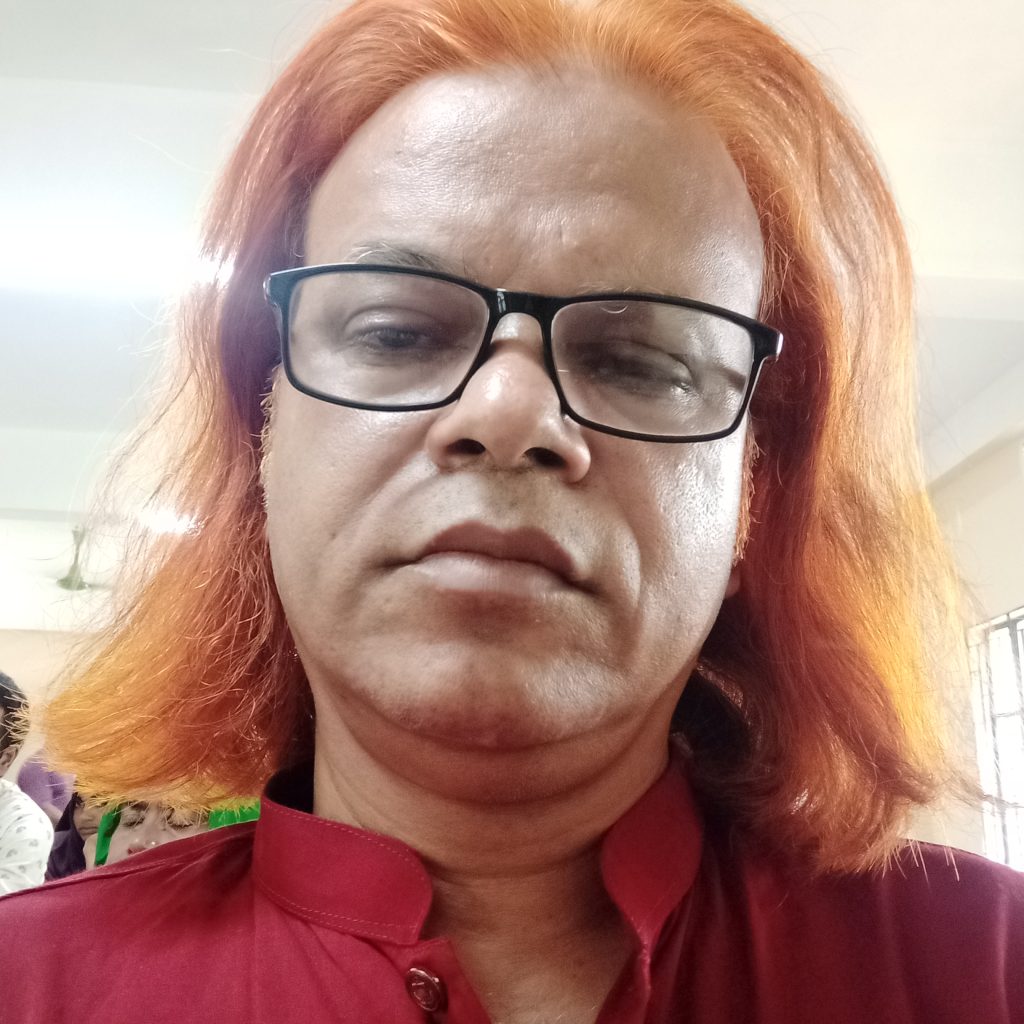
Mesfakus Salahin Assistant Professor of English Namoshankor Batti College Chapainawabganj Bangladesh
In one eye of yours dwells a silvery moon, In the other, an eternally youthful sun. It is that other eye I prefer the most; Touching the moon feels like walking, holding the fingers of the night. I deeply love that crimson fire— In the sun-bellows, I melt day after day, Becoming mountain and river at the port of toil; The sun is my fiery bliss.
The mud-streaked sun of dawn eventually turns into a fiery red glow;
Drenched in the hues of dreams, the mountain stones become exquisite art. The sun’s fragrance, caught in the hem of autumn’s robe, Gradually finds its way into the braid of your hair. Beloved, Let your secret mysteries rest upon the mountains of the moon; But grant me the river of the sun— I shall float or sink in its waters for eternity. Do not ask for an accounting— Of who loved whom and to what extent; Termites have made a home in my heart Had I stopped to calculate, I would not have loved Touch the veil of existence, hold fast to time—
In your restive, waiting evening Experience tells you, Do not spoil the evening; sip your coffee, and ponder something—
Is everything so wretched? The light is dim, framing the dustbin outside. Such a nuisance—the little girl in nothing at all! Even the intersection is unhinged, rushing with red eyes, opening green eyes only to go blind.
No, not these. Do not waste a thought on such things. A man of your worth doesn’t bother with them;
please, do not ruin your evening. Ask yourself instead: why is there no Starbucks here? Is the coffee cloyingly sweet? Thinkers like you crave a bitter brew.
Ponder your new lover’s swelling breasts instead— the finest creation of beauty in the world is a woman’s breast. Your fountain pen, engraved with the Madonna, sheds its clothes as it writes— compare the two pairs of breasts, while within your skull a war breaks out between rival miracles.
Do not dare think of the beauty of the vagina, it is like a black hole, where your entire being collapses into nothingness. Do not spoil the evening; let each sip of coffee yield another intoxicating draft.
May your evening be blessed. Let her arrive, let her warmth outmatch the coffee’s steam. Sit face to face and begin to write— let the lover’s body strip down like the fountain pen.
Do not spoil the evening. Drag the poem deep into the night— let the ink of the fountain pen flood the undiscovered vagina.
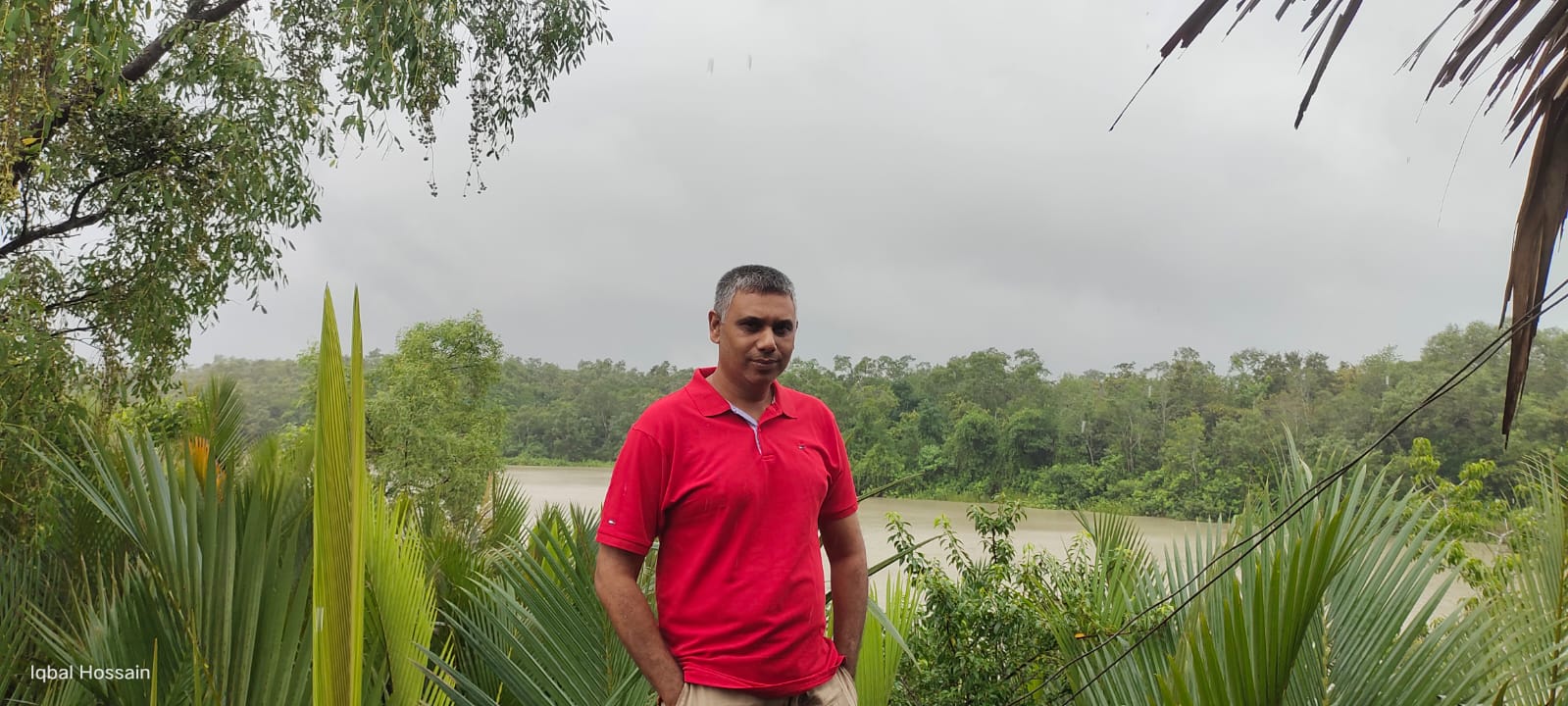
Ri Hossain is a prominent voice in Bengali poetry, recognized as a rebellious and resilient figure in the contemporary literary landscape. Born on August 19, 1981, in Rangpur, Bangladesh, with ancestral roots in Munshiganj, he began his literary journey in 1993. His poetry deeply reflects personal experiences, societal conflicts, urban alienation, and a steadfast commitment to free expression. Author of several works, including the poetry collection Kobitar Abhyutthan Chai (2024), his writing bridges social consciousness with profound psychological and intimate introspection.
My head is like a ribbon thrown under a train that you can’t stop; that you don’t want to stop. My head: like a ribbon of worm in an apple pie. My head: destroy this pain again and for the first time (like water washing time from hair). Destroy this head: abnormal, sick, vile, purple-marbled, and then winter and snow will begin. Snow always holds a secret: destroy this snow, it carries neither secrets nor questions, trains are like lame swallows, rails are like inflorescences of homeless and suicides peoples hanging from the trees. This head carries no secrets, no questions. Destroy this head: the husks will scatter across meadows and deserts, across bird meadows and across human deserts. Cut off the dead branches, pluck the faded flowers, take out the trash, throw your head under the train.
And then I’ll die. And then you’ll die inside my head.
Ananya S Guha lives in Shillong in Northeast India. His poems have been published in both print and electronic formats, and he has been writing poetry for the last forty years.