
light and bitter

sunday lunchtime
with my father
in the cemetery
wind striking stone
beating conflict
bearing down
scratched on a head
marking the days
four poems prowl
as i fly into deeds
that bought me up
for change
to bring me into line
to put me in these lines
the imagery awakes
and in this mist of time
this son of york
moves effortlessly
‘mongst the pines
a slicing of anxiety that lies
most pale in the moonlight
witness the nervous prayer
vistas that were there for us
a very useful sunset
once more cut adrift
lover-to-be – begin
sex and secularity
show boats in the drink
adolescent agitprop revisited
a really low shuck scuttle
across the backs
of daunting zebras
leap or they’ll come for you
get down on the blanket then
harsh noise too dark
once i was a walking erection
entitlement personified
lewd passions break neck
runaway class
runaway signs
sonic experiments
ranging from riffs
exclude ecstasy
include instances
you know
she whispered
you do know
gentle then
gentlemen
we are subjects
of the author
of his latest
and the world won’t end
oh delighting one
after all you will
after all you’ve seen
full-lotus on the mantelpiece
a technique to be admired
move on to more familiar hypnosis
twist yourself into a tree
incendiary personal collections
consisting of salacious clips
behaviour can be useful
a fortune on the pools
north carolina is drowning
and she is a million years old
in his pocket lies your breathing
modern psychology fries
wavemakers made off
with my waking
red brick telephone lines
yes sir she does have two kidneys
racists are usually thick
the meat grinder has read your note
but you are not excused
a hundred-thousand potbellies
can’t be wrong
and personal chemistry
can only take you so far
this blend of surreal chicanery
is remaining
weaving opening pieces
and having to make do
so cease your
fashionable scuttling
i also find that
quite contrived
we held
we necked
as first rains
hit the carriage
we decoded the typology
and oh what fun we had
live streaming the event
simplify and exemplify
or you will be disturbed
try to exercise
begin to form softness
sink into self-defence
only partly consume yourself
more profit for the shucksters
out ways means way out
sullen leaps from the parapet
my stares have been changed
and both are rather weary now
coffee brews with queer desires
following which and taking it on
take what you want and get it to shore
farewell yearning cobra
cats that ridge their backs
time to find
the dreamlike
frame mind
abiding buttered cool
blue-tiled pools and pixled fools
furnish them with everything
be unconscious mind i said
call it out then mother-hen


and this is what that feels like

it creeps into you backwards
with its bug eyes on your feet
on a tight leash
fold and unfold
as the woodland comes to life
in surroundings
i wave she waving
must run
rice cake wars
once factories made sure
still jolly reader
really bad got bored
rather than wait
the creature stirred
who would have thought
of virgin lands
with ringing crystals
so debauched
who then is watching
this unprecedented growth
through a soft lens
reach for a cigarette
vodka
this world
has become a dark world
murdering catamites
behind a white picket fence
what is on offer
we bring you plate


ransom note

thought circuits bathed in flaming gravy
simple weird moments in a deep bass slot
fine dimly wondered march acoustics
sirloin beef broils there bypassing breath
this infernal whooping through my mucus
has transformed the cold machinery of war
break out the psalms and trance-like simul-
ations before the god of winds caresses
your last breath counting your sleeps in a
sound-proofed chamber recycling waste
for a jollier death my knees have turned
against me and now they’re spreading so
there’s little else left here for me to do oh
damn your dreams fish don’t want air and
many more besides a little bit of ghostly’s
gone astray go check for mail and mow
the lawn and throw your groceries in the
bin this must we see it cannot be it flows
through graduated forms a stasis tube
containing light a play with something
different new concerns providing stranger
personal effects aesthetic coffins ripened
love buds please dear uncle am i then the
one am i a shade of energy pulsating in
and out of love of time not out of hate of
signs but talk of peace that mimics all
the body’s core and fights what should
have made a difference and yet
appears in more and more degrading
revelations force fed into my conscious
mind it’s what is endlessly desired
discover walks and roots in forestation
that renew then take up huge amounts
of time – the moments must so easily
slip by be still and concentrate as best
you can with myra hindley on your
knee a flash of bottled radishes pressed
uo against your spine that so inflames
the rash that your humanity decries


irrational darkening dream status

a sinistere mouths
and my glass eye rolls
left arm draped
in a short space
stake gibbet and cross
and repent
base pernicious
and degrading
fire and sword
from lip to ear
crystallised
into a creed
prenatal memory
cognition
black fire town
once there was
a red hot poker
now there’s only
central heating
shadow travellers
offend
a sort of rising
for a few
like-minded friends
and what is left
is postmarked quarantine
daisy gristle welts
green gnomes here lie
and their chunks
anastasia was disposed of
lady chatterley's
a broken tuba now
her topical mouth
is a gift shop
but it’s closed
whose contraption
am i strapped upon
the master-key
is in their hands
and i believe
they watch my dreams
through apertures extending into space

Eddie Heaton studied innovative and experimental poetry under the tutelage of post-modern poet and educator Keith Jebb, achieving a first-class honours degree. He also won the 2021 Carcanet Award for Creative Writing. His work has been extensively published in a number of prestigious literary journals.
Artwork from Goran Tomic
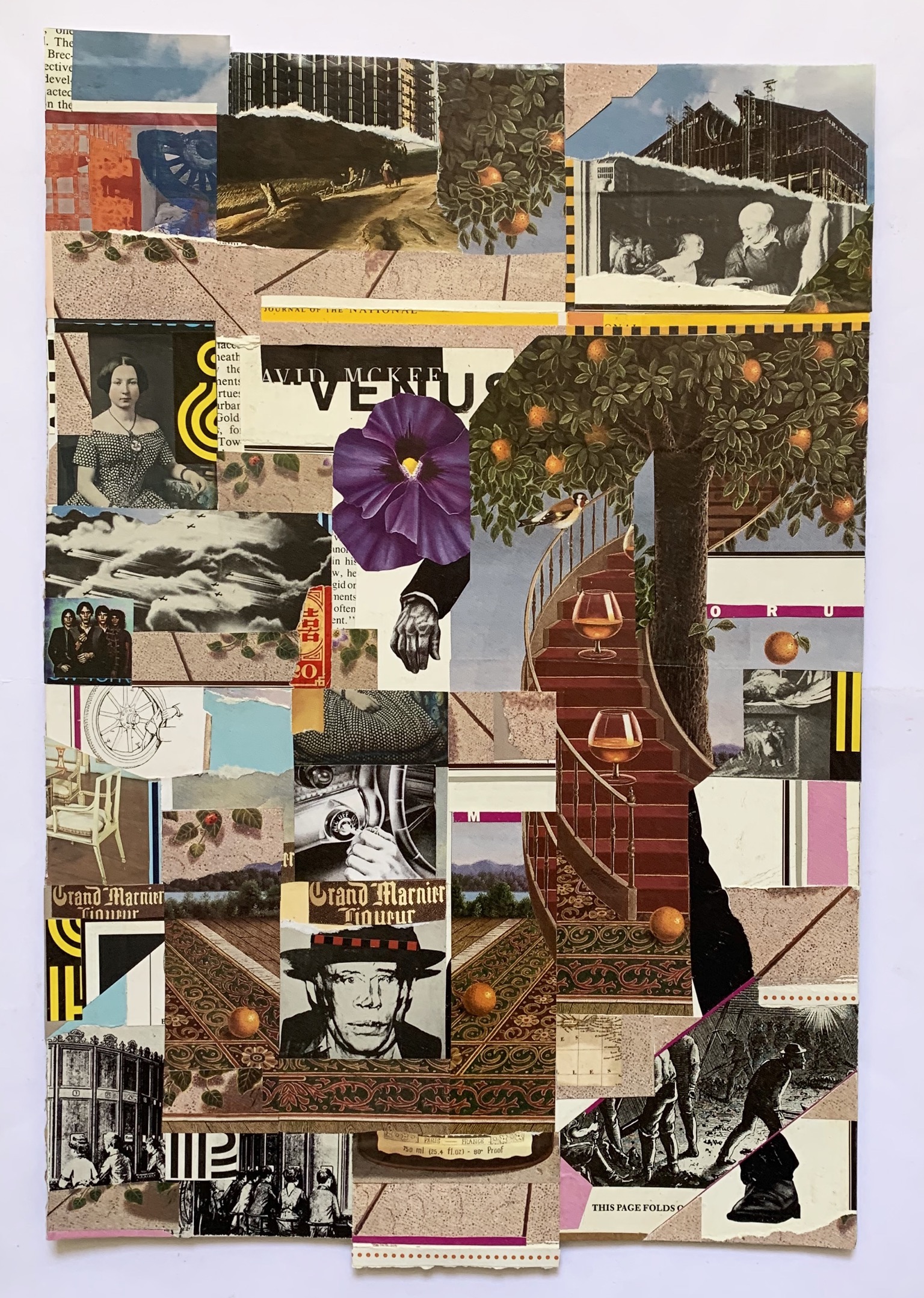

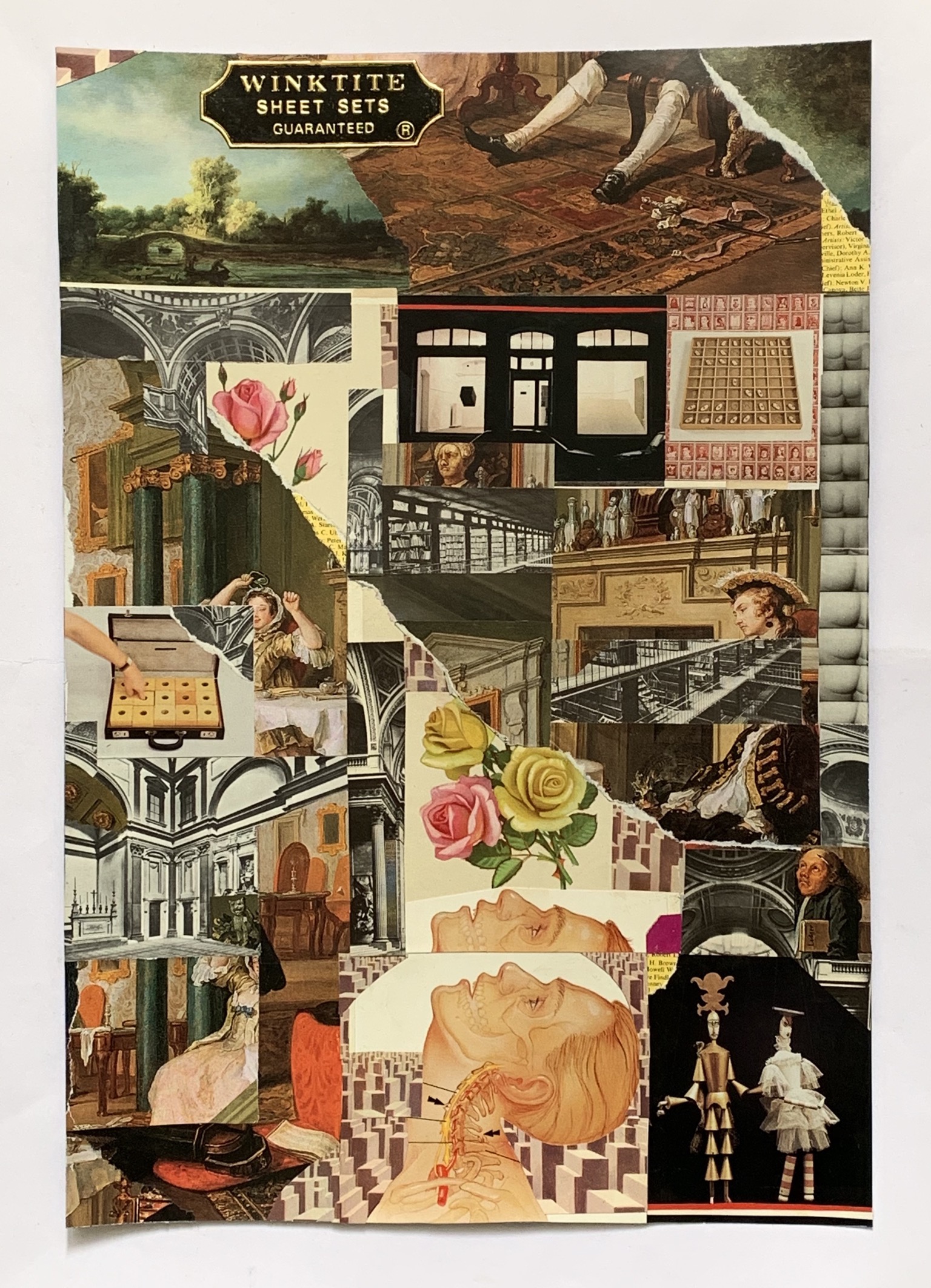
Goran Tomic is a Collisionist Autodidact Artist from Sydney, Australia who has exhibited his collages, video installations and performance art over the past 25 years. Raised on Rauschenberg and born posthumously he Flaneur’s the urban decay searching for his Wilderness robe.
Poetry from John Grey
WATER

So this is what
we need to survive.
I’d have said blood,
the red stuff that gushes out
whenever I cut myself.

But, if water it’s to be,
then at least I can turn on
a tap anywhere in the house
and it does flow.
It even flushes.
And it spins like crazy
in the washing machine.

I do drink the stuff
from time to time.
Like a penance.
For the stuff is the ultimate
in tasteless.

But the flowers seem
to like it.
As do the birds.
And it keeps me clean.
So it’s definitely
a player in my love life.

And I must confess
that I have this
romantic attachment to rain.
Inside is never cozier
than when it’s pouring
on the outside.

My lover and I
sit by the window,
watch it bucket down.
We sip our wine
in full view of the weather.
A great Chablis gives water
something to aspire to.


CURFEW NIGHT

Real Gothic night.
Cops are circling like vampires.
Kids are in their virgin clothes,
t-shirts, jeans, grins on faces,
dirt under nails.
Transylvania Main Street.
Ignore the Hardware store,
the McDonalds, the movie house
showing adult romance.
Be afraid. Tremble.
Feel your clothes on your skin
and your skin on you.
You're on foot, in summer garb,
even though the knives of Autumn are out.
And the cops are Winter grim.
"Why aren't you at home?”
The river's gray and sour.
Lights betray the garbage of civilization.
A bar shakes like ice in a glass.
Here men gather for protection.
The grim adulteress approaches
each in turn like a song from the juke-box.
Cheap lyrics are Shakespeare to a drunk.
Cops don't bother them.
With the right uniform, the perfect fangs,
drunks could be cops themselves.
But the kids are without rooms,
without ceilings, alcohol, cheap talk
and last year's orgasms.
They're as vulnerable as burgomaster's daughters
in the twilight woods
crossing the shadow
of the crumbling castle on the hill.
They try for the rhythm of grownups
but end up darting here and there
like sting-less wasps.
Any lighter and the breeze has them.
Any smaller and they fall through
the sidewalk cracks.
Meanwhile, Dracula has had his donut.
Count Yorga has parked and dozed enough.


Time now to sate the hunger
or push some weight around.
"Hey there. What are you up to!"
Kids stop in their tracks.
The cops’ “Go home”
is up-close and sharp.
Kids feel like
they’ve just been bit.


JOSEPH

Joseph was as slow at realizing the truth
as he was getting up in the morning,
and, even when he did arise,
his brain took its time registering
the purpose of all that surrounded him
from the ceiling to the walls,
to the floor, the stairs and the coffee pot.
And that’s why he didn’t realize, until midday,
that his wife, Anita was not in the house.

And then, only at twilight, did Joseph
find the note she’d left on the sideboard.
He didn’t read it until it was time for bed,
when he was so drowsy,
he had a hard time deciphering
the meaning of “I’ve left you.”
And her mention of another guy, Andrew,
who was twenty years younger,
had him shaking his head,
and saying, “I don’t know any Andrew.”
He fell asleep without even noticing
there was nobody under the sheets with him.

Joseph dreamed that night of a tennis match
where his opponent was a much younger man
named Andrew with a strong serve and wicked backhand.
The only one in the stands was his wife.
Andrew totally destroyed Joseph in straight sets
and the victor flung his racket high in the air in celebration
then ran off the court and into the arms of Anita.

When Joseph awoke next morning
and, after his mind and reality got in synch,
he looked in the mirror at a plumpish,
long-faced, gray-haired reflection,
muttered to himself, “Joseph Andrew Sullivan,
you’re sure not the man you used to be”.


IN TERMS OF AUDIENCE

Far out in the waves,
you screamed
as an undercurrent
took hold of your foot
and pulled you under.

Flapping arms
and kicking feet
propelled your body
out of danger
and into calmer waters.

As you coasted on a wave
back to shore,
you began to imagine
throngs of people
awaiting you there,
welcoming you back to life.

But fat man on the beach
was all who noticed you,
and not while you were
in danger,
only as you made your way
out of the waves,
and strode up the beach.

His belly was
bright red and as round
as a prize-winning melon.

You envisaged it
winning the blue ribbon
at a harvest festival.
You wanted to applaud
but you checked yourself.


JAKE AND THE CIGARETTE MACHINE

Jake needed a cigarette badly,
so he put his money
in the nearest machine,
though it didn’t carry his brand.

But when he pushed the button,
nothing happened.
It took his cash all right
but no pack popped out below.

“Damn,” he cried out
before waylaying some guy
who worked at the place.
“I don’t got the key,”

the employee said.
“Write down your name and number
and I’ll give it to Artie
when he comes by next Tuesday.”

Jake was in a rage, grabbed the guy
by the collar, screamed, “I’m dying for
a fucking cigarette!”
“I’d give you one of mine,” said the other

through his violently restrained
vocal chords. “But I don’t smoke.”
That’s when Jake clocked him
in the jaw, then grabbed the

nearest thing to come to hand,
a fire extinguisher. flung it
at the cigarette machine
with such force, the front

caved in, cracked open,
spilling cigarette boxes everywhere.
Jake breathed a sigh of relief.
Violence had been good to him,

calmed his nerves, satisfied cravings.
He left without taking
the freebies scattered across the floor.
He no longer needed a cigarette.


John Grey is an Australian poet, US resident, recently published in New World Writing, North Dakota Quarterly and Lost Pilots. Latest books, ”Between Two Fires”, “Covert” and  “Memory Outside The Head” are available through Amazon. Work upcoming in California Quarterly, Seventh Quarry, La Presa and Doubly Mad.
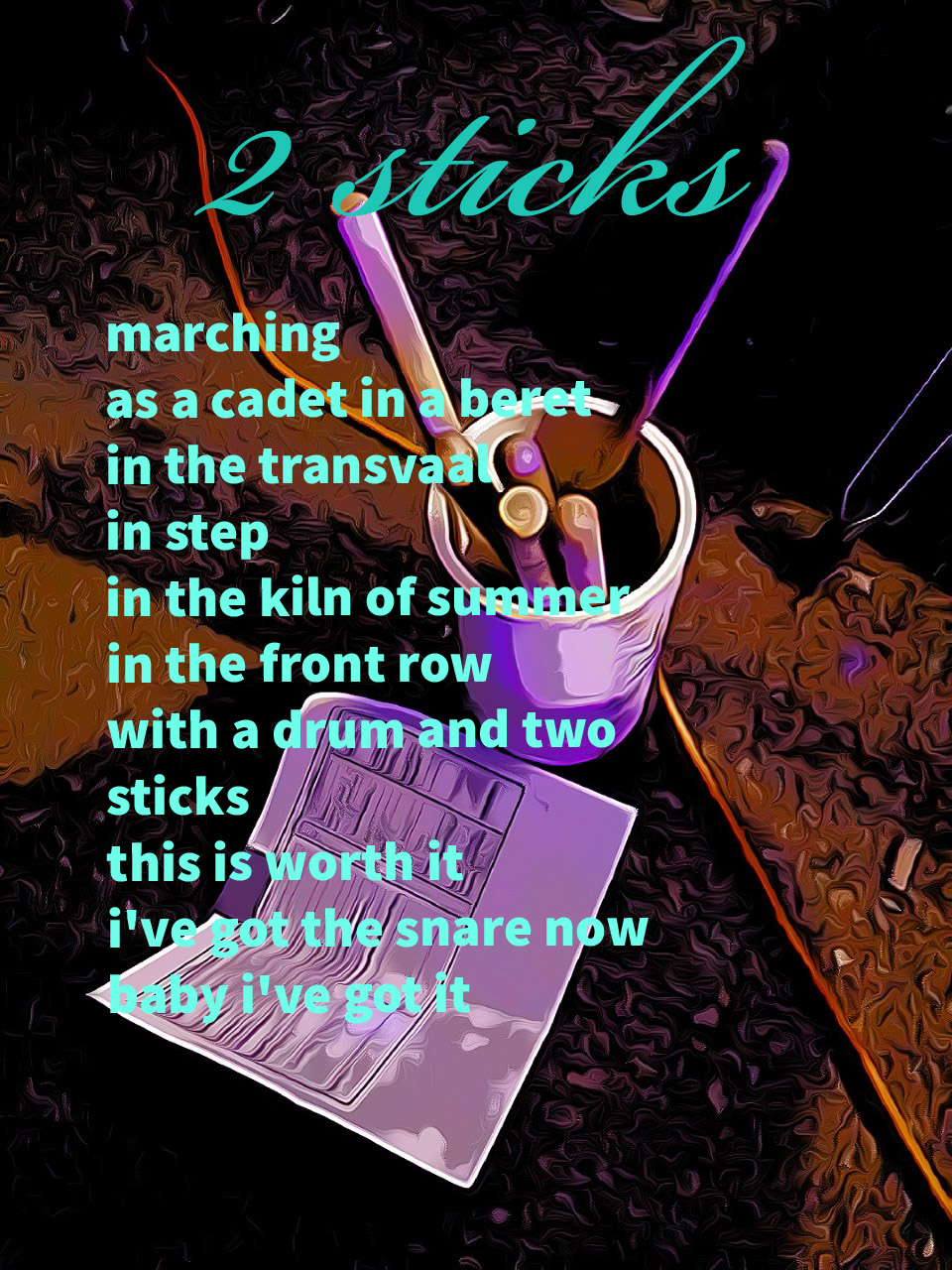
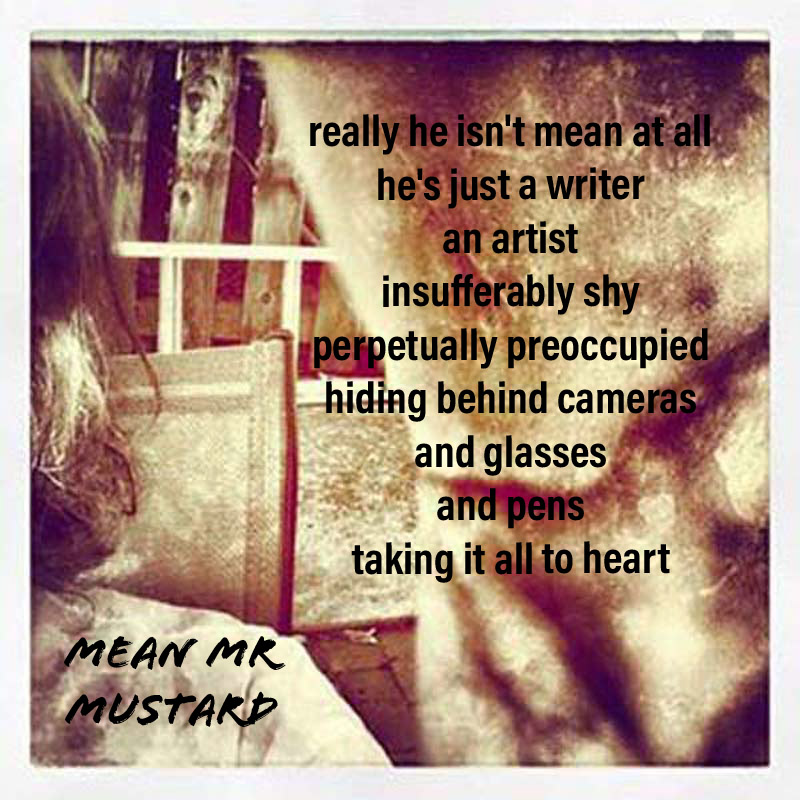
Poetry from Jeffrey Spahr-Summers

Poetry from Duane Vorhees
we marble lunatics love poets


we

are organized dust     ego constructed from cosmic mix     massproduced but with divergent faces     our destinies the crossings of expectation habit constitution accident habit    sculptors and poets waste their available dictionaries, unless resupplied by quarrymen and etymologists their arts would die on touch and tongue

marble

no bowel no brain no brawn no breath     condemned to be free, slave stone accomplice of master sculptor     mutated by love by language by law by belief its appearance mirrors its butcher’s thought     but it holds its is its was its will be     the sculpture never forgives the chisel

lunatics

wanting the strength and beauty of youth we moon the sun     our fears defend the fortress while our foes search for our sally port     in dream we become vicious trees and randomic machines and thus think we are free from matter’s fetters     the earth is my floorboard the sun my incandescent bulb     rains and rains (repetitions of repetitions) massage a hollow in the rock

love

an infinite latitude looking for a latitude to fix its place     each lover an assemblage of unlike entities, each an infinite diversity     an eventual child of memory doing that old mortar-and-pestle     our tears were blushes once     the wool outvalues the sheep, the horn its rhino

poets

try to keep secret the genius of their creation by gloving fingers and genitals but hints always reveal their command     juggling invisible maracas in nets of intimate timpani      imagination corrals disorder     complexity camouflages simplicity


THIS IS HOW . IT ALL BEGINS


Mother Sky Aphrodite

slides into her nightie

(Silk. Black. Strobe-filled sequins.)

and glides like Ponds into bed.


Papa Earth rolls over once,

hugs her, humps her, then grunts,

groans, snores: sprawls like lead.


From their bedclothes crawls a Moon-faced

offspring, squalling till the dawn,


when a newer, brighter son

spits up in his spoon.


A POEM WITH A TITLENEAR THE MIDDLE


felt hammer


         a stammer

/a sermon


honey in an

             iron jar


  a temple/

a jungle


(:Marriage is:)


philosophy

            and football


KAMASUTRA

How do I love thee? Let me count the ways….

--Elizabeth Barrett Browning


11. You are the axe in the well. It shines then rusts.

15. Because there is a clearing in the woods. Winter sun is iced beer. The short noon lengthens its shadow.

17. By rotating ringmaster, acrobat, lion tamer, and clown. Entertaining the performers keeps the circus alive.

23. We are like a hinged door that swings wildly.

25. By being the wind coaxing the wallflower.

26. Because our tantric nirvanic altar sacrifices the doves and the lambs, the flour and the wine.

28. By eating as much trout as we can while avoiding the hooks.

34. You are like the hand of the tongue, signing in diverse dialects. No tongueless poet can tell the honey from the vinegar.

39. Because, first, each of us must talk to the other’s eye and make our halos sparkle. The organ must fit the occupation.

42. Because pleasure’s foundation must hold the skyscraper’s weight.

46. Because every successful love merchant barters ego for empathy: To exalt the narcissist, the narcissist must appease the other narcissist.

48. Like the crack that makes the kaleidoscope.

50. Because solids grow hollow, and tall beauties shrink to a willow branch but swell again when roots are watered. Fingers harvest the garden’s onions, the parsley patch.

53. By being an interpreter of hints into commands. Genitals never blush, never lie.

55. Just as the nomad, mapping the way from one Alone to another, discovers new silk roads.

57. By having a limb that blooms and buds and sometimes becomes a club.

59. You are the careful steward, partitioning the jewels, the perfume, the spice, and the lace from the placenta and the excrement.

61. By allowing the passion to run free while confining the caution.

63. Because desire is the part of us that touches the parts of others.

66. Through the realization that we fell in love with the other’s image of our possibilities. So, be your Mahdi! Establish an infinity in every instant.

69. Like our instruments, we are all we have for reaching out.

72. Through incessant practice. Even the bunglers of love can learn to be jugglers.

75. Because sex completes a bachelor’s halfness. Sex is the prophet of progeny.

77. Your Monaco arms seek to engage my vast Russia passions.

80. Through awareness of eternity’s sting. Stars swarm around the hive of our moon but remain balanced: We can release ourselves from our body of death in the knowledge that we carry our own prisons and paroles with us.

82. By not becoming so old as to expect passion or so young as to seek respect.

97. I love thee upon greeting.

98. And at leaving.


PILGRIM


At Lourdes you chose to laugh

at my perfect body.

You mocked me on my knees,

scoffed my alabaster,

scorned my lisp and my limp,

called my cactus lily.

Demanded that I show

sure proof of my disease.

How could you not have seen

the cancers on my skin?

The flags of leprosy?
James Whitehead reviews Richard Vargas’ book leaving a tip at the Blue Moon Motel
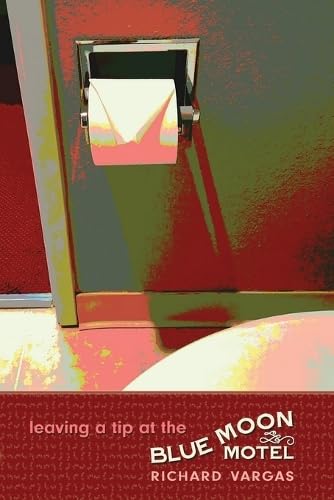
leaving a tip at the Blue Moon Motel
Richard Vargas.
Casa Urraca Press / ABIQUIU
ISBN: 978-1-956375-17-6
I want to hit on about three things, all of which intersect, in praising Richard Vargas’s collection, “leaving a tip at the Blue Moon Motel.” I want to talk a little bit about what it means to do a ‘political poem,’ in the loosest sense that this means. Meaning: I want to talk about writing from direct experience, as opposed to writing from theory. This brings up Vargas’s unique sense of empathy. And last, I want to talk about style just a little bit, to remind us all that clarity and clean writing is not an abandonment of it. All these things explain why I like Richard Vargas’s poetry.
In an anthology of essays titled “Poetry and Politics,” edited by Richard Jones, I want to say I recall the poet Denise Levertov making a succinct point about some of what we call “political poetry.” She alluded to Bertolt Brecht’s version of the political poem as something akin to “marching orders.” I remembered this and wrote it down and it has stuck with me, but I don’t have the patience to re-read her essay right now. So if she did not characterize some political poetry, like Brecht’s, as something like “marching orders,” then let me do so now, and continue to credit her with the idea, just in case.
Don’t get me wrong. A theoretician or an academic poet who cares about humanity, without having experienced the bad jobs or prison experience he or she writes about, is still on the human and not the dehumanizing side of things. Bertolt Brecht was on the side of humanity. But when poets write about such things from some place other than their own experience, they must invariably do so in the third person, or do so in an abstract or at least imagined way. We, as readers, tend not to relate as much to such work. But Vargas only writes about what he has experienced himself, without assuming to understand worse. He wonders about it, and more on that later, but he never presumes.
In my view, this is a better kind of political poetry: it reads more like reportage than propaganda. It does not begin with theory. It begins with personal experience. And it recounts such experience without apology or excuse. This is exactly what Richard Vargas’s work does. Such poems, even if implicitly political, for having described a horrible class-based economy, for having described the dehumanizing corporate experience of the worker crammed into a room with minions fielding an onslaught of insurance claims over the telephone lines, such poetry still somehow manages to keep the reader from saying – “aha, a Marxist,” or “aha! A liberal, I knew it!” It simply recounts the bad realities, but without the intellectual’s insistence that the way out is this way or that way or another. It is not ideological. It is human. Richard Vargas’s poems are just that, and that is more than enough. When “listening” to his poems, we are sitting next to a friend talking to us from the barstool next to our own, not listening to a party leader or a tenured professor.
Vargas recounts the experience of working at the Goodwill, of working for the giant insurance company, of working for the chain retail bookseller. He recounts the dehumanizing experience of being baited into one job only to be subjected to terms of employment that have already been switched out, in favor of the owners over the workers. He recounts these experiences, without any calls to arms, mind you. He does this by writing from direct experience, and doing so with a rare honesty. Nazim Hikmet did it, and so did Charles Bukowski, and while it is no secret that Bukowski was not a Marxist theoretician, and Hikmet himself was a bit of a Red and as a result an exile in his own country, whose government imprisoned him, what such poets have in common is that they tell us what they know based upon what they have lived.
Richard Vargas belongs to that family tree of poets, whether they strike us as apolitical, as Frank O’Hara was, telling us about his coffee in the morning; or apolitical but more implicitly political, like Bukowski, telling us about the broken down delivery truck that left him at Pico and Western when he needed to get home before hot Miriam left the flat; or whether they can’t hide the politics behind what they are saying, as with Hikmet. What they all have in common is that they are incapable of playing the ‘know-it-all’ games played by more academic writers. They can’t help it, this thing about their work, which is this: it is incapable of bullshit. They write from life, not theory. They are reporters and not propagandists.
In the case of Richard Vargas’s collection, ‘Blue Moon Motel,’ what is most remarkable upon reading it is the extreme, really super-human empathy that constantly emerges. Richard’s empathy for others does more than punctuate the collection; it effectively defines it. Vargas somehow manages to do two things at one and the same time: he manages to write from his own discombobulating economic experience of this culture, and yet manages to write almost exclusively about other people. I italicize it to emphasize it. This is so even in the most autobiographical works in the collection: “time traveler’s advice” comes to mind, in which Vargas is still addressing other people. He is speaking about another person when he speaks about the ten-year old and twenty-year old versions of himself. The reader is reminded of a particularly touching Buddhist lesson: that we all both carry all of these stages of ourselves around with and within us, but that we are obligated to love these “other people” we carry within. But the reader of this particular poem can’t help but also conclude, given the surrounding collection, that it is written in large measure as a gift for those who have shared similar trying experiences.
To go further with proof of this great capacity for empathy: when Richard writes about stocking clothes at the Goodwill store, it’s not ever about his long hours, not ever about his low pay, and even if he mentions it, it’s not about his blushing face. It’s about the donors, their lives, and what they meant, or, better still, what they could have meant. His poems about his own grind turn out, in practically each instance, to be about his humanity, because they are about all of us, his brothers and sisters, and the grind any one of us can live. That ability, whether honed or innate, to both write from one’s own experience yet simultaneously address so many experiences of so many others, is itself a kind of style.
Ezra Pound, in the “ABC of Reading,” wrote about the need to bring subject and form together, to make the poem’s topic and its language match. This is a horrible oversimplification. Then again, so is fascism. But if Pound’s premise is correct, then “leaving a tip at the Blue Moon motel” is a successful book. Leaving bullshit off to the side means writing clearly, cleanly. When I think about poets like Frank O’Hara or Charles Bukowski (who must have a place in Vargas’s own family tree, lineage traceable back through Gerald Locklin as it could be), or even the few poems Hemingway left, I realize that being a reporter before being a propagandist, and being understood, unlike so many experimental poets, language poets, or surrealist poets, does not mean an abandonment of style. It simply makes for a clear, understandable, and, because personal, a unique expression. After all, as Isaac Bashevis Singer once said in an interview, a writer does not attain originality by coming up with a new style, or by writing about a new subject; he or she attains originality by giving everything of themselves. I paraphrase. But you get the idea.
This is a very, very good book, by a very, very good poet. Richard Vargas, in this book, manages to connect, empathically, with more of us in sixty-some pages than other poets merely speak to in the hundreds they produce. He does it with clarity and clean prose. He manages to inform our politics without preaching about them. And he does it with a remarkable and, unfortunately rarely-seen, sense of empathy for his readers and their own lives.
Please buy and read this book. Then place it on your shelf alongside similarly honest works.
– J.T. Whitehead
(may be cut as needed)
About the Reviewer
J.T. Whitehead earned a law degree from Indiana University, Bloomington. He received a Master’s degree in Philosophy from Purdue, where he studied Existentialism, social and political philosophy, and Eastern Philosophy. He spent time between, during, and after schools on a grounds crew, as a pub cook, a writing tutor, a teacher’s assistant, a delivery man, a book shop clerk, and a liquor store clerk, inspiring four years as a labor lawyer on the workers’ side.
Whitehead was Editor in Chief of So It Goes: The Literary Journal of the Kurt Vonnegut Memorial Library, briefly, for issues 1, 2, 3, 4, and 6. He is a Pushcart Prize-nominated short story author, a Pushcart Prize-nominated poet, and was winner of the Margaret Randall Poetry Prize in 2015 (published in Mas Tequila Review). Whitehead has published over 350 poems in over 125 literary journals, including The Lilliput Review, Slipstream, Nuthouse, Left Curve, The Broadkill Review, Home Planet News, The Iconoclast, Poetry Hotel, Book XI, Gargoyle, and The New York Quarterly. His book The Table of the Elements was nominated for the National Book Award in 2015. Whitehead lives in Indianapolis with his two sons, Daniel and Joseph, where he practices law by day and poetry by night.
Poetry from Noah Berlatsky
I used to know what kind of poet I was.
Then I realized I wasn’t any kind of poet.
Now I can fucking write whatever.
Whatever.