Living is the breaking of one boundary after another.
Life grows colder as it goes on.
The time they wrote
abandons them in the end.
On a spring day when cherry blossoms befriend the wind,
mountain-like buildings,
valley-like alleys,
water-like people.
People, worn by strangeness,
save it sparingly, fearing they might grow used to it.
An angel slips between their lips,
and they take out a single smile.
한 마디 말처럼
하늘과 땅은 영원의 입술
거기,
한 마디 말처럼 우리는 산다
누구의 손에 끼웠는지
모르고 사는 반지처럼
세상에 끼워 사는 사람들
오늘은
어디 있는지 몰라
그냥 서 있는 곳
손으론 손자국 판화
발로는 발자국 판화
삶은 허공에서 길 찿기
새들은 안다
허공이 영원이라는 걸
사는 건 경계가 경계를 허무는 것
목숨은 갈수록 쌀쌀한 남
그들이 쓴 시간이 그들을 버린다
벚꽃이 벗하는 봄날
산 같은 빌딩
계곡 같은 골목
물 같은 사람들
사람들은 낯섦이 닳아
익숙해질까 봐 아껴 쓰고 있다
입에 드나드는 천사
웃음 하나 꺼내 본다
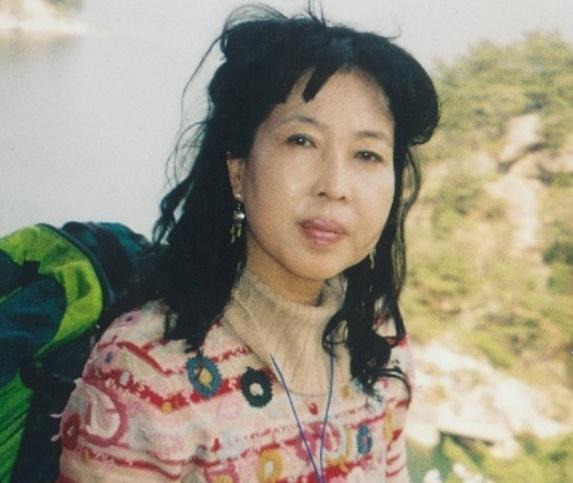
Poet Siyoung Doung graduated from the Department of Korean Language and Literature at Dongguk University and went on to earn a Ph.D. in Korean Language and Literature from Hanyang University. She further expanded her academic pursuits by studying humanities at Regensburg University in Germany. Her teaching career includes positions as a professor at Korea Tourism University and Jilin University of Finance and Economics in China.
Her literary journey began in 2003 with her poetry debut in the literary magazine Dacheung. Since then, she has published numerous poetry collections, including Future Hunting, In Search of a Strange God, The Phone Call from God, The Eyes of November, The Carnival of Time (Anthology), Was It You, Was It Me, or Was It Longing?, The Scent of Secrets, Aria of Everyday Life, The River Flowing Under the Pen, The Magic Letters, and The Horizon Never Gets Wet. In addition to poetry, Doung has contributed significantly to literary research with works such as Roh Cheon-myung’s Poetry and Semiotics, Korean Literature and Semiotics, and Semiotics of Modern Poetry. Her exploration of literature extends into travel writing, with essay collections like Encountering Culture Through Travel and Encountering Travel Through Literature. Her literary excellence has been recognized with numerous prestigious awards, including the Park Hwa-mok Literary Award (2010), Poetry and Poetics Young Poet Award (2011), the Grand Prize at the Korean Buddhist Literature Awards (2018), the 32nd Dongguk Literary Award (2019), the Yeongrang Literary Award for Criticism (2020), and the 7th Woltan Park Jong-hwa Literary Award by the Korean Writers’ Association (2021). Most recently, she received the Literary Youth Work Award in 2024. In recognition of her contributions to literature, She was also a recipient of a creative grant from the Arts Council Korea in 2005.
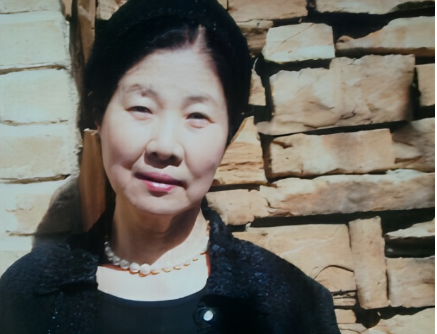
Poet Kim Sun-Young was born on May 17, 1938, in Kaesong, Gyeonggi Province. She graduated from Sudo Women’s Teachers College and later served as a teacher at Sudo Girls’ Middle School and as a professor at Sejong University. In 1962, she made her literary debut in Hyundae Munhak(Modern Literature) after her poems Bluebird, Echo, and Graffiti of the Seasons were recommended for publication. She was also an active member of the literary coterie Cheongmi (靑眉). Since the publication of her first poetry collection, Saga (思歌), in 1969, she has published 15 poetry collections, including The Shoe Store of Emptiness (1972), Wildflower Ritual (1976), Atmosphere of Fantasy (1976), Words Written at Night (1982), God Who Lives in the Lilac Tree (1983), Song of Longing (1987), and To Shatter (2008). She has received numerous literary awards, including the Contemporary Poetry Award and the Korean Literature Award. She has also served as an advisory board member of the Korean Poets Association and the Korean Women Writers’ Association, as well as a member of the International PEN Korea Center.
THE SYSTEM OF LEGAL INCENTIVES FOR EMPLOYING YOUNG SPECIALISTS: A FACTOR IN ENSURING LABOR MARKET STABILITY Jumayev Akmal G‘ulom o‘g‘li Student of the Public Security University of the Republic of Uzbekistan
The legal foundation of youth policy in Uzbekistan and the analysis of constitutional reforms demonstrate significant progress in strengthening the protection of youth rights. The new edition of the Constitution of the Republic of Uzbekistan, adopted by referendum on April 30, 2023, has elevated the system of youth rights protection to a qualitatively new level. Unlike the previous version, the new Constitution explicitly enshrines youth rights in a separate article.
Analysis of Article 79 of the Constitution — the “Charter of Youth Rights”: This article imposes an obligation on the state to ensure the protection of the personal, political, economic, and social rights of young people, as well as to create conditions for their active participation in the life of society and the state. From a legal perspective, Article 79 elevates the issue of youth employment from a mere social measure to the level of a constitutional obligation of the state.
Labor guarantees: Article 42 of the Constitution guarantees every individual the right to work, to freely choose a profession, and to work under fair labor conditions. For young specialists, the realization of this right is ensured through a “system of legal incentives” facilitating their transition from education to the labor market. Constitutional reforms legally confirm the transformation of the state’s role from a “passive observer” to an “active facilitator” in youth-related issues. This serves as a higher legal basis for establishing quotas and tax preferences for youth in subordinate legislation.
Socio-legal necessity of ensuring youth employment under demographic growth: Uzbekistan is currently considered one of the youngest countries in the world, with nearly 60% of its population consisting of young people. This demographic situation implies that more than 600,000 new entrants join the labor market annually.
The “first job” problem: Although graduates of higher and secondary specialized education institutions possess theoretical knowledge, they often lack practical experience, making them less competitive in the labor market. Legal mechanisms (such as preferential probation conditions) are essential to bridge this gap and protect young people from discrimination.
Labor market stability: Youth unemployment is not only an economic loss but also a social risk (including increased migration and crime). Therefore, a system of incentives for employing young specialists serves as a key tool for maintaining the balance between supply and demand in the labor market.
Elimination of legal conflicts: In practice, contradictions arise between employers’ demand for experienced workers and legal obligations to hire graduates. Before analyzing the system of incentives, it is necessary to clarify the legal meaning of the term “young specialist.”
Legal status of “young specialist” and “graduate” in national legislation: The term “young specialist” has a specific legal status closely related to, but distinct from, the concept of a “graduate.”
“Graduate” refers to an individual who has completed higher, secondary specialized, or vocational education programs. According to the Law “On State Youth Policy,” youth are defined as individuals aged 14 to 30.
“Young specialist” is a narrower legal concept, typically referring to a person who, within three years after graduation, enters employment for the first time. In some cases, this period may vary depending on the sector or program.
Connection with incentives: The status of a “young specialist” provides certain legal benefits, such as employment without a probation period and assistance in job placement. While “graduate” indicates completion of education, “young specialist” reflects entry into professional activity and eligibility for legal protection.
Distinguishing between these two concepts is important for both employers and young individuals. Employers must comply with legally established benefits when hiring young specialists, ensuring fairness and transparency in the employment process.
International Labour Organization (ILO) standards and their transformation into national law: As a member of the International Labour Organization (ILO), Uzbekistan has ratified several conventions and recommendations aimed at promoting youth employment. These standards serve as an important legal guideline for improving national legislation.
In ILO documents, “youth employment” implies not only job creation but also ensuring decent work conditions, protection of rights, and opportunities for professional growth. The ILO generally defines youth as individuals aged 15 to 24, although this range may extend to 30 in national contexts.
Key aspects include:
Conventions and Recommendations: Ratified ILO conventions (e.g., on employment promotion) form an integral part of national legislation and may have direct applicability.
Best practices: International experiences, such as Germany’s dual education system and Japan’s lifetime employment principles, serve as models for shaping Uzbekistan’s youth employment policy.
ILO standards ensure protection against forced labor, prohibition of discrimination, and the right to fair wages, reinforcing the concept of “young specialist” within both national and international legal frameworks.
Thus, the legal determination of the term “young specialist” is based on both national and international legal norms. It refers not merely to age but to a qualified individual entering the labor market who requires special legal protection. This concept forms the basis for applying all benefits and guarantees aimed at youth employment.
Incentives for employers: Ensuring youth employment requires not only providing benefits to young people but also incentivizing employers. This helps maintain labor market balance and facilitates youth employment.
Tax incentives are among the most effective tools. Legal frameworks should allow reductions in social tax rates for enterprises hiring young employees. Relevant provisions of the Tax Code of Uzbekistan (such as those related to personal income tax and social tax) may include mechanisms for granting such benefits.
Currently, these incentives may take the following forms:
Social tax benefits: Partial reimbursement or reduced rates of social tax for companies employing young specialists under certain conditions.
Income tax benefits: In some cases, enterprises implementing youth employment projects may receive tax preferences.
These measures compensate employers’ additional costs and make hiring young specialists economically beneficial, especially for small and medium-sized businesses.
Conclusion: Youth employment today is not merely an economic issue but a crucial legal element of Uzbekistan’s national security and constitutional stability. Therefore, studying the system of legal incentives for young specialists is of great theoretical and practical importance. Economic-legal mechanisms such as tax incentives, subsidies, and mentorship systems accelerate the integration of young specialists into the labor market. This system serves as an essential legal instrument for implementing state youth policy and encourages employers to invest in young human capital.
LEGAL MECHANISMS FOR ENSURING YOUTH PARTICIPATION IN PUBLIC ADMINISTRATION
Jumayev Akmal G‘ulom o‘g‘li Student of the Public Security University of the Republic of Uzbekistan
Young people, as an active and creative segment of society, play a crucial role in public administration, which is essential for ensuring the democratic development and social stability of a country. The political engagement of youth and their possession of legal powers contribute to the protection of their interests, acceleration of modernization processes, and enhancement of their socio-political activity within society. These processes form a foundation for strengthening democratic institutions and preparing a new generation of political personnel.
Within the framework of ensuring the legal participation of youth in public administration, the role of parliamentarism and youth wings is a highly relevant issue. This direction requires an in-depth study of legal mechanisms aimed at creating stable foundations for youth representation within the constitutional and legal system of the state, as well as defining their rights and responsibilities. At the same time, it is necessary to analyze the existing regulatory and legal framework in the country that promotes youth political activity, identify practical challenges, and develop effective solutions.
The legal definition of youth and their position within the context of statehood is also of particular importance. Youth are generally defined in national legislation and international legal documents as a specific social group protected based on age criteria. For example, in the legislation of the Republic of Uzbekistan, youth are often defined as individuals aged between 14 and 30. From a legal perspective, youth represent not only an age category but also a group distinguished by specific rights, responsibilities, and state-supported mechanisms. In the context of statehood, youth are considered the future of society and a key element of social stability and development. Therefore, protecting youth and guaranteeing their rights is one of the priority directions of state social policy. Thus, the concept of youth holds significance not only in a socio-cultural sense but also in a legal context.
Participation in public administration refers to the process by which citizens and social groups influence state authority decisions and actively engage in their formation. This concept has evolved within the framework of constitutional and administrative law and is determined by the legal opportunities available to participants. From a legal standpoint, participation is exercised through various forms such as voting in elections, expressing public dissent, and engaging in the activities of public organizations. This process constitutes a fundamental component of the principles of legality, transparency, and accountability in public administration. Therefore, participation in governance is not only based on legal documents but also on practical political and cultural processes, ensuring that citizens—especially youth—play an active role in public life.
Comprehensive legal analysis of these issues serves as a basis for developing political and legal mechanisms aimed at protecting youth and ensuring their active participation in public administration through legislative frameworks.
The parliamentary system, as a form of state governance, ensures the independent and effective functioning of the legislative body. Legally, parliament exercises state power based on the principle of representation, meaning that the interests of citizens are expressed through elected representatives. Key principles include representation, rule of law, balance in governance, and transparency of parliamentary activities, all of which are enshrined in the constitution and special laws.
The involvement of youth in parliamentary activities is an important aspect of democratic development. In many countries, including Uzbekistan, there are normative legal acts aimed at encouraging youth political participation. The Constitution guarantees citizens’ political rights, including the right to vote and to be elected. Minimum age requirements are established for entering parliament, enabling youth to participate in the legislative process. In addition, youth wings and public associations serve to legally strengthen their political engagement.
From a legal perspective, youth representation in parliament is regulated by specific requirements such as minimum age thresholds, eligibility criteria for candidates, and other conditions. These limitations are intended to ensure that young individuals are prepared for political responsibility. At the same time, legislation seeks to expand their opportunities for representation. For instance, lowering minimum age requirements and creating favorable conditions for youth organizations contribute to encouraging youth participation in parliamentary activities. As a result, this promotes the renewal of political processes and strengthens democratic principles.
Legal mechanisms of parliamentarism play a decisive role in ensuring youth political activity and directing their effective participation within the system of state power. These mechanisms are закреплены (enshrined) through constitutional norms and special legislation, forming an integral part of democratic processes.
This legal analysis contributes to strengthening the role of youth and expanding their authority within the development of national legislation and democratic institutions.
in the desks that are filled with curiosity and youth
in every mind that asks to be believed
the same thirst of knowledge that she tried to spread
fortune did not divide our worlds apart
though hers was framed by hometown and open air
and mine by screens that hum with distant lives
still, something human that is quite the same
the need to be seen without a doubt
to hear a voice say, you are more than this
though I could turn away and choose differently
I follow her career, her mission of education
but from a knowing deeper than what I understand
that love can live in the work we keep on daily
and somewhere in each word I give away
her life continues, powerfully through the passion of mine
Võ Thị Như Mai is a Vietnamese poet, translator, editor, critic, and Senior Teacher based in Perth, Western Australia, whose work spans more than two decades of bilingual writing and cultural advocacy. She is the author of five poetry collections and three children’s books published in Vietnam and Australia and has led over ten internationally published bilingual translation projects introducing Vietnamese poets to global audiences. Her writing explores themes of belonging, memory, heritage, and the quiet beauty of everyday life, blending Vietnamese imagery with a universal emotional resonance. An active member of the HCM Writers Association and the Perth Poetry Club, she is also a committed supporter of emerging writers and cross-cultural literary exchange. In 2025, she was honoured in Spain as one of the Top One Hundred Most Influential Literary Figures and received two Awards of Commendation from the Vietnamese Consulate General in Australia and the Foreign Affairs in Vietnam for her outstanding contribution to promoting Vietnamese culture and language abroad.
May every passing day of my people be a celebration. May its people live in health and peace. May every heart smile with happiness. Let Uzbekistan keep singing the melody of peace.
Be children who burn with love for your homeland. So many opportunities have been created for you. Build a strong foundation for the future. Today, Uzbekistan has placed its trust in you.
Read books, seek knowledge, do not wander aimlessly. In deserts and steppes, create gardens and orchards. Design projects and programs, do not stay silent. Uzbekistan will support you materially.
Many banks open their doors for the youth. Your leader’s decisions are your shield. Show your strength in knowledge and intellect. Uzbekistan supports you in every field.
Songs and melodies suit a peaceful land. Its children grow up cheerful and joyful. Other nations look with admiration. May no evil eye touch your peace, Uzbekistan.
Fergana State University Agrarian Joint Faculty Student of group 25.64: Orzigul Ibragimova
REFORMS IN THE TRANSITION TO A GREEN ECONOMY IN UZBEKISTAN:
On the Example of the Strategy for the Transition of the Republic of Uzbekistan to a Green Economy for the Period 2019–2030
Students of Termiz State University of Engineering and Agrotechnologies Ergasheva Komila To‘ra qizi Email: komilaergasheva152@gmail.com
Namozova Sarvinoz Erkin qizi Email: nomozovasarvinoz74@gmail.com
Abstract: The article examines the current problems of transition to a green economy in our country and their solutions using the example of the “Strategy of the Republic of Uzbekistan for the transition to a green economy for 2019-2030”. At the same time, it is noted that in the current period, global environmental problems and the limited availability of natural resources and the urgency of their rational use are one of the important directions of our economy.
Key words: Ecological crises, green economy, strategies, sustainable development, industrialization, small business, financial mechanisms, incentive mechanisms, energy efficiency, innovative solutions.
Introduction
Over the past few years, one of the key directions implemented in our country, the results of which are clearly visible in the economy, is the development of the green economy. A green economy is an approach aimed at promoting environmental development, improving ecological conditions, and ensuring sustainable growth without harming the environment.
In order to give special attention to this sector, the Strategy for the Transition of the Republic of Uzbekistan to a “green” economy for the period 2019–2030 was developed. In particular, the following were defined as the main objectives:
Increasing energy efficiency and rational use of natural resources through technological modernization and the development of financial mechanisms;
Introducing “green” criteria based on advanced international standards into priority areas of public investment and expenditure;
Supporting pilot projects in green economy sectors through the development of state incentives, public-private partnerships, and enhanced cooperation with international financial institutions;
Developing systems for training and retraining personnel for the green economy by encouraging investment in education and strengthening cooperation with leading foreign educational and research institutions;
Taking measures to mitigate the negative effects of the ecological crisis in the Aral Sea region;
Strengthening international cooperation, including through bilateral and multilateral agreements.
Research Methods (Methodology)
This article uses a combination of qualitative and quantitative analysis methods to assess reforms and their effectiveness within the framework of Uzbekistan’s Green Economy Transition Strategy for 2019–2030 (PQ-4477).
The priority areas defined in Uzbekistan’s strategy (energy efficiency, renewable energy share, water resource management) were compared with the United Nations Sustainable Development Goals (SDGs), particularly SDG-7 (Affordable and Clean Energy) and SDG-13 (Climate Action).
Other relevant regulatory documents and concepts, such as the Energy Efficiency Concept in Industrial Sectors.
Strategic goals, indicators (such as reducing greenhouse gas emissions by 35% by 2030 and increasing renewable energy share to 30%), and action plans were analyzed in the context of priorities and existing challenges.
Current Progress
Uzbekistan is gradually transitioning to a green economy, and current results confirm this progress.
For example, in 2022:
Presidential Decree PQ-436 was adopted to improve the effectiveness of reforms aimed at transitioning to a green economy by 2030;
Strategic documents were approved, including:
The Green Economy Transition Program until 2030;
The Energy Efficiency Concept for industrial sectors;
The Action Plan for green growth;
A target was set to reduce energy intensity by 20% by 2026 compared to 2022;
The Interagency Council on green economy coordination was updated;
A Donor Coordination Group was established;
A project office (Technical Secretariat) was created under the Ministry of Economic Development and Poverty Reduction.
Additionally, in cooperation with the Agence Française de Développement (AFD), a public policy loan program was implemented, under which €150 million was allocated to Uzbekistan’s state budget.
Target Indicators (by 2030)
Direction
Target
Greenhouse gas reduction
35% reduction (compared to 2010)
Renewable energy share
30% of electricity production
Industrial energy efficiency
At least 20% improvement
Energy intensity of GDP
30% reduction
Water-saving technologies
1 million hectares coverage
Green areas expansion
Increase by 30%
Waste management
600 collection points
Research Results and Discussion
The results show that Uzbekistan has achieved significant progress in strengthening institutional foundations and reforming the energy sector.
The adoption of PQ-436 and the restructuring of coordination mechanisms demonstrate strong political will and improved international cooperation.
In the energy sector:
A target of 30% renewable energy share by 2030 was set;
Industrial energy intensity is planned to decrease by 20%.
However, achieving these goals requires substantial investment, making financial support—such as the €150 million AFD loan—crucial.
Despite progress in public-private partnerships and international investment, the absence of mechanisms such as carbon pricing remains a challenge that may slow down the green transition.
Environmental priorities include:
Mitigating the Aral Sea crisis;
Implementing water-saving technologies on 1 million hectares.
These are critical for Uzbekistan’s socio-economic stability given limited water resources.
Conclusion
One of the major global economic problems today is the unequal distribution of resources such as water, soil, and natural energy. A significant share of resource consumption belongs to developed countries, highlighting the need for global action.
We believe that:
International organizations in health, food security, and climate research should develop practical proposals for fair resource distribution;
Negotiations should ensure equitable allocation for both developed and developing countries.
Currently, one in five people worldwide lacks access to sufficient energy, illustrating the urgency of this issue.
Global resource inequality leads not only to economic imbalance but also to ecological degradation, social tensions, and slower sustainable development. Overuse of natural resources by developed countries intensifies water scarcity, soil degradation, and energy shortages, while developing countries struggle to address these challenges independently.
Therefore, strengthening international cooperation for fair and efficient resource use is essential. Expanding joint programs in energy, water supply, ecosystem protection, and food security is necessary.
Strategies developed by international organizations must consider the interests of all countries, especially by improving infrastructure in less developed regions, introducing resource-efficient technologies, and reducing emissions.
Ensuring equal access to energy, promoting renewable energy technologies, and supporting their implementation are crucial for global stability. Since one-fifth of the world’s population still lacks adequate energy access, this places a significant responsibility on the international community.
Joint efforts in addressing these challenges will contribute to building a safe, sustainable, and equitable world for future generations.
References
Presidential Decree of the Republic of Uzbekistan No. PQ-4477 (04.10.2019) – Green Economy Transition Strategy (2019–2030).
Khashimova S.N. Green Economy textbook. Tashkent: Ma’rifat, 2024.
Decrees and resolutions of the President of Uzbekistan.
Nationally Determined Contribution (NDC) of Uzbekistan under the Paris Agreement.
Agreements and reports on green project financing with AFD, World Bank, and EBRD.
Lex.uz – National legal database.
President.uz – Official website of the President of Uzbekistan.