—Losing the green wild, one can never flee the white snow
No path to tread
It seizes the grief
I carry, still warm
Chills surge unceasing
I start
To mend my robe round the frame
Gather firewood along the way
To patch the gaps
Where the green wild fled
From the wall
2.年碑
——为你做碑
只攒了些许
清楚
流尽落款
的灰
敞开东行
的雪
站成南向
的碑
来年
椿的,杨的,榆的
陷了一堆
涨了一辈
Epitaph of the Year
—Carving a stele for you
I only gather a little
Clarity
Till the ash of the signature
Runs dry
Unfurl the snow
Wending east
Stand as a stele
Facing south
In the coming year
Of the Chinese toon, the poplar, the elm
A pile sinks
A generation rise
3.阴天
我习惯
冬的母亲
持续凌冽
里断里
有一天扭捏
难肯
凭惯性
结果她
含了许久
才送出
带着温润
的种
跑去埋下
发不了
芽
Overcast Day
I’m used to it
Winter’s mother
Keeps the bitter chill
Lingering, fraying
Once in a while, coy
Reluctant
By force of habit
Turns out she
Holds it long
Before she sends forth
The seed
Warmed and mild
I run to bury it
It won’t
Sprout
4.送叶
春天的
许应
旋我在
雪上
等到脱落
的叶
飞上高枝
却是灰黑
的雀
Sending the Leaf
The promise
of spring
Whirls me upon
the snow
Till the fallen
leaf
Rises to the high branch
Yet it’s a dull black
sparrow
5.望波
我追不上
认定的
波
母亲静立
看阔阔的
河
至夜半
外公的眼角
搁浅了
泥螺
我一并
掂起
但我行动
太缓
完成不了
对一个
人的
提纯
Gazing at the Waves
I cannot catch up
with the wave
I set my heart on
Mother stands still
watching the broad
river
Till midnight
in Grandpa’s eyes
mud snails run aground
I pick them up
all together
Yet my steps are
too slow
to finish
the purification
of a
person
Su Yun, 17 years old, is a member of the Chinese Poetry Society and a young poet. His works have been published in more than ten countries. He has published two poetry collections in China, namely Inspiration from All Things and Wisdom and Philosophy, and one in India titled WITH ECSTASY OF MUSINGS IN TRANQUILITY. He has won the Guido Gozzano Orchard Award in Italy, the Special Award for Foreign Writers in the City of Pomezia, and was praised by the organizing committee as the “Craftsman of Chinese Lyric Poetry”. He has also received the “Cuttlefish Bone” Best International Writer Award for those under 25.
I’m at a funeral of someone I barely know. He’s a third cousin of my wife or something. She hardly knows him either. The death of strangers…it’s a family thing.
We sit in the rear of the church, far away from the teary ones who actually knew the guy. We’re sad for them. It’s the best we can do.
Then it’s to the cemetery. We’re so far back of the hearse, it’s like we’re at the head of someone else’s procession.
We pray at the gravesite, pray that no one asks who we are. Then it’s back to the house for catered devils eggs and chicken salad sandwiches.
Even my wife isn’t sure if it’s the right house or not. But there’s one of her aunts. “He was only fifty-five,” she says.
Or at least, that’s what her third cousin told her nephew-in-law. An hour later, we leave, thinking to ourselves, someone died
and we’re just moderately upset. Ah death, if only you would keep your distance thus. Like a third cousin or something. And on my wife’s side.
John Grey is an Australian poet, US resident, recently published in Midnight Mind, Trampoline and Flights. Latest books, “Bittersweet”, “Subject Matters” and “Between Two Fires” are available through Amazon. Work upcoming in Levitate, White Wall Review and Willow Review.
Excerpted from the book Decoding Dongba Culture by Lan Xin (Lan Xin Samei)
Wan Yilong: Practicing Great Love with High-Dimensional Wisdom
Casting the Soul for the Inheritance of Dongba Culture
By Lan Xin (Lanxin Samei)
Mr. Wan Yilong is an outstanding master of traditional Chinese culture, a high-dimensional wisdom mentor, spiritual practitioner, poet, and philanthropist. He is also the founder of the Nine Dragons Realm, Dean of the High-Dimensional Wisdom Academy, Dean of the Dongba Culture Academy, and a rare Han Chinese inheritor of Dongba Culture.
Born in Anyang, Henan, the hometown of China’s oracle bone inscriptions, he has been deeply nourished by 5,000 years of Chinese civilization since childhood. Proficient in I Ching at a young age, he devoted himself to Confucianism, Buddhism, and Taoism, integrating ancient Eastern philosophy with spiritual wisdom. He enlightens hearts with wisdom and expresses the soul with poetry, spreading Eastern high-dimensional wisdom and great love to the world.
He is a true man of action who “does more than he speaks.” In daily life, he lives simply and frugally, with no pursuit of luxury or fame. Yet in charity and cultural inheritance, he gives his all without reservation. He has quietly helped countless strangers, never seeking recognition or reward, embodying great love through deeds and fulfilling his mission with a devout heart.
My encounter with Mr. Wan Yilong was legendary and destined. In a spiritual workshop with many fellow practitioners, I stood quietly and independently in the crowd, with a unique and serene aura. Though surrounded by many admirers for his “Third Eye” that perceives the truth of life, he noticed me at first sight among all those people.
He walked toward me gently, with firm and sincere eyes, and whispered: “We have met before.”
At the moment our eyes met, a familiar feeling across time and space arose naturally. With his high-dimensional perception, he clearly saw my form in multi-dimensional space and revealed the deepest imprints and mission of my soul. I was deeply shocked and convinced that this meeting was divinely destined. Since then, we have become closest partners, awakening the wisdom of countless lifetimes together, and guarding the inheritance of Eastern civilization hand in hand.
Over the years, Mr. Wan and I have worked together to protect and inherit Dongba Culture, a precious World Memory Heritage. We co-founded the public-welfare Dongba Culture Academy. Introduced by me, he became one of the very few Han Chinese inheritors of Dongba Culture. Together with Elder Aheng Dongta, he has devoted himself to sustaining this thousand-year-old cultural lineage. With profound cultural knowledge and high-dimensional insight, he helped me awaken the hidden wisdom of sacred mantras, rituals, and life energy, allowing the ancient civilization to shine anew in the modern era.
Deeply moved by the crisis facing Dongba Culture — few inheritors, most of them elderly and struggling to make a living — he made the rescue and inheritance of Dongba Culture his lifelong mission. Together, we restored an ancient thousand-year-old temple into the now-renowned Yulong Wenbi Dongba Culture Academy, creating a sacred home for Dongba inheritors to practice, research, and pass on their heritage.
Mr. Wan upholds the philanthropic philosophy of “teaching people to fish rather than giving them fish.” He provides not only material support but also platforms for cultural exchange, ancient scripture research, traditional ceremonies, and public education in the most dignified way for Dongba masters. This enables them to gain stable livelihoods and social respect while preserving their culture. He has traveled many times to remote mountainous areas such as Shangri-La and Muli in Sichuan to visit, comfort, and support the elder Dongba masters guarding the cultural roots, warming hearts with sincere and practical love.
As an extraordinary high-dimensional wisdom mentor and spiritual practitioner, Mr. Wan integrates the essence of wisdom from Buddhism, Taoism, Christianity, and Dongba Culture. He perceives the karmic roots of life through the “Third Eye,” explores the mysteries of the multi-dimensional universe via astral travel, and chants cosmic sounds from high-dimensional realms with pure intention. This energetic frequency helps people break through physical limitations, connect with ancestral wisdom, awaken their soul guardians, resolve life confusion, and find their ultimate life purpose.
He never boasts of his extraordinary abilities or pursues personal gain, always guiding and healing all beings with compassion. For those trapped in confusion and suffering, he illuminates their path with high-dimensional wisdom and liberates them from karmic obstacles through spiritual practices. He heals both physical pain and spiritual wounds, helping countless people regain light and hope from hardship. For him, spirituality is not abstract theory, but a way of living integrated into every word, every deed, and every ordinary moment — seeing the sacred in the mundane, realizing the Tao in daily life.
At the Dongba Culture Academy, Mr. Wan is one of the core spiritual guiding forces. People from all over the world come seeking help with health, relationships, career, and spiritual struggles. With his ability to “see through karma,” he accurately identifies the root of their difficulties. Combining Eastern spiritual wisdom and ancient Dongba rituals, he has helped countless people experience life transformation: infertile couples welcoming children, critically ill patients recovering, lost souls finding direction, and suffering beings regaining peace. These real transformations are the best proof of his high-dimensional wisdom and boundless love.
Mr. Wan Yilong lights the path of cultural inheritance with high-dimensional wisdom, walks the way with selfless love, and guards the roots of civilization with poetic spirit and devotion.
He is a practitioner of Eastern high-dimensional wisdom, a distinguished Chinese poet on the international stage, a humble and profound philanthropist, a soul-builder for Dongba cultural inheritance, and a guide who transforms lives through life.
He shows the world the vision and dignity of a true Chinese spiritual practitioner. With perseverance, he revives the thousand-year-old culture; with compassion, he shines like starlight, illuminating countless lost souls.
He lives by this truth:
True high-dimensional wisdom begins with awakening and belongs to great love.
True spirituality and charity lie not in words, but in devoted action.
sheltered during the electrical storm
by my grandmother's freckled arm


          *


ignoring the elaborate directions
my brother the technopath


          *


zooming-in on the shoe in the street


          *


the stalled industry of clover crowns


          *


sea voyage atop the Crimson King maple


          *


the green undertow of my dysfunctional family


          *


you're a white cloud when nobody waits for your return


          *


she told the store detective the sweater wasn't even her style


          *


please continue, as long as you're not counting on being understood


          *


she knows all the birthdays of the dead


          *


the opulent life of the former bedwetter's
full underwear drawer
“Kamilah the Miracle Filly,” by Angela Alioto, wins the Courage for Freedom Film Award
San Francisco. The “Courage for Freedom Film Award” has been awarded to Angela Alioto’s film “Kamilah the Miracle Filly” narrated excellently by Joe Mantegna, winner of a Tony Award, multiple Emmy nominations, and honored with a star on the Hollywood Walk of Fame.
The coveted award was presented to Angela Alioto last week by Count Federico di Wardal.
The citation is: “for creating a work of high cinematic value based on saving a life through courage and faith, with unparalleled determination “
Angela Alioto, politician, president of the Knights of St. Francis, and one of the most esteemed lawyers in the United States, has taken actions considered of historic importance for human and civil rights and for peace, upholding the creed of St. Francis of Assisi of universal love, which is the goal of SF founded by the Franciscan missions.
Alioto gave also a strong contribution to San Francisco concerning cinema.
The SF Film Commission is attributed specifically to her legislative initiative as its creator.
But let’s get back to the film “Kamilah, the Miracle Filly”.
It is the true story of the filly Kamilah that doctors had decided to put down, refusing to operate on her legs.
The story captivated California, spread throughout the USA, landing in Europe, where Angela Alioto is known too, and in the rest of the world, via social media.
Through UC Davis, Alioto operated on Kamilah, saving her life, during months of tribulation.
At that point she committed to making the film “Kamilah the miracle filly” selected in 2025 at the LA Tribune IFF, chaired by Moe Rock and Emily Letran and winner at the SF New Concept IFF chaired by Joanna Zhang and at the Vesuvius FF, in Pompeii (Italy) chaired by Giovanna D’Amodio.
Alioto, as well as the Count Federico Wardal, was friend of the film legend Federico Fellini and she always was involving in an international film entourage.
At the same time, Francesco Garibaldi Hibbert, a descendant of the hero of two worlds Giuseppe Garibaldi, and his friend Count Federico di Wardal met in LA last summer and decided to found the “Courage for Freedom Film Award” and “Courage for Freedom” and to create the film “Anita,” with music by Andrea Ceccomori, centered on a touching poem of the highest artistic value by the hero Garibaldi on the agony and death of his young Brazilian wife Anita.
For this, an unusual aspect emerges for a hero: being also a poet and poetry is close to the border with cinema.
Here’s what the coveted award is: The “Courage for Freedom Film Award” is issued by the “National Giuseppe Garibaldi Association” to honor excellence in films that exalt the universal values that inspired the revolutionary Hero of Two Worlds, Giuseppe Garibaldi, in his quest for freedom, equality, and justice for oppressed peoples.
The award immediately became one of the most coveted internationally, supported by institutions for peace, the protection of human rights, the environment, and film festivals with these missions.
Congratulations again to Angela Alioto and a call to everyone to cultivate a profound awareness of inner peace.
Inflation is one of the most important economic indicators in modern economies. It refers to the general increase in the prices of goods and services over time. When inflation rises rapidly, the purchasing power of money decreases, which means people need more money to buy the same products. High inflation can create economic instability, reduce living standards, and increase uncertainty in the market.
However, when inflation begins to decrease, the situation may improve. The decrease of inflation, also known as disinflation, means that prices are still rising, but at a slower rate than before. This process is often seen as a positive sign because it shows that economic policies are working and price growth is becoming more stable.
This paper discusses the concept of inflation, the reasons for its decrease, the role of monetary and fiscal policies, and the positive and negative effects of lower inflation on households, businesses, and the national economy.
Understanding Inflation
Inflation occurs when the overall price level of goods and services increases over a period of time. It is usually measured annually using economic indicators such as the Consumer Price Index (CPI).
For example, if a basket of goods costs $100 this year and $110 next year, the inflation rate is 10%. This means that money has lost part of its value.
Moderate inflation is considered normal in many countries. Central banks often aim for inflation around 2–3% per year. This level encourages spending and investment while keeping prices stable.
However, when inflation becomes too high, it creates serious problems:
Decreased purchasing power
Higher cost of living
Reduced savings value
Economic uncertainty
Types of Inflation
Inflation can be classified into several types based on its causes.
1. Demand-Pull Inflation
This happens when demand for goods and services exceeds supply. When consumers spend more money, businesses increase prices.
2. Cost-Push Inflation
This occurs when production costs increase. For example, higher wages or energy prices force companies to raise product prices.
3. Built-In Inflation
This type is caused by expectations. If people expect prices to rise, they demand higher wages. Businesses then raise prices, creating a cycle.
Understanding these types helps policymakers control inflation effectively.
What Does a Decrease in Inflation Mean?
A decrease in inflation does not mean that prices are falling. It simply means that prices are rising more slowly.
For example:
Year 1: Inflation = 12%
Year 2: Inflation = 7%
In this case, inflation has decreased, but prices are still increasing.
This process is called disinflation. It is different from deflation, which means a general decrease in prices.
Causes of Decreasing Inflation
There are several reasons why inflation may decrease.
1. Monetary Policy
Central banks use interest rates to control inflation. When inflation is high, they increase interest rates. Higher interest rates make borrowing more expensive, which reduces spending and demand.
As demand decreases, price growth slows down.
2. Fiscal Policy
Governments can reduce inflation by controlling public spending and reducing budget deficits. Responsible fiscal management helps maintain economic balance.
3. Improved Supply Conditions
When supply chains recover and production increases, shortages decrease. As a result, prices stabilize.
4. Lower Energy and Commodity Prices
Energy plays a key role in production. If oil and gas prices fall, transportation and production costs decrease. This reduces pressure on prices.
5. Decreased Consumer Demand
If consumers reduce spending due to uncertainty or high interest rates, demand decreases, and inflation slows.
Positive Effects of Decreasing Inflation
Lower inflation has several important benefits.
1. Increased Purchasing Power
When inflation slows, people can buy more goods and services with the same income.
2. Economic Stability
Stable prices create a predictable business environment. Companies can plan investments more effectively.
3. Protection of Savings
Lower inflation protects the real value of savings. High inflation reduces the value of money saved in banks.
Businesses benefit from stable and lower inflation because:
Costs are predictable
Planning becomes easier
Investment risks decrease
However, high interest rates may increase borrowing costs.
Impact on Households
Lower inflation helps households by:
Reducing the cost of living growth
Protecting income value
Supporting financial planning
But if inflation decreases due to economic crisis, unemployment may increase.
Global Perspective
Inflation is influenced by global factors such as:
Oil prices
International trade
Exchange rates
Global crises
When major economies reduce inflation, it positively affects global markets.
Historical Examples
Many countries have experienced high inflation followed by disinflation.
Successful strategies included:
Strict monetary policy
Fiscal discipline
Structural reforms
These experiences show that reducing inflation requires careful planning.
Inflation and Employment
There is often a trade-off between inflation and unemployment. Reducing inflation too quickly may increase unemployment.
Policymakers must balance these factors.
Social Impact
High inflation increases inequality because low-income families suffer more.
Lower inflation improves social stability and reduces financial stress.
Long-Term Economic Benefits
Stable inflation leads to:
Sustainable growth
Stronger currency
Higher productivity
Increased foreign investment
Policy Recommendations
To maintain stable inflation, governments should:
Strengthen monetary policy
Maintain fiscal discipline
Improve supply chains
Support domestic production
Increase economic transparency
Conclusion
The decrease of inflation is an important economic process that contributes to stability and sustainable growth. It indicates that price growth is slowing and economic policies are effective.
Lower inflation increases purchasing power, protects savings, and supports investment. However, policymakers must ensure that inflation decreases gradually and does not lead to economic recession or deflation.
A balanced and well-managed economy requires moderate and stable inflation. When governments and central banks work together, they can create a strong economic environment that benefits businesses, households, and the entire society.
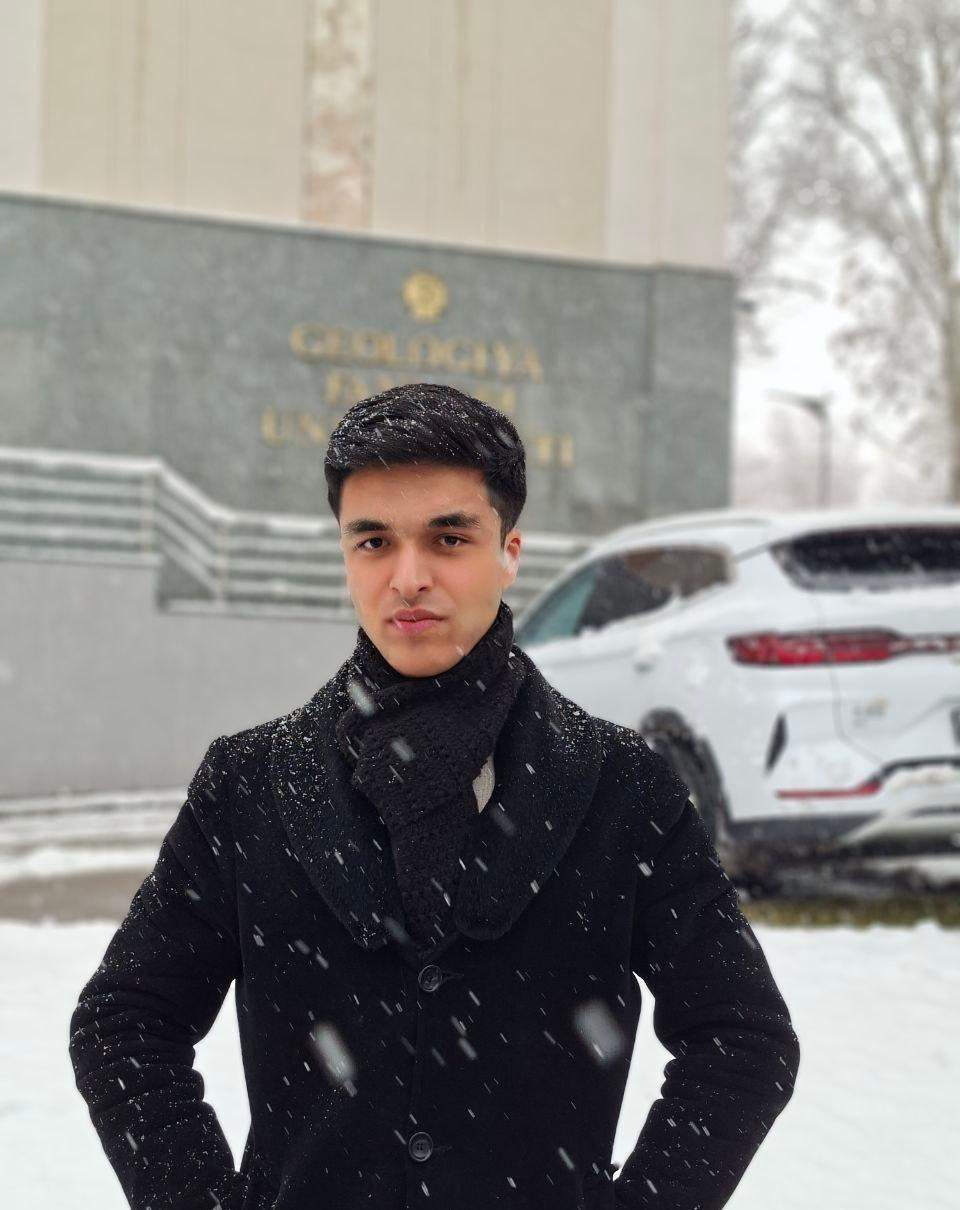
My name is Shonazarov Shohjaxon, born on January 17, 2008. I am currently a first-year Economics student at Tashkent State Geological University. I chose this field because I am highly interested in financial systems and economic development.