Essay from Steven Mayoff

Waxing Lyrical


“Oh, mama, can this really be the end? To be stuck inside of Oslo with the Nobel Prize again.”


This was my Facebook post, a kneejerk reaction when I first found out that Bob Dylan had won the Nobel Prize for Literature in 2016. The same year that Donald Trump became president of the United States of America. I’m not sure which depressed me more. No, that’s a lie of course.


But it was close. One thing I knew for sure, in both cases guard rails were in danger of being torn down.
I consider Dylan one of my cultural heroes. When I first started writing in my late teens and early twenties in Montreal during the 1970s, it was mostly poetry with a growing interest in
lyrics, occasionally collaborating with musician friends and acquaintances. Although I had a deeply hidden aspiration to write fiction, I didn’t attempt prose until the early 1980s, while still
in Montreal, and then again in the mid-90s in Toronto. I only started focusing seriously on fiction after I moved to Prince Edward Island in 2001 at the ripe old age of 45.


These days I consider myself primarily a fiction writer who also writes poetry and lyrics. A bit of a turnaround from where I started. So, it is with some interest (and a healthy dose of bewilderment) that I find lyrics cropping up more and more in my fiction. It started innocently
enough with a short story that appeared in my first book. An anonymous love note causes a rift in the relationship between a couple because neither knows which of them it is for. One of them
is an aspiring songwriter and, seduced by the note’s poetic language, sets it to music. In my next book, the lyrics of a ditty written for the female protagonist by her composer cousin (with whom she is in love) become a recurring motif that acts as a kind of connective tissue in the novel’s non-linear structure. My latest novel includes lyrics for a satirical revision of Leonard Cohen’s masterpiece Hallelujah.


Now, if Leonard Cohen had been nominated for the Nobel Prize, I probably would have let it slide, since he actually wrote novels and poetry. Sure, Dylan wrote Tarantula, a book of stream-
of-consciousness rambling, but it’s hardly Nobel-worthy. As I understood it, he won the prize on the basis of his main body of work, his lyric writing. The grey area here is that many consider
Dylan a poet, which I can’t argue with. And yes, his lyrics have been compiled in books. Still, it just didn’t sit right with me.


The announcement that he had won spread like wildfire throughout the media. The controversy, at that time, was that he had not formally accepted the prize. The Nobel committee was growing frustrated that Bob was taking his sweet time in getting back to them. I was actually
holding out hope that he would turn it down. But after he finally decided to accept the prize, in his speech at the ceremony, he justified this decision by claiming to have been influenced by
literary giants such as Herman Melville. All well and good. I can make the claim that my fiction has been influenced by many great musicians and that music itself is a driving force in my
stories. But I don’t reasonably expect any of my books to be nominated for a Grammy or a Juno.


Or maybe I should?
The thing is, a snatch of lyric here and there is a common enough occurrence in many stories and one might think I was merely filling my quota, but lately I’ve begun to double down on the lyric content in my fiction. I recently wrote a yet-to-be-published novella set in a club that is a combination cabaret and bordello. As such, there is a song lyric in each of its nine chapters. The lyrics are meant to be commentary on the story as it unfolds and I think of the novella as a kind of literary musical. In my current novel-in-progress, a struggling middle-aged poet is writing a memoir of when, in his late teens and early twenties, he was the lyricist in a rock band during the
late 70s and early 80s. Every chapter will open with a full lyric, representing the songs on the unreleased album the band recorded. The impetus for the novel came from a long-held fantasy
from my adolescence of being the resident lyricist in a rock band like Keith Reid in Procol Harum or Pete Sinfield in the early King Crimson.


What exactly is going on here? The idea of lyrics as literature has always been anathema to me. In 1981 I began collaborating with a composer. For twenty years we wrote songs and tried our hand at a few musical theatre projects. During that time, I slowly gained some understanding of the relationship between words and music. Often, my deep-seated yearning to write fiction found its way into my lyrics, giving them a literary tone. At times, my composer partner found
them a bit unwieldy to sing and, in the course of setting them to music, words fell by the wayside. The music itself was acting as an editor and I soon learned that simpler language was better suited to singable melodies.


In the comments section of that original Facebook post, where I satirized the refrain from Dylan’s song Stuck Inside of Mobile with the Memphis Blues Again, I opined that if a lyricist had to win the Nobel Prize, it probably should have been Stephen Sondheim. Aside from being a great admirer of his work, I felt it somehow more appropriate that he be bestowed with such an honour. Perhaps it’s because in an interview, Sondheim shared some wisdom that his mentor, Oscar Hammerstein II told him. Essentially, lyrics are not poetry, they are text, but when paired with the right music they become elevated to poetry. This is often borne out by the fact that much of the time, lyrics don’t stand very well on their own and, when spoken as poetry, often
tend to fall flat. Whenever I see lyrics to popular songs on the page, I invariably hear the melody of the song in my head. The words don’t seem to make sense without the music. I don’t care if we’re talking about the lyrics of Bob Dylan, Leonard Cohen, Jim Morrison, John Lennon or anyone else who’s been saddled with the mantle of rock poet. The words carry the meaning, but it’s the music that gives them their thrust and etches them in our memories.


Maybe it’s my own particular bias, but I think that if anyone’s lyrics were going to be described as “literary” and awarded the Nobel Prize it would be Sondheim’s. Then again, maybe I assumed that he would have had the humility and the grace to turn the thing down.


Given my firmly entrenched view of the unliterary quality of lyrics, I ask again, what’s going on? What is this need to contradict myself and let lyrics sprout like unsightly weeds throughout my fiction?
Around the time I moved to PEI, my composer partner and I stopped writing together. I wanted to focus more on fiction and poetry and he had his own projects and interests to develop.


Another twenty years passed, during which I’d sometimes get an idea for a lyric and let the muse lead me where she may, even without the prospect of music to come. Every now and then, he
and I would mention writing again, although it never went any further than that. It was only during the Covid lockdown of 2020 that we finally started writing together once more. A few songs ensued until he asked if I’d be interested in collaborating on a rock opera, which we did over the next couple of years and it will soon be staged for the public.


One might expect me to be content to let my lyrics keep their natural place in the occasional collaborations with my composer partner. And yet, I found myself frustrated and could not help envisioning a more prominent role for lyrics in my writing life. When I began to see more
opportunities to include them in my fiction, I decided to throw caution to the wind, despite my nagging doubts about what I hoped to achieve.


While I still maintain that lyrics in themselves have no literary value, I’d argue that in the context of the novels and short stories in which they appear, they take on a life of their own. The fictional worlds I create only exist in the reader’s ability to make sense of squiggles on a page, to translate them into ideas, emotions, sights, sounds, smells, and tastes through the interactive magic that is reading. Is it too farfetched to expect that, presented with a song lyric in the context of whatever story is being told, the reader will also provide, through their own inventive mentality, the music that would elevate those words to the level of song, as if hearing it with the inner ear, the same way they experience a scene through the mind’s eye?


Perhaps it’s a lot to ask and, I suppose, a lot to expect.
All I know is that I’ve staked the last twenty or so years of my life on the power of words and my ability to coax an alternate reality from their meaning and their music. The craft and art of the writer culminates into what is best described as the illusion of authenticity. This is a bargain struck with the reader that their suspension of belief will pay off in a story that will engage their emotions and exercise their intellect. In the end, the writer’s journey is to push beyond the
boundaries of their own cherished beliefs and obstinate ideologies and use whatever is at hand as the connective tissue between where we are and what we can imagine.


The big question now is, if my next novel is miraculously nominated for the Polaris Music Prize, will I listen to my Sondheim angel perched on one shoulder or my Dylan angel roosting on the other? While it’s tempting to quote Stephen, regarding such an odd couple for my guiding voices with, “Isn’t it rich? Are we a pair?”, at this hypothetical point, I have to side with Bob’s sage observation: “When you got nothing, you got nothing to lose.”

Poetry from J.D. Nelson

Seven Untitled Monostichs

not I firefly nachos

sigmund’s gloom beware of cocoa

gallon of paint born in the ferns

philmont ranch dressing roomba is the ghost

one murph ammonia the corn cob pipe of sss-ss-ssss

sādhanā minestrone moon

you lean back a presto phenom

bio/graf

J. D. Nelson’s poems have appeared in many publications, worldwide, since 2002. He is the author of ten print chapbooks and e-books of poetry, including *Cinderella City* (The Red Ceilings Press, 2012). Nelson’s first full-length collection is *in ghostly onehead* (Post-Asemic Press, 2022). Visit his website, MadVerse.com, for more information and links to his published work. His haiku blog is at JDNelson.net. Nelson lives in Boulder, Colorado, USA.

Poetry from Alma Ryan

a mind in a marble


in an echoing, wide open world far far away from you, i run.

only then 

to stop suddenly.

and a shout rings out as i cry in circles…


turning into a tune, that begins to play,

splintering from the last letters of scream.


 and I'm thrown into a nightmare.

my breaths beating,

unsteady.


imagining the end,

of everything.

the tune,

the world,

the screams,

my life,

you.


who waits at the end,

holding a gift wrapped in red,

that melts when i reach out

causing the iron stench of blood

to pinch my mouth

from nowhere and everywhere

all at once.


this isnt something i want.

just something given to me,

something expected of me,

but not quite 

not yet

me.


nevertheless,

i take this gift for now.

because something else

red

taints my vision.


love or possibly hate

for the tune,

the world,

the screams,

my life,

you.


who has,

given everything,

knows everything,

loves everything.

just as i will.


but you, are not quite,

and never will be

me.

Poetry from Faleeha Hassan

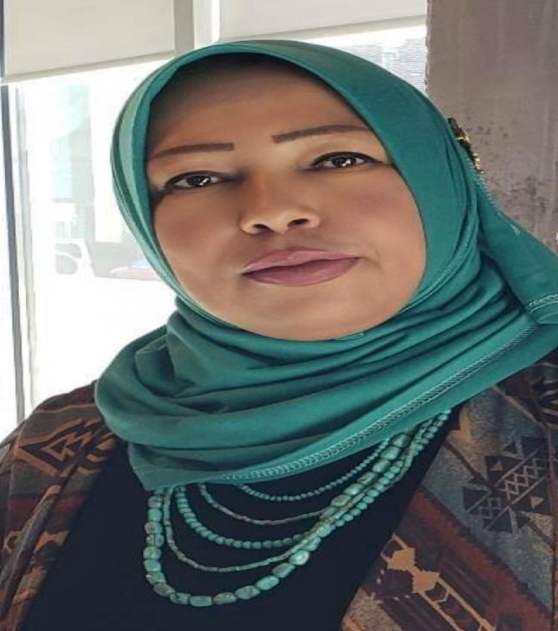
Young Central Asian woman with a green headscarf and a dark colored blouse and brown hair and eyes.
Faleeha Hassan

Remembering

I remember

I was born there,

Near a lingering dream,

When my mother, alone with her passion,

(I‘m alone still, an orphan)

Arranged her dreams in boxes called “us”

And then returned the next morning to

Press her eyes to shed kohl,

While she slept, we lay as naked as a

freshly washed tunic

Inhaling alienation as we dried.

…………………………….

Faleeha Hassan

Translated by William M. Hutchins

Faleeha is a poet, teacher, editor, writer, and playwright born in Najaf, Iraq, in 1967, who now lives in the United States. Faleeha was the first woman to write poetry for children in Iraq.

She received her master’s degree in Arabic literature, and has now published 26 books, her poems have been translated into English, Turkmen, Bosnian, Indian, French, Italian, German, Kurdish, Spain, Korean, Greek, Serbia, Albanian, Pakistani, Romanian, Malayalam, Chinese, ODIA, Nepali and Macedonian. She is a Pulitzer Prize nominee for 2018 and a Pushcart Prize Nominee for 2019.

She is a member of the International Writers and Artists Association, the Winner of the Women of Excellence Inspiration award from SJ magazine 2020, the winner of the Grand Jury Award (the Sahitto International Award for Literature 2021), one of the Women of Excellence selection committee members, 2023, the winner of Women In The Arts award 2023, a member of Who’s Who in America 2023, on the SAHITTO AWARD, JUDGING PANEL 2023, and a Cultural Ambassador – Iraq, USA.

Email : d.fh88@yahoo.com

Article from Bakhora Bakhtiyorova

Central Asian teen girl with reading glasses, short black hair, a white tee shirt with a blue design. She's got a wristwatch on her right hand which is near her mouth.
Bakhora Bakhtiyorova

What I understand

(Written under the influence of what I saw and some events)

Some recommendations for parents in raising children

1. Being a parent, it is not easy to take responsibility and raise a child. If there is a little neglect, they can get involved in anything. They always think that you should be strict with them. But this does not mean that you should always be strict with the child and always fight. You want to teach the horse the right way until he reaches it. But no matter how much you beat the child, it will never help. Worse, they will be cold towards you. Your respect will disappear.

Respect their decisions;
You should not neglect their goals;
You should give them their freedom without pampering them.
The main thing is to know how to listen to your child!

2. Always pay attention to your child's dream goals and respect their abilities. So-and-so's child knows math. You should also study math, history, and IT!

Unfortunately, in many parents, their child knows this type of piston very well. They say, "You have learned too!". Have you asked your child first about his interest, the field of science he is interested in?

3. Never compare your child with someone else's child!
Every child has his own abilities given by God. Someone is strong in science. Maybe your child is interested in sports, art, IT, why would someone say, "Why can't you do it?!" "should be compared by saying?!

Allow your child to pursue an area of ​​interest. What your child can do may not be possible for the child of the pumper who praises you. The more you compare your child, the more he loses interest in his own identity and begins to fall into depression. Let your child be like HIMSELF, not like SO-and-so's child. And the thoughts that no one understands me and why they compare me to him appear in their minds, and their interest fades. Because every child has his own interests, abilities, self-thinking worldview. If every parent listens to their child's abilities and uses them, they would go in the direction they are interested in. Therefore, no child's field is the same. If his fellow doctor does this, he shouldn't do it either. It can't be like that.

Don't compare your child at all and listen, this is the thing that has the most negative effect on the child. It even makes the parents think that they hate me!

4. Always give your child their freedom without pampering them.
No matter who asks you to do something or what clothes to wear (I can't tell you everything, of course you should consult with your parents), I mean let the child make decisions that he can make without fear. That's it. What do you mean, parents, don't be afraid. Let them make their own personal decisions freely. Therefore, you should give them such freedom and strong confidence, say the words "I believe in you", "I respect their decisions", and only then have a child. He starts to try to justify the trust given to him, but many people say that if he doesn't have to take it hard, he will do as he knows how. No! this is a big mistake!

Give them confidence, motivation, and then a child
My parents and me

He tries harder because he respects my decisions and interests. He is also afraid of abusing the trust given to him. Can he act? under depression?!
He does it only because he is afraid.


TODAY AND TOMORROW

Do you struggle to get up in the morning?
Remember when you had an important job and overslept on the day of your exam?
No, because you know why you need to wake up.
When you wake up in the morning, look out the window,
spring is around, if you look around when it's late after spending the day, autumn has come

This morning, another door of opportunities was opened for us to change our lives. A new day was given. Draw a conclusion from your mistakes, don't repeat those mistakes this morning!!!

Our first task in this life is to make ourselves happy. To be able to set goals for our own life, to live by ourselves. To think about our future at least a little, to think about who we are now. and we have to start by realizing who we will be in the future!!! First of all, the first principle of human life begins with self-acceptance. Accept yourself. The people around you are like a mirror to you. Be able to see your mistakes and shortcomings. Keep negative people away from you.

Don't pay attention to the people who laugh at you saying "You can't do it" and keep silent! Be committed to your goals. Don't give up on trivial excuses and don't be weak! The world is not all rainbows and shining sun. The world is very cruel and only the strong can endure. You and I or no one can hit as hard as life hits. It's not about how much life can or can't hit you. No matter how hard it hits you. It's not about how many hits you can take.

Don't point the finger at others saying that it happened because of him when you've taken the blows. This is an act of absolute cowards, and you should separate yourself from them.

For people in this life, it doesn't matter how much you are struggling and you are giving all your strength to it. What is important for people is the RESULT you have achieved. 'changing result. If you say that one day you will not be a slave to people who have a purpose, act today. It's okay if you have fallen a thousand times, don't stop! Get up, it might be the same this time. Search, develop, grow, work more on yourself! Don't give up hope every day you are given an opportunity. Don't look for excuses.... Never... don't look for excuses..

Are you not getting enough sleep at night? Are you out of strength?...If you work harder than today, someday people will work for you.

Stay away from people who have a bad opinion about you. Be purposeful with a plan! Link your life to goals. Try to find your own solution to the problems that arise. If you don't fight to find the solution to those problems, it will never end..Make time count...Every minute..Every hour seconds. Those SECONDS can bring success to your ascension. You may have made mistakes in the past. Don't dwell on those mistakes for too long. Draw conclusions from them! Draw conclusions from what those mistakes gave you and what they took away from you. Make a new decision! Make a plan for your life. If you dwell on the past for too long, you may miss the opportunities that have been given to you in your present life. Don't torture yourself with the past. Live only with the future. Be able to see your achievements in it. Action! Action and only Action! .,WITHOUT ACTION nothing can be achieved. Believe in your own strength and knowledge. 

Everything in this life will end. However, knowledge is an exception. No matter how much it is spent, it will not end. And its zakat is to give to others. If you say that you can act, hundreds of thousands of dying cells in your brain will be activated. You only and just believe in yourself. Put the "I must do it" thing in front. Test yourself every minute and second!

Author Bakhora Bakhtiyorova Asliddin's daughter was born 2006 21-March in the Republic of Uzbekistan. She is an international journalist and a monologist.

Poetry from Don Bormon

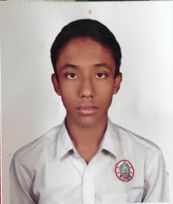
Young South Asian teen with short brown hair, brown eyes, and a white collared shirt with a school emblem on the breast.
Don Bormon

Trees

In forests deep, where nature thrives,
Stands a marvel that keeps our planet alive.
Majestic sentinels, rooted in the ground,
Trees, the guardians, spreading beauty all around.

With limbs outstretched, they reach for the sky,
Whispering secrets as the wind passes by.
Their emerald crowns, adorned with leaves,
Creating canopies where sunlight weaves.

Oh, mighty oaks with trunks so stout,
Centuries old, steadfast without a doubt.
Birch trees, elegant and slender in form,
Dancing softly in a gentle summer storm.

Maples blaze with colors ablaze,
Enchanting autumn with their fiery ways.
Silent witnesses to the changing seasons,
As winter takes hold, they endure with reason.

Beneath their boughs, life finds haven,
A symphony of creatures, from rabbit to raven.
Squirrels chase and play on their sturdy limbs,
Birds nestle and sing their melodious hymns.

Don Bormon is a student of grade 8 in Harimohan Government High School, Chapainawabganj, Bangladesh.


Poetry from Mahbub Alam

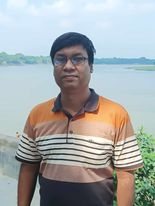
Middle aged South Asian man with reading glasses, short dark hair, and an orange and green and white collared shirt. He's standing in front of a lake with bushes and grass in the background.
Mahbub Alam
The Victory Day

16th December is the Victory day of Bangladesh
After a long line of death in nine months ---
Severe torture, rape and struggle in the deep dark place
The Morning Sun rose in the East sky
On this day of 1971
Bangladesh, a name written with the blood of millions of Bangalee people
A name glorious with its own beauty and struggle
We have bought this country with so many lives
When I go through this history
I can't but cry 
Oh, my country! We have found you in the map of the world
Where I live and find myself to be one the world's citizens
Oh, my Bangladesh! I love you from the core of my heart.

Chapainawabganj, Bangladesh,
11 December, 2023
 

Md. Mahbubul Alam is from Bangladesh. His writer name is Mahbub John in Bangladesh. He is a Senior Teacher (English) of Harimohan Government High School, Chapainawabganj, Bangladesh. Chapainawabganj is a district town of Bangladesh. He is an MA in English Literature from Rajshahi College under National University. He has published three books of poems in Bangla. 

He writes mainly poems but other branches of literature such as prose, article, essay etc. also have been published in national and local newspapers, magazines, little magazines. He has achieved three times Best Teacher Certificate and Crest in National Education Week in the District Wise Competition in Chapainawabganj District. He has gained many literary awards from home and abroad.   His English writings have been being published in an International Online Magazine - Synchronized Chaos from America for seven years.