She tried to abort me drinking turpentine before I was born he left us and it changed me poisoning my mind, my life
always a disappointment displeasing, distrusting mother, stepdad at 3 a grey-black spirit of doom a foreordained unhappiness a grievous, murderous hatred I had to learn to live with
when they dragged me away from my home in big sky Texas to the gritty streets of New York lost and scared they sent me back to Grandma in Fort Worth I never knew why or when or if they would come for me and I hated them for that
when I returned to Manhattan belonging no place, not there not Queens, Greenwich Village I chose Barnard, literature stylish clothing, affected poses drinking my way up the ladder with society girls and gin whiskey shots in bars schmoozing the lions for inroads to the literary life I craved women and booze and writing
about identity and deception the fears and furies of secret selves the subterfuge of the repressed Graham Green called me the poet of apprehension my characters got the revenge I wanted for myself.
Patricia Highsmith on Her Sexuality
My first job was for a man writing scripts for comic books freelancing and living alone dead broke in Taxco the Mexicans knew how to drink cheap all day
I returned to New York and headed to Yaddo writer’s colony in the woods met the man I would not marry promised him and hurt him completing my first novel for a British publisher and Alfred Hitchcock adapted it for the screen
I was headed for top rungs while suffering from cycles of anorexia and alcoholism therapy helped my writing the psychology of the psychopath I felt I understood I was a man who loved women and mistreated them
enjoyed seducing straights breaking up couples the two Pats the charmer, the offender battling inside, on the page my life a novel I made up lies in interviews in my diaries fantasies inventing until the end
I left millions to Yaddo my literary estate to the Swiss my heart in a bottle of whiskey and turpentine.
Virginia Kent Catherwood on Patricia Highsmith
With her I felt strange unlike what I thought I was yet loved, I loved her manly ways in a woman’s body deep dark warmth I found another kind of love my husband used against me in court took away my daughter to protect her from her own mother’s love.
After we broke up Pat worried about me afraid of my reaction to my story in her novel based on a pretty stranger she waited on once while working the counter at Bloomingdale’s and stalked her home to the rich enclaves of suburban New Jersey and fantasized about her made up a world, a love a taboo romance destined to be a cult classic a major motion picture.
Pat heard how the woman killed herself in her running car in her closed garage while Pat was writing about her, about me in her novel Carol.
Ellen Hill on Patricia Highsmith
I don’t know why I loved her left her, went back to her so many times she used sex to make me unhappy she went from cool green grass underfoot to shattered glass shards
like the time she got drunk at a party in London and fell over the table her long dark hair caught fire and we put it out and carried on British-style as if the singe of bitter burn didn’t smell up the room the time she hid her pet snails in a purse, dozens spilled on the dinner table sliming starched white cloth.
I was not a homosexual but I fell for her stormy kissing biting hardness always fighting she thought I was too straight, too organized too critical and a snob I expected her to treat me as a man would and I was forever after her to stop drinking, cheating ruining other people’s lives
when she threatened to leave I sprawled on our bed sucked down two martinis in my silky underthings let her watch me swallow barbiturates she couldn’t leave me not like that
yet off she went to some party out late, waiting for me to die in a coma for days she did not visit involved in a twisted tryst on Fire Island and you’d think I would not forgive her antipathy, cruelty, selfish fear I would accuse her of murder by proxy once I read her novel about a man driving his wife to commit a suicide mirroring my own
but I still loved her lived with her in Mexico England, France, Switzerland in her black bunker with lookout slits a sad drunken recluse when she was all yellow skin, bones, bitterness still writing, still carrying that little hell in her head hating what galvanized her Pat still Pat always looking for a fight.
I did not attend her funeral.
Marijane Meaker on Patricia Highsmith
We met cute in a lesbian bar in the 1950s we could be arrested for the love we made I was taken with her gentlemanly manners, good bones and thick dark hair her laughter, shared book talk and gay gossip I wanted to be her my books paperback dime store pulp and Pat a literary lion, lesbian icon.
Isn’t it wiser to accept that life has no meaning is what she said the earth like the moon with only her on it her dark fantasies keeping her going all those years all those books stories of men who compete who climb, who con, who kill for the thrill in her novels about the American Abroad an excuse for excess self-indulgence, hedonism how she lived herself from villages in France to villages in Greece Venice and Positano she said our love cured her wanderlust.
We settled down together in an artsy community in the Pennsylvania countryside fruit trees and a barn, she gardened cooked dinner and dressed up in slacks, a crisp white shirt bright ascot, polished loafers with a shiny switchblade from her blazer pocket she trimmed our indoor plants and sipped a second martini while studying the dictionary— a strange cocktail hour, yes but we had a sweet life
mostly because of Pat affectionate, easygoing didn’t want her mind cluttered with bad feelings but she knew I was besotted obsessed and afraid of losing her I became her drinking too much smoking her Gauloises wearing her jackets reading her diary I wrote a literary book about famous suicides.
Perhaps I don’t like anybody was how she explained her characters’ lack of decency, humanity her own prejudices her own shifting identity her withdrawal, escapes from love affairs like ours while above her a window filled with light blue sky just out of reach too small too far away to escape through
there was a place where thousands of birds gathered and I said to the woman, ‘Do you think they fly south from here or kinda make some plan to soon? And maybe they say, for instance, “How have you been? It’s been a long time. Is everything well? How is the family?”’ See, they are not only numerous but loquacious and loud, yet beautifully so for the din of the world of man and woman is not. and the dusk is not what it used to be, for it seems to arrive and leave too quickly, and doesn’t want to be a long poem or slow song but perfunctory, all-business,- like it has broken up with the earth and is just dropping off its things out of obligation. yes the dusk and the earth used to be lovers. they were crazy about each other but it’s no longer so. winter waits and taps it’s fingers rudely and impatiently. what does it care for the love of others? ‘…ya ya ya blah blah blah…,’ it says, not being a romantic, ‘just move on.’ and the birds,- they went across a long field and then suddenly dove downwards, on practically a right angle,- w/a certain agility and confidence before disappearing from sight. it is the poet’s job to try and document such things, I thought, as that. the edges of far witching hour dreams actually, the electric light cascading onto the street in the rain, or the late autumnal season, where it marries winter in not a love marriage but a fixed one, an arranged one. and do you know that if it rains inside the fall that it is the fall crying? and now you know why. maybe the birds understand this. perhaps that’s what all their gossip is about.
This right here. This is my corner. My crosswalk. You will find me out here every school day from 7:30 to 9 in the morning and 2:30 to 4 in the afternoon. No matter what the weather. Sunny, mostly sunny, partially sunny. I’m even out here when it dips below 60 and nobody in Venice Beach walks.
This wasn’t always my corner and I wasn’t always a crossing guard and I didn’t always live in Venice.
But it is now and I am now and I do now.
Before this? Before this I had a life that I didn’t want any more. That life was back in Boston. That life had decades of cold and snow and slush and the relentless cycle of seasonal chores.
I had enough.
And yeah. I was married once. And then I wasn’t. That’s everyone’s story, right?
I left her. She left me. Does it even matter? Lots of days I wanted to leave me.
What’s that thing Tolstoy said in Anna Karenina? All happy marriages are alike but every unhappy marriage is unhappy in its own way.
That’s crap.
It may have once been true, but that time was surely before Facebook and Twitter and Youtube and blogs and podcasts. Before anyone who could reach a keyboard over shared every uninteresting detail of their slowly decomposing relationship and equally mundane break-up in an endless dribble of manufactured outrage, self-serving, self-indulgent, self-satisfied anger to sympathetic strangers to eager to pile on their contrived disapproval while gleefully bestowing likes and emogis.
See, it turns out, it’s the happy ones, the relationships that make it, they are the curious ones.
So can we just say be okay with, we fizzled out. I know it’s bullshit, but really, if it was even a little interesting I’d tell you.
Then, ten months after the divorce I’m with some friends in the north end for my birthday. January 23. It was freezing out – it’s always freezing on my birthday. Still, we’re having a great time when my friends raise their glasses and toast my being born, I told them I didn’t want to die there.
They said they didn’t want me to die here either – at least not before we got our cannolis and tiramisu. I assured them that I meant Boston and not the restaurant. But Boston was the only place I’d ever lived, I say, and I loved it, but I didn’t want to die without having lived somewhere else. I tell them heading south and west.
They had their own takes.
I was depressed about my divorce.
I had run out of Tinder matches.
Not one of them believed I meant what I said or wanted what I wanted.
Between bites of cannolis and spoonfulls of tiramisu we discussed and debated my plan. And then they scoffed. Scoffed I tell you. Opinions were indecorously and disrespectfully spouted in my direction.
It was not very complicated I told them. It was not some enormous change at the last moment. Just a change of scenery.
In mid February, with my car packed I looked to the west and hit the road. I love road trips. They’re full of possibility, they suspend time like a baseball game and exist just outside of reality.
The trip counter counted my way south: Massachusetts, Connecticut, New Jersy, Pennsylvania, Maryland, Virginia as I sought to escape weather. In Tennessee I shifted west onto I-40. In Nashville, I caught my breath with moonshine and music and I toasted the road ahead.
The next day I crossed the mighty Mississippi in Memphis and made my way through Arkansas, Oklahoma and the Texas Panhandle – which by itself is double the area of Massachusetts. State borders rose up as natural topographic dividers that offered entry into wonderful new worlds of dialects, dishes, vegetation, music, accents, architecture and more.
The final push through New Mexico and Arizona brought the California border and a sense of urgency as the Pacific beckoned. Three thousand miles. Seventeen cups of coffee. Four time zones. Nine refuels. Thirteen states. Winter to not winter. Atlantic to Pacific. Snow flakes to earthquakes. I had arrived.
I rolled up my jeans and waded in the water.
I really should have taken off my sneakers first.
I walked back across the sand and up the stairs to the Santa Monica Bluffs. The sun is disappearing into the Pacific and lights lit up the ferris wheel on the Santa Monica pier.
I was warm and it was February. Not New England winter thaw warm. But warm warm.
What a night I said to the guy standing near me.
He turned toward to me and smiled. That’s when I heard it. He was peeing into the bushes.
I had made it west.
After 48 hours behind the windshield, I opted to explore the coast on foot. I walked and jogged the snowless streets, watching. And what a show. The 3rd Street Promenade, Dogtown, Santa Monica Pier, muscle beach, the Venice canals, the Santa Monica stairs, and of course, the beach.
Hipsters and hippies, tourists and druggies, boomers and techies, street dwellers and artists shared the space and it mostly seemed to work. Venice Beach is totally walkable. The rest of LA, well, sure, that’s walkable too if you drive.
So that happened a few months ago. I found a place to live and saw an ad for a crossing guard and I guess the school department out here figured a lifetime of having survived crossing Boston streets qualified me.
And now I have my own corner of the world. And I’ll cross everyone.
I cross moms and dads, nannies and au pairs, and all the grands. I’ll cross you yoga pant wearers, and bicycle sharers. Roller bladders and skate boarders and stroller pushers. Joggers and slow walkers.
You’re not getting hit on my watch.
I heard the last person to patrol this corner sold a screenplay. Got the call right here one morning. Didn’t even finish her shift. Made a thing of it. Dropped the stop sign in the middle of the cross walk and kept walking.
I might write one of those.
Till then I will get you safely across these thirty-one feet of blacktop. Know this, drivers. Know that I’m not messing with you when I tell you to stop. You need to calm yourselves down and sit tight while I escort these pedestrians to the other side. You had best use those damn brakes that came with your amn car and just stop. You’re just not getting through till I say you are.
And you punks in your silent electric cars who think you can go all stealth on me. It’s not happening. I’m on to you and your namaste bumper stickers.
And you lowlife in your over compensating Lamborghini. Keep testing me. You’re going to regret starting a pissing war with me. I’ll be getting a body cam just for you. You’re my new retirement plan. Go ahead. Don’t stop and I’ll own your ass. And your car.
Anyway, school is in now session and my shift is over and I need breakfast.
Two coffeehouses grace fair Venice where I lay my scene.
The one, Dogtown, local with a glorious past. Noisy and meant for conversation and chatter. A place where meetings are scheduled, projects projected, connections made.
The other, a Starbucks, where quiet is the rule and talking is discouraged, if not forbidden. A haven for writers and readers. For texters and surfers.
Today I’ll take my self to the noisy one in hopes of seeing Ashley who has breakfast there on Tuesdays before she goes off to yoga.
Elan Barnehama’s second novel, Escape Route, is set in New York City during the tumultuous 1960s, and told by Zach, the son of Holocaust survivors who becomes obsessed with the Vietnam War and finding an escape route for his family for when he believes the US will round up and incarcerate its Jews. Zach meets Samm and together they explore protest, friendship, music, faith, and love. Barnehama’s words have appeared in 10 x10 Flash Fiction, Boog City, Jewish Fiction, Drunk Monkeys, Entropy, Rough Cut Press, Boston Accent, Jewish Writing Project, RedFez, HuffPost, Public Radio, and elsewhere. Elan was the flash fiction editor for Forth Magazine LA, has taught college writing, coach high school baseball, worked with at-risk youth, had a gig as a radio news guy, and did a mediocre job as a short-order cook. He splits time between Pasadena and Boston.
Cinema uses politics and history to produce meaning just like a literary text does. Explore this idea with respect to any literary text and its corresponding film adaptation.
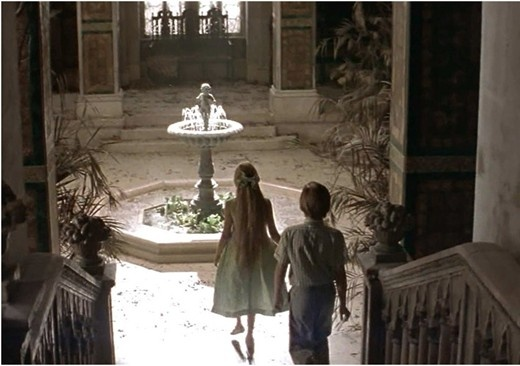
Nostalgia films embody historical picturesque adaptations that represents nostalgic fetishization of authenticity. Laura Mulvey film critique points out that “stylized and fragmented by close-ups…as the direct recipient of the spectator’s look”. Miss Havisham conferment of jewels upon Estella’s breast and hair was the symbolic travesty of objectification of the female body into delectable pieces for male consumption; therefore exhibiting and showcasing Estella’s feminine body politic as an object to be treasured, owned, memorialized, fancied, toyed, desired and possessed. Similarly Miss Dinsmoor exposes Estella as the embodiment of artistic consumption; foreshadowing the perilous commodification of selfhood upon which the bildungsroman hero Finn will focus his expectations in the Manhattan studio.
That Miss Havisham’s portrayal of transmogrification as incarnate of Dinsmoor infiltrates the filmic Satis House -the domicile of family brewery where Miss Havisham’s father produced the family’s wealth; economic designs penetrating marital relations as Miss Havisham was jilted by her lover Compeyson and the kinsman Arthur. Fallen and unfruitful paradise: large and dismal house barricaded against robbers. Thus though ‘Satis’ is the root of satiation and satisfaction become inverted into unsatisfaction and undernourishment of a barren wasteland. Dickensian descriptive language resonates bizarre eccentricity of the archetypal spinsterish lady. She [Miss Havisham] has never allowed herself to be seen doing either…She wanders about in the night, and then lays her hand on such food as she takes”.
Miss Havisham’s bridal feast commemorates a black fungus on the table where speckled legged spiders with blotchy bodies infestation occurrence ; and this rotting bridal cake metaphorically personifies Miss Havisham’s moral decay: anthropophagy revealed by the cliche: “The mice have gnawed at it[bridal cake] and sharper teeth than teeth of mice have gnawed at me”. The gothic imagery of the body and the market dynamics of Miss Havisham coalesced with the incursion of the financial world into the domestic hearth as Miss Havisham’s cousins wait to feast on the same table where the spiders feed upon her bridal cake. Miss Havisham adopts Estella who establishes sense of proprietorship in the bildungsroman hero; Miss Havisham later deals in trafficking of children instead of wine; albeit the Satis House becomes the economic nexus for the grasping members of the Pocket clan. Miss Havisham characterizes the transparent fawning of her relations as the grossest consumption, ripping the table with her stick saying: “Now you all know where to take your stations when you come to feast upon me.”
The mourning masks and the mourning jewels such as brooches and rings are grim simulations of grief and death portends the bildungsroman hero with the inherent liminality of capitalistic culture that is built upon the sufferings of the poor wretches such as the castaway Magwitch, the clandestine patron of the protagonist.
In terms of mise-en-scene the most striking contrast of the dark and the light imagery in the cinematography studies shifts film and movie audience away from the dramaturgy in novelistic adaptation. Revealing the departure scene as the epitome of the halcyon farewell in the filmic production, the hero and heroine are beneath the bridge; the camera tracking the hero as Finn walks back into the sunlight while Estella’s image disintegrates into a dark blur in the background. Extracted quotable quote illustrative of the Dickensian rhetoric used in the semantic approaches to the semiotic is thus read: “….in all the broad expanse of the tranquil light…no shadow of another parting from her”.
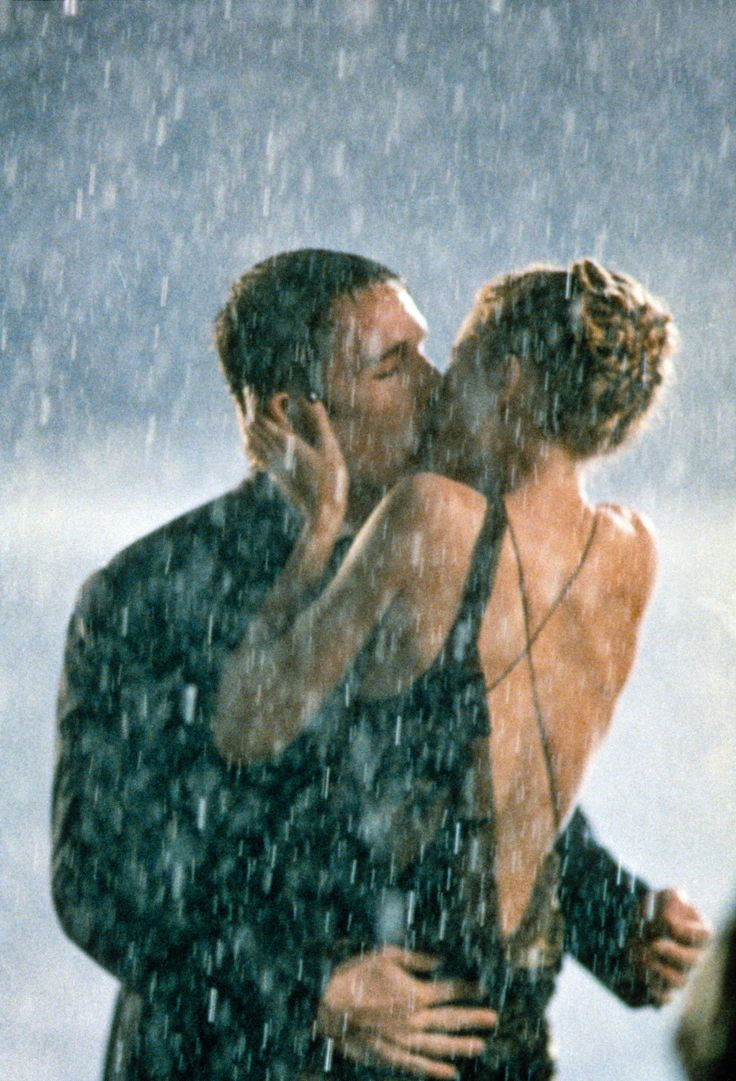
Estella’s reunion with Finn at the bright sunlight sea suggests the amorphous relationship and the future possibilities; there is no retreat in the darkness of the heroine tempered by motherhood and divorce; brought the daughter to view the ruins of the childhood estate of legacy. In textual and filmic language the authenticity has been intact although the mise-en-scene diverts away from Estella’s realistic characterization by Charles Dickens as the virgin, angelic, haughty, heartless, thankless, damsel beauty separated from her deceased life partner the snobbish extravagant loutish of the Finches Groove. Dialectical approaches to Dickensian film criticism would authenticate the valedictory speech act in the character of the bildungsroman protagonist and his heroine as limelighted in these exchanges:
[narratorial authoritative imperative and Estella’s declarative:… “everything else is gone from her [Estella]. The silvery mist is touched by the first rays of moonlit and the same rays touched the tears that fall from the eyes. The ground belongs to her…”It is the only possession I[ ] have not relinquished. Everything else is gone from me, little by little, but I have kept this…
[autobiographical bildungsroman protagonist’s voice: “Estella, to the last hour of my life, you cannot choose but remain part of my character, part of the little good in me, part of the evil.” In terms of intertextuality Wuthering [Cathy: I am Heathcliff] can be paralleled in the bildungsroman hero subverting the conventions of romance love making speech associated with objective identification by directly merging his subjectivity into the heroine : “every prospect I have ever seen” ideally “the embodiment of every graceful fancy that my mind has ever become acquainted with”.
Further Reading
Shari Hodges Holt’s Dickens from a Postmodern Perspective: Alfonso Cuaron’s “Great Expectations” for Generation X, Dickens Studies Annual 2007, Volume: 38, pages: 69-92
Gail Turley Houston’s Pip and Property: The [Re]production of the Self in “Great Expectations”, Studies in the Novel, Spring 1992, Volume 24, No. 1, pages: 18-25
Keith Easley’s Self-Possession in Great Expectations, Dickens Studies Annual, 2008, Volume 39, pages: 177-222
Susan Grass’s Commodity and Identity in “Great Expectations”, Victorian Literature and Culture, 2012 Volume 40, No. 2, pages: 617-641
For young people living in the world of adults, “love” is a means of defiance and resistance. Explore with respect to the literary text and any cinematic adaptation of Romeo and Juliet prescribed in your course.
The frantic pace of the movie reveals the outburst vehemence and impulsive hot-headed nature of the dwelling aboriginal of Verona as latterly foreshadowed by the rage, grief and passion of the feuding rivalries between the adversaries-Capulets and Montagues—-true to the authenticity of Shakespearean spirit. 1960s film version was focused on tragic love; the 1990s is about violent love. Shakespearean dramatis persona were the milieu of the starcrossed lovers and their inner moral dilemmas of those minds whose temperaments resonate reckless and hasty nature as the dysfunctional world of the Montagues and Capulets whose blood and honour were inseparable. Modern day mise-en-scene of the adaptation is a brilliant spectacle that marvels the accomplishing achievements through bestowal of laurel wreathed bouquets and accolades. For instance, Mercutio’s raving in the Capulet’s ball makes unimpeachable exemplary phenomenon with the bottling of acid beforehand. Romeo’s decision to end his life with poisonous drugs parallels the lifestyle of violence and addiction. The mafia clans’ fanaticism of religious sentiments as projected by their Catholic vein running through the plot juxtaposes coldblooded aggression as ironically spotlighted by the stereotypical families.
The close shot camera focusing the Shakespearean hero and heroine cloistered by the walls of Verona and confinement by window frame of patriarchal abode respectively. Upon revealing close up shot Zeffirelli’s camera angle moves to showcase Romeo attired in a deep, lilac; a Montague bereft of Capulet vulgarity and ostentation; nonetheless, pill box hat, eyeliner, flawless complexion and the flower exemplifies effeminacy. “A glooming peace this morning with it brings. The sun for sorrow will not show for his head”—–unshaved, unkempt Romeo beside swollen lips and fluffy faced Juliet in the tomb scene is the visual artifice in commitment to the ironical perspectives of the drama. Zeffirelli’s textual interpretation literally elucidates Shakespeare’s highly stylized and emotionally expressive naturalism that bestows weight to the narrative moments like Juliet’s departure epitomizing overexcitedness and emotional disorientation by the state of the physical dizziness. Here, as throughout, Zeffirelli creates a situation where visibility becomes feeling and feeling becomes awareness.
Religion of love imagery foreshadowed by the sonnet dialogue is absolutely superbly visualized filmic adaptation to cherish beneath the connotations of pilgrimage and saintliness: institutionalized and ritualized love-making courtship. The starcrossed lovers romantic love-making sonnet in the background depicted by the imageries of saints, pilgrims and statues brings the abstractest essence of martyrdom, canonization and immortality—the fabulous trappings embodying their history—their personalities and their naivetes, and their uncertainty of each other and the awareness of the social context in which they find themselves in the ignorance of perils. Choruses last six lines musical effect is absolutely inappropriate and unnecessary addition to the cinematic conventions of diegesis hovering between snapshots and painting, documentary and fiction; reconciling the present tense with the past tense of the film, ethical space with that of the cinema and history with story as profoundly replicated in Mercutio’s remark to Romeo is appropriately credible to Zeffirelli’s diegetic: “Now art thou what thou art, by art as well as by nature.”
Further Reading
Sarah L. Lorenz’s “Romeo and Juliet”: The Movie, The English Journal, March 1998, Volume 7, No 3, Teaching the Classics: Old Wine, New Bottles, March 1998, pp. 50-51, National Council of Teachers of English
Michael Pursell’s Artifice and Authenticity in Zeffirelli’s: “Romeo and Juliet”, Literature and Film Quarterly, 1986, Volume 14, No 4, pp. 173-178, Salisbury University
Examine the cinematic adaptation of Pride and Prejudice with that of the literary textuality.
Costume as well as nostalgia films engage the spectatorship through voyeurism of feminine and masculine sensuality as the technique of dramatization and the usage of focalization as revealed in the construction of Elizabeth Bennet’s and Fitzwilliam Darcy’s dramatis persona; whose body language, literary allusions, puns, metaphor, imageries and symbolisms have been layered with sexual connotations; beneath the intentionally solicited experience of repression tat imbues with sexuality: clothing, landscape, piano playing, letter writing and conversation. Evolving the Austenian filmic adaptations into modern cinema from the BBC 1995 television series, You’ve Got Mail, Bridget Jones’ Diary, Bride and Prejudice to the hallmark production of the film Pride and Prejudice 2005, which is critically acclaimed for the filmic grammar that includes: close ups, insert shots, subjective shots, eyeline matches, reaction shots.
The female body politic is fragmented and transmuted into eyes to be admired, her hair locks to be bestowed, hands to be kissed and feet to be touched as exemplified in the case of feminine fetishization in the heroine Elizabeth Bennet portrayed by Keira Knightley. Mr. Fitzwilliam Darcy in the cast of Mr. Matthew Macfadyen, in whom avowed desire for the feminine object is aroused by the romanticism through fantasizing “the beautiful expressions of her dark eyes”—–the recurring symbol of Elizabeth’s charm. The ardent love of Darcy eventually follows melodramatic marriage proposal, a refusal and latterly unexpected encounter at the Pemberley Derbyshire estate; Elizabeth Bennet’s respect, esteem, gratitude and a genuine filial affection for the welfare of Darcy is translated into a reality. […] “it is many months since I have considered her as one of the handsomest women of my acquaintance”. Love and passion have merged together into authentic and relevant feelings; there is no question of impulsive foolhardiness since the breach of etiquette can be valedictorily redressed and the truth be confessed.
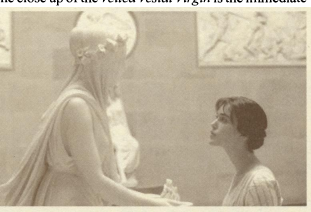
Metonymic love undercover of Austenian body politic is not always translated into synecdochical fragments; sometimes it is also deviated and transmuted into tangible and touchable substitutes of the persona in the marbled sculpture and the mantelpiece portrait found by Elizabeth in the Pemberley Derbyshire estate as transmogrified real metonymical substitute in Darcy’s real picture. Discovery of the treachery and villainy by the janus-faced Wickham is visualized in the narrative perspective: “Till this moment, I never knew myself” is representative of the objective correlativity of the attainment of truth: Mrs. Reynolds, the housekeeper’s testimony of the heroic Darcy’s impassioned defence: “He is the best landlord and the best master […] that ever lived.” Instead of the family portraits the gallery of Chatsworth House offers Greco-Roman antiquaries sculptures such as the corporeity close-up of the Veiled Vestal Virgin in the embodiment of the heroine.
Jane Austen, a subtly pervasive stereotype of defensively ironic genteel spinster wrought by sexuality fogged in bourgeoise morality as opposed to sexual vitality; in favour of frigidity as a standard of sexual conduct. Jane Austen chronicles sexual selectivity behind the wooing and wedding amidst art and nature, feeling and reason, freedom and order, individual and society as thematic plot and dialogue within the narrative. Constrained, reserved, solitary and fastidious Darcy epitomizes vanity and haughtiness, superciliousness and snobbery. Darcy’s inner dramatic dream fulfillment for dancing a reel / “feel a great inclination […] to seize such an opportunity of dancing a reel by the playing of piano by Miss Bingley. Austen stories and characters are brought to life by the landscape and panorama of the settings as wanderings of the exquisite halls and eccentric gardens; drawing rooms pulsating with society’s expectations, gardens consisting of well-wrought urns of mysteries; and the outdoors becoming the witnesses to the silence of the ebb and the flow of love and intrigue.
The narrative moment sedately stroll through parklands and cultivated gardens or accompanied walks to towns is both alluring and perturbing for being unescorted young maidens in Austenian Regency England. In this instance, the heroine walk from Longbourn to Netherfield to visit Jane Bennet: Elizabeth’s hiking over fields, jumping over stifles and springing over puddles aroused the censoriousness in Miss Bingley’s rhetoric of muddy petticoats and blousy hair to which Darcy’s defence of the narrative voice invokes “divided between admiration of the brilliance which exercise had given to her complexion and doubt as to the occasion’s meriting her coming so far alone”, acknowledgement that he does not wish to be allied with a family that frequently makes a spectacle of itself. It is an opposition of heart and head, of reason and feeling, of intellect and emotion, of control and spontaneity, of elitism and egalitarianism—-that Jane Austen ironically insists in satire —-landed gentry view versus the outlook of a gentleman’s daughter.
Jane Austen’s warding off Mr. Darcy’s wedding proposal through the verbal rape of Elizabeth that he has not behaved in a “gentlemanlike manner” is far less explicit than Jane Eyre’s assertion to Rochester that she has full as [much soul as [he] and full as much heart.” But it voices the same feminine complaint alleging the masculinity of unrecognition of the female selfhood. Even after the proposal scene, the antitheses and hostilities between the sexes bear resemblances to Shakespearean lovers in a wood, meeting evanescently for exchanging letters. However, the whole of Pemberley episode is a tour-de-force of technique and perception in which the outward action is a metaphor of inward feeling: “at that moment she felt to be mistress of Pemberley might be something.” The language of speechlessness is bereft of smiles, sparkle of wit and repartee—–Benedict and Beatrice as lovers reciprocated in the depth of the deeper sentiments of silence. Eventually the reticence and resolutions of filmic diegesis of the textual adaptation shifts the pronoun of Mr. Darcy from “I” to “you” in the statements [“In vain have I struggled”… “You are too generous to triffle with me”] to transcend his social and sexual egocentricity. Foiling Georgiana Darcy’s obstreperousness to Lady Wickham or Lydia Bennet heightens the tension harboured by too repressive or too permissive upbringing, each of which equally lead to promiscuity. Through freedom and spontaneity, Elizabeth will teach Georgiana as a corrective to her too rigid upbringing; that she will be a child of Darcy’s head and Elizabeth’s heart, of his principles and her feelings to oversimplify—-of the union of rationality and emotion that their marriage represents.
Further Reading
Roberta Grandi’s [Catholic University of Milan] The Passion Translated: Literary and Cinematic Rhetoric in “Pride and Prejudice” (2005), Literature/ Film Quarterly, 2008, Volume 36, No. 1, pp. 45-51, Salisbury University
Alice Chandler’s “A Pair of Fine Eyes”: Jane Austen’s Treatment of Sex, Studies in the Novel, Spring 1975, Volume 75, No. 1. Pp. 88-103