Essay from Xayrullayeva Zahro

Young Central Asian woman with her dark hair up in a bun, earrings, and a white fluffy coat.

INNOVATIVE SOLUTIONS FOR PRESERVING THE NATIONAL LANGUAGE

Abstract

This article presents a set of proposals addressing the factors that currently undermine the status of the Uzbek literary language in society and outlines measures to eliminate these threats through innovation. In the modern technological era, the aggressive “attack” of Internet language on the national language is pushing it toward the brink of decline. Such circumstances weaken the expressive power of the Uzbek language, which is a source of national pride. The literary language has its own established norms that are uniform for all speakers of the language [4, online resource]. Nevertheless, despite these standards, modern innovations have contributed to a linguistic crisis. At the same time, there are real opportunities to halt the negative consequences caused by technological development through innovative solutions. If the ideas and proposals advanced in this article are supported, the development of the language will reach a high level in society, making it possible to preserve its full potential.

Keywords: literary language, globalization, modern speech, Internet language, artificial intelligence, targeted methods.

Introduction

The literary language is the refined, standardized, and highest form of a national language. In contemporary Uzbekistan, state administration and official affairs are conducted in the Uzbek literary language. When the state language of Uzbekistan is mentioned, it primarily refers to the Uzbek literary language; therefore, it is protected at the state level. The literary language represents a processed and standardized form of a national language that serves the cultural needs of its speakers. The concept of “processing” is relative, as literary languages have historically changed across different periods and among different peoples.

Even within a single nation, the literary language has taken different forms over time (for example, the ancient Turkic literary language and the modern Uzbek literary language). In certain historical periods, the language of one people served as the literary language for another. For instance, Classical Arabic functioned as a literary language for Persian and Turkic peoples, Classical Chinese for the Japanese, and Latin for several European nations.

The literary language exists in two forms: oral and written. Any literary language is shaped on the basis of folk speech, generalizing dialectal features and becoming understandable to all speakers. A nation cannot possess a rich culture without a developed literary language. In this sense, the literary language remains one of the most pressing issues of society. Literary language is sometimes confused with its various forms, such as artistic language or spoken language; however, these cannot be considered identical.

Historical Development of the Uzbek Language

An examination of the stages of development of the Uzbek language—from ancient Turkic to modern Uzbek literary language—allows observation of linguistic evolution and identification of differences between these stages. Such differences generally arise from two main factors:

internal laws of linguistic development, including systemic and structural changes within the language itself;

contact between two or more languages (interstratal relations).

In the development of the Uzbek language, ancient Turkic functioned as the substratum language, while Arabic, Persian, and Tajik served as superstratum languages. Interaction between substratum and superstratum languages typically occurs under conditions of bilingualism or multilingualism. These interactions have resulted in processes known as language substratification, such as Turkic–Arabic, Turkic–Persian, Uzbek–Arabic, Uzbek–Tajik, and Uzbek–Russian bilingual contexts. Along with internal development laws, these factors have caused significant structural changes in the language from ancient Turkic to modern Uzbek literary language [1, pp. 9–10].

A review of Uzbek linguistic history demonstrates that the language has undergone complex stages of formation and development. Historically, Uzbek has interacted with several non-related languages belonging to different language families due to socio-political circumstances. The degree and quality of influence varied across these languages. Some had a strong impact on the lexical composition of Uzbek, while others had minimal influence [3, p. 22].

Impact of Technology and Globalization

In the 21st century, the rapid development of information technologies and social media has had a direct influence on language use. Among young people in particular, written communication increasingly involves abbreviations, emojis, English words, and slang expressions. This raises a critical question regarding the purity, clarity, and expressive capacity of the Uzbek literary language.

Today, Uzbek is spoken by nearly 45 million people worldwide, significantly exceeding the minimum threshold of one million speakers required for language survival. The distribution of Uzbek speakers by country is presented below:

No.

Country

Number of Speakers

Notes

1

Uzbekistan

32–34 million

Official language

2

Afghanistan

3–4 million

Northern regions

3

Tajikistan

1–1.5 million

Border regions

4

Kazakhstan

800,000–1 million

Southern diaspora

5

Russia

500,000–1 million

Labor migration

6

Kyrgyzstan

900,000–1 million

Osh and Jalal-Abad regions

7

Turkmenistan

300,000–400,000

Border areas

8

United States

30,000–50,000

Migrants and students

9

Turkey

20,000–30,000

Education and employment

10

Germany, South Korea

10,000–20,000

Labor migration

Modern Uzbek reflects each era through change. Vocabulary richness is a key indicator of linguistic power and expressive capacity. However, in recent years, a decline in vocabulary richness has become a serious issue. This decline is not only related to linguistic evolution but also to weakened cultural awareness and reduced engagement with the mother tongue.

Causes of Vocabulary Decline

Several factors contribute to the reduction of vocabulary richness in modern Uzbek:

Globalization and foreign language influence:

The increasing use of English loanwords has reduced lexical diversity.

The continued influence of Russian has also led to the replacement of native Uzbek words with borrowed terms.

Social media abbreviations:

Platforms such as Telegram, Instagram, and Twitter popularize abbreviations, emojis, and simplified expressions, distancing users from classical literary norms.

Technological simplification:

Software, mobile applications, and online platforms often rely on shortened and simplified language instead of full and accurate expressions.

Educational shortcomings:

Some educators experience difficulties in mastering literary Uzbek, which hinders effective language instruction.

Certain textbooks contain simplified or incorrect language rather than contemporary literary norms.

Abbreviated forms (e.g., shortened spellings), excessive use of foreign terms (like, story, post, comments, ok), and replacement of words with emojis weaken linguistic culture. These tendencies are clearly observable in everyday communication on platforms such as Telegram, Instagram, and TikTok.

Proposed Solutions

Despite these challenges, the problem is solvable. The following solutions are proposed:

Improving teacher qualifications through specialized training and professional development

Creating updated textbooks with accurate, rich, and standardized language

Developing digital resources in Uzbek

Designing AI-based applications to enhance vocabulary acquisition

Creating interactive games and tests to promote correct word usage

Supporting Uzbek language promotion on social media

Encouraging bloggers and influencers to use rich literary language

Developing AI-based spelling and grammar assistants that suggest full forms instead of abbreviations

For example, an application could be created under the slogan “Write fast, but write correctly!”, where users receive scores based on adherence to literary norms. Rewards such as internet data packages or prize competitions could motivate young users and help prevent degradation of literary standards.

Conclusion

Although Internet language offers convenience and speed, preserving the purity of the literary language is essential. Every language evolves, but such development should not undermine its roots. Preserving the literary language means safeguarding national identity and cultural thought. By effectively combining artificial intelligence with conscious language use, it is possible to protect and develop linguistic culture. However, meaningful results can only be achieved when technological innovation is aligned with individual responsibility toward language.

References

Sayfullayeva, R.R., Mengiyev, B.R., Boqiyeva, G.H. Modern Uzbek Literary Language. Tashkent: Fan va Texnologiya, 2009.

Madvaliyev, A. The Relationship Between Language Development and Thought. Language and Thought, 1998.

Ethnologue: Languages of the World. Statistics on the distribution and number of Uzbek speakers.

Rahmatullayev, G. History of the Uzbek Literary Language. 1994.

Jamolov, H. Modern Uzbek Literary Language. Tashkent: Talqin, 2005.

Shoabdurahmonov, Sh. Theory of Literary Language. Tashkent, 2004.

UNESCO Atlas of the World’s Languages in Danger.

Saidov, Y. History of the Uzbek Literary Language. Bukhara: Durdona Publishing House, 2019.

Xayrullayeva Zahro was born on April 13, 2006, in Kitob District, Kashkadarya Region. She is currently a student at Samarkand State Institute of Foreign Languages. At the institute, she is a young student who has earned respect through her talent and active participation. She is the author of numerous scientific articles and a collection of poetry. Her creative works have been published in international journals as well as in prestigious national publishing houses.

Essay from Mashrabxoʻjayeva Feruzaxon

Young Central Asian woman with straight dark hair, hoop earrings, a multicolored bead barrette, and a white collared shirt and black and white plaid coat.

The trust of my parents has given me strength.

My father is the most precious person in my life, a man whose value is as high as the sky itself. He is such a father that if I asked him for a single star from the sky, he would prepare the moon for me instead. Until this very age, he has always been my support — encouraging my education in every possible way, working tirelessly day and night for my sake. He has always told me, “My daughter, I have great hopes for you,” and has stood by my side, shoulder to shoulder, in every step I take. My father is my greatest pillar of strength, and when I try to describe him, tears come to my eyes.

Mashrabxoʻjayeva Feruzaxon was born on March 7, 2005, in Chimyon village, Fergana District, Fergana Region. She is currently a second-year student at Fergana State University.

Essay from Choriyeva Oynur

Young Central Asian woman with long dark hair up in pigtails. She's got small earrings, a white collared shirt, and a multicolored vest.

The Effects of Overusing Phones on Mental Health

Choriyeva Oynur

Uzbek State World Language University, Faculty of English Philology, 2nd-year student

Annotation:

This article examines the effects of excessive phone use on human mental health. It analyzes the psychological, behavioral, and physical consequences of overuse, including increased anxiety, depressive symptoms, decreased attention, and sleep disturbances. The purpose of the study is to highlight the negative impact of prolonged screen time and emphasize the need to develop healthy digital habits.

Keywords: overall well-being, overusing gadgets, stress, negative effects, human mental health, healthy lifestyle, screen time, depression, isolation, relationship issues.

Introduction:

The advent of smartphones and social media has brought significant changes to modern society, with profound implications for mental health. Smartphones have transformed the ways people communicate, learn, and entertain themselves; however, their constant presence can lead to compulsive use and psychological dependency. Continuous streams of notifications and updates often create a sense of urgency and fear of missing out (FOMO), increasing anxiety and stress levels. Moreover, excessive smartphone use can interfere with sleep quality, an essential component of mental well-being.

Similarly, social media platforms, while offering opportunities for connection and self-expression, can contribute to feelings of inadequacy and low self-esteem. Frequent comparisons with others and the desire for validation through likes and comments may distort an individual’s self-perception, ultimately leading to decreased self-worth and emotional instability.

Main Body:

Mobile phones and their impact on the mental health of children and young people have increasingly become a subject of concern and academic inquiry. While mobile phones provide numerous advantages—including access to information, communication, and learning tools—they may also pose several risks to psychological well-being. The extent of these effects can vary based on individual factors such as age, frequency of use, and the type of digital content consumed.

Increased Anxiety Levels:

Excessive smartphone use can lead to heightened anxiety, often referred to as “digital detox anxiety,” which occurs when individuals are separated from their phones for extended periods. This anxiety may manifest through physical symptoms such as sweating, trembling, and heart palpitations. Additionally, delayed responses to messages or missed social media notifications can trigger similar stress.

Social media further exacerbates this issue by encouraging constant comparisons with seemingly perfect lives online. Such comparisons foster feelings of inadequacy and insecurity, increasing stress and anxiety. Individuals addicted to smartphones may spend more time scrolling through social media than engaging in face-to-face interactions, leading to social isolation.

Difficulty Sleeping:

Exposure to blue light emitted by smartphone screens, particularly within two hours of bedtime, can disrupt melatonin production, the hormone responsible for regulating the sleep-wake cycle. This can result in difficulty falling asleep or maintaining sleep, poor sleep quality, daytime fatigue, and worsened mental health outcomes. Keeping a smartphone nearby during sleep increases the likelihood of being woken by notifications and elevates pre-sleep stress levels, further impairing sleep quality.

Isolation from Social Interactions:

Smartphone addiction can reduce real-world social engagement with family, friends, and peers. Constantly checking for updates or notifications limits meaningful face-to-face interactions, potentially leading to feelings of isolation and loneliness.

Depression:

Frequent comparisons with idealized social media content can contribute to feelings of worthlessness and inadequacy, which may develop into depression. Prolonged exposure to social media has been linked to higher rates of depressive symptoms, particularly among individuals prone to negative thinking. Withdrawal from smartphone use may also trigger depressive feelings, including loneliness, irritability, fatigue, and frustration, creating a vicious cycle that reinforces mental health challenges.

Decreased Academic or Work Performance:

Overuse of smartphones can negatively affect performance in work or academic settings. Constant checking of notifications or browsing social media detracts from time that should be devoted to tasks, resulting in lower productivity, decreased academic achievement, and increased stress.

Relationship Issues:

Smartphone addiction can strain personal relationships. Frequent phone use in the presence of others may cause feelings of neglect, tension, and conflict. Spending more time online than engaging in meaningful conversations with family or partners can reduce intimacy and weaken emotional bonds.

Conclusion:

Smartphone addiction can significantly impact both personal relationships and work or academic performance. Excessive use often leads to social isolation, reduced face-to-face interactions, and strained relationships with family, friends, or partners. In professional or academic contexts, constant checking of notifications and social media can distract individuals from important tasks, decreasing productivity and increasing stress.

By recognizing the signs of smartphone addiction—such as compulsive checking, anxiety when separated from the device, or neglecting real-world responsibilities—individuals and mental health providers can take proactive steps to manage usage effectively. Interventions may include setting screen-time limits, scheduling digital detox periods, and promoting alternative offline activities that encourage social engagement, physical activity, and relaxation.

With consistent effort and dedication, it is possible to reduce the negative effects of smartphone addiction, fostering a healthier balance between technology use and real-world responsibilities. Cultivating self-awareness and practicing mindful technology use can significantly improve mental well-being, interpersonal relationships, and overall quality of life.

References:

https://ensorahealth.com/blog/how-do-smartphones-affect-mental-health/

Yang, Z., Huang, J., Li, Z., … The effect of smartphone addiction on the relationship between psychological stress reaction and bedtime procrastination in young adults during the COVID‑19 pandemic. BMC Psychiatry, 23, 813 (2023). 

Park, J.‑Y., va Yoo, H. Smartphone addiction and its psychopathological consequences: behavioural, social and physical effects. (Kemas 19 (2), 2023

Alzhrani, A., Elsheikh, B., va boshqalar, Effect of Excessive Smartphone Usage on Sleep Quality and Psychological Distress Among Healthcare Students. IAPS Journal of Practice in Mental Health (2024)

Poetry from Orinboyeva Madinabonu

Young Central Asian woman with a white headscarf over a black top.

The Heart Longs to Be Reborn

The heart desires to be reborn anew,

This life has worn it down, exhausted, torn.

Cut sorrow’s thread that binds the soul so tight,

The years have ripped its laughter out by force.

To everyone it offered help each day,

For good souls, never sparing breath or bone.

But now, within its wounded, open chest,

Thick clots of blood are flowing like a stream.

The heart desires to be reborn again,

They stoned it down without a single fault.

From slander’s stones, abruptly crushed and bruised,

In silent nights it wept, unseen, alone.

The heart still yearns to rise and live once more,

It cries aloud: O Lord Almighty, hear!

Though innocent, I stand condemned, O God,

From You alone I beg for refuge now.

If nothing’s left of me but brittle bones,

Let that remain — I ask for nothing more.

The heart still longs, still aches to be reborn.

Orinboyeva Madinabonu is a first-year student of Group 25.23, majoring in Pedagogy, at the Faculty of Pedagogy, Psychology, and Art Studies of Fergana State University. She is a holder of a National Certificate and the author of numerous articles.

Essay from Ubaydullayeva Saodat

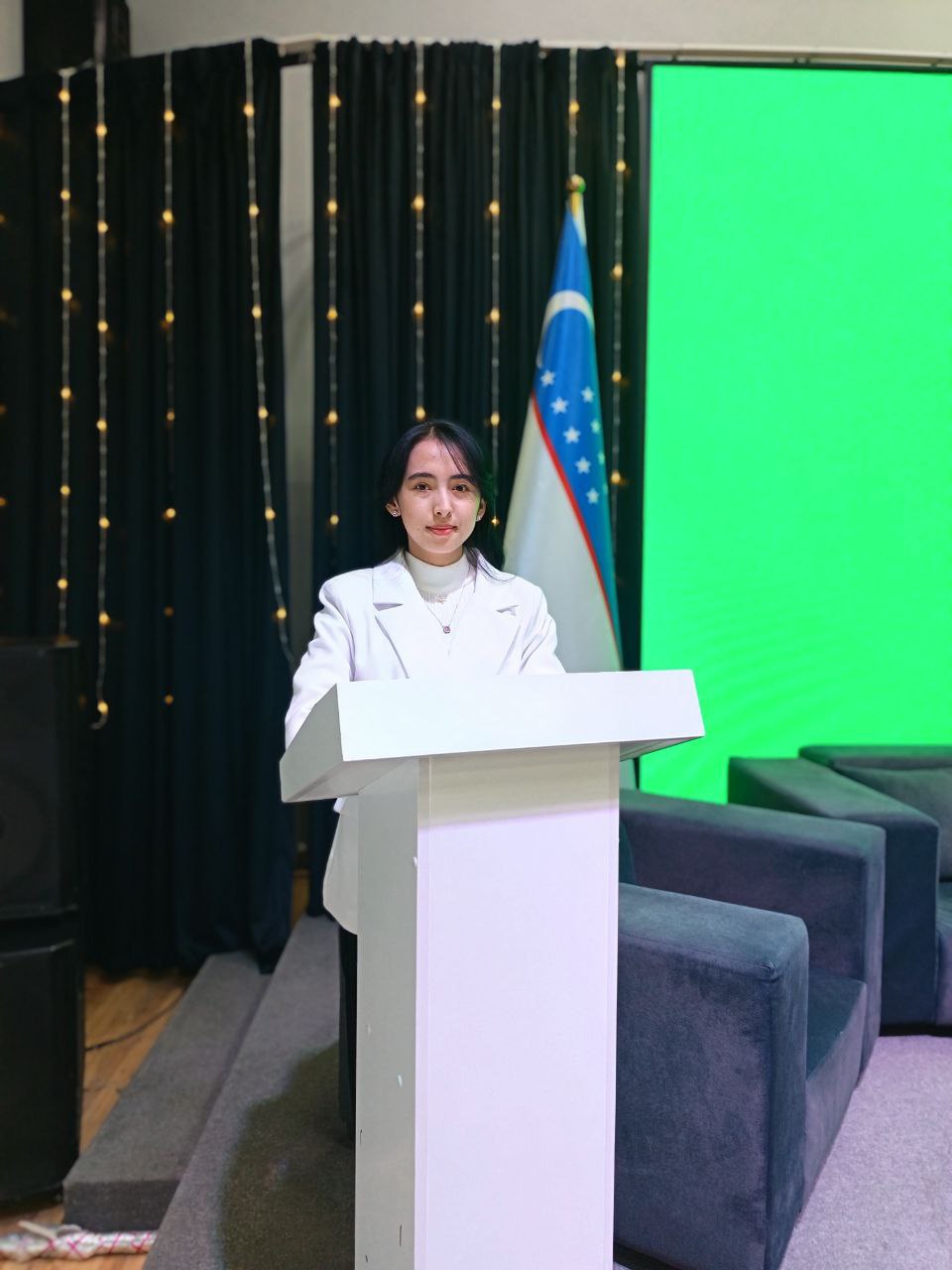
Central Asian woman with short dark hair and a white top and coat standing at a podium next to a flag and some gray chairs and a green screen.

The life and work of Alexander Feinberg and the world’s recognition of him

Ubaydullayeva Saodat

First-year student, Faculty of English Philology,

Uzbekistan State World Languages University

Annotation 

An article about the life and work, achievements, and poems of A.Feinberg .People’s poet of Uzbekistan and Russian-language writer of the late 20th and early 21st centuries.

Keywords

A.Feinberg’s life, poems, translator, literary translation, screenwriter

Introduction

 A. Feinberg [1939-2009] was a great poet, writer, and master of literary translation who lived and worked in Uzbekistan. He was also recognized as “poet of the era,” meaning “poet of the epoch.” After graduating from Tashkent University, he studied in the correspondence department of the Faculty of Journalism of the Faculty of Philology and worked at a student newspaper. The name of A. Faynberg is still a symbol of interethnic literary friendship and cultural closeness.

Main parts

The famous Uzbek poet Alexander Arkadyevich Feinberg was born on November 2, 1939, in the city of Tashkent. His father, Arkady Lvovich Feinberg, was from Gatchina. Graduated from the Institute of Higher Education and Technology. His mother, Anastasia Alexandrovna, was born in Moscow. His parents worked as chief engineers and machinists at an alcohol plant. After school, Feinberg studied at the Tashkent Topography Technical School, then served in the military in Tajikistan. He wrote poetry in Russian and could read and understand both Uzbek and Navoi’s language – Chagatai.

Literary translation constitutes an important part of Feinberg’s work. He paid great attention and strived to convey the spirit of Uzbek poetry to Russian readers. In addition, he translated Navoi’s ghazals, poems and epics of Erkin Vahidov, Abdulla Aripov, Omon Matjon, Rauf Parfi, and others, excerpts from Fitrat’s works, and Abdulla Kahhar’s prose works into Russian. Erkin Vakhidov and Abdulla Aripov called him “one of the most refined translators in the Russian language.”Faynberg headed the seminar of young writers of Uzbekistan in Tashkent and worked as a consultant at the Writers’ Union of Uzbekistan. His poems were published in the magazines “Smena,””Yoshlik,””Yangi dunyo,””Yangi Volga, “as well as in periodicals of a number of foreign countries: Canada, the USA, Israel.

He is the author of fifteen poetry collections (published in Tashkent, Moscow, and St. Petersburg), including “Etude,” “Seconds,” “Poems,” “Distant Bridges,” “Short Wave,” and “Free Sonnets, “including a two-volume posthumously published work. His poems embodied a unique artistic world. He is considered a great personality who fully preserved his human essence in his time and was always ready to show mercy and support to others, not being indifferent to unpleasant events occurring in society.

His words are a vivid example of this:”Я видел мир глазами вечной дали”.”That is, “I saw the world through the eyes of eternity.” His work has captivated people’s hearts with its depth, philosophy, and charm.

Дождь ошалел. И не наступит утро

Мрат фары по дороге сталбовой

Ну хоть одна остановись попутка!

Из ночи забери меня с собой

It should be especially noted that films and animation projects were created using his poems and scripts. Based on A. A. Feinberg’s screenplay, films such as “My Brother,” “Under the Scorching Sun,” “Hardened in Kandahar,” “The Criminal and the Lawyers, “and others were filmed at the “Uzbekfilm” studio. Based on his screenplay, 4 feature films and about 20 cartoons were created. In 1999, in connection with the 20th anniversary of the death of the football team “Pakhtakor” in a car accident, the film “Stadium in the Sky” was shot based on Feinberg’s screenplay.

In 1999, he was awarded the title “Honored Cultural Worker of Uzbekistan,” and in 2004, Alexander Faynberg was awarded the honorary title “People’s Poet of Uzbekistan” for his contribution to the development of literature. Four years later, for his contribution to strengthening Russian culture and Uzbek-Russian literary ties, he was awarded the State Prize of the Russian Federation – the “Pushkin Medal.” 

 In order to perpetuate the poet’s memory, a monument to Faynberg was erected on the Alley of Writers. On the dates associated with his life, poetry evenings and events are held and widely celebrated annually. Also, G.V. Malikhina’s master’s dissertation “The Structure of Artistic Images and Thematic Dominants in A.A. Feinberg’s Lyrics” is devoted to the study of Feinberg’s work. In addition, a scholarship named after the talented translator and screenwriter A. Feinberg has been established.

Alexander Feinberg died on October 14, 2009. According to the information, he was buried in the Botkin Cemetery, and a monument was erected in his mausoleum. His name is forever etched not only on the pages of history, but also on the streets of Tashkent, in the centers of literature, in the hearts of our people with his free spirit, pure heart, and profound thoughts.

Conclusion

Indeed, A.A. Feinberg was considered a creator who was able to look at his time and era with an open eye, looked at the truth directly, and praised it in his works. To this day, it lives forever in the hearts not only of the Uzbek people, but also of the Russian people.

References

1.https://n.ziyouz.com

2. https://arboblar.uz

3. https://inlibrary.uz

4. https://cyberleninka.ru

Essay from Nasulloyeva Feruzabonu Akmalovna  

Young Central Asian woman with short dark hair, brown eyes, and earrings, in a black top with a light white/black coat.

Nasulloyeva Feruzabonu Akmalovna  

Bukhara State Pedagogical Institute  

Faculty of Foreign Language and Literature

Nasulloyeva Feruzabonu

First-year student, Faculty of Foreign Languages and Literature

Bukhara State Pedagogical Institute, Uzbekistan

Scientific Innovation and National Development

Abstract

Scientific innovation has become one of the most significant forces shaping national development in the modern world. In an era characterized by rapid technological advancement and global competition, nations increasingly rely on scientific research and innovation to strengthen their economies, improve social welfare, and ensure sustainable development. This article explores the relationship between scientific innovation and national development, emphasizing the role of research and development, education, technological progress, and government policies. The study analyzes how scientific innovation contributes to economic growth, social transformation, environmental sustainability, and global competitiveness. Furthermore, it highlights the importance of supporting young scientists, investing in education, and fostering innovation-friendly environments. Through theoretical analysis and real-world examples, the article demonstrates that countries prioritizing scientific innovation achieve long-term stability and prosperity. The findings suggest that scientific innovation is not only a tool for economic advancement but also a key factor in addressing global challenges and ensuring inclusive national development.

Key Words

Scientific innovation, national development, technology, economic growth, research and development, sustainability

Introduction

In the 21st century, the concept of national development has expanded beyond traditional economic indicators such as gross domestic product and industrial output. Today, development is closely linked to a nation’s ability to innovate, adapt, and apply scientific knowledge to solve complex problems. Scientific innovation plays a central role in shaping economic structures, improving living standards, and enhancing global competitiveness. Countries that prioritize science and technology tend to experience faster growth, stronger institutions, and greater resilience to global challenges.

Scientific innovation refers to the process of developing new ideas, technologies, and methods through systematic research and experimentation. It is the foundation of technological progress and a key driver of modernization. National development, on the other hand, encompasses economic growth, social progress, political stability, and environmental sustainability. The interaction between scientific innovation and national development is dynamic and mutually reinforcing.

In a globalized world, nations compete not only in terms of natural resources or labor but also in scientific capacity and innovative potential. Advances in information technology, biotechnology, artificial intelligence, and renewable energy have transformed economies and redefined development strategies. As a result, understanding the role of scientific innovation in national development is essential for policymakers, educators, and researchers.

This article aims to analyze the contribution of scientific innovation to national development by examining its impact on economic growth, social welfare, education, healthcare, and environmental sustainability. It also discusses the challenges faced by developing countries in promoting innovation and suggests strategies for building innovation-driven economies.

The Concept of Scientific Innovation

Scientific innovation is a multifaceted concept that involves the creation, application, and diffusion of new knowledge. It is rooted in scientific research, which seeks to understand natural and social phenomena through observation, experimentation, and analysis. Innovation occurs when scientific discoveries are transformed into practical solutions that improve efficiency, productivity, or quality of life.

Innovation can be classified into several types, including technological innovation, organizational innovation, and social innovation. Technological innovation involves the development of new products, processes, or systems, such as advanced machinery, digital platforms, or medical devices. Organizational innovation focuses on improving management practices and institutional structures, while social innovation addresses societal challenges through creative solutions.

Scientific innovation is not a linear process. It requires collaboration between researchers, industries, governments, and educational institutions. Universities and research centers play a crucial role in generating knowledge, while industries apply this knowledge to create marketable products and services. Governments support innovation through policies, funding, and infrastructure development.

The effectiveness of scientific innovation depends on a country’s innovation ecosystem. This ecosystem includes research institutions, skilled human capital, financial resources, legal frameworks, and cultural attitudes toward creativity and risk-taking. Countries with strong innovation ecosystems are better positioned to achieve sustainable development.

Scientific Innovation and Economic Growth

One of the most significant contributions of scientific innovation to national development is economic growth. Innovation increases productivity by enabling firms to produce more output with fewer resources. Technological advancements reduce production costs, improve efficiency, and enhance product quality. As a result, innovative economies tend to grow faster and create more employment opportunities.

Research and development (R&D) is a key component of innovation-driven growth. Investments in R&D lead to the development of new technologies and industries, such as information technology, biotechnology, and renewable energy. These industries generate high value-added products and contribute to export competitiveness.

Moreover, scientific innovation promotes entrepreneurship and the emergence of startups. Innovative startups introduce disruptive technologies and business models that challenge traditional industries. This dynamic process fosters competition, drives efficiency, and stimulates economic diversification.

Developed countries such as the United States, Germany, and Japan have demonstrated the importance of innovation in sustaining economic growth. Their strong emphasis on scientific research, technological development, and education has enabled them to maintain leadership in global markets. Similarly, emerging economies that invest in innovation can accelerate their development and reduce dependence on raw materials.

Innovation and Social Development

Beyond economic growth, scientific innovation plays a vital role in social development. It improves living standards by enhancing access to healthcare, education, and essential services. Innovations in medical science, for example, have led to the development of vaccines, advanced diagnostic tools, and effective treatments for diseases. These advancements increase life expectancy and improve quality of life.

In education, scientific innovation has transformed learning methods and expanded access to knowledge. Digital technologies, online platforms, and artificial intelligence enable personalized learning and distance education. These innovations are particularly important for developing countries, where access to traditional educational resources may be limited.

Scientific innovation also contributes to social inclusion by addressing the needs of vulnerable populations. Assistive technologies support people with disabilities, while innovative social programs help reduce poverty and inequality. By promoting inclusive development, innovation strengthens social cohesion and stability.

The Role of Education in Innovation

Education is the foundation of scientific innovation and national development. A well-educated population is essential for generating new ideas, conducting research, and applying knowledge effectively. Education systems that emphasize critical thinking, creativity, and problem-solving skills prepare individuals to participate in innovation-driven economies.

Higher education institutions play a central role in scientific research and innovation. Universities conduct fundamental research, train scientists and engineers, and collaborate with industries on applied projects. Strong links between academia and industry facilitate knowledge transfer and commercialization of research results.

STEM education (science, technology, engineering, and mathematics) is particularly important for fostering innovation. Countries that invest in STEM education develop skilled workforces capable of driving technological progress. At the same time, interdisciplinary education that integrates social sciences and humanities helps address ethical and societal aspects of innovation.

Encouraging youth participation in science and innovation is also crucial. Young people bring fresh perspectives and creative ideas that can lead to breakthrough innovations. Supporting young scientists through scholarships, research grants, and mentorship programs strengthens a nation’s innovation capacity.

Scientific Innovation and Environmental Sustainability

Environmental sustainability has become a major challenge for national development. Climate change, resource depletion, and environmental degradation threaten economic and social stability. Scientific innovation offers solutions to these challenges by promoting sustainable practices and green technologies.

Renewable energy technologies, such as solar, wind, and hydropower, reduce dependence on fossil fuels and lower greenhouse gas emissions. Innovations in energy storage and efficiency further enhance the viability of clean energy systems. These advancements contribute to sustainable development and energy security.

In agriculture, scientific innovation improves productivity while minimizing environmental impact. Precision farming, biotechnology, and sustainable irrigation techniques help conserve resources and ensure food security. Environmental monitoring technologies enable better management of natural ecosystems.

By integrating sustainability into innovation strategies, nations can achieve development that meets present needs without compromising the future. Scientific innovation thus plays a critical role in balancing economic growth and environmental protection.

Government Policies and Innovation

Government policies are essential for creating an environment conducive to scientific innovation. Public investment in research and development provides the foundation for innovation activities. Governments fund universities, research institutes, and innovation programs that generate knowledge and technological breakthroughs.

Innovation-friendly policies include intellectual property protection, tax incentives for R&D, and support for startups and small enterprises. These measures encourage private sector investment in innovation and reduce risks associated with research activities.

National innovation strategies align scientific priorities with development goals. By identifying key sectors such as information technology, healthcare, or renewable energy, governments can focus resources on areas with high growth potential. Effective governance and coordination among stakeholders enhance the impact of innovation policies.

Challenges for Developing Countries

Despite the benefits of scientific innovation, many developing countries face challenges in promoting innovation-driven development. Limited financial resources, inadequate infrastructure, and weak educational systems hinder research and innovation activities. Brain drain, where skilled professionals migrate to developed countries, further reduces innovation capacity.

Institutional barriers, such as bureaucratic inefficiencies and lack of coordination, also impede innovation. In some cases, cultural attitudes toward risk-taking and entrepreneurship discourage creative initiatives. Addressing these challenges requires comprehensive strategies that strengthen education, infrastructure, and governance.

International cooperation can help developing countries overcome innovation gaps. Partnerships with foreign universities, research institutions, and international organizations facilitate knowledge transfer and capacity building. By learning from global best practices, developing nations can accelerate their innovation efforts.

The Future of Scientific Innovation and National Development

The future of national development will increasingly depend on scientific innovation. Emerging technologies such as artificial intelligence, biotechnology, and nanotechnology are reshaping economies and societies. Nations that adapt to these changes and invest in innovation will gain competitive advantages.

Innovation will also play a crucial role in addressing global challenges, including pandemics, climate change, and resource scarcity. Collaborative research and international cooperation will be essential for developing effective solutions. As innovation becomes more interconnected, national development strategies must balance global integration and local priorities.

Conclusion

In conclusion, scientific innovation is a fundamental driver of national development in the modern world. It supports economic growth, enhances social welfare, promotes environmental sustainability, and strengthens global competitiveness. The relationship between scientific innovation and national development is dynamic and mutually reinforcing, as innovation fuels development and development creates opportunities for further innovation.

To achieve sustainable national development, countries must invest in education, research, and innovation ecosystems. Governments, educational institutions, industries, and individuals all play vital roles in fostering innovation. By prioritizing scientific innovation and addressing existing challenges, nations can ensure long-term progress, stability, and prosperity.

References

UNESCO. (2022). Science, Technology and Innovation for Sustainable Development.

World Economic Forum. (2023). Innovation and Economic Growth.

OECD. (2021). National Innovation Systems.

Smith, J. (2020). Science, Technology and Development. Academic Press.

United Nations. (2022). Sustainable Development Goals Report.

Essay from Eshmatova Marjona Kamol qizi

Young Central Asian woman with straight dark hair, a white sweater, and a black and white plaid coat.

Support Systems in Dysfunctional Families

The Role of Schools, Local Communities, and Psychological Services

Termez State University

Field of Study: Psychology

Second-Year Student

Eshmatova Marjona Kamol qizi

Abstract

This article examines the factors affecting child development in dysfunctional families and highlights the collaborative role of schools, local community institutions, and psychological services in supporting such families. The effectiveness of existing systems in early identification, prevention, and rehabilitation processes is analyzed, and the advantages of an integrated approach are emphasized.

Keywords: dysfunctional family, support system, school, local community, psychological services, prevention, rehabilitation, child development.

Introduction

The family is the most important social institution in society, within which an individual’s emotional, social, and moral development is formed. Therefore, the stability of the psychological climate within the family is one of the fundamental criteria of a child’s well-being. However, practice shows that in some families, dysfunctional conditions arise as a result of conflicts, violence, neglect, economic hardship, mental illness, or negative parental behaviors. Children raised in such families often face emotional instability, academic difficulties, high levels of anxiety, aggressive behavior, and low self-esteem.

The phenomenon of dysfunctional families has been widely studied in various scientific studies. In particular, American psychologist Murray Bowen, in his Family Systems Theory, views the family as a unified system and emphasizes that any disruption within it affects the entire system. Similarly, Salvador Minuchin, the founder of Structural Family Therapy, notes that dysfunctional families are characterized by blurred role boundaries, unhealthy communication patterns, and authoritarian or neglectful parenting styles, which lead to numerous psychological problems.

In the context of Uzbekistan, the family is closely interconnected with the local community, which increases the importance of social support mechanisms. From this perspective, this article provides an in-depth analysis of the role of schools, local communities, and psychological services in identifying dysfunctional families, providing assistance, and implementing preventive measures.

Psychological Characteristics of Dysfunctional Families

In studying dysfunctional families, socio-psychological factors play a crucial role. According to Attachment Theory developed by John Bowlby and Mary Ainsworth, children who do not feel secure within their families tend to develop insecure or ambivalent attachment styles. This leads to distrust, anxiety, and difficulties in social adaptation in later relationships.

Dysfunctional families are typically characterized by the following features:

1. Emotional Instability

Frequent parental conflicts, aggression, violence, or emotional coldness increase anxiety and fear in children.

2. Communication Disorders

According to Minuchin, such families exhibit “blurred boundaries,” which manifest either as excessive parental intrusion or complete neglect of the child.

3. Parental Dysfunction

Alcohol and substance abuse

Mental health disorders

Excessive punishment

Strict control or absolute neglect

4. Economic and Social Stress

Research by James Garbarino indicates that economic hardship intensifies family stress and negatively affects the quality of parenting.

Many scholars emphasize that identifying and addressing these factors requires a systematic approach.

The Role of Schools in the Support System

Schools are one of the most important institutions requiring focused attention within the support system. As places where children spend most of their time and where their psychological state can be continuously observed, schools are often the earliest institutions to identify children from dysfunctional families.

1. Observation and Diagnosis

School psychologists regularly assess factors such as temperament, emotional stability, academic motivation, social adaptation, behavioral disorders.

2. The Role of Teachers

Teachers are often the first to notice changes in a child’s daily behavior, including: lack of attention in class, social withdrawal, aggression, excessive irritability.

3. School Psychological Services

Family counseling based on Bowen’s and Minuchin’s theories, individual sessions with children, and group training programs produce positive outcomes.

4. Working with Parents

One of the school’s most important tasks is providing psychological support to parents through pedagogical training, counseling, and seminars. The more attention parents give to their children, the more effective the child’s upbringing becomes.

The Importance of the Local Community Institution

In Uzbekistan’s social system, the local community serves as one of the most influential institutions for identifying and resolving family-related problems.

1. Monitoring the Family’s Social Condition

Community leaders, women’s activists, and prevention inspectors thoroughly assess economic conditions, parenting environment, social relationships.

2. Early Intervention

Many social problems can be prevented from escalating into dysfunction if identified early at the community level.

3. Support Mechanisms include financial assistance, psychological guidance, social support services, awareness-raising activities during community meetings.

4. School–Community Cooperation

Joint monitoring of a child’s condition by both systems enhances the effectiveness of support.

The Role of Psychological Services

Psychological services represent the core professional component in addressing family problems. The works of psychologists such as Nathan Ackerman, Virginia Satir, and Carl Rogers serve as foundational resources in family therapy.

1. Individual Psychotherapy

Working with children focuses on emotional regulation, stress reduction, restoring self-esteem, developing social skills.

2. Family Therapy

Based on Minuchin’s model, regulating roles and boundaries within the family significantly reduces problems.

3. Working with Parents

Training programs include anger management, effective communication, non-violent parenting, understanding children’s needs.

4. Rehabilitation and Counseling Centers

Psychological centers provide ongoing monitoring and offer comprehensive rehabilitation programs for dysfunctional families.

Conclusion

Children growing up in dysfunctional families constitute one of the most vulnerable groups in society. Their emotional, social, and psychological development is seriously threatened due to instability in the family environment. Therefore, providing support to such families should not be the responsibility of a single institution but should require coordinated cooperation among schools, local communities, and psychological services.

Scholars such as Bowen, Minuchin, Satir, and Bowlby emphasize that the stability of the family system is a decisive factor in a child’s personal development. Thus, in the context of Uzbekistan, implementing a systematic approach, early identification, prevention, and continuous psychological support remains a critical task.

Through an integrated support model, it is possible to reduce family dysfunction, ensure children’s safe and healthy development, and strengthen social stability within society.

References

Bowen, M. Family Therapy in Clinical Practice. New York: Jason Aronson, 1978.

Minuchin, S. Families and Family Therapy. Harvard University Press, 1974.

Minuchin, S., & Fishman, C. Family Therapy Techniques. Harvard University Press, 1981.

Satir, V. Conjoint Family Therapy. Palo Alto, CA: Science and Behavior Books, 1964.

Yuldoshev, J. Family Psychology. Tashkent: National Publishing House of Uzbekistan, 2019.

Sobirova, N. Child Upbringing and Psychology in the Family. Tashkent, 2020.

Abduqodirov, A. Educational Psychology. Tashkent: Fan Publishing House, 2018.

Jabborov, R. Foundations of Social Pedagogy. Tashkent: TDPU Publishing House, 2017.

Qoshoqov, M. Culture of Communication in the Family. Tashkent: Yangi Asr Avlodi, 2015.

Materials and methodological manuals of the Research Institute “Mahalla and Family” (various years).