
A Way to Go

Often I wake up
in the middle of the night
unable to go back to sleep
writing this
like so many others

We wait for the light
on the edge of dawn
trying to make sense
of ourselves and others
with a few words rambling
off into the blur of forgetfulness

It's  sad and silly and maybe smart
to be wise in our own eyes
giving ourselves a sigh of completeness
as we fall
and we do fall
back into the loneliness
of ourselves not knowing what we're doing.

Notice the period on the above line
that shows a good place to stop
but I keep going
hoping
something comes out of all of this....

Maybe a prayer
that I'm still involved
and finding my way to go.

All of us...
finding
a way to go.

Is that why
we wake up
in the middle of the night?


With Whispers

So I'm back
with a line of light
on the horizon...

Do you see it?
At least imagine it...

Or are little Leprechauns
dancing around on the floor
pointing at your cold feet

old feet that almost never
get out and run in the dry soft sand
of freedom

and where is the freedom
we use to read about?

Sorry...

I didn't want to go back into this...
The Leprechauns are nervous now...

But think of it...
A sunny day at a beach
where the waves are gentle and warm
and make you believe
you're young again
with someone walking toward you
to love and cry with under the covers
of a bed
safe
and silent

with whispers
of love
lasting forever.


Upward We Bend

This is the end
of another rattle of lines

hoping you read between the skips
and look up to the sky

where clouds move slowly
showing the way

of how to sit beside
all those you love

and fly Baby Fly!
Those Lost Words of Love

In your eyes I can still see the shadow of passion
that once stormed between us
like the force of a rushing river never ceasing
Our talks were exciting and our interests
were so similar, as if we were one person
Then the day came when words became silent
and tears told the world our painful tale
At times I hope that you will find the beautiful
lines of the never ending love story once again
Even now, I remember the words you once spoke,
and I swear at times you want to speak them again
Those lost words that you still refuse to say to me
sit on tip of your tongue, yet you will not utter them
But I refuse to accept that those words of love for me are not still there
Just speak them to me once more ❤


"God! Do You Cry Too"?

Today while trying to make sense of it all
When I look around and see so much evil
When what was created so perfectly
has become so wrong, I wonder...
Does God cry?

When I read He made me in his likeness
and He tells me clearly through his word
that there is no other love greater than His
I think of how sensitive he has made my heart
and I can't help but ask... "God, do you cry too?"

And when I see a child who has been abused
And you have called them our greatest treasures
Do you take vengeance on such evil?
"God!  How do you cope, when you see their tears?
Tell me!   Do you cry too?"

I think He must.  Because the One who taught me
how to love; Who taught me about faith; Who commanded me to love one another must have a heart as sensitive as mine..
and I think, "God, I believe you cry and grieve just like me."

"Because no other could care as deeply as You do."

"You count every tear I cry.. But Lord, who counts yours?"


Longing for Spring

The clouds cried again today as a cold wind blew across a sunless sky of gray.
I watch an orange fall off my tree and I wait until the rain becomes a sprinkle to collect it.
I walked outside feeling the mist hit my face
to pick up the fruit that lay on the wet earth while admiring it's vibrant orange color.
As I peel the fruit which uncovers its perfume, I close my eyes and savor it's sweet nectar.
I enjoy seeing the green grass in the garden covered with rain, which brightens it's color.
Spring is waiting to burst out as Narcissus flowers now show off their yellow faces.
I long to see the the blue sky of Spring again;
Waking up to the scent of jasmine that will soon bloom, and the  gentle morning song of the sparrow that lightens my mood.
Once more will I be able to hear the owls call to me while sitting on my porch in the dark, as the coyotes howl an eerie song in unison.
I welcome again the warm breeze that lightly touches my skin as it blows gently through the sheer curtains covering my bedroom window.
And I will fall asleep to the calming sound of the crickets and the croaking frogs as the stars twinkle behind a bright full moon on a beautiful Spring night.


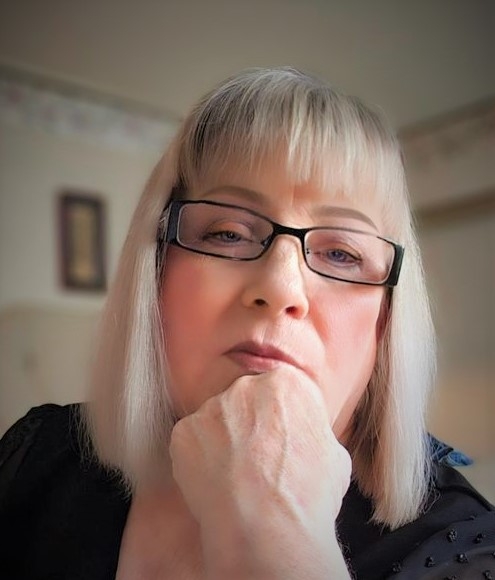
Kristy Raines was born  in Oakland, California, in the USA.
She is a poet, writer, author and advocate.
She has five books getting ready to publish soon, one with a prominent poet from India which will launch hopefully soon called, "I Cross my Heart from East to West", two fantasy books of her own called, "Rings, Thins and Butterfly Wings" and "Princess and The Lion", and an anthology of poems in English,"The Passion Within Me" and her Autobiography called "My Very Anomalous Life"
Kristy has received many literary awards for her unique style of writing.
1)
lingering
1,000 explosions
welcome to
the masquerade.
2)
you trespassed
on my rituals
through slaughter
my deeper dreams
turn to black.
3)
nearly touching
energy expanded
from
melting flesh.
4)
sweet relief
substitute
bones for
reality.
5)
i met you in
the metallic
kiss
your eyes
focused
on
babylon.
6)
sparse infinity
tragedy them rocks
our unfortunate union
leading ultimately
to a death mask.
7)
taking the coastal path
where i left your lifeless
body
in several parts
sand induced
hysteria.
8)
clouds over your hope
ballooning your integrity
lost within virginity.
9)
i have a thousand
internal sons
dividing the world into
ectoplasmic futures.
10)
dripping jewel
you brought me rust
on diamond legs
with frozen epithets.
i climbed into
your empty spaces.
11)
you stretched across my rack
to convince me of your devotion
take your time now
to recall those old days
but take care
as the farewell leaves your lips
the scream of past days follows you.
12)
fairy tales
surround the wooded path
where lurks the foetus
whose curses shatter
on the leafy tongues.
(ends)
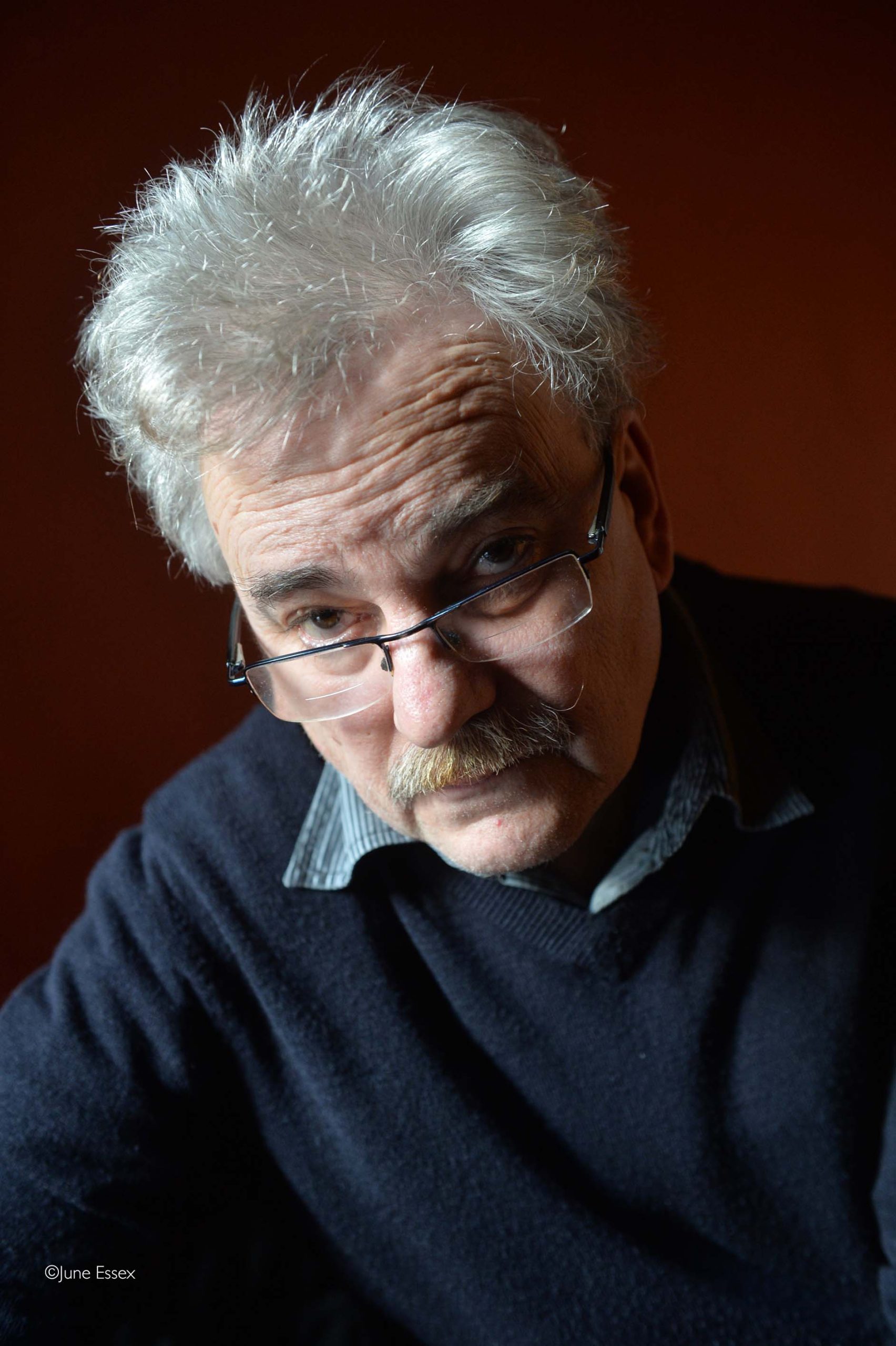
Clive Gresswell is a 65-year-old British innovative writer and poet. He has several books out obtainable through Amazon or LJMcD Communications.
                LIFE AND DEATH IN ALABAMA

		A fertilized egg is a treasure,
		a boon to the barren, a gift of hope.
		But in sweet home Alabama,
		the latest law gives embryos a bonus:
		eternal life.

		A judge decreed an egg fused with a sperm
		is now a U.S. citizen, with rights.
		If kept quick-frozen, zygotes live forever.
		Sperm donors will pass on.
		Parents will pass on.
		But grandchildren, great-grandchildren
		must keep potential ancestors in liquid nitrogen
		forever and ever. Amen.
		Any careless spills or thaws are murder.
		Any cells lost in the implant process-- serial murder.
		And murder is a capital offense.

		These microscopic cells don’t look like people.
		No face, no bones, no blood, no lungs;
		no organs, tissues, gender.
		But one dogmatic judge decreed
		these cells are fully human.
		That’s what his Church believes.
		Our founders erred-- Church ought to rule the State!
		His Church, of course.

		Living children aren’t the law’s concern.
		In Alabama, school-aged kids
		can work in factories— child labor. Cheap.
		Children of asylum-seekers?
		Routinely ripped from parents’ arms
		and locked in cages.
		Children of the poor are grudged food stamps,
		must fight red tape for every scrap of health care.
		And every day more kids are shot and killed.
		No, real youngsters aren’t priorities.


		But embryos—now there’s a righteous cause!
		Eden’s tree, that bore enticing fruit,
		has sprouted in the courtroom, promising
		knowledge of good and evil.
		Alabama’s judge has tasted insight;
		his laws prevent Eve’s needy daughters
		from seeking IVF—lest cells be wasted.
		Decrees deny a babe in arms to parents
		out of respect for life.

		He reads God’s mind, this Alabama judge.
		Or speaks, perhaps, for someone else
		that lurks in Eden, hissing…


		Copyright 2/24               Patricia Doyne
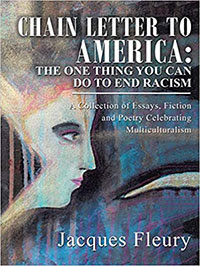
[Excerpt from Fleury’s book: Chain Letter To America: The One Thing You Can Do To End Racism: A Collection of Essays, Fiction and Poetry Celebrating Multiculturalism]
“Injustice anywhere is a threat to justice everywhere. We are caught in an inescapable network of mutuality, tied in a single garment of destiny. Whatever affects one directly, affects all indirectly. I can never be what I ought to be until you are what you ought to be. This is the interrelated structure of reality. ” — Dr. Martin Luther King Jr.
A 2006 article by Mema Ayi and Demetrius Patterson from the Chicago Defender reported that “actor Morgan Freeman created a small firestorm…when he told Mike Wallace of “60 Minutes” that he finds Black History Month (BHM) ridiculous.” Freeman goes on to say that “Americans perpetrate racism by relegating Black history to just one month when Black history is American history.”
I agree with Dr. Martin Luther King, Jr. that as Americans we are tied together “…in an inescapable network of mutuality…Whatever affects one [of us]…affects [all of us] as Americans in this country.
As you can clearly see, the month of February dedicated to Black history continues to stir controversy. However, we can’t continue to ignore the fact that although we have made progress towards racial unity, we still have ways to go towards racial harmony, understanding and tolerance, if not acceptance.
Scholars and historians such as Conrad Worrill, chairman of the National Black United Front, agree that Black Americans still need February, and every day, to reflect on the accomplishments of Black Americans who contributed countless inventions and innovations to society.
Radio personality Cliff Kelley notes that capricious historians conveniently leave out certain parts of the story that do not corroborate their version of history, which consists mostly of White men. Blacks are virtually removed from the narrative to substantiate the White historical agenda. Plenty of Black youths do not know their history. Most of them think that their history begins and ends with slavery.
Former State Representative David Miller (D-Calamut City, Ill) asserted that Freeman was right in saying that Black history should be a year round thing. “We’ve shaped America,” he said, “but that Black History Month should serve as a reminder of our legacy.”
The recently deceased Howard Zinn wrote in his book A People’s History of the United States, “There is not a country in world history in which racism has been more important than the United States.” He poses the question, “Is it possible for Blacks and Whites to live together without hatred?”
When it comes to the evolution of racism, he had this to say: “…slavery developed into a regular institution of the normal labor relations between Blacks and Whites in the New World. With it developed that special racial feeling — whether hatred or contempt or pity or patronization — that accompanied the inferior position of Blacks in America…that combination of inferior status and derogatory thought we call racism.”
He goes on to say, “The point is the elements of this web are historical, not ‘natural.’ This does not mean that they are easily disentangled or dismantled. It only means that there is a possibility for something else, under historical conditions not yet realized.”
In a 2010 article in The Boston Phoenix, “Is There Hope in Hollywood?” Peter Keough extrapolates the medium of film is making an effort to bridge the race gap. They do this by portraying Blacks as heads of state — in movies like Transformers 2, 2012 and Invictus — although the contexts in which a Black man becomes president is often created by a catastrophe in which the White leader is killed. Or Blacks are still being portrayed in glaring stereotypical roles such as in Precious, with racist clichés like Precious stealing and eating an entire box of fried chicken.
The undercurrent of racism is evident even from well-meaning Whites like President Biden, when he ran against Obama for president. Biden declared that “[Obama] is the first mainstream African-American who is articulate and bright and clean, and a nice looking guy.” Similarly, another fellow Democrat, the former Senate majority leader Harry Reid wrote in his book Game Change, about Obama that America is ready for a Black president, particularly because he is “light skinned and speaks with no Negro dialect.”
This leads me to extrapolate that despite all that Blacks have contributed to the making of America, this becomes extraneous compared to the first impression our colorful appearance makes. I am compelled to recall what Dr. King, Jr. so eloquently stated, that Black people should be judged “by the contents of their character” and not their skin color.
Many modern conveniences spring from the inventions of Black inventors: blood banks facilitating life-saving transfusions, the bicycle, the electric trolley, the dustpan, comb, brush, clothes dryer, walkers, lawn mower, IBM computers, gas masks, traffic signals, the pen, peanut butter…The list goes on and on.
Thanks to the Academy Award nominated film, Hidden Figures, we’re now all familiar with the amazing contributions of mathematical geniuses Katherine Johnson, Dorothy Vaughan, and Mary Jackson, whose work helped make Neil Armstrong the first man on the moon! All of these achievements have become part of our daily lives here in America and around the world as the result of African-American contributions to the economic and scientific stronghold known as America.
Sadly, we still need Black History Month to remind us!
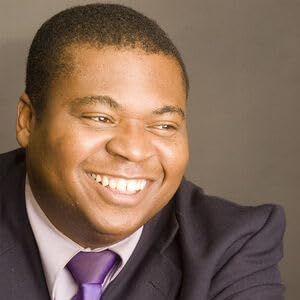
Jacques Fleury is a Boston Globe featured Haitian-American Poet, Educator, Author of four books and literary arts student at Harvard University online. His latest publication “You Are Enough: The Journey to Accepting Your Authentic Self” & other titles are available at all Boston Public Libraries, the University of Massachusetts Healey Library, University of Wyoming, Askews and Holts Library Services in the United Kingdom, The Harvard Book Store, The Grolier Poetry Bookshop, Amazon etc…He has been published in prestigious publications such as Muddy River Poetry Review, the Cornell University Press anthology Class Lives: Stories from Our Economic Divide, Boston Area Small Press and Poetry Scene among others…Visit him here.
Bubbles

I see through bubbles that are blown everywhere.
Some are protestations of undying love,
others, a screen
between the public and their leaders.

Some journey towards afflicted regions,
but burst before they reach their destinations.

Some are a kaleidoscope
of a happy childhood,
which is no longer available.

Some evoke an ocean
that is now at enmity
with its immediate neighbors.

Some are a display of historic arrogance
that will be the plight
of every nation.

Some are at variance
with their own ingredients,
so turn against themselves
in a hysteric self-annihilation.

Some perform the Danse Macabre
and foretell the transience of the human species.


An Eye Contact

Two hours after midnight,
a pair of fluttering stars
that steadily looks me in the eye,
shortsighted as I am,
has finally established an eye contact.

The thread of light that now ties
my irises to their flickering white
is my daily exit from Hades.

I do not need to climb a ladder to reach the skies
or to fly an extraterrestrial spacecraft,
I mount my own eyesight.

I was born into so many wars

I was born into so many wars, I pause
with shortness of breath
that has nothing to do with respiratory throes,
but with Fear
that was injected into my system
during my earliest years.

I was only four when the 1967-war
violently shook my cardiac chords.
Lightning and thunder became a metaphor
for the fireworks
of Israeli bombardments of land and ports.

Then came the 1973-raids
on the harbor which was only yards away
from our street which filled with tanks,
military trucks,
and soldiers with helmets.
Shell-shocked, I was launched into my teens.

Before I became eighteen,
a civil war bequeathed numerous assassinations
and odd forms of sectarianisms.

2011 was the ominous date,
heralding rockets,
displacement,
and an everlasting siege
that brought inflation and darkness in its wake.

And now I am sixty years of age.
I find myself in the grip of a War
that has shattered my dreams
of a long-lasting peace.


The Massacre of Penguin Chicks

I was in Sydney in the early nineteen-nineties
when I first heard of people who endanger their lives,
clinging to the masts of massive ships,
to hinder the pollution of soil, air, and seas.

Those activists are trouble-makers
in the eyes of legislators,
merely for attempting to save our planet
and its endangered species.

With my TV screen recently gone out,
having been electrocuted by a surcharge of electricity,
I now read the news instead of watching it,
which spares me a lot of psychological harm
and lingering grief.

These recent events sound apocalyptic
but not Biblical to me;
however, our globe is being destroyed
with Luciferian zeal.
Emperor penguin chicks are the latest martyrs.
In thousands, they have drowned
or frozen to death
because the sea-ice melted beneath them
before they could develop the waterproof feathers
which would enable them to swim.
The executioner is global warming.

Millions of people have been dying in stoppable wars
and nobody gives a damn,
so who would care about the demise of penguin chicks?

I once heard a conspiracy theorist speak of preparations,
to inhabit another space,
once planet earth has ceased to exist.
Such a flight to a new paradise must cost billions,
but should I get it free -
please excuse such a daydream -
I would not want to board one of their spaceships,
because the journey would nauseate me.
I would rather perish here.