

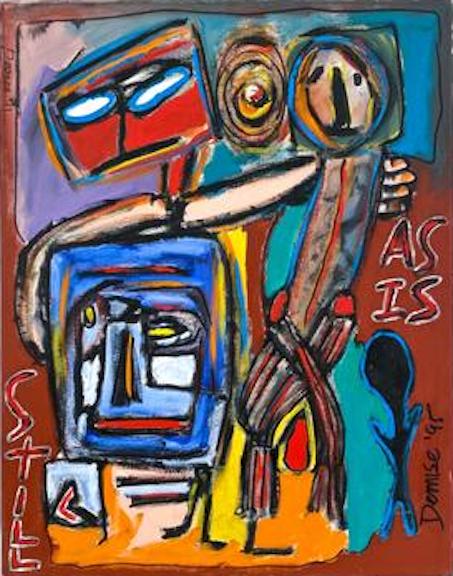
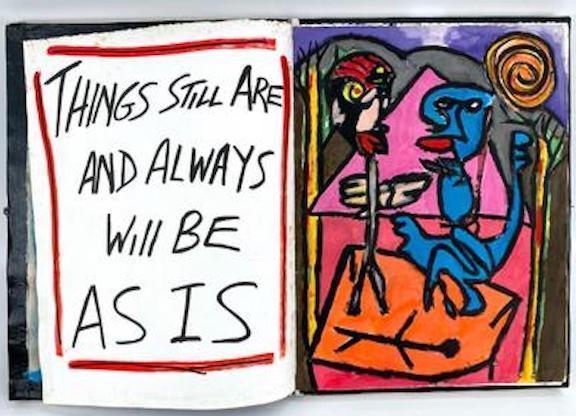

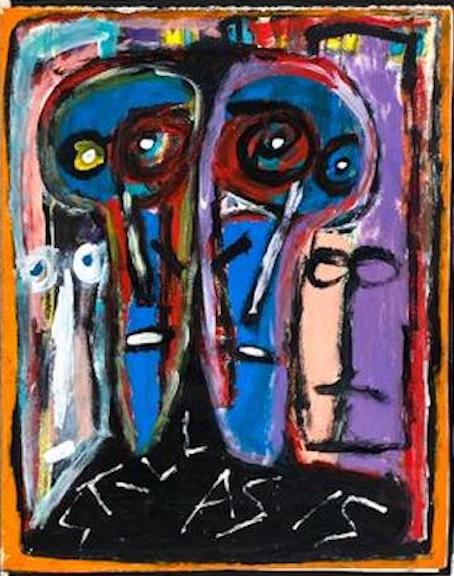
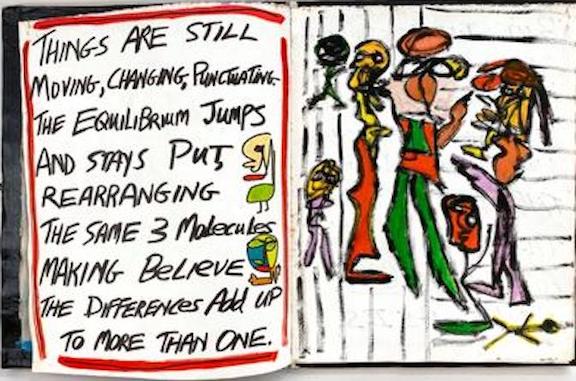
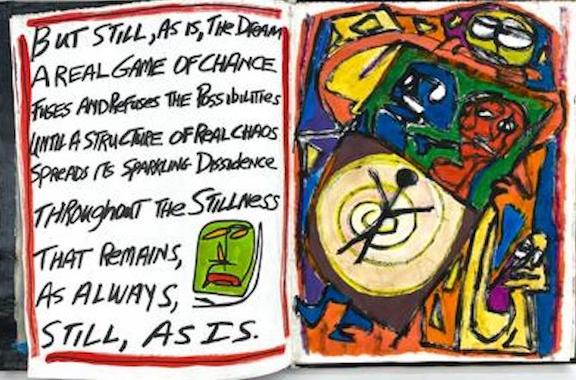
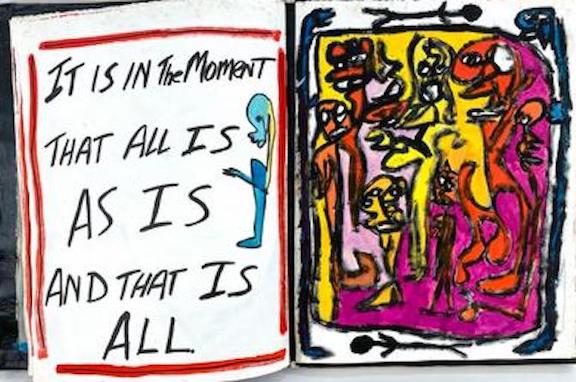
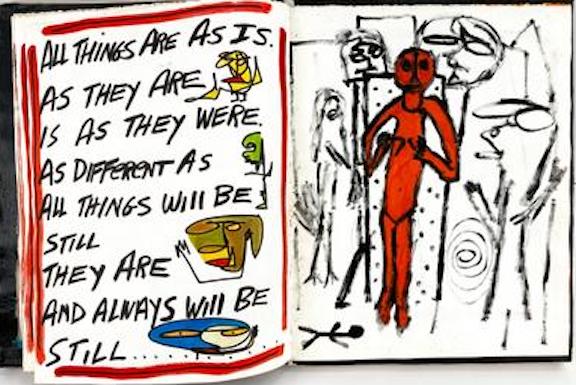
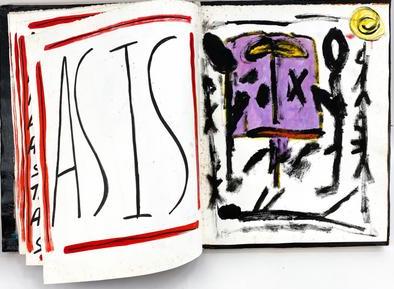
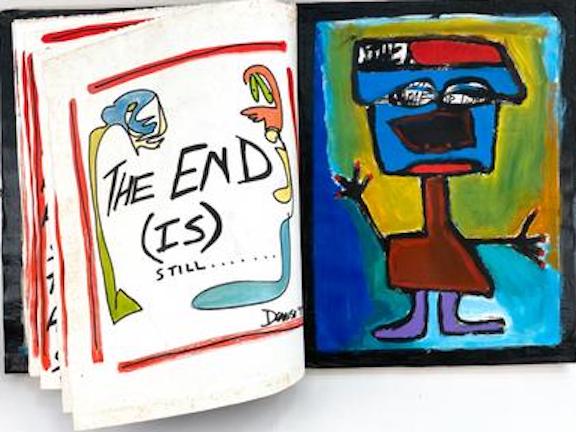
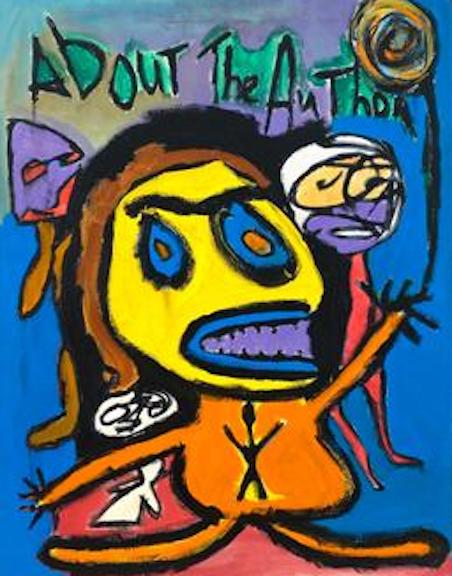
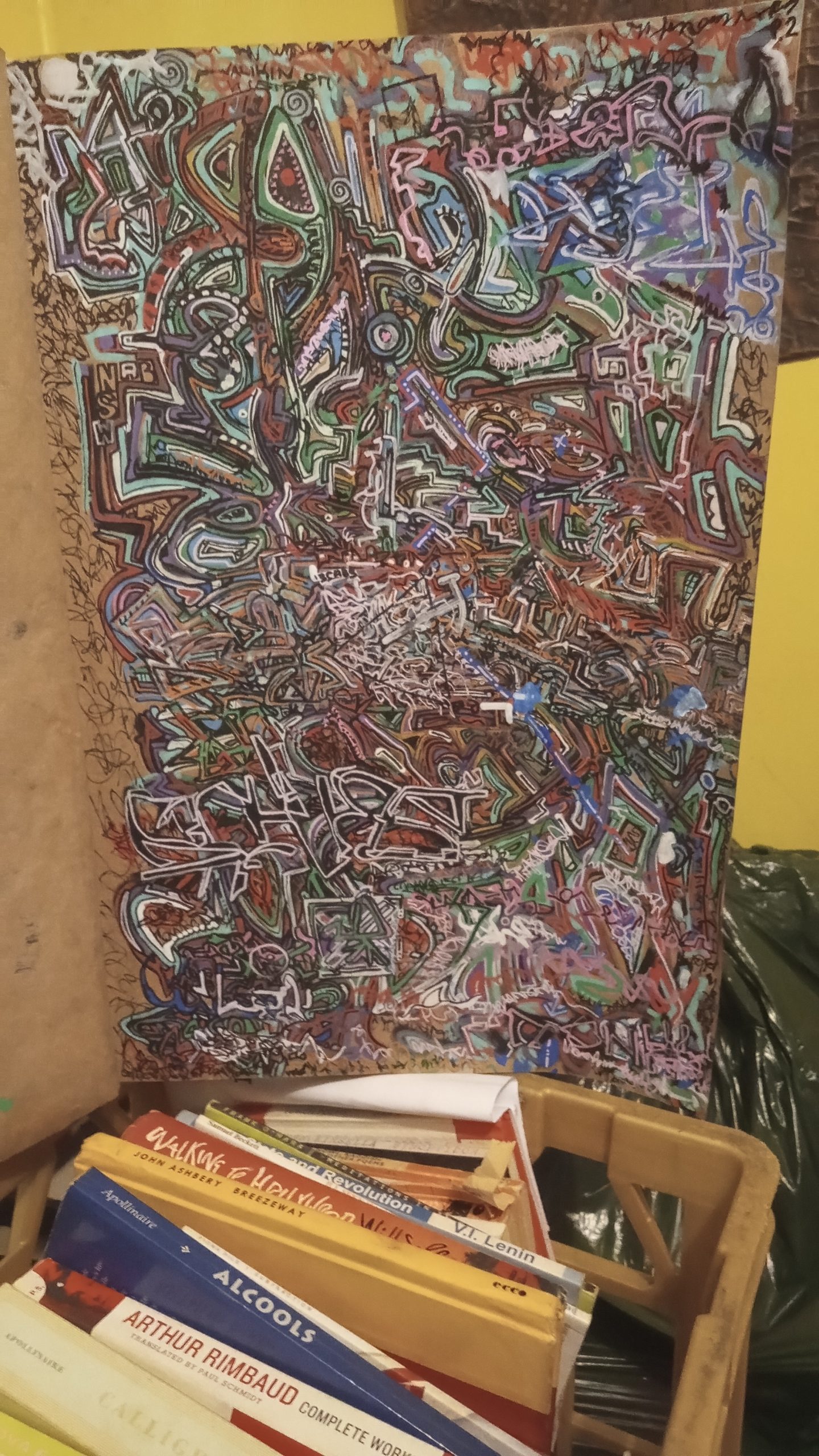
I have often thought about the relationship between what was and what is and about the motion of the stillness that is “now” (see my attached homage to Mondrian). In “Still Is , As Is“ I’m using the vastness of definition and context and the vision that language and paintings provide in order to illustrate my experience of living within the vibrant, alternating current of yin yang alternatives – the back and forth, the yes and no, the right and wrong of real life….things move ahead within the stillness of now. They move through time in order for the chaos to become what is. What is, is born from what was, while remaining still, as is. It’s the oxymoron of still moving.
Phil Demise Smith
Poet, musician, artist, gallerist, teacher. Was the editor /publisher of Gegenschein Press and owner/producer at NYC performance loft- The Gegenschein Vaudeville Placenter from 1976-1978. Published in numerous magazines mostly in the 1970’s and 80’s and has had numerous chapbooks published including What I Don’t Know For Sure (Burning Deck), Periods, selected writings 1972-1987 (Gegenschein Press), History of Pre-Diction w/ drawings by Gérard Sendrey (Gegenschein Press). Has given numerous poetry readings in the U.S. and Europe. Began playing music in 1975 and has written over 200 songs and performed with numerous bands at NYC clubs (i.e. CBGB’s, Max’s Kansas City, Folk City, The Bitter End etc) – most recent recording (2021) being a vinyl record album Growing in the Dark with AnDna. In 1987 began to paint and since has had numerous one person and group shows in the U.S. and Europe including an exhibition at the The Musée Création Franche in Bégles, France and has work in many collections including in the collection of the Musée d’art brut, Montpelier, France. Was owner/gallerist of Outsider Art at A Gallery @ Wares For Art (1996-1999).
Too Late


If you find yourself

Thinking that

Marriage counseling

Might help

Your troubled marriage,

You are

Almost certainly

Too late.


Taylor Dibbert is a writer, journalist, and poet in Washington, DC. He’s author of the Peace Corps memoir “Fiesta of Sunset,” and the forthcoming poetry collection “Home Again.”
Poetry Is Labor and Work


Poetry is labor and work.


People should be paid for their labor and work.


Asking people to pay to consider their poetry is exploitative.


Taking advantage of people’s desire for an audience is exploitative.


Taking advantage of people’s desire for exposure is exploitative.


Exploiting labor isn’t thoughtful or beautiful.


Yes, this goes for contests as well.

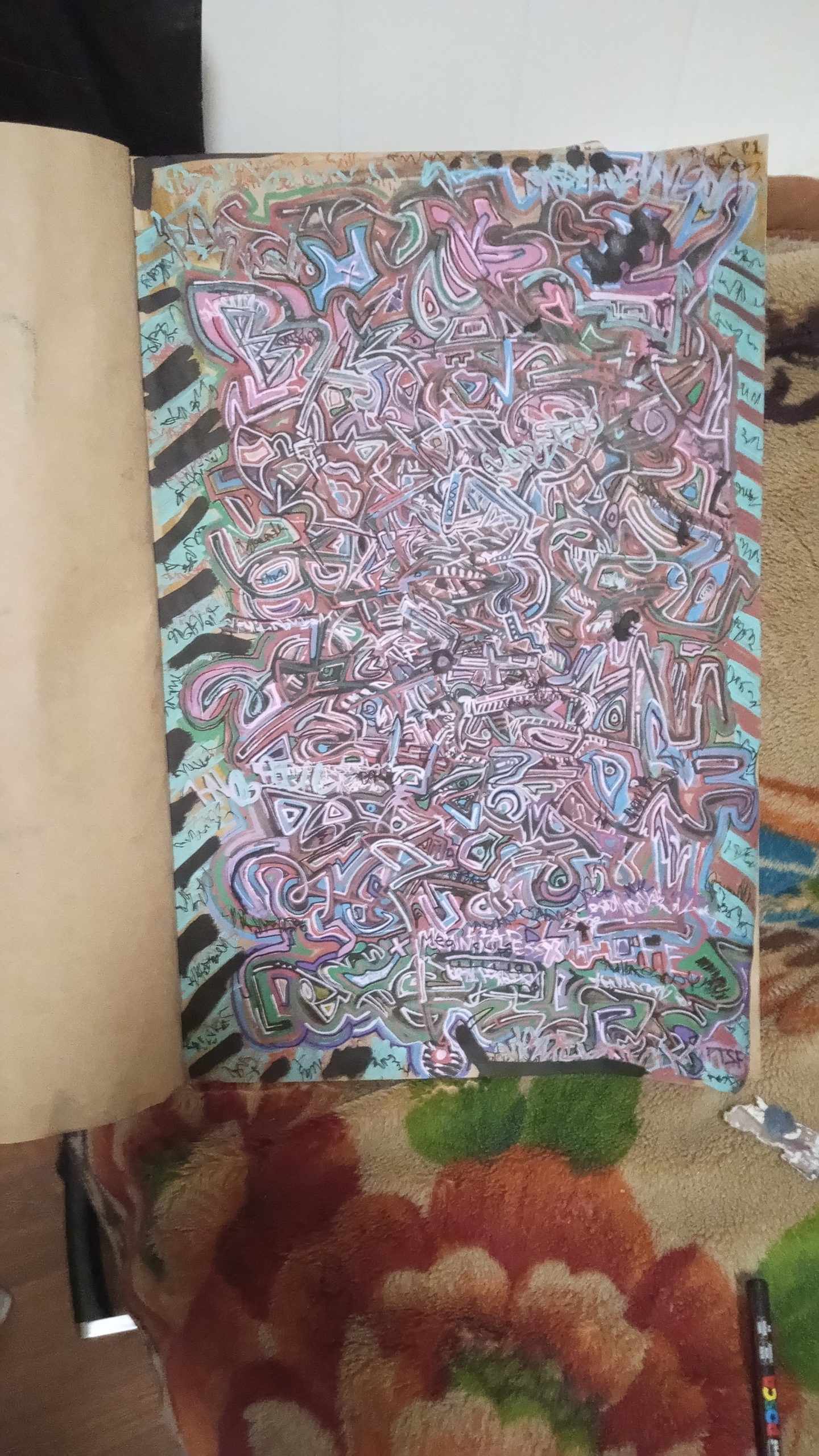
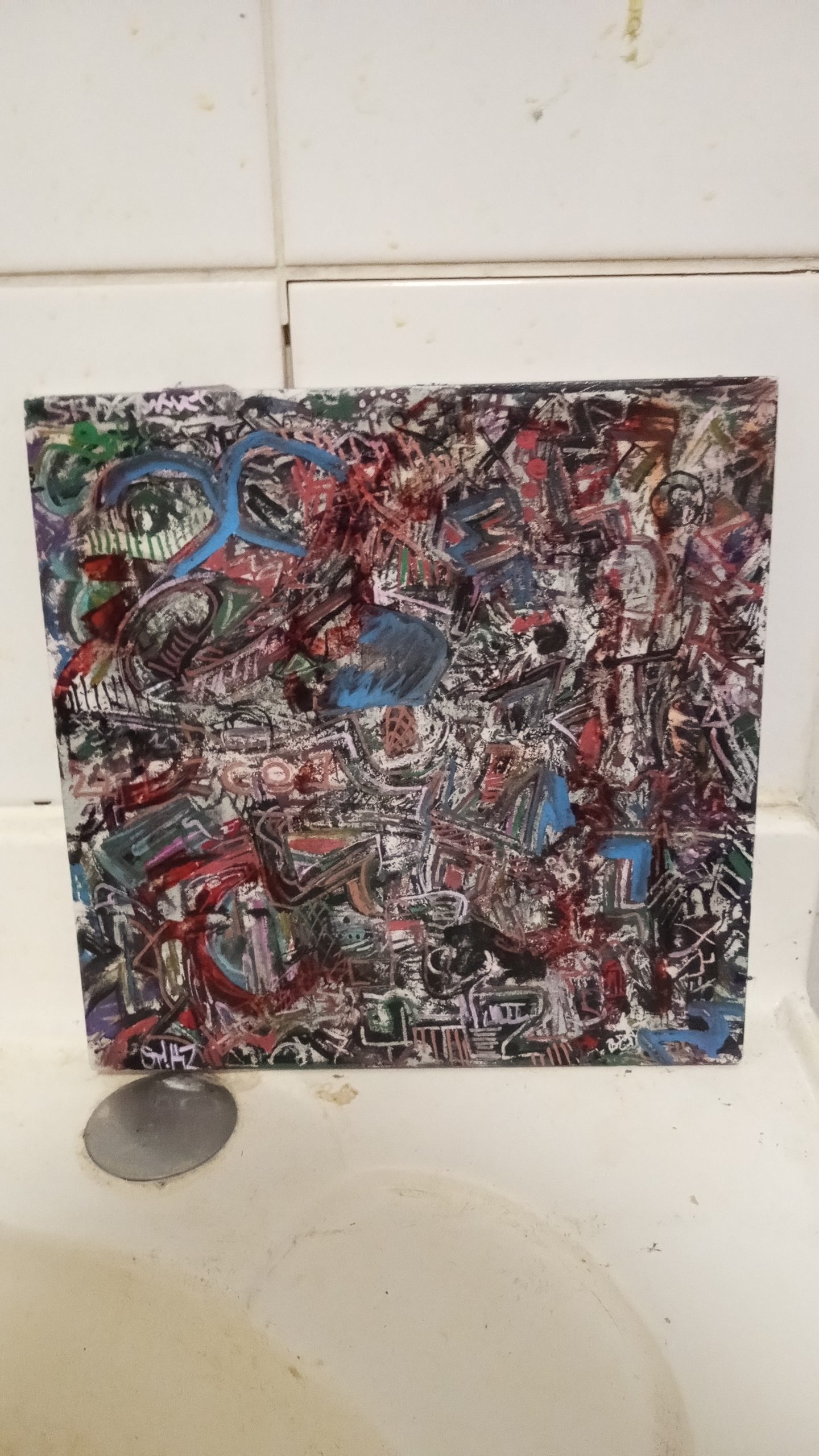
Learning Situation

There may, especially in times
of civil int’resting unrest,
be hid ‘midst heroes – who’d solve crimes,
believing weaker folks’ good best –
badged rogues who’d stop at no excess –
to savagery against suspects,
karate-chop pat-downs, regress;
on courage, honor, cast their hex,
leave victims sexually tortured.

Idealists who took a stand,
Once let out of this devil’s-orchard,
must face their love, although unmanned.
Their love is beauty, nothing less,
who knows to love where courage grows
but now finds love a harrowed mess –
distrait, stand-offish.  Why?  Who knows?

One may have suffered worse groin pains
in downhill bike falls, but – it’s strange –
this ache won’t go away.  The change
will bring unbid but oft’ his brains
all addled vivid bright recall
of dingy green precinct back room,
his hands upon the chilly wall,
his legs spread wide in civic gloom.


We’d cellmates been in protest time –
while I too had attacked a pig,
foolhardy vainglory for rhyme
it was – hardly a thing as big
as bravery.  (Though like outrage
they’d dealt me, small discomfort lingers –
my first night free did much assuage.
I’m just glad they spared my fingers.)

They’d thrown him howling through the door:
“Strike, coward scum, and from behind –
thus justice mock since law’s no more
where peacekeepers have lost their mind!”
He ceased his anguished hoarse harangue
and climbed onto the upper bunk.
Our cell door slid closed with a clang
as back into my bed I sunk.

His thrashings kept waking me up
for long into ceaseless glare.
I gave him water in a cup,
he fin’ly slept without nightmare.
Then after quiet hours went by
wherein he didn’t even snore
I guess he must have heard me sigh
for, leaping to the iron floor
he said his name, stuck out his hand.
I shook it, told him “Call me Jack.”
He taught up at the college, planned
This lecture for when he got back:

“When any revolution’s inchoate
if it’s at all, such autocratic lock
the Powers have on ev’ry human fate
the chance that dissidence with fight will mock
the pomp of armed enforcers isn’t great.
Few act upon disgust that many feel.
But character, integrity will rate
with some despite the odds, which are surreal.
Then luckily the losers themselves find
In what we call a learning situation:
What ruthless motherfuckers do them bind
Is matter for the wonder’s contemplation.”

I said that would his students well
Forearm.  He thanked me.  We discussed
specific treatment, what befell
us both since brought in on this bust,
and which side in particular –
they differed ‘tween the both of us –
received insult testicular.
He then reflected – with a cuss:

“It seems this adds another facet
to passions positive as well –
how tell my girl now in tacit
accents exactly what a hell
her country is, what fiends its cops,
what force ensures wage-slave docility,
what gratis ache that hardly stops
our bliss infects and my virility –
No! – she must be carefully shunned.
A note with disengagement ring
will say, ‘Sweetheart, love’s moribund.
You’re not to blame, though, that’s the thing.
You know you take it personal
when griefs hit folks that aren’t their fault.
But now the ghetto I’ll home call
while you continue to exalt
delight – but new guy overjoy –
for I this shaman must consult
to help your mad ex-lover-boy
again in ecstasy exult….’ –
I’ll not write that, just disappear.
To flee’s the better part of valor.
Of missing history buff she’ll hear,
I’ll spare her any further pallor.”
The Honesty
The Chander Gare ( one kind of roof opened van) with eleven young men has just stopped. The place is crowded. Many vehicles from the opposite side come and stop here for Sometimes . Different kinds of shops are busy with their customers. Some children are uttering different words to attract the customers to sell their handicrafts, fruits and foods. Among them a boy with unbrushed hair but innocent and with deep eyes of near about eleven comes to Chander Gare to sell bananas. His two hands are full with fresh and big bananas. He says:
– Sir, please buy my bananas. These are fresh and testy. These are also medicine free.
One of the eleven young gentlemen says
– How do you know all these things. Have you eaten any of them?
The boy is laughing half with two lips and says with sweet sound
-Sir, these bananas are from my banana tree.
Who knows well about these more than me?
You can take without any confusion.
-Who will give guarantee about your story?
-Guarantee? Guarantee has no guaranty but look at my eyes. These eyes do not misguide you. My mother does not teach me to tell a lie.
If I tell you lie my trees will die and Nature will take revenge.
– You are more mature than your age.
-I don’t understand what you are saying.
– What is the price of your banana?
-8 taka per piece, but one pair is 15 taka.
– ok. Give us 11 pieces.
– Sir, that will be difficult for me to calculate.
– We are eleven and we need eleven pieces.
Don’t worry. I shall give you 8 taka per piece. Give us the best eleven pieces.
– Here you are, Sir.
-Thank you. Take your money.
The Chander Gare starts to move very fastly.
The boy counts the money. It is one hundred taka. He is in a fix. He wants to return the excess money but the Chander Gare is out of his sight. He is thinking what to do. He shares the incident with his friend, Alex. Alex says
-Jon, you have nothing to do. You are not responsible. Keep the excess money to you.
Jon says
– I do not agree with you. I want to return the excess money.
– It is impossible. But I have another idea.
Jon asks Alex
– What is it? Please tell me.
– You can give the excess money to a beggar. I think it will be better.
Jon says with high voice
– I have got an idea.
Alex comes to him and asks
– What is it?
-I have to go. Time is very short.
– Where do you want to go?
– I want to go to the next and final stoppage. I think I shall get him there.
– That will be impossible.
-Pray for me.
Jon starts his journey by a bus. All the vehicles stop in the next stoppage. This place is border area between two countries. People of two countries come and go from here. So they have to stay for some formalities of the offices. After maintaining the formalities they can cross the border.
Jon reaches the place but it is too late. He sees the eleven young men but they are far away. They have just crossed the border. They are walking.
Jon says with high sound,
-Sir, please take your money. I am here only to return your money. I do not want to take your money.
The eleven stars shine brightly. One of them looks back. He becomes surprise to see Alex. He stops for a while and says
– You have come here to back money. We are happy to see you here. We praise your honesty. We do not want to take money from a boy like you. We are pleased upon you.
-I have come here to back your money. Please take your money. I don’t want to take excess money. My mother has taught me not to taka extra money from any customer.
-We have not enough time to come back and you can not cross the border. So keep the money.
-No, I don’t. I am very poor but not beggar. I need money but I do not need money of others. Please forgive me.
-We have no option.
Alex collects a stone. He binds the money with the stone and throws the stone to the eleven young men. The stone crosses the boundary and it floats in the air of honesty.
Alex sees the stone where he see the face of his mother.