Anointed with Timeless Joy

I want to dance in the sunshine of my soul;
Laugh in gales of greedy delight at nothing at all.
I want to strip bare and bathe in rain-drenched blossoms
Falling like snow from the flowering pear tree
And let down my hair to cling in rivulets down my back.
I want to go fast down life’s slide on my belly
And land laughing in the dirt at the bottom of the world.
I want to count the stars of midnight and ride the comets
Across the universe, bare-back, with my spurs dug in.
Dusty eons and frozen grains of sand in the hourglass
Mean nothing but being alive in all the soul’s timeless joy;
Spending golden moments lost in endless beauty;
The breast of time rising and falling with the tides of the moon.
Each breath is a lightness of knowing, of remembrance
Moving rhythmically to the drums of everlasting madness
While strolling leisurely through the light tunnels of infinity
With a silly grin spread across my wonder of existence.
Endless joy is sparkling eyes, and a laughing soul in bare feet.


Breath of Life Sonnet

Oh, the intemperate swells of the heart
That drown me in their wake when you appear,
That melancholy stills when you depart;
And comes again to life when you draw near.
Ancient forgotten love spells seem to call
Like fading siren’s songs from long ago
And all the sighs that held me so enthrall
Whisper once again how I love you so.
Come to me from the tunnels of the wind.
Let not our time on earth be lived in vain.
Love is a living force that has no end -
A breath of life for us to breathe again.
 Love is a magnet that pulls heart to heart;
Once together, no force can pull apart.


Prayer at Twilight

You are my thoughts in the shadowy lane at twilight;
So real I wonder if you can hear my footsteps
Crunching over the stones beneath my feet as I walk;
Or the whisper of the grass when I step off the path.
Can you hear my voice as I speak to you in make-believe,
Imagining your hand in mine and you walking beside me?
The stars hang above the treetops like tiny lanterns
Waiting for the breath of God to blow them out
When dawn peeks breathless over the hills of morning.
I will be long in my bed before the new day arrives,
Snug under the covers of night and its holding
Of my treasured dreams of you in earnest longing
Tucked in my lonely heart missing you with each beat.
My fervent prayers at night are always the same words,
Let him be safe, healthy and strong and missing me
As he seeks my soul in the long shadows of twilight
Down the silent starlit lanes of his stalwart soul.

Annie Johnson is 84 years old. She is Shawnee Native American. She has published two, six hundred-page novels and six books of poetry. Annie has won several poetry awards from world poetry organizations including; World Union of Poets; she is a member of World Nations Writers Union; has received the World Institute for Peace award; the World Laureate of Literature from World Nations Writers Union and The William Shakespeare Poetry Award. She received a Certificate and Medal in recognition of the highest literature from International Literary Union for the year 2020, from Ayad Al Baldawi, President of the International Literary Union. She has three children, two grandchildren, and two sons-in-law. Annie played a flute in the Butler University Symphony. She still plays her flute.
Three, Two, One......Done

My heart has been dragged, ragged and bruised.
Every drop of its weary blood has been used.
I have wrung it dry and left it out to die and still
It feeds my thirsting brush and starving quill.
My soul has been battered, tattered and sold
Every piece set in stock; paid out in fool's gold.
I have set it out on the world to the point of no return.
Still in everything I do.......... I can see......... I feel it burn.
In giving my heart and soul my mind has left me.
My passion has led me to the point of insanity.
All that I love has gone from peace to war.
I'm left staring in madness at a black door.
No reflection from the depths of the abyss.
Pain and sorrow have become my bliss.
Oh hell, I remember the destruction
The end and rebirth of creation
Three.........two........ one
ONE......it's done.


But A Droplet

If you could catch my fall
My tears would tell it all.
You might be able to see
Your way through me.
If you could break the surface
You would see secrets I can't confess.
But I am but a droplet
That you will soon forget.
You will never see me blossom
Nor know what I have become.
If you could see beyond the reflection
You would see behind my rejection.
You would know I'm entangled in tears
I've let grow for so many years.
If you could catch my fall
My tears would tell it all.
I am but a droplet
Wishing it could forget.


From South-Western, Michigan, Jerry Langdon lives in Germany since the early 90's. He is an Artist and Poet. His works bathe in a darker side of emotion and fantasy. He has released five books of Poetry titled "Temperate Darkness an Behind the Twilight Veil", “Death and other cold things” “Rollercoaster Heart” and “Frosted Dreams” Jerry is also the editor and publisher of the literary magazine Raven Cage Zine poetry and prose. His poetic inspirations are derived from poets such as Edgar Allen Poe, Robert Frost and Henry Wadsworth Longfellow. As well as from various Rock Bands. His apparently twisted mind, twists and intertwines fantasy with reality.
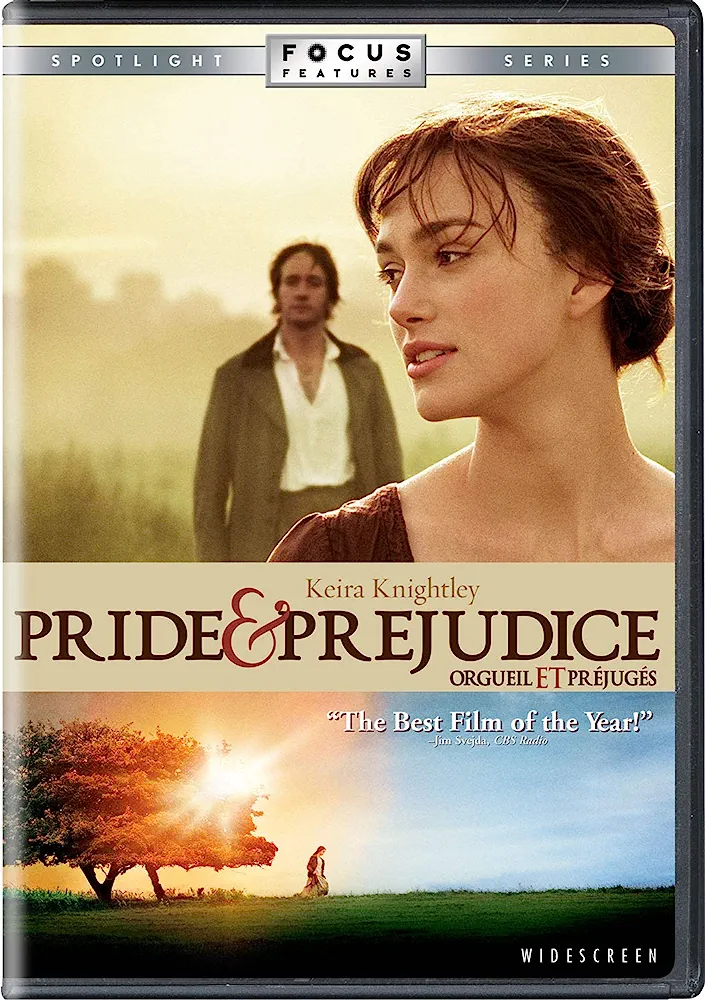
“Happiness in marriage is entirely a matter of chance.” Explain and elucidate the significance of the following line in the light and perspectives of Austenian feminine characters.
Jane Austen’s feminine figures including the heroine Elizabeth Bennet and the manorial role of Charlotte Collins Lucas have agonistic perceptions or differing opinions with relation to marriage, conjugality, intimacy, self personhood or individual fulfillment.
Charlotte Lucas’ preferences of conjugality or marital alliance with Mr. William Collins, surmounts the touchstones of mercenary wedding, prudential matrimony or materialistic marriage lacking of admiration, love, romance unlike Elizabeth Bennet’s relationship. Economic futures and financial security are everything that a woman would be intending for a sustenance of livelihood and, in this sense, Charlotte is not an exception. Elizabeth Bennet despises such courtship or conjugality which lacks romantic love in engagements or relationships and this is evidently crystal clear by Elizabeth’s dialogical interiority demarking, “she [Charlotte Lucas] had sacrificed every better feeling to worldly advantage”.
Elizabeth Bennet further proceeds, critiquing her formerly intimate acquainted friend, Charlotte Lucas’ fiance, “Mr. William Collins was neither sensible nor agreeable; his society was irksome, and her attachment to her[Charlotte Lucas] was imaginary.”
Elizabeth possesses the sentiment that a woman’s wellbeing is either affirmed or jeopardized by the social institution of marriage. Jane Austen, through Elizabeth Bennet, says to regard marriage as the union of refinement and self-improvement. Charlotte Lucas’s marriage guarantees money, wealth, or fortunes but at the stakes of a husband famed for being conceited, pompous, narrow-minded, or silly.
“How despicably have I acted!… How humiliating is this discovery!” Elizabeth’s exclamation of being cheated by the befoolery and fraudulence of Wickham ameliorates her fragile relation with Mr. Darcy. Her marriage exemplifies the acknowledgment of “I marry for love and not for comfort” and “advantage to the union of both”.
Charlotte and Elizabeth: Multiple Modernities In Jane Austen’s Pride and Prejudice, Author: Melina Moe, Source: ELH, Vol 83, No. 4, Winter 2016, pages: 1075-1103, Yale University, Publisher: Johns Hopkins University Press
Describe Jane Austen’s Pride and Prejudice as a form of romance novel genre with textual citations and references to features of spatiotemporality.
Jane Austen’s novel Pride and Prejudice (P&P) is a social criticism upon the family life and English society from the preNapoleonic French revolutions to the post Austenian Regency England. Throughout the bicentennial adaptations, translations, transmutations, simplifications, continuations, dramatization and theatrical embodiments have evolved the emergence of spatiotemporality from Netherfield to Meryton, Bath to London and Derbyshire Pemberley.
Explicitly Longbourn Meryton Hertfordshire ladies especially the much piquant Bennet household, have attendance to participate in marital ball festivals occasioning the neighboring estates to be exalted in revelry and merriment of the marriage market. Herein, haughty and arrogant Fitzwiliam Darcy’s manifested appearance harbours a presentiment of ‘above station…above company…’ attitude.
Upon facing to see Elizabeth, he declares to Bingley, “She is tolerable but not handsome enough to tempt me. I am at present in no humour to give consequences to young ladies sighted by other men.” Bath is the haven Gardiners and Elizabeth Bennet have a harangue of marital alliance discourses pertaining to conjugality and relationships with her family relations therein, “Pray, my dear aunt, what is the difference in matrimonial affairs between the mercenary and the prudent motive? Where does discretion ends and avarice begins?…My dear, dear, aunt,” she cried rapturously cried out. What delight! What felicity! You give me fresh life and vigour. Adieu to disappointment and spleen. What are men to rocks and mountains?!” Oh! What hours of transport we shall spend! ….Lakes, mountains and rivers…generality of travellers.”
Jane’s struggling resistance to recovering from depression and mood swings and the visitation of Miss Bingley at Gracechurch Street happens to be a lengthy dialogue between microcosmic spaces and timings. Screams and tantrums of Lady Catherine Debourgh metaphorically bespeaks Jane Austen’s own rages and this is destined to be venued at Lady Catherine Debourgh’s residence of Rosings and Hunsford parsonage of Kent where Mr. Collins curates. “Mr. Collins, you must marry…Chuse properly, chuse a gentlewoman for my sake; and for your own, let her be an active, useful sort of a person, not brought up high, but able to make a small income go a good way.”
“This is a most unfortunate affair and will probably be much talked of. But we must stem the tide of malice, and pour into the wounded bosoms of each other the balm of sisterly consolation.” Then the novel’s narratological obsequiousness and space time travel furtherance of London to East Sussex Brighgton occurs with Lydia and Wickham’s scandalous affair into an elopement. Elopement of scandal in the sense, that ladies of Regency England should have marriage settlements with family’s consent and approbation. This grimes the scandalous affair to exploitative financial pecuniary usurpation by George Wickham and the disregard for moral opprobrium amongst of the Bennets amongst the gentries.
Until Darcy’s rescue, the family would have sunk into pangs of disgrace and eventually lost esteemed value. Vindictiveness of Elizabeth for heroic Darcy’s “blind, partial, prejudices and biased viewpoint and sentiment ameliorates salvaging of climax, “I have courted prepossession and ignorance, and driven reason away where either where concerned. Till this moment, I never knew myself.” Deberyshire’s “Pemberley grounds” becomes the heyday of truth that Darcy’s impersonation imitates none the less as “”He is the best landlord, and the best master,” said she [housekeeper Mrs. Reynolds] “that ever lived; not like the wild young men nowadays, who think of nothing but themselves. Elizabeth Bennet’s admiring wish for being the mistress of Pemberley turns a sublime touch of reality after the philanthropic and humane attitude of Darcy’s revelations with subsequent rescue efforts for George and Lydia.
In this relevance, Elizabeth Bennet is interpreted to be a stormier traveller of space-temporality from out of the library to the ball room and then up to the altar. The setting for ending strikes the Pemberley with Darcy’s denouement, “I cannot fix on the hour, or the spot, or the look or the words which laid the foundation. I was in the middle before I knew that I had begun.”
To the viewpoint of literary critic Andrew H Wright, “To say that Darcy is proud and Elizabeth is prejudiced is to tell but half the story. Pride and Prejudice are both faults but they are the necessary defects of desirable merits: self-importance and intelligence. The novel makes clear the fact that Darcy’s pride leads to a prejudice and Elizabeth’s prejudice stems from a pride in her own perceptions. And the tragic ironic theme of the book might indeed be said to have centered on the dangers of human intellectual complexities.”
Further Reading Johns Hopkins University Publishers Press, Celebrating The Bicentennial: Jane Austen And Her Recent Critics, Barry Roth, Ohio University, Studies In The Novel, Winter 1976, Vol. 8, No. 4, pages: 474-481 http://wp.lancs.ac.uk/dighum/2016/12/01/mapping-pride-and-prejudice/
Pride and Prejudice Editorship of Donald Gray 1. Claudia L. Johnson, Pride and Prejudice and the Pursuit of Happiness 2. Susan Fraiman, The Humiliation of Elizabeth Bennett
Marriage, almost inevitably the narrative event that constitutes a happy ending, represents in their view submission to a masculine narrative imperative that has traditionally allotted women love and men the world. Ironically perhaps, such readers have preferred novels that show the destructive events of patriarchal oppressions, for they complain that Austen’s endings, her happily-ever-after-marriages, represents a decline in her protagonists. In the light of this commentary explain the significance of the ending of Pride and Prejudice.
Or explain Pride and Prejudice as Marxist-feminist criticism of nineteenth century English society. ‘’As in much women’s fiction, the end, the reward, of women’s apprenticeship to life is marriage… Marriage, which requires [heroine and protagonist Elizabeth Bennet] to dwindle by degrees into a wife.’’ Nineteenth century women’s lives are satirized by Jane Austen’s romantic fiction through burlesque comedy, irony and most tellingly of marriage as a self-knowledge; the overcoming of egoism and the mark of psychic development.
Jane Austen’s Pride and Prejudice’s ensuing narrative with the aphoristic maxim of that, ‘It is a truth universally acknowledged that a single man in possession of a good fortune must be in want of a wife’. On the contrary, ironically, young bachelorettes such as the Bennet family maidens and Charlotte Lucas are in the dire urgency of procuring their wealthier husbands for securing their fortune which the marriage motif exerts throughout the narrative culminating in the resolution or reconciliation amongst the hero and heroine, notably Mr. Fitzwilliam Darcy and Elizabeth Bennet.
Literary critics like chivalry balladic romance novelist Walter Scott’s shrewd observation of Elizabeth’s changing heart at Pemberley rekindles her blind, partial, prejudice or biased opinions to enlightening truth and light. Elizabeth Bennet becomes admirable of the tastes and judgment imprintings and engravings of the Derbyshire Pemberley mansion of Mr. Darcy. This resemblance salvages her vindication of her behavioral attitude and sentimental temperament to love and matrimony after hearing of the housekeeping stewardess’ narrative; “the best master and the best landlord that ever lived, not like those wild young men of nowadays, who think of nothing but themselves’
The justification of George Wickham’s verdict of ‘..imprudence of abominable Mr. Darcy..’ is revealing to be unfolding treachery to Elizabeth Bennet, and this hints to the material prospects of usurpation of wealth and fortunes by veteran social class and working class bourgeois exploiting marriage to be surfeit of worldly advantage and materialism.
Darcy has tied the knot of ignorant and imprudent Lydia with the impecunious George Wickham and thus safeguards the Bennet family from the apocalypse of social disenfranchisement and infamous disempowerment. ..
Deconstructionist Judith Lowder Newton’s exclamations of the Marxist-feminist close reading of Pride and Prejudice emerges the revelations of ‘fantasy-wish-fulfillment structure where the boy meets -the-girl-leads-to-marriage’ convention.
On the contrary, the fairy tale structure and the materialist language which pervades the novel emphasizes rather than represses or obscures what Terry Eagleton terms ‘the fault lines of the nineteenth century English society’
Jane Austen’s Pride and Prejudice are both revolutionary and romantic and even unconservative to be true in Butler’s lucid rhetoric, ‘anti-jacobin tradition’ Through ironic reversals and miraculous coincidences Austen has pointedly observed sentimental ideals and novelistic conventions on the one hand, and the social realities of sexist prejudice, hypocrisy and avarice on the other.
Further Reading & References
1. The Continuity of Jane Austen’s Novels, Author: Juliet McMaster, Source: Studies in English Literature, 1500-1900, Autumn 1970, Vol. 10, No. 4, pages: 723-729
2. Can This Marriage Be Saved: Jane Austen Makes Sense of An Ending, Author: Karen Newman, Source: ELH, Winter 1983, Vol. 50, No. 4, pages: 693-710, Johns Hopkins University Press Publishers
To the Tune of Several Hundred Pages of Mandatory Reading which Must Be Done in an Impossibly Small Amount of Time


G!
What?
Whoops where the hell in the where the hell am I is this?
I don’t know I don’t know I
Simply and simple just I—I don’t know—it’s—so cold hard and cold why are my eyes closed I never closed them I don’t think but so open and then—no no open them and—then no not this no . ‘o . . ‘n’ . . . .  ‘‘o’’ . . . . . . . . ‘’’’n’’’’ . . . ‘ . ‘’ . . ‘’’’ . . . . . . . . ‘ ‘ ‘ ‘ ‘ ‘ ‘ ‘  . . so you see that’s why it had to be done the way it was done. Any other way, which, we will grant you, would have provided more precision, would have quadrupled the time needed to be ready to do the count. For doing the count is more important than the count being perfectly accurate—which could never be achieved, no matter the amount of time and care taken. See—here is how these people operate. Give them something to do with absolutely no explanation of how to do it. Just—do this and do that and this that and put it aside and go to the next one. And will they protest? Some maybe—but most not. Because the way we’re going to tell them what to do can’t be too simple. Too simple, and they’ll see right through we’re telling them nothing. Just handing them this big sloppy bag of gas which by the time they get to work at all will be limp-hung down empty and—they will see, and they will know. Then they’ll come back. And we’ll have to admit. That we have told them nothing, not because we’re holding back, but because we have no idea how to do it ourselves. So we got to wrap words and if that then do this and is thus then do that ‘round this gasbag. To the tune of several hundred pages of mandatory reading which must be done in an impossibly small amount of time. There will be some {and these we don’t want} who will see this all as an insane fiasco of make-work ‘cause we got no real work to give you right now kind of make-work, but. There’s another kind of breed which is the kind most in this herd are. It’s the kind that always feels a little bit too stupid. A little bit unsure of themselves no matter what they’re doing. A little bit unqualified to do anything they end up doing, but—never able to say I don’t get it or help me out here or I don’t get this. I got to stop. I just can’t do it because they fear being exposed as idiots or phonies or liars {as in—what the hell you mean you don’t know how to do this job? We hired you ‘cause you said you could do it; that you’ve done it in other places, and at other times, before; what; were you lying to us? [no I was not it’s just that ah ah] Oh? Why the hell did you lie to us then…} or another of the many other variations on this theme {such as—what do you mean you don’t know what to do here? Time was spent in training you to do each and every possible thing you’d ever be made to do on this job, and you said you were ready [oh I know I said that but its just this part here I don’t] why did you lie and say you were ready when you knew you weren’t ready [no no I did not lie it’s just this part here it’s] oh yes you knew here’s the proof here you are not at all ready [but hold it no no I am ready it’s just th’] hey look everybody! hundred faces turn all a’smile here’s another liar who lied that they were ready when they weren’t [no no that’s not true] hey ha look and see them all laughing at you sucka’ hundreds of mouths eyes and faces all laughing yah that’s right sucka’ yes you lied sucka’ that you were good enough sucka’ yes you lied and you lied and look HEY EVERYBODY LOOK AT THE LYING SUCKA’ laughing and laughing and laughing and here's the LYING SUCKA’ laughing pointing the LYING SUCKA’ LYING SUCKA’ LYING SUCKA’ pointing laughing the LIE and the LIE laughing pointing} and like that so you see that’s the last thing they want to see happen to them, so, that type will dig in [!]—that type will—get ‘er done[!!}
Yes get ‘er done, Smitty!
That type will get ‘er done!
Party!
Party!
Party!
Wonderful!
[air pillo air pillo air pillo air]
[spit]
Love You


I love the sky
Above your head
Where you gather
The wings of dream.
I love the love land
Where you walk
And stand for me
I love the wind
surrounding you
Where you breath me
I love the flowers
You have touched
That spread your fragrance
I love the birds
 Living in your heart
That chirp your whisper
I love the nature
where you are imitated
All day and night
I love water
Under your leg bridge
Where ancestors found peace
I love the fountain
That overflows your feelings
I love you
Though you don't.
People face many situations in their lives, sometimes succeeding and sometimes losing.

A person is never born bad, he is brought up by those around him. Always think about what you are spending your time on, and spend your time on useful things. A person will fall many times in their lifetime, but as soon as they fall, get up and promise yourself that I can do it!

Set a small goal for yourself first and work steadily toward it. Choose a job that makes you feel comfortable while working, one that you can trust that you will choose this job even if you are given two lives! even for years.

Cross roads, glaciers, mountains and seas to find the true meaning of life! You will definitely do it. I believe!
Stop dwelling on the bad, unconscious situations that have entered your life! Unite and feel that there is still time to start over. Communicate more with people. Be kind to the people around you!
You don't have to prove anything to people. you love your life! From that moment on, life will laugh at you.

Don't let those around you suffer because of your failures! The whirlwind of life never stops. You are living today! Live today as if it were your last! If there's something you want to do, don't wait for tomorrow or Monday, do it today!

People may not make a good impression on you. But you have a good imagination for them!
One day he didn't realize that the wheel of life had come to take one person's life. In the last moments of his life, his family members agreed to go to him to ask what he wanted. He was asked what the meaning of human life is, and he said that he could not find this meaning in 78 years of life. One said this is your property and your life. Another replied that this was your kindness and eccentricity to the needy all your life.


People should never forget that they are people and realize that what is good for them is also good for others!
Don't waste your life and time on useless things! Don't forget that life is one of the greatest blessings ever given to you!
Think of what you have done for your parents so far. Are you a worthy child of them? or not. Let every path you see be a lesson for you!

Don't waste your life on useless people. Always surround yourself with people who love and respect you. Stay away from people who hurt you! Because they will hurt you.
Take advantage of life's sweetest moment - your youth! Choose a job that works for you!
You will surely be happy someday. The people who shut the door for you will one day watch you through the crack in the door!

you are beautiful
you are lucky
I could
Defeat is the best road to success!
A vivid feeling that life is beautiful!
you know what? Flowers do not bloom before their time!
The best is ahead for you
Don't even think about giving up!

As long as you live, use this opportunity. ...♡
You deserve everything!
i love you.......
♡♡♡
in the time of shadows and light, or, waiting for the new hour

The wildflowers gathered and saw the bright of the sun, cohorts and cousins, old fast friends they were, for they had found similarities and continuance through the years in their light and bright and hue. Someone had built a structure, long and wooden, dirt and handsome and sure, that juxtaposed the swaying stems and leaves and petals windswept against the stillness of the planks and large windows. at dusk the rains would begin and perhaps the nocturnal creatures would stay at such times inside their own abodes and from such dwellings say in their own way to one another, their own ancient way, Wait, just wait and see if this passes. It is bad out. Untoward. The world is full of wind and water and difficulty right now. Yes just wait and hopefully a new hour will change things.


My Old Lady or in the Time of Wild Eyed Prophets and Grocery Carts

(For Tara)

Do you know when it is the middle of dusk and you are in the centre of a liminal time? People don’t talk about the middle of dusk, or not so much, eh. I was on the outskirts of a town where the dirt and sure manicured boulevards begin to meet the feral worlds. The last brick wall, literally, I was walking by, and on my way into a store. The wind tossed my old lady’s hair and her head moved to one side to let the wind move it out from her face. I saw her dimples and zygomatics, also the metal from an earring caught in the last of the late day light. Beyond her were the strange clouds, textured and they seemed to tell labyrinthine stories. I wanted to read them, to discern their mystic and esoteric messages. We turned a corner. A man appeared out of nowhere, and caught me off guard, I, who am pretty perceptive. He handed me a grocery cart and looked at my eyes. I don’t like the eyes of normalcy, the prosaic and judgemental, the untrustworthy eyes of the modern and mediocre suburban or city set, no. What have they to offer me? They are clones of one another and what’s more, they are happy about it! That’s not any kind of true happiness of course, so maybe one should say they are ‘satisfied’ with it. They are Plato’s cave members even outside the cave on sunny days. Nothing will change them. But the man. He and his eyes were different. Actually, Osho said in a discourse somewhere that those eyes, those eyes that are a bit separate from society as we know it, from someone who has fallen out of step with societal burdens, that those are the eyes you want. Well the man pointed to my old lady, a lady pure of heart, true and sagacious and beautiful. He said, ‘Take this cart and follow her. Every man has two mothers. Your first mother is gone, but this is your second mother and the one you are to obey now. Trust in her.’ I was a bit surprised at all this so just stared at him for a few long seconds. She stopped and looked back, wondering what was taking me so long. ‘Well go,’ he said, ‘and do as I say,’ and he went away and I took the cart and followed her. She began talking about something but I couldn’t hear for some reason. I looked back and saw only clouds where the man had been, clouds like long wondrous songs but from another language that had gone all the way down when nobody was looking. Yes they had traversed the firmament's length to the distant horizon line as if they were whispering some sacrosanct secret to the earth.


the bird and the sea and me

once there was a bird on the promenade and I said it was a sign and they said that’s no sign it’s just a bird. and I went far away from them, and knew them to be course and base, w/out any sensibility or as the Christians say, involved in worldly things. and I followed the birds and the contour of the coastline then, and there was a storm coming, but I delayed going home because the atmosphere was charged w/a magnificent strange electricity and spirituality. the waters were salt waters, and they became turning over and and again, bird and birds loquacious and like spirits alive. I thought the whole populace would come to watch the wondrous natural world, real and also ephemeral-ethereal-mystical-visionary-dreamlike,- such as her eyes,- but nobody came, nobody cared- so I watched in satori the world out there- and even though it became dark there was a spiritual light, a light that was beyond any worldly light or all worldly lights combined- and it somehow twirled and swirled and enlightened and was part of forever. and the bird went past, and they had been wrong, for a bird was never just a bird, but nothing less than a miracle.
Brian Michael Barbeito is a Canadian poet and photographer. He is the author of the book of prose poems, Chalk Lines (Fowl Pox Press). Currently he is at work on the visual and written nature narrative, Mosaics, Journeys Through Landscapes Rural.