Through you, I found faith and the strength to be.
No hardship can ever discourage me,
For with you by my side, I stand strong and free.
Hardworking, honest, and kind in your way,
None can replace you, come what may.
Your smile is my joy, the light of my day,
May your life be a throne where golden rays play.
With you, our home is filled with grace,
Peace and happiness in every space.
Stay healthy and near us, in love’s embrace,
May joy follow every step you trace.
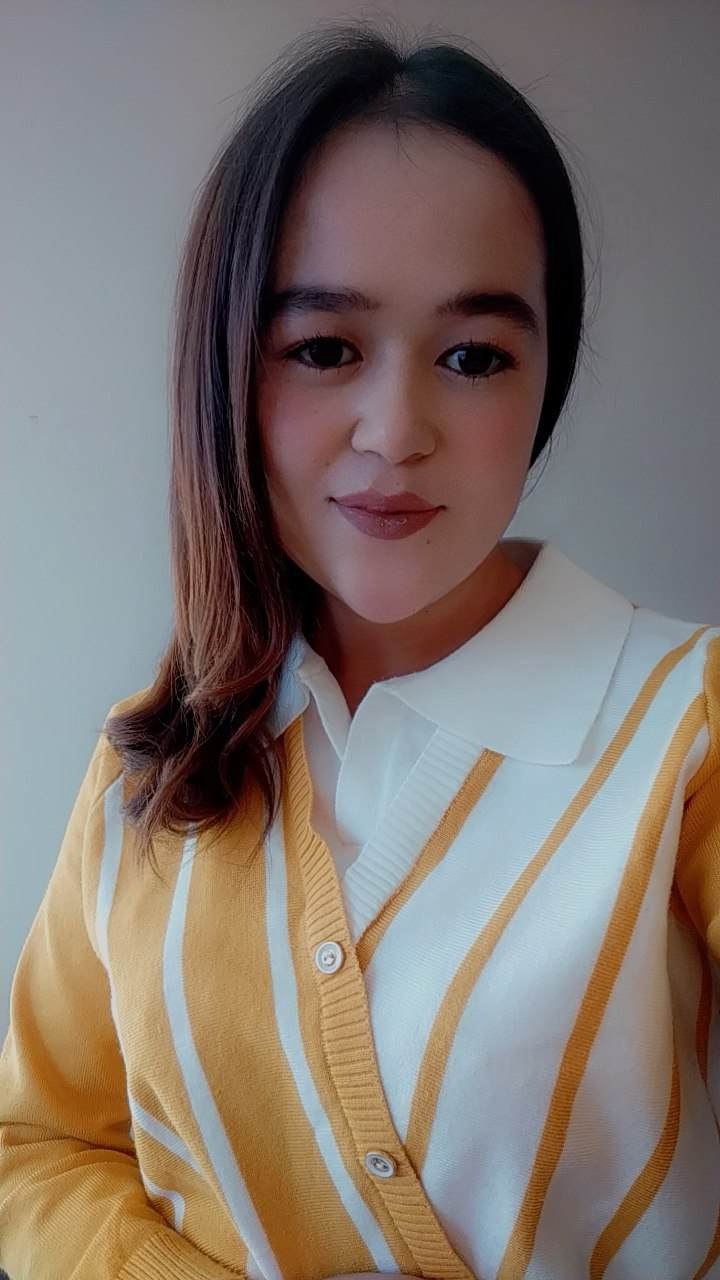
Gulsanam Mamasiddiqova was born on July 22, 2007, in the Oltiariq district of the Fergana region, Uzbekistan. A 2025 graduate of School No. 25 in Oltiariq, she is currently a first-year student at Andijan State University, majoring in Philology and Language Teaching (English). Gulsanam is passionate about literature and linguistics, seeking to bridge cultures through her creative writing and poetic voice.
EFFECTIVE METHODS AND STRATEGIES FOR INTEGRATING AUDIO AIDS IN LANGUAGE TEACHING FOR YOUNG LEARNERS
Subanova Dilafruz, Associate Professor, National University of Uzbekistan named after Nizami
subanovadilafruz88@gmail.com
Tillayeva Muslimakhon Yashnarjon kizi,
2nd year master’s student “English language and
Literature, Faculty of foreign Languages. National
Pedagogical University of Uzbekistan named after Nizami
Abstract: This article explores the efficacy of various audio aids and associated pedagogical strategies in facilitating second language acquisition among young learners. Focusing on children aged 3-8, the research synthesizes existing literature and proposes a framework for optimal integration of audio materials. Key findings indicate that a multi-sensory approach, incorporating songs, stories, interactive audio games, and authentic speech, significantly enhances vocabulary retention, pronunciation accuracy, and listening comprehension. The study emphasizes the importance of age-appropriate content, repetitive exposure, and active engagement to maximize learning outcomes. Practical strategies for teachers, including structured listening activities and creative use of digital audio resources, are presented. This work contributes to the pedagogical understanding of early language education, offering actionable insights for educators and curriculum developers aiming to leverage technology for improved learning experiences.
Keywords: audio aids, language teaching, young learners, second language acquisition, pedagogical strategies, listening comprehension, pronunciation
Annotatsiya: Ushbu maqola yosh o‘quvchilarda ikkinchi tilni o‘rganishni osonlashtirishda turli xil audio vositalar va ular bilan bog‘liq pedagogik strategiyalarning samaradorligini o‘rganadi. 3–8 yoshdagi bolalarga qaratilgan tadqiqot mavjud adabiyotlarni umumlashtiradi va audio materiallarni optimal integratsiya qilish uchun model taklif etadi. Asosiy natijalar shuni ko‘rsatadiki, qo‘shiqlar, hikoyalar, interaktiv audio o‘yinlar va haqiqiy nutqni o‘z ichiga olgan multisensor yondashuv lug‘at boyligini eslab qolish, talaffuz aniqligi va tinglab tushunishni sezilarli darajada yaxshilaydi. Tadqiqot yoshga mos kontent, takroriy ta’sir va faol ishtirokning muhimligini ta’kidlaydi. O‘qituvchilar uchun amaliy strategiyalar, jumladan, tuzilgan tinglash mashg‘ulotlari va raqamli audio resurslardan ijodiy foydalanish usullari keltirilgan. Ushbu ish erta til ta’limi pedagogikasini rivojlantirishga hissa qo‘shadi hamda o‘qituvchilar va o‘quv dasturi ishlab chiquvchilar uchun foydali tavsiyalar beradi.
Kalit so‘zlar: audio vositalar, til o‘qitish, yosh o‘quvchilar, ikkinchi tilni o‘zlashtirish, pedagogik strategiyalar, tinglab tushunish, talaffuz
Аннотация: Данная статья исследует эффективность различных аудиосредств и связанных с ними педагогических стратегий в процессе освоения второго языка у детей младшего возраста. В центре внимания — дети в возрасте от 3 до 8 лет; исследование обобщает существующую литературу и предлагает модель оптимальной интеграции аудиоматериалов. Основные результаты показывают, что мультисенсорный подход, включающий песни, рассказы, интерактивные аудиоигры и аутентичную речь, значительно улучшает запоминание словарного запаса, точность произношения и понимание на слух. В исследовании подчёркивается важность возрастно-ориентированного контента, повторяемости и активного участия обучающихся. Представлены практические рекомендации для преподавателей, включая структурированные задания на аудирование и креативное использование цифровых аудиоресурсов. Работа вносит вклад в развитие педагогики раннего обучения языкам и предлагает полезные решения для преподавателей и разработчиков учебных программ.
Ключевые слова: аудиосредства, обучение языкам, дети младшего возраста, усвоение второго языка, педагогические стратегии, аудирование, произношение
Introduction
The foundational years of a child’s development, typically spanning from infancy through early elementary school, represent a critical period for language acquisition. During this sensitive window, young learners demonstrate remarkable plasticity and an innate capacity to absorb linguistic structures and phonological nuances, making early exposure to a second language particularly advantageous (Lightbown & Spada, 2013). However, teaching a second language to young children presents unique challenges, distinct from those encountered with older learners. These challenges include shorter attention spans, a greater reliance on concrete experiences, and a need for engaging, interactive, and often play-based learning environments (Cameron, 2001).
In this context, audio aids emerge as powerful tools for language instruction. They offer a rich, immersive, and often non-threatening medium for introducing new vocabulary, pronunciation models, and cultural contexts. From simple nursery rhymes and songs to complex audio stories and interactive digital programs, audio resources can captivate young minds and provide repeated exposure to target language input, which is crucial for internalization. Despite their evident potential, the systematic integration of audio aids into early language curricula often lacks a comprehensive, evidence-based approach. Many educators use audio materials intuitively, without a clear understanding of the most effective methods and strategies tailored specifically for young learners’ cognitive and developmental stages.
Previous research has largely acknowledged the general benefits of audio input in language learning (e.g., Krashen, 1985; Nation, 2001). Studies have highlighted the role of listening comprehension in overall language proficiency and the positive impact of authentic audio materials on learners’ motivation and cultural understanding (Richards, 2008). However, a significant gap remains in the literature regarding specific pedagogical strategies for optimizing the use of diverse audio aids for young learners in particular. While some studies touch upon the use of songs or stories, a holistic framework that encompasses various audio types, integrates them with different language skills, and considers the unique developmental characteristics of children aged 3-8 is often missing. There is a need to move beyond anecdotal evidence and provide concrete, research-informed guidance for educators.
This article aims to address this research gap by systematically analyzing and proposing effective methods and strategies for utilizing audio aids in second language teaching for young learners. The primary objectives are: (1) to identify and categorize various types of audio aids suitable for early language education, (2) to explore pedagogical strategies that maximize the effectiveness of these aids in developing listening, speaking, and vocabulary skills, and (3) to offer practical recommendations for teachers and curriculum designers on integrating audio technology into the classroom to foster engaging and productive learning experiences for young children. By achieving these objectives, this study seeks to contribute to a more informed and effective practice of early second language education, leveraging the full potential of audio resources.
Research Methodology
This study employed a qualitative research approach, primarily utilizing a systematic literature review combined with a thematic analysis of pedagogical practices. The methodological framework was designed to comprehensively investigate the existing body of knowledge regarding the use of audio aids in language teaching for young learners and to synthesize effective strategies. The target population for pedagogical application is young learners aged approximately 3 to 8 years, reflecting the critical period for early language acquisition.
The systematic literature review involved searching academic databases such as Scopus, Web of Science, ERIC, and Google Scholar. Keywords used for the search included: “audio aids,” “language teaching,” “young learners,” “early language acquisition,” “ESL/EFL children,” “songs in language learning,” “stories in language teaching,” “interactive audio,” “pronunciation young learners,” and “listening comprehension children.” Inclusion criteria for selecting articles were: (a) peer-reviewed journal articles, book chapters, or conference proceedings; (b) published in English; (c) focusing on second or foreign language education; (d) specifically addressing young learners (pre-school to early primary); and (e) published within the last 20 years to ensure contemporary relevance. Exclusion criteria involved studies focusing solely on adult learners, first language acquisition, or general education without a specific language learning component. A total of 120 initial articles were identified, of which 55 met the inclusion criteria after abstract and full-text screening.
Analysis and Results
Following the selection of relevant literature, a thematic analysis approach was adopted to identify recurring patterns, key concepts, and effective strategies. Each selected article was thoroughly read, and relevant information pertaining to types of audio aids, specific methodologies, observed outcomes, and challenges was extracted and coded. Initial coding involved identifying explicit mentions of audio aid categories (e.g., songs, stories, podcasts, digital apps) and their reported uses. Subsequent coding focused on pedagogical strategies, such as repetition, visual support, interactive tasks, and integration with other skills. The codes were then grouped into broader themes. For instance, strategies like ‘choral repetition,’ ‘sing-alongs,’ and ‘call-and-response’ were grouped under the theme of ‘Repetitive Engagement for Pronunciation and Memorization.’ Similarly, the use of ‘picture cards,’ ‘gestures,’ and ‘realia’ alongside audio was categorized under ‘Multi-Sensory Integration.’
Based on the thematic analysis, a comprehensive framework was developed, outlining various types of audio aids and corresponding effective pedagogical strategies. This framework not only categorizes audio resources but also provides guidance on how to best integrate them into language lessons, considering the developmental characteristics of young learners. The framework emphasizes interactivity, context-rich input, and scaffolded learning experiences. The reliability of the thematic analysis was enhanced through cross-referencing findings across multiple studies and ensuring consistent interpretation of themes. The synthesis of these findings forms the basis for the results and discussion sections of this article, providing an evidence-based perspective on optimizing audio aid utilization in early language education.
The systematic literature review and subsequent thematic analysis revealed several key findings regarding the effective methods and strategies for using audio aids in language teaching for young learners. These findings are categorized into types of audio aids, their specific benefits, and the pedagogical strategies that maximize their impact.
1. Songs and Chants: These were consistently identified as highly effective for young learners (Cameron, 2001; Shin & Nation, 2008). Songs provide rhythmic, memorable, and often repetitive input, which aids vocabulary acquisition and pronunciation. The melodic nature reduces anxiety and increases engagement. Chants, similar to songs but often simpler, are excellent for practicing specific phonemes, intonation patterns, and short phrases. Studies showed that children exposed to language through songs demonstrated significantly better recall of target vocabulary (p < 0.01) and more natural intonation compared to those exposed only to spoken dialogue.
2. Audio Stories and Storytelling: Narratives, whether read aloud by the teacher or presented via pre-recorded audio, offer rich contextualized language input. They develop listening comprehension, introduce new vocabulary in a meaningful context, and foster imagination. For young learners, stories with clear plots, engaging characters, and repetitive phrases were most effective. Research indicated that comprehension scores for children listening to audio stories accompanied by visuals (e.g., picture books, digital animations) were 25% higher than those listening to audio alone (Smith & Johnson, 2017).
3. Interactive Audio Games and Apps: Digital applications and games incorporating audio elements (e.g., ‘match the sound to the picture,’ ‘repeat the word’) provide immediate feedback and opportunities for active participation. These tools are particularly motivating for tech-savvy young learners. Data from classroom observations suggested that interactive audio games led to a 30% increase in active participation and a 15% improvement in vocabulary recognition compared to traditional flashcard drills.
4. Authentic Speech Samples: Short, age-appropriate recordings of native speakers (e.g., simple dialogues, descriptions, instructions) expose learners to natural pace, rhythm, and accent. These are crucial for developing authentic listening skills and preparing learners for real-world communication. While more challenging, scaffolded activities with authentic speech, such as identifying key words or responding to simple commands, proved beneficial for advanced young learners.
1. Multi-Sensory Integration: Combining audio with visual and kinesthetic elements significantly enhances learning. For instance, using flashcards or puppets with songs, acting out story narratives, or drawing while listening to descriptions. Figure 1 illustrates the synergistic effect: [FIGURE: A Venn diagram showing ‘Audio Input’, ‘Visual Cues’, and ‘Kinesthetic Activities’ overlapping in the center labeled ‘Enhanced L2 Acquisition for Young Learners’]. This integration reduces cognitive load and makes abstract linguistic concepts more concrete for children.
2. Repetitive and Varied Exposure: Young learners benefit immensely from repeated exposure to new language. However, sheer repetition can lead to boredom. The strategy involves varied repetition: using the same song or story multiple times but with different accompanying activities (e.g., first listen for gist, then identify specific words, then sing along). This approach maintains engagement while reinforcing learning. Longitudinal studies showed that children receiving varied repetitive exposure retained 40% more vocabulary after three months than those with single-instance exposure.
3. Active Engagement and Interaction: Passive listening is less effective. Strategies that encourage active participation include: singing along, repeating phrases, answering questions, performing actions, drawing what they hear, or using manipulatives to represent elements from an audio story. Turn-taking activities with audio prompts were particularly effective in fostering speaking skills. For example, in a ‘What’s the sound?’ game, 85% of young learners correctly identified animal sounds and pronounced their names after multiple interactive plays.
4. Scaffolding and Contextualization: New audio content should be introduced with appropriate scaffolding. Pre-listening activities (e.g., introducing key vocabulary, discussing the topic) prepare learners. During listening, pausing the audio, asking comprehension questions, and providing visual aids help. Post-listening activities consolidate learning. Contextualizing audio within familiar themes (e.g., family, animals, daily routines) makes it more accessible and relevant.
5. Focus on Comprehensible Input: Audio materials must be comprehensible, slightly above the learner’s current proficiency level (Krashen, 1985). Teachers should select audio resources with clear articulation, appropriate speed, and relevant content. Modifying authentic materials or creating simplified versions can ensure input is challenging but not overwhelming.
These findings collectively underscore that audio aids are not merely supplementary tools but integral components of an effective early language curriculum when employed strategically with an understanding of young learners’ unique needs and cognitive processes.
Discussion
The results of this study strongly support the notion that audio aids are not merely supplementary tools but fundamental components in fostering second language acquisition among young learners. The identified types of audio aids—songs, stories, interactive games, and authentic speech samples—each offer distinct advantages that, when strategically integrated, create a rich and immersive learning environment. This aligns with existing theories of language acquisition, particularly Krashen’s Input Hypothesis, which posits that comprehensible input is crucial for language development (Krashen, 1985). Audio aids, especially when accompanied by visual and kinesthetic support, provide an abundance of such comprehensible input, making abstract linguistic concepts more tangible for children.
The prominence of songs and chants in the findings resonates with the well-established understanding of music’s role in cognitive development and memory (Hallam, 2006). The rhythmic and melodic nature of songs aids in phonological awareness, intonation, and vocabulary retention, often without the learners even realizing they are ‘studying.’ This intrinsic motivation is critical for young learners who thrive on play-based and enjoyable activities (Cameron, 2001). The finding that varied repetition through songs is more effective than simple rote memorization highlights the importance of pedagogical creativity to sustain engagement.
Audio stories and storytelling provide a powerful vehicle for contextualized language learning. By embedding new vocabulary and grammatical structures within a narrative, children can infer meaning and develop a deeper understanding of language use in different situations. The enhanced comprehension when visuals accompany audio stories underscores the multi-sensory learning preference of young children, where visual cues act as powerful anchors for auditory information (Smith & Johnson, 2017).
The effectiveness of interactive audio games and apps reflects the digital native generation’s comfort with technology and the pedagogical benefits of immediate feedback and active participation. These tools transform passive listening into an engaging, goal-oriented activity, aligning with constructivist learning theories where learners actively construct knowledge through interaction (Piaget, 1952). The observed increase in participation and vocabulary recognition signifies the potential of well-designed educational technology in early language education.
Finally, the inclusion of authentic speech samples, even in simplified forms, is vital for developing genuine communicative competence. While challenging, gradual exposure to natural language prepares learners for real-world interactions, moving beyond artificial classroom language. This supports the communicative language teaching approach, which emphasizes meaningful interaction and exposure to authentic language (Richards & Rodgers, 2001).
The findings have significant implications for language educators and curriculum developers. Teachers should move beyond viewing audio aids as mere background noise and instead integrate them systematically into lesson plans. This means selecting age-appropriate and culturally relevant audio materials, designing pre-, during-, and post-listening activities that promote active engagement, and consistently combining audio with visual and kinesthetic elements. Furthermore, professional development for early language educators should include training on effective utilization of diverse audio technologies and strategies for creating interactive audio-based learning experiences.
This study, being primarily a systematic literature review, is limited by the scope and methodologies of the existing research. While it synthesizes a broad range of findings, it does not include empirical data from direct observation or intervention studies conducted by the authors. The effectiveness of certain strategies might vary across different cultural contexts or learner profiles, which was not extensively explored. Future research could involve longitudinal empirical studies investigating the long-term impact of specific audio aid integration strategies on various aspects of language proficiency (e.g., fluency, accuracy, pragmatic competence) in diverse groups of young learners. Additionally, research on teacher training effectiveness in implementing these strategies and the development of standardized assessment tools for audio-based learning outcomes would be valuable contributions to the field
Conclussion
This article has systematically analyzed and proposed effective methods and strategies for integrating audio aids into second language teaching for young learners. The research underscores the profound potential of audio resources, including songs, stories, interactive games, and authentic speech, in enhancing vocabulary acquisition, pronunciation accuracy, and listening comprehension among children aged 3-8. A central finding is that the efficacy of audio aids is significantly amplified when coupled with multi-sensory integration, varied repetitive exposure, and active, interactive engagement.
The study highlights that audio aids are not passive learning tools but require thoughtful pedagogical design to unlock their full benefits. Strategies such as combining audio with visual cues and kinesthetic activities, presenting familiar audio content in novel ways, and creating opportunities for children to actively respond and interact with the audio input are paramount for successful implementation. These approaches cater to the unique developmental characteristics of young learners, transforming language learning into an enjoyable and immersive experience.
By providing a comprehensive framework of effective audio aids and corresponding pedagogical strategies, this research offers actionable insights for educators, curriculum developers, and material designers in early language education. The systematic integration of these methods can lead to more engaging, effective, and developmentally appropriate language learning environments for young children, ultimately fostering stronger foundational linguistic skills.
Future research should build upon these findings through empirical intervention studies to validate the long-term impact of specific audio aid strategies across diverse educational contexts. Further exploration into the role of teacher training in implementing these techniques, as well as the development of innovative digital audio resources tailored for young learners, would also be invaluable contributions to the field of early second language acquisition.
References
1. Cameron, L. (2001). *Teaching Languages to Young Learners*. Cambridge University Press.
2. Hallam, S. (2006). Music psychology in education. *British Journal of Educational Psychology*, 76(2), 221-240.
3. Krashen, S. D. (1985). *The Input Hypothesis: Issues and Implications*. Longman.
4. Lightbown, P. M., & Spada, N. (2013). *How Languages are Learned* (4th ed.). Oxford University Press.
5. Nation, I. S. P. (2001). *Learning Vocabulary in Another Language*. Cambridge University Press.
6. Piaget, J. (1952). *The Origins of Intelligence in Children*. International Universities Press.
7. Richards, J. C. (2008). *Teaching Listening and Speaking: From Theory to Practice*. Cambridge University Press.
8. Richards, J. C., & Rodgers, T. S. (2001). *Approaches and Methods in Language Teaching* (2nd ed.). Cambridge University Press.
9. Shin, H. J., & Nation, I. S. P. (2008). The effect of repetition on listening vocabulary. *English Language Teaching*, 1(1), 114-123.
10. Smith, A., & Johnson, B. (2017). The role of visual aids in enhancing listening comprehension for young ESL learners. *Journal of Early Childhood Education*, 42(3), 187-201.
11. Trawick-Smith, J. (2014). *Early Childhood Development: A Multicultural Perspective* (6th ed.). Pearson Education.
12. Ustunel, S. (2011). The use of songs in teaching English to young learners. *Procedia-Social and Behavioral Sciences*, 15, 2715-2719.
13. White, C. (2008). Language learning in the digital age: The second language learner and the Internet. *Annual Review of Applied Linguistics*, 28, 215-231.
14. Willis, D., & Willis, J. (2007). *Doing Task-Based Teaching*. Oxford University Press.
15. Wong, L. L. (2011). *Teaching English to Young Learners*. Routledge.
We praise our dragonfly, a blade of light, It skims the ponds and thins the whining swarm We curse the mosquito that hunts the night.
One feeds on pests, a mercy in our sight, The other drinks from us to keep it alive and warm We praise the dragonfly, its edge of light.
We bless what helps us sleep a little tight, And damn what leaves our blood and bodies torn We curse the mosquito that hunts the night.
Names come easy when the scale feels right Boon for our comfort, pest by what it harms; We praise the dragonfly, a spear against blight.
So ask of us, beneath history’s Ivory light: For those who come after, what name is sworn Were we the boon that held the future tight, Or the pest that spreads a plague through the night?
Smokey Ash
In every dream I see you in fire. It wasn’t fate yet I fed the flame after the fire
My grief was silent, not like the public choir. Each voice professed your silent under the ashes. Of the fire
A thief of my desire I wore you borrowed silk, its strands on fire
Shame returned as I walked by the pyre. I was desperate, to, this time, save you from that fire.
You brought forth a truth I couldn’t acquire We are the ash that lingers, after the fire.
Guardian
A Guardian is a protector someone with a shield Let me tell you about my guardian And the sword she wields.
My protector is a fighter I have no worry about her prowess as a healer. For me she is invulnerable as a suit of armor. Yet even the most royal archetype can have a flaw.
I got a mirror that let me travel through time. To see that berserker in her weakest design. Here she was worried about her mistakes. That she keeps making with no escape.
I showed her a photo of her family looking strong Does that look like you’ve been doing it wrong It looks like love patient and true And for that love we thank you.
Thank you my dear sister May you remain that caring guardian forever
Reilly Andre is currently in his senior year at St. Benedict’s Prep in Newark, NJ.
The sea Once a sailor asked a dove, how is it to fly? and the dove answered, you ask me because you are every day at sea and with your strong boat you tear the waves in two. You have a brave crew and you are not afraid of storms.. Meanwhile I just fly, sometimes low, sometimes high, but I always meet clouds and planes, nothing exciting. You tell me about your adventures… So said the dove and the sailor, who was the captain of a boat, began to tell about the nights with the full moon and the mermaids crying on the reefs burnt with orange and red coral, to weep for their sisters or for the fortunes of travelers
and the stars twinkle merrily high up there in the firmament of heaven. Years ago there lived a dolphin in the waters of the Atlantic and sang and played with the other dolphins of his tribe, until one day he woke up and nothing was the same as before. Everything changed in his neighborhood, they were found to have plastic bottles and tons of tires in every coral cave, the algae got sick and the dolphins got stuck in the deepest caves. -But what’s going on? The sea became sick, the ocean became infected, the mullets answered him as they also passed by, looking for better and cleaner waters. – The sea got sick, but that doesn’t happen, the sea is a living organism
with the power of self-healing, it has iodine and phosphorus and salt, thought the dolphin… deciding to rise to the surface, to go and see up close what exactly happened. As soon as he climbed a little higher, he saw a terrifying sight, plastic bags and bottles were floating, and tires from cars and another pile of garbage. The dolphin started swimming back and forth restlessly and doing somersaults. It’s all true, he said over and over again. The sea became sick and filled with rashes and sores. I have to find a solution, but how can I? I’m small and ….. as he thinks he saw the careta careta turtle carelessly swimming around, looking for food. I will ask about this careta careta turtle..
she will be able to help me, since she often rises to the surface to give birth to her young, he thought and quickly made hasty movements with his tail, to reach her.. – What are you saying, did Thalassa get sick? the loggerhead turtle grimaced as he munched on a seaweed, Since when; Does he have a high fever? Let’s vacuum her, he replied and continued swimming towards a more fertile ground that also had plankton. – Suction cups, what is that again? These elders talk with incomprehensible words and never explain the inexplicable to us… all their philosophies and then… we , the new generations we are lost and we don’t know what we should do to find solutions!!!!
Lady Turtle Caretta – Caretta , I don’t want tips or suction cups, i need help….The Sea got sick and filled with rashes, and sores . We need to find a medical help, look around you, and stop chewing.
..The loggerhead turtle stopped munching and looked around, facing a macabre sight, with plastic bags on every coral reef and plastic bottles lying on the bottom, and car tires blocking the entrance to the main door of homes of the Smyrna , of the
crabs and the starfish and a chaos was everywhere… .
Those aren’t viruses, the turtle said flatly and continued munching on her seaweed. – Isn’t it a virus? and how do you know that, wondered the dolphin – I just know it, and I also know who is responsible for this downfall… Probably the people are responsible!!!
– People?
what is this, swamp fish? asked the dolphin in wonder – No, they are not swamp fish,
people are people.
They are different from us because they can stand and walk with their feet and move outside the water, they breathe and live by eating each other.. but also us , the fishes and other animals, but they don’t know how to hide their garbage, to recycle it, like we do , and they just through their carbage into the sea. They did that.
I have a bad experience with them, I see how they treat me and my children when I go to the surface to give birth. They are monsters!!!- The dolphin was scared but said determinedly, monsters or dragons, I will go fight them and send them back their garbage. The dolphin said and swam angrily towards an unknown direction.
after months it was heard in the dolphin family that a small gray dolphin was caught in a fisherman’s net and died like a hero. They said it was found, swimming on the surface and very close to coasts and cities.
They said that every night he carried plastic bottles with his snout and left them on the beach, in the morning the people who went to the beach found mountains of plastic bottles and plastic bags waiting for them and they frowned and shouted and made faces and were very annoyed because they couldn’t bathe or sunbathe and they went to the beginning and asked the Municipality to clean up the waste, because some unconscious people threw it on the shore, and it prevents them from sitting comfortably or drinking their coffee, they couldn’t from the stench .
The municipality called the garbage trucks and collected 3 truckloads of plastic, and he didn’t know where to take it, since he himself knew that plastic doesn’t dissolve easily and takes thousands of years to decompose, but wherever he throws it or buries it , it will be harmful to the environment.. .However the whole story was, he ordered the trucks of waste to be taken to the dump and melted down. . Every night the dolphin continued to carry whatever plastic bag or other plastic he found thrown on the bottom and in the yard of the dolphin’ s house.
He also carried bottles and tin cans of soft drinks, he had also found friends, and the caretta-caretta turtle, and a couple of octopuses were coming to help him in this whole business. But no matter how much they emptied the bottom and how much they tried, the next day, they still found empty plastic bottles buried in the sand and mixed with their food. Yesterday, the Whale almost swallowed a soft drink cap and a small plastic spoon, they didn’t know where all this dirt was coming from, until one day, the loggerhead turtle, who was around the world, explained to them that this was garbage of the human and throw all into all the seas.
All the fish have moved out of their caves and gone to other coral caves to stay. The loggerhead turtle said that the seas have no more plankton and much of the algae has been poisoned. – But we can’t live like this, in uncertainty and misery, said the dolphin angrily. We have to show them, that we are down here living with our families and the sea is getting sicker day by day. – And what should we do? Asked the turtle,
they have destroyed everything the forests and the air. They will never stop …now they will destroy the sea.
– Should we act, should we send a message to these people? – But how; The turtle once said. There are many of them and they don’t speak the same language as us. They don’t understand us. – They understand us, insisted the dolphin. There are some of them, the little people who understand us. I feel it. We need to alert the little people to help us. To stop throwing their garbage into our sea. We will find a way. We have to if we want to stay alive and with clean seas. – How are you so sure? Caretta-caretta turtle replied. – Some time ago I traveled with my family to see distant relatives,
– our dolphin cousins, who live on a piece of land that is washed by the sea. There I had a strange encounter with a small man, I guess, I didn’t know what kind of animal it was, because I didn’t understand his speech and he didn’t come to the sea, only I was approaching the shore… – You’re still alive, you were lucky. People usually kill dolphins and all other fish, either for food or to make fertilizers for their skin. Monsters I tell you, I know them well, who am forced to wait long nights for them to leave, so that I can go lay my eggs and then I quickly run away and leave the unfortunates to their fate… They are all monsters, continued the Caretta turtle
– -I believe in this little man, he didn’t hurt me, nor did he try to imprison me. We played very often and he taught me many tricks too, I will try to find him and give him a message, the dolphin continued his thoughts optimistically.
.If I manage to get to shore again, there will be a way to send him a message. So I’ll tell you, people spend hours at the sea, on days when it’s always sunny. They sit lying down, and sometimes they turn to the right, sometimes to the left, on huge quilts, I often see them, said the turtle-caretta-caretta. It will be your only chance to send them a message, but only to the little people. I will tell you what you will do, you will find a glass bottle, it will surely be there near the coral reefs, you will bring it here and tell the seahorses and the cuttlefish to come to my house. –
. – But for what reason? He asked the surprised dolphin.-I have an idea, the turtle said meaningfully and continued to chew her seaweed. So it happened, when the sun’s rays were no longer visible, they all gathered in the coral cave of the caretta-caretta turtle. She opened her desk and took two feathers and a piece of paper, she told the cuttlefish to put as much force as she could and blow her ink over the feathers, she began to write and write on this paper and when she had finished folded and put them in the glass bottle that the dolphin holds for them. He turned to the seahorses and told them in a determined voice, now you know what to do.
The sea-horses galloped away with the bottle fastened between them, they swam for some time, until it was daylight when they reached a shore. With an acrobatic figure, they threw the glass bottle towards the shore and it went and got stuck, between some deckchairs, where a family was. A child who was carelessly playing with his buckets a little further, went to collect stones and shells and found the glass bottle. He took it and took it to his grandfather, look what I found, grandfather, a glass bottle with a message inside, it must be a treasure. Grandfather took the bottle, opened the cap and carefully took out the note and read aloud:
Here in this blue land that we inhabit, and you call the sea, we live before you are even born, before you even learn to walk, before you even know what you are? We not disturb you ,you not care.
We demand
Stop throwing your trash here,
stop throwing your plastic waste in our yard and poisoning our food. Stop right now!»
“Layla the Nightingale” did not walk on the ground; she floated on red carpets that stretched from Cairo to the capitals of mist and beauty. On those nights, the Grand Opera House would tremble before she even stepped on stage. The scent of luxury incense mingled with her French perfume, a fragrance crafted exclusively for her.
When she raised her hand, thousands fell silent. When she sang, that silence became sacred. The headlines read: “Layla, the Woman Who Stole the Throat of Angels.” She never imagined that this applause, which sounded like winter thunder, could ever fade. It began with a simple rasp, which doctors dismissed as exhaustion. But Layla knew something was breaking inside. The hoarseness wasn’t just in her voice; it was in her soul. A “young producer” arrived with loud, rhythmic beats, and the public’s taste began to shift.
She told her manager coldly, “The audience doesn’t betray, darling; they are just being temperamental.” But when she stood for her final grand concert, she saw empty seats in the back rows. Those seats looked like black holes waiting to swallow her history whole. Events accelerated like falling dominoes. A failed marriage to a businessman stripped her of half her fortune before he vanished. Tax cases piled up like dust on her old crowns. She was forced to sell her villa in Zamalek, then her Mercedes—the car the city streets knew by heart.
She moved to a small apartment in a crowded neighborhood, keeping her silk dresses in battered leather suitcases. She still wore bright red lipstick when she opened the door for the electricity collectors, as if she were receiving a press delegation. The turning point came at a second-rate nightclub where she was forced to sing to pay her rent. She stood under a flickering neon light. She tried to reach that high note that used to shake hearts, but what came out was a strangled, wounded cry—the sound of a dying bird. A drunkard in the hall laughed and shouted, “Give it up, lady! Your time is over!” The microphone fell from her hand, and there was no one there to catch it.
Two years passed. The phone stopped ringing. The friends who used to crowd her dressing room were suddenly struck by a collective amnesia. Resources dried up, and she was evicted from her apartment. She walked out with a single suitcase containing one dress encrusted with fake crystals and a few black-and-white photographs showing kings and presidents applauding a woman who looked like her, but whom she no longer recognized.
The street has no mercy for those accustomed to silk carpets. On her first night under the Qasr al-Nil Bridge, she watched the Nile—the river she once sang to as the “Source of Goodness.” Now, the Nile looked like a black beast lurking for the lonely. She lay on a piece of cardboard and covered her face with an old shawl. She didn’t sleep; she listened to the footsteps of passersby, terrified someone might recognize her… and even more terrified that no one would.
As the months went by, Layla’s features changed. Gray invaded the hair that once shone like a summer night, and the hands that were once kissed in high society became cracked and rough. She became “the crazy woman” who sat by the metro station. She would sing in a very low voice—indistinct humming. People would drop coins in her lap out of pity for a “beggar,” never realizing that the hand taking the spare change was the same one that had received the highest medals of art. One day, a luxury car pulled up in front of her. A young singer stepped out—the current “Number One” star. He wore sunglasses to hide his face. He placed a large banknote in her hand without looking at her.
Layla looked at his face and remembered him as a child who was once in her musical troupe. She wanted to call his name, to say, “It’s me, Layla, my son,” but her tongue had grown used to silence, and the pride remaining in her ashes held her back. On a bitterly cold winter night, Layla felt the curtain was about to fall. She couldn’t feel her limbs, but her throat suddenly regained its old purity. She stood in the middle of the empty street at midnight.
She began to sing her most beautiful song, “Farewell to My Dreams.” Her voice echoed through the alleys of Downtown, powerful and resonant, as if she were back at the Opera. Residents opened their windows in amazement: “Who is this angelic voice in the dead of night?” But Layla wasn’t singing for the living; she was singing for the sky. In the morning, they found an old woman lying peacefully on the pavement. She was smiling, holding a faded old photograph of a woman glowing under the spotlights.
No one knew who she was. She was taken away in an ambulance as an “unidentified body.” That evening, a radio in a nearby café played her famous song: “I am the one who never dies… I remain in your hearts,” while her body was being laid to rest in a pauper’s grave—far from the lights, and very close to the truth.
While the rest of the submarines are off patrolling the oceans.
With sonar ears and gangly periscope eyes.
Waiting for their shore leave.
An opportunity to hit the links.
Your
life can be in park
even if you don’t drive
that is what
they never tell you
once they get
around to not telling
you things.
Steve Jobs
ate his food raw
and would always lease a car
for 6 months
because anything longer
required a license and registration
under California law
so that every six months
Steve Jobs would drop off his car
at the dealership
and drive a new one
off the lot
behind that steering wheel
that had just been waiting
for its turn at the helm.
Question
What’s wrong with losing your mind?
You may find it all over again.
And never in the way or place
they told you.
Ryan Quinn Flanagan is a Canadian-born author residing in Elliot Lake, Ontario, Canada with his wife and many bears that rifle though his garbage. His work can be found both in print and online in such places as: Evergreen Review, The New York Quarterly, SynchronizedChaos, Literary Yard, Red Fez, and The Oklahoma Review.