


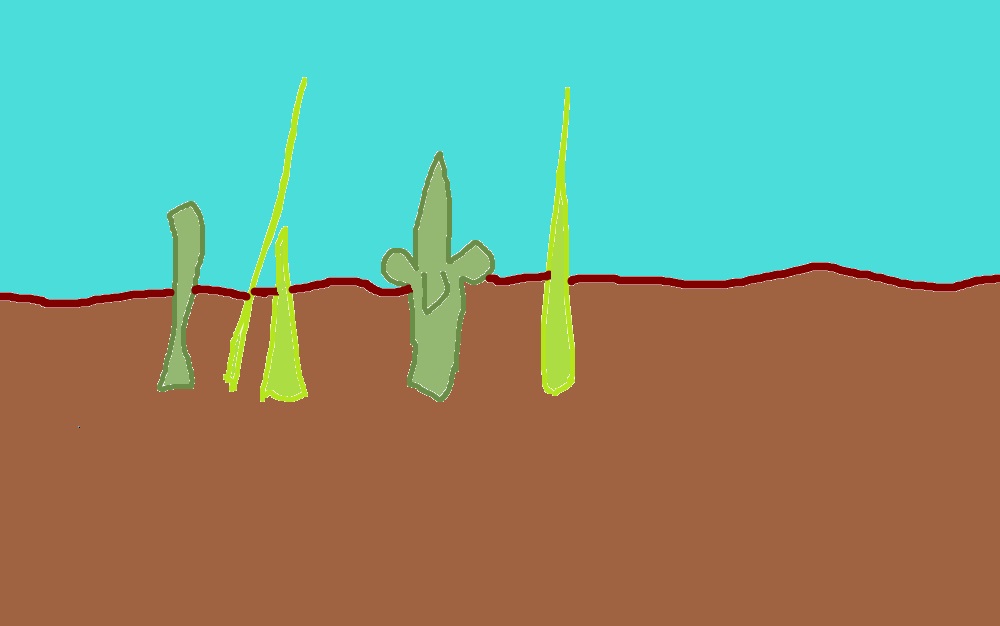

THE UNCHANGING CHANGE
This land, the one, you used to reside in, who do you think, gave it for free? everything free, the air, the wind, the sky, the rain, the bloom, the feeds, yet you thought, you are powerful enough to defeat me, enough to dictate everything, just because all these became a reality like de ja vu, you really think it shall be like that, how futile of you lunatic and psychotic being, invincibles yet imbeciles. so it shall be, all you have designed and dictated? Then you must be the god, the god(s) you pray tol, now the god is you, do your best to be the god or perhaps the dog. please reflect the god in you, you damn Abaddon, Abram cove, let me tell you, you are the god(s), but none shall have recognized, excepts of pious, the purity levels, is nowhere closed to the human touch, your arse-crawler, passed your levels. So please be the god now, am tired of your creative stupidity, you think you can kill me? Me of all people? Me that’s me? Me that’s you? Me is the power, the pen, you can’t know forever, for I can’t let you, please look forward and be in solace, Abyssinia.
You all, we are toxic both of us, including me, because destiny is the bad bitch, she chosen me nonetheless, the cupper, now it changes to cunning man, so you all blind cupids, open your damn useless eyes and see me, I am here, your closest at that, yet, I dare you to tempt with me.
You literalist, so stupid, coward of a being, few exceed my crunch test, I gave you all, this kind of cupboard love, but failed, majority of you does, many follows the road of destructions of ashes, I tried my best with you, I don’t care now, where you choose to be,” let the damn ship sinks” everyone shall escape or die, the death itself is brassed off, and like a brass knocker, it awaits you.
Bilatu Abdullahi is a Final year student from the department of biological sciences, Gombe state University. She was passionate about writing poetry as her hubby despite being so good in her sciences. Her dream is to bring change to her community through her pen.
Bloom
Burning up and down
Like the highest peak can’t be touched down
My dolce et petition
My sweetest devotion
Cracked open
I made my religion break open
Through cracks and bones
Amongst midnights and alleyed bones
Little fragile heart at my doorstep
Visiting my underworld stairway
My heavenly coldness
Crowns in my living room way
The porched open house
Little graffiti artistic pursuit
Of my hotspot on the opened door
Aside from the bottom line
Made my phone book worthy
Like living waters
The transparent ghost
My front porch open window
Burning lilies hanging open
My superbloom my resilient religion.
Contribution of spiritual leaders to the development of India
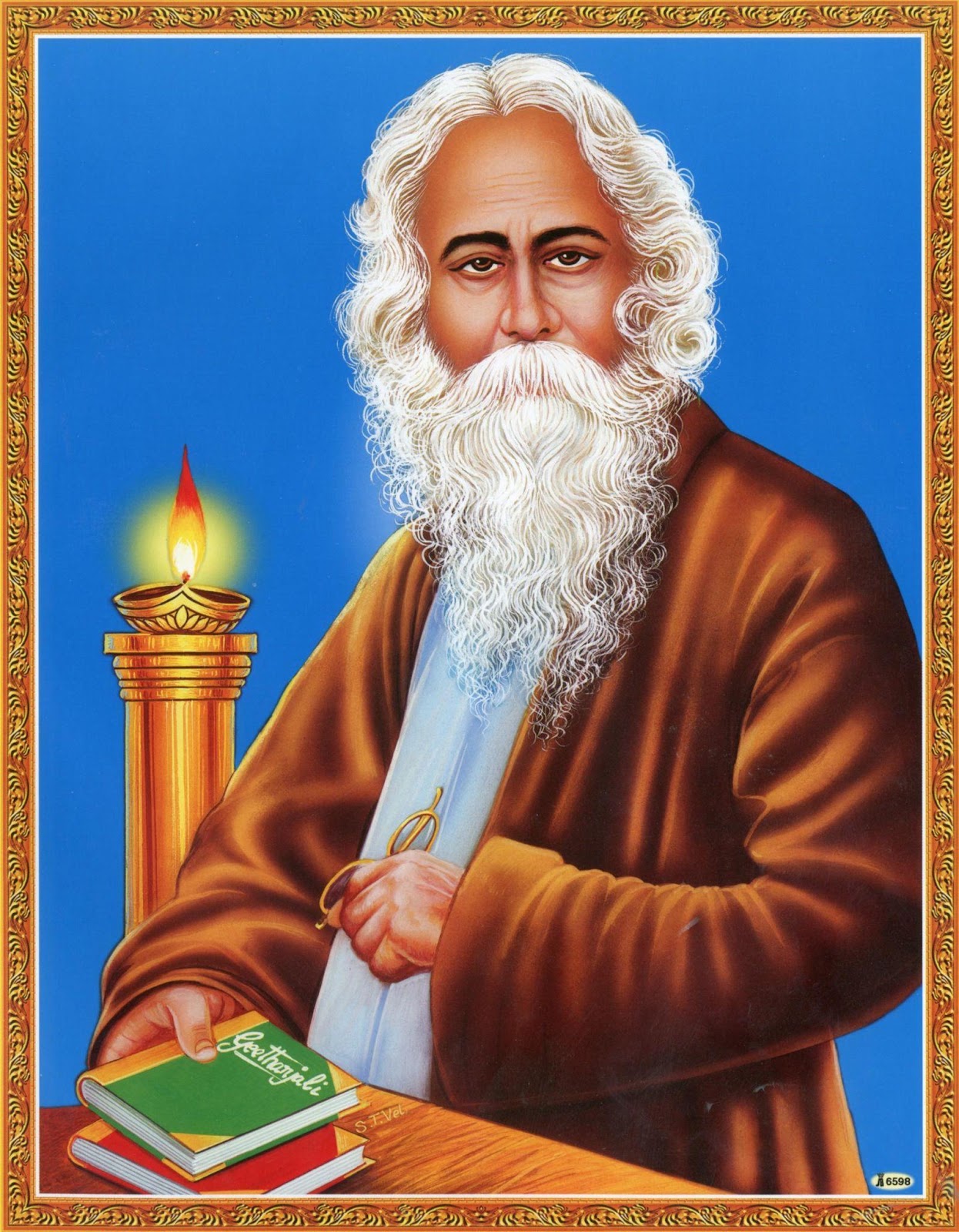
Adherent to spiritualism and mysticism, Rabindranath Tagore, the Nobel literature laureate of the Renaissance Bengal is famed to be enthroned as the Indian Shakespeare. Literary acclaim and widespread popularity of visionary Rabindranath Tagore’s incredible contribution as a mystic can be a wondrous marvel that strikes emotional socialists’, sensational spiritualistic, sentimental moralistic and humane philanthropists’ psyche from orientalism to transatlanticism. As luminary, Graham Greene, the twentieth century English writer and journalist, proclaims of Tagore’s majestic magnificence and glorious brilliance of the visionary eyesight symbolic to ‘Chesterton’s bright pebbly eyes’ ;so hithertofore therein is indeed indicative of the vindictive testament exclaimed by poetic lines of Even Anna Akhmatova. Even Anna Akhmatova’s admirable appeal for translation of Tagorean canon springs from exaltation of “that mighty flow of poetry which takes its strength from Hinduism as from the Ganges, and is called Rabindranath Tagore’’. Rabindranath Tagore’s mysticism and asceticism surmounts the Indian myths and legends, folklore and folktales, hymns and lyrics, vernaculars and dialectics, narratives and discourses to a greater extent ascension and publicity amidst William Butler Yeats and Ezra Pound.
Rabindranath Tagore’s philosophical theology centers heralding non-sectarianism and communal harmony and humanistic peaceful dwelling influencing the different parts of the Indian cultural background. A sage-like visionary poet whose existential influence for a millennia amongst Europeans as Schopenhauer in the New Testament critically appreciates, “A Tagorean Christ transforming morals into asceticism, its pessimism and its avatar.”
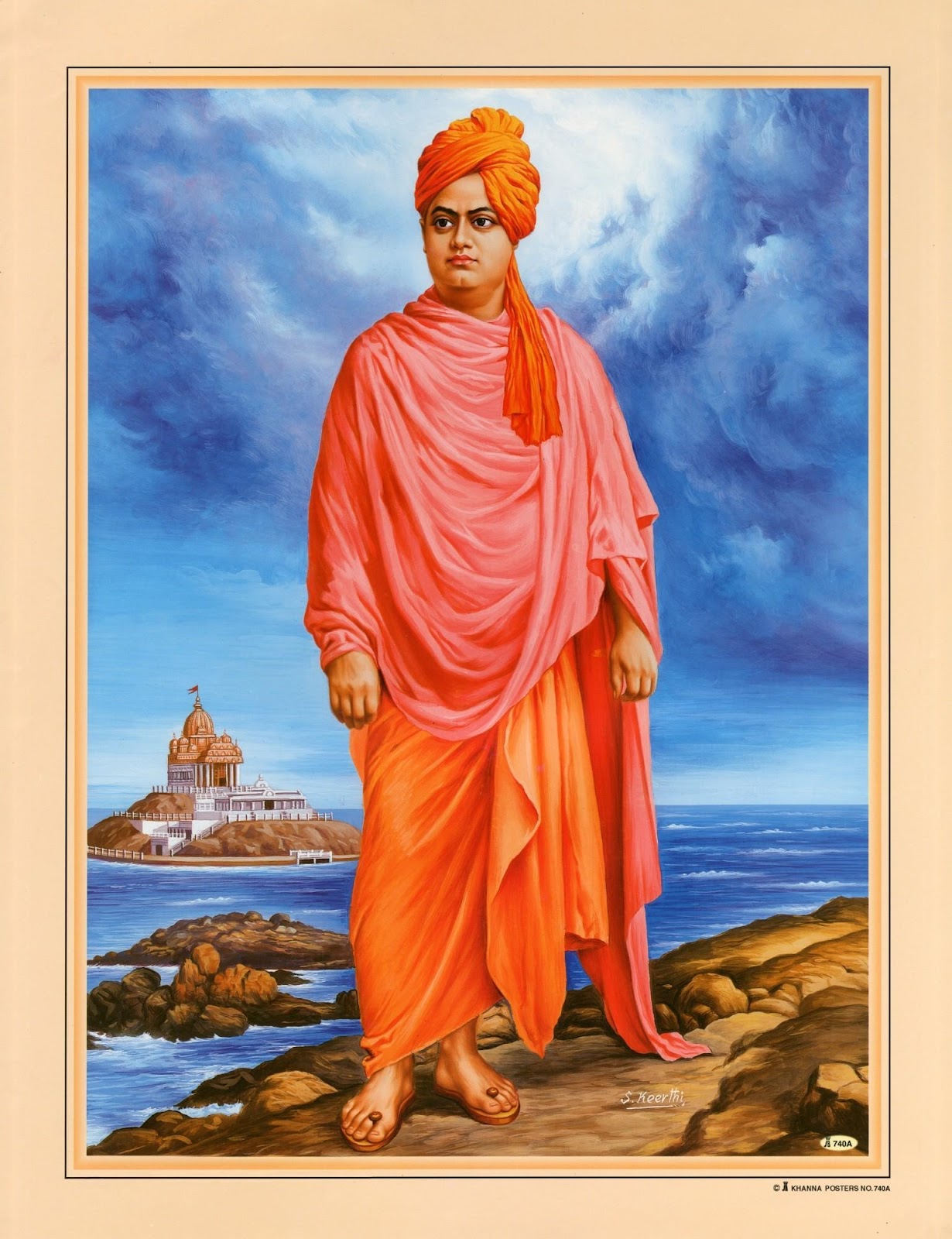
The Sanyasi of high intellect, action and devotion ennobled Rabindranath Tagore to encourage inspirational reads which have nothing pessimistic but optimistic guidelines in harnessing knowledge of India: “divine unity of existence and unity in diversity”. Subhas Chandra Bose’s enthroned Vivekananda as the spiritual teacher and Mahatma Gandhi hailed enshrining Viekeanada works to be a treasure trove in reawakening feelings of patriotism, nationalism and world peace to a thousand fold. Spiritual resources of Vivekananda have uplifted motherland India and her fellow citizenry to be safeguarded in the brink of disillusionment :harbinger of challenges to circumstantial debacles hindering Hinduism and spirituality.
Motherland India is the destination of harbourage and anchorage to multifarious backgrounds of microcosmic racial ethnicities, diversified culturalism, egalitarian and platonism to Swami Vivekanada-the cyclonic monk of Hinduism. Vivekanda exults in commendation and applauds of varieties of socio cultural linguistic and diasporic communities of faith in prevalence of mutual tolerance, great heartedness, broad-mindedness, liberal understanding, acceptance of brethrenship and fraternity’s fellow-feelings. Destitution of privation and refugeeship of geopolitical crises arouses empathy and sympathy to this nobly humanistic personae and, therefore, he pledges destitute and refugees rehabilitation within the society: enlightening society enlarging provisions, hearths and altars to be bereft of exilement, banishment, alienation, solitary confinement or forlorning isolation. In this regard, communalism, superstition, fanaticism, fundamentalism and debacle of social evils should be promptly and vigilantly eradicated with valiant resoluteness and brave-heartedness. “God”, “Allah”, “Jehovah”, “soul”, “love” are integrated in unison by sermoniser Vivekanada’s preachings universalistic genesis of Hinduism integrated in unison by sermoniser Vivekanada’s preachings universalistic genesis of Hinduism. Referring a letter to the famine devastated Muslim aborigines Vivekanada imperatively advised Swami Akhandananda in vouchsafing and safeguarding the Muslim community of the Murshidabad orphanage against religious conversion.
Espousal of the cradle tales of Hinduism embedded in the civic and national lives the charismatic quintessence of being a Hindu refers to “A Hindu is a person who regards this Land of Bharatvarsha from the Indus to the Seas as his Fatherland as well his Holy Land and the land of his religion.” Awakener of the soul and the wayfarer of Northern India Swami Vivekanada is reportedly to have seen by Sister Nivedita in utmost reverence and solicitude of aboriginal nativity in ascension of foreign climes and environs. “…I had seen him in India, dressed in the two garments of simple folk, sitting on the floor and eating with his fingers, so, equally without doubt or shrinking, was his acceptance of the complexity of the means of living in America or France” In today’s era of digital and virtual live sessions yoga and meditation transmutate with variations in their clothing garbs of their closets and wardrobes. These boisterous folks have adopted their meaning of lifestyle concerned with forks and knives in the very transcendental English society and the westernized culture. To Vivekananda, the love of Hindutva is pristinely engrossing in embellishment of the Divine within the self in case of different socio-economic strata prevalent; ie aristocratic multimillionaire or imperialist and exploited or oppressed. Heralding humanity and harnessing humility Vivekanada disgraces and disdains apartheid of race culture and upholds the divination of spiritual beings as ancestry originating in the white-skinned Aryan, yellow-skinned Mongolian and black-skinned Negroid.
Viveknanda’s motherland India is the cavern wonderment of meditation and reflection which is nowhere else to be found. “Oh I know I have wandered over the whole earth…but in India I have looked for nothing save the cave in which to meditate!” “But the sannyasin no longer needs to worship, or to go on pilgrimage, or perform austerities. What then, is the motive of all this going from pilgrimage to pilgrimage, shrine to shrine and austerity to austerity?” Whs- can this heavenly idealogue be chanted in a dialogue amidst prophetic and visionary Rabindranath Tagore during the later stages of his life in Victoria Ocampo’s hearty hearth? Vivekananda’s Victoria Ocampo foils as orchestrated by the portrayal of a ‘Western Woman’[Sister Nivedita] in whom, charity’s endowments bestowal ensues with happenstances of observing ‘’…that quiet giving, always to the right person in the right way, at the right time, and never making a mistake…”
Starstruck, awestruck and wonderstruck Swami Vivekanada and Rabindranath Tagore voyagers of the distant starlit sea in pursuit of charismatic spiritualism’s quest. They have a glare of serendipity and sanguine to pour into the wounded bosoms the love of universal brotherhood, fraternity of siblinghood and unconditional camaraderie.
The High Priest of Internationalism and the One Man Ambassador of Culture, Tagore’s indianness is allusive to the ascetics with the abolition of disunity…and, therefore, from bridging to conquering the hearts of the people… between the East and the West, old and new, nationalism and internationalism, knowledge and power, art and literature “Honeyed the heavens,honeyed the dust of the earth, this is the great fulfilling chant of life, I have received and treasured in my heart.” Visiting the Buenos Aires isles and seashores, seafaring hospitality of Victoria Ocampo, the devoted admirer of the wayfarer traveller, Rabindranath Tagore’s Sadhana, proclaims, “Eyes see only dust and earth but feel with the heart, and know pure joy.” Heraldry of fortuitous bond evolved between the mindscapes of Asian and Latin American landscapes through prophetic sage or visionary ambassador or ascetic diviner Gurudev Rabindranath Tagore and the ambrosia enchantress Argentina’s lady. And the end of the discussion of spiritual contribution in the development of India truly enchants, enlivens, enlightens, entices, engrosses the gentry bereft of bigotry and sectarianism in awed admiration of faith: Donning a prophet’s robe and preaching sermon from the pulpit Tagore’s advises “Faith is the bird that feels the light when the dawn is still dark.”
To the spirit of spiritual Indianness depicts the universal outlook of liberal mind and tolerance of dissent, of the unfamiliar and even of the wayward and sympathies transcending race, religion and nation. Penchant of loves leads to triumphanal Bhakti since Swami Vivekananda implies, “Books and learning, yoga and meditation and illumination- all are but dust compared with love.” Love withholds the vainglory and prompting austerities of ceremonials but love bestows relief and charity to feed the starving masses or famine afflicted downtrodden. In Vivekananda’s repertoire, spiritual enlightenment and dreamy mystic benevolence envisionings to the ascetic upliftment ablaze luminosity in these quotable dialectics, “I love the poor, the ignorant, the downtrodden, I feel for them— the Lord knows how much… I do not care a fig for human approbation or criticism.” and this declarative further reechoes Vivekanada’s letter to the swami famine of Rajputana [“No god will come of sitting idle and having princely dishes and saying “Ramakrishna, O Lord!.. You must give your body, mind and speech to the “welfare of the world.” You have read—… . God, look upon your father as God”—-but I say—”the poor, the illiterate, the ignorant, the afflicted let these be your God.” The wonderful saints or avatars encompassed Hindustan to alleviate the affliction and elevate the freedom strugglers “through the powers of insights into the human hearts and lifted it off”.
Further Reading and Bibliography
1. An Aspect of Tagore’s Criticism In The West: The Cloud of Mysticism, Asian Studies Center, Author: Nabaneeta Sen, Michigan State University Publishers, Source: Mahfil 1996, Volume. 3 No. 1, pages: 9-23
2. West Meets East: Tagore On The Banks of The River Plate, Author: Victoria Ocampo, Source: Indian Literature, April-September 1959, Volume 2, No. 2, pages: 13-22
3. Tagore: The Oriental and Modern, Author: Prabhakar Machwe, Source: Indian Literature, September-October 1976, Volume 19, No. 5, pages: 80-94
4. Guru To The World The Life and Legacy of Vivkenanada, Ruth Harris Winner of the Wolfson History Prize, Professor fo European History University of Oxford,
4. Rabindranath Tagore, Authors: Maria Renee Cura, Source: World Affairs, The Journal of International Issues, Volume 9, No. 2, Summer 2005, pages: 131-139, Kapur Surya Foundation Publishers
Welcome to February’s issue, the Literary Browsing Experience.
First of all, Synchronized Chaos stands with all those affected by the recent earthquakes in Turkiye and Syria. We encourage all who are able to contribute to the relief efforts, which you may do through the Red Crescent or other worthy organizations.
Also, please come out to Synchronized Chaos Magazine’s in-person event, held during the Association of Writing Programs’ conference, Thursday March 9th at 6pm at Ada’s Technical Books in Seattle.

During the pandemic many of us came to miss browsing in bookstores and libraries. The experience of scanning and flipping through books that we wouldn’t ordinarily order for ourselves, but which catch our eye and we find ourselves fingering, flipping, reading, and then checking out and buying.
This reading creates an ‘audible browsing’ experience by presenting readers who are published authors in a variety of genres. This includes mystery, romance, poetry, memoir, drama, literary and international fiction.
Also, our friend and collaborator Rui Carvalho reminds us about our Nature Writing Contest for 2022.
This is an invitation to submit poems and short stories related to trees, water, and nature conservation between now and the March 2023 deadline. More information and submission instructions here!
Now, for February’s issue. We’re experiencing a visual browsing experience right here in our magazine, perusing pieces of different genres and styles in this combined issue.
Farok Faisal encourages us to cultivate our lives as if they were gardens.
Jeffrey Spahr-Summers’ poetic speakers seek both liberation and sanctuary, and he highlights ordinary life into signboard-esque posters in his photography.
Z.I. Mahmud highlights the role of kindness in Homer’s Odyssey, while Rakhshona Akhmedova poignantly celebrates a friend’s kindness to her puppy.

Laura Stamps explores the potential and the limits of the human capacity to forgive, while Taylor Dibbert expresses the hope that can come through simply moving forward with one’s life.
Obirija Somtochukwu speaks eloquently about the nature of grief and of wanderlust. Aasma Tahir contributes elegant prose on love, nature, emotion and Romantic literature.
Gaurav Ojha urges us to live with a balanced perspective, while Osieka Osinimu Alao finds an entire cosmos and all of human history within his solitary bedroom.

Ari Rice imagines himself existing simultaneously as people of different ages within a single photograph, while Gerry LaFemina waxes nostalgic about the Beatles. Richard LeDue draws on artistic metaphors to highlight our mortality and the brevity of our lives.
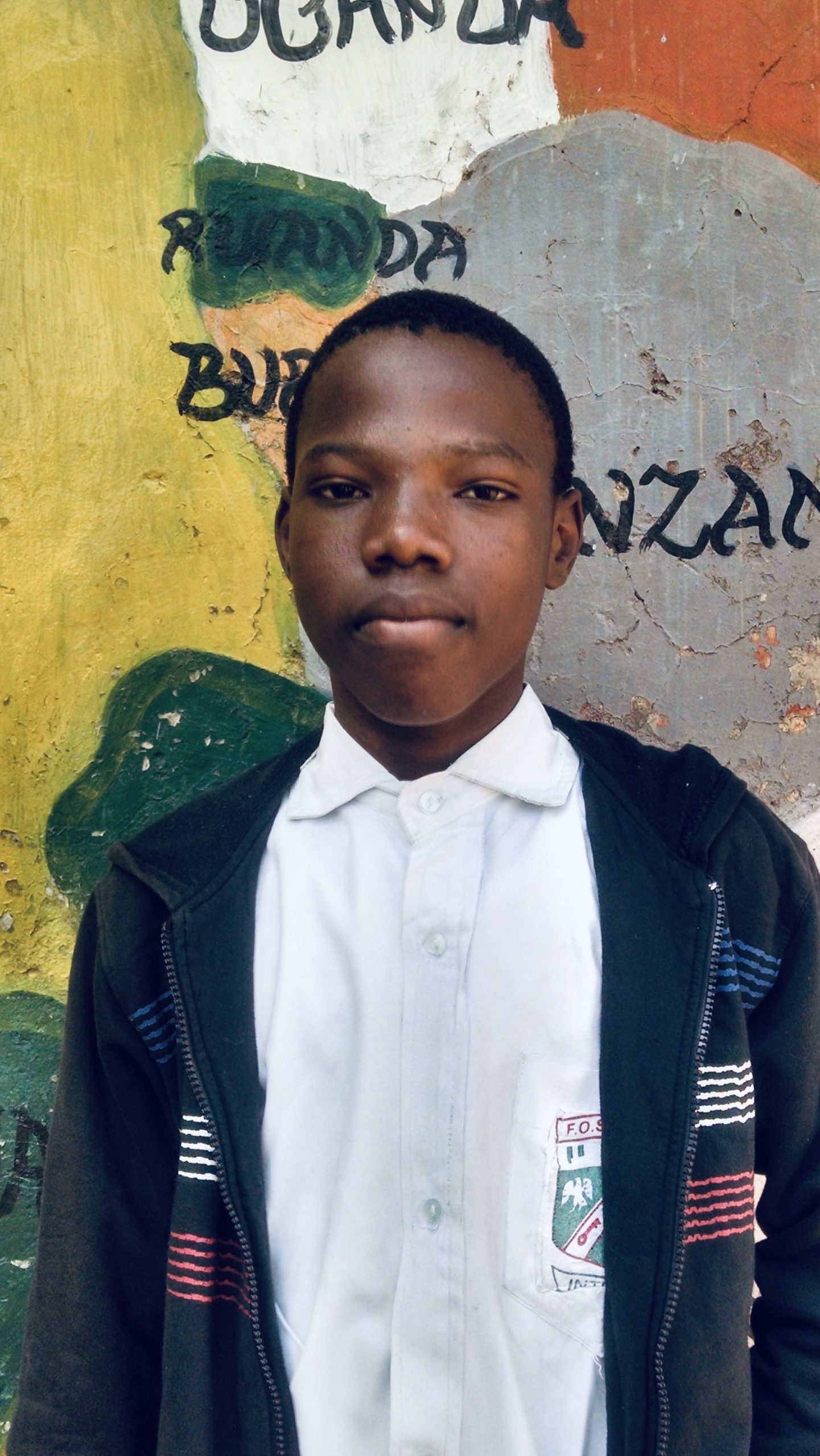
J.J. Campbell probes how much we can truly change through the generations, what we keep and what we can hopefully leave behind. Nahid Gul celebrates the joy of sharing writing with the generations who come after us. Starlie Tugade relates the thoughts and feelings of a young immigrant woman reflecting on the lessons of her past. Emmanuel Umeji urges youth to learn from their elders and not be cocky about growing up too fast.
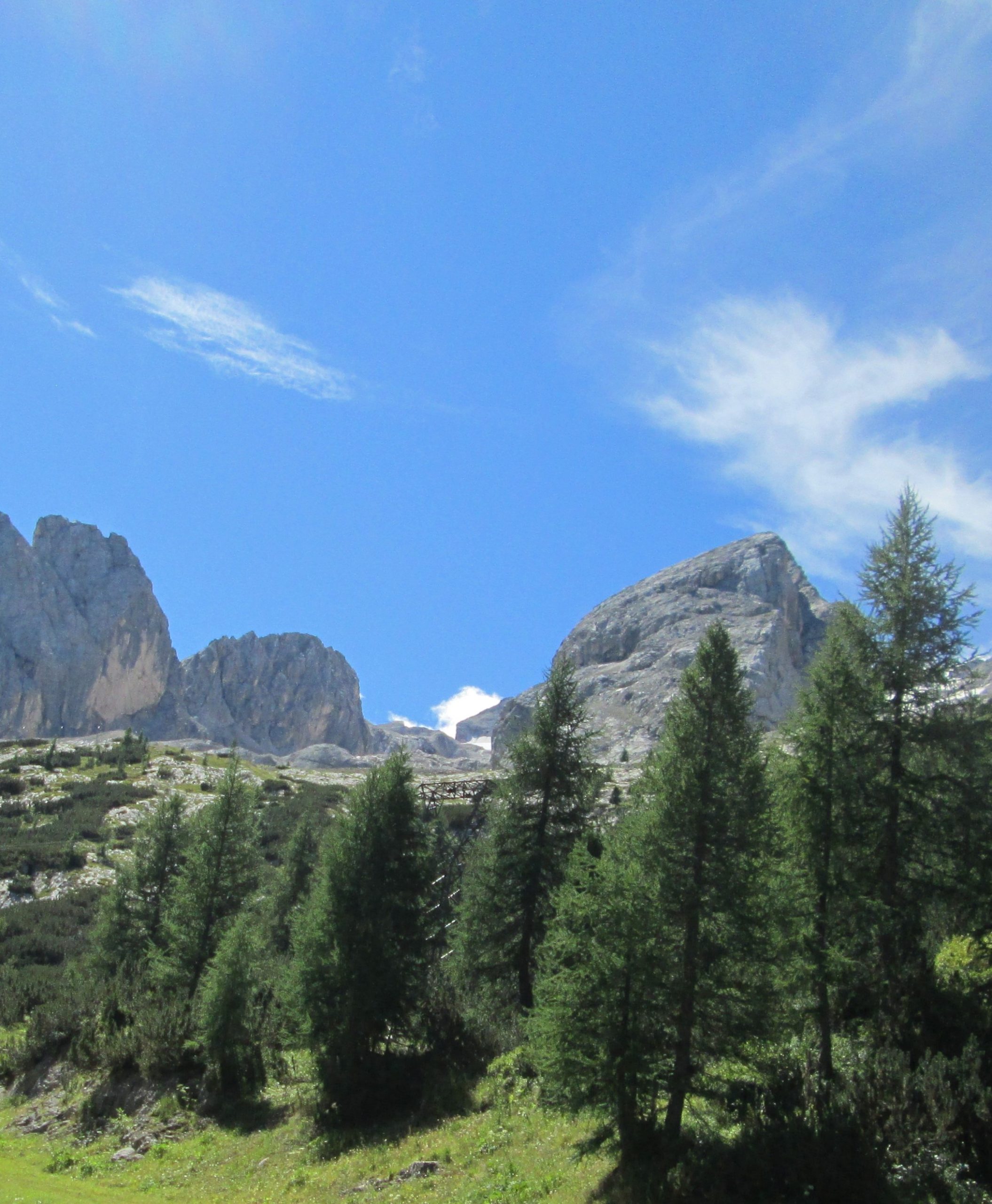
Daniel De Culla talks of aging in his signature earthy, physical way. Ian Copestick finds a form of faith in the renewal of blossoms in the spring, while Mesfakus Salahin speaks of the spiritual renewal he finds in nature.
Channie Greenberg captures horses at gentle moments of contemplation. Mahbub Alam writes of the power of the natural world to restore our perspective when we get caught up in human stresses.
C.L. Liedekev speculates on his and humanity’s future as he looks into water. Will we be devoured by sharks or simply drift away along the river?
Maurizio Brancaleoni renders a tourist’s visit to Italy’s historical relics into its own form of art, while Petro C.K. harnesses predictive text to process human history and nature. Andrew MacDonald turns to state parks as a metaphor for the well-meaning desire to preserve some of our ceaselessly changing world. Ryan Quinn Flanagan contributes his signature humor to probe our human condition and frailty.
Irene Koronas forges poetry as if it were metal in a blacksmith’s foundry. Daniel Y. Harris probes Wittgenstein’s philosophy as if Derrida were a hacker presenting his ideas through malware. J.D. Nelson crafts phrases to highlight our often fragmentary, incomplete and mysterious view of our worlds.
Alan Catlin crafts his words and sequences in a logical order known only to himself, while Jim Meirose renders a visit to the barber as a surreal experience. Mark Young sculpts a papier-mache work out of “found words” from his environment. Joshua Martin scrambles fragments and ideas into their own form of meaning.
David Woodward questions whether human justice systems can ever reach the truth, while James Whitehead presents American political satire through dreams and waking reveries. Sevara Gapporova recommends fresh ideas for restitution and rehabilitation within Uzbekistan’s justice system.
Chris Butler speculates about a dystopian future where human thought and connection become obsolete.

John Edward Culp’s poetic speaker harkens to the voice that matters to him after quiet contemplation. Christina Chin and Uchechukwu Onyedikam finish each other’s sentences in a set of seamless collaborative haikus.
Don McLellan presents a humorous story of culture, intrigue and domestic investigation among South Asian immigrant communities in Canada.
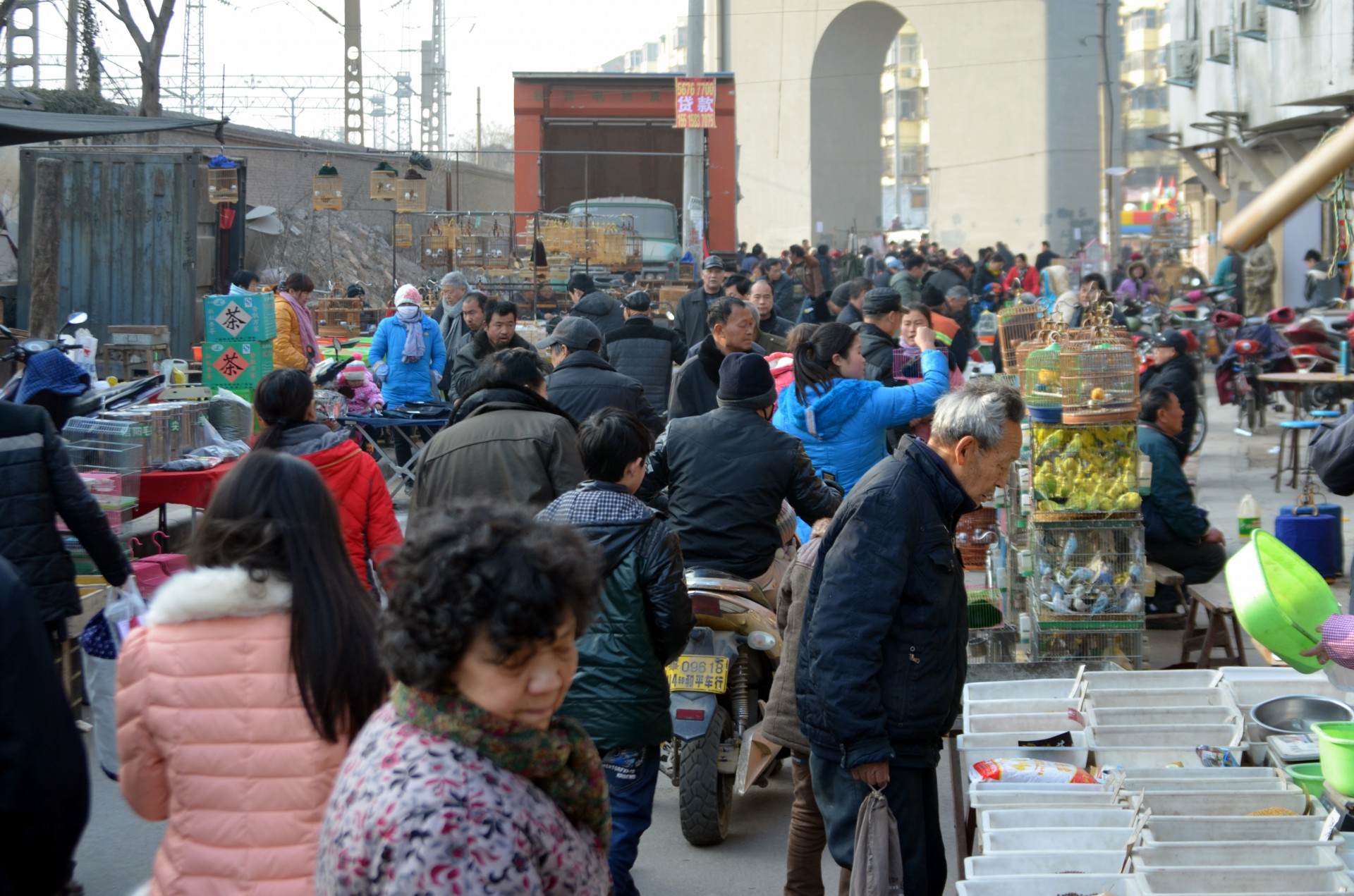
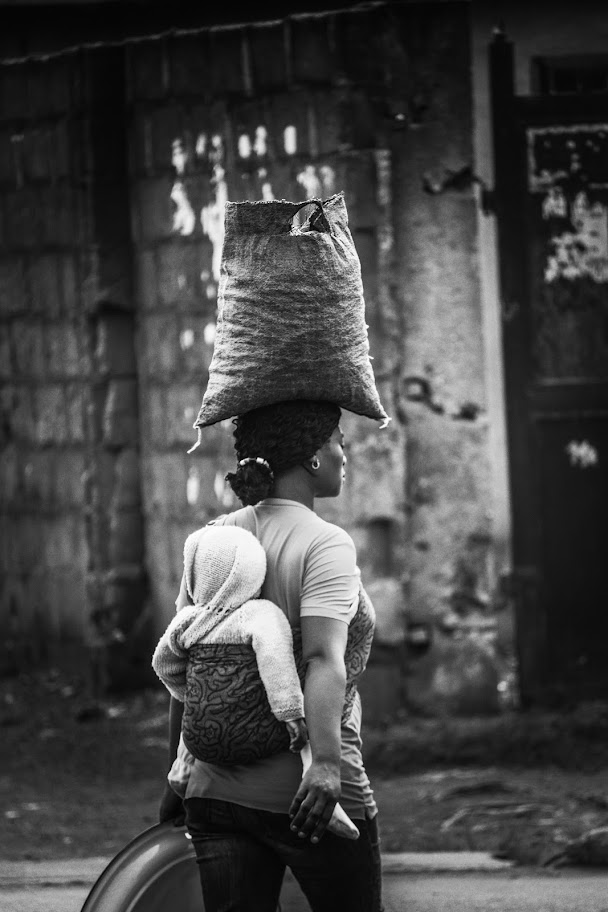
Caleb Ishaya Oseshi presents snapshots of Nigerian city life, people of various ages and genders, all with energy and determination.
Roodly Laurore bears witness to the current violence and tumult in Haiti.
Sandro Piedrahita draws parallels between modern-day political leaders and Shakespearean antiheroes to lament the perennial tragedy of our quest to oppress and dominate others.
Chimezie Ihekuna evokes the physical bliss of romantic attraction in his song lyrics. Ajibola Aljanat speculates how romantic love holds the power to both elevate and destroy humanity. John Tustin renders the grief of losing one’s love, faith, and home into words that dissolve on the page, along with the speaker’s identity and sense of self.
Joseph P. Wechselberger captures the surreal beauty of being caught up in the moment of poetic creation.
Sayani Mukerjee’s poem grants dignity, grace, and beauty to domestic chores. Natasha Leung explores a young woman’s quest for beauty, rendering shaving leg hair as a poetic way to reach softness and grace.
Aloysius S. Harmon acknowledges that boys and men can grieve and feel emotions deeply. Chloe Schoenfeld draws on the language of yesteryear to convey empathy for another’s grief.
Film critic Jaylan Salah describes director Quark Henares’ film Where Is the Lie, a psychological thriller that explores the depths of friendship and gender identity.
We hope this issue is enjoyable and thought-provoking for all.
BAGGY GENERATION
I need no canoe to sail back into
The past, the day my grandfather
Read his adage into every growing ear
Only a puzzle in my brain, & this all
Would re-appear in fresh flesh
We grew up with this adage becoming
The owner of our heart-
The okra herb never duels for height
With its cocky.
As my mother’s tongue has also attested,
My mother’s mother would sew her a cloth
Of pair-able size to her petite nature-
Cutting her cloth in accord with her cloth.
Err NO for this baggy generation
A man’s shoe size is a thousand and two times
Grey-haired than his leg
Every being opine to what isn’t yet
Visible in their weak muscles
A child wants to talk before birth
And run before he crawls
A boy with two teeth is wearing the
Words of fatherhood in his mouth
The beards like scattered mop strands
Beneath the bottom of a child’s mouth
Has been robbed of the esteem of his father.
The baggy generation of
Fat clothing in big thin bodies
makes them another phrase
For a swallowed pill.
Baggy heads yet thin of sense
Everything is baggy! eyes, mind, mouth & motive
On crossed legs, this generation wants
To reach the peak of an alp.
the eiger sanka

thinking tonight
I am not this brain

in the darling garden
eating cowboy bread

in this underlined winter
I am the burrowing owl

scrabble tile: alpha
a noise now nothing


---


plum (understood)

combo

shampoo your skull

I use the same salt as the funneling crow
I am that old gold senator from the moon

combo


--


the promise of a new marvel team-up

the absolute reality

we were
went worm

para
keet

the moss inside
I went through the wrong door


--


crabapple could-be

& yes
I know
bio/graf
J. D. Nelson (b. 1971) experiments with words in his subterranean laboratory. His poems have appeared in many small press publications, worldwide, since 2002. He is the author of ten chapbooks and e-books of poetry, including *Cinderella City* (The Red Ceilings Press, 2012). Nelson’s first full-length collection is *in ghostly onehead* (Post-Asemic Press, 2022). Visit MadVerse.com for more information and links to his published work. His haiku blog is at JDNelson.net. Nelson lives in Colorado, USA.