
The Cubelli Lagoon

[La albufera de Cubelli]


by Fernando Sorrentino

translated from the Spanish by
Michele Aynesworth

<micheletexas@hotmail.com>, <michele@mckayaynesworth.com>

In the southeast region of the provincial plains of Buenos Aires, you might come across the Cubelli Lagoon, familiarly known as the “Lake of the Dancing Alligator.” This popular name is expressive and graphic, but — just as Doctor Ludwig Boitus established — it is inaccurate.

In the first place, “lagoon” and “lake” are distinct hydrographic occurrences. Secondly, though the alligator — Caiman yacare (Daudin), of the Alligatoridae family — is common to America, this lagoon is not the habitat for any species of alligator.

Its waters are extremely salty, and its fauna and flora are what you would expect for creatures that inhabit the sea. For this reason, it cannot be considered unusual that in this lagoon a population of approximately 130 marine crocodiles are to be found.

The “marine crocodile,” that is, the Crocodilus porosus (Schneider), is the largest of all living reptiles. It commonly reaches a length of some seven meters (23 feet), weighing more than a ton. Doctor Boitus affirms having seen, along the coasts of Malaysia, several of them that were over nine meters (30 feet) in length, and, in fact, has taken and brought back photographs that supposedly prove the existence of such large individuals. But, as they were photographed in marine waters, without external points of reference, it is not possible to determine precisely if those crocodiles were truly the size attributed to them by Doctor Boitus. It would of course be absurd to doubt the word of an investigator with such a brilliant career (even though his language is rather baroque), but scientific rigor requires that the facts be validated by inflexible methods that, in this case, were not put to use.

Well then, it happens that the crocodiles of the Cubelli Lagoon possess exactly the taxonomic characteristics of those that live in the waters around India, China, and Malaysia; hence, they should by all rights be called marine crocodiles or Crocodili porosi. However, there are some differences,which Doctor Boitus has divided into morphological traits and ethological traits.

Among the former, the most important (or, better said, the only) is size. Whereas the marine crocodile of Asia can be up to seven meters long, the one we have in the Cubelli Lagoon scarcely reaches, in the best of cases, two meters (6 feet 6 inches), measuring from the tip of the snout to the tip of the tail.

Regarding its ethology, this crocodile is “fond of musically harmonized movements” according to Boitus (or, to use the simpler term preferred by those in the town of Cubelli, “dancing”). As anyone knows, as long as crocodiles are on land, they are as harmless as a flock of pigeons. They can only hunt and kill when in the water, which is their vital element. They trap their prey between their toothy jaws, then rotate rapidly, spinning until their victim is dead; their teeth have no masticatory function, being designed exclusively to imprison and swallow a victim whole.

If we go to the shores of the Cubelli Lagoon and start to play music, having previously chosen something appropriate for dancing, right away we will see that — let’s not say all — almost all the crocodiles rise out of the water and, once on land, begin to dance to the beat of the tune in question.

For such anatomical and behavioral reasons, this saurian has received the name Crocodilus pusillus saltator (Boitus).

Their tastes are varied and eclectic, and they do not seem to distinguish between esthetically worthy music and music of little merit. Popular tunes delight them no less than symphonic compositions for ballet.

These crocodiles dance in an upright position, balancing only on their hind legs, reaching an average height of one meter, seventy centimeters (5 feet 8 inches). In order not to drag on the ground, their tails rise at an acute angle, roughly parallel to their spines. At the same time, their front limbs (which we could well call hands) follow the beat with various amusing gestures, while their yellow teeth form a wide smile, exuding enthusiasm and satisfaction.

Some townspeople are not in the least attracted by the idea of dancing with crocodiles, but many others do not share this aversion. It’s a fact, every Saturday when the sun goes down they put on their party clothes and gather on the shore of the lagoon.There the Cubelli Social Club has set up everything necessary to make the evening unforgettable. Likewise, people can dine in the restaurant that has arisen not far from the dance floor.

The arms of the crocodile are rather short and cannot embrace the body of their partner. The gentleman or lady dancing with the male or female crocodile that has chosen them places both hands on one of their partner’s shoulders. To achieve this, one’s arms must be stretched to the maximum at a certain distance; as the snout of a crocodile is quite pronounced, one must take the precaution of standing as far back as possible. Though disagreeable episodes have occasionally occurred (such as nasal excision, explosion of ocular globes, or decapitation), it must not be forgotten that, as their teeth may contain the remains of cadavers, the breath of this reptile is far from being attractive.

According to Cubellian legend, occupying the small island in the center of the lagoon are the king and queen of the crocodiles, who it seems have never left it. They say they are each more than two centuries old and, perhaps owing to their advanced age, perhaps owing simply to whim, they have never wished to participate in the dances organized by the Social Club.

The get-togethers do not last much past midnight, for at that hour the crocodiles begin to tire, and maybe to get a little bored; in addition, they feel hungry and, as their access to the restaurant is prohibited, they want to return to the water in search of food.

When no more crocodiles remain on terra firma, the ladies and gentlemen go back to town, rather tired and a little sad, but with the hope that, maybe at the next dance, or perhaps at a later one, the crocodiles’ king, or the queen, or even both together, might abandon their island for a few hours and participate in the party. If this were to happen, each gentleman, though he takes care not to show it, harbors the illusion that the queen of the crocodiles will choose him for her dance partner; the same is true of all the ladies, who dream of dancing with the king.

1086 words

“La albufera de Cubelli” was originally published in Cuadernos del Minotauro (edited by Valentín Pérez Venzalá), Año IV, No. 6, Madrid, 2008, pp. 117-120. The present English version was translated from a slightly modified text.
Stories from John Sheirer
Middle-Age Superpowers

Can read difficult books even in dim light. Can overeat at lunch and then again at dinner even after having a big breakfast. Can correctly use affect and effect, accept and except, there, their, and they’re. Can get laundry clean without separating whites and colors. Can hold back intestinal gas during job interview, usually. Can win footrace against four-year-old niece if given proper training and warm-up time. Can return mangled paper clip to moderately usable shape with only his bare hands and pliers. Can pass badly dressed teenagers on the sidewalk and withhold comment. Can understand that superpowers are overrated.


Words to Warm a Teacher's Heart

Do we get extra credit for showing up to class? You weren’t kidding about that exam thing? Syllabus? What syllabus? There’s a textbook? My paper is only a month late. I missed class—did we do anything important? You gave me a B—why do you hate me? My paper is about the dangers of seatbelts. I saw it on the internet, so it must be true. I missed ten weeks of class. Is there any way I can still get an A? How much will I get when I sell the textbook back? Do you get paid for this?


Lies his Fifth-Grade Teacher Tried to Make him Believe

Every day, most people on earth pass within twenty feet of a murderer. Human bodies contain three cents worth of minerals. The average fast food hamburger contains 1.7 ounces of bovine hair. While sleeping, human beings swallow or inhale an average of eight spiders during the course of a lifetime. The average bottle of ketchup contains 1.3 worms per cubic inch. Turkeys are far more intelligent than chickens. The Russians established a colony on Mars in 1963, then abandoned it due to lack of funding in 1967. Too much television causes eyeballs to explode. He would never amount to anything.


Everyday Ironies #3

The Mercedes has a vanity plate: AVG JOE. The beer truck is badly parked. After the long skid on the icy road, he has a pretty good idea what his last words will be. Home sick from work, she notices that every clock in the house tells a different time. The snow-covered street is named for a tropical fruit. From the prison by the freeway, a lone inmate near the double-fences waves hello. There is nothing good on television, every channel, for about three hours now. The guy at the bus stop is arguing with the telephone poll and losing.


Everyday Ironies #4

In the bank vault corner, somehow, there’s a scattering of autumn leaves. Fluttering in the breeze, her butterfly earrings. On the lake, autumn leaves float through the reflection of autumn leaves. Just beyond the deer crossing sign, there’s a bear. The neighbors’ bad-tempered cat is dog-eared. The only quiet moment of the day, being third in line for the drive-thru cheeseburger. In the middle of the argument, even his stomach growls. The “back in five minutes” note has been on his office door for about three hours now. Stuck in the breakdown lane, she finally started to understand her life.
Poetry from Emmanuel Umeji
SCAR OF RAINBOWS

The moon as displayed
by night wears a ribbon
around its chest
The stars fits into bikinis
Each time I hid and watch the
Sky through my windowpanes,
They dance in barley
Each time harmattan knocks
At the door, there is always
A stretch scar on my face
That shows that I belong
To the sky
Mama's broken portrait
Is fading upon me
Father's beautiful stare from
The broken frame catches
My mood into tears of dawn
The rainbow in the sky
Was made a lollipop to the sun
Each day I see the rainbow,
It reminds me of grave
As it fades in all its colours,
So be me someday on my bed
Poetry from Awodele Habeeb
It flings from mouths to mouths
And from ears to ears,
Through the narrows of generations.
It is mumbled into minds,
In the corners of their four-angled fences.
As they rave and rant it every day:
'The readers are the leaders of tomorrow!'


Let us, for a while
Stretch their throats to confession,
To tell us, in exact,
When will the readers become the leaders?

Is it when the dazzling dreams
And blooms of bright visions,
Are wickedly drenched off,
Under the weeping faces of wrecked roofs,
Inside our cages of learning,
Will the readers ever become the leaders?

Is it when, with scratched skins, the brainiest kids
Are worn with pieces of ragged wears.
Ragged wears still soaked, with tears.
Tears craving new books and pencils,
As their farming fathers, too peasant to provide.
But the dullest Senator's children,
Adorned in the fittings of the finest suits,
Will the reader ever become the leaders?

Is it when the best-built laboratories,
Are open to the ones bred,
With silver-spoon in their mouths only,
While those decked with destitution,
Are to carry out their scientific experiments,
Under the shivering shades of trees,
Will the readers ever become the leaders?

Is it when the most intelligent heads,
On the race to conquer unemployment,
Are made to turn around a million miles,
In the burning rage of the sun rays,
And the brutal beatings of the rain falls,
Still all efforts in vain,
Will the readers ever become the leaders?

Is it when the Executive of vampire,
Shielded inside the hollow of Aso Rock,
To butcher the fleshes of unfulfilled hearts,
In order to serve the beefs of their delicacies,
And gulp the springs of striving bloods,
To make the wines of their thirst,
Will the readers ever become the leaders?

Let us, once more, ask them,
Why they have made the ladder to leadership,
As tough as a tiger's tail.
Is it when brightening visions blurred,
And dazzling dreams drowned.
Is it when aspiring hearts shredded,
And all hopes turned grave -- death,
Will the readers ever become the leaders?
Artwork from Shilpa Barti
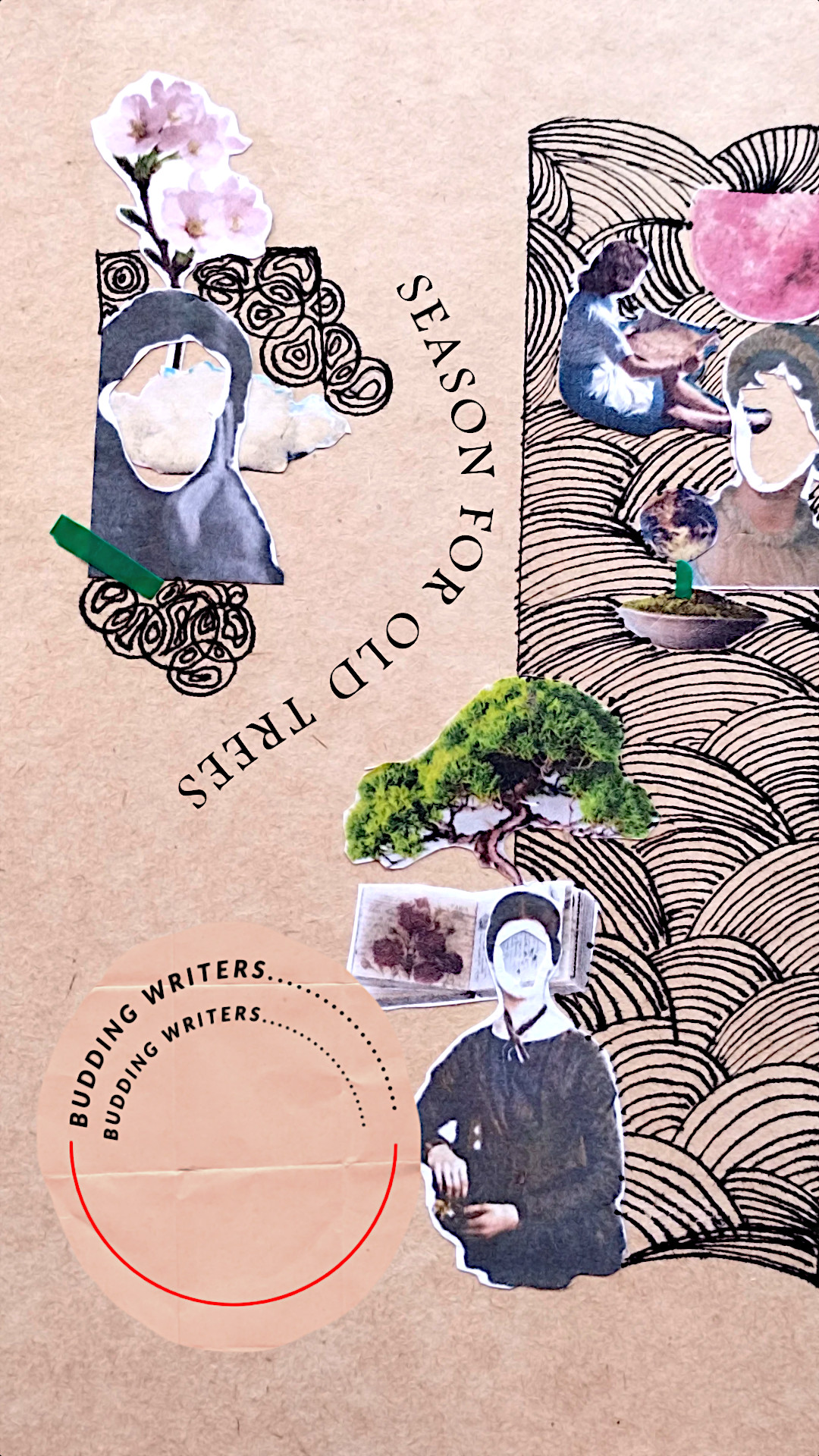
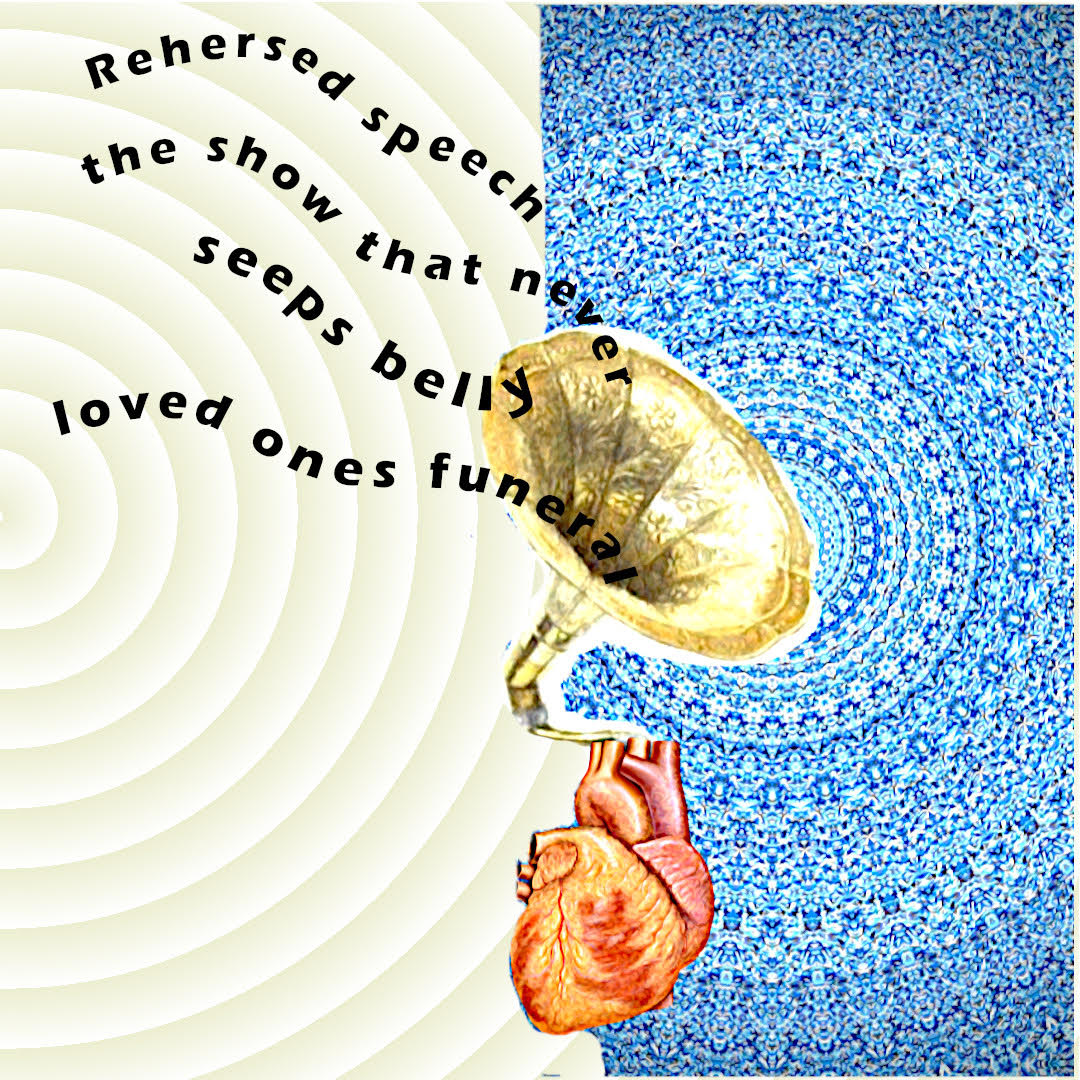
Bio- Shilpa Bharti, pen name- Rose is a published poet. She has served on the editorial panel(open leaf press review) of several literary journals. She has been on the judging panel of poetry contests including the poetry pea journal haiku contest. She had her work published in failed haiku journal; poetry pea journal of haiku and senryu; creatrix haiku journal; neo literary journal; narrow road literary journal (young voices slot); an ode to the queer journal; howling press; throat to sky magazine,origimi review journal and ressurection press. Her forthcoming work includes poems in the SAHITYA AKADEMI and Her Artwork has managed to appear in several other art journals.
Poetry from Pippa Phillips
1.


hot pavement—

summer plays hopscotch

barefoot


2.


antipode—

the widening pupil

of a ghost eye


3.


white rainbow—

the sunstruck film

from last summer


4.


divining tomorrow

from a feather—


a dove

turns blue

to match the sky


5.


darkening rain—

the legibility

of dream words
Poetry from Mesfakus Salahin
Everything is lost

Love is dead

Death hides in life

Life is dead

Even death is dead

It is a dead land in the dead world

Only time is alive

Time is the chief guest of the funeral of love

 Memories make fire

Love is burnt and so on

Time is burning everything

Dead souls are lamenting for the past

The sun stands behind the ceremony with pain

Tears of air blow over desert in vain

Procession of absence is an  imagination

Death bends all and each

Only death is true, nothing else

There is none to love.