
A Prickly Pair
by Pesach Rotem


The world is cruel and harsh and cold
And we yearn for warmth—my love and I—
A pair of porcupines
We approach and embrace
And she jabs me
And I prick her
And we flee, bleeding, back into the safety
of the pain-free cold.


Carey, Get Out Your Cane
by Pesach Rotem


When I was fifteen years old,
Joni Mitchell came out with a new album called “Blue”
that had a song called “Carey”
that went “Oh, you’re a mean old daddy but I like you”
and when I heard that song I resolved, right then and there,
that someday I would have a girlfriend—
I’m talking now about a real girlfriend, not an imaginary girlfriend—
that someday I would have a real girlfriend and
that someday I would be a mean old daddy.

I had my first real girlfriend
the summer after my junior year of high school.
We were counselors in a camp.
She said, “I think you’re cute”
and I said, “Thank you very much,
“my grandmother also thinks I’m cute”
but she never said, “Oh, you’re a mean old daddy but I like you.”

Time went on
and I went to university
and I graduated
and I went out into the world.
I thought about becoming a professional motorcycle racer
but then I decided, for various reasons,
to become a marketing content writer instead.

Later, as the twentieth century transitioned into the twenty-first,
I myself transitioned from regular marketing content writer
into online marketing content writer
and I must say, at risk of immodesty, that I am a damn good one,
but, alas, online marketing content does not a mean old daddy make.

I am now sixty-six years old.
I will never read The Odyssey in the original Greek.
I will never pole vault fifteen feet.
I will never argue a case before the United States Supreme Court.
I will never see Machu Picchu.
And I will never be a mean old daddy.


Why an Apple?

Hello, everybody.
I am Pri Etz haDaat Tov v’Ra.
You English speakers may call me The Fruit of the Tree of Knowledge of Good and Evil.
I’m cool with that.
I am a major character in Chapters Two and Three of your Book of Genesis
along with my sidekick, the Tree of Life,
who actually has a much smaller part but nevertheless became more famous
just because he makes such a handy metaphor:
the Torah is a Tree of Life, the Sefirot are a Tree of Life, et cetera,
but I don’t care, I’m not jealous, I don’t even know why I brought it up.
What I came here to talk about is: Why an apple?

I never claimed to be an apple,
that rosy-cheeked symbol of good health and good cheer,
and yet Albrecht Dürer painted me as an apple.
Hendrick Goltzius painted me as an apple.
Titian painted me as an apple.
Lucas Cranach the Elder painted me as an apple.
And the folksingers are as bad as the painters.
Just listen to Patrick Sky sing “Separation Blues” and you’ll know what I mean
and why I keep on wondering: Why an apple?

At first, I suspected that John Milton might be behind it
but my investigation revealed that
John Milton wasn’t even born until 1608
while Titian and them had already been painting apples back in the 1500s,
so that’s an airtight alibi
that lets John Milton off the hook
but it leaves me wallowing in puzzlement
as I continue to ponder that eternal question:
Why an apple?


“Paint It Black” Revisited
by Pesach Rotem


“Use the active voice.”
William Strunk Jr. and E.B. White, The Elements of Style


Last night I watched a movie called “Devil’s Advocate” on Netflix
and at the end of the movie, as the credits rolled by,
they played the Rolling Stones song “Paint It Black”
and the subtitles on the screen said “I see a red door and I want it painted black”
and I said, “That’s a mistake, it should be ‘I see a red door and I want to paint it black’”
and my date said, “Are you sure?”
and I said, “Of course. ‘I want it painted black’ is passive and the Rolling Stones weren’t passive guys so why would they sing passive lyrics?”
and to prove my point I replayed the song
but to my surprise it did sort of sound like “I want it painted black”
and I said “uh-oh”
and we played it a few more times and we listened very closely
and we also looked at AZLyrics.com and a couple of other lyrics sites
and they all said “I want it painted black”
and I said, “Well, I guess I’ve been singing it wrong for 55 years”
and my date smirked.

I brooded for a while and then I became defiant.
“But my way is better,” I proclaimed.
“‘I want to paint it black’ means I feel a powerful urge to grab a bucket of paint in one hand and a paintbrush in the other and slosh my pain and my grief and my anguish all over that grotesquely cheerful red door and all over the whole cold cruel uncaring world
while your way—‘I want it painted black’—means . . . what? I’m going to send a requisition to the Maintenance Department to have someone take care of this matter? Where’s the catharsis in that?”

I was starting to feel angry at the Rolling Stones for failing to consult with me
as they should have done before releasing the song in 1966.
I would have told them to read their Strunk & White and use the active voice
but No,
the Rolling Stones are too high and mighty to ask for my advice
so I decided to lodge a Statement of Protest
but I wasn’t sure whom to lodge it with
so I lodged it with the songwriters Mick Jagger and Keith Richards
and I also lodged it with Bill Wyman and Charlie Watts as collaborating members of the Rolling Stones
and with the Decca Record Company
and with the Rock and Roll Hall of Fame
and with Queen Elizabeth II of Great Britain
and with the Upper Galilee Chapter of the Voices Israel Group of Poets in English
and I am well aware that you can’t always get what you want
but I did at least get some measure of satisfaction.
Pesach Rotem was born and raised in New York and now lives in Yodfat, Israel. He received his B.A. from Princeton University and his J.D. from St. John’s University. His poems have been published in more than two dozen literary journals including Chiron Review, Permafrost, Voices Israel, and Synchronized Chaos. His poem “Professor Hofstadter’s Brain” was nominated for a Best of the Net award. He is a member of the Israel Association of Writers in English.
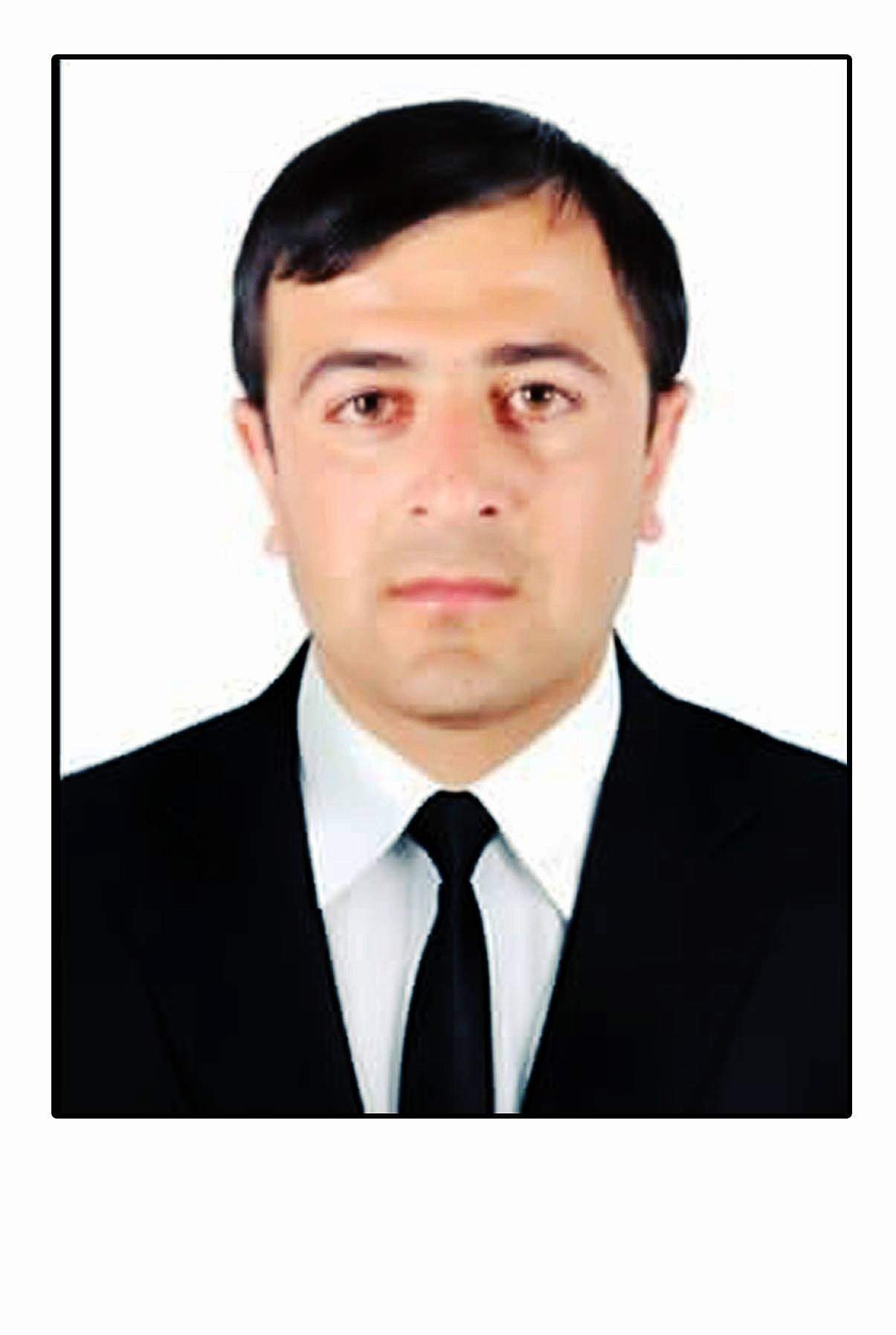
Elbov Kulmonov was born on 29 May, 1992 in Koson district in the Kashkadarya region of Uzbekistan. His poems and stories were published in local and national newspapers.

His poems were published in a collection of "Ezgulik yolqini" and his poems were published in Uzbek Writer's Anthology in India in 2013 and '*Katla-lntercontinental magazine in 2013.Now he is a correspondent of "Tarovat" newspaper. He is a member of the "Astonishment" creative writing club.

Uzbekistan

My body made by from your soil.
I know some day I will die.
Some day my soul will get across my body,
So my soul is a temporal.
I will take you away with me,
until dead your memory.
I will live in your land till this event,
I will remain in your soil.


Dreams

Dreams, dreams white dreams,
You are a ray lighted my soul palace.
You appeal me to live,
You are an Antelope in my heart.
I am trying to reach the dream's mount,
Everyday, cry an hour with hope.
I admire my feelings to reach you and I will gain a victory some day.
Listen

When the lightning smiles,
let fear not boil your blood
for my voice will be deep into the thunder scream,

give ears when the cloud gets shadowy
and the rain is dancing on your roof,

listen to the wind when the trees dance

look beyond the wave of the oceans
as it chases itself off the shore,
for my eyes will be smiling in each tide

when the sun oozes down the ocean,
as hummingbirds sing lullaby,
as the wind stands still,

listen to those lyrics
from the sounds of crickets  beneath your window
for  I'll be flying on the wings of butterfly

listen to nature
for I am in every sound you hear.
to paint your heart with kisses,
Listen.
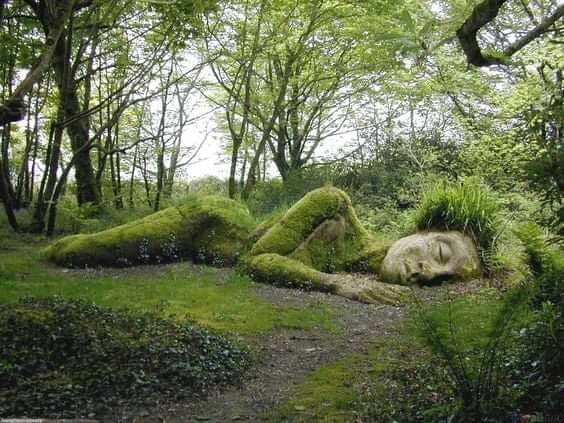
My mother is nature


The fountain of God's love

Her thighs are the roots of cotton tree
And the ground on which my feet first tasted

Her hands are the gravity that held me
when I thought I could fly without wings
Her fingers still taste like raindrops on my heated body

The circulated winds from her nostrils
breathe life

in her smiles-- I see twinkling stars
beautiful flowers from the top of Everest

in her veins-- I see oceans upon oceans
oceans that tide with the peaceful hands of wave
Her face holds the brightness of the sun
as it escorts itself every morning

In her eyes-- I see winging butterflies being chased by Blue Jay
and tiger happily racing with antelope
As the branches of her eyelashes stand tall above

Her chest holds waterfall canals
That flow down from mountains built in heaven

In the heart of nature--I see jewelries
Gold, diamonds that smile with love

She is as green as Amazon forest
The sky shows her eyes
And her body is Sahara
Nature lives in her
            Vulnerable
      -----------------------------


Half the Moon
      through
           Broken
                 Roof

I'll flap my arms
             where lips won't Do

And rest my thoughts
             where Wings once flew

Half the Moon
     the
         Owl can
                See

feathers Warm
      No
         tethers
               Worn

Wisdom   is more
                   FREE

                   Snow
   Pierced by Small Hooves

       Lord's Grace to find
              Transition
                     Where   Cold & Light
                                          Meet.
Half a Moon
    Half a Moon

              The Life
        and the Spirit
             make Whole.


                     ♡
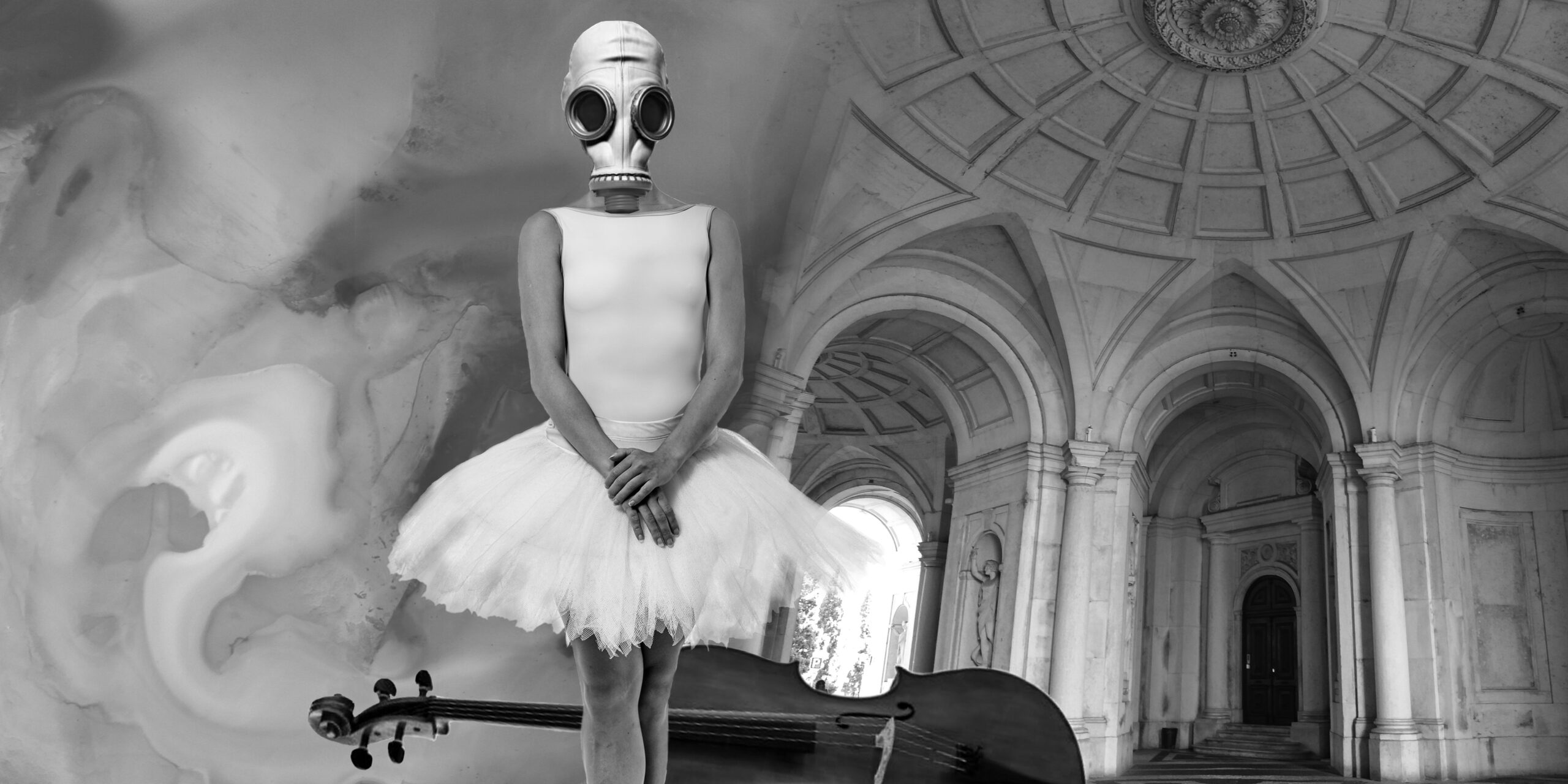
  Text by M.A. Blickley


   Licking the Wound

	Laying naked in this bed on my back, I tilt my head and I look down with so much pain in my face. This is the third time today my boyfriend has gone down on me. Shouldn’t a girl be happy?
 	I would be, but this is how he apologizes for the blunt fist to the face he gives when he loses his temper. I tell myself every day I need to leave. Just get my shit and leave.  But I don’t. I let temptation win every time as soon as his tongue strokes me slowly up and down until the abuse feels distant.
	I look down at him in between my legs, my natural fluids moistening his face. I am in such heartbreak and awe over how the man I love can deliver such pain and pleasure. It’s insane. I stare at him. He looks up at me and whispers, “I love you baby.”
	 I search his eyes until I can find the apology for the black eye and the blood from my nose that stained the satin sheets we just purchased. My moans grow louder and drown out thoughts of me leaving until I hear my mother’s voice echo inside my head pleading, repeating, “Don’t you ever let a man hit you the way Daddy hits me.”
	I have fallen in love with a man who one day will take my life and I continue to do nothing but look at him as we lay in this bed of lies, the same bed I retreat to after he beats me until I’m numb and then licks me until I can feel again.
	Today something is different. Something is very, very off.  I can feel his darting tongue actually trace individual letters inside of me that turn into words that form a full sentence that rises up through my body and explodes out my throat, “You are not my suicide note!”
	His mouth jerks back and he jumps off the bed. For the first time ever, I can see he is afraid. And I am not. It must be true that the third time is a charm because I am going to save myself and leave this cowardly son of a bitch. I wish my mother were alive so I could thank her.
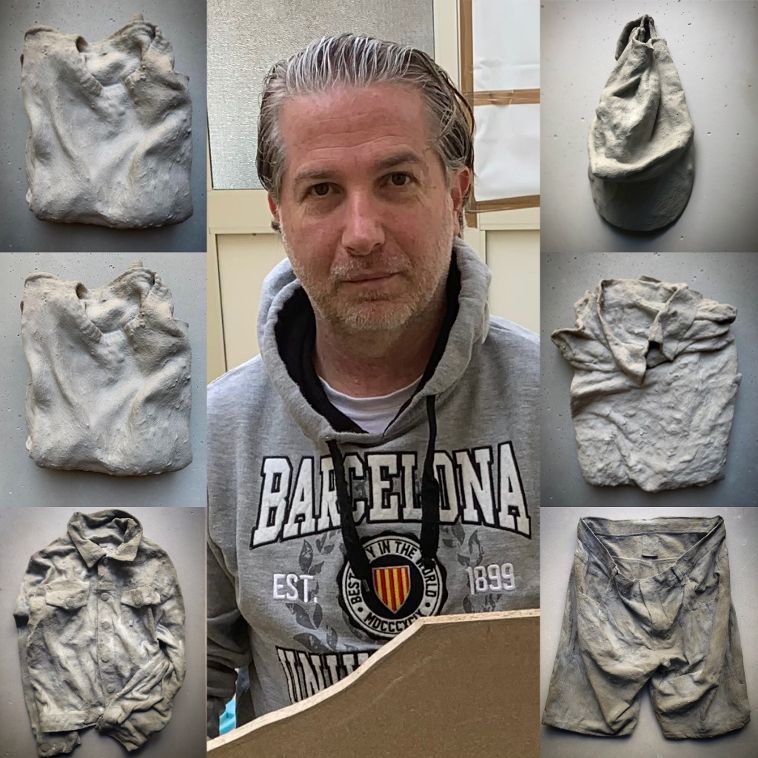
Mario Loprete, Catanzaro 1968

Graduate at Accademia of Belle Arti, Catanzaro (ITALY).

Painting for me is my first love. An important, pure love. Creating a painting, starting from the spasmodic research of a concept with which I want to transmit my message this is the foundation of painting for me. The sculpture is my lover, my artistic betrayal to the painting that voluptuous and sensual lover that inspires different emotions which strike prohibited chords.

This new series of concrete sculptures has been giving me more personal and professional satisfaction recently. How was it born? It was the result of an important investigation of my own work. I was looking for that special something I felt was missing. Looking back at my work over the past ten years, I understood that there was a certain semantic and semiotic logic “spoken” by my images, but the right support to valorize their message was not there.

The reinforced cement, the concrete, was created two thousand years ago by the Romans. It tells a millennia-old story, one full of amphitheaters, bridges and roads that have conquered the ancient and modern world. Now, concrete is a synonym of modernity.

Everywhere you go, you find a concrete wall: there’s the modern man in there. From Sydney to Vancouver, Oslo to Pretoria, this reinforced cement is present, and it is this presence which supports writers and enables them to express themselves.

The artistic question was an obvious one for me: if man brought art on the streets in order to make it accessible to everyone, why not bring the urban to galleries and museums?

With respect to my painting process, when a painting has completely dried off, I brush it with a particular substance that not only manages to unite every color and shade, but also gives my artwork the shininess and lucidity of a poster (like the ones we’ve all had hanging on our walls).

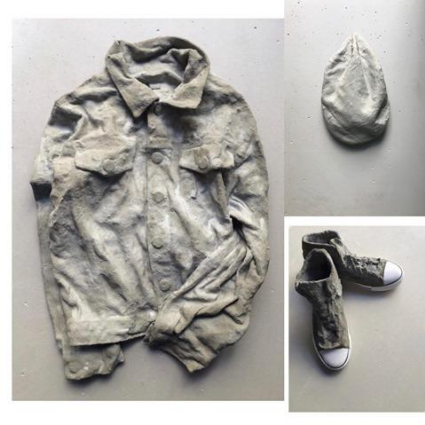
For my concrete sculptures, I use my personal clothing. Through my artistic process in which I use plaster, resin and cement, I transform these articles of clothing into artworks to hang. The intended effect is that my DNA and my memory remain inside the concrete, so that the person who looks at these sculptures is transformed into a type of postmodern archeologist, studying my work as urban artefacts.

I like to think that those who look at my sculptures created in 2020 will be able to perceive the anguish, the vulnerability, the fear that each of us has felt in front of a planetary problem that was Covid-19 ... under a layer of cement there are my clothes with which I lived this nefarious period.

Clothes that survived Covid-19, very similar to what survived after the 2,000-year-old catastrophic eruption of Pompeii, capable of recounting man's inability to face the tragedy of broken lives and destroyed economies.