
Tongi
by
Mehreen Ahmed

It was a glass room, Tongi. Literally, a room which was made of glass built on stilts in the far shade of a village pond. The pond's algae reflected its green on its glass walls. On rainy days, slanting rains fell on it and left its droplets to slide down the glass. Tongi ghor, or Tongi room, as it was often called was also a lover's den. Under a waxing moon, love glided here in the moon's full view—light streaming through the glass. Only an insider was privy to its magic—only they could feel its real throbbing, transforming romantics into yearning hearts—enchanting and transcending any barriers—a safe house for the insiders. This place knew no shame. Where love was not berated for breaking taboos. Its rhythms, a heartfelt, meant only for love—to hear and understand. Tongi was an insider’s bubble. As soon as lovers came out of the room, the full moon packed itself away under a river cloud and the bubble of enchantment broke. Social antipathy was let loose on them—off-limit to the socialites—this bubble belonged only to the insiders of the Tongi room.

Nacre

An irritant entered the body, Queen Nacre secreted aragonite and conchiolin in her castle's bedchamber of the deep seas which the Queen produced as a protective shield against invaders, she gave birth to the Mother-of Pearls and embedded it on its lucent pods within its hard shells, a defence mechanism, an impregnable wall, not understanding though, that this prized possession, was also the much-coveted object for the Mad Hatter and the Queen of Hearts--the rulers on the land, who would go to any lengths to extract it by violating Nacre's fragile shells— the Trojan wall would fall at their feet, to bejewel an already existing ornamental neck of the Queen, more pearls for the Hatter's jewel in the crown, the Mother-of-Pearl the most precious survival mechanism taken and crushed for their pleasure, paradoxically an existential crisis, a double-edged sword—the very wall of protection was also Queen Nacre's nemesis, for her oyster subjects cried a rising death toll in the Garden of Pearls, however, who could not even conch, a sound off to the mermaids of the far seas whose aid of ancient callings could have frustrated the Queen of Heart's sea soldiers -- raiders of the Oyster Kingdom had this wayward annihilation on their conscious, but, one pearl made its way back to Queen Nacre's court and told her a story of obsession that a Queen on the land dissolved one of them, pearls, mixed it in wine or vinegar and drank it to impress her King--beautiful but idiosyncratic, thought Queen Nacre in a moment of truth.

Space

People stared opened-eyed at me, brazenly walked across to my table as I had my morning coffee, coming, up close and personal almost choking my breathing space, however, I didn’t move an inch, they didn’t either, as they wanted my table, finding tables was rare here at this time, my gut feeling— they were not only after the tables.
Poetry from Ahmed Aminu
My homeland.

In my homeland
Why pains ranges like a burning fire
And tears is what it requires
They said men don't cry
And I held it up, burning inside me

In my homeland
I have been through hell and back
And my eyes had become tears bank
Where I try to cry, and the word rang
Tears is a weakness,
In my homeland
no place to live
Terror has put on her garment
Beckoning on the emissaries of death dancing to the beats of herder's drum.
Like grief, pain feed the state of taraba.

In my homeland
The frightening gloom of darkness
Loom silently in the starless skies,
My homeland, filled with heartless savage
My homeland, on the footstool of brain less bastards.
Dear, my homeland
I fear for my life and future

For the infants yet unborn
I fear for the lives of youths
Who's future bases on strive.
Dear, my homeland
I fear for what life has in store
The more one lives, the more he dies
It's not a bed of roses,
Where one lives in comfort and love.
I fear for my homeland
Where peace and tranquility are imagine.

Innocent blood decorate our land,
Yet, we have been possess by orgyloving and bloodthirsty evil spirit.
With a loud thunderous voices.
When can we have a better homeland?
A better homeland,
devoid corruption,
Free of greed.

My homeland.

In my homeland
Why pains ranges like a burning fire
And tears is what it requires
They said men don't cry
And I held it up, burning inside me

In my homeland
I have been through hell and back
And my eyes had become tears bank
Where I try to cry
Poetry from John Culp
The mirror of life.
  It's a gift. Time will tell.

  Some twist in the wind.
Some fly above the clouds.

It is given,  time
 and again.

  Window Swing Free!

    Known,  knowing
      Reflection from glance
       to stance

          I've Begun.

I cannot tell you
   all I'm feeling in
     a timely manner.

My smile is all of Me.
Poetry from Ojo Olumide Emmanuel
Breathing

hear me: we do not immerse our pages
with words because our hearts are swelling
with grief, sometimes, or floating with joy.
we do so because these poems want to breathe;
they want to live their own lives.

here in my country, it’s the season of harmmatan
the cotton tree in our garden breaks open its pod
we gather the seeds & the snow-like wool into basins
the papaya tree close-by ripens with the wind & sunlight
other trees shed their leaves & dryness is the new culture
the ground is with littered leaves & they sing under our soles.

we are all seeking to breath, even in warmth,
in cold, when our skins are pierced with the lune of chill
our bodies immerse longer under our duvet.
we are still breathing, everything wants to breathe
this poem is not about misery, bliss or nostalgia;
it is about you, it is about [the] poem--- breathing.


Conversation

because i am kneeling down between the pew
sifting my thoughts on what i should have confessed
i wanted to cast the pitcher deep into my heart &
draw out every word from its place
i wanted to purge; to fetch out the darkness beneath
to the rays radiating from the sanctuary.

because my heart is full & bubbling with water
i wanted to break a part of me & leak
i wanted to flood everywhere until i’m lean.
i shudder like one met by the steering of a dagger
i shriek like one almost eaten by his foes
i gather words into groan & my lips began to bleed.

because i am cut open by the laser of truth &
all i know about myself gushes out
i break open to all who care to listen
god above or the other worshippers
staring down at me from across their benches.
Ojo Olumide Emmanuel is a Nigerian Poet and Book Editor. He is the author of the Poetry Chapbook “Supplication For Years in Sands” (Polarsphere Books, 2021). His works have appeared and forthcoming at Ake Review, Feral, Quills, Poemify, Melbourne-Culture, TNR and elsewhere. He is the Editor-in-Chief of The Nigerian Review (TNR).He currently curates the monthly Wakasoprize for Poetry and Abubakar Gimba Prize for Short Fiction. He is a fellow of the SprinNG Writers Fellowship. Say hi to him on Twitter @OjoOlumideEmma2
Poetry from Michael Robinson
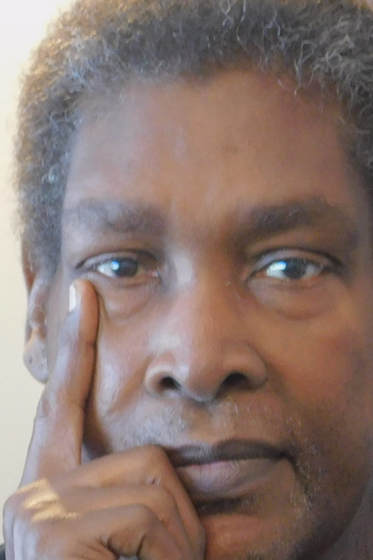
GOD’S LOVING EMBRACE


Lights come through the stained-glass windows to give warmth.

Kneeling at the altar with prayers in my heart speaking to you.

A closeness, only your loving embrace can comfort me.


Moments of distress, your begotten son Jesus embraces me.

His loving heart gives me a sense of redemption for my soul.

Time after time when there has been a flood of sorrow came.


Always, have my soul asked to be united to you through time.

You have heard my prayers throughout my life and have answered.

Through Jesus my savior speaks to a waiting soul for a life of eternity
Essay from Chimezie Ihekuna
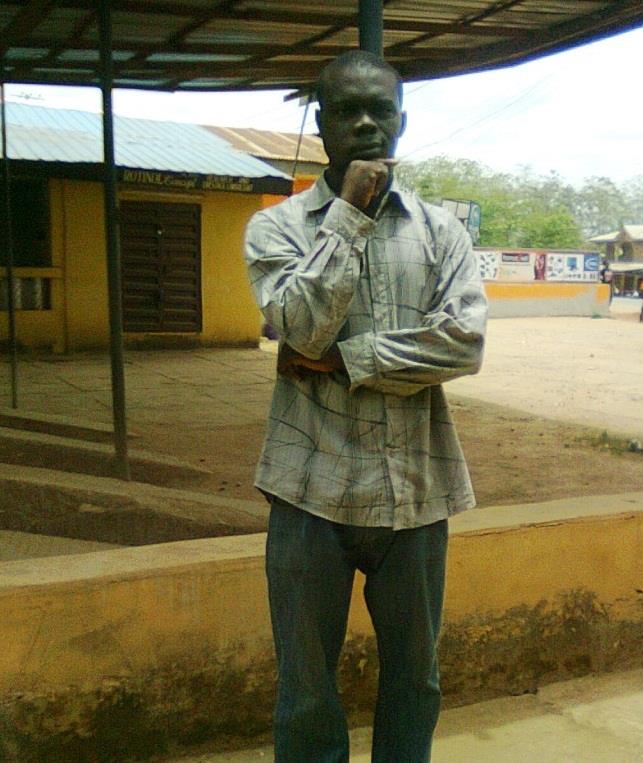
My Falsified Report Card

I have always been reluctant toward education, especially what is taught in the classroom. Though my mother was teacher, I had always had some phobia towards learning. I would prefer to stay at home rather than go to school. My parents would have to drag me! Going to school from Mondays to Fridays has always been a nightmare. The good times I enjoy were usually the weekends and holidays.

As a consequence, I was not sound academically: always at the bottom of the performance pile. During examinations, I was usually faced with uncertainties. Reading and understanding were my pertinent problems, despite having stand-by lesson teachers to take me on all subjects at home, as soon as I was done with school. In all of those, however, I was always happy when I was through with tests and examinations and looked forward to the subsequent holidays.

My parents were particularly concerned about my academic performance. Playful I was, I turn deaf ears to their words of advice. They were indeed a busy people. My father was an engineer who had to work almost half a day and retired home late at nights. My mother worked hard to support the family through teaching in various classrooms and offering extra lessons to add to her income.

From my first year at elementary school to my fourth year, my results were all in the negative. My mother expressed her frustration on me as I came home with bad academic results every term. It got so worse to the point I was being scolded through the weapon of the whip. It became the ‘new normal’ I had to face every term of academic session  I came home with the ‘usual academic result’

My teachers were concerned. My mathematics, English and social studies teachers offered extra times to painstakingly teach me on a one-on-one basis. Yet, all their efforts prove abortive. I was left on my own. In fact, my parents got fed up and consequently gave up on me! They fired all of my lesson teachers. I was left at the mercy of several house-helps: paid home helpers whose responsibility centered on taking care of the home, my three younger siblings and me.

Between the years 1990-1995, my elementary school years were seriously boring times. I got tired of receiving the usual bad results every term (four months) and seeing my parents getting upset. Through the help of a friend, Olumide Coker, I was able to do the ‘unthinkable.’ I was at my fourth year at elementary school (Yewande Memorial School, to be precise) when the ugly incident happened. Olumide came to my house with a Tipex Ink-what was used to make alterations to figures as shown in the Report Card-a document that validates the performance of pupils. Together, we changed every score and percentage in it! The scores and percentages showed  an unusual' excellency of my result'. My report card! I felt good and thought my parents would be happy seeing the bad results ‘changed’ to good! I never knew I was in for a shocker!

When I showed my parents my report card, they knew it was obviously sketchy. My mother asked, 'Are you sure this is your report card?' Afraid I was, 'Yes, it is' was my reply. Later that day, 'Your report card looks funny. I will call the attention of your head teacher the next session. Are you sure this your report card?' were my dad's words. 'That's my result' I answered, feeling guilty.

The early part next session saw my dad brought the attention of my head teacher at my fourth year of elementary school. Then, I just got promoted to the next class-the fifth year of elementary school. It was there the truth had to be unearthed. I altered my report card! After much interrogations, I bowed to the pressure mounted on me.

I was not only humiliated in the presence of my parents but also the entire classes and levels  of my school. I felt the ground opened up and swallow me completely! My fellow pupils in class, seniors and juniors made spectacle of me throughout that day and for several months . It took me time to get over the consequence of my action. It was a day I live to remember.

Looking back to that ordeal, I can't help but assert 'it's a thing of the past'.
Fiction from John M. Brantingham
The Night, the Dark, and Bats, 1952

	Arthur who decides not to tell his children or grandchild about the heart condition that’s going to end him soon enough, comes over in the evening to find Henry staring up into the eaves outside his parents’ house. It’s a cool evening in mid-May, the whole world waking up with that spring smell of a million things blooming, and it would be hopeful if there were hope left for Arthur. “What’s up Henry?”

	Henry points up at the roof. “I think something just flew up into there.”
	The sun has just gone down. “This time of night,” Arthur says, “it’s probably a bat. Most of the birds would be nesting now, and wouldn’t go up there anyway.”

	“You mean, you think we have bats living in our house?” The idea lying in the boy’s voice sounds magical. This is a boy who begs to be taken to horror movies and reads comic books. Maybe he’s thinking about Dracula.
	Arthur goes into his son’s garage where he knows there is a flash light. Ever since the diagnosis last week, Arthur keeps imagining little pains in his chest. He hopes he’s imagining them anyway. Back under the eaves, Arthur shines a light up and sure enough, there’s one bat hanging there by itself. “That’s good,” he tells Arthur.
	“Why?”
	“A bat by himself is probably just resting before he does more hunting or before he goes back to his colony. I was worried your parents were going to have to deal with a big group of them.”
	“They live in colonies?”
	“They hang together in gigantic clumps touching each other. I was in an old mineshaft one time and crawled right under hundreds of them.”
	“Why were you in a mineshaft?”
	“It was a gold mine out west that had closed down years before. My friends and I were just exploring it.”
	He’s flipped the light off, but he hears the little boy’s gasp, the wonder that fills it. “Could you take me?”

	“Ah,” Arthur says, his own kind of gasp because words cannot fill the reasons this will never be possible, and his unword is followed by a kind of infinity of regret and anger that’s focused on nothing really except maybe the universe.
	“Come on grandpa. If Mom and Dad say it’s okay, can we go?”
	The truth is that he has enough energy to take the boy. His only worry is that he’ll leave the boy stranded in the middle of the woods or down a cave. He has carbide lamps and rope and all the rest of his old equipment. The only thing holding him back is death.

	“I tell you what. If your father goes with us, then I’ll take you.” He can feel the unquiet of the boy’s silence as he looks over the field to see the fireflies winking on. “What’s wrong?”
	“Dad’s always working.”
	It’s true. He has the hardware store to manage and the concerns of an adult. He works too hard during the day and drinks too much at night. Still, Arthur says, “We’ll schedule a vacation. You and I will plan it, and he’ll get some time off.”
	The boy’s breathing turns hopeful, and Arthur sends him in to start talking to his father about it. Arthur stays outside for the sake of the fireflies.

	And so, Arthur probably won’t be around in the late summer, but he’ll fill some hours with Henry planning and mapping and explaining how and where to enter the earth gracefully, without fear or danger. He hopes there is a heaven, but he doesn’t think there is. He’d love to watch the two of them on their journeys. He’d love to watch Henry learn to understand the night, the dark, and bats.