
Welcome, all, to June’s second issue of Synchronized Chaos. This month’s contributors take a step back, contemplating our world and our lives. Many show thought and care, aware of the loss and grief around us, and even the more celebratory or humorous pieces draw upon our fragility for inspiration.
Mark Blickley and Miss Unity’s ekphrastic work shows the vulnerability of a silent performer who must gesticulate for her living.
Multimedia work from Jeff Crouch, Soumailia Zoungrana, and Diana Magallón also involves performance, a dancer giving a very athletic performance in old-time gritty black and white, as if she’s a legend fading with time. Stephen Crowe sketches out a scene at a dying California lake.
John M. Brantingham’s novel excerpt deals with the passage of time. Its main character is an old man facing death, unsure how or when to share that news with his grandson.
Tess Tyler presents a lovely scene of outdoor family life in Northern California that turns into a lament for murdered children, while J.K Durick comments on gun violence and rising gas prices and Lewis LaCook’s surrealist poems probe death, intimacy, and wildfires.
Ahmed Aminu and Yahuza Abdulkadir mourn political corruption, violence, and social injustice, as does Mahbub, in a collection otherwise devoted to time-stopping moments of connection and beauty.
Candace Meredith’s short story brings the poetry of a fairytale to the real-life drama of drug addiction and recovery. Amos Momo Ngunbu’s piece also highlights the social influences we can have on each other, for good or ill.
Chimezie Ihekuna reflects on how social shame inspired him to falsify his report card as a child, and how his deed was discovered. Fatihah Quadri also remembers childhood vignettes entertainment from a friendly neighbor who has since passed.
Benyeakeh Miapeh contributes elegant, figurative verse about grief, while Ayiyi Joel reflects on the touch of a lost love.
Stephen House describes memories of the past and of lost causes. Steve Brisendine’s poems set in America’s heartland explore what we remember, what happened and what didn’t.
Robert Ragan’s piece skirts the fine line between describing the anger stage of grief and the way love can turn to possessiveness and hate.
J.J. Campbell’s poetic speakers are misanthropes on the edge of society who still crave some type of human companionship, although by sexually objectifying women of color.
Ryan Quinn Flanagan also writes poems of middle age, but with heavy helpings of humor tossed in with the laments.
Mehreen Ahmed’s pieces convey sanctity and privacy, while Michael Robinson reflects on the comfort he finds in Christ.
John Culp’s work illuminates the physical sense of elation. Ojo Olumide Emmanuel’s poems can serve as expression of his feelings, but can also seek lives of their own, independent of his will.
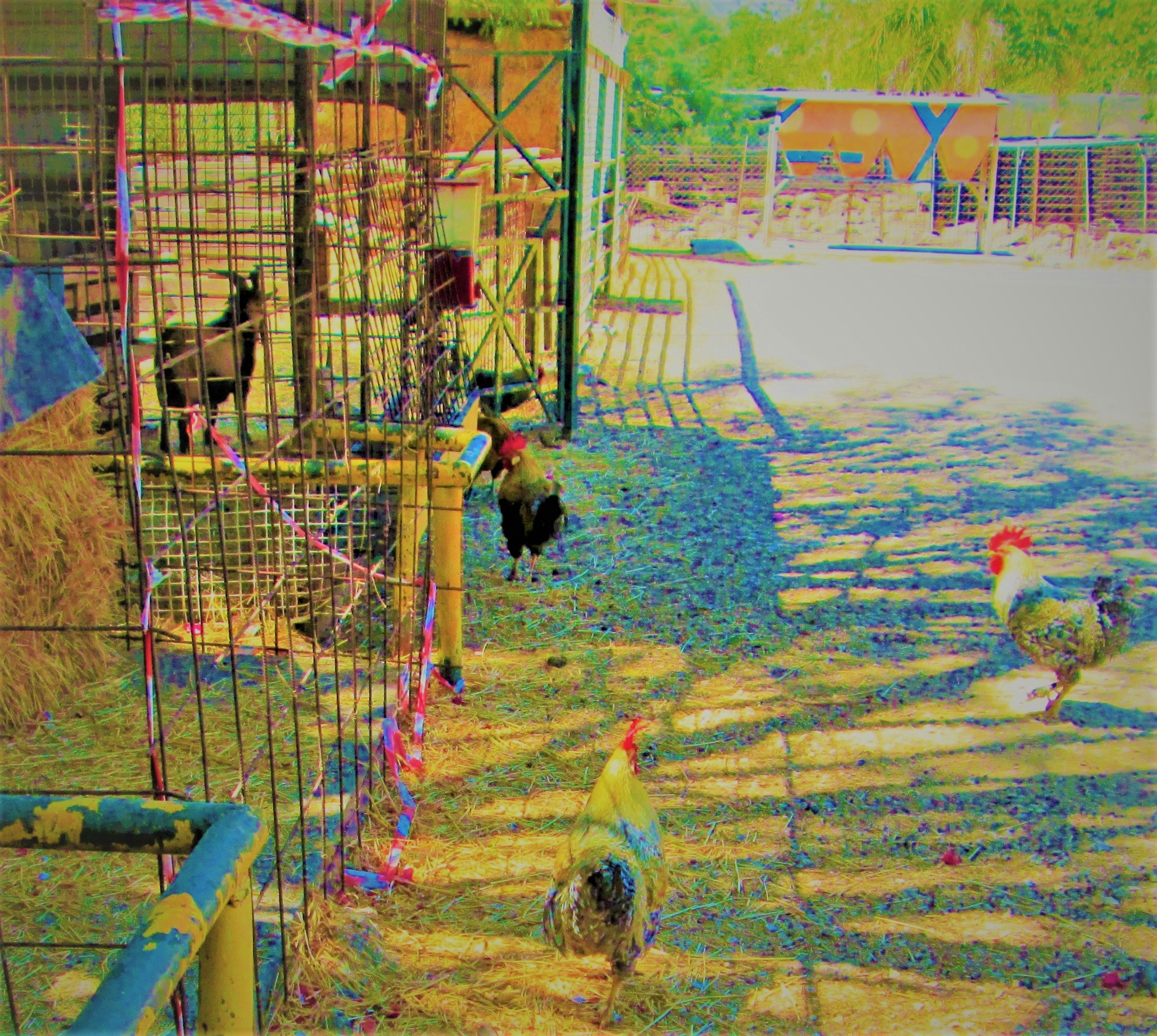
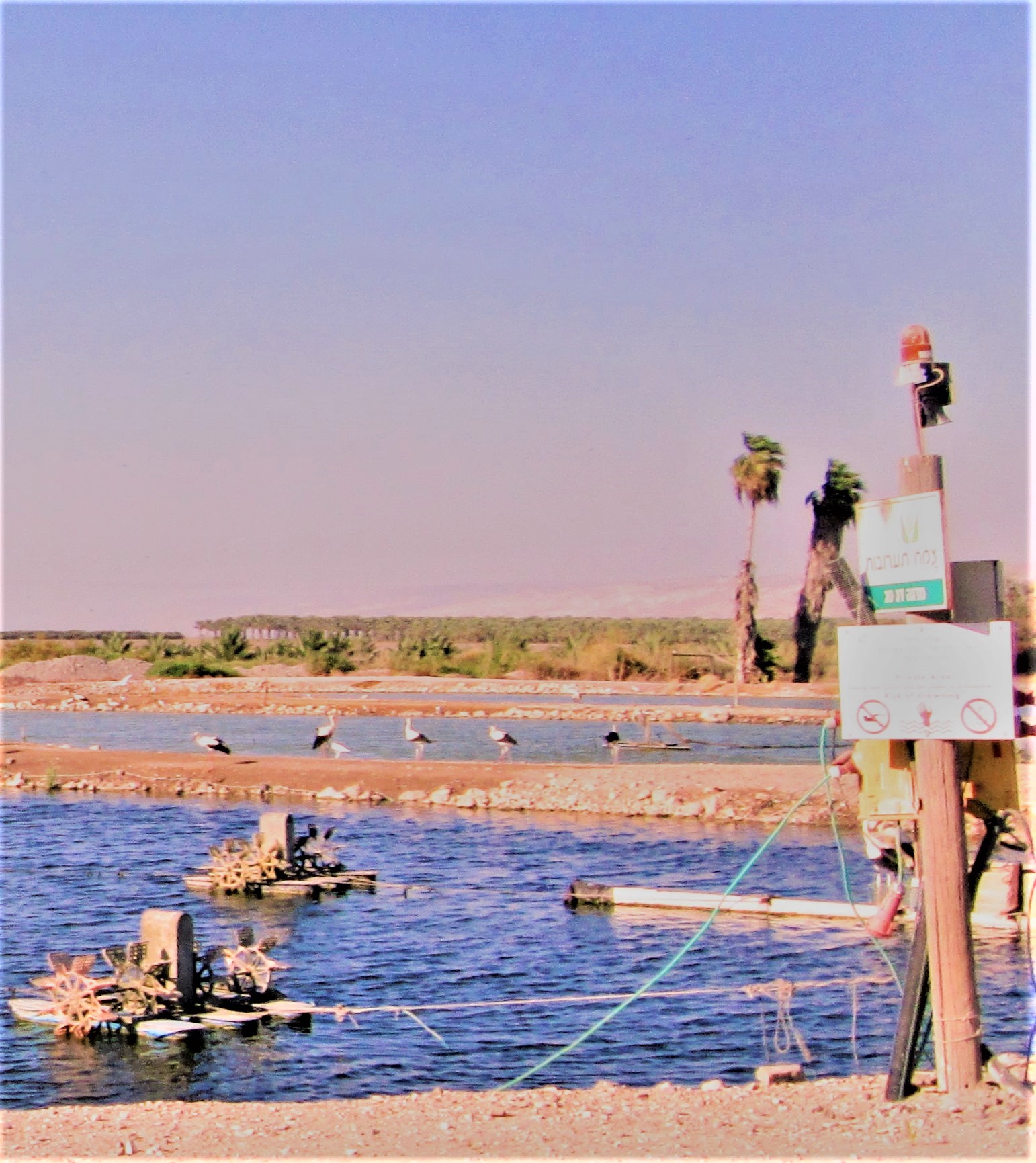
This month includes visual art as well: striking photographs of signage from Hannah Greenberg and graffiti-style work from Texas Fontanella.
Thank you for reading June’s issue of Synchronized Chaos.

Standing on the Bridge

Standing on the bridge
I look straight around the bending structure of the world
To the end my eyes can't enter any more -going out of sight
The mind steps there where the unseen lies
I know all my loving dreams lurking there
How wonderful reflection of the water!
Brings out the unknown beauty and charm
Right time to start the journey to the horizon
The sky and the land kiss between
The soothing light dancing with the colorful birds
Suddenly the waterman sings out touching the heart
"O ki Garial Bhai!"

Chapainawabganj, Bangladesh
12/06//2022

In This Hot Summer

In this hot summer
I turn back here again and again
Under the large banyan tree
Drink the cool fresh tube-well water
And remove my fatigue
By your hand made spicy lemon tea without sugar
I walk through the green isle
Emerge the oxygen of the body
Sitting on the mound
How wonderful the sunset reflecting on the river!
In the hot summer morning
I walk out to the lovely open field
Observe the new light softening the earth
Awakening with the chirping lovely birds
Calling me back to the fondling childhood days
In the hot summer night
O disturbing sleep
Keeping hands on the forehead
Brood over the days passed
And the days on to the rise.

Chapainawabganj, Bangladesh
12/06//2022


Facing the Reality

Nowadays we can't cry to see the death of our brothers and sisters
Everyday every time it becomes natural - occurring death
It stops our cry to see the misery of others
Nowadays our heart can't respond like the past for love or sympathy
Sympathy or empathy -
Roles on the outer face of the body
Humanity or the group of the humanity
All lie in the hole
No sign of light to remove the black spots on the corner of the eyes
Every day it increases the line of the hungry children
The deaths on the roads, on the waters, in the sky or by shooting, throwing missiles
Adding the large amount of daily starving people
Around us facing the new change to solve
`Globalization' -the word
I believe the reality
How can I disbelieve my eyes, dear?!

Chapainawabganj, Bangladesh
13/06//2022


Love Breath

What I do everything for you
Your simple words of love
Simply touches my heart
I reach my goal - like the boat floating on water
Your simple words of love
Knock at the door
I enter your room lying by you
Charmed to what you say and hug
I take my breath and lose myself in the world
Where only you and I live.

Chapainawabganj, Bangladesh
13/06//2022
Playground

Back then, we use to see a woman at the window,
Who made sounds with her mouth to arouse our laughter;
Our milk teeth cracking their surfaces like tiles on metals.
Then we would jump closer again and again, a-thirsting another sound.
We back-walked, and laughed at the window woman.

You would say to me “Run, run!, she is sounding again”
You and I laughed, legged footprints on the sand;
Like old copies of a testament that unfreezes memories;
Of fragile days, of clay-soaked Kanjami, of toy catapults, of the dark!


At dinner time, Flashes of the window woman mirrors in our cornflakes plates.
Longing stumbles through the threshold of our hearts like a flapping toucan.
We swam in a pool of imagination that everything began to wear her sound,
But we relocated.

Today, we miss the playground,
The window woman who breaded us with sounds that still echoes.
We held each other, ran to the playground,
Up the valley, we looked up to the window.
But sadly, nothing sounded.
Fatihah Quadri is a poet, creative writer, and a literary critic. She is a member of HCAF (Hilltop creative arts foundation), Nibstears poetry cave, B.G.T( Black girl’s tales) and a member of Al faheedah press, University of ibadan. Fatihah is a Nigerian.
The Salton Sea


It’s said the Salton Sea is a drainage pond for the vast Imperial Valley-

Breadbasket of the nation

And just when I think I’ve seen it all…

an old man in a tomato red tuxedo water skis passed a flock of pelicans.

I go for a walk

The water is receding from the beach like a shy girl in a disco tech. The lake will be dead in another 50 years

White sand beaches are littered with the bodies of dead green fish. They remind me of dollar bills scattered in the snow

Sea gulls pick at the bleached bones of a cat


The hotels are empty and the palm trees have died eons ago.


I thought I saw the skeleton of a dinosaur in the trash heap behind the Howard Johnson’s.

Someone’s opened a fire hydrant and it’s pissing precious water down the road.

The ancient body of a Winnebago sits in the lot across from a deli its tires are flat and someone’s spray painted “Earth First!” in blue paint across the back of the motor home. I think it was used in a movie once.


Not far is a tavern

Two bills get you a glass of cheap bourbon

Not far is a peer


A pile of bacon grease lies on the walk to the water the fat’s coated with blowflies

Watch your step.

My dogs investigate the dumpsters behind the Chinese restaurant.


Somewhere out here there’s supposed to be a wildlife refuge.

Captain Caveman just rode by on a Schwinn bicycle--


The sun falls behind the atomic mts.

Good luck, good-bye


from the Salton Sea
Fading memories

I could remember
When you left
At noon, it was outside, at the portico
My eyes soaked, rivulets streaming
I held your hand, the same hand
You used to rub my head and I lock
My hands in yours-soft
But at that moment, as I held you
Perhaps with the weight of pain on me
It felt rough as a sandpaper, why?
Now I see you were tired,
Tired of the ride with me
Each time I reach inside my head
In search of a moment’s memory of you
I see you disappearing/fading away
From my heart like smoke.
But still I wait outside on this same
Spot/waiting for you as a prodigal son
It’s been two years now
& at every knock and sight of
Shadow at night, I scurry down
Thinking it’s you.
Still waiting
Come to me, say you've stayed away
For long
Let’s make memories again
There’s still a lot unmarked
On our bucket list.
Note: This story contains themes that may offend members of the LGBT community. We at Synchronized Chaos stand with LGBT and with all people in their quest to be treated as equal human beings. At the same time, we don’t believe Amos Momo Ngunbu intended to harm anyone with his writing as we think it came from sincerely held religious or other beliefs on his part and concern for the welfare of teenagers. That said, there are different ways to interpret religious teachings on same sex relationships (as well as church-state separation). We invite readers, if they wish and feel comfortable, to engage Amos with reasoned and compassionate discussion in the comments.
Rose, growing up as a child, who lived with her parents in the 70s, was a daughter to Mr. and Mrs. Miro.

Her ambition was to become a medical doctor within the next decade. Decent she was, and schooled at the Don Bosco Technical High School, located in Sinkor, Monrovia, Liberia. Her beauty was like a symbol, crafted with words, that almost everyone could read, through which to get their way out.
Rose was admired, by almost everyone, in and out of her school.

Regardless of her beauty, she was positive about her future and never wanted it to be disrupted, with anything else. She was satisfied with her living standard, regardless of her parents' condition.
During the next academic year, there came a newly enrolled student in the person of Lesia, who entered the school with the mindset of initiating young girls into lesbianism and prostitution.

She entered the school with a very high dress code. Her beauty flattered everyone, both instructors and students. She initiated a lot of girls.
On a bright Friday morning, during the day of sporting activities, Lesia went on the campus, with a very high dress code that turned the eyes of everyone.
Contested for miss and came out with a shining color. She got her talent from the dark world, for which, she never lost in any competition.

Suddenly, her talent drew her attention to Rose. She ignorantly saw her to be a good person in nature. She got closer to her with the mindset of achieving the positive best from her.
In no time, she was initiated into the dark world. Rose, who was a great and serious student, became to misbehave and mislead people on campus.

Everyone was shocked with her behavior. Her name was the song sung in the ears of everyone.
Nakedness became her fruit for success. She no longer listened to people, both on and off campus. She initiated most of her friends too. There was a boy named Thomas, who she tried to initiate, but failed, due to his time spent in the presence of God. She tried and tried, but failed.

Thomas kept getting closer to her, just so he could regain her soul in the presence of God. He did all he could and later captured her soul to the presence of God. She recovered from the ancient world and got to her normal stage. Thomas and Rose later married and left for the Netherlands.