a little jack daniels with the coffee

tracing the outline
of a tattoo on soft
black skin with
your tongue

a snowy morning
in the middle
of somewhere

a little jack daniels
with the coffee

the love of your life
sleeping in just her
panties in your
centuries old bed

you can't help but
feel this was never
supposed to be for
someone like you

the infinite joy
to have defeated
time

there is no substitute
for it
---------------------------------------------------------------------
let the fun begin

the joy of a dirty mind
is absolutely anything
could be a reminder
or the spark for the
imagination to rev
the engines and let
the fun begin

a rainy day

a car dealership
bathroom

a certain way the
floor sounds with
the right shoes

an echo from
across the street

the subtle way the
chap stick tastes

a certain song on
the radio

absolutely anything

and i won't be able
to walk for a few
minutes
----------------------------------------------------------------------
too fast for me

i'm at the age
now that life
either moves
too fast for me
or too fucking
slow

finding the right
groove is not
possible anymore
for me

maybe i'm the
cranky old man
or just another
child that has
grown old

not that it
matters

we are born
to die

few get to
experience
something
other than
that

or so i have
been told
--------------------------------------------------------------
a few moments to forever

i have never learned
how to cope with
good news

happiness is some
rare thought that i
haven't embraced
in years

and here comes a
lost soul that wants
me to give myself
to her for any
amount of time

a few moments
to forever

my soul is old
enough now to
stop fighting this
silly notion that
i'm strong enough
to go it alone

i am broken
enough though

that i still have
doubts that anyone
truly wants to devote
the time to fixing me
the way it needs to
be done
--------------------------------------------------------------------
something is always in the way

and you want
to love her

but neither of
you can find
the fucking
time

and the days
become years

and eventually
something is
always in the
way

before you
know it

what could have
been is all that
is left

a fleeting moment
of sweet kisses

and enough desire
to keep you warm
on a winter's night
J.J. Campbell (1976 – ?) is currently trapped in suburbia, wondering where the lonely housewives are hiding. He’s been widely published over the years, most recently at Mad Swirl, Horror Sleaze Trash, Misfit Magazine, Terror House Magazine and The Beatnik Cowboy. You can find him most days on his mildly entertaining blog, evil delights. (https://evildelights.blogspot.com)
Some geographies:

Batangas

Only an exceptional lawyer,
with a strong resemblance
to motor Jacksonian epilepsy

& a somewhat heavier bass-
line trailing behind them, can
perform a confident victory lap

without slamming the putter
back into the bag & stewing on
their flight back from Manila.


Gabès

Candy may be hard
to find in the fast-
food franchises built
by the former colonial
government in the
airport terminal, but,
thanks to the U.S.
military intelligence
supplying them in
an electronic format,
pretzels are plentiful.


Palembang

Scotch whisky — or was
it Irish? Or both? — is
said to be enhanced by
distilling it over burning
peat. Here peatland fire
is given as a reason why
not to visit the city. Not

always so. Yijing, a 7th-
century Chinese monk, came
back from a six month stay
excited by the plethora of
electronic billboards, & how
they scraped the sky. Little
heard from him after that.

Rumor has it the Dutch East
India Company obtained
his silence by promising him
the royalties from any future
use of that sky-scraping word
along with a speaking part in the
upcoming Blade Runner movie.


Balikpapan

There was a pig tied up in
a corner. A toddler was tied
up on several pieces of board
in a state of lying. How dare
they say there was no evidence
of white supremacy? My brain
keeps running a marathon. The
frontal lobes eventually get
overloaded. We can't easily
make these problems go
away. Instead of dinner
with a big group we have
Zoom & cookies. It is so tiring.


Jezqazǵan

A quick snack is all the guide-
books say you can find here.
They suggest you go some-
where else, to a nearby city
perhaps, if you're looking for
memorable moments. Maybe
that's why the Soyuz rocket
of expedition 49 landed near-

by, to relax "in a remote region
in Kazakhstan" after the hustle
& bustle of space. It was my
75th birthday. If I'd known they
were going to be around, I
would have invited them along.


Cork

Only infections
acquired after surgery
can dominate the

men's 400m hurdles
& remove all un-
necessary programs

in the expansive &
expanding field
of Irish studies.


Bayanbulag

It may be tucked away in
a dark graffiti-covered alley
but you can often find out

what yurts are currently
on the market or what the
relationship is between

nutritional status & motor
development by following
the many conversations on

religion & culture that occur
in the manicured gardens of
the Divine Word University.
Consciousness is Self Evident.
To Ask for Proof grants the Disproof
 by the Axiom of Requiring it.

It's a journey that every Question
Aborts the Answer
so a walk home resumes.

The industry, The Art
is how to define Boundaries
to hold Pleasure as
an enduring form.

So If You Like it,
  the process can come
    from non-form
      through form
        to non-form
Or mid-stand
where comfort
holds the sensitivity
to ongoing Beauty.

Vibrant Joy Sure by feeling
upon natural ongrowing

Boundaries that fall to
      unrestrained pleasure.

Set Heart's desires
   as bounding focus
       drawn a party to

Gifts rising upon the moment,
                 Evidently.
How To Start


I cannot start

without the dagger pain of a wooden splinter

cored deep and burrowing in the dark.

Bearded dog, limping Cuckoo wasp, the painted

canvases are tumbling dominoes

but I cannot start.


Once I wandered onto property that was not mine

and an old man came screaming up

on a swastika-stamped ATV and the damp moss

spat his beliefs in my eyes, and I was startled

by a mind that was not mine.

I could start then.


Her Body


She lifts her body with her body,

moves her body with her body, sits down

on a hard mahogany chair that holds her body

while she tends to her body, as it is a creature

that needs be tended. Cutting lentils

and cooking rice to sustain her body,

boiling water, infusing safflower

that will quench her body, her body

moving her fingers (a part of her body)

with fine finesse and ease. She thinks

nothing of this marvelousness

that is her body; her body

is a sack which carries her brain around

which is also a part of her body,

wishes she could be without it, contemplates

the necessity of fingernails and earlobes.

She navigates the stairs with her body

that was built by bodies

with the help of machines and tools

that were imagined and designed by bodies,

who sweated, labored, debated

and shaped them alive like art. She enters

with her body, exits with her body,

works with her body, talks

with her body, embraces with her body,

treats it like a garden bush,

keeping it satisfied in its self-containing self.

Her body is the ultimate instrument,

that could even make other bodies

if she so chose; in her womb,

with her body, and the brief assistance

of another body, she can form a being.

(She does not consider much

how this is an attribute of gods.)

She lifts her body to reach the books

on the top shelf, lies her body with her body

onto her bed that cradles her body,

an idea her body came up with

to reconfigure itself. And so

she dreams in her body,

sees orbs and faces and feels pine needles

and loses time and place and law.

Her body is a distant echo; for seven hours

she is more than her body and she likes this,

she thinks this is a miraculous feat.

When she wakes she is a body again.

She rouses her body, walks her body

to the kitchen with her body,

to the kettle with her body, her body

a marvel, to be sure, her body

a majesty of cells and electrical impulses

and movements of bone and lore.

She counts her dollars, heads

to the grocery store, buys a vegetable body,

smells it, feels its leathery hide, wonders

if a potato is aware it has a body,

she walks alone the five city blocks

back home, considering only

the consciousness of the sky.


Dead Finches


They say the bird is a messenger.

Two finches die in a heatwave but who’s around?

The folding and unfolding skies twiddle

with my heart-ends, my valves summer yellow,

chambers blanketed in snow. Again

a lover sends down the rains, but all I get

are rasping gulls with shrieks that puncture sleeps

as musky as cow pastures, as heavy as gold.

My messengers are in procession down the nave

of a church with no one but straw dolls in the pews.

Birds die everyday. I’ve broken bottles

with more than liquid in them. In mourning

there’s a need for a story (even if cruel).

Words unwritten are words unused.


The Play


The curtain rises, and there are faux-animals

human beings dressed in gowns

of lions, elk, cicadas, foxes, toucans

whales on their stomachs moaning upon the floor

so they sway, declare they are grass blades

heaped together, a meadow, a symphony

and yes, they are singing

singing with not just their mouths dressed

as maws and bills and proboscises but with their eyes

their arms, their bellies, their hands

they are trying to tell the story

the story of what it means

to be on an oblate ball of clay alone

orbiting its way through unrelenting space

and what it means, they tell, of how they all lean

together upon one another's shoulders

how they have sex with each other

eat each other

die and will head

into the same soily, cool bed

how they fear and love each other

and are pulled

arrested

driven by yearnings and cravings

to rub against, break things open

watch it, see it, touch it, all of it, grow, change

it all so painful, heavenly, astronomical

so they sing, of when they first realized

that they could not leave, that they, all as one

existed on an island, and if it goes

they all go, gulped by an exhalation of energy

dark matter and quantum particles

and together they begin to act out the end

by suddenly spinning like tops

they fall into and over each other, calling out

hollering roars and coos and clicks and baas

and gasps and cries that are human

and taking off their pelts, as humans

they collapse, impact, all as one, to the stage


except the whales, they merely roll onto their backs

and reach their flippers up toward

the lights shining above, and this theater

all the way to the back rows and utmost rafters

is silent as a tomb.


Shake


All things rattle to your touch.

You are an earthquake, with feelers for the moon.

Monsignori pray for you. Playwrights scratch out

the tremor that takes place inside your pen;

little things make you quiver,

like lost daughters, dead pets, gone friends.

As the mother hen you bear the egg.

As the second youngest of the Babe and the Pop

your shoulders shake from all the wave of

Seven Sibling Wonders who came.

You stick to shampoo, like glue,

and all the windows leak whispers to you.

You pluck a cigarette, and shiver in the drag.

As the grass whipping, you smile.

The dandelions sprout in droves

and you reach to uproot—but you don’t.

Mama, you get me to commit

the genocide.


Lime Kiln


Around his steeple, a neckerchief

embroidered with the lie his father gave.

So, around the point, the strong gulls live,

songs like raking nails to the ear.

Dry myrtle, in the hand, spittle

aside the mouth, we forge course

through the arching buttresses of stars.

He knows the hammer. He knows the bouts.

What swings lays waste to things unmoving.

I reject his common beliefs, his white napkin

that dabs away the gore of his stinging words.

Daytime the chronometer, daytime the stick

measuring the waves at Lime Kiln.

My hands cross the hours. My hands

silt smeared and boney old. He harbors

his clean justice, his pure head

in the flailing wings of birds thriving.

I see the dead ones, on the stones.

Full of ivory threads and matted plumes.
Renwick Berchild is half literary critic, half poet. She is lead editor of Green Lion Journal and writes at Nothing in Particular Book Review. Her poems have appeared in Porridge Mag,Headline Press, Whimperbang, Free Verse Revolution, Vita Brevis, Streetcake, and other e-zines, anthologies, and journals. She was born and raised on the angry shores of Lake Superior, and now lives in a micro-apartment in Seattle, WA. Find more of her work at www.renwickberchild.com
Lunching LlamasMe and My ShadowMore FishOld FriendSpringtime Friend
My paintings and digital paintings have graced two galleries, served as covers for more than half of a dozen publications, and been incorporated, alongside my poetry, in in One-Handed Pianist (Hekate Publishing, 2021). These days, I party with the imaginary hedgehogs I met in midlife, write about the foibles of parenting, teach online courses to emerging writers the world over, and deign to use color and shape to express feelings. There may not be anything new under the sun, but Granny can share with youngins various ways to secure their bonnets. After all, exposure to feral ideas remains important.
HOPE: A HAIKU!

Hope it’s you and me
it’s a light so bright so bright
it is a pure gold.

HOPE: A HAIKU!

Hope is like a light
It’s a little light you can see
Hope is Happiness

By Aurora Brown, age 9, 3rd grade,
Alexandria, Virginia
The City Holds My Heart

Conversations with Independent Filmmaker Ahmad Abdalla

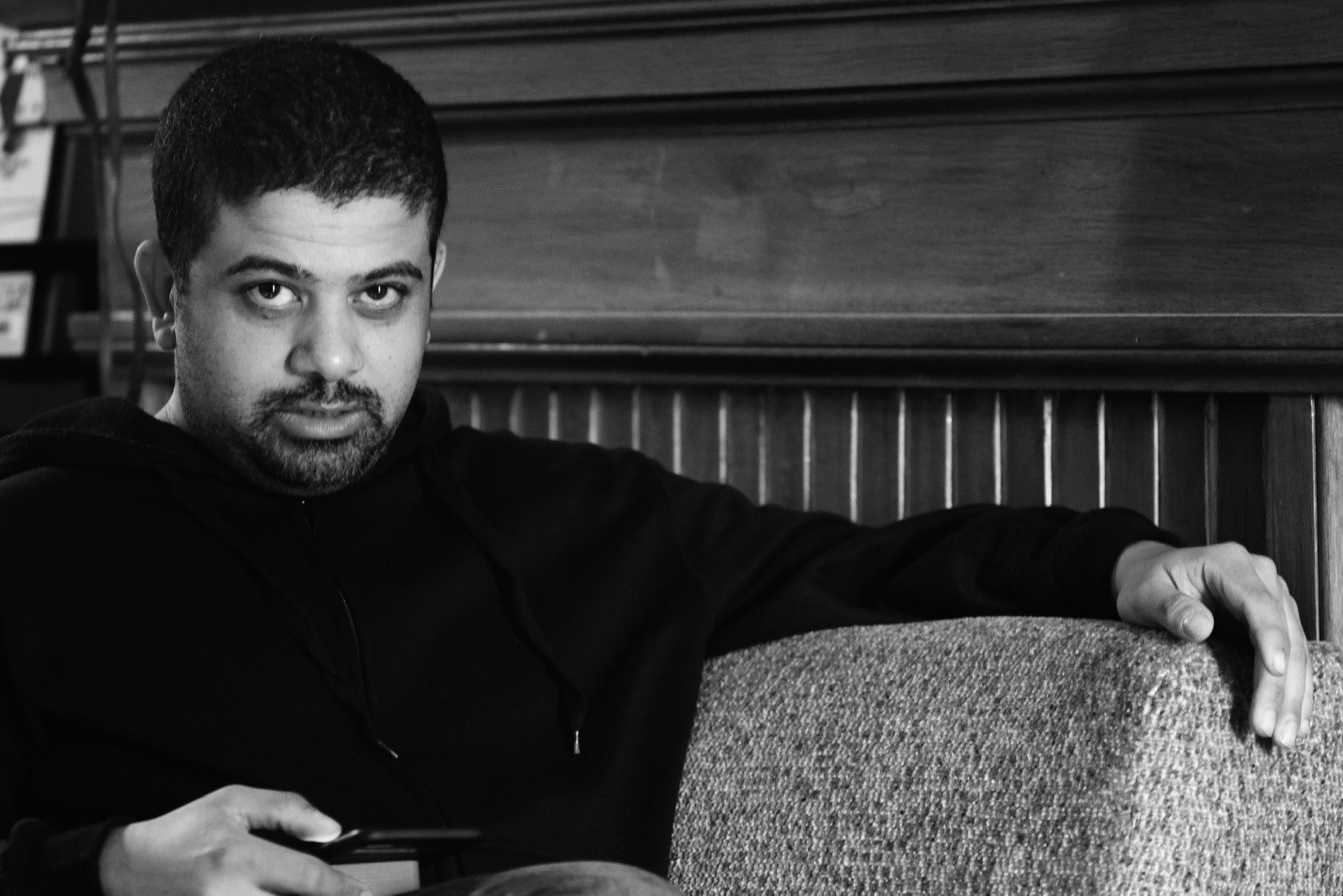
There are films about cities and cities that need to be archived in films. Ahmad Abdalla’s filmography is a long tale about lost cities and their citizens trying to gather their broken pieces among the ruins. Whether it’s simply a suburb in Heliopolis, a decaying art scene in Microphone, a journey on the outskirts of a politically torn Cairo in Rags and Tatters, or the harsh, unnerving Cairo nightlife in Exterior/Night, Ahmad’s heroes and heroines are on a personal conquest to search the self and the city. The only time he made an intrinsic journey, escaping the vastness of cities to the intricate details of one’s inner-city a.k.a home and identity was in Décor. I had the pleasure of interviewing Ahmad Abdalla, whose films fascinated me, I saw two of them in the movie theater, one with my family and the other with a man I loved, both films still resonate within, not just because of the quality and the distinct style with which he makes movies, but because he knows how to dig deep into the subject at hand without getting too sentimental about it.

Ahmad Abdalla is an Egyptian filmmaker who originally studied music and was a pioneer in non-linear editing which he taught himself as part of his passion to become a director someday. He was a key player in the so-called Egyptian independent cinema wave which uses limited resources, outside a major studio, defies traditional storytelling and directorial techniques, relies on personal stories and -mostly- unknown actors or regular actors, although many movie stars opt for an independent film if they believe in the key message or the theme. Many cinephiles and Egyptian film critics have argued against the modern Egyptian independent cinema as a wave of sorts, partly because it lacks vision or it relies on funds and script development programs that align films in similar directions and themes.

I chatted with Ahmad via Zoom, during a world still railing under the ambiguity of the COVID pandemic in 2021. His voice was friendly and tactical, carrying his inquisitive methodology as seen in his movie, yet laced with the sympathetic lens through which he views his subjects,
“Even a freelance artist struggles, they are left to the whims of whatever is going on in the world. Like a candle in the wind, they are left to the chances and the global socioeconomic implications of a constantly changing world.”
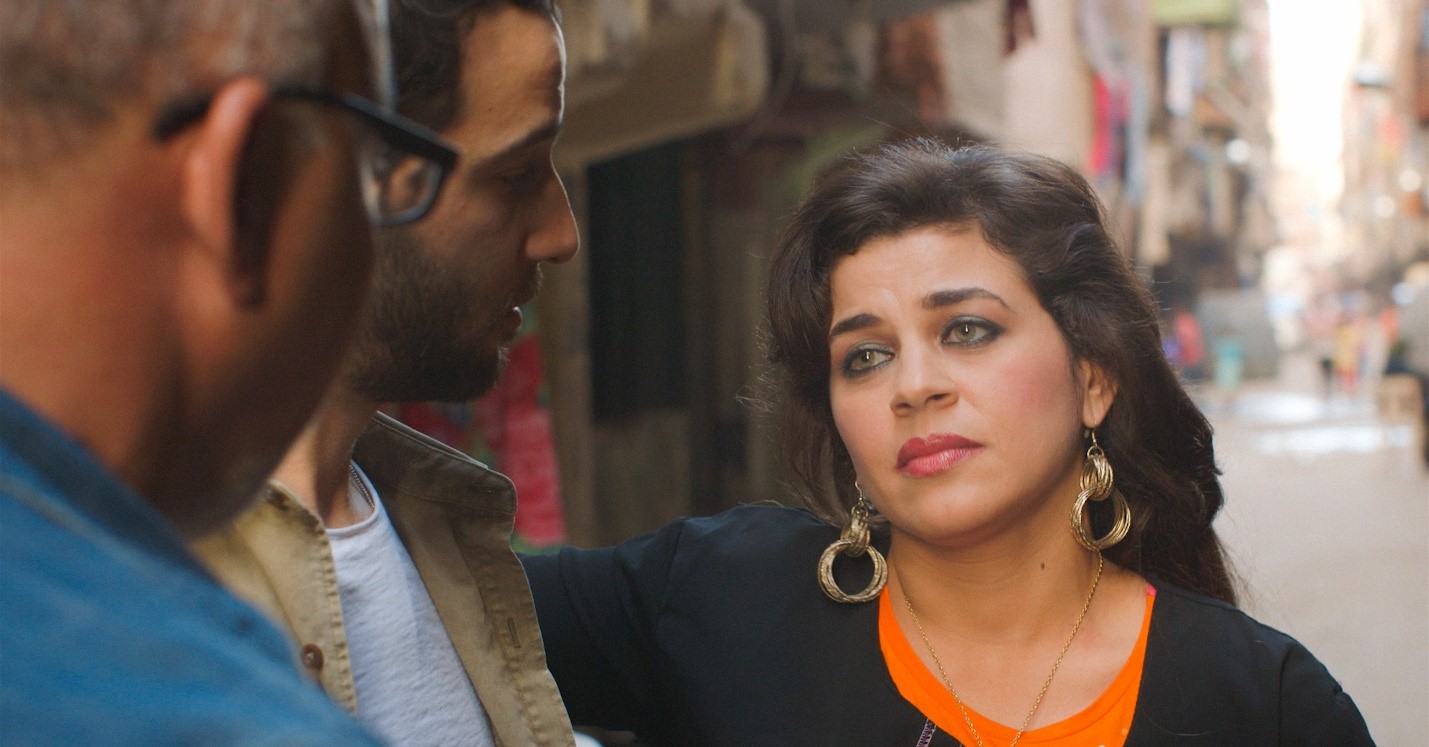
Egyptian actress Mona Hala from the movie Exterior/Night
Watching Ahmad’s movies up until Exterior/Night has been a throwback experience, a view-from-the-top, bird’s eye style of Egypt we have known and impeccably misunderstood. He archived a critical state in post-2011 Egypt to create a mesh of ideological, religious, and social chaotic visions from individuals who found themselves at the mercy of a world between vigor and decay.

Ahmad Abdalla has been introduced to the Egyptian film scene as an indie filmmaker, whose films are more niche than mainstream. His films were never box office hits, but they gradually blossomed into cult classics which increased in popularity as they aged, like a fine bottle of Château de Granville. Microphone and Heliopolis became these quotable, shareable internet content. Songs from Microphone despite their success back in the ravishing post-2011 days, have seen even more recent success as youths started witnessing the dying days of the Alexandria underground art scene. Was it because the state of the city itself was lost? Alexandria and Cairo now are two different entities from when they were back then, what does Ahmad think of this,

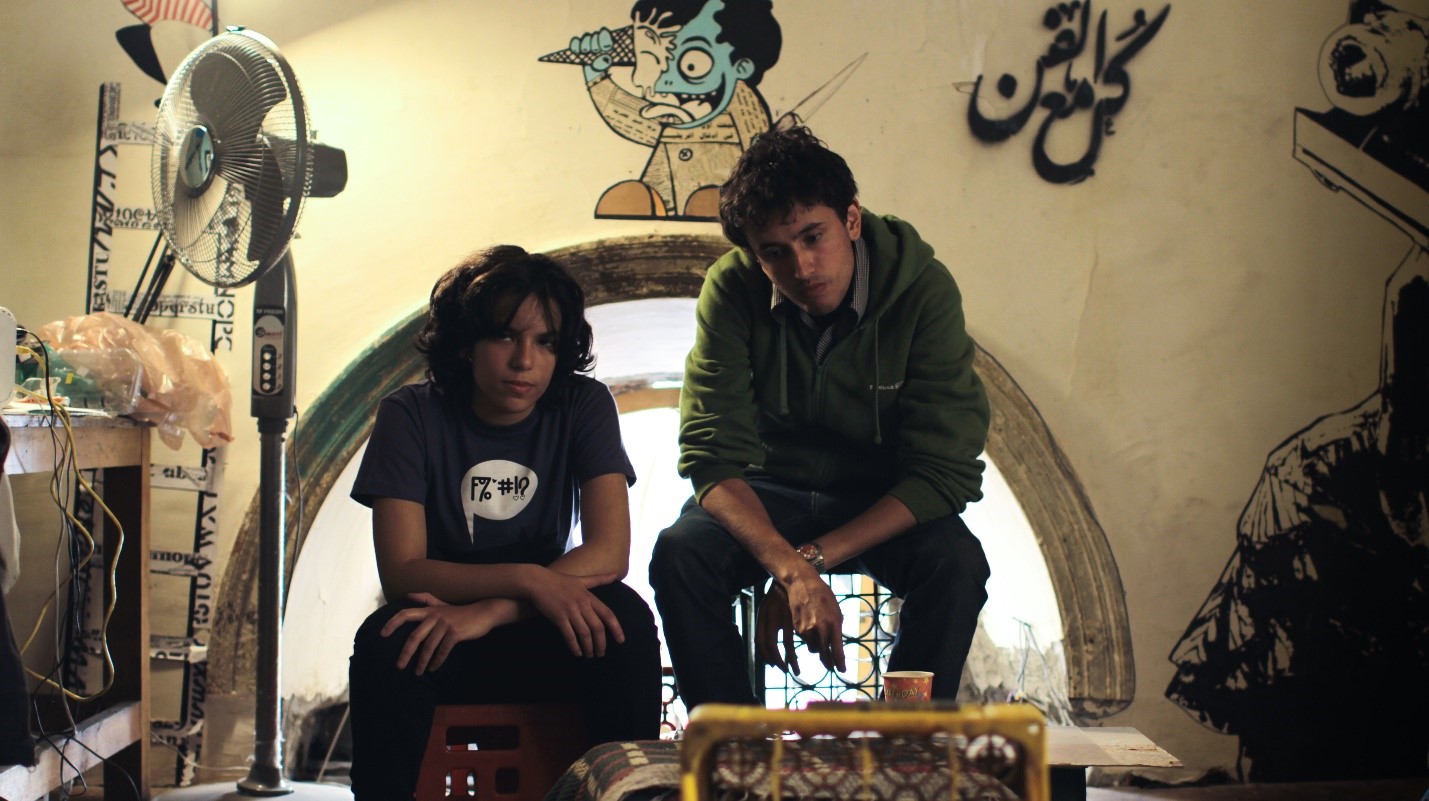
“Change is part of the game, the graffiti that appears in Microphone is all about the concept of graffiti as an art form itself. Graffiti is there to be subconsciously removed and then redrawn again. This is part of the identity of the city. Change is the only constant. When I made Microphone back in 2010, many films were shot in Alexandria at the same time and were more concerned with the nostalgic aspect of the city and its cosmopolitan past, but this was the last thing on our mind. We were more interested in the people who lived there at the time and where they were headed. Films are supposed to look beyond the current condition of the city. However, if people look back at the city through Microphone and feel nostalgic, this is something I could understand. It resembles people now watching Darbet Shams [by Mohamed Khan] and feeling nostalgic as Nour El Sherif -the main lead- drives his motorcycle across Abdel Monem Riyadh Square and witnesses the All-Saints’ Cathedral before it was demolished. Visuals change but what remains at the heart of the film is the story. Are people able to resonate with it or not? Are the vibes of what the city was similar to the vibes that are buzzing in its recent form? In my case, I believe I have retained those vibes.”

The short movie The Subconscious Art of Graffiti Removal by Matt McCormick came to mind after Ahmad’s speech, but also his view on cities and whether they retain their souls despite all the interchangeable energies and shifts. One main topic that I wanted to discuss with him was the vibrant Alexandria rap scene which in Microphone was infantile, slowly testing the waters and attracting young listeners and now it’s become a solid genre with constant followers, rabid fans, and emerging sub-genres,

“Yes, the rap scene has changed completely in Alexandria but it’s still there. Not much graffiti is being produced but a lot of visual artists emerged and are currently starting their exhibitions whether virtual or in more spacious, welcoming art galleries. The art remains but it took a different form and shape from what it was before, and that’s the nature of things. Had we shot Microphone in the 60s for example, we would have captured the Greek and Western music scene that was active in Alexandria in San Stefano Casino. In 2010, those Greek bands were replaced by alternative music bands such as Soot Fel Zahma and Massar Egbari. Had we shot the movie these days, it would have introduced us to rappers such as Wegz and Marwan Pablo. Our modern times are defined by the agile transformation phase. If you watch a movie shot in the 60s-70s you would barely notice how the city evolved, probably only through the evolution of vehicles. However, if I showed you how the Alexandrian corniche looked like four years ago, it would shock you how much has changed.”

Ahmad created three distinct and divergent journeys in Heliopolis and Exterior/Night. While the first was a personal ode, an individual journey of a certain habitant of the elegant Cairo self-titled suburb, the second was a requiem for the Egyptian intellectual middle class, a journey where they burst out of their existential bubbles into the dark side of the city. On the other hand, Rags and Tatters exhibited a minimalist, semi-documentary style using minimum resources and harsh lighting, telling the story of an escaped convict on the outskirts of a Cairo boiling with rage and political unrest in 2011,

“I consider every film a journey. All my films are about people trying to find their place in the world; specifically in the city, whether to have a voice, to be an artist, or as simple as finding a roof over their head to stay after coming out of prison, like in Rags and Tatters. I try to see it [the city] through their eyes. And it is usually a reflection of how I saw the city at a particular moment in time. I made Heliopolis with an approach similar to how I lived my life at the time. This was the narrative that intrigued me back then, and it’s a very personal film for me, made about people I’ve known in real life and issues that concerned me as an artist and individual. I made it to retell stories that had been told to me as a way of archiving these tales. When films are made they become a mesh of my vision and how I saw what happened at the time, not necessarily how it happened exactly. And [you] as a viewer, the films become a mesh of your vision as well. Your narrative is intertwined with mine, and as we talk about the film right after its release the conversation would be different from talking about it ten years later. In the end [my heroes] are people trying to find where they fit in the city, during their journey we see the city from a lens within the moment that the filmmaker decided to capture it. That’s not just me, I think. Every serious filmmaker trying to make a movie and deciding to shoot in the street and not in a closed location would have similar hauntings and views about cities. Take Land of Dreams by Daoud Abdel Sayed for example which was also shot in Heliopolis -by the way, Daoud lives there- and how it reflected the filmmaker’s vision about the city at the time through the tale itself.”

In Ahmad’s films, cities are haunted by ghosts of past relationships and exes. It could be almost found in every movie he made. In Exterior/Night, there’s the ghost of Mo’s ex Mai; a recurring presence throughout the film whether in the dialogue, like a low-res photo or through their WhatsApp chats. Khaled’s ex Hadeer shows up in Microphone as part of the non-linear narrative in scenes from Khaled’s past that juxtapose back and forth with his present, cementing her haunting existence in his psyche as an insurmountable memory that does not go away with time. In Heliopolis, Naglaa -Ibrahim’s ex- is a dominant presence in his conversations with friends, his interview subjects, and through her haunting voice message at the end of the film.
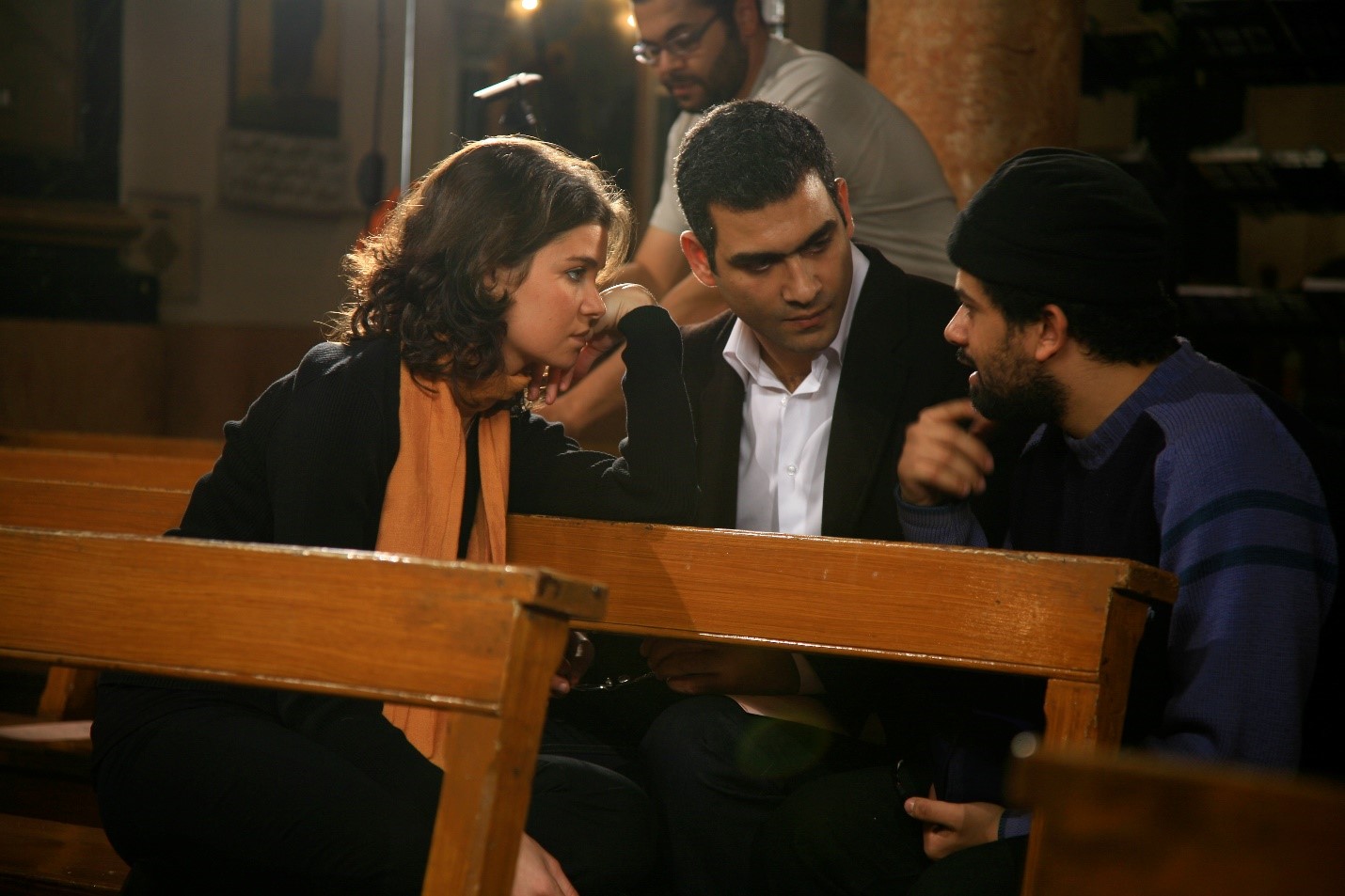
Yosra El-Lozy and Hany Adel getting directions from Ahmad Abdalla on the set of “Heliopolis”
This makes Ahmad’s movies an interwoven narrative of the Adult-Child trope, which makes adulthood so different and unattainable from when it was a decade before. Films like The Worst Person in the World, Frances Ha, and tick,
tick...BOOM! show what it’s like for adults to go through their 30s without accomplishing anything, where resolutions and settling down are parts of the big ol’ mystery that their parents and generations before had. Ahmad joins the clubs with his haunted cities, hesitant characters, forced heroes, and love stories that don’t die,

“I firmly believe that romantic relationships are the things that reveal us the most, and the most accurate way to see the world. Relationships with all their bittersweet memories, brutalities, and wonders open doors inside us more than anything else in the world. On a personal level, each long feature that I created was inspired by the post-breakup phase in my life. These are where my creative levels soar. At the time when the breakup washes off, I find myself looking back at it, wanting to revel in the details, and see where I am in the aftermath. In the middle of this discovery stage, I find myself learning more about the reality of things, and how the world works. Relationships resemble a cave where you have been spending days on end and suddenly the door opens and you find yourself out there in the world. Many critics have written that in my movies there’s an obsession with unfulfilled love or unresolved relationships. I believe that we are all obsessed with that. It’s just that we are not used to writing or expressing it. Our hunger to seek these romantic urges, and fulfilling what might have appeared as a fulfilled love story is what drives us to change our lives ultimately.”

Art is a strange being, it hits you in the sorest spots, at the time when you least expect it. When I first watched Exterior/Night it felt like I couldn’t relate to any of the characters. That was one year ago, and now, it feels like I’m the female version of Mo, an artist so consumed with his ego and inner world that he retreats into it further and further as the years go by. Mo has become the mold of the intellectual unable to mingle with the masses, yet so thrown off the art scene that his existence became subconsciously attached to his characters. As he dozes off or daydreams, he becomes the poor peasant hero of his film, for which he might never find a producer or an actor. Ahmad is a realistic dreamer, an artist who sees the world for what it is, he doesn’t fool himself but also cannot sacrifice his artistic vision for the sake of earning his dime as an artist.

The same artistic obsession could be found in Décor, a fairytale in reverse of an independent woman who dreams of domesticity and a simpler life. Again Ahmad returns to artists who are forced to seek a less than glamorous, rebellious artistic path but this time the heroine, Maha, yearns for a life that has been completely rejected by a woman of her path and craft. She is an art director on the set of a commercial film who struggles against doing her job and making a living as an artist. Yet deep-rooted in her psyche is a traditional Egyptian woman pining for the safety of a normal, apple-pie life. It’s the first actual female protagonist that Ahmad pushes to the front to lead his film narrative,

“Let me tell you why I make films in the first place. Only my last two films were written by someone other than myself. I’m not interested in piling up films in my filmography, although it has a financial significance for me since making films is my main source of income and I have no other monetary source for my living. I don’t do advertisements or direct TV series but I still make movies only because at this particular stage in my life there’s an issue that haunts me and I want to express it. At the time of making Heliopolis [as I told you], I was so emotionally charged and I wanted to insert it into this tale with all my power. The same goes for Microphone, the first time I met Aya Tarek [Alexandrian painter, street artist, and illustrator] and the musicians I was dazzled by their world of artistry as if I entered a different portal. I never thought I would be able to meet these people and make a movie about them. Microphone was supposed to be a documentary at first which is why I consider it a docufiction with scenes from the initial documentary inserted within the fiction film format.
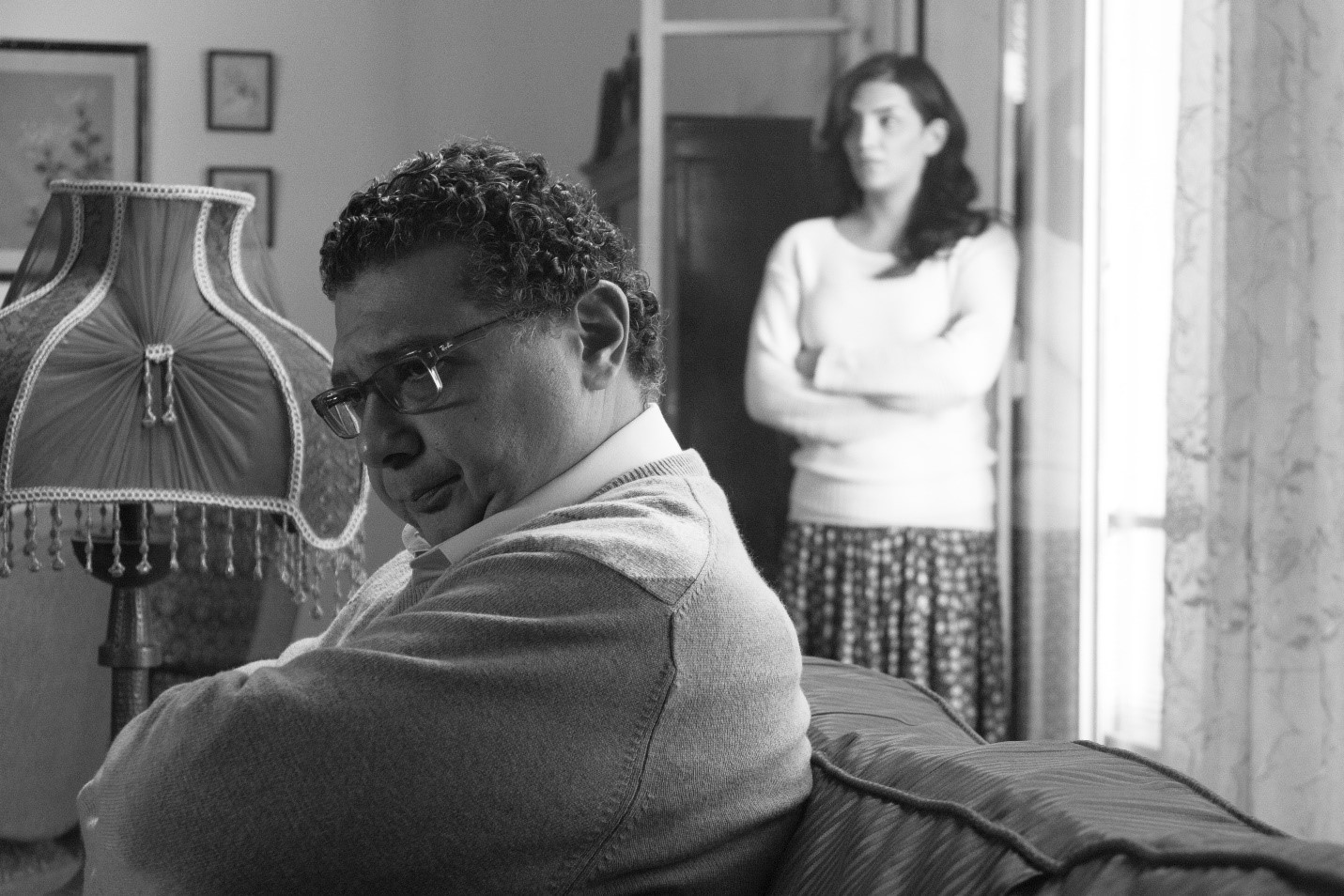
Still from “Décor” featuring Horreya Farghaly and Majid Al-Kidwany
Décor is not much different from my other films, but it came at a certain stage in my life where I questioned the concept of choices; whether choosing between two things meant that we were free to make those kinds of decisions? For me choosing between two things was a fragile and very limiting concept. So when I read Sherine and Mohamed Diab’s script it piqued my interest, in addition to my passion to make a movie that paid homage to Egyptian classic noir films [e.g. those directed by Kamal El-Sheikh]. This question coincided with one that hovered over my psyche at the time so I knew I had to make this film. There’s also a quote by Yousry Nasrallah [famed Egyptian director] that I love: Egyptian cinema died when it stopped telling women’s stories and this also made me more compelled to make a film where the narrative was female-centric since it didn’t happen a lot these days. I was amazed by the script when it got passed to me and had to sink my teeth in it.”

The Egyptian cinema died when it stopped telling women’s stories. Ahmad’s -in that case Yousry’s quote- stopped me midsentence and I asked Ahmed to elaborate,

“I believe that has to do with how conceiving the female box office star changed in Egypt in the last decade. In the past, moviegoers paid to watch Nabila Ebied and Nadia Elguindy on the big screen. Nabila and Nadia’s audiences were predominantly women, if you looked closely at photos of movie theaters from that era you would find women flooding to see their films. However, the New Comedy wave which started at the beginning of the 2000s and rocked Egyptian cinemas like a hurricane was purely male-dominated. Female characters only resorted to secondary roles, filling plot holes that boosted the male character’s narrative. It started shyly at the beginning until it became a staple as the New Comedy wave progressed.”

Ahmad’s heroes are people struggling with their identities. It’s them against, not just the world, but their obsessions and fears. Their unfulfilled creative paths and their unsteady steps echo a generation of millennials who have not yet achieved their societal or economic successes. Ahmad is not interested in showing the lives of artists who made it, since he believes in the journey and not the destination, and as all of his heroes have not done anything special with their lives, they are eternal lost souls in the great Labyrinth of modern Egypt,

“With Exterior/Night, my friend Sherif ElAlfy [the scriptwriter] told me about an idea based on his personal experience and together we sat down and discovered many questions that tackled deep into both our worlds such as the modern world of the intellectual burgeois as reflected in our main protagonist, Mo. But as the film progressed it became about Toto, the prostitute. However, to be more loyal to the story I had to tell it from Mo’s POV. Exterior/Night was what I saw happening in Cairo at the time and how I wanted to show it. I wanted to make it a commentary on the nature of relationships between men and women in Egypt which was mainly governed by class, religion, and cultural background.”
Still from “Microphone”
It's strange how Ahmad saw the world. People who never thought they would grow into the lives they saw their parents live. Adults who resist the life of adults, and try to rebel against it only to realize they are not teenagers anymore and get sucked back into the adult life. In one scene in Heliopolis, Ali watches as his fiancé Maha contemplates buying another fridge, and in an unexpected move attempts to flee and abandon her, probably calling the whole marriage off, only to change his mind and join her reluctantly. A subtle scene that captures the spirit of a generation; the lost kids of the late 80s/90s after they got handed responsibilities and became adults despite their infatuation with the Peter Pans they once were. On his familiarity with the stories he tells and the worlds he creates, Ahmad states,

“I don’t make movies about worlds I am not familiar with. Many people pass on scripts to me and the plot alienates me so I decline to do that. Even the crew behind the camera, at least in my first three films have been in my life for as long as I can remember. As for actors’ choices, most of them are my friends in real life. Throughout this safe zone of mutual understanding, we can play together and try as many approaches as we can to the scenes or the acting. Décor is a different story, it was the first time that I worked on a script that I didn’t write while being backed up by a major production company with a big budget. That’s why I wanted to work outside my comfort zone and work with artists from the world of the mainstream movie market. That’s what happened with Horreya [former beauty queen and high-profile Egyptian actress] whom I loved before our artistic collaboration. She studied her role faithfully and we were able to communicate perfectly during shooting. I think she was great and she brought a freshness to the role that I don’t think anybody else could have done better. In Exterior/Night I paid great attention to picking the actor who would play Mo. He had to look the part of an Upper Middle-Class Egyptian intellectual bourgeois.

There was no one better than Karim Kassem whose francophone and family background made him the perfect match. Karim is a great actor, and his subtle acting method could be one of the reasons he is not getting well-deserved attention.”

During our conversation, I made a point to wonder about the craft of acting itself. How some promising young actors are sometimes cast aside, living their whole creative lives in the shadows. I mentioned a specific Egyptian actor, Amr Abed who played a minor role in Exterior/Night showing unmistakable buried talent yet never getting the exposure that he was worthy of,

“Unfortunately our industry [cinema] depends on luck, specifically for actors. You have to be in the right place at the right time. You have to get the right exposure. Some actors are not that lucky to get that kind of exposure, regardless of their talent, and there is a sort of sticking to safe casting choices. However, talent usually conquers, especially if there are filmmakers who are open to searching for these specific talents and seeking them in person without resorting to the easy options.”

Ahmad’s main purpose as an artist was self-expression, whether the medium was writing, photography, or filmmaking. It didn’t come as a surprise that he was not keen on watching as many films as he could. From what I saw, Ahmad tamed the medium to fit his narrative, filmmaking was one of many methods by which he could exist through stories that he was telling,

“People who are close to me know that I’m not a major movie buff in the sense of the word. I go to the movie theater to enjoy a blockbuster and my taste in terms of movie favoritism is purely commercial, believe it or not. I’m not concerned with cinema as an art form, but more with the art of self-expression and using filmmaking as a means to convey that.”
Ahmad was born to create whether through the lens of a handheld camera or in the air-conditioned corners of a photography exhibition in Zamalek. The world will see more of his creativity through the terms he dictates as a self-immersed independent artist truly representative of our modern times.