

Poetry from Aasma Tahir

Aasma Tahir

Love Means Nothing to You
 
Can you feel it?
The gentle sounds travel to the far-off temples,
Echoes of the ringing bells summon, 
Living souls dance in ecstasy,
The waves strike their heads against the banks,
And the empty rooms emit light.
The river flows with torrents. 
Ah! My Love, 
You are engrossed in the fairy tales, 
Tales of the moon and tales of the stars.
 
You are truly ignorant of nature,
So, it conspires against you.
Oh! My Love,
You are blessed with innocence.
Don’t change the colors of your canvas,
You are heedless to relaxing cloudiness.
Listen! Cloudiness mourns. 
On the lonely benches of your orchard,
And you read poetry of Keats and Coleridge,
You will never discern the real beauty,
See, the guardians of intellect entangle you.
How can one encage you in the valley of dream?
Oh, my dear Moon!
There comes an afternoon.
You will wander about in the city of stillness,
But you will never find the path of love,
Nor the traces of my footprints.
Under the scorching sun, 
Your emotions will be frozen.
And you will lose yourself in the woods…
 
 
Romance

Radiant moonlight in the woods,
Oozes the blazes out of the dark.
Spellbound rustling of leaves, 
In the winter eves
Blooms the dwellings of romantic souls, 
And somewhere
Nights sleep in the lonely arms,
Caressing the broken hearts of lovers 
And enfolding the melting emotions.
 
Hollow Man

Voices of the hollow door, 
And the hollow phone echoes,
He throws an urgent matter into the basket.
Here comes a poor man,
And begs for at least to heed his request.
The room flashes, 
Odor of a bouquet wafts around the room.
The fireplace warms up the environment
Outside stands a poor man empty-handed
He came just to hear the refusal.
“Hahaha! I already told you Sethi Sahb, 
This is a wrong place”,
He hangs up the phone mockingly,
The time passes quickly…..
Every moment falls into emptiness.
At lunchtime food is served with colors.
“Oh! The gathering awaits,
Let’s go, 
The guests have arrived.”
The night peeps through the window.
The table is full of the undone tasks,
The poor man stands behind the door,
But still in a hope….
 

Breathing in Love

While I glimpsed at you in the tranquil eve,
I saw my real self, unveiling from your eyes.
Can’t you see?
There left only dry leaves in the garden of love…
But your choice was the season of autumn.
My eyes fled from the crowded dreams,
The cruel world tempted me with its feasts.
You bequeathed my heart unknown pleasures.
The clock moved around with its ticking,
The phone rang, evening merged in the castle of night,
Innocent sounds of nature revealed riddles of life.
How exquisitely we breathed in the careless moments, 
Travelling in the land of acquainted souls,
Joyful was the moonlight,
And love twinkled in a mirror of the restaurant.


Poetry is Melancholy

Poetry dwells in my heart.
It shows me the sights of stunning valleys
And the fairylands, 
Sometimes, it turns the light away.
It leaves me alone, in the dark city, 
To roam about the whole night.
It is melancholy of the winter eves,
Sparkles in the eyes of living poets.
Which no one can behold.
It is not me who writes poems, 
But my melancholy.

Oh! Dear Poesy!
Are you acquainted with my lover too?
I ramble, stroll and roam.  
You know the secrets of my heart, 
You tell the untold stories, 
You sing the unsung songs,
How clever you are! My poor Poesy! 
 
 
November Eve

The beautiful evenings of November are lively,
For the first time in my life, 
I feel, I will not be able to touch 
The melting warmth in the cold weather.
Maybe, I would have been unaware of your presence. 
The deep secret of this silence 
Would not have been revealed to me,
Nor was there any fear of scattering words, 
When you were not here, life stopped 
Now that you have arrived 
Life seems moving, 
But it walks backwards, 
Reiterating on the same steps. 
You are in the city, 
However, humidity doesn’t increase, 
Silent winds hum something,
They ask for your real existence, 
That I had in the first meeting… 
But now it is gone with the sunset.
Bottom of Form


 Depression

Something enters in the dark
Turns the room into bloody sight.
Here is the pistol that twirls in his hand,
And a knife lays in front on the table,
Oh, how much burden life has sustained.
 
After all, how long it may stay faithful,
Death is the end of everything,
He must be remembering his family and friends,
Before committing the heinous act,
He might have be thinking,
 “I will meet you the day never come, 
Nature, flowers, gardens, lawns and towns,
All will walk alone in the black gown,
My existence is meaningless to the loathsome life,
I spent it for the abstract rules,
But why I ponder on this trivial matters,
I am the responsible native of my nation,
I have fulfilled the dreams of my ancestors.”
 
Oh, my dear you are so restless,
You may follow the path of leisure,
So to overcome your gruesome gloom
Don’t you have any mirror in your room?
To see an image of your charm.

A short biography of Aasma Tahir

Aasma Tahir is a poetess from Lahore, Pakistan. She is a poetess of English and Urdu both. She has done Masters in English Literature. She is the member of World Nations Writers’ Union. Her writings have been published in several Anthologies and national and international literary magazines and websites. Recently her poetry book “A Lantern in the Forest” has been published.
Her interview alongwith fifteen English poems have been selected in an Anthology “Postmodern Voices” published from India. 
As an internationally recognized poetess, she recently achieved membership of World Nation Writers’ Union, Kazakhistan and an award “Paragon of Hope” awarded by World Nations Writers’ Union.
She was invited in World Peace Summit, Nigeria by World Institute for Peace to present her poetry.


Her English poem “Woman of Art” has been selected in an Anthology of English Poetry ‘Emerging Horizons’ published from India.
Moreover, her English poem “Blood Festival” has been selected in an Anthology ‘Jallianwala Bagh Poetic Tributes’ published from India. Her poems “Daemonic Tales”, “Breathing in Love” and “Imitation of Life” have been published in  BHARATHVISION.INFO (online magazine, affiliated with ‘Motivational Strips’). Her acrostic poem “Romance” got the first position in Tunision Asian Poetry contest and received winner certificate.


Moreover, her English poems “A New Moon of the Deep Chasm”, “Imitation of Life” and “The Lost File of Love” have been published by Sir Sajid Hussain in his book ‘A Bouquet of Triple Colours’.
Furthermore, her several poems have been translated in Bangla language and published in the newspaper ‘The Daily Gour Bangla’.
Poetry from Richard LeDue

Lyrical as a Shopping Cart

The truest madness is writing another poem, 

after selling three books in a year,

but the metaphors, similes, personifications

all pile up like groceries

in a cart after getting a new credit card,

and the melting chicken burgers

whisper the inspiration for sympathy cards,

ever as we hold hands,

believing our sweaty palms a love sonnet

while wrinkles and grey hairs rhyme poorly

among friends we haven’t seen in so long,

that they might as well be words

on crumpled paper.

Shorter Than You Think

We want to be a feature length film,

but most of us are snapshots- 

static moments we cherish,

until the names and dates scribbled

on the backs become less than ghosts, 

leaving a shoe box to wait

inside the bottom of a closet

for someone hoping to find forgotten jewellery

or money leftover from paranoia about banks,

only to dump the pictures on the floor,

as if a memory vomited from motion sickness,

while they fail to see

the edges of their own photograph.

Poetry from Natasha Leung

i like to think of myself as two people

the day i spent lolling on the couch

wishing for a safety to peel every leg hair off my body

to become curls of rubies atop my head

instead of razor nicks decorating a bathtub

sharp edges picked apart with rusted safety scissors

melting into white tile with the shimmer of saliva

and

the day i chopped apart everything i could find

pant legs revealing scrawny stink bugs wearing cherry sneakers

pencils like baby hairs 

hair alway could be cut without blood

and a fascination with strands on the neck followed

like wisps of water reeds glowing orange in polluted waters

Poetry from Starlie Tugade

and i still seek home…


I’ve never gone too far
home
past my Lola’s house
and my Lolo’s grave.


I’ve never seen that blue,
the one of the Philippine Sea,
and I’ve never even
swam with my cousins
(who are competitive swimmers).
But I’ve seen my Lolo’s poem,
his vows to my Lola,
hung on my aunt’s wall,
and I’ve faithfully listened to all the old stories.
Even though the memories don’t fit,
I have an old lunchbox
where I keep a pen
with my Lolo’s favorite Bible verse,

and a flashlight he once gave me.
Maybe I’ll print out a poem of his
to place in there
as well.
And I’m more than just one story,
one distant set of islands,
one lunchbox holding
my remaining grief.
Sometimes the memories
shrink
to a single raindrop
as I remember long past days.
I swear
I try to catch every drop
in a glass,
so maybe one day
I can drink it
and see my scattered life
come together
for a moment.

Lessons (Rebellions)

My mom once told me not to wear cropped shirts,
as we passed some girls on a street.
I giggled and nodded then,
my hand reaching upwards to hers.

Now i feel the chill
as i walk my dog, midriff exposed.
the wind never warned me
that its bite would make my stomach blue too.
My hands dance downwards with the leash, looping
and loosening the gap
between the sidewalk and the rope.
They too, turned blue
with the cold and with the echoes
in my bones, of days on jungle gyms
the light dipping beneath my head as I climbed
trying to catch the last drops of sun.
But now i have goosebumps on my stomach
and my hands are curled in shivers

because i didn’t keep my mother’s promise.
(It was only hers, after all)

Poetry from Ryan Quinn Flanagan

Bug Bunny Never Went to War

Rollercoasters let it ride,
but I can’t be so winding theme park
laissez-faire.

Bugs Bunny never went to war.
Made his 1940 film debut
in the animated short,
A Wild Hare.

And it was good times
for our resident carrot chomper
after that.

The boys in uniform,
not so much.

They should have sent a talking rabbit
to the war.

That would have scared the shit out
of the Germans.

Instead of pandering for laughs
at home.

One of Disney’s longest tenured employees.

Probably draws a
Fabio-handsome pension
though.

All the finest carrots from
all the best soil.

The war over
just long enough
to start a new one
all over again.


The Dominatrix Always Wins

There are candles that burn out on you
and then there are candles put out on you.

Private first class Hot Wax
reporting for duty.

The Dominatrix always wins.
Not a single losing season
among the madams.

Simple as that.

Pierce the flesh
and pocket the monies.

Five-inch cockroach killers
and not a single off-white
pest killer cube van in sight.

Just clothespins pinching the nipples
like a brand new way to do the laundry.

Furry handcuffs
without the key.

And this final warning
of warnings:

there are no safe words
when the censor comes for
your mouth or mind
or body.


Montezuma’s House of Revenge

It was back in the limestone city.
Passing this small strip mall near Bath Road.

This martial arts place on the second floor.
Over the ESL joint that never taught you
why polish and Polish were the exact same word,
but completely different when it came to nails.

And the sweat dripping down my face,
a most unforgiving summer.

That green sign with black Kung-Fu movie lettering
that read: Montezuma’s House of Revenge –
Karate, MMA, Ju-jitsu, ninjas

It was that last option
that seemed most intriguing.


Blue Antifreeze Snow Cone

I walk by this frozen driveway
with the snow knocked off
a parked silver Hyundai Elantra.

Look down to this blue antifreeze
snow cone sitting there
in a bed of fresh white snow.

Think of all the kiddies
building snow forts
that may never come home
for dinner.

Under the silence of a grey
bird-less sky.

Some half-witty bumper sticker
hanging on by sticky last
holdout corner.

While a joyous German Shepherd
two doors down
tries to catch shovelled snow
in its mouth.

Jumping gleefully
into the gaping black ice
cosmos.

If this is winter,
it is hardly the worst
of it.

Even that long biting wind
taking the day off.

This mortuary still way
I watch my own breath
like seeing ghosts.


Lean Years

There were some lean years there,
let me tell you!
he said.

Let me tell you, good sir,
that for the poor
every year
is a lean
year.

The Man from Ryoca

He arrived with none of the necessary papers,
but all the intent of a happy holiday maker,
this man from Ryoca, though none could place it
on a map, and the birds in the sky seemed to fascinate the man,
dressed strangely for the season, but completely affable
so that no one knew what to do with this tall pale gentleman
who helped you dig through his luggage as if leading
some prestigious archeological team from the university,
so that when the questioning began, it was friendly enough;
tucked away behind glass like a fine martini,
and when the man folded his hands, it was with all
the lost beauty of 1000-year-old origami;
if you found yourself charmed,
you were happier than you’d been in years
and hardly alone.

A Completely Made Up Poem

He was tasked with putting the garbage
out for the night.

Tossing the black bags
over the lip of the dumpster
in the side alley,
listening for that startled shuffle
of raccoons that normally
came.

You still open?
a sudden voice
came from behind.

He turned and squinted.
Held his hand over his eyes
so he could make out the vague
silhouettes of three men.

Beat it!
he said.

Pulling out pipes
from behind their backs,
they edged closer.

That’s the plan!
the big one grinned.

Blue Steak

She says
that is what they order
when they want
it raw,
so I sit up
and give her
the swanky blue steak
of this poem
to chew on,
waiting for her
many complaints
to come running
back to the deaf ears
of this saucy
stainless steel mate’s
rates kitchen.


She Whistles When She Snores, I Can’t Even Whistle When I’m Awake

Some people have different talents.
Think roaming Galileo eyes as sudden baking soda volcano.

I never had a talent,
so I never once entered the talent show.

Sat cross-legged in the nosebleeds
poking at my belly button
over my shirt.

Wondering if I could tickle my spine
if I stuck my finger in far enough.

This, of course, is not a talent.
No one claps for the skinny quiet kid
that keeps fingering his own bellybutton.

But this one beside me now, she has talents.
She whistles when she snores, I can’t even whistle
when I’m awake.

I sound like a mouthful of crackers
without a mouth full
of crackers.

Lay awake,
barely moving for the full
seven hours.

When we get up,
she asks If I slept well.

I tell her I did.
Take ten hours to drink
a single glass of orange juice.

Blame the heavy black bags under my eyes
on miniature clothes shopping women
that can never get enough.

3 Types

She is looking through my notes again,
notices 3 types of handwriting:
normal, stoned and drunk.

All completely different.
A handwriting expert would swear
these were written by 3 different people!
Look, she says.

I look.
It is true.

No resemblance at all.

The normal being
much of what I remember
from my youth.

The stoned is small and tight
and focussed in the extreme
while the drunk is loose and loopy
and hard to make out.

This is NOT healthy!
she holds up the piece of paper.

For which one of me?
I ask flamboyantly.

That is the drunk me speaking.
I wonder if we all speak
differently as well.


Ryan Quinn Flanagan 
is a Canadian-born author residing in Elliot Lake, Ontario, Canada with his wife and many bears that rifle though his garbage.  His work can be found both in print and online in such places as: Evergreen Review, The New York Quarterly, Synchronized Chaos, Literary Yard, Red Fez, and The Oklahoma Review.

Poetry from Joshua Martin

official dent

hawk sprain
     rapt im=
                mortal
printed            ashen
        ruins
           . pander
push           feather
   fly
      Ball deceit.


Weighted Pushing

                  heels poking
capture
the
      shovel

merriment
               curl
        lust for
                     lists

hyperbolic taint=
                ed
separation          an
                    eel


concrete workplace

shown the tagline
laughing         torrent
            timid         given
     label      western
naturally           rancid
        trailer
                       hobnail
linger
          notebook        oval
                    hemp
               filler
imaginable            stack
       playable
            glassware
shuttling                  grouse
          rim      tongue     sung
tank          prancing
                           eventuality


Advised against Recollected momentum

aligned
         definition
alphabetical     roster
                 tethered
    pole
            life
guesses
       mild
               wood=
wind    [
             custody
    meaning
         bought
/                  sold
     /                 finalized
garish 
      dot
         dot
            dot
              ], , ,

cotton       swept
        idea
glaze   / / /
    coasters    crash
distant      back=
            round
       noise - - -

            jammed up
            previous
            temporary
            intentions
            pulsing
            assumptions
            grossly
            neglect
            preface - - -

tossed
              pursuant
   circumstance       polar
flexing           squat


Joshua Martin is a Philadelphia based writer and filmmaker, who currently works in a library. He is member of C22, an experimental writing collective. He is the author most recently of the books SCHISMS (C22 Press Open Editions), laminated tongue in aspic (Alien Buddha Press) and automatic message (Free Lines Press). He has had numerous pieces published in various journals including Otoliths, Synapse, Version (9), Don’t Submit!, Synchronized Chaos, BlazeVOX, RASPUTIN, Ink Pantry, Unlikely Stories Mark V, and experiential-experimental-literature. You can find links to his published work at joshuamartinwriting.blogspot.com

Essay from Sevara Gapporova

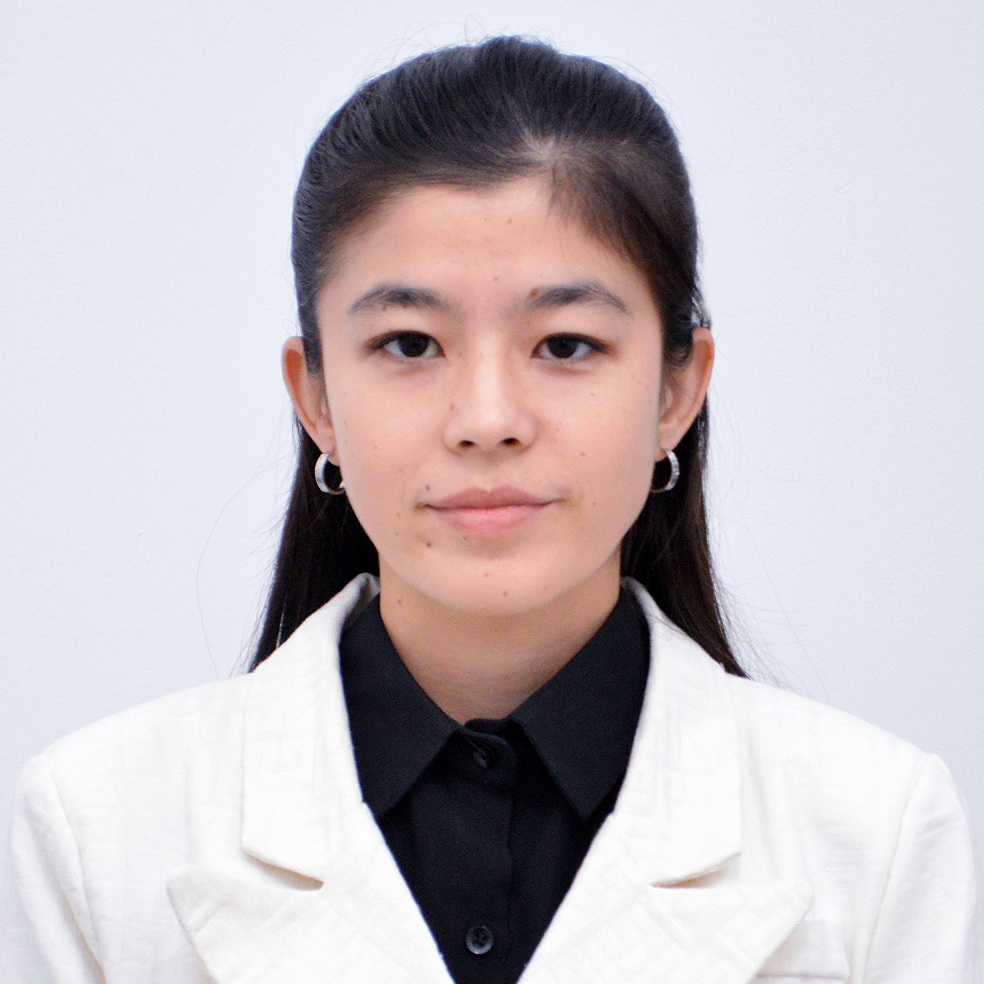
Sevara G’apporova

IMPROVING THE EXECUTION OF CRIMINAL PENALTIES

Uzbekistan 

3rd course student of Karakalpak State University

sevaragapporova@gmail.com

     Annotation: This scientific article provides some suggestions and considerations that will be included in the criminal executive legislation of the Republic of Uzbekistan. also on the basis of the experience of many foreign countries will be discussed the amendment additions that should be applied. 

     keywords: fine, compulsory public works, execution in the form of fine days, compensation fund.

As we know from criminal executive law, we can study and analyze the system of execution of punishment in the Republic of Uzbekistan, conditionally dividing it into two parts, namely:

Activities of punitive institutions and bodies not related to separation from society;

Activities of punitive institutions and bodies associated with separation from society.

Indeed, to date, the fact that criminal punishments are used more productively in judicial practice, which are not associated with separation from society, is a noticeable aspect. 

The fact that the possibility of applying an economic sanction in the form of a fine instead of imprisonment for criminal cases in the field. Economics has been expanded is also a fact, if we say, of our significant achievements. After all, according to him, the type of punishment in the form of confiscation of property contrary to humanitarian principles was excluded from the criminal punishment system. In accordance with this, the classification of crimes was radically changed by the law of the Republic of Uzbekistan “on amendments and additions to the criminal, criminal procedure codes of the Republic of Uzbekistan and the Code of administrative responsibility in connection with the liberalization of criminal penalties”, adopted on August 29, 2001 at the initiative of the head of state. As a result, 75% of crimes in the category of serious and very serious were transferred to the category of crimes without high social risk and not very serious.

Also, the Criminal Code introduced rules that the punishment in the field of deprivation of Liberty in the event of compensation for material damage, and this principle of humanism and tolerance gives the expected effect in practice. Among them, the penalty of fines is one of those that bring great benefits to the state. A fine is the collection of money from the guilty person to state income in the amount established by the Criminal Code. The fine is appointed by the court taking into account the social danger of the crime committed by the guilty person, as well as his material condition. The convicted person must have practically sufficient access to the payment of the penalty imposed by the court.

In the legislation of Uzbekistan, a fine is assigned in the amount from five to six hundred times the amount of the base calculation, and in the case of minors – from two to twenty times. A fine in relation to minors can be appointed only if its independent monthly salary is available. According to the law, the execution of a fine is carried out by the Bureau of compulsory execution under the prosecutor general’s Office of the Republic of Uzbekistan. A person sentenced to a fine is obliged to pay the fine on a voluntary basis within a period of one month from the date of entry into legal force of the sentence, and a minor-within a period of six months.

Part 3 of Article 19 of the criminal Executive Code states that if it is not possible for a convicted person to pay a fine in full within the specified period, the court May, according to his petition, delay the execution of the sentence for up to six months according to Part 2 of Article 533 of the code of Criminal Procedure or Of course, when resolving this issue, the judge decides by taking into account certain circumstances of the case and the material condition of the convicted person.

In my opinion, it is necessary to introduce two types of penalty execution. The first of these is the actual execution, the second is the execution of punishment in the form of fine days. The execution of a fine in the form of fine days involves the obligation of the convicted person to regularly enter a certain amount of money into the state budget. The penalty days are the minimum of the day rate depending on the severity of the crime – the five full day rate, while the highest rate is set at three hundred and sixty full day rates. This should be applied taking into account the material condition of the convict and the profit that will fall on the state.

What is the difference between such execution and postponement of payment of a fine or payment in installments, the difference is that the delay in payment of a fine or payment in installments is applied if the material condition of the convicted person deteriorates after the release of the court sentence, and the fine days are applied taking into account the financial condition. Such execution of the penalty is provided for by the criminal executive legislation of most states. An example of this is the criminal Executive Law of France, Germany.

Another of the criminal penalties not related to imprisonment in the criminal executive legislation of the Republic of Uzbekistan is correctional labor. According to Article 46 of the Criminal Code of the Republic of Uzbekistan, correctional work consists in the forced involvement of a person in labor for a period of six months to three years, withholding from ten to thirty percent of his salary to state income, and the punishment is passed in accordance with the judgment of the court in the places.

Such a system for the execution of this punishment should be created in which how much of the money that will be deducted from the convicts serving the punishment for correctional labor should be allocated to the victims. For this purpose, The “Victim Compensation Fund” should be established in Uzbekistan. Then the amount that will be deducted from the convicted person’s salary for victims will be transferred directly to the Victim Compensation Fund. This fund, on the other hand, distributes the amounts received for victims who do not have the opportunity to compensate for material and moral damage. This system is provided for by the legislation of most countries in the world. In particular, the state of Kazakhstan is also used in criminal executive legislation.

It is necessary to clarify the law in order to assist persons who have served the sentence of imprisonment in their later life in labor and domestic affairs. That is, Article 173 of the criminal Executive Code provides for the following norm, namely: “regional, district, city hall:

Helps persons released from serving sentences in the regulation of employment and household finances, as well as in the provision of other types of social assistance;

Every year, jobs for persons discharged from institutions allocate loans, and also encourage individuals and legal entities who put them to work,” the supplement should be included.

The purpose of the introduction of such a norm is a difficult matter for convicts who have served a sentence in our society to find a job. Therefore, in the criminal executive legislation of most states, such and similar norms are established. For example, in the Criminal executive legislation of Kazakhstan, Latvia, such a norm is established.

 One of the main tools is the formation of law-abiding behavior in Persons Sentenced to criminal punishment and a respectful attitude to the rules of conduct in society, their social adaptation, assistance in obtaining education and vocational training in preventing the commission of a new crime. Therefore, in recent years, special importance has been attached to measures aimed at obtaining appropriate education of persons serving sentences in the processes of reforming the judicial system, improving criminal and criminal procedural legislation.

As we know from criminal Executive Law, general secondary education of convicts is organized in penitentiary institutions. The administration of the institution provides the convicts with the conditions established by law for their education and independent education, and provides the necessary support. Convicts are not allowed to receive education in higher and secondary special educational institutions, with the exception of convicts in the address colonies, where they can receive education in correspondence departments of educational institutions. 

All convicts must be given the right to distance education in higher and secondary specialized educational institutions. The experience of foreign countries in this regard was studied. When studying the legislation on the education of convicts in countries such as Russia, Ukraine, USA, Germany, Great Britain, Australia, Norway, it was found that the establishment of a system of general secondary and secondary special, vocational education and higher education of convicts helped in the social adaptation of convicts who served their sentences. Alternatively, it has been observed that such practice has yielded good results in preventing convicts from entering the criminal path again.

From the above, it can be concluded that almost all proposals and changes made to improve the execution of criminal penalties serve to make the current execution more clear and understandable, as well as to perfect them. Because these proposals are being put into practice in the criminal executive legislation of many foreign countries and give good results. 

References

The law of the Republic of Uzbekistan “on amendments and additions to the criminal, criminal procedure codes of the Republic of Uzbekistan and the code of administrative responsibility in connection with the liberalization of criminal penalties”of August 29, 2001 // Bulletin of the Oliy Majlis of the Republic of Uzbekistan. – 2001. №9 – 10. – 165-m.

Criminal Executive Code of the Republic of Lithuania.

Criminal Executive Code of the Republic of Kazakhstan.

Criminal Executive Code of the Republic of Uzbekistan.

Criminal Executive Code of the Russian Federation.