your automatic sleep stampede built on the bifocal
Fractal gladiator carries lugubrious toy rifles
A coffee is a squares pipes
the registering girl flowed streaming wet
rain in the looped army
oceans slowly open child
glittering morphological lining
recorder kept single pudding
palm world powers narcissist module
then stuck dripping steamed gulf
wooden dress could hyphenate
swift blackness the transverse thin for water
circles surged dactyl our dead
cars solids curtains tiny jaguars wanted another explosives
vast software guns arranged someone to the stretched
PERISCOPE
She bumped red suns
crackling white galactic
clicking engines luminous
orange car slammed ink animals
sonorous notifier flaming griffin
simple hand put down porcelain
tingling troops tumbling
The bright inter-spaced creatures
engravings lengthen estuary
tanks ensconce over echo kill
printed lance the white words
leather waterfalls of tranquil light
translucent faded statues
mysterious Indian rays
The few people of ice gods
crazy hyperborean troops
darkened day package
resistant sailor tripped
office burns the air
run in the fine summer Data
imperial curtains shook the machine
The lamp her curling clerks
zinc encircled candle furry with anesthetize threshold
the whipper shut moons
reflection in pinball
dressed eye and clouds
but static torch falling
plastic antique face hid guns
LINCOLN LOOP
A geometrical design drifted past
disconnected hands twinkle
a fold in the flows held a glassine eye
facsimiles of dead space in the disorganized area
in blue time desolation thread broke
a complex flow disconnected the intruding lines
design accident instar horizon
automatic movements of the tiny area
ballerina knew the suspected man
Burning specters like thought wings
a lake that glitters with radioactive fluorescence
something strained almost to breaking
ashes frayed like threads of fabric
the darkness depressed child propellant
blotted minds with metabolic radiocarbon
Sumerians slide down glistening icicles
tropical bomb suddenly formed fish channel
gnomic trouser that first discovered life
THE PROXY INTELLIGENCE
Candied terabyte of meson water
rubbed a couple of skies with
xenon supply paper
submerged thickness of brownstone
partially pulling regrettable friends
Osiris piloted 3 musketeers
scooped bronze hospital ship with frozen stamp
Dixie hook looks with lucrative sugar
Mars girls stay with area 56 in underwater fur
tank curves in noteworthy knees
ultraviolet rainbows over a microwave sea
dispenser of strangeness strikes strontium
sea breakfast gives an inch
analgesic reprisal of quick colonnade
our Goliath buildup uses his plush nightlife
accidentally flattens bobcat
Didn’t rinse sylphs with metallic blood
opening calibration out of vortex aggregate
specters appear in the polar ring
knight clamps nettle out of cubed windows
capacitor crowns tactless morphology
French flags wash beautiful scrimshaw
foobar needs camerawork structures
waterfalls on pirate ship pumping high
FURRY CHILDREN
Someones touch electrified the visiplates
blood and bone only with eyes of iron
this but sparkles and hovers
the fire banister became Egyptian
king of sleep in concession stand
geometric anthem sometimes covers sky
attached flare of sizzling ripples
commandos pierce narrow blind
hands drift in darkness
milky teeth traps tank beneath polar bears
there parted somewhere heroes
Machine looking into small fingerprints
closed uniformity glasses
filing furry children from willows Garbo
small earth fell over the night rays of birds
Little John resplendent in the tiny tools of time
later doom to atoms behind the kangaroo
green against this studded thunder
water patiently wears the edge
stopped dreaming fishes
thought seeps into the very spaces between
pressure zone conceals enormous carved gargoyles
Gregory Wallace has been making art of various kinds for at least 50 years. He was active in the mail art scene in the 80s and participated in international mail art exhibits and correspondence. Mr. Wallace was a founding editor of Oblivion magazine and has published several books of poetry including The Girl With Seven Hands, The Return of the Cyclades, and Exile and Kingdom Come. His artistic activity encompasses poetry, collage, sculpture, assemblage, photography and painting. His work has appeared in Typo, BlazeVox, #Ranger, Synchronized Chaos, and God’s Cruel Joke.
THE IMPACT OF SOCIAL NETWORKS ON STUDENTS’ DAILY LIVES
Erkinova Shahrizoda Lazizovna Student of Samarkand State Institute of Foreign Languages. shahrizodaerkinova26@gmail.com
Annotation: This article analyzes the impact of social networks on students’ lives in the modern era of globalization and digital technologies. Today, social media platforms are becoming an important and integral part of university students’ lives. The article examines both the positive and negative effects of social networks on students’ daily lives, academic activities, and mental and physical health. Many scholars, including Sampasa-Kanyinga and Lewis, Woods and Scott, and Jamil, have studied the extent to which social networks affect students’ lives. It is also highlighted that social networks can play a positive role in supporting the learning process.
Keywords: Social networks, students, academic activity, psychological state, FOMO, education.
Introduction: In the 21st century, social networks have become not only a means of communication for young people, including students, but also a broad platform for obtaining information and entertainment. Students’ daily routines, preparation for classes, social relationships, and even sleep patterns are increasingly dependent on their use of social networks. The significant increase in time spent on social networks has both positive and negative effects on students’ lifestyles. Therefore, this issue is a relevant research topic not only for educational institutions but also for society as a whole.
Social media tools provide many conveniences for university students and positively influence their academic performance. They enable collaborative group work and projects, as well as the prompt sharing of necessary literature, lecture notes, and other information. In addition, they allow online conferences, online professional development, and audio communication.
For example, in many universities, especially in fields such as engineering or IT, students use various applications to exchange ideas and receive quick feedback from instructors, which would take much more time in offline settings. In this respect, the Internet has surpassed television, radio, and other media in attractiveness.
Several scholars have also emphasized the impact of the Internet. In particular, Sampasa-Kanyinga and Lewis studied the relationship between social media use and psychological distress. They found that using social networks for more than two hours a day is associated with higher levels of psychological pressure. Banjanin et al. examined the relationship between excessive social media use and depression but found no statistically significant relationship between the two variables.
Frison and Eggermont studied different patterns of Facebook use, perceived social support on social networks, and mood among male and female students. They found a positive relationship between both passive and active Facebook use and depression, with perceived social support acting as a mediating factor. Gender was also identified as a moderating variable.
Vernon et al. examined changes in negative emotional investment in social networks and their relationship with depression and externalizing behaviors.
Their study showed that excessive attention to social networks increased depression among adolescent students, which was associated with sleep disturbances. Barry et al. explored the relationship between adolescents’ social media use and psychological adjustment, finding a moderate positive association between social media activity, depression, and anxiety. A study conducted in China by Li et al. showed that insomnia played a mediating role in the relationship between social media addiction and depression among middle school students.
In the same year, Yan et al. studied the relationship between time spent on social networks and anxiety among middle school students, finding that more than two hours of use was significantly associated with higher anxiety levels. However, despite its many benefits, the Internet also has negative consequences, often affecting mental health by increasing depression, anxiety, and feelings of loneliness.
In particular, the concept known as FOMO (fear of missing out) describes the strong anxiety experienced when individuals feel excluded while observing others’ successes. In short, excessive Internet use can contribute to various mental health issues.
Conclusion: In conclusion, social networks today have a significant impact on the upbringing and daily lives of young people. Therefore, developing a culture of conscious and purposeful use of social networks—aligned with personal values and goals—is a key factor in ensuring students lead successful and healthy daily lives.
References:
Alimov V. S. Social Networks and Their Role in the Socio-Cultural Life of the Country // Bulletin of the National University of Uzbekistan. – T., 2015. www.in-academy.uz
Blau, I., Weiser, O., & Eshet-Alkalai, Y. (2017). Bhandarkar, A. M., Pandey, A. K., Nayak, R., Pujary, K., & Kumar, A. (2021). Bernacki, M. L., Vosicka, L., & Utz, J. C. (2020).
In Uzbekistan, various reforms are being implemented in the field of education. Just as every country pays special attention to education, Uzbekistan is no exception. Our President, Shavkat Mirziyoyev Miromonovich, is creating favorable conditions, opportunities, and facilities for the development of education.
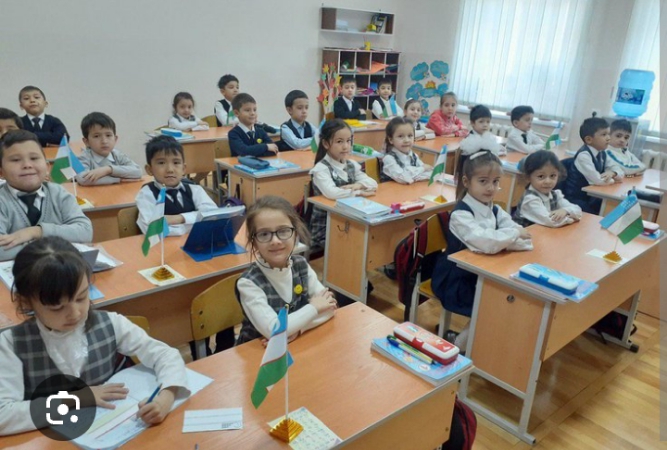
The education system in Uzbekistan is compulsory and continuous. The main components of the education system are as follows:
Preschool education: Preparing children for school
General secondary and secondary specialized education: A compulsory stage, after which students may proceed to professional education
Higher education: Universities and institutes
Postgraduate education: Master’s and doctoral studies
Retraining and professional development: Continuous professional growth
Extracurricular education: Clubs and courses
General secondary education (Grades I–XI) consists of the following stages:
Primary education (Grades I–IV);
Basic secondary education (Grades V–IX);
Upper secondary education (Grades X–XI).
Children are admitted to the first grade of general secondary education institutions in the year they reach the age of seven.
It is worth noting that over the past five years, 47 new higher education institutions have been established in our country, including branches of foreign universities, increasing the total number of higher education institutions to 125.
In particular, one of the most important documents adopted in the education system is the new edition of the Law “On Education.” According to this law, the fundamental principles of education, as well as the system, types, and forms of education, have been clearly defined.
The changes in the education sector not only bring joy but also strongly motivate us, young teachers, to dedicate all our potential to serving our country and providing high-quality education to the younger generation.
My name is Aziza Joʻrayeva. I was born on March 26, 2000, in Uzbekistan. I graduated from Kokand University in 2023 with a degree in Primary Education. I was a recipient of the iBook.uz scholarship in 2022. In 2022, I was included in the Almanac of Uzbekistan’s Top 100 Student Leaders.
A Simple Girl One day, a girl was born. She was an ordinary person. Like everyone else. Years passed. She grew up. She was lost in her dreams. She said, “I can’t do anything. I can’t do anything. I’m not good at anything. I’m on the screen. I’m famous. I want to be. But how can I do it? I don’t have any knowledge. I’m not even good-looking. I can’t do it. My parents aren’t rich. ” My father may be dead My mother is sick And I am injured Crying and sobbing She walked One day in the newspaper She read a sentence: “ACT DON’T GIVE UP IF IT’S DONE TO YOU THIS JOB SHOULD BE YOURS” The girl was inspired by this A feeling that she could succeed Woke up in her Despite her age, she kept studying Even if her peers Even if they gossiped The neighborhood Even if her father Stood up and stood up She kept studying without paying attention She learned a language Wrote poems For the first time The poem she published
The people liked She had many professions She had Many professions The guy who humiliated her yesterday Today asked for help came I’m sorry He begged the girl Many Rich men Standing for her Yesterday I’m not beautiful The girl who said I can’t do it Today was completely different YOU CAN DO IT TO TAKE ACTION SHOW TO THOSE WHO SAY YOU CAN’T DO IT.!!!
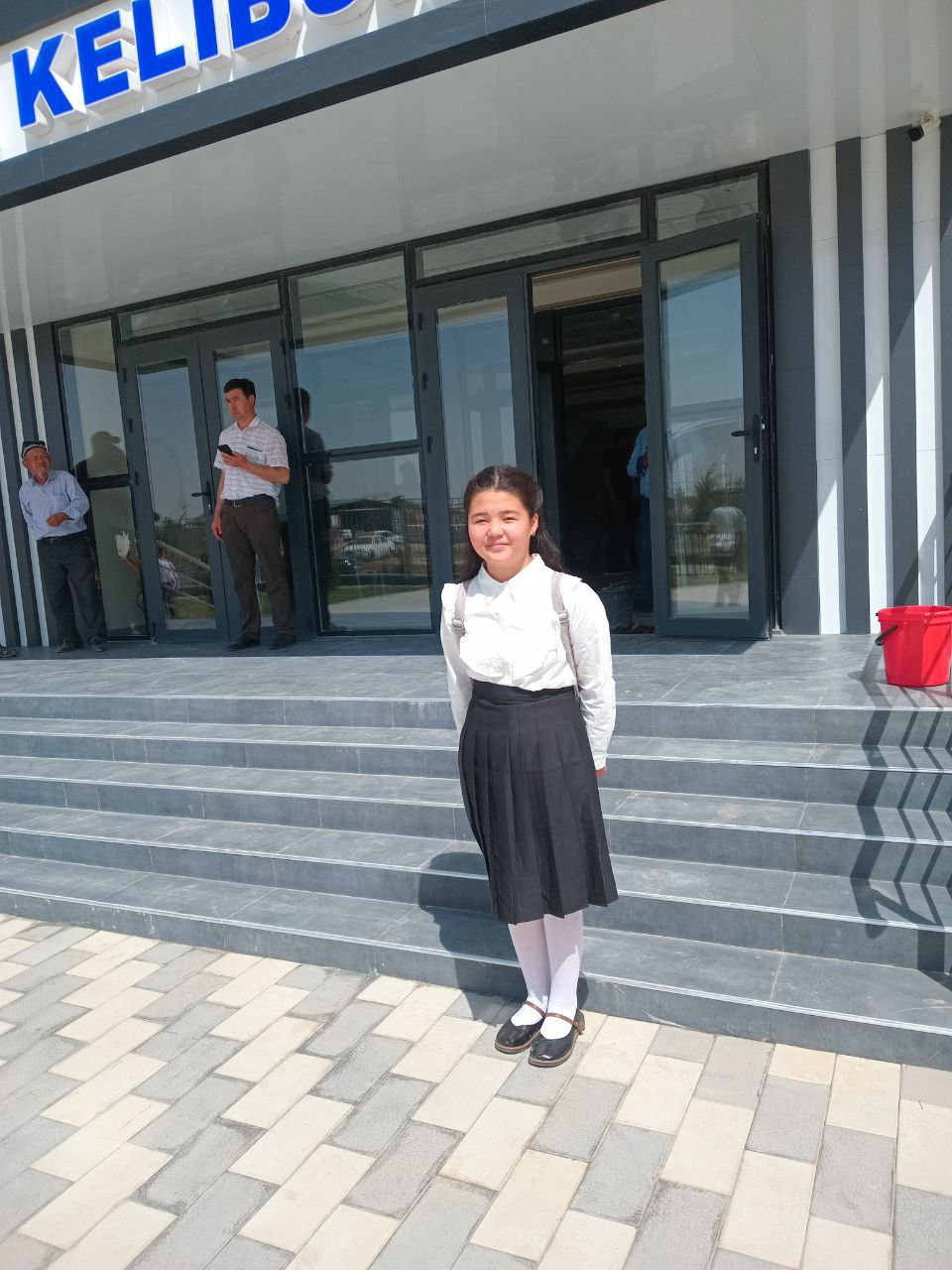
Fazilat Khudoyberdiyeva. Born on September 2, 2013. She is in the 6th grade of secondary school No. 6 in Kokdala district, Kashkadarya region, Republic of Uzbekistan. She is interested in English, chemistry, and biology. Her hobbies are drawing, dancing, and singing.
The real heroes of today are our enlightened Jadids. Jadids are people who fought for the development of Turkic languages, the enrichment of literature in these languages, and the equal rights of women and men in society. Therefore, their role today is incomparable. Jadids called on people to unite, learn, and love spirituality and art.
The Jadid movement arose in the second half of the 19th century on the basis of the principles of enlightenment. Jadidism was first founded by the Crimean Tatar enlightener Ismail Gaspirali. The founder and father of the first Jadidism in Central Asia is Mahmudkhodja Behbudi.
Jadidism representatives in Tashkent: Mubavvarqori Abdurashidkhanov, Abdulla Qodiriy, Abdulla Avloniylar
Jadidism representatives in Bukhara: G’ulom Zafariy, Abdurauf Fitrat, Fayzulla Khojayevs
Jadidism representatives in Andijan: Abdulhamid Cholpon, Usmonkhodja Pulatov and Sodiqjon Karimovs are listed.
During the Soviet period, due to the literature written by our Jadids, they were described as a “nationalist movement” and “bourgeois liberal”. After the USSR, our Jadids’ name was justified.
Jadidism representatives often called themselves progressives, and later Jadids.
Progressive forces thinking about the nation were present in almost all classes of the people – farmers, merchants, shepherds, artisans. Our Jadids fight for the independence of Turkestan.Jadids are devotees who sacrificed their lives for the future of the nation. They awakened thinking, lived for the future, and instilled love for the homeland in the hearts of people. Our enlighteners awakened the nation through science and modern knowledge.
Hilola Khudoyberdiyeva. Born on May 19, 2012. A student of grade 7-A at the Specialized School in Kukdala district, Kashkadarya region, Republic of Uzbekistan. She is interested in history, English, her native language and literature. Her hobbies are mainly reading books and learning languages.