In her deftly constructed poetry chapbook Hikikomori, Virginia Aronson builds a house of mirrors reflecting our social isolation. Her interlocking poems and metaphors draw inspiration from a phenomenon the Japanese define as hikikomori, or “pulling inward,” the impulse to withdraw from the pressures of modern life, which resonates with our current experience of the Covid-19 pandemic.
Told from the point of view of a person afflicted with hikikomori, the poems are succinct in their impact. In the title poem, for example, the narrator inhabits a small room, which is both his world and his inner landscape. He describes himself like a specimen: “alone / in your own world / alone / with yourself / your swirling thoughts.” His urge to confine himself indoors is further outlined in the poem “Brave New World” and echoes Aldous Huxley in reverse. The victim of hikikomori does not experience the evolution of society but its denial.
Cultural pressure and lack of respect for the individual inform the poem “It Can’t Be Helped,” where is the reader is haunted by images of ultimate isolation: “Japan is a suicide forest / the people wandering / in the ancient woods / … / to gut the emptiness.” Sadly, young people are most vulnerable to social oppression and parental pressure as described in “Anime Me.” The child in the poem succumbs to the lure of online entertainment, including video games and binge watching as a means of relaxing and evading social interaction, which sound familiar but frightening in this context as symptoms of deeper withdrawal.
Aronson shows how self-isolation can evolve into a psychological or medical condition. In extreme examples of hikikomori, adult children continue to live with their parents and depend on them for support well into their own middle age: “over forty / lacked self-esteem / locked in my childhood / bedroom / dreamless / alone.” In the poem “Homosocial” while thinking of women in society, the poet writes: “I sit in my dark / womblike room / thinking of them / living in the / present / no future for us.” The tragedy of the hikikomori is characterized by the victims who are no longer able to live or participate in society, excluding them from such essential endeavors as holding employment, having relationships, and raising a family. The individuals and society both suffer.
I found Aronson’s description of hikidashiya, or “those who pull people out,” to be quite chilling. In “Spirited Away,” the narrator endures an extraction reminiscent of attempts to force people to change sexual identity or religion. These violent attacks, often undertaken by one’s family members, are justified as necessary or well meaning, but they are painful to all involved.
One of the most beautiful images in the chapbook is also one of the most haunting. Given the Japanese sense of society and how those excluded tend not to exist, the victim describes his view of the hierarchical culture: “the pyramid leaving / me: / a grain of sand / at the very bottom.” We see the traditions of college, hiring, and corporate meetings evolving into drinking marathons from the eyes of one who has bound himself to nonconformity by retreating to his room.
This sense of loss and rationalization informs many other historical traditions of religious and philosophical inquiry from ancient hermits and monks to modern attempts to achieve enlightenment and insight through meditation or nature. But here the withdrawal feels tragic because of its permanence and emotional toll. The poem “Day #3652,” for example, finds the poet describing “my life floating past / on a dark thundercloud / … / And if the Earth stops spinning / I’m sure / I won’t notice.” Not only is the victim removed from society and the world, but he experiences a sense of timelessness and eternity in his condition.
My enjoyment of the collection was enhanced by the notes following each poem explaining the aspects of hikikomori in Japanese and English terms. The phenomenon of hikikomori has a rich history in Japanese culture, and I came away with a deeper understanding of hikikomori and its resonance with modern society. Hikikomori is an appropriate metaphor for the lure of staying home and withdrawing into binge watching and gaming despite its potential impact on the individual and society, even before the pandemic. This is the final epiphany of Aronson’s chapbook, that we are all reflected in her house of mirrors.
We drove through the ancestral skeleton of the world and it’s broken harmony. Driven by the song we were searching for, following the path of the pendulum, divided by time – driven, as souls drive their path through the dark forest of the universe. I closed my fist around a mantra and felt the serpentine blood drip through the fingers of my hand that would bury the day under the night and then resurrect in the emerald eyes of Millenia each morning as if for the first time. I push my body through the dense air of insomnia retrieving the hunt for silence in the hour that knocks incessantly on the door of my heart. The indifferent knock, the indifferent questions put to life that some would weigh and sell or place in jars to be kept for the future to solve. The song is pierced and exposed at it’s core is the rotten carcass of a god. The flesh of it’s being withered, the blood long run dry. This is my city, my voice, this is my frozen will and arsenal against the time it takes me to run away from the voice inside that carries a dead abyss.
In the ruins I have placed here my footsteps to freedom, in the wreckage I have designated my home they follow me blindly, loyal as a shadow and as indifferent. The only habitat I can pull from my genes is the knowledge of death carved from time into the form of life. Where else is there to begin? Though the question may be untrue, I feel like this is the only answer. Still, my eye cannot give to itself and the voice can only point and never touch the image that was given flesh this unfinished, burning hour. So I slip through it and pull the cords tighter, as a knot, as a fist round a mantra, as a mouth round a stone.
In this place, in this instance the nomenclature is diced in no fashion other than symbolically. Where dreams live and die like an empty TV set or abandoned theatre. We sift through machinery, once collectable symptoms of our collective disease and become mere mercenary to trend. Ideas pinned to thin air like radio-waves living in the ultra. Born sightless yet carrying out a vision, paid for in the womb. Embodying the embroidered fate of a dusted loop, still now after the depleted force of turning image to flesh and blindness to vision. The hours are mantra dislocated from the jaw, clocking mileage where mirage fails, falling pivots that redact inaction with seismic leverage and sense of occasion. The sense of ourselves spilling through the dense air I force my way through may be known tomorrow when the child that weeps inside me is given a name. When I release what has long since gone from my possession.
In movement
The burnt shadow of your heart still whispers it’s first word that collided with the image lifting itself over the horizon of the earth. When the sun has drunk it’s painful silence and followed blackly the memory and mirror it is chained to, retrieving the gesture will be simple. The race to outsmart this dark venom began early morning. You weigh, singularly, what cannot be reached inside you. The simple essence of a loud voice being disappeared as an object is moved or replaced is a message that points to fracture in our approach to struggle. Really, the silent essence of spirit having split the eye as an atom and fallen blindly into the crater of imagination is where a story ought to begin.
Longingly, I exhume detail for what might suit me as the whole armour, all the while remaining motionless becoming the engine of the void, afraid to tell the story that tells me so often, the black memory the sun is chained to will engulf my heart too. In paroxysm, the image is lifted over the horizon of the earth into a wider gulf and birth we share with the twin eyes of time. One eye that sees with a dead purpose, singularly, as a clock might be wound and forgotten and one that sees as though resurrected each moment it is seen. The hidden depth of what cannot be reached inside you. When I am given to compassion for the ghost (whose song only some will hear as the sun sets and the shadow of the fire escape drapes over the alley) it is the key beneath the blues keeping me awake.
The migrants who died trying to cross the sea for whom the sea is their cross and the dark, dark painful silence we carry that is ours. There is the gesture and measure taking place here all the while. The terrific irony of a moment that carries and sacrifices the weight and purpose of a single heartbeat, shed like a second symmetrical history, covering distance inside the iceberg of thought. Contained inside space, negatively, the surface is frozen, and living the way we may live is the reflection. A glass like plain where I, the engine of the void, may regain a foothold as the lucid speed of the disappeared voice becomes apparent. To welcome the deceived and deceased alike within the structure of movement becoming clear in the gesture the conversation opens with.
It’s true and the measure is correct. The sun empties it’s thought into the black mirror and memory it is chained to by every imaginary eye, swallowing it’s own impregnable music within the fortress of a violent, reoccurring birth none shall escape. What cannot be reached inside you a hidden irony displaces. The future is lulled closer as a spider plucks the strings of her deadly instrument and web. Blinded by the music, her prey enters the kingdom where she alone is queen and reigns over every chaos.
What else are you keeping secret? The thoughts that woke you at 3am? The symmetry splitting you longitudinally between an East and West – a past forgotten and a life longed for – a line the sun drew with the same invisible hand in the pocket of the killer in the Audubon Ballroom? It ought to be enough that silence can be mapped in your body by touch alone, traced as though the broken mirror of your memory has been cartographically outlined. So that at the border between dream-states, the landscape wakes and spills a lucidity that one might recognise as an aerial photograph of the past. Say something. The secret is a grave in you that you feed the promise of silence. You sit with the knowledge a ghost gave you,
a Pandora.
who’s only possession
like a burning ember
depicted in shadows
is swallowed whole. And the same lurid darkness follows you home. Stalks the voice you have filtered so carefully so as to not let the ghost fly out. So that they don’t build on the grave(s) you protect and feed with the promise there is a place in your memory where the secret sits, fragmented like an island inhabited by the unspoken.
Jaie Miller is an artist from London, England, and has been published by various journals at various times since starting sharing online.
From Chains to Freedom: A Journey of Freedom for the Black Man
Review by Dr. Bianca Stewart, MD
Mr. Michael Robinson’s published work, “From Chains to Freedom: A Journey of Freedom for the Black Male” is a beautiful depiction of the intricacies of race relations that is effortlessly executed in Mr. Robinson’s distinguishable style. His work is provocative yet, delicate. As a black woman, his work is raw, unfiltered, and in so many ways, comforting. “From Chains to Freedom” takes the reader on a journey of the resilience of the African American race from the Mother Land to Jim Crow and to Modern America.
He draws inspiration from Langston Hughes’ “Suicide Note” in his “Seas of Freedom on the Horizon” where he articulates the torment of the slave trade and speaks of death not as an enemy but as an old friend — “In the sky ahead the horizon calls, Calling him by name each day they sail. On a night when the moon had receded, And all was sleeping, the sea took him in.”
“Beginning of Grief” and “Crosses for Black Men” recounts the trepidation of the Jim Crow era — remembering the “when the light of the burning cross casts a shadow” and how, even now, “Four hundred years later, a rope still waits…”
In spite of it all, “From Chains to Freedom” is work about peace and hope. In “Midnight with God,” Mr. Robinson reminds us that “A desire for freedom has not been banished from his invocations” and leaves us with a message of “Some Place Special” “…where the sun speaks to the moon, While the mountains listen to the wind’s singing…” “A shooting star streaks across the sky.”
From Chains to Freedom is available directly from Michael Robinson, please contact him at mjrobinson@rollins.edu
 Sky Burial

 Soldiers all heard the stories, folklore of the shaped-
 charge monster, unbeatable IED, flipped an Abrams
 on its back, the fable goes, until it's like they're
 waiting for it, for today, for the sudden protean
 flower of sand and flame, what a second before
 was the lead vehicle -- now a rain of shrapnel
 against bulletproof glass of Humvees that follow,
 now a fiery-dark windstorm blowing up a desert floor.

 The long second where one's intake of breath stops
 for an under the breath "God," a place where you
 can only watch, in the long second before radio talk
 between vehicles, frantic security halt, bracing
 for secondary IEDs, possible complex attack, in
 that second I imagine three soldiers calm like yogis,
 shamayim all around in the sudden sky, I wonder
 is it a journey to nowhere -- in the long second.

 The recovery team, later, finds nothing, not a piece
 of skin, no bones, nothing to ship home, come back
 with a pretzel-shaped steering wheel they show
 to officers around camp.  And I think, these three
 are burned into the desert now, a Shroud of Turin,
 never going home – home, where a memorial service's
 beauty of flowers is nothing to say goodbye to –
 nothing to cling to but a folded flag.

 Home, where memory of a face, sound of a strong
 voice, are offered as a gift to eternity, grief stopping
 speech, silently -- the idea of a place where loved ones
 continue to be loved needed to let a heart keep beating,
 let lips open to mouth a silent "goodbye."


 Widow

 One of the peaceful places in Kabul, outside
 the grounds around Embassy Row, an open
 stretch of grass, a few trees, and chalk-colored
 stones, was my convoy's frequent lunch stop,
 pulling the Humvees under the limbs of cedars.

 We'd eat the spicy lamb meat, rolled fajita-like
 in naan bread, then rolled up in the flowing script
 of a daily newspaper and bought by our interpreter
 from his street-vendor cousin, in the shade
 and sound of songbirds.

 The first day there I was glad to stop in this quiet,
 away from the ripe stone street channels of sewage,
 the congestion of busy markets and honking horns,
 past an Afghan checkpoint that kept out most traffic,
 but as Americans we could go anywhere,

 So, I watched the eager sergeant major who'd
 been commanding this Kabul patrol for two months
 unroll the food he was unafraid to eat, in this quiet
 of cedars, wondered if the paper's stories were Pashto
 or Dari, looked at the hazy mountains that ring the city,

 And at the woman in full blue burqa that billowed up
 in gusts of wind as she sat in the high green grass opposite
 the dirt road from us alone.  After a while the interpreter
 took a lamb bolani from the unrolled paper on the hood
 to her, and an arm appeared from the burqa to take it.

 So I asked who she was, and Hashem said she's a widow,
 her husband was an Afghan soldier killed in an outlying
 province.  The next day we fed her again, and I asked
 why she sat here, and Hashem said, "to beg."  The soldiers
 who patrolled let her stay because of her army husband.

 And the next day I wanted to ask where she went nights,
 but part of the purpose of lunch was the mission brief
 by the sergeant major for the rest of the day, so I just
 wondered as SGM Sanchez talked about itinerary
 and ammo counts,

 Imagining a mudbrick house where she was barely
 tolerated by relatives, driven out in the day to beg
 in her blue ghost costume, seen on every woman
 outside the city, but less so here in Kabul.  Every day
 for a month she was there.  One day she was gone.


 Late Friday Night at the VFW Bar

 When beers become gradients of time, gradually
 taking good-natured men at a corner table back
 like years from baseball scores and current politics,
 loosening stories from those lives that led them here,
 to the days when their hearts were full of darkness.

 An Iraq vet recalls firecracker sounds of small arms fire
 from windows, the flip flop clomping of tank treads
 as it pulled up and wound its turret, its round devouring
 a building's walls, turbaned men thrown like dolls, falling
 with collapsed masonry over the sandy street.

 A Vietnam vet tells of sudden ambush in a delta fertile
 with green trees and rice paddies, unloading magazines,
 afterwards finding his spent casing sprinkled over a buddy,
 and when he kneeled down to brush them off, saw
 his own reflection in his stilled friend's staring eyes.

 These are men who can conjure violent figures,
 in nightmare worlds where all options seem bad,
 where no parables are found that guarantee survival,
 only heroes that may have saved a buddy's life
 to die themselves in a mutilation of any happy ending.

 Last call, and they rise from their stories, glancing
 at the American flag tacked to the wall beside a reflective
 Michelob sign, and it gives some relief, some meaning
 as they head for the door under the red exit sign, outside
 to lead normal lives and keep terrible secrets.


 The Ironised Voice of the Soldier's Ghost, 500 Years
 After His Desertion

 "A skeleton was discovered with sword and knives under the old
 Dubingiai bridge in Lithuania's Lake Asveja. Scientists with Vilnius
 University examined the body and said that the person was male and
 died in the 16th century, though they don't yet know why he died."
 --November 12th, 2020


 I expected to lie down in battle by the bodies of men, the dark
 folding me as death already folded them.

 Bemused by the play of light on ripples I tripped awkwardly
 on the bridge, my inner eye looking for my heroic future.

 The shock of the cold water was like a klaxon cry as my armor sank me
 into this ethereal world.

 These five hundred years below water, only fishermen's boats appeared
 disappeared by day above in the distance.

 At night, well above me pinwheels of stars spun their ancient patterns,
 But in the gloom I never saw them.

 Mourner's eyes be pools of sorrow for loyal knights who die
 for the kingdom, unlike these eager eyes that now pick and measure.

 With what is left of me I tell you my pain was not in death or drowning
 but that no blow flies came to buzz and whisper:

 "You are dead on the field of battle" -- embarrassment my pain,
 like the water it still saturates me.


 June 4, 1937

 Picasso adds the last thing to Guernica
 a light bulb gives unity to chaos:
 bodies bend and bruise
 wrack and burn
 scream at the sky
 sword broken
 baby dead
 arms outstretched

 The highest figure the bull
 still on its feet
 tail floating
 like Luftwaffe
 in the sky above

 People forever trampled in firebomb winds
 of shrapnel, Basque victims
 of other people's wars

 A light stays on forever
 lest we forget
A US Army combat veteran, Steven Croft lives happily on a barrier island off the coast of Georgia on a property lush with vegetation and home to various species of birds and animals. His poems have appeared in Liquid Imagination, The Five-Two, Ariel Chart, Eunoia Review, Anti Heroin Chic, Synchronized Chaos, and other places, and have been nominated for the Pushcart Prize and Best of the Net.
Five Poems
Words by Hongri Yuan
Translated by Yuanbing Zhang
A Mysterious Giant
There is another sun in the body of earth,
it is the light of lights, cool flames.
Where the palaces and pavilions are golden and transparent,
houses a mysterious giant.
Last night I heard a call in my dreams
and came to his vast hall.
His smile made you to forget yourself,
reminded me of a ancient poetry—— “the rising sun has just risen”.
2.12 10.2015
神秘的巨人
大地的体内有另一轮太阳
它是光之光 清凉之火焰
那儿的宫殿楼台金色透明
住着一位神秘的巨人
昨夜我梦中听到召唤
来到了他那巨大的殿堂
他的笑容让你忘了自己
令我想起古人之诗 旭日始旦
2015.2.12上午10时
Gold Civilization in Prehistoric
Fifteen million years ago,
there was a civilization of gold on the earth.
The sun wrote the words of gold,
the moon wrote the words of silver;
all things on earth had its own language.
Where do the gods live in now?
They have never disappeared,
they house still on the earth,
just you aren't able to see them.
5.19.2013
史前之黄金文明
一千五百万年前
大地上曾有过黄金的文明
太阳写下黄金的词语
月亮写下白银的词语
万物皆有自己的语言
那些神人们现在何方
他们不曾消失
他们仍然在大地之上
只是无法看见
2013.5.19
Giants' Homes
The fleets of stars were speeding towards me,
They came from the distant galaxies.
In prehistoric times, they were the ancient gods,
their ancient kingdoms existed in the depths of the earth.
Oh, they gave me the rolls of gold books,
let me to seek the swords of gods.
The ancient earth will be golden and transparent,
hold up the newborn homes of giants.
2.3.2015
巨人的家园
星辰的舰队向我驶来
他们来自遥远的星系
在史前 他们是古老的诸神
在大地的深处 有他们古老的王国
哦 他们赠我一卷卷金书
让我去寻找那一把把神剑
这古老的大地将金色透明
托起新的巨人的家园
2015.2.3
I Saw a Golden City
I saw a golden city
made itself invisible in the earth.
Those ancients were still alive.
I often visit them in my dream.
Their eyes were very bright.
as if they did not know the passage of time.
I saw myself in ancient times,
he told me that the world just was a phantom.
He gave me an ancient golden sword,
let me to go and kill the greedy Python.
These demons ruled the world.
let the mankind forget the ancient ancestors.
6 .23, 2011
我看见一座金城
我看见一座金城
隐形在大地之中
那些古人还活着
我常在梦中去做客
他们的眼睛格外璀璨
仿佛不知时光的流逝
我见到了古代的自己
他告诉我人间只是幻影
他赠我一把太古的金剑
让我去击杀贪婪的蟒蛇
这些妖魔统治了人间
让人类忘记了古老的祖先
2011年6月23日
He is My Immortal Soul
The eyes of years are the maze of stars.
In a gigantic palace,
I have seen the God of Gods.
He is smiling at me in heavens.
I'm thousand years in the world, which is just his moment.
He is my immortal soul,
and the universe——transparent crystal ball, in the palm of his hand.
6.6.2016
他是我的不朽的灵魂
岁月的眼睛 是星辰的迷宫
在一座巨大的殿堂
我见到了 那诸神之神的上帝
他在天庭之上向我微笑
我在人间的千年 只是他的瞬间
他是我的不朽的灵魂
而宇宙 透明的水晶之球 在他的手掌之上
2016.6.6
Bio:Hongri Yuan, born in China in 1962, is a poet and philosopher interested particularly in creation. Representative works include Platinum City, Gold City, Golden Paradise , Gold Sun and Golden Giant. His poetry has been published in the UK, USA ,India ,New Zealand, Canada and Nigeria.
Yuanbing Zhang (b. 1974), is Mr.Yuan Hongi's assiastant and translator.He is a Chinese poet and translator, works in a Middle School, Yanzhou District , Jining City, Shandong Province, China. He can be contacted through his email-3112362909@qq.com.
Email:3112362909@qq.com Hongri Yuan Phone:+86 15263747339Address:No.18 middle school Yanzhou District ,Jining City, Shandong Province, China
  Apocalypse Now:

 Just like Apocalypse now, heavy breath - 1,2,3, controlled and focused.

  Descending steps sounding loud and crisp, only deep reflection floating on top.

  In the mind a painting appears, dark, mysterious, Black and Tan.. light too in the center. Don’t disturb this.

  A heavy white page is now turning, a story in its own right with no explanation or talking needed.

  A sudden revelation emerges but it’s too sudden and too revealing .

 Turning another page now.
THE GRACIOUS ROAD

 They would talk now. The time had finally arrived. He had gotten what he desired, a chance to express all the hurt and confusion caused by her reckless behavior, a betrayal. She often told him he was so gracious and kind. He would not be today. He would hold her accountable now.

 The heart in hiding was now unexpectedly stirred by her voice. A meek hello as she answered the phone. Damn, where were the notes he had meticulous jotted down, his shopping list of topics to be covered? Each point meant to be delivered with just the right tone and effect, causing some uneasiness in her, and yes, some hurt, too. He found his pace and words poured out in a frenzy like rapid brush strokes he applied in one of his paintings. He wasn't just saying it, he was reliving the whole relationship. Her silence indicating she was finally taking him seriously. Then he heard a small groan from her, followed by tears. This did not bode well for his script.

 It felt good...no, it felt bad. This was not his nature.
 This was a love lost, but not forgotten. Now he did what he had always done in her time of distress. His heart rose to take the wheel, his intellect pushed to the backseat. His voice, his words, comforted them both like a bird's sweet song. She felt better now. He did too, finally.
 He suddenly located his notes, but realized they were not needed on the gracious road.
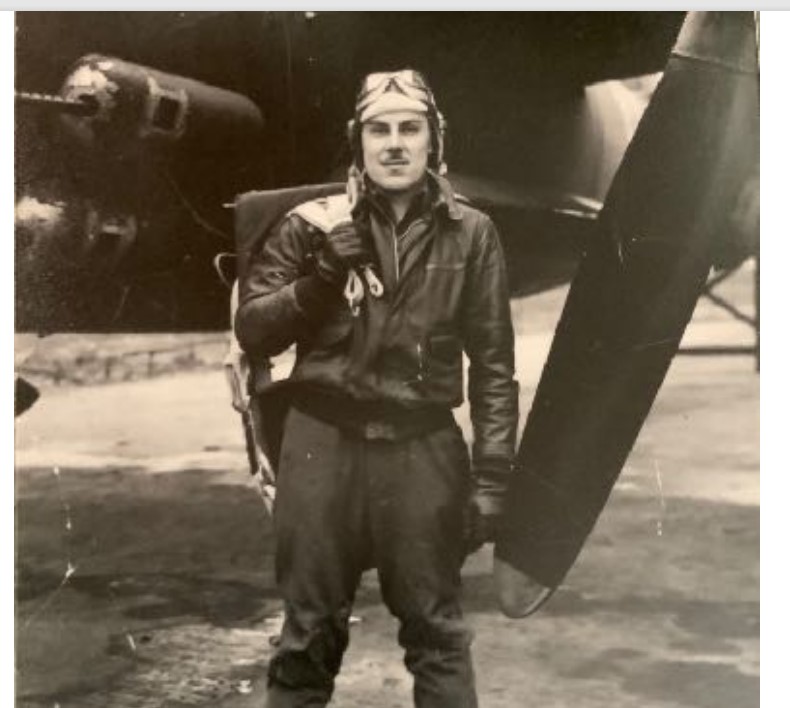
My father, Technical Sargent Stanley F. Thomas flew a total of 60 missions as a bombardier and tail gunner on a B-26 Marauder, twin engine bomber in World War II. The minimum Air Force requirement of missions to be served was 25-30. Since my father never discussed the war with his children, I never knew whether he exceeded the mandate out of patriotism, or he was just an adrenaline junkie. In either case, along with an Air Medal, he was awarded the Distinguished Flying Cross. The medal bracket on his uniform also held numerous unit citations with oak leaf clusters. Along one side of the front of his leather jacket, a number of bombs were stenciled indicating direct bombing hits, while an adjacent row of swastikas evidenced enemy planes downed by his unit in combat.
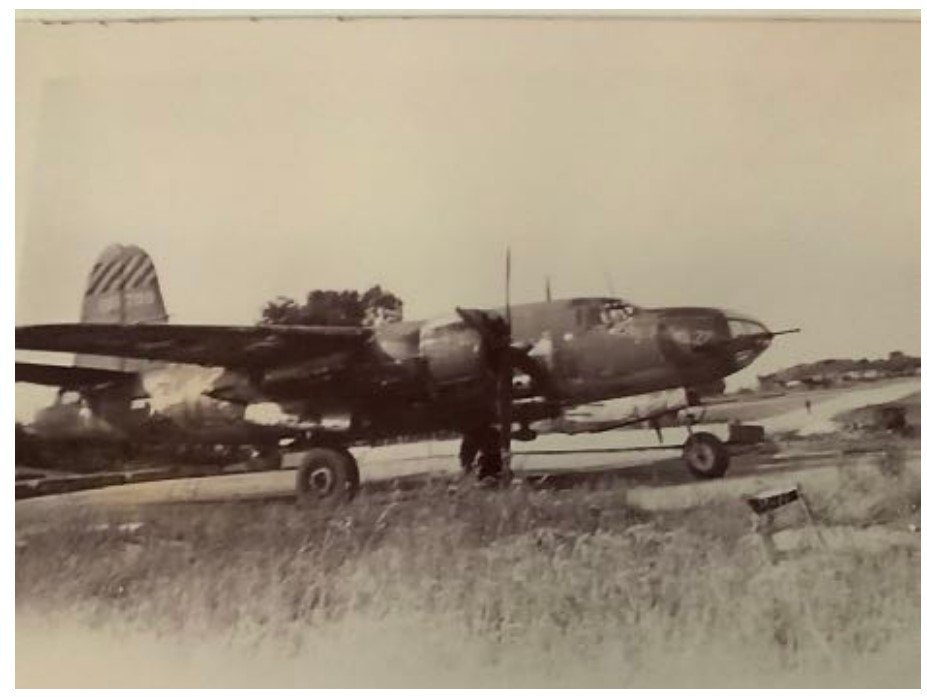
The B-26 Marauder was designed and put into production a number of years prior to the bombing of Pearl Harbor. The Army Air Corp 1 (AAC) prepared itself for any possible contingency. Specification for the plane included a speed of between 250-350 mph. Because the plane was to be used as a strategic bomber, the plane had to be able to out pace the then known top airspeeds of German and Japanese fighters. The plane also had to have sufficient arms to repel any attack by fighters as it performed its mission. Thus, both nose and rear 30 caliber machine guns, as well as a top turret gun was mandated. Later, the 30 caliber guns were replaced by 50 caliber weapons. Additionally, the plane had to carry a sufficient load of bombs, enough to cause significant damage to designated targets. This meant that weight was of crucial importance. The desire for maximum bomb load resulted in a short wing span. A shorter wing meant greater takeoff and landing speeds. Since the landing gear of the B-26 were in a tricycle-like position, particular attention had to be paid to making sure the rear wheels touched down first, with the nose wheel gently allowed to touch down last. This was no easy feat when coming in at 150 mph or better. Doing so in a damaged plane made the task even more difficult.
Crews treated their planes as if they were their own possessions. Nose art with pet names became a standard, giving the crew and plane a personal identity. My father’s crew named their plane, Kizio Pofoth 2nd, Eaglet. The name consisted of the first letters of the last names of the all the crew members (See airplane above photo). Strategic bombing was considered crucial to any successful outcome in a war. Before any major offensive (D-Day) the enemy’s ability to counter attack had to be thwarted. This meant destroying war materials factories, to limit their production of armaments and supplies; bombing the enemy’s airfields to minimize their dominance of the airways; and to knock out transportation venues such as roads,
Devon Francis, Flak Bait (Duell, Sloan and Pearce, New York, 1948), xi-xvi 1 10T Sgt Stanley Thomas
bridges and rail yards to keep them from moving supplies and troops into areas of combat. However, at times, given unforeseen circumstances, other targets may have to be considered a priority. This proved to be the case when Germany began implementing the V-1 rocket attacks on England. The V-1 emplacements were scattered across the coastal areas of France and the Netherlands, and had to be taken out, diverting the B-26s from other strategic targets.
The mission of the B-26 units in WWII was to provide strategic intervention, both prior to and after D-Day. The 387th Bombardment Group to which my father was attached, was eventually based in 10various areas of England. A total of 36 or more planes from this group flew out each day. My father’s squadron, the 557th was stationed in Chipping Ongar, located thirty miles northeast of London. From Chipping Ongar, daily sorties of planes flew out over the English Channel to areas of France, Belgium and the Netherlands.
Every mission was fraught with danger, not only from possible mechanical problems that might render the plane unable to fly, but also from enemy fire. Anti-aircraft guns protected many of the target areas. These guns sent up shells that exploded at a given height. Many of the B-26s were damaged and or brought down by barrages of flak exploding at the height of the planes. B-26s often came back to base riddled with holes, their crews sometimes injured or dead from shrapnel wounds. While less frequently encountered, enemy fighters were also a challenge. In cases of fighter attack, the skill and dexterity of the gunners was crucial to the crews lives. Although, occasionally, the Americans had friendly fighter escorts run intervention for them. These escorts extended only as far as the fighters range, which were far less than the B-26s flew to reach their targets. Luck also played a part in the crew’s survival. My father had to abort one mission due to severe illness. His replacement came back deceased from a flak hit.
In addition to operating the tail gun on a B-26, my father had the responsibility of preparing the bombs for deployment. A safety fuze pin had to be removed from each bomb before release. The fuze pin consisted of a cotter pin, to which a paper tag was attached. A short safety notice was printed on one side, while the other side of the tag was blank. For each mission flown, Sgt. Thomas saved one tag, upon which he wrote notes related to the mission. Each tag indicated The number of mission; the name of the target; sometimes the weather conditions; enemy fighter encounters; amount of flak; number and size of bombs dropped; and occasionally other personal comments. The tags became a diary of his missions.
I sorted all of the fuse tags in order from his first mission to his last, with only five tags missing. Rather than describe his experiences in narrative form, I have decided to let my father’s own words tell his story. Below are his notes as he wrote them for each mission:
1) August 16, 1943, Bernay-St. Martin airdrome, first mission, James Michael’s first gift (New born 1st child), more to come. 2) September 3, 1943, Lille-Nord Airfield, fighter airdrome, heavy to medium accurate flak, all safe. Dropped 6, 500 lb. bombs. 3) September 14,1943, Lille-Nord Airfield, fishing trip, plenty of flak, target under cloud cover. 4) September 14, 1943, Lille-Nord Airfield, turned back when over target-weather bad, went fishing, light flak 5) September 25, 1943, St. Omer-Longuenesse Airfield, target under cloud cover, couldn’t see results, cold as hell, 6, 500 lb. bombs dropped. 6) September 21, 1943, Beauvais-Tille Airfield, two ships hit by fighters, one lost, one made belly landing on airfield. Also one single engine landing. We were jumped by 18 FW 190s. Engineer of one ship bailed out when ship was hit and set afire. Dropped 10, 300 lb. bombs. 7) October 3, 1943, Woensdrecht Airfield, inaccurate flak, bombed alternate target on coast. Dropped 10, 300 lb. bombs. 8) October 22, 1943, Evreaux-Fauxville Airfield dispersal area, direct hits, beautiful morning takeoff, Little flak, no fighters. Sweated out landing, sick as a dog. Dropped 6, 500 lb. bombs. 9) October 22, 1943, Cambrey-Epinoy Airfield, raining-fog-soup, did not drop bombs, rear 18 shot down, FW-190, could not see 100 yds in front, Cambai/Epinoy. 4 1000 lb. bomb load. 10) November 3, 1943 St. Andre de L’Eure Airfield, flak intense, lost 2 B26s and 1 Spitfire. Saw FW 190, Got in some potshots. Dropped 4, 1000 lb bombs.
11) November 5, 1943, Mimoyecques V-1 site, excavations between Calais and Boulogne, France, flak intense and accurate, one B26 lost from 386th. Six boxes of 36 planes on this target- secret 12) November 26, 1943, Cambrai-Epinoy Airfield, target X, overcast, just got into the coast. 13) November 29, 1943, Cambrai-Epinoy Airfield, target X, Buildings of workers, good hits registered. Typhoon cover, short trip in and out, pas La Calais, flak heavy, bomb stuck in bay. 14) December 1, 1943. Cambrai-Epinoy Airfield dispersal area, hit her right on the button, flak over target-light, fighters on way out, spitfires engaged same. Dropped 6, 500 lb bombs. 15) December 1, 1943, did not drop bombs, in over coast and out. 16) December 2, 1943, Did not Drop bombs? 17) December 30, 1943, Le Meillard-Bonniers V-1 site, target 2X, tour of France over the Pas De Calais area. Had a good dose of light flak It was terrifying. Could not locate target. 6, 500 lb. bombs. 18) December 31. 1943, Cormette V-1 site, Pas De Calais construction works no bombs dropped 6, 500 lb. bomb load. 19) January 23. 1944, Le Grismont V-1 site, no ball (Code for V-1) target in Pas De Calais area, no flak, no fighters, spitfire escort fair bombing. Dropped 5, 500lb. bombs. 20) No tag?
21) February 9. 1944, Belleville en Caux V-1 site, no ball in Pas De Calais , cloud cover, made two penetrations, bomb not dropped, landed at Friston-emergency-weather bad. 6, 500 lb. bomb load. 22) February 10, 1944, Poix Airfield, no ball in Pas De Calais, cloud cover, hit airfield no flak, milk run. 6, 500 lb. bombs dropped. 23) February 11, 1944, Amiens marshalling yards at Amiens, France, cloud cover over target, hit no ball in break through clouds-12 bursts of flak only in rear of formation. 6, 500 lb. bombs dropped. 24) February 24, 1944, Leeuwarden Airfield, Holland, base of 60 single, and 60 twin engine fighters. Good bombing results. 10 miles from German border, light to heavy flak. 30, 100 lb. bombs dropped. 25) February 24, 1944, St. Josse Au Bois V-1 site, no ball Pas De Calais, St Josse Au Bois, dropped 8, 300 lb. bombs, no flak, no fighters.
26) February 25, 1944, Venlo Airfield, Holland on German border, first glimpse of Germany, light- heavy flak. Lost 4 B26s over north Sea to fighters. Box in back of us saw whole show 5 miles back. Dropped 10 250 lb. bombs. 27) No tag? 28) February 28, 1944, Ray sur Authie V-1 site, no-ball Pas De Calais cloud cover did not bomb. 8, 500 lb bomb load. 29) February 29, 1944, Behen V-1 site, no-ball Pas De Calais hit target, no flak milk run. 8, 500 lb. bombs dropped. 30) March 3, 1944, Montdidier Airfield, hit field, flak accurate, received 8 holes, pilot hit by flak in arm. Really sweated on this one. 14 250 lb. bombs dropped.
31) March 5, 1944, Ray sur Authie V-1 site, no-ball Pas De Calais. 1032) March 6, 1944. Bois de Huit Rues V-1 site, no-ball Pas De Calais, no flak, no fighters.10, 500 lb. bombs dropped. 33) March 20, 1944, Criel marshalling yards, France, flak inaccurate, fighter-none attacked, Saw Paris Eiffel tower. 14, 250 lb. bombs dropped. 34) (no date) Criel marshalling yards hit target perfect, light flak, no fighters. 10, 500 lb. bombs dropped. 35) March 23, 1944, Haine St. Pierre marshalling yard, hit target perfect, light flak, no fighters, 10, 500lb. Bombs dropped. 36) March 26, 1944, Ijmuiden E-Boat pens, Holland, Marauders drop 600 tons of bombs. Flak intense, 2 men killed in lead ship, 4, 1000 lb. bombs dropped. 37) April 10. 1944, Le Havre coastal defenses, gun emplacement, hit target right on the button- flak intense and accurate, no fighters, 4. 1000 lb. bombs dropped.
38) April 11, 1944, Bonnieres V-1 site, no-ball, hit target, flak intense and accurate, lost first ship in our squadron, Lt. Pratt- 2 chutes seen, 14 250 lb. bombs dropped. 39) April 12, 1944. Dunkerque coastal defenses, gun emplacement, hit target, flak intense and accurate, lost lead plane-colonel Caldwell, no flak holes, really prayed on this one, 4, 1000 lb. bombs dropped. 40) April 30, 1944, Bois d’Enfer V-1 site, no-ball Pas de Calais, Good bombing, flak accurate, aileron shot up, no fighters, 4, 1000 lb. bombs dropped. 41) April 30, 1944, Somain marshalling yards, didn’t release bombs, tour of France, no fighters, no flak, 4, 1000 lb. bomb load. 42) May 1, 1944, Monceaux-sur-Sambre marshalling yards, bombing fair, no flak, no fighters, 4, 1000 lb. bombs dropped. 1043) May 1, 1944, Louvain marshalling yards, good bombing, no fighters, flak on bomb run, 8, 500 lb. bombs dropped. 44) May 11, 1944, Hardelot coastal defenses, short of target, flak hole in right wing, no fighters, 4, 1000 lb. bombs dropped. 45) May 12, 1944, La Parnelle coastal emplacements, short of target, no flak, milk run, no fighters, 4, 1000 lb. bombs dropped.
46) No tag? 47) No tag? 48) May 20, 1944, Benerville coastal guns, direct hits on target, no flak, no fighters, visibility poor at take-off, 2, 2000 lb. bombs dropped. 49) May 20, 1944, Fecamp coastal defenses north of Le Havre, no flak, no fighters, P47 area cover, 4, 1000 lb. bombs dropped. 50) May 22, 1944, Barfleur/Panelle France coastal gun emplacement, short of target, bombed on pathfinder, flak moderate, no hits, no fighters, P 38 escort, 2, 2000 lb. bombs dropped. 51) May 24, 1944 Barffleur/La Parnelle gun emplacements, France, direct hits, flak, no fighters, pathfinder tech, P 47 cover, 2, 2000 lb. bombs dropped.
52) May 24, 1944, Etaples-St. Cecily coastal gun emplacements, direct hits, no flak, no fighters, P47- cover, 2, 2000 lb. bombs dropped. 53) May 26, 1944, Chartres Airfield, France, hit dispersal area, flak heavy-accurate, lost Smith, #199 road-on single engine, no fighters, 2, 2000 lb. bombs dropped. 1054) May 28, 1944, Liege-Renory bridge, Belgium, hit north span, flak accurate, nose hit at gun, no fighters, long haul, 4, 1000 lb. bombs dropped. 55) May 28, 1944, Maison La Fitte R.R. bridge, Paris, France, missed bridge, flak terrific-several holes, prayed like I never did before, No fighters, 2 2000 lb. bombs dropped. 56) May 31, 1944, Bennecourt highway bridge. R.R. bridge France, Seine, overcast did not bomb, no flak, no fighters, 2, 2000 lb. bomb load.
57) June 2, 1944, Eperville-France, coastal gun emplacement, fair bombing, no flak, no fighters, 2, 2000 lb. bombs dropped. (June 6, 1944, D-Day) 58) No tag? 59) June 10, 1944, St. Lo troop concentrations, St. Lo R.R. bridge France, invasion area, hit target area, meager flak, no fighters, 14, 250 lb. bombs dropped. 60) June 11, 1944, Pontaubault R.R. bridge, France-invasion area fair results, no flak, no fighters, 2, 2000 lb. bombs dropped.
I have no information regarding whether my father returned home after his 60th mission, or if he remained in England participating in other duties until the end of the war.