Literature Confronts False Narratives: Dr. Jernail Singh Anand
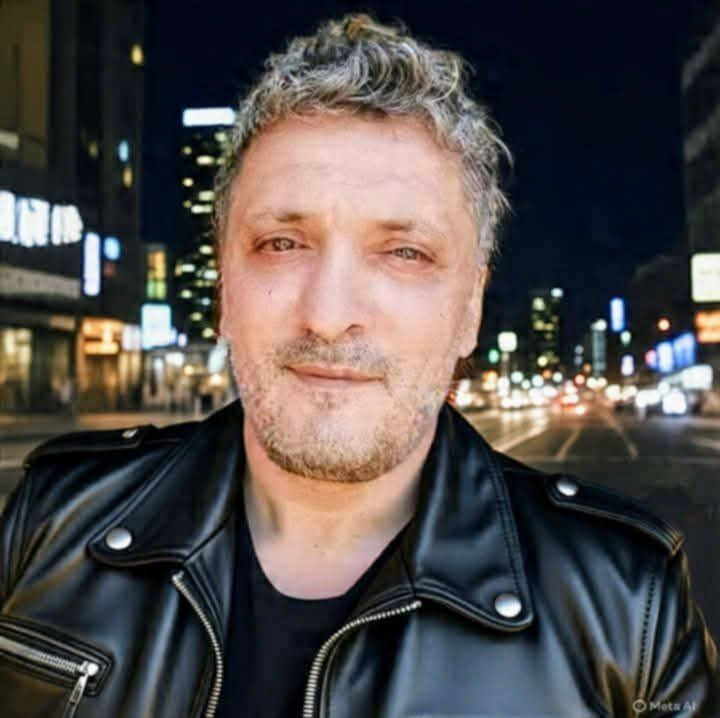
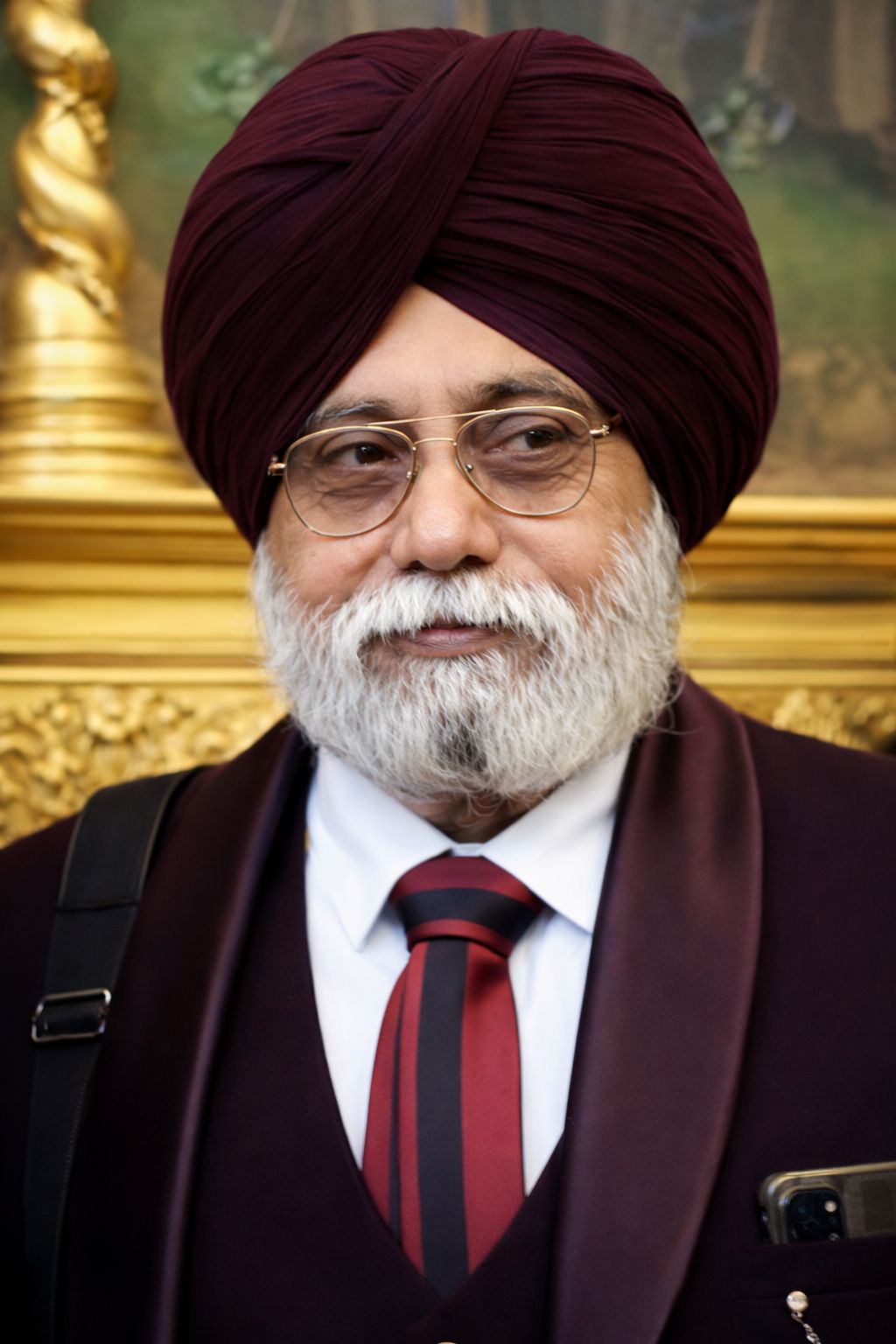
Bilal al Masri [Lebanon] engages Indian poet and philosopher, Dr Jernail Singh Anand in a conversation spanning human rights and ethical imperatives.
Masri:
How can world literature write about catastrophe when suffering becomes a daily condition in places such as Gaza and Lebanon, exceeding the language’s capacity for representation or endurance?
Anand:
Literature and art, which serve as a mirror to society and record and replay its vicissitudes, are active agents of prevalent culture, which not only reflect, but meditate on contemporary reality, and draw a parallel to history, which is the creation of human excesses, and recorded by the academia under pulls and pressure of politics. We can see dry mapping of human progression in history, which merely mentions the march of jackboots turning it into an endless story of deprivation and depletion of human values at all levels. Literature and art present an account of human suffering which was caused by the movement of chariots and cannons on the breast of the earth. I sometimes wonder if there is any stretch of the earth, which does not harbour a human skeleton. The human suffering will become a sad chapter in human history, but not without causing convulsions to the literature and art which are cultural documents of an era.
Masri:
Does the intellectual in today’s world still retain the role of the moral witness, or has their voice become part of a noise that no longer alters the trajectory of pain unfolding in Gaza, Lebanon, and beyond?
Anand:
An intellectual is a man of intelligence, who has a vast grounding in the sphere of knowledge, who understands the drift of history, and can assimilate what is happening in present times. I believe that the moral degeneration which has set in, is the result of the failure of the intellectual equipment of society, in which more and more emphasis has been assigned to academism. The common people form the real sphere of suffering and they remain immune from the salted wisdom of library shelves from where, books have never moved into the parlours of ordinarity. Intellectual is an arbiter of the moral sense but it appears he has failed to find channels of communication to converse with his own society. The world that suffers and the elite of the world that discuss and debate are two different worlds, and the knowledge which could have connected the two worlds has become a wall, rather than a bridge.
The second part of your question is: has the intellectual become a part of the noise. I would say, yes. The corporate culture and the market economy has afflicted every sphere of social activity, and intellectual is not immune from its influence. In most of the cases, we find the intellectuals taking part in the race for recognition, and becoming a part of the noise. Standing apart and recognizing and challenging the rot is left to very few people who are in absolute minority.
Masri:
When images of destruction from Gaza and Lebanon are endlessly circulated before the world, do they lose their power of moral indictment, or is the problem located in the viewer’s eye, which has grown accustomed to suffering?
Anand:
You appear to be right in suggesting that human beings have become accustomed to see pain and misery spreading across continents, and do not complain. An empathetic understanding of human misery and a responsive world regime are need of the hour, for which we shall have to reformat human consciousness. The world must have a mechanism to spread the idea of Ethics and Human Rights. Our world has failed to recognize the right of people to live in harmony. As members of a highly civilized society, we are expected to respect the right of human beings to exist, and exist with dignity, which God has granted to every one born to this earth.
Masri:
To what extent can we still speak of universal ethical and humanitarian values when they appear powerless in the face of what is happening in Gaza and Lebanon, and how can we understand this contradiction between the global human rights discourse and its absence in practice?
Anand:
The ethical movements are run by private organizations which do not find statutory support from states. Human Rights Organizations have got international presence, but they do not go beyond mere condemnation. Universal ethics is an abstract ideal, and the apparatus through which these ethical sensitivities could be articulated, and spread across is almost non-existent. The near total absence of universal ethics and disregard of human values results from a social set up in which evil is not condemned nor looked down upon. Education, family and spiritual bodies tried hard in the past to instil the ideals of good and evil. At present, education has been converted into a thriving business, family has disintegrated and spirituality too is in the grip of market forces. With the failure of this regulatory mechanism, it is free for all. There is no one to check man from a hasty fall into insensitivity and moral inertia.
Masri:
To what extent can literature be an ethical stance, rather than merely an aesthetic reflection of the suffering of the distant other?
Anand:
Human suffering comes to us packaged in history books. When history is replayed, it takes us back to the hoary times when great massacres took place, killing millions of people. If we go back to myth, just imagine how many went under the grave in Troy, and how many perished in the epic battles of Ramayana and Mahabharata. The story is disturbing when it filters through history. It makes the tragedy stare at you, in all its horror. It is unvarnished truth, which really disturbs us, and it can demean us too. Nearer home, if history of the Partition is brought before us through history, those who suffered the loss of their near and dear ones, would find their wounds reopened and blood might start flowing in the streets all over again.
Literature Confronts False Narratives:
Literature and art are a medium through which when human tragedy is passed, it gets a new makeover. Literature and art serve a great purpose: bringing the margins to the centre, and softening the hurt, by giving it a plausible argument. Art is an argument with time, so is literature a conversation with the self. The material they use is history, but they treat it with a humanistic angle, and before presenting it to the people, dilute its lethal substances, so that they do not kill whosoever drinks on it.
This is the ethical stance of literature. To represent its society and its evil in such a way as to prepare men to discard it altogether. Literature presents the truth of an era, but it is treated with a moral varnish, and given an ethical orientation. Truth cannot be unleashed unguarded, because it has the potential to disturb peace, unless the author gives it a makeover of art, removes its poison, and reduces it to a story with a plausible moral.
[Bilal al Masri is a Lebanese Arab poet and writer whose work engages with the intersections of poetry, language, and existential thought. He writes texts that explore the tensions between self, memory, and the world. His practice seeks the inner music of language, where meaning emerges through rhythm, image, and silence rather than ornamentation. For him, literature is not merely an aesthetic craft but a way of questioning existence and human fragility. He is also engaged in the critical reading of contemporary Arabic literature, continually exploring the human condition through writing].
Dr. Jernail S. Anand, with 200 books to his credit [20 epics] is a Chandigarh-based polymath, and a vital architect of the 21st century ethical literature whose seminal work ‘Lustus: The Prince of Darkness’ challenges the moral complacency of our era. Founding President of the International Academy of Ethics, and Laureate of Charter of Morava [Serbia], Seneca [Italy], Franz Kafka [Germany, Ukraine, Czech Rep] and Maxim Gorky [Russia], his name is inscribed on the Poets’ Rock in Serbia. He is an Honorary Member of the Serbian Writers Association, Belgrade. Anand has built a poetics that unites ethics, Vedic spirituality, social critique, and the philosophy of meaning. Anand presents an articulated perspective on poetry as an instrument of planetary consciousness. A moral philosopher, professor, and international speaker, Anand has devoted much of his research to the ethical dimension of language, to the responsibility of the individual within a globalised society, and to the relationship between matter, consciousness, and transcendence. Email: anandjs55@yahoo.com.
Bibliography:
https://sites.google.com/view/bibliography-dr-jernal-singh/home