(ALL MY WORKS ARE DEDICATED TO MY BELOVED TEACHER A.T. KAMILJANOVNA —- TO THE LIGHT OF MY DARK EDUCATIONAL LIFE.)
You are like a sun ¢ in winter
i mean : we see you very rarely, like the sun in winter, but at every meeting your radiant smile, your eyes filled with warmth warm us, i would like to see the sun * every day I hope to have more sunny days in 2 semester
Don’t take my words as a compliment or sycophancy
As only with you my tongue is connected with my heart
Each
word, each message I share with you, is a melody of my soul.
Missing you is like waiting for spring in the midst of a harsh
winter.❄️
We do not say I miss you…
Between us, chilly winds still blow,
As if spring got lost in the snow.
You are my sun, my inspiration bright,
But now you shine only in dream’s light.
I’m your ray, breaking through the grey,
Through silence, still seeking the way.
I long for spring to bloom once more,
For my soul to tremble ̶ but not from war.
Let cold fade in the warmth of your hand,
You’re like April ̶ you always withstand.
Even in storms, even apart,
I reach for you, with all my heart.
You Didn’t See….
You didn’t see the love I gave you —
Pure and bright, like springtime light.
I kept waiting, hoping, dreaming,
That your warmth would make things right.
What’s my fault? — Just standing near you?
Being a ray through storm and snow?
While the ones who hurt with glances
Let their silent anger grow.
I kept quiet — you heard no sorrow,
Just my voice behind a wall.
But you were more than just a moment –
You were spring and sun and all.
And the things between the phrases,
All the words you didn’t see —
They were more than dreams or silence…
They were simply you and me.
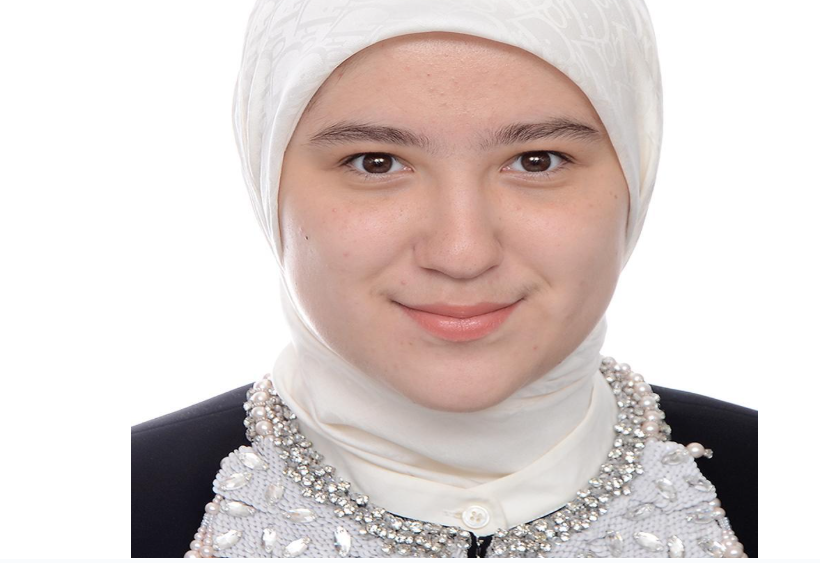
I am Khamzayeva Rukhshona Bakhodirovna, a second-year student at the Faculty of Theory and Practice of English Translation at Silk Road University of Tourism and Cultural Heritage in Samarkand. My academic and professional interests focus on written and oral translation as well as on the impact of artificial intelligence on contemporary translation practice.
My research interests include translation studies, intercultural communication, advertising and literary translation, and the integration of digital technologies in the language industry. I am the author of analytical and research papers examining the challenges and prospects of the translation profession in the era of digitalization.
In addition to my academic work, I work as a translator in the jewelry industry and participate in international forums and conferences, including events with foreign experts. I am fluent in Russian and English and currently study Turkish. I plan to further develop my professional skills in translation, international relations, and diplomacy.
I am particularly interested in academic writing, public speaking, and cross-cultural communication, and I am committed to continuous professional and intellectual development.
ANNOTATSIYA;Mazkur maqolada oliy ta’lim muassasalarida tahsil olayotgan talabalarda stress holatlarining vujudga kelish omillari hamda emotsional barqarorlikning psixologik xususiyatlari ilmiy-nazariy jihatdan tahlil qilinadi. Tadqiqot jarayonida stress va emotsional barqarorlik o‘rtasidagi funksional bog‘liqlik ochib berilgan. Shuningdek, talabalarda stressga chidamlilikni shakllantirish va emotsional barqarorlikni rivojlantirishga qaratilgan amaliy-psixologik tavsiyalar ishlab chiqilgan.
Kalit so‘zlar: stress, emotsional barqarorlik, talaba, psixologik moslashuv, ruhiy holat, motivatsiya.
АННОТАЦИЯ:В статье проводится научно-теоретический анализ причин возникновения стрессовых состояний у студентов высших учебных заведений, а также психологических особенностей эмоциональной устойчивости личности. В ходе исследования раскрыта взаимосвязь между уровнем стресса и эмоциональной стабильностью студентов. Разработаны практические психологические рекомендации, направленные на повышение стрессоустойчивости и укрепление эмоционального равновесия студентов.
ANNOTATION: This article presents a scientific and theoretical analysis of the causes of stress among university students and the psychological characteristics of emotional stability. The study reveals the relationship between stress levels and emotional resilience. In addition, practical psychological recommendations aimed at reducing stress and enhancing emotional stability among students are proposed.
INTRODUCTION. In modern society, the reforms being implemented in the higher education system place a significant responsibility on students. The increasing complexity of the educational process, the rising demand for knowledge, and the necessity for independent decision-making have a substantial impact on students’ psychological well-being.
Particularly, the widespread prevalence of stress among youth is negatively affecting their mental health and academic efficiency. In psychological science, the issue of stress and emotional stability is considered a crucial factor in personality development. The student years represent a transitional stage in an individual’s life, during which stress resistance and emotional stability are formed. Therefore, studying this problem on a scientific basis holds great relevance. It is well known that the adolescent-student period encompasses various ages, during which numerous psychological characteristics can be observed. Students who study far from their parents, face financial difficulties, or experience heavy intellectual workloads may encounter negative issues in peer relationships.
Furthermore, during this period, family relationships also show a high susceptibility to stress. The concept of stress was introduced into scientific discourse by H. Selye, who interpreted it as the body’s general adaptation response to various unfavorable influences. In the psychological approach, stress is interpreted as a state of mental tension that occurs in situations where an individual’s internal resources are insufficient. Stress in students manifests in the following forms: slowing of cognitive processes; emotional instability; increased feelings of anxiety and fear; and negative changes in behavior. Prolonged stress can also lead to psychosomatic disorders in the individual.
RESEARCH METHODOLOGY. The study was conducted based on random sampling; for example, 200 students (100 males and 100 females) studying in the 1st-4th years of Tashkent State Universities participated. The participants’ age range was between 18 and 23 years. A systematic approach, comparative analysis, and psychodiagnostic survey methods were utilized during the research process. The sample group consisted of 150 students studying in various fields of higher education institutions. The study employed Ch. Spielberger’s “State-Trait Anxiety Inventory,” R. Lazarus’s “Coping Test,” and V. Boyko’s “Emotional Stability” methodologies regarding exams, heavy course loads, and time shortages. The obtained data were correlated using statistical analysis (SPSS software).
LITERATURE REVIEW. The problem of stress and emotional stability among students is one of the fundamental directions of psychology and has been studied by international and local scholars based on various approaches. The scientific foundations of the stress concept were developed by H. Selye, who defined stress as the body’s non-specific response to any external demand (General Adaptation Syndrome). The cognitive-phenomenological theory of R. Lazarus and S. Folkman holds significant importance in studying stress during the student years.
According to their view, stress is not merely the result of external environmental influences but rather depends on how an individual evaluates these influences and to what extent they perceive their own resources as sufficient. The issue of emotional stability has been extensively covered in the research of L. Kulikov, B. Vardanyan, and K. Izard. K. Izard evaluates emotional stability as an individual’s ability to maintain a positive emotional state in complex situations without decreasing performance efficiency. Regarding stress-coping mechanisms in students, E. Frydenberg and N. Endler conducted research proving a direct correlation between adaptive coping strategies and academic success.
ANALYSIS AND RESULTS To determine the stress levels of students, Ch. Spielberger’s “Anxiety Scale” was used; to evaluate emotional stability, H. Eysenck’s “EPI” questionnaire and Goleman’s emotional intelligence test were employed. The study involved 120 undergraduate students.
Analysis of the dependence of stress levels on educational stages The results show that stress levels manifest differently depending on the students’ year of study.
Table 1. Student stress levels by year of study (in percent)
Year of Study
Low (Reactive)
Medium (Optimal)
High (Destructive)
1st Year
15%
45%
40%
2nd-3rd Year
25%
55%
20%
4th Year
10%
50%
40%
The high stress indicator in 1st-year students (40%) is explained by the process of adaptation to a new socio-psychological environment. In 4th-year students, the increase in stress is a result of “existential anxiety” related to the final qualification work and future employment issues.
Correlation between emotional stability and academic achievement. During the research, the relationship between emotional stability indicators and students’ Grade Point Average (GPA) was calculated using the Pearson correlation coefficient. A positive correlation was identified between emotional stability and educational efficiency. Students with high emotional stability can effectively manage cognitive functions (memory, attention, logical thinking) during exam sessions. Conversely, it was found that students with a high level of emotional lability (instability) experience an “intellectual blockade” in stressful situations, leading to lower results despite having a high level of knowledge.
Psychological determinants of stress resistance An analysis of the coping strategies (overcoming mechanisms) used by respondents revealed the following:
Constructive strategy (62%): Planned problem solving, seeking social support.
Non-constructive strategy (38%): Avoiding responsibility, suppressing emotions, or aggression. The research results indicate that simply providing knowledge is not enough to develop emotional stability in students; it is also necessary to form the quality of psychological resilience (flexibility). Following training sessions conducted on developing emotional intelligence, a decrease in the anxiety level of subjects by an average of 18% was observed.
CONCLUSION The theoretical analysis and empirical research results allow for the following scientific conclusions regarding the psychological characteristics of stress and emotional stability in students: It was determined that the level of stress in students has a variable character according to the stages of the educational process. Adaptive stress dominates in the 1st year, while professional anxiety prevails in the 4th year. This indicates the necessity of introducing a differentiated psychological support system for each stage in higher education institutions. Research results proved a direct positive correlation between emotional stability and academic achievement. Emotional stability serves as a “filter” for students to fully manifest their intellectual potential during stressful situations (exams, colloquiums).
Constructive coping strategies (problem analysis, time management) used by students emerged as the main determinants strengthening emotional stability. Non-constructive strategies (avoiding the situation) were confirmed to lead to chronic stress and psychosomatic disorders.
Recommendations
Incorporating special training modules aimed at developing students’ emotional intelligence into the curriculum.
Establishing systematic activities of psychological counseling centers at universities to form self-regulation skills in students. Considering the psychophysiological capabilities of students when optimizing academic workloads. The scientific novelty of the research lies in revealing the mechanisms of emotional stability’s influence on cognitive functions in overcoming crisis situations during the student years. These results serve to enrich the theoretical foundation in the fields of pedagogical and developmental psychology.
REFERENCES
Mirziyoyeva.S.SH (2024). Talabalar shaxsida emotsional intellektni rivojlantirishning psixologik mexanizmlari. Toshkent: “Fan va texnologiyalar” nashriyoti.
G’oziyev.E.E. (2010). Umumiy psixologiya. Toshkent: Universitet nashriyoti.
Lazarus.R S. Folkman, S. (2021). Stress, Appraisal, and Coping: Modern Perspectives. New York: Springer Publishing Company.
Boymurodov. N. (2023). Amaliy psixologiya: Talabalar va yoshlar bilan ishlash metodikasi. Toshkent: Yangi asr avlodi.
Smith. J. Johnson. K. (2025). Emotional Stability and Academic Success in Higher Education: A Longitudinal Study. Journal of Educational Psychology, 117(2), 45-62. Google Scholar orqali ko’rish.
Karimova, V. M. (2022). Ijtimoiy psixologiya va muloqot tizimidagi stress omillari. O’zbekiston Milliy universiteti ilmiy axborotnomasi.
Bar-On, R.(2023). The Impact of Emotional Intelligence on Stress Management. Educational Research Review, 18(4).
God, I have nothing to say to these broken-winged birds
for they are evidence of the fear stitched
into the fabric of my existence.
But Lord, I have come to the threshold of my doubt,
let me not be barren of your mercy.
Let the dawn of my grief not break
for I am a fragile vessel holding a breath.
If I am lucky to survive my morning,
let the sun scorch away every hatred I hold in my heart
for my neighbor. When the curtain of the night falls,
may my couch not mock me of loneliness.
I have known pain, and a bit of betrayal. Yes.
Caress this sinking heart with the finger of love.
Lord, are you listening? Let me not tread
on the knife-edge of anger and burn this little joy
I own. Let my ignorance grow a wild patience
to know your will. Send me a sign.
Maybe a dove perching on the hill of my weariness.
Speak a word, Lord, to the bones of my dead faith
& let them breathe again, like Lazarus. Amen.
Sarah Adeyemo, SWAN IX, is a Nigerian poet, editor, writer, and spoken word artiste. The debut author of The Shape of Silence, a micro chapbook. She draws inspiration from solitude and experiences. She is a fellow of the SprinNG Writing Fellowship. Sarah has published/forthcoming work on Pepper Coast Magazine, The Weeds Review, Akpata Magazine, The Shallow Tales Review, The Muse Journal, The Weganda Review, Everscribe Magazine, Afrillhill Press, TV-63 Magazine, Poems for Persons Interest, Northern Writers Forum Journal, Eboquills, Rinna Lit. Anthologies, and elsewhere.
J.J. Campbell (1976 – ?) is old enough to know better. He’s been widely published over the last 30 years, most recently at The Rye Whiskey Review, Night Owl Narrative, Disturb the Universe Magazine, Crossroads Magazine and The Beatnik Cowboy. J.J. is a 3 time Best of The Net nominee and a two time Pushcart Prize nominee. You can find more info on his latest book, to live your dreams, by going here: https://www.goodreads.com/book/show/245883678-to-live-your-dreams
Aliicia Menendez stood on the corner, near the ivy-covered mansion designed by James Nagle; she was waiting for her bus. She casually glanced down North Burling Street and noticed a gang of men staring at her. There were at least a dozen. Alicia did a double take. They were done up in military gear and their face coverings and gasmasks gave them the aspect of a swarm of six foot, 200-lb. insects. One of them pointed at her. They all wore coats emblazed across the back with ICE.
Uneasy, she began to drift from the bus stop. She looked again and they were moving, en masse, in her direction. Dropping her packages and clutching her purse, she took flight, in the direction of the intersection of West Armitage Avenue and North Halsted Street. She was wearing low heels and couldn’t make good time.
She fled for about half a city block before the big bugs caught up with her. Someone reached out and grabbed her arm, twisted it behind her back. Alicia cried out in pain.
“Get her ass on the ground,” one man barked gruffly and she was thrown to the pavement. Her hose shredded, her skirt tore. Her other arm was twisted behind her and twist ties affixed about her wrists.
“I got her purse,” said one of the men, turning up her handbag. “Alicia Menendez,” he muttered aloud. “She ain’t from Chicago.”
“Okay, Alicia Menendez,” purred a man, mocking her, “where’s you effing green card. Where are your documents, Beaner? You ain’t got ’em, do you?” he asked smartly.”
“I’m a citizen,” she wailed shrilly, then began to sob.
By this time, a crowd had begun to gather: Hispanics, Anglos, African Americans, a mixed-bag. They began to edge closer.
“Stand the fuck back!” shouted the presumptive leader. “This is official ICE business. You got no business here. Disperse or be detained.”
“You got a warrant?” asked a high-pitched voice. A woman. The crowd began rumbling angrily. The thugs of ICE looked uneasy.
“Like this lady said,” said a dark-suited man, “do you have a warrant?”
“What the hell are you?” asked the leader of ICE. “A goddamn lawyer?”
“I’m an immigration attorney,” replied the other man.
“This is a perfectly legal warrantless arrest, Esquire,” said the man bitingly. “You just carry your ass on out of here, while you can still walk.”
“What’s your reasonable suspicion?” asked the lawyer. “Warrantless arrests are only valid with probable cause or its equivalent.”
“She ran,” pointed out the head thug heavily.
“Because you ran after her,” the lawyer reminded her.
“If she wasn’t guilty, then why did she run?” ask the man, boldly putting his foot on the back of the prone Alicia.
“You men are all strangers to her. You’re heavily armed. You’re wearing masks. I saw the whole thing. You didn’t identify yourself as agents.”
Before the man could respond, one of his minions said, “Eh, Mike, this lady is a U.S. citizen.”
“Huh? And how do you know that?”
“Passport,” replied the other man, holding it out for Mike’s inspection.
Without another word, Mike bent and cut Alicia’s bonds. Then, as if on cue, two black SUVs rumbled up and, still without a word, the men climbed aboard. The vehicles sped away.
The attorney knelt and helped Alicia to her feet. “Anything I can do for you, ma’am?” he asked kindly.
“Wh…what happened?” she asked in a bewildered voice. “I’m a stranger to Chicago,” she explained. “I’m from Milwaukee.”