Poetry from Gaurav Ojha

Philosophical Reflection on Love

Gaurav Ojha

After having read various philosophical works, I have come to realize that the scope of philosophy is not just limited to all that difficult stuff great philosophers write. Philosophy is not just an academic pursuit; it serves as a daily analytical tool that prompts us to question, reflect, and uncover the larger context behind the various aspects of our lives. Hence, anything from an intense political debate to a personal dialogue with your lover on the turgid matters of falling and being in love can be quite philosophical.

For an analogy, just hold yourself and think for a while when your lover asks you the next time, “Do you really love me?” Instead of answering the question bluntly, you need to analyze and reflect on his or her concern for a while and then ask yourself, what does love really mean? Why do we fall in love? Is love about giving things, holding hands, or something deeper? Why is she asking this question? Is she insecure? Is she in love with me for what I have or who I am? Now ponder over these thoughts for a while and what you are doing is the philosophy of love. After reflecting on these questions, you may feel that even a familiar thing like being in love carries so many concerns, questions, and enigmas.

Perhaps too much has already been said about love, from poems, essays and bulky philosophical treatises to the complex plots of novels reflecting on its complex, contradictory and inexplicable nature. And, among many such reflections on love, I find French philosopher Jacques Derrida’s thoughts on the paradoxical nature of love rather philosophically intriguing. When asked to say something about love, rather than answering the question, Derrida simply obscures the question itself and makes the idea of love look rather odd by exposing the paradox between what we love and who we love.

Derrida argues that before we say anything about love, first we need to reflect on our ways of loving, whether we love each other for who she is (her being) or for what he has (his possessions). Are we in love with the right person (who), or does that person have all the right possessions we need and want to be in love with? Here “being” reflects who a person is as an individual, how her life speaks, and a sense of joy, laughter, support, transparency of thoughts, and inner connections you experience in her presence, whereas “having” indicates what a person owns in terms of accumulations, possessions, opportunities, purchasing power, social security, and control.

In our idealist imaginations we want to presume that we always love the person before his/her possessions; however, in reality we are also evenly aware that probably we are in love with the person for his/her physical attributes, social status, skills, knowledge, influence, and other material possessions. The joy of philosophizing about love lies not in finding answers, but in exercising our minds, posing questions, and analyzing the familiar experience of falling in love from various unexpected angles, all with the aim of expanding our understanding of that passionate and whimsical phenomenon we refer to as love.

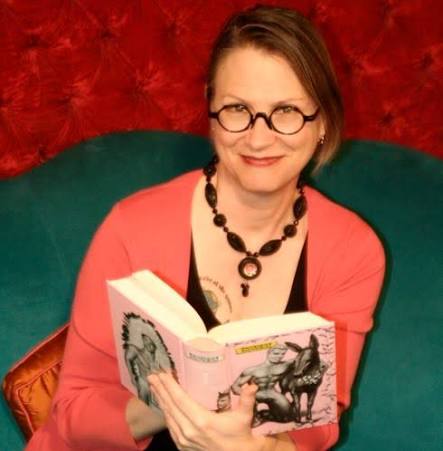
(Ojha is a faculty member specializing in communication, critical thinking and research at various educational institutions in the Kathmandu Valley)

Poetry from J.K. Durick

Full Tourist

I’ve been a tourist all my life –

Always passing through

Touring from here to there

Always trying to recall where

I am today and on to tomorrow.

I’ve been looking for a guide

To direct me in a language I know

(English spoken slowly, a little

Frence and of course

My high school Latin) spoken

Clearly and loud enough.

I’m a  tourist taking selfies and

Buying post cards and souvenirs

To remind me where I’ve been

And all the things I’ve probably seen.

I’ve learned to live in and out

Of a suitcase, rummaging about

Through underwear and socks

Enough of both I’m always hoping

But never sure – just ask me.

I’m always a tourist planning my next

Excursion, out and back, next and

After that, every day, all day, smiling at

And wondering about all these locals

Natives of the place.

       Packing Up

I picture you packing

A backpack, a carry-on

And you didn’t mention

Anything else, so my

Picturing will be limited.

A few weeks in Europe

Touring, sightseeing, and

dressed to the nines, as

I expect you will be, will

Need careful selecting

Folding and matching

One thing with another.

Walking through the Roman

Forum, sipping the right

Wine in a Parisian café

Standing in line for just

About anything this time

Of year, hottest it’s been

In Europe in recorded time.

Your backpack and carry-on

Left in that bed and breakfast

Your kids picked and there

You are – I can picture it –

Dressed for whatever comes

Your way.

           Time Travel

We time travel, but not like Wells

In a machine going back or

Ahead, blurring centuries as

We find out what went on or

What will happen. No, the kind

We do, requires that we just

Sit back, stand back and let

It happen. It’s inevitable, so it

Needs no outside assistance.

We’re travel through time, going

Forward on the clock and on

The calendar, sometimes plunging

Ahead, sometimes tick-tocking

Onward, but always moving on

Shedding yesterday, disposing of

Last week, last year, and what it

All meant. We do carry ourselves

So things accumulate on us, in us

Follow us, become part of us. We

Never get to go back to relive and

Or improve on what happened in

Our past. We travel forward, but we

Don’t know when it all will end, don’t

Know when our clock unwinds or

When that last alarm goes off and

We can’t get up and start again.

Poetry from Patrick Sweeney

willing it,
he draped tinsel across the train tracks
of his childhood


she said: the Tao teaches you in your sleep


when the mathematicians get here, be sure to use the word 'approximately' 
and please don't bother them with knotty questions about prime numbers


she kept her 'waitress' shoes in the hall closet


day moon
briefly in the nucleus
of dew


she filled the holy water bottle from the polluted creek


Rosary and a half-pack of Pall Malls
in the big front pocket
of her knock-around housedress


he's wasting his gifts envying butterflies


it can't be normal to think about a cardinal in a blue spruce tree all day


I got the parking spot
and a half-baked notion of an infinite universe


Poetry from Photini Karamouzis Chalkias 

Evasions, guilt

and a thousand unknown words.

I lick from your fingers…

the flavors of your tiny dreams!

I hide newspapers in my coat

so that the desert cold doesn’t whip me.

Windows with bars

to hide anonymous faces

that the sun has never seen.

I set up a stool outside the school

to expect children’s smiles..

to make decorations

on the edge of the lips

The tongue tastes

the spices of pearls.

What else can I hide from you

in a red hall

that sleep did not want to give a breath?

Tonight I wished

many patterns to scar

on my withered skin.

Truly, what should I remember?

That drink you treated

in an untouched night?

That you cried in my hands on a train…

while crossing the tunnels?

We lit a fire in a house that was cold

but happy

We had to hide exposed parts of the body

and walk naked on the rooftops of another mind

Many cities to enclose

a half-full arch

and a completely empty wish.

I swallow harsh images

on a bed that I laid my feet.

I gaive you wedding gifts

on a road that was  covered by mud.

You gave me veils to hide the lie

behind curtains that I painted with blood.

On a terrace we hung all those feelings

that the sunset deprived from us of when we melted…

On that road you showed me poverty to face

I turned back, I didn’t leave any footprints.

In the desert 

you didn’t let me

go of my breath!

A drop that was left

gave me back my life.

Eyes closing, turning black

Giving a fiery glow

You tricked the stars into drinking wine!

Morocco 2008

Photini Karamouzis Chalkias 

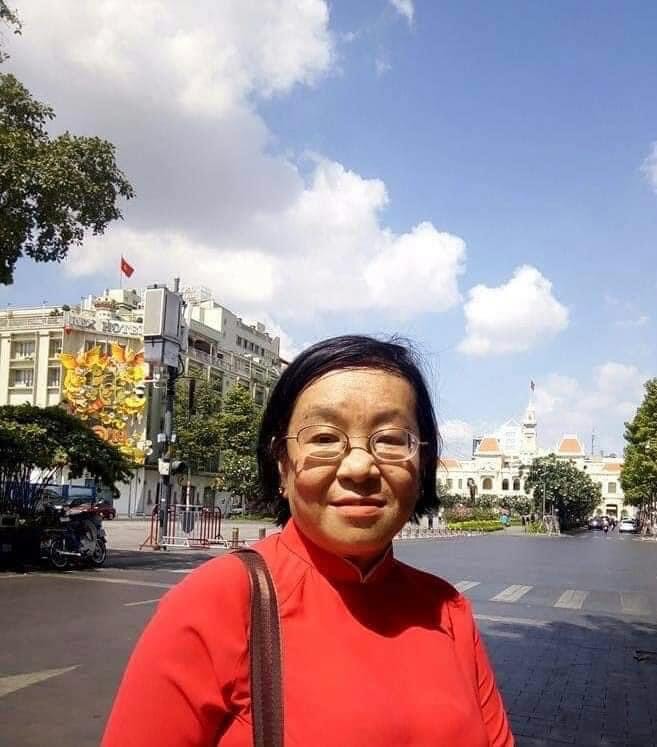
Educational Psychologist, Creative Publicity Consultant, Arts-Cultural Mediator, Private Language Tutor, Project Manager & Social Trainer in Artistic Union Ulysses- (Artistic Merits)

Essay from Maftuna Rustamova

The Secret of Success: Talent or Habits?

Success has always been one of humanity’s most fascinating topics. Thousands of books have been written about it, countless seminars have been organized, and millions of people spend their lives searching for its secret. Although there is no single formula for success, the lives of highly accomplished individuals reveal a common pattern. More often than not, success is built on discipline, consistent habits, and perseverance rather than extraordinary talent.

Many people believe that success depends mainly on natural ability or luck. While talent may provide an early advantage, it does not guarantee long-term achievement. History has shown that individuals who continuously improve their knowledge, develop new skills, and remain committed to their goals often outperform those who rely solely on their natural gifts. Daily effort and self-discipline create opportunities that talent alone cannot sustain.

The digital age has also transformed the meaning of success. Today, a person’s background matters less than their willingness to learn, adapt, and embrace change. Online education, artificial intelligence, and global communication have made knowledge more accessible than ever before. As a result, continuous learning has become one of the most valuable qualities for anyone who wishes to succeed in a rapidly changing world.

Another essential element of success is the ability to respond positively to failure. Many people give up after experiencing setbacks, viewing failure as the end of their journey. However, successful individuals treat failure as a valuable learning experience. Every mistake provides insight, strengthens resilience, and prepares a person to make wiser decisions in the future. In this sense, failure is not the opposite of success—it is an important step toward it.

It is equally important to understand that success should not be measured only by wealth or fame. Genuine success is reflected in personal growth, meaningful contributions to society, and the satisfaction of achieving one’s goals with integrity. Financial achievements may come and go, but knowledge, experience, and a positive impact on others leave a lasting legacy.

In conclusion, the secret of success cannot be reduced to a single strategy. It is the result of clear goals, consistent effort, lifelong learning, resilience, and the courage to continue despite difficulties. Success is not achieved overnight; it is built through small, purposeful actions repeated day after day. Those who remain committed to growth and never stop learning are the ones most likely to achieve lasting success.

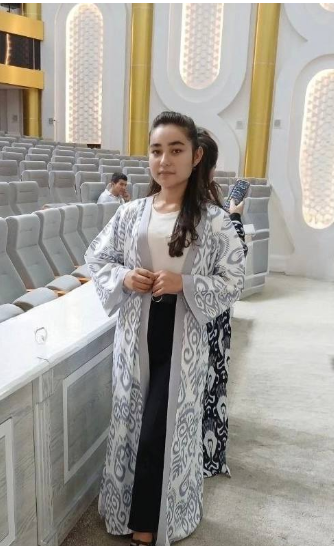
Maftuna Rustamova Ruslan qizi, 30th school 10 class

Poetry from Türkan Ergör

Young Turkish woman with blonde hair, a headband, a black top, and long necklace.

IF I COULD RETURN

Everyone finally returns 

Goes where they belongs 

Maybe they want to go

Maybe they don’t want to go

But

Finally

People returns

To where they belong

Their becomes request to return 

Perhaps unintentionally 

Reluctantly 

But l 

I would want to return 

If l could return 

Where l belong 

Quietly

Because I saw a rose 

Never seen before 

In the feelings garden.

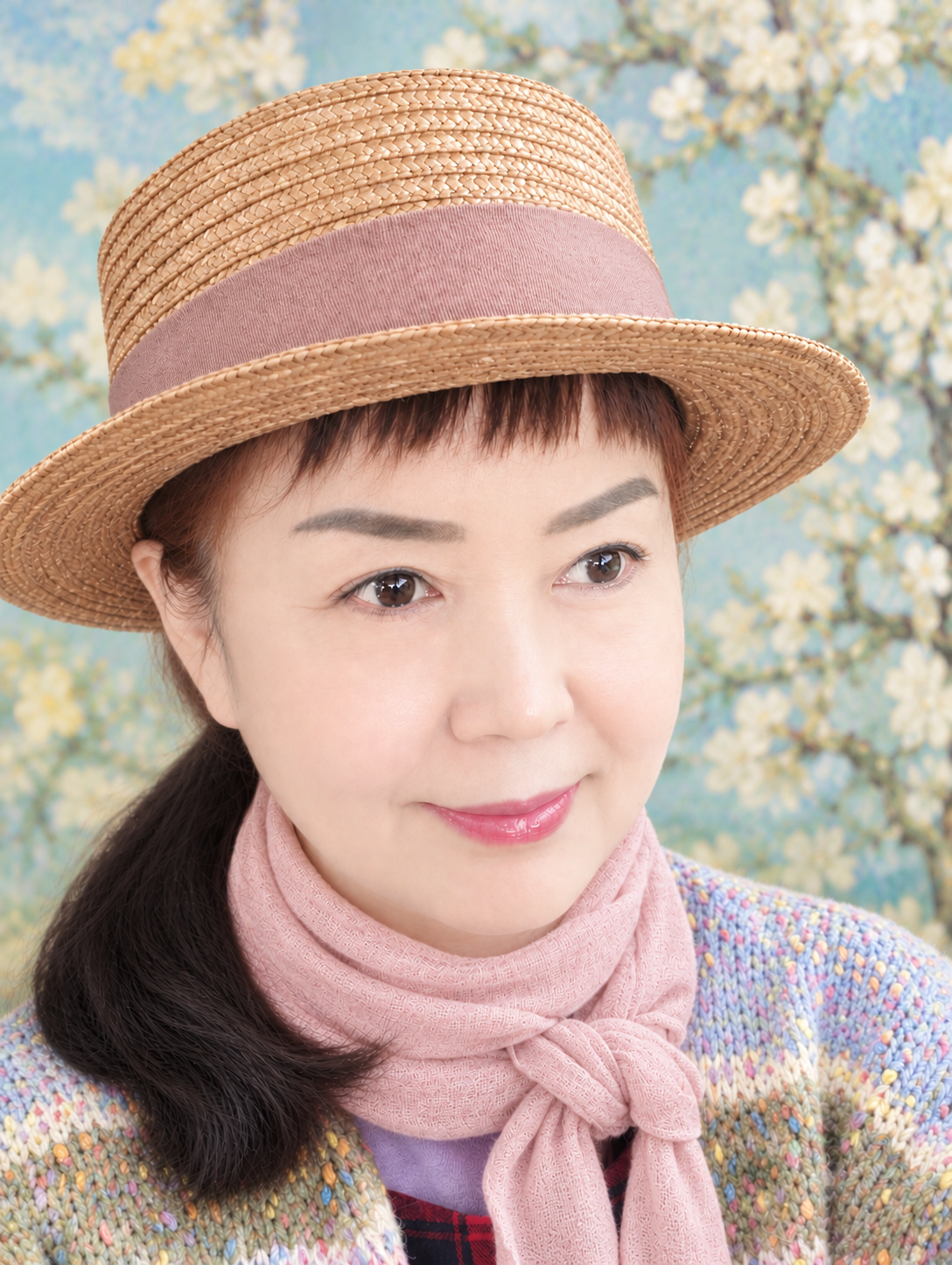
Türkan Ergör, Sociologist, Philosopher, Writer, Poet, Art Photography Model. Türkan Ergör was born 19 March 1975 in the city of Çanakkale, Türkiye. She was selected International “Best Poet 2020”. She was selected International “Best Poet, Author/Writer 2021”. She was selected International “Best Poet, Writer/Author 2022”. She was awarded the FIRST PRIZE FOR THE OUTSTANDING AUTHOR IN 2022. She was awarded the 2023 “Zheng Nian Cup” “National Literary First Prize” by Beijing Awareness Literature Museum. She was awarded the “Certificate of Honor and Appreciation” and “Crimean Badge” by İSMAİL GASPRİNSKİY SCIENCE AND ART ACADEMY. She was awarded the “14k Gold Pen Award” by ESCRITORES SIN FRONTERAS ORGANIZACIÓN INTERNACIONAL.

Poetry from Cyril Erchev

Wings of Dreams

You are the eternal light

of the night…

where you imprison the magic

of your dance…

That vibrates in your body

and in your destiny.

Where you carry the mysticism

on your bare feet…

The flowers and the silence

embrace you with the

sowing…

So that the flame of your love, which crosses

your world

to transmute it

into millions of stars

where you can illuminate

the entire UNIVERSE, may never be extinguished!

CYRIL ETCHEV, pseudonym of Elvira Cirila Etcheveste, was born in the city of Gualeguaychú, Entre Ríos. She studied at School No. 4, Gervasio Méndez, and became a teacher at ENOVA. She taught in Islas del Ibicuy, Entre Ríos, and in Buenos Aires: Necochea, Quequén, and Mar del Plata. She is a Professor of Language and Communication Sciences, with a degree in Language and Literature. She specializes in Reading, Writing, and Education, and has completed national and international postgraduate studies. She is an independent researcher of the works of Cortázar, Borges, and Chekhov. She is an International Ambassador of the Word (Quero, Toledo, Spain) and a World Ambassador of Culture (Tarija, Bolivia). She is a Distinguished and Illustrious Citizen in cities in Argentina and Bolivia. She has directed plays for children and young people, as well as adult storytelling performances. Founder of Literature Clubs: Little Prince, The Blue Heron, and The Bicycle.

Published books: She Tells, The Book That Speaks, and Amara, the Eyes of Time. Essay and profile magazine: The Blue Heron. Attends Writers’ Meetings and National and International Book Fairs. Has given lectures on Latin American authors in theater, art, and literature. Edited the book: The House on San Juan Street and Other Stories. De Los Cuatro Vientos Publishing House. San Telmo, Buenos Aires. Tucumán Park Editions: The Women of the Earth. She pro bono promotes Latin American stories among children, young people, and adults in cultural centers, libraries, and institutes. She collaborates on anthologies with the group: Together for Letters: THE IMMORTALS on the Web, in ArtePoética, the cultural magazine THOTEM, and in Weaving International Brotherhood: with essays and short stories. Dr. Mirta Ramírez, Chaco, Argentina. Translated into thirteen languages. She is invited to read, present, teach classes, and give lectures to all countries via streaming networks: YouTube and Facebook. She also appears simultaneously on radio and YouTube. She has been an active writer at Mercosur Congresses since 2020. President: Professor Zulma Nicolini, Gualeguaychú, Entre Ríos. In Mar del Plata, she belongs to the Ibero-American Society of Poets, Writers, and Artists (SIPEA). From Mexico, she represents the International Book Confederation. Presidents: César Salvatierra and Alan Morales from Peru. Coordinated by Cultural Ambassador Julio Gorenaud for the world.

She receives distinctions as a writer and cultural promoter from the Organization for the Defense of Peace and Art AWARD THE BEST World Federation of Women Grand Masters. Presidents: Elena Paniagua and Nora Miranda at the Palace of the Buenos Aires City Legislature. The International Mendoza Condor Award/Presidents: Guillermo Salinas and Adela Cornejo. She receives the Silver Seagull Award/The Knight Errant/Dr. Princess Alexandra of Easter Island. Dr. J. Manuel Equihua Estrella International Literature Prize from the International Cultural Collective, Universal Poetic Utopia USA Branch, and the International Program of Virtual Tributes to Living Artists. Selected among the 100 writers of Ibero-America and the Caribbean by EDITORIAL HISPANA USA, Atlanta, Georgia, 2020.

She has numerous publications in anthologies from Argentina to the world. MSADEI Diplomas of Honor. J. PAYRÓ, Dr. Jorge Citrángolo Casal. Mercedes, Buenos Aires, Argentina. Sworn in as a writer at the “Monument to the poet Alfonsina Storni” in Mar del Plata, Buenos Aires, by Dr. Jorge Citrángolo Casal. She is a member of the National Society of Writers (SADE) and the Gualeguaychú branch in Entre Ríos, Argentina. She donates books of her authorship to the Domingo F. Sarmiento Library in Gualeguaychú, Entre Ríos, the National Library, the Library of Congress, and the Library of the Legislature of the Autonomous City of Buenos Aires, as well as to schools and museums she visits. In 2025, she published Romance de la Sirena, followed by the publication of BORGES, nació con el Tango (Borges, Born with Tango).