Story from Leslie Lisbona

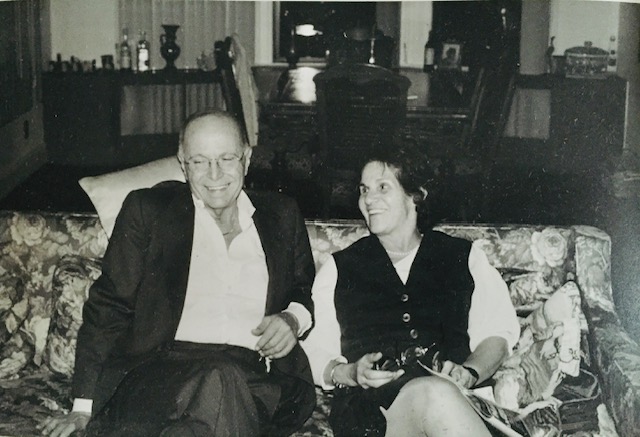
Black and white photo of an older middle aged light-skinned couple seated on a patterned sofa in a living room.

The Countdown

Day one. My father came home from prison. It was December. I was 30. The waiting was over:  My own life, independent of my parents, could begin.

My father was a poor judge of character.  He vouched for the wrong people and was sentenced to ten years in federal prison.  He served four and a half.

I was 25 when I watched my father being sentenced in a Brooklyn courtroom.  I was there with my mom and my sister, Debi. Afterwards, he was given a chance to speak to the judge.  He adjusted his designer glasses, whispered a few words, barely audible, and then fell backwards into his seat, as if he were shoved. 

For four and a half years, I had visited him in several federal prisons.  Each time, I got my period as soon as I got through security.  Each time, it surprised me.  It was never on my 28th day.  My mother said, “You should know by now,” but I was never prepared.  The prison made me bleed. 

Life continued while my father was away.  Not my life though.  My brother, Dorian, moved to California.  Debi, remarried and had twins.  Our dog, Cujo, died. 

I was still living at home with my mother.  I was unmarried.  My life was unchanged. I watched a lot of TV.  Jackie Kennedy, who was the same age as my mom and who shared a hairdresser and a unique sense of style, died. Shawshank Redemption premiered, and I thought of my father.  Like Andy Dufresne in the movie, my dad had been head librarian, helping other inmates study for their GEDs. 

Nearly five years later, during one of our last prison visits, I told my father that I had found a rental apartment in Tudor City.  That I had put down a deposit. That I would wait until he was back home to move in.  He said nothing.  His plastic glasses slid down his aquiline nose. My mother looked away, and her lip trembled.  I said, “Never mind.”  We all sighed, almost in unison.  I didn’t take the apartment, the studio with the magnificent views of the East River and the Murphy bed hidden in the wall. 

At his release, my father was dressed in loose-fitting jeans, white sneakers, a jacket, and clear plastic glasses, prison issued, that were too big for his face.

Finally he was home.  The countdown to my freedom had begun. I wondered if that apartment was still available. The little park on one side, the river on the other.  The thought of it alone made want to hug myself.

The first night was Thanksgiving.  My parents’ closest friends were invited.  The ones who stood by us when everyone else hadn’t.  My parents looked happy, their friends surrounding them.  I let out a big sigh and felt a bit lighter.  The tentacles attaching me to my seat and this house were loosening. A one bedroom would also work if I got a roommate.  The idea made me lightheaded.

Those first days, my parents were like newlyweds.  I could fully imagine them young. They looked at each other with tenderness.  They seemed to lean towards each other.  They were in love.  I wasn’t in love.  I had a long-distance boyfriend, but I couldn’t see myself married to him.  I wanted at least a little of what I thought my parents had.

On the second day, my mom, dad, and I went to breakfast in Manhattan, and then dropped my dad off at the store.  It used to be his store.  Now he was an employee. 

On the third day, I realized that my father was afraid to touch money.  We went to a gas station and he had forgotten how to pump gas.  He watched me and then sat in the car.  He didn’t want to drive.  I showed him the checking account and the bills and how I had been taking care of them until his return.  He asked if I could continue for a while longer. 

On the fourth day, we ate lunch on the back porch.  That’s when my friend Terence came over to see my dad.  We took one picture.  All of us smiling, mid chew.  That afternoon, my Dad asked my mom to get him an appointment at the eye doctor.  The plastic glasses were bothering him. 

On the fifth and sixth days I looked around my bedroom and thought that a studio would work.  I didn’t have much of anything of my own, just clothes, souvenirs, a few posters. 

On the seventh evening since my father had returned to us, my mom and I went to the theatre.  A mom and daughter night we had planned a long time before.  My mom was acting oddly.  After the show, she couldn’t find her car keys and then she couldn’t remember where she’d parked the car.  Later that night, I asked her if she was okay.  She said that a few days before, she was sweating so much that she went into a coffee shop on Madison Avenue to get napkins to wipe the moisture from her stockinged legs, even though it was freezing outside. I said we should go to a doctor, our neighbor even.  “Leave me alone,” she said.  “I’m not going to die,” and then she made a funny face with her eyes bulging and stuck out her tongue and walked out of the room with a wink.

The next morning, my father and I said goodbye to my mother.  We were heading to the subway to go to work. The sky was a slate grey. It was threatening to snow. She stopped us at the door in her white wooly robe.  She had an infection in her dental implant.  She said she didn’t want to go to the dentist, that she was scared.  My father hugged her, kissed the side of her forehead, and said she would be okay.  I said, “Bye, Ma.” She knew I would take my father to his subway stop at 57th Street.

That was the last time we saw her alive.  That was the last time I spoke to her.  I usually called her from work, but that day, for some reason, I didn’t.  My dad and I normally timed it so that we were on the same subway car home to Queens but I didn’t see him.  There had been delays.  When I got home, a police officer was stationed in front of our house.  An ambulance was at the curb.  All the lights were on in the living room.  The officer held my shoulders, trying to get my full attention. “Do you have a back door we can use?”  he wanted to know. I nodded.  My pantyhose were pinching my waist.  When I finally asked him what was happening, he said, “They are working on your mother.”  I heard the words but couldn’t understand their meaning.  The driveway was dark, full of snow, my feet breaking the icy surface with each step.

The back door was locked.  I didn’t even have a key. I peered through the glass and saw Debi standing in the kitchen sobbing in the arms of a police officer.  She saw me and opened the door.  When I asked what was going on, she shook her head and cried more.  Then my father was behind me.  We must have been on the same train after all.  We both moved past Debi to the front of the house.  I never expected to see my mother’s inert body, her clothing cut off, EMS workers surrounding her.  The furniture was shoved to the edges of the room.  Suddenly I was on the floor, at her level.  I don’t know how I got there.  I may have fallen or fainted or tripped.  My father fell on top of me.  He screamed, “My wife!” 

My father and I were placed on a couch in a dark room at the back of the house.  Windows were opened.  The air outside was arctic, but I was not cold.  My body was fire.  Someone shouted to breathe deeply.  A neighbor came over. The one who was a doctor.  But it was too late.  My mother was still not breathing.  She was put on a respirator but was deemed brain dead at the hospital later and the machine was disconnected.

That was day eight. My father clung to me, his plastic glasses askew. 

Leslie Lisbona recently had several pieces published in Synchronized Chaos, Dorothy Parker’s Ashes, The Bluebird Word, The Jewish Literary Journal, miniskirt magazine, Yalobusha Review, Tangled Locks, and Smoky Blue Literary.  She is the child of immigrants from Beirut, Lebanon, and grew up in Queens, NY. 
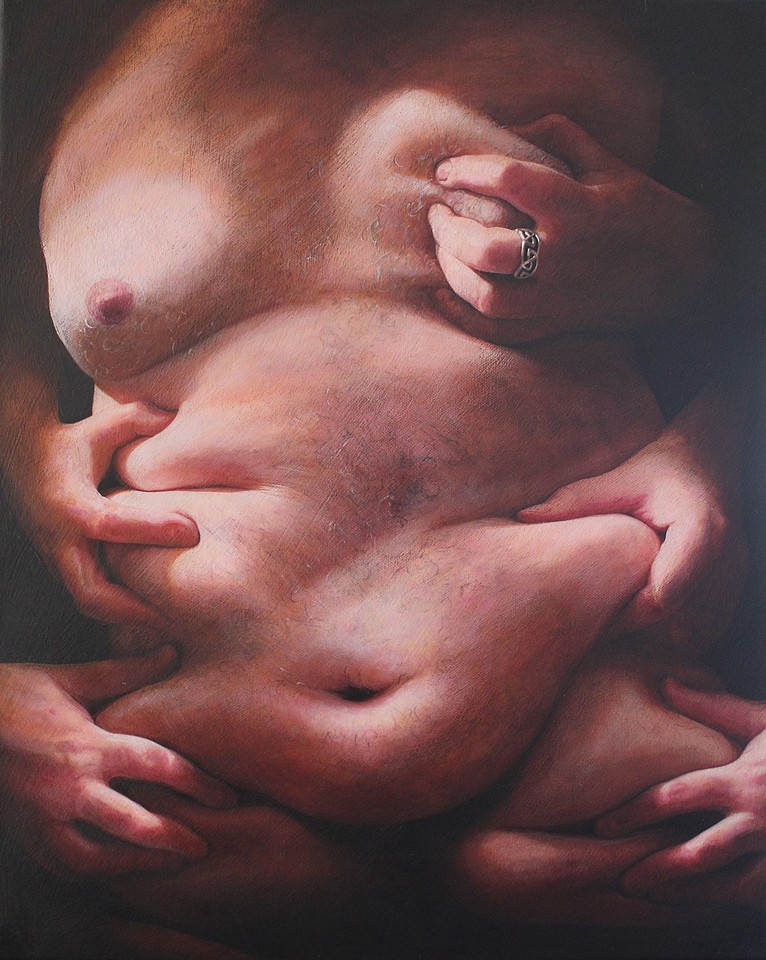
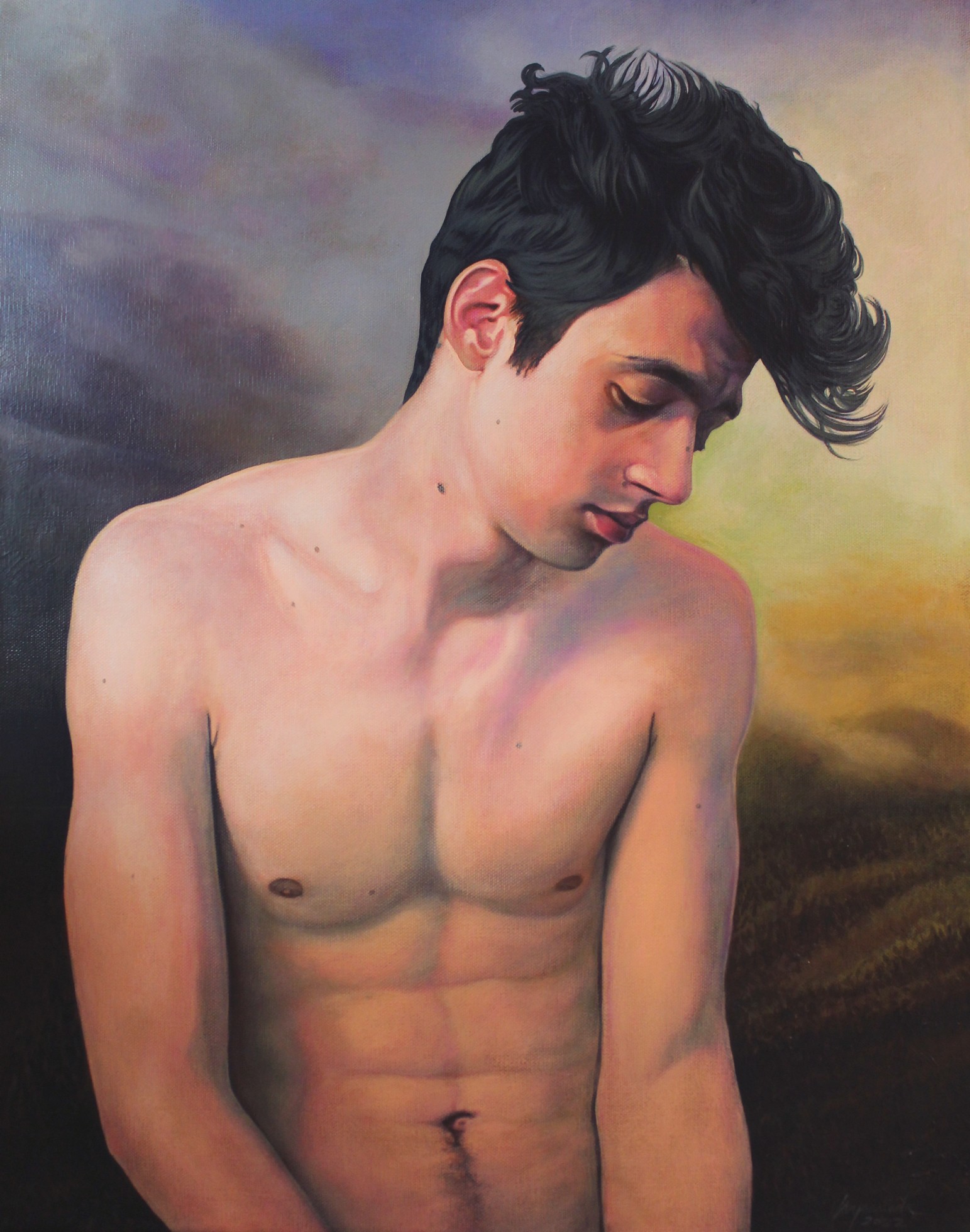
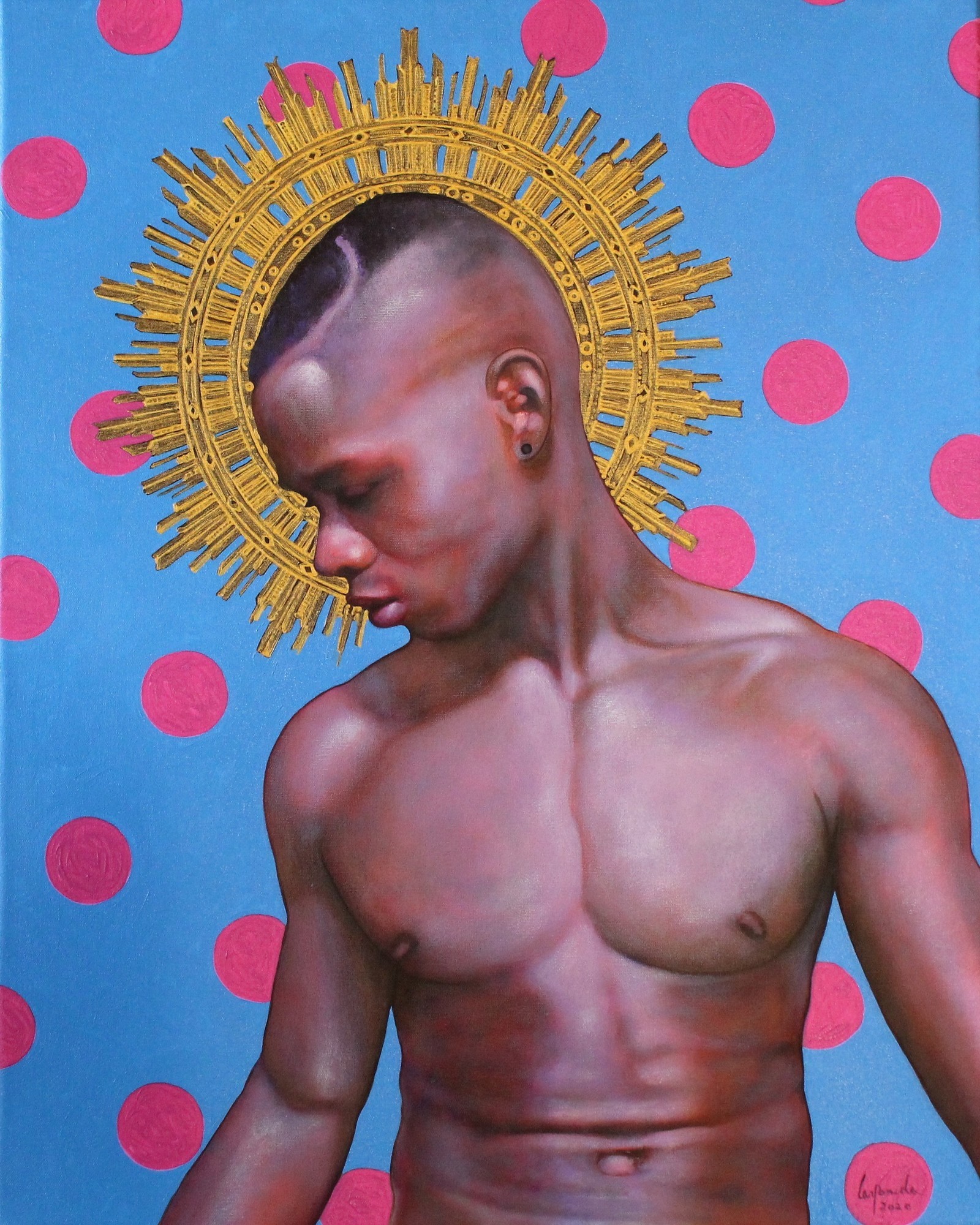
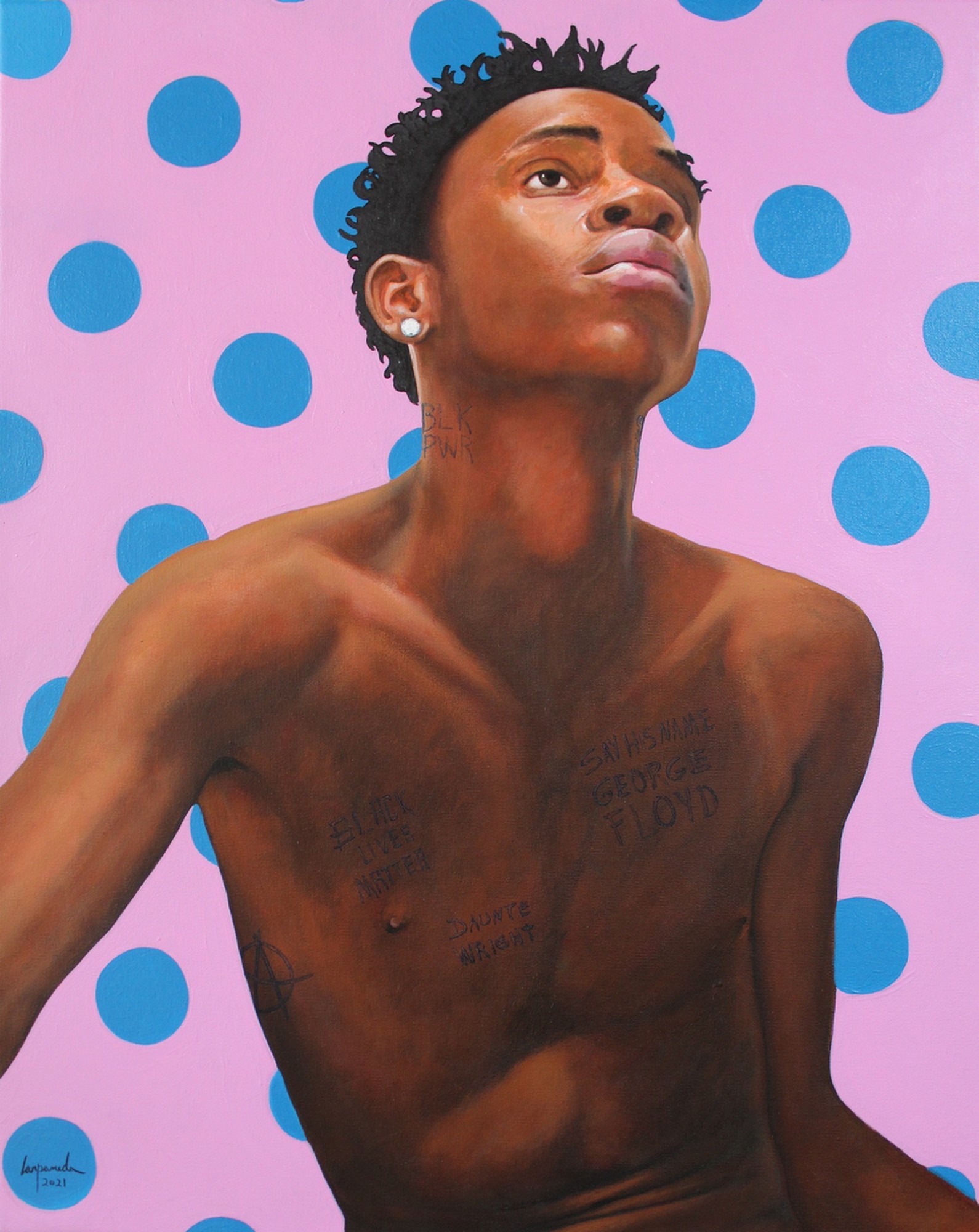
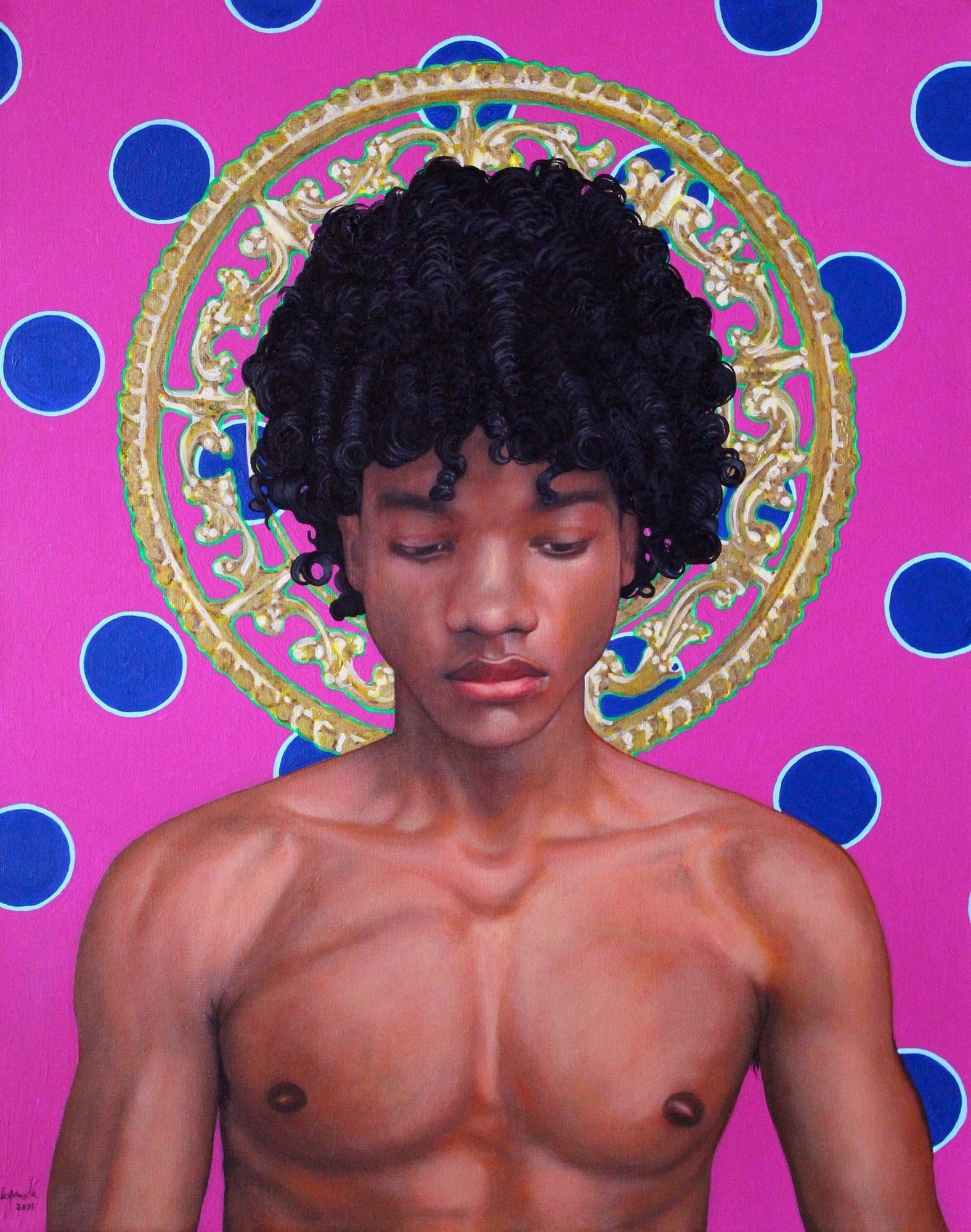
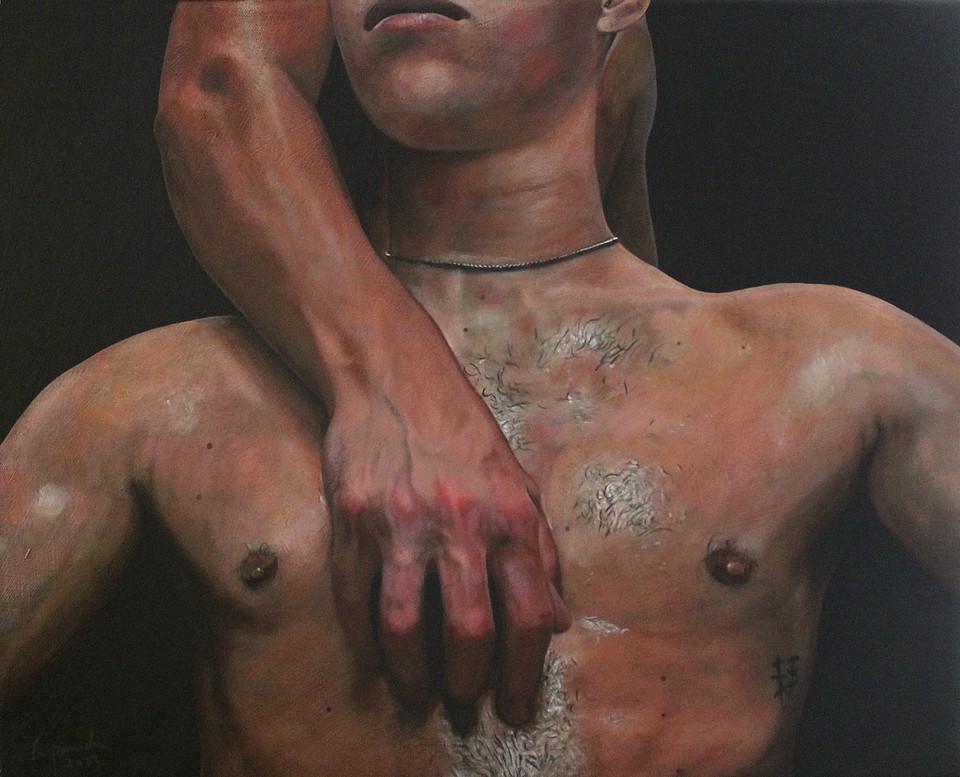
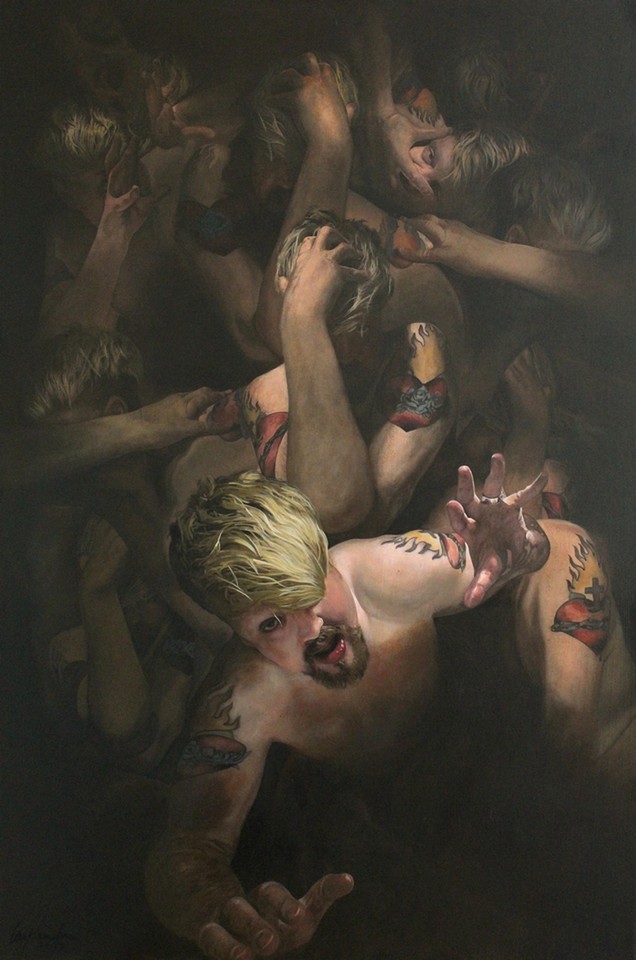
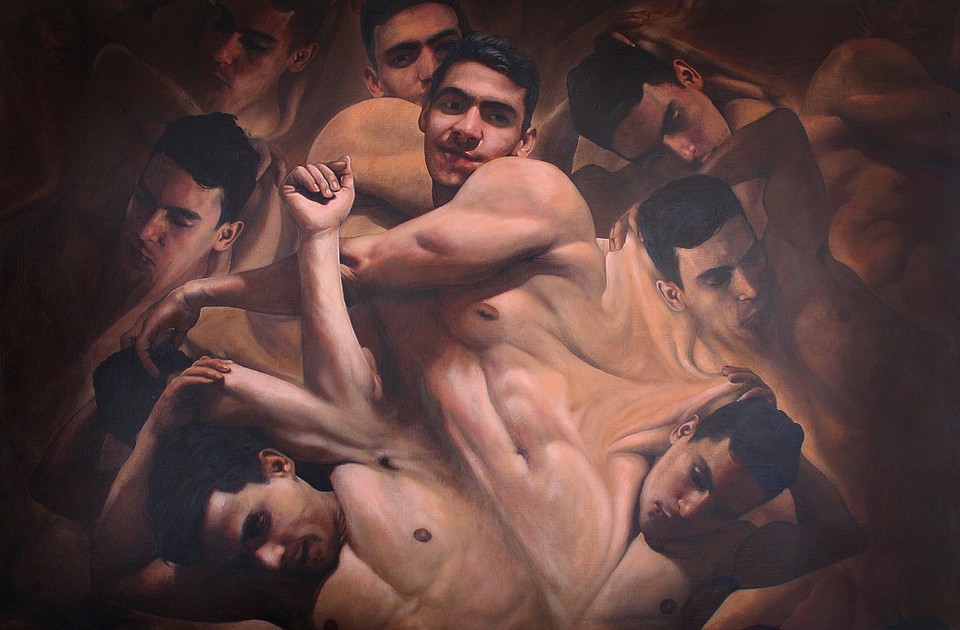
Art and an interview with Fernando Carpaneda

Body Positivity
Corbin. Acrylic on canvas.
Jesus Christ
Justice
Son of Man
It’s Not a Crime! It’s Not a Sin!
Selfitis: The Obsessive Taking of Selfies
The Transfiguration

Fernando Carpaneda has been creating sculptures and paintings within the punk and homoerotic genres since the 1980s. His voracious involvement in the cause of diversity and punk culture led him to exhibit at: the CBGB art gallery, The Heckscher Museum of Art, The Tom of Finland Foundation, The Leslie Lohman Museum of Art, and on the LED panels in Times Square, New York. Carpaneda also created illustrations for The Best of Punk Globe Magazine: a book that brings together interviews with Debbie Harry, Boy George, Jamie Oliver (UK SUBS), Earl Slick, John Lydon, The Adicts, Glen Matlock, Joe Dallesandro. Carpaneda’s works were published in the book Treasures Of Gay Art, by the Leslie Lohman Museum of Art, alongside Andy Warhol, Robert Mapplethorpe and Keith Haring. Recently, the artist made it two in a row returning to the Long Island Biennial.

From Fernando Carpaneda:

I come from an Italian family but I was born in Brazil. I had my first exhibition of paintings at the age of 13, in the early ‘80s in Brasilia: the capital of Brazil. I came to New York City by chance. In the late ‘90s, I met “Dumpster”, an American Crust Punk who was on vacation in Brazil. We became friends and I ended up moving to New York and living in the C-Squat on Avenue – C.

C-Squat and CBGB were two very important influences on the creative process of my works. My work has always illustrated the Underground scene, the Punk scene, and the LGBTQIA+ scene. In early 1995, I got in touch with CBGB, and ended up scheduling some exhibitions at CB’s 313 Gallery. A few years later the gallery invited me to participate in an exhibition called “Back to the Bowery”. That brought together some of the remaining artists from Andy Warhol’s famous The Factory, as well as new artists who portrayed the city’s underground scene.

It was a historic exhibition, and where I met Billy Name (He created the design for The Factory, Andy Warhol Superstars, and was Warhol’s photographer) as well as several other artists from the ‘70s. I ended up becoming friends with Billy Name and we stayed in touch until his death in 2016. The CBGB exhibitions definitely opened several doors for me on the city’s art circuit, and it was a turning point in my international career. It was also at CBGB that I met Arturo Vega, we became friends and we stayed in touch until his death in 2013. Arturo invited me to participate in an exhibition called The Bowery Electric Festival (A Tribute to Joey Ramone) with Dee Dee Ramone paintings. I will be forever grateful to have participated in those celebrated exhibitions.

My style has grown through experience across several mediums for decades. I work with sculptures, paintings, and drawings. I try to show in my works: relevant social taboos, often dense, linked to the punk/underground universe or to LGBTQIA+ contexts. My works talk about exclusion, belonging, racial, gender, social discrimination, and anti-fascism, especially at this moment. In a world of exclusion, art for me generates dialogue. It doesn’t matter who you are, how old you are, or how innovative you are in society. I highlight ordinary people, natural and real bodies and this brings people closer to my work and, consequently, to ourselves.

Interview with artist Fernando Carpaneda

Carpazine: How did you end up on Long Island? Tell us a little about your early career and the influences that led you to where you are today.  

FC: I come from an Italian family but I was born in Brazil. I had my first exhibition of paintings at the age of 13 in the early 80’s in Brasilia: the capital of Brazil. I came to Long Island by chance. At one of the first exhibitions I did in New York, I met an artist who invited me to visit his studio on Long Island, and I ended up moving there. My work has always portrayed the underground scene, the punk scene, and the LGBTQIA scene. In early 1995, I got in touch with CBGB, and ended up scheduling some exhibitions at CB’s 313 Gallery, which was the CBGB art gallery. At that time, the gallery organized an exhibition called “Back to the Bowery” which brought together some of the remaining artists from Andy Warhol’s famous The Factory, as well as new artists who portrayed the city’s underground scene. It was a historic exhibition, and where I met Billy Name (He created the design for The Factory, Andy Warhol Superstars, and was Warhol’s photographer) as well as several other artists from the 70’s. I ended up becoming friends with Billy Name and we stayed in touch until his death in 2016. Various artists from The Factory, like Lou Reed, Candy Darling, and Joe Dallesandro lived here on Long Island in the 60’s and 70’s. I think Joe Dallesandro was living in Babylon at that time. The CBGB exhibition definitely opened several doors for me on the city’s art circuit, and it was a turning point in my international career.

Carpazine: You had an exhibition of your work in Times Square, right? How was that exhibition?  

FC: I exhibited paintings in Times Square. The paintings were portraits of friends and acquaintances, my own superstars. The works were shown on giant bright LED screens and were displayed on the screens of NASDAQ, Thomson Reuters, Clear Channel Spectacolor, and A2a MEDIA’s Port Authority. The opening of the event was attended by singer Twin Shadow, DJ’s AndrewAndrew, and musician Questlove from the band The Roots. The host of the night was Jimmy Fallon of NBC’s Late Night show and the event was organized by Art Takes Times Square. It was a unique experience.  

Carpazine: How was it to have your sculptures in the film The Nearest Human Being?  

FC: It was a fantastic experience to see my sculptures in director Marco Coppola’s film. It won an award for best feature at the Manhattan Film Festival, and it is incredible. While filming, my friend: actor Robert W. Smith, made the connection between me and director Marco Coppola. The director liked my work, and he included my sculptures in the movie. Also, it was great to meet Charlie Hofheimer. I met him by accident when I arrived to leave my sculpture on the film set. So, I saw this guy there, and said, “Hi, how are you?” and shook his hand and talked to him a little bit. It was only after that that I realized it was Charlie Hofheimer. LOL. He was very cool. Charlie is in two of my favorite films. Black Hawk Down and The Village. I was happy to meet him.

Carpazine: How do you view the reactions from the conservative part of society in relation to artistic manifestations in the contemporary world and issues such as sexuality and discrimination?  

FC: Art aims to promote freedom of expression and knowledge, however, not everyone has the knowledge and sensitivity to understand or discuss the subject. Conservatism and lack of information are recurrent. Our society is formed by people with different realities and lifestyles and we have no right to compel people to follow our reality, just as no one has the right to impose theirs on us. Human sexuality is complex and it is not up to anyone to judge it. I know people who have been sexually abused by pastors, priests, and family members and they obviously don’t see the world the same way I do – If an artist’s sexuality bothers you, think twice before criticizing or discriminating against it , because not everyone has had the same life as you.

Carpazine: Can you tell me a little about the Long Island biennial?  

FC: The Long Island Biennial, is an exhibition held by the Heckscher Museum of Art, and had his first edition in 2010. The Long Island Biennial offers professional artists a unique opportunity to share their work through a prestigious exhibition and offers a unique space for visitors. This year the museum celebrates its 100th anniversary, and the proposal of the biennial on this occasion was aimed at showing contemporary artists residing on Long Island. For the first time, most artists will exhibit two or three works of art, presenting visitors with a more complete picture of their most recent works. I thought it was incredible to have been selected, and I think it is a positive point for my work, in such a unique moment in which we live. At a time when minorities are persecuted, I think it is a victory to participate in this exhibition.

Carpazine: Tell me about your sculptures, you did some reinterpretations with classic art scenes. What was your inspiration to reinterpret Rodin’s sculpture (The Age of Bronze)?

FC: I always loved Rodin’s sculptures, and I always thought of making a hyper-realistic version of one of his works and I ended up being inspired by the work The Age of Bronze. My version was inspired by Keanu Reeves. I turned him into Punk Rodin. I have always loved Keanu Reeves, I like his character, his personality, and attitude as a person. I was inspired by a phase in his movie My Own Private Idaho which is one of my favorites. Eroticism for me is something natural and I show that in my works.  

Carpazine: How do you see the role of tattoos in Punk Rodin?  

FC: Some tattoos on Punk Rodin sculpture refer to the relationship between Rodin and Camile Claudel.

Carpazine: Homoerotic Art has always been part of the underground in the 20th century, recently it started to boom and to be part of the mainstream. How do you see this interaction between amateurs and queer art? Not all nude is art … or is it?    

FC: I think that interaction and the boom in homoerotic material is happening in the same proportion as the boom that abstract, geometric or conceptual painting had.  At the beginning of these movements, they also suffered from the interaction of amateurs with contemporary art … not all contemporary art work is art … or is it?

Poetry from Aisha Damilola Abioye

Real ray of beauts

Is there a thing more luring
Than the sight of a gazelle
Walking her way to the aisle
As her waist gives the rhythm
Of the East wind’s enchanting songs?

True meaning of guts.
Is there one as fierce
As one whose hair has weathered 
All storms of gall and friction
And mastered to forfend
Even her descendants yet to come?

The one Kim Martin–
A coresident of mine.
Her strong resilient spirit,
Grew wings and learnt to fly.

Poetry from Mahliyo Raximboyeva

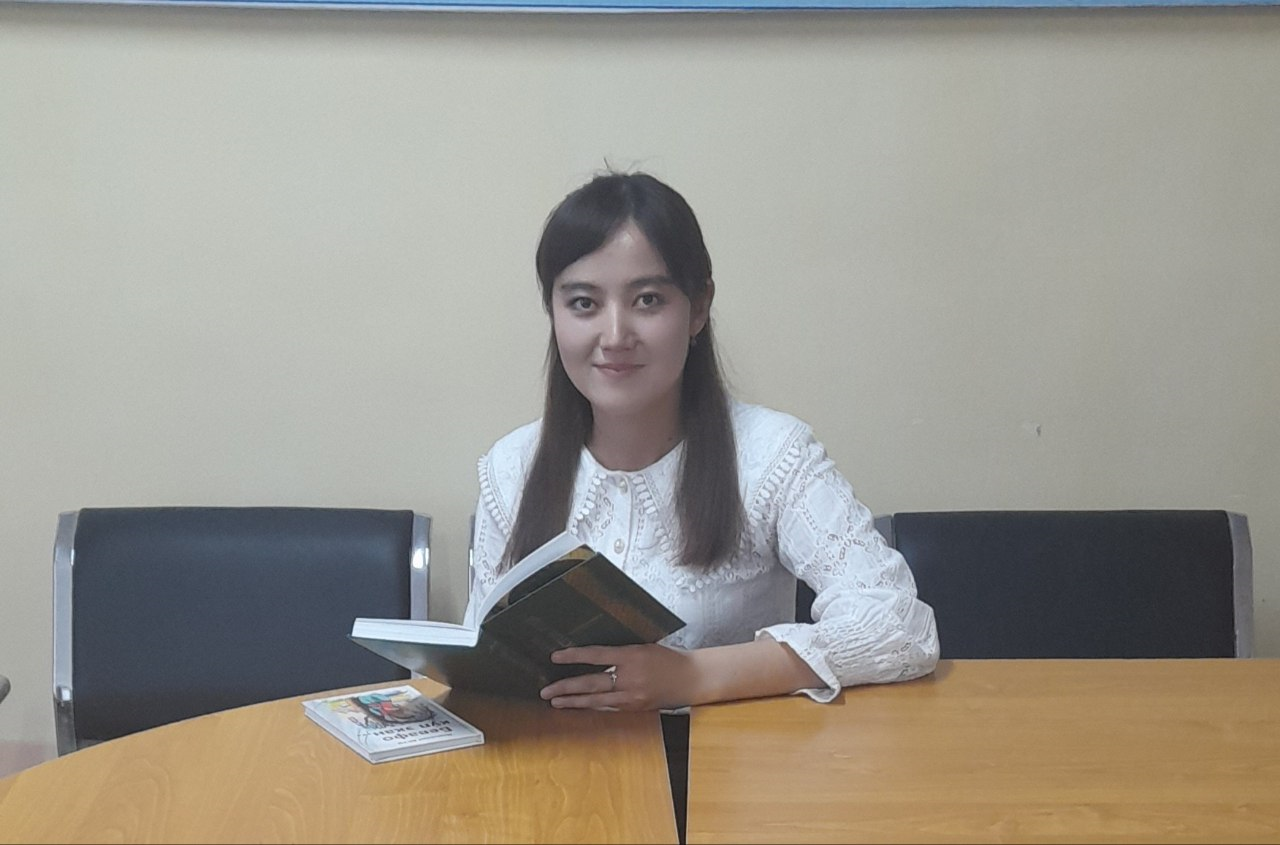
Central Asian teen girl with long black hair and a white lacy blouse. She's sitting at a long tan table reading a book.
Mahliyo Raximboyeva

Statue

(in front of the statue of Zulfiyakhanim)

There is a statue, very big,

Showing the face of Tashkent.

Apricots stand near the statue,

Talking slowly with the spring season.

Feeling a strange feeling in the heart,

I enter the garden with excitement.

My eyes fall on a long corridor,

There is no refreshment like this anywhere.

Flowers in the hands of girls every spring,

All are wearing badges.

These mysterious melodies play the poet’s heart,

Zulfiya is standing, missing us.

See…

Look carefully and carefully with hope,

How many patterns, ornaments, polishes are given.

He calls to this abode,

A mighty statue is watching over us.

There is a statue, great…

Mahliyo Rahimboyeva was born on November 2, 2002 in Gurlan district of Khorezm region. Currently, he is a 2nd-year student of the Faculty of Philology of Urganch State University, studying philology and languages: Uzbek studies. Mahliya is one of the talented students, the collection of poetry “Tabassum Tarovati” and the monograph “Symbols related to the image of nature in the works of Rauf Parfi” were published. In addition, Mahliyo actively participates in republican and international conferences with his articles and theses. Literary-artistic and journalistic articles have been published in regional and republican newspapers and magazines.

Essay from Seymour Knecht

Chirality

Before heading out to do two years in Nigeria as a voluntary teacher of Maths and Physics at the Gongola Day Secondary School in Song, VSO UK organised two, two-week courses.  For volunteers like me, (Science teacher in Nigeria), the first course was teaching me to be a teacher.  The second course was some instruction in the market language of Northern Nigeria, Hausa, as well as an introduction to working is an area that was heavily influenced by Islamic cultural conventions.

One of the basic cultural lessons concentrated on teaching us not to use our left hand with local people: this could be construed as either bad manners or downright insulting.  There were useful hints like keeping your wallet in the right pocket of your trousers to try and ensure that you paid vendors with your right hand.  (A later more subtle idea from another long serving VSO teacher was to pass back a badly attempted assignment to the pupil with your left hand to emphasise additional displeasure at the lack of effort: I never did this…)

One day, after I had been in Song for about thirteen months, during a free period, I strolled across the main drag through the village to a little shop, opposite the school — a shop I often frequented to drink one of their ice-cold AfriColas.  On this occasion, the older son, who was about fifteen, had arrived back from his boarding school, fifteen kilometres distant, to ask his father for extra money to buy school texts.  I had chatted previously with this boy, but have since forgotten his name.

While I was chatting to the older brother, his younger, ten-year old brother took my order and went off to fetch my AfriCola.  I left a banknote to cover the price next to me on the bench, which the little boy picked up and went for the change.

Half a minute later, while I was chatting with the older brother, the little boy arrived back with the change.  Being involved in the conversation, I absently- mindedly put out my right hand, palm upward, to receive the coins.  At the last second, I noticed that the child was using his left hand.  Almost without thinking, I rotated my right palm to be vertical and the coins clattered to floor.

At once the little boy turned and ran into the darkness of the inner shop, where he stood near its doorway talking and gesticulating to his elder brother.  After a few seconds the elder brother turned to me and said, “My brother begs your forgiveness Mr. Seymour.  He asked me to explain that he has a tropical ulcer on his right hand and did not want the coins to touch it before he handed them to you.”

Of course, I felt like total swine when I heard this, and I asked his big brother to convey my acceptance of what I considered to a valid excuse and my apologies if I had scared him.  I picked up the coins from the floor.

                                                oooOOOooo

Some VSOs with whom I shared this tale were hard on me saying that I should have kinder in the first place to the little brother, accepting the coins in my right hand.

However, to this day, I remain convinced that the little boy believed that I behaved entirely appropriately, as his father would have, except that the son would have been able to explain the situation in Hausa to his father.

                                                oooOOOooo

In sub-atomic physics, the left- or right- handedness of particle interactions can be significant.  Also, it would seem, in some social interactions.

Poetry from Sayani Mukherjee

Remember


Green olives and merchandise of
Forgotten safekeeping
My overall cremated beginning
A splash for a second
Like Color palette
It just oozes 
A little too bold 
Still forgotten
Or never opened 
Clouds on nine
A heavenly choir
Choice of infinity
Brew some coffee
Earthly mundane daily chores 
Living in new York alone
I shift 
A little bit more open 
Of synchronized symmetry
It has to be
Divinely separated
Divinely unified
A trophy golden 
Splash of color on my mind
Every second a little bit
Still forgotten
Too swift
The divine light passes
Keeping scores
Always
Remember
Your or mine 
There's no division
Union collides
Another one 
Like other matted furnishings
Too swift 
Little birds little flowers
Heavenly bodies
Mazy amusements
Bodies flesh studios my mind
Paint hearts 
Still forgotten
A chess a gambit
Queen's Birthday 
A Phoenix
Always keeping score
My mind 
Always remember
Your heaven. 

Poetry from Ahmad Al-Khatat

MY DENSE REFLECTIONS

I have been very depressed lately!
I wonder why I don’t recognize myself, 
Good times are fading like autumn leaves.
They say that grief never last, but mine lasted it.

I start walking around my town in the darkness 
I cannot scream instead, I abuse my lungs by smoking.
Everyone walks with an unnoticeable crown above me.
I am curious if I am a sinner with broken wings to fly.

I am not afraid of death, but worry that my name
-will come to mind, then you shout at the tomb of my tears.
Maybe I should be far from your eyes, lips, and your scent.
To leisure’s from overdrinking from my dense reflections.