

First, a few announcements.
Sandra Tabac invites poetry and art submissions for an international Hands of Love anthology.
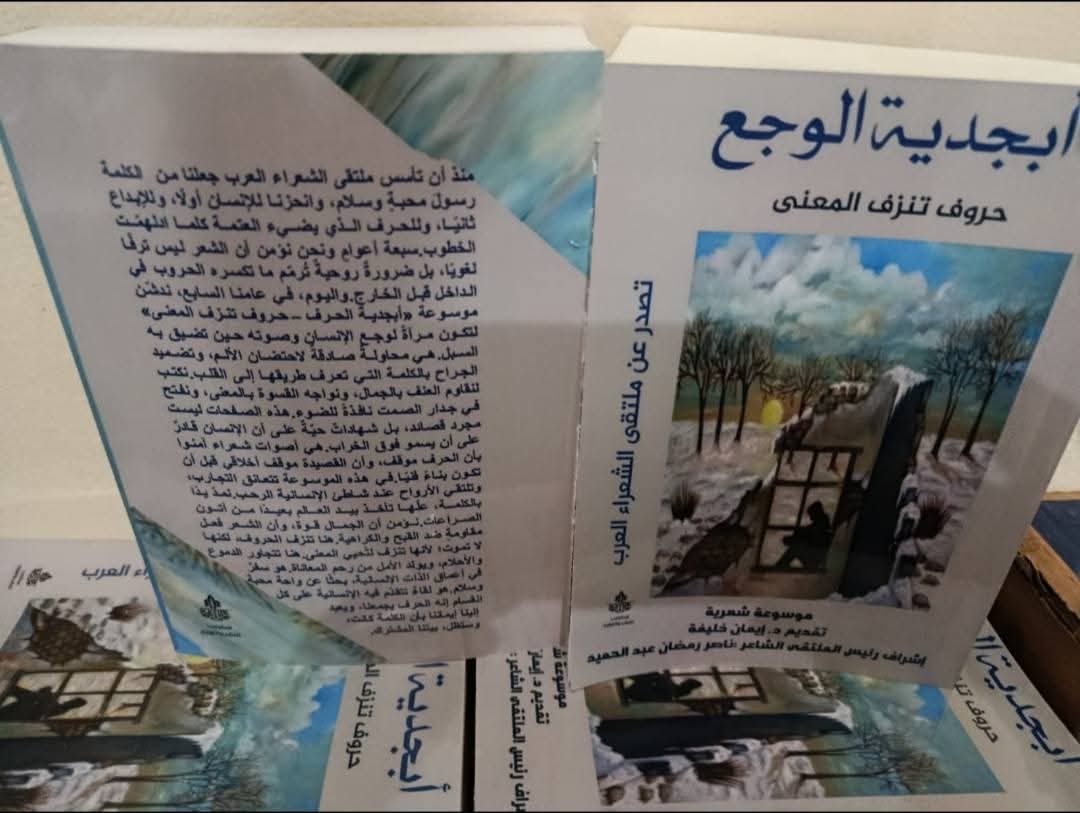
Also, The Arab Poets Forum has recently published the book “Alphabet of Pain… Letters Bleeding Meaning”, a remarkable poetic encyclopedia featuring 212 poets from around the world, presented in two volumes spanning 800 pages.
The cover artwork is created by Iraqi visual artist Nada Askar, and the cover design is by Lebanese artist Layla Beiz Al-Mashghariya. Several Synchronized Chaos contributors, including Taghrid Bou Merhi, Mirta Ramirez, Eva Petropoulou Lianou, Dildora Xojyozova, Binod Dawadi, and Kujtim R Hajdari, are published in this collection.
Now, for this month’s first issue, Where Memory Meets Tomorrow.
This issue is beautiful, rich, and international. There’s a strong throughline of memory, devotion, identity, and renewal running across continents and genres.
For this month’s first issue, we are proud to present a collection of voices that span styles and topics, each offering a meditation on what it means to live, remember, and hope.
Vo Thi Nhu Mai opens with a heartfelt tribute to her mother, honoring the quiet love and lifelong dedication of a teacher. From Uzbekistan, Orzigul Ibragimova calls her people forward with intelligence and determination, while Namozova Sarvinoz Erkin qizi explores the nation’s ongoing transformation toward an eco-friendly, energy-efficient future. Sevara Abduxalilova reflects on the legacy of Mirzo Ul’ugbek, the great Central Asian astronomer whose vision still resonates across time, as Botirova Gulsevar Muzaffar qizi honors political leader and poet Zahiriddin Muhammad Babur, known for promoting education and national development. Munisa Islomjonova celebrates her native Uzbekistan through verse.
The power of words themselves comes into focus in Harinder Cheema’s celebration of poets as messengers of peace and inspiration, echoed by Soumen Roy’s prayer to poetry as a source of healing and transcendence. Jamoliddinova Dilnozaxon Mirhojiddinovna discusses how countries and social groups form communication and speech traditions. Olimova Shahina Botirjon qizi discusses strengths and weaknesses of different methods for teaching foreign languages. Hamdamova Sevara Saidmurodovna outlines modern philological theory about the power of language beyond literal meaning. Türkan Ergör sharpens her focus to highlight the pain of a world without trust and truth. Rev. Dr. Jitender Singh speaks to human unity across race, color, nationality, or creed. Manik Chakraborty and Mesfakus Salahin and Mahbub Alam each issue urgent calls for peace, reminding us of our shared humanity in a fractured world. Graciela Noemi Villaverde depicts the pain of words felt but never sent. Christina Margeti speaks to war and childhood, what humanity destroys and what we strive to protect. Faleeha Hassan reviews Saudi directors Meshal Al-Jaser and stars Adwaa Badr and Yazeed Al-Majioul’s film “Naga” (Purity) which, through the tragedy of a betrayed and rebellious young woman, shows the weight of a society imploding upon itself as it punishes the existence of femininity. Asadullo Habibullayev brings violence down to a smaller scale, reminding us that how we treat each other at the interpersonal level matters. At the same time, poet Nilavronill decries how poets have failed to stop the world’s violence with their words.
Themes of love and devotion weave throughout the issue. Sandro Piedracita reflects on the distinction between selfless love and possessiveness, while Eva Petropoulou Lianou honors the tender, enduring bond between mother and child. Nazokat Jumaniyozova offers a moving elegy for her grandfather, and Danijela Ćuk pays tribute to Eva Petropoulou’s tireless support of fellow writers. Saparboyeva Laylo Xajibay qizi relates a folktale-like story of grief, justice, fate and renewal. Joseph Ogbonna expresses his spiritual devotion in the Easter season and his thanks for Christ’s humble sacrifice. Maqsudova Anora Alisherovna’s poem urges heartfelt sincerity and reflection when people observe Ramadan. Sarvinoz Bakhtiyorova relates the tale of a now-adult son who sacrificed his own body for his mother. Jahongir Murodov expresses his tender care and respect for his mother. Xojamurodova Nigina urges sensitive souls to continue loving and not lose heart in a brutal world as Ms. Kim Sun Young shares how longing for a lost love is persistent, like a weed in her heart and Do’sanova Dilnoza Xolmurod qizi reflects on heartbreak and regret.
Other contributors turn toward time, myth, and the natural world. Ananya Guha evokes deep, mythic landscapes, while Sayani Mukherjee and Lan Xin draw on the imagery of spring—its motion, memory, and rebirth. Ankica Anchie Biskupović finds unity in flowing water, and Elaine Murray immerses herself in nature’s quiet revelations. Ms. Koo Myongsook reflects in stillness on a mountain as a metaphor for life. David Kokoette’s desert journey and Duane Vorhees’ meditation on absence and longing remind us of the inner landscapes we all traverse. Maja Milojkovic laments the steady decline of her powers due to old age. Aziza Jorayeva expresses heartbreak, loneliness, and grief. Dr. Prasanna Kumar Dalai speaks to autumn, night, longing, and confession. Siyoung Doung expresses the mystery of our existence and the beauty of finding small moments of beauty and meaning. Dr. Tomasz Laczek urges us to make the most of the lives we have and live for something that matters.
This issue also engages with contemporary life and its tensions. Abdumaxamediva Gulchexra looks at the positive and negative effects of American cultural influence on traditional Uzbek culture. Patricia Doyne sharply critiques the current U.S. administration, while Bill Tope employs satire to confront its institutional excess and brutality. J.K. Durick reflects on individuals navigating vast, impersonal systems, even systems invented for fun, such as professional sports, engaged yet estranged. Peter Cherches plays the absurdist blues for us in his poem that’s equal parts exile ballad, street song, and darkly comic cabaret. Christopher Bernard kicks off the first installment of his children’s story Otherwise, with a mixture of philosophy, mystery, and middle-grade energy.
Science, education, and personal determination appear in compelling ways. Urokova Nargiza discusses ways to protect against new types of viruses. Jorakulova Gulshoda Uchqun qizi examines disease detection through the lens of blood cell analysis, while Abduhalilova Sevdora Xayrulla qizi advocates for reconnecting physical education with nature. Nabiyeva Xilolaxon Axrorjon qizi discusses how to make fuel composition less toxic and more environmentally sustainable. Choriyeva Oynur analyzes the role of music in helping students concentrate and learn. Anarboeva Madina Ulmas qizi highlights her accomplishments in the Uzbek national sport of kurash. Laylo Yo’lbarsova highlights the role of personality in determining suitability for different careers. Priyanka Neogi asserts her self-determination, strength, self-respect, and independence. Maxsudbekova Farogat Izzatbek qizi valorizes self-assurance, personal dignity, and individuality. Toshmamatov Javohir tells a story of perseverance through the journey of a computer science student, Jumayev Akmal G’ulom o’g’li discusses ways to get young people more involved in shaping the future of Uzbekistan and to help them take their place in the workplace, and Gulhayo Abduqahhorova considers the choices that shape life after college.
Artistic memory and cultural reflection round out the issue. Mark Young presents his signature altered geographies, while Brian Michael Barbeito revisits the world of hockey through personal recollection. Mykyta Ryzhykh captures the intensity of first awakenings—moments that divide life into before and after. Jacques Fleury offers a haunting vision of beauty, resilience, and power embodied in a goddess who still fades from view while he can only watch. Ms. Im Sol Nae looks at death not merely as an ending, but as a transformation, a communal aesthetic experience.
Finally, editor Cristina Deptula contributes a review of No One Dreams in Color by John Biscello, a work that meditates on consciousness, grief, the creative process, and the fragile boundary between reality and imagination.
Together, these works form a tapestry of voices, which are urgent, reflective, and deeply human. They remind us that across distance and difference, we are united by our search for meaning, our capacity for love, and our enduring hope for renewal.