This camera has an eye that cannot see
the act of toxic scrolling that can be
an agony of the mind that’s driven me
miles from “amour de soi” that’s all I need
to find my peace and spread prosperity
to those who I see and see me as rarity
These lenses can keep flashing filthy BANKNOT£S
for people who hide behind their idle followers
of photographs they’ve taken to promote
their “soulmates” with whom they’re asymptotes
projecting life as seen by the Kardashians
with selfies in a shell that’s rather porcelain
Insta-society needs velvet antidote
to filter trash and help one to self-love
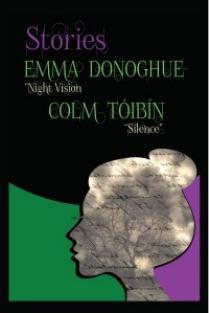
San Francisco’s well-known drama group Word for Word, which for 23 years has been staging short stories with ever-increasing theatrical sophistication, recently brought to the stage two finely wrought tales by Irish writers about Irish writers at SoMa’s Z Below. The results were a pleasure for both lovers of literature and of the stage.
Word for Word’s cunning device is so obvious one wonders why nobody ever thought of it before: take a good short story and stage it as a play, with every word spoken by a character in the story. The opportunities for theatrical magic are patent, and potent, and taken entire advantage of by Word for Word and its talented staff.
Tonight’s embarking (I saw it on April 1st) brought two stories, one by Colm Tóibín, the comfortable, fashionable middle-brow writer (“middle-brow” is sometimes mistakenly taken for a putdown, though it isn’t; a sturdy literary culture needs a strong middle-brow culture to keep the low-brow aspiring and the high-brow honest), based on an anecdote from the notebooks of Henry James. The anecdote was told to him by Isabella August, Lady Gregory—the Lady Gregory—writer, playwright and Irish folklorist, probably most famous in this country for her association with the poet W. B. Yeats and their mutual support of the celebrated Abbey Theater, now the National Theatre of Ireland. Henry James never worked up the anecdote into a story, but Tóibín uses it to draw out a tale about an affair between the unhappy Lady Gregory and the poet and womanizer Wilfred Scawen Blunt, and her long, puzzled savoring of what seems to have been the one great physical passion in her life.
I often think of September 29th, 2001 as my birthday. It was the first time I marched in Washington, DC, and in many ways was the culmination of a process that started about three years earlier when I found out about the School of the Americas (SOA), a Latin American military officers’ training facility located at Ft. Benning, GA. But that day in DC there were two demonstrations against the impending war in Afghanistan, and I participated in both.
I had been to protests before, but nothing I had experienced in Cleveland, OH (Clevo) prepared me for the tense and sometimes violent Anti-Capitalist Convergence (ACC) march on the World Bank, which ended with hundreds of us getting detained in the plaza in front of the building.
In retrospect, of course, the differences make total sense. What’s demonstrating for the legalization of marijuana with maybe three hundred people mostly too stoned for any sort of serious shenanigans, or participating in a so-called solidarity rally while people on the actual front lines are breaking unjust laws elsewhere?
Many dreams drift from cloud to cloud. Dreams of peace without the sounds of gunfire or the cries of death. I watch the moon as it sinks behind the horizon, and I wonder, when will my nightmares of living in the inner-city end? Watching the peacocks’ feathers blooming, I lie quietly in my grave — and peace has found me.
* * *
Black Boys II
Angry at life and angry at a system that keeps them incarcerated to a promise of a life without body piercings and tattoos; but hope is lost from a life spent avoiding the police. Mothers addicted to crack cocaine lie upon urine-strained mattresses. Some escape this life, and climb and climb and climb, and finally reach the safety of the mountains. And it is there that love flourishes; there that sanctuary is found. Beyond the stars that glow at night. A soul no longer thirsts for the safety of home: no longer in the heat of the streets.
* * *
Mother II
I want to send flowers to my mother, but she has passed away. I would like to visit her her grave and let her know that I have finally found the better side of life. There is a place on earth which reflects heaven. No longer do I cry into my pillow.
Cinema Critique: The Revenant by Rui M. Carvalho (28 March 2016)
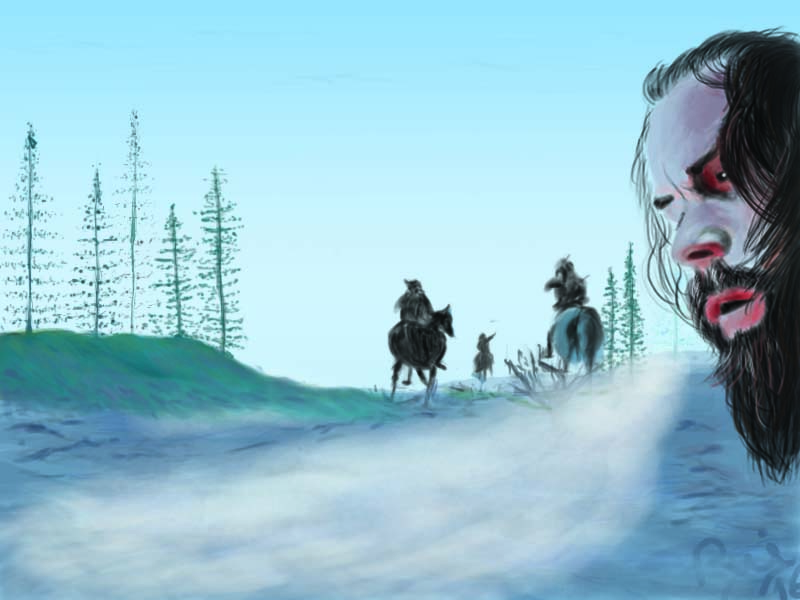
Inspired by true events, The Revenant, a movie directed by Alejandro Iñárritu, is an example of a film whose trailer alone makes us feel it has a significant message to transmit. Visually, it might be considered almost a new genre of western, which we might call the “frozen western.”
The sentence “I’m not afraid to die any more, I done it already” surely creates on us a deep first impression, expressing the idea that there’s no turning back: only a landscape in front, and a shadow behind the speaker. This dramatic first impression is further emphasized by the contrast between ice — dominant, mostly blue and grey — and, sometimes, small dots of fire, mostly yellow and orange. A human tragedy plays out in the course of the movie, in which divers persons confront the meaning of their lives; this being especially obvious during one of the last scenes, in which the aggressor, played by Tom Hardy, speaks with the hero (or surviving victim, if you please), played by Leonardo Dicaprio, and confronts us all with deep questions: What is justice for? What types of justice are there and what are the ones we want? Should justice be a constructive process?
This type of reasoning is an example of what some cinematic theorists consider to be the psychological role of film: as a tool to give new significance to reality, to educate and influence the citizenry. The Guardian asserts that cinema can be valuable for children’s and young peoples’ learning and cultural experience (The Guardian, 28 March 2016). And this can be seen as a detail of a big process of civilization, which “is not linear and conscious” (Cultural Studies Now, 28 March 2016).