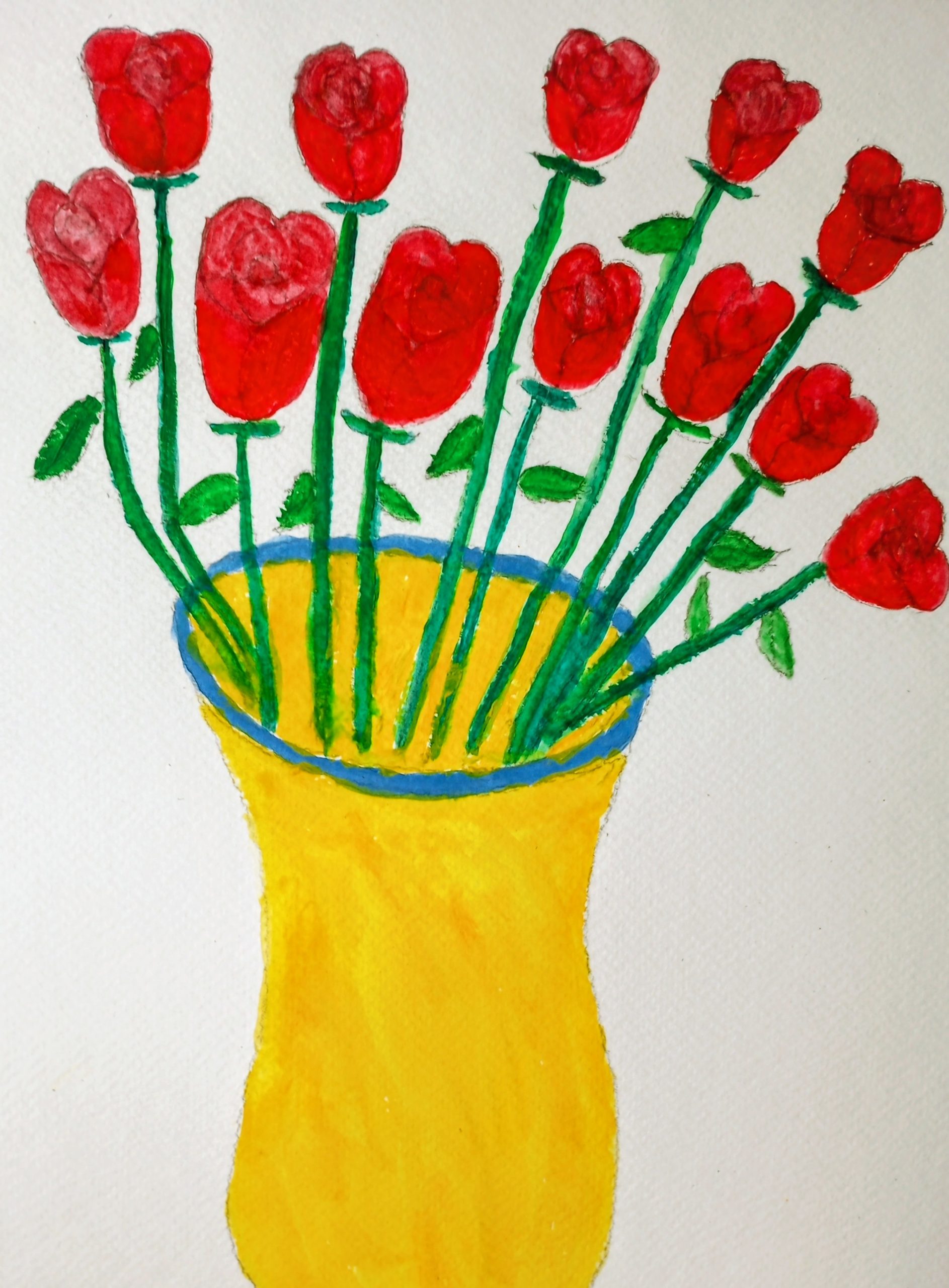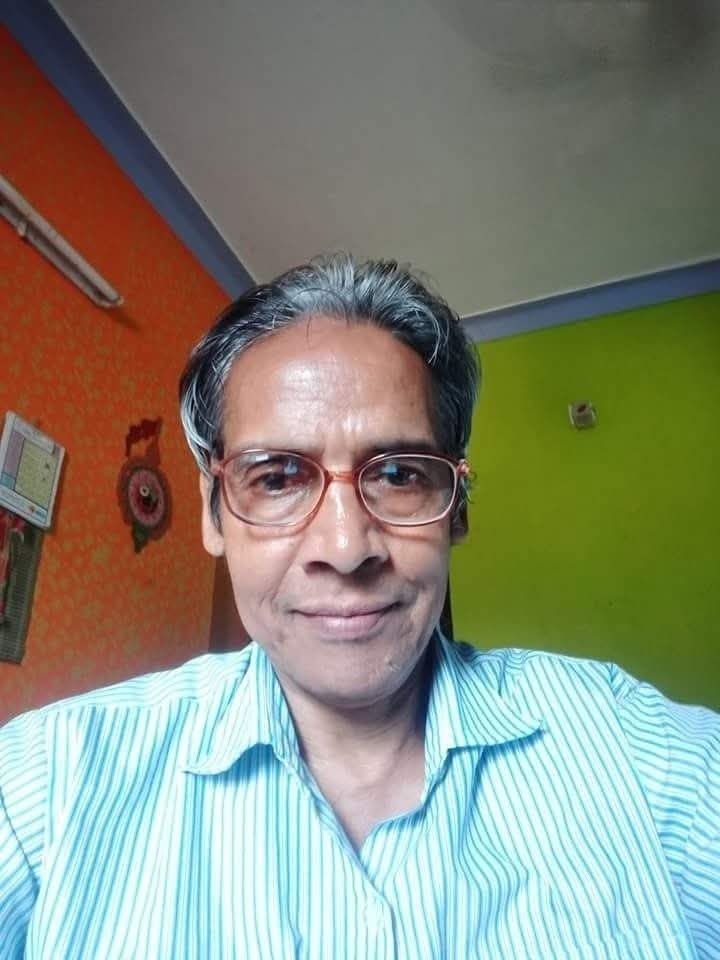
J.J. Campbell (1976 – ?) is trapped in suburbia, plotting his escape. He’s been widely published over the last 30 years, most recently at The Rye Whiskey Review, The Beatnik Cowboy, Yellow Mama, Night Owl Narrative and Mad Swirl. You can find his latest book, to live your dreams, on Amazon by going here: https://a.co/d/0aaEe8ph
I cannot even be bothered to go to south of the river or Dalston to watch the commemoration film I’ll I’ll see it tomorrow I promise myself.
I looked earlier in the morning for moon
moon jewellery, scavenged through my necklaces but found nothing. Stars,
stars, I think later in the day,
I could have worn star jewellery.
Google Doodles. The banality.
This is not what I expected, which I
I might as well admit happened to be global peace the world united in Western commemoration. Girls in silver go-go boots, young men painted chrome, a U.N. Declaration to call it Moon Day.
Everything stops just like the footage
video I duckduckwent all the
all the way to YouTube.
Only three London cinemas
movie theaters theatres cinemas theaters theatres screening the big day.
Maybe the programmers forgot the
the momentous occasion but
but most likely it’s generation y z born after
but x still remembers the child blips of
of space boots tang. Or maybe not.
I am American. I am an extraterrestrial here.
Different history but
but my fate has converged here in London like like my mother’s egg and
and my father’s sperm against the odds.
Everyone in the world gets along in love and beauty. Beauty. I’d like to teach the world to sing.
Sing. We have sailed to the stars. We have touched up Luna.
Instead everyone taps their smartphone in deep thought I I console myself to say maybe they’re watching the the landings too or at least the Google Doodle. I was seven months old but we
we were in the Arctic with no TV or
or even radio so my mother told me
several years ago when she elaborated that
she never could in fact have held me up
to see the screen as I had always assumed.
My mom too only saw it properly for the
the first time this year at the age of 75.
Instead we have a slither in the
the White House bleating soundbytes on Mars a
a desecration no communion tongue to cheek
frenching the white tongue of the cool moon,
our opal rising blue and gold green glittering
like a Turk’s eye in the old form of
of turquoise adjective admixture earthrise protect us
us against the evil eye we are one people,
we are one, we are al one.
Like Knut at tides we stare at our phones at
at inevitable earthset cut off from it it all but
no we I one in the queue for the 249 bus one
one woman at last is wearing a shirt
with ostentatious stars on it that’s
got to be it has to be a tribute I think but
but I say nothing nothing to her.
II. Night (when it is eerie to consider the scope of our passions a half year before the pandemic)
I will try not to let it go to my head.
But Apollo 11 Astronaut Michael Collins
just liked one of my space paintings on
Instagram today of all days.
I was just thinking that if someone ever
ever offered me a free trip to
the international space station I
I would turn it down I think. Chicken a
squawking earthbound chicken a flightless bird.
Would you? I text my friends
whilst humblebragging about social media valentines.
I’d really have to think about it,
friend one says. I couldn’t live easily myself
if I turned down the chance, friend two says.
I would go too, I say, because I’ve now changed my mind.
Ha ha, no one’s asked, says friend two.
My new friend MC is begging me to
come with on his next launch, I text,
claims he got a little bored with just Armstrong and Aldrin.
I was going to go to bed, but I got so overexcited over the
Michael Collins contact I poured myself a glass of champagne and and went out looking for the moon.
However, I also dropped the Ikea glass and
and then cut my hand whilst being a responsible citizen. I
I give a hoot and don’t pollute. I was
was walking down a road next to mine home champagne
Widow Click actually and
and bleeding from my hand. I text this. Life in second person.
Perfect, says friend two, that’s peak life.
A guy tried to pick me up and I said
I was looking for the moon, I elaborate.
Then he saw my bleeding hand and desisted.
“I dig crazy chicks,” says friend two.
“Crazy chicks are easy…
Oh wait, her hand’s bleeding… Nah.”
I am texting with one hand. Time for a bandaid.
Goodnight. Goodnight, Moon.
London on the Moon
Moon on a Stick is a good name for a pub
or a retrofuturist dessert or a prog-rock album.
I wonder how often it has occurred to you that
all space medical doctors are essentially veterinarians
due to their expertise in multiple species
A.L.F., Vulcans, E.T., greys their
cats, hamsters, bluebirds, dinosaurs.
It has occurred to me.
And now you have looked askance
on my latest commission,
on the anatomically incorrect Crystal Palace dinosaurs
I was bribed to paint for £200
alongside watercolour Routemaster omnibuses.
I have defied you and painted this anyway.
Despite my benign pareidolia that has me detect
fizzing physiognomies in nearly everything
with increasing regularity these days
including the predictable jolly man
like a 1970s smiley decal plastered on my planet’s rocky satellite. Yes, I know you can’t see the curve of the moon when you’re on it; yes, I know you cannot see stars save the sun from the moon; yes, I know there are no Crystal Palace dinosaurs or red buses on the moon.
Kathleen Bryson is an Alaskan-born evolutionary anthropologist and an EU virtual reality research fellow, with previous posts at Oxford and QMUL. She has had four novels previously published; 25+ short stories in publications ranging from Aesthetica to Bending Genres; and 45+ poems in venues from Magma, Star*Line, Always Crashing to Ranger.
I have no fear of becoming small and insignificant
I have no fear of touching my inner infant
I have great fear of becoming large
I have great fear of being deceptively in charge
Of keeping an illusion of masquerade ball
I would rather scream and call
Everyone to rip off their masks
To give up on their made up tasks
And hear the sound of wings clapping
Or maybe I should be tapping
Myself to the ground?
High voltage woman
There should be a sign on my forehead
So everyone could just sleep and go to bed
Instead of trying to be awake with my high-maintenance Self
They should just leave me on the shelf
Full of misunderstood books
I just don’t care about looks
About shallowness
About being less
I have never stopped being much and more
I have never stopped searching for soul’s core
A sign should say:
“Caution, high voltage”
I am somewhere near middle age
But it doesn’t stop me to engage
Myself fully to every emotion
To every life motion
I admit, it is exhausting
Sometimes I wish I could just sit and sing
Just dance and stare at sky
Just watch the birds fly
But I am a mother
I cannot just say I don’t care, I don’t want to bother
With life’s biggest responsibility
I want to learn how to have ability
To relax
But still be me
But still be someone who deserves True Love
Just the way I am
So dangerous, high-voltage woman.
Jasmila Talić-Kujundžić
Short biography:
Jasmila Talić-Kujundžić was born on December 26, 1989 in Banja Luka. She completed primary and secondary school in Zenica, and in Sarajevo, where she still lives, she obtained a master’s degree in Psychology at the Faculty of Philosophy.
Her first novel “The Sky Window” (BMG, Bosanska medijska grupa, Tuzla, 2025) was awarded as the best manuscript at the “My First Book” festival competition.
Jasmila worked for six years as the editor of the youth magazine “Preventeen”. She has a lot of experience working with children and young people, and has worked in schools and day care centers. She has published poetry, prose, essays, and articles on numerous portals, magazines, and anthologies.
She also won first prize in the competition for the best newspaper story organized by “Naša riječ” Zenica in 2008.
Jasmila is currently focused on motherhood and writing.
Dear Richard, I am very happy to have this interview with you. Let’s talk about you. How was your childhood? Your dream?
I was fortunate to have a good upbringing, with supportive parents and a stable home, growing up in a working-class town – Mansfield – in Nottinghamshire. It was a grounded childhood – simple in many ways, but rich in the things that mattered: love, encouragement, books, and space to think.
Books were always part of my life. I have been reading from a very young age, and I still remember getting books every Christmas. My Mum once told me a story that stayed with me: she had gone to order some books I’d asked for, including the works of William Blake, and the shop assistant remarked on what good taste I had for someone so young. That says a lot about where my mind was even then.
Writing was there from the beginning too. I wrote constantly as a child, and one of my English teachers recognised something in it early on, telling me that one day I would write a book. He was right – I’ve now had five published. But at the time, writing never felt unusual to me. I didn’t “dream” of being a writer because I simply assumed it was something everyone did – writing in journals and note pads, etc. It felt natural, like breathing.
Poetry always fascinated me. I would often find myself drawn to the poetry sections of libraries, trying to understand what it was. There was a wonder to it – something elusive, almost sacred. Alongside poetry came philosophy and psychology: questions of existence, meaning, and the workings of the mind. Looking back now, I can see that all of these threads became woven into my work.
I never consciously set out to become a writer. Life seemed to shape that path for me. But I do remember when I first went to university thinking how powerful it must be to write words that could genuinely affect, and inspire, another person’s life!
Now, through my books, essays, and my freelance writing – including my own column in local lifestyle magazines – I find myself in that very position. Looking back, it all makes sense. What once felt ordinary has become my life’s work, and I feel deeply grateful for that.
2. When did you meet poetry? Who inspired you?
Poetry found me early, though I only truly recognised it later. It became a language for the things ordinary speech could not hold. I have been inspired by many voices across time – from William Blake to Jim Morrison. But life itself has been my greatest teacher.
3. What is poetry giving to the world?
Poetry gives the world pause. In an age of speed, distraction, and noise, poetry asks us to stop and feel. It reminds us of what is essential – love, grief, beauty, impermanence, truth. It keeps alive the inner life of humanity.
4. What about young people? Are they interested in literature and books?
I believe many young people are hungry for meaning, but they are growing up in a world that often fragments their attention. Literature asks for patience, and patience is becoming rare. But the hunger remains. The challenge is not that literature has lost its value, but that the world has changed its rhythm.
5. Tell us about your book. Why would you suggest your book to the reader?
My latest book, Introspective Soliloquies, is perhaps the clearest expression of who I am as a writer at this stage of my journey. It is a collection rooted in reflection, contradiction, rebellion, and inner searching – exploring themes of nature, identity, suffering, resilience, and the eternal tension between shadow and light. The title itself speaks to the essence of the work: a dialogue with the self, an honest confrontation with the inner landscape.
What makes this book especially meaningful to me is the journey it has taken beyond the page. It became my first work to enter the UK curriculum, now being studied in schools across the Midlands – something that felt both surreal and deeply humbling. That achievement also made headlines in India, because the book was published by the esteemed Indian publishing house Birutjatio, a publisher long associated with literary prestige and academic significance. Their catalogue has included giants such as Rabindranath Tagore, Nobel laureates, Bollinger Prize winners, and Pulitzer finalists. To become their first contemporary British author is an honour I hold close.
In many ways, Introspective Soliloquies represents a bridge – between the romantic inwardness of Lord Byron and the spiritual universality of Tagore. Some have described my work as occupying that middle ground, and I think there is truth in that. It carries both rebellion and reverence; both grit and grace.
The book also forms part of my wider literary journey – one that has seen my work recognised by UNESCO and Nottingham City of Literature, where I have been placed in conversation with the legacy of Nottinghamshire writers such as Lord Byron, D.H. Lawrence, and Alan Sillitoe. That lineage means a great deal to me, not because of status, but because all of them, in their own way, wrote against the grain.
I would recommend Introspective Soliloquies to readers who value honesty over polish, depth over distraction, and poetry that does not merely decorate life, but interrogates it.
Available here:
6. What is your favourite quote?
At the moment, my favourite quote is:
“The energy of the mind is the essence of life.”
– Aristotle.
It’s a quote that resonates deeply with me and one that will appear at the front of the book I am currently working on. I won’t say too much about that yet, because I don’t want to give too much away, but I think the quote itself offers an insight into the spirit of the work.
It also reflects something central to me as a writer – my long-standing fascination with philosophy, consciousness, and the workings of the mind, which I mentioned earlier. Those themes have always run alongside my poetry.
I’ve always chosen quotes carefully for each of my books. They act almost like doorways into the work – particular fragments of thought that help frame the journey ahead. Over the years, those guiding voices have included figures such as Jack Kerouac, Hunter S. Thompson, and Carl Jung – writers and thinkers whose words have stayed with me, each for different reasons, at different times in my life.
7. What are your future plans?
At the moment, my future plans are rooted very much in the place I come from. As Poet Laureate of Mansfield, I am working closely and passionately with my hometown to inspire and encourage local writers, helping to nurture creative voices that may otherwise go unheard.
Over the past months, I have been giving workshops, talks, and recitals of my own work at colleges and various venues around the town, sharing not just poetry itself, but the deeper idea that writing can be a means of understanding ourselves and our communities.
A major part of that work has been my role as judge for Mansfield’s Writing on the Wall poetry competition – a heritage project tied to the restoration of the historic Old Town Hall. The competition invited writers to respond to themes such as hope, courage, reflection, and community, and the winning pieces will not only be published in an anthology – for many, perhaps the first time they will ever see their words in print – but fragments of those poems will also be woven permanently into the fabric of the town itself, inscribed onto the historic stonework of Mansfield’s Old Town Hall. I think there is something incredibly powerful about that: words becoming part of the landscape, part of the town’s memory.
Beyond that, my ambition is to build on the talent we are uncovering and create something lasting – an annual literature festival in Mansfield that is recognised not just locally, but nationally. Mansfield has a rich creative spirit, and I want to help give it the platform it deserves.
For me, the future is not only about my own writing. It is about creating opportunities for others, strengthening the literary identity of my hometown, and ensuring that the next generation of writers knows that their voice matters.
8. A wish?
My wish is that people return to themselves – to silence, to reflection, to authenticity. In a world that constantly asks us to perform, I hope more of us remember how to simply be.
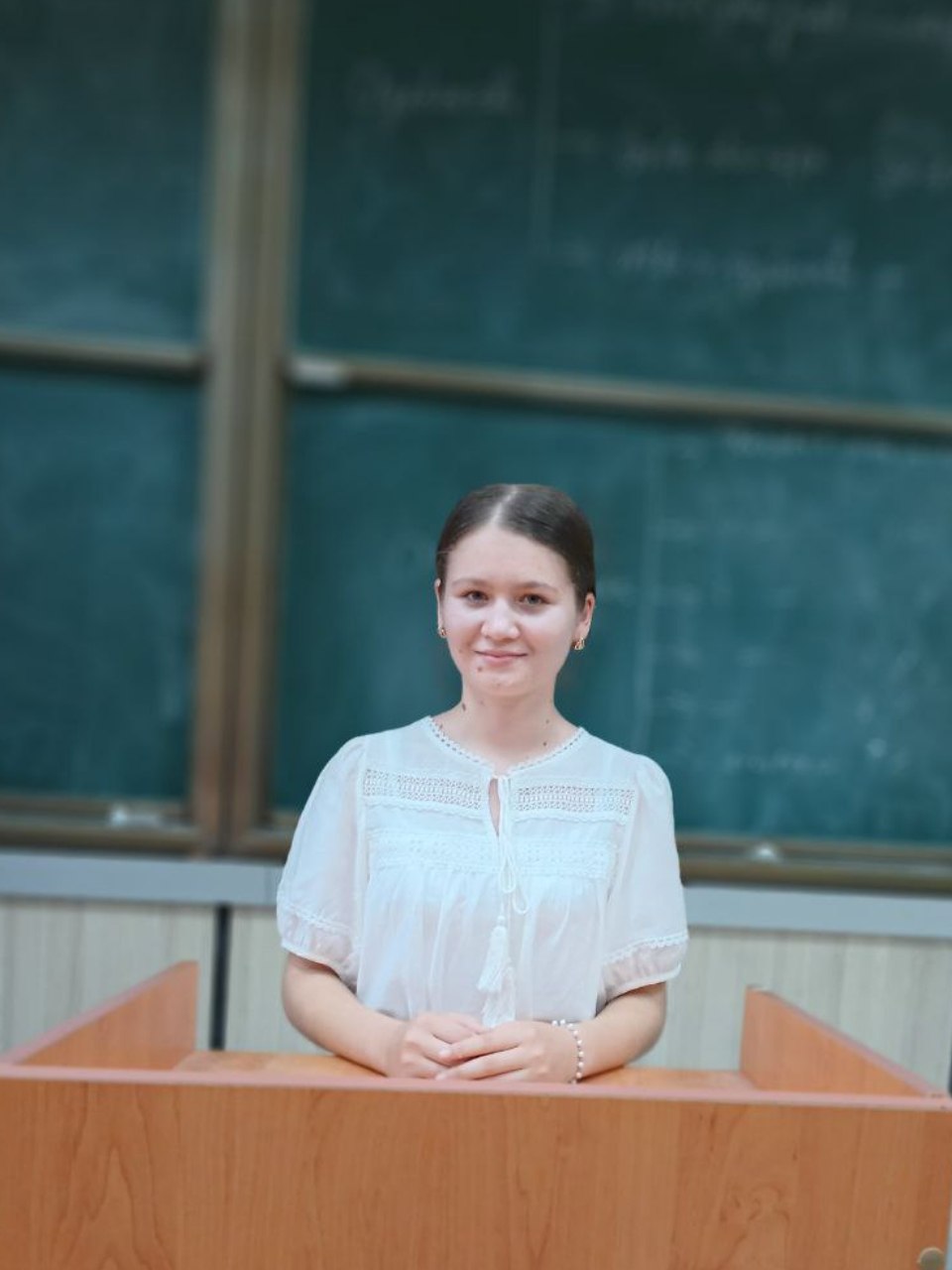
THE CRISIS OF MULTILATERALISM AND THE FUTURE OF THE UNITED NATIONS SYSTEM: GLOBAL GEOPOLITICAL TRANSFORMATIONS AND REFORM STRATEGIES
Sardor Raximov
Student of School No. 52, Gijduvon District, Bukhara Region, Republic of Uzbekistan
ABSTRACT
This scientific article provides a deep analysis of one of the most pressing issues in contemporary international relations: the crisis of multilateralism (multilateral cooperation) and its profound impact on the functioning of the United Nations (UN). Geopolitical tensions that emerged in the first quarter of the 21st century, escalating competition among major powers, violations of international legal norms, and global crises (pandemics, climate change, regional conflicts) call into question the effectiveness of the UN. The article examines the reform of the UN Security Council, the transformation of the financial and institutional mechanisms of the organization, and the initiatives of the Republic of Uzbekistan in developing global multilateralism. In conclusion, forecasts and recommendations regarding the future prospects of the UN system are developed.
Keywords: Multilateralism, UN, UN Security Council, geopolitical crisis, global security, international law, sovereignty, reforms, Uzbekistan initiatives, diplomacy, global governance, veto power, peacekeeping, climate change, new world order.
INTRODUCTION: THE CONCEPT OF MULTILATERALISM AND ITS HISTORICAL EVOLUTION
The system of international relations that emerged in the post-World War II period was built upon the principles of multilateral cooperation, namely multilateralism. Multilateralism is a mechanism where three or more states establish relations based on common rules and institutions to jointly resolve international problems. As the central pillar and supreme institution of this system, the United Nations (UN) was established in 1945. The UN Charter became the foundation of international law, institutionalizing fundamental principles such as the sovereign equality of states, the non-use of force or threat of force, and the peaceful settlement of disputes.
However, entering the 21st century, the relative stability that characterized the post-Cold War era has been replaced by profound geopolitical transformations. Today, the international community faces a profound crisis of global governance. Multilateral institutions, particularly the UN, are exhibiting severe limitations in maintaining world peace and security, preventing major conflicts, and guaranteeing the supremacy of international law. The intensifying rivalry among global powers like the United States, China, Russia, and the European Union has led to multilateral agreements being sidelined in favor of unilateral or bilateral interests.
The purpose of this study is to uncover the root causes of the crisis of multilateralism in contemporary international relations, analyze the institutional and structural deficiencies within the UN system, and evaluate the future prospects of this global organization alongside its potential for reform. Furthermore, the article provides an analytical review of Uzbekistan’s modern strategy in supporting global and regional multilateralism.
1. THE ESSENCE AND CAUSES OF THE CRISIS OF MULTILATERALISM IN MODERN INTERNATIONAL RELATIONS
The crisis of multilateralism is not a sudden phenomenon but the culmination of systemic problems accumulated over the past two decades. The first and most fundamental cause of this crisis is the shifting global balance of power and the emergence of a multipolar world order. The unipolar world and US hegemony that took shape after the dissolution of the USSR in 1991 are coming to an end. Today, China’s economic and military rise, Russia’s revisionist foreign policy, and the demands of emerging power centers like India and Brazil for greater representation in global governance no longer align with the existing architecture of international institutions.
The second critical factor is the rise of national egoism and economic protectionism. Global globalization processes have triggered internal economic and social challenges within several states. Consequently, populist and nationalist movements have gained political power in numerous countries. Clear examples include the “America First” policy in the United States, the United Kingdom’s exit from the European Union (Brexit), and the frequent circumvention of World Trade Organization (WTO) regulations. Nation-states have increasingly prioritized short-term national interests over global obligations.
Thirdly, a severe erosion of international legal norms is being observed. Major powers openly violate the UN Charter and international treaties or interpret them selectively to achieve their geopolitical objectives. Military interventions and actions in Iraq, Libya, Syria, and most recently in Ukraine have completely disrupted the global security architecture. This reinforces the perception that international law has deteriorated into a tool for the powerful, thereby diminishing the trust of small and medium-sized states in the international system.
2. SYSTEMIC PROBLEMS AND STRUCTURAL CRISIS IN THE UN OPERATIONS
The United Nations stands as the heart of multilateral diplomacy; however, today this very heart is struggling to function effectively. The structural crisis of the organization manifests in several vital areas:
The Paralysis of the UN Security Council. The Security Council (UNSC) is the sole organ capable of adopting legally binding decisions to maintain international peace and security. However, the veto power held by its five permanent members (United States, Russia, China, United Kingdom, France) currently paralyzes any decisive collective action. The UNSC has failed to adopt unanimous and resolute measures regarding any major geopolitical crisis (the Syrian conflict, wars in the Middle East, the Ukrainian crisis) due to clashing interests triggering a veto from one of the permanent members. This reduces the organization to an impotent bystander in preserving global peace.
Anachronistic Structure. The current composition of the UNSC reflects the geopolitical outcomes of World War II in 1945. It entirely excludes India, which holds a population of nearly 1.4 billion, economic giants like Japan and Germany, and does not grant a single permanent seat to the entire continents of Africa and Latin America. This geopolitical asymmetry severely undermines the legitimacy and fairness of the Security Council.
Financial and Bureaucratic Impediments. The UN has evolved into an immense and excessively bureaucratized apparatus. The organization’s financing is perpetually on the brink of crisis as several large states delay their mandatory assessments or utilize funding as a mechanism for political leverage. The activities of various UN agencies and programs are frequently redundant and inefficient, prioritizing administrative reporting over tangible field results.
3. THE TRIAL OF MULTILATERAL DIPLOMACY IN THE FACE OF GLOBAL THREATS
In the contemporary world, states confront transnational threats that no country can resolve independently. These include climate change, global pandemics, international terrorism, cybercrime, and food insecurity. Theoretically, these challenges should compel states to unite around multilateral frameworks, yet practice has demonstrated the opposite.
During the COVID-19 pandemic, “vaccine nationalism” became painfully evident. Advanced and wealthy nations hoarded vaccines for their domestic populations while neglecting impoverished countries. The World Health Organization (WHO) lacked the necessary political authority to effectively coordinate global operations. Similarly, obligations under the Paris Agreement on climate change are consistently unfulfilled by major economies, laying the groundwork for future global catastrophes.
In the sphere of global economics, institutions like the International Monetary Fund (IMF) and the World Bank are failing to fully meet the development needs of emerging economies. Because these institutions are perceived as preserving the economic hegemony of Western nations, alternative frameworks such as the New Development Bank within BRICS or the Asian Infrastructure Investment Bank (AIIB) are being established by China and other states. This trend further accelerates the fragmentation of multilateralism.
4. REFORMING THE UN SYSTEM: PRINCIPAL APPROACHES AND MODELS
To overcome this crisis and restore its authority, the United Nations requires deep systemic reforms. Today, international experts and member states propose several distinct models for reforming the UN, particularly its Security Council:
1. Expanding the Composition of the Security Council. The G4 nation bloc (Germany, India, Japan, and Brazil) demands permanent seats on the Security Council alongside veto capabilities. Concurrently, the African Union advocates for the allocation of at least two permanent seats to represent the collective interests of the African continent. This model aims to democratize the UNSC and enhance its representational scope.
2. Limiting the Use of Veto Power. Spearheaded by France, proposals have been introduced to voluntarily restrict or suspend the veto power of the five permanent members in instances involving mass atrocities, war crimes, and crimes against humanity. This mechanism could prevent the Security Council’s paralysis during catastrophic humanitarian emergencies.
3. Enhancing the Role of the UN General Assembly. Various structural proposals aim to expand the powers of the General Assembly, where all 193 member states hold equal voting rights. For instance, frameworks are being discussed to transfer deadlocked issues from the Security Council to the General Assembly, granting its resolutions a more binding legal character under specific conditions.
5. UZBEKISTAN’S INITIATIVES IN ADVANCING GLOBAL MULTILATERALISM
Under its renewed foreign policy strategy, the Republic of Uzbekistan stands as an active proponent of multilateral diplomacy and the strengthening of the UN’s authority. Under the leadership of President Shavkat Mirziyoyev, Uzbekistan has advanced a series of vital initiatives addressing global and regional security from the high rostrum of the UN General Assembly.
First, Uzbekistan has elevated regional multilateralism in Central Asia to an entirely new level. Upon the initiative of the Head of State, the Consultative Meetings of the Heads of State of Central Asia were institutionalized. Through this platform, long-standing regional issues (borders, water resources, transport corridors) began to be resolved via mutual dialogue and consensus, completely free from external interference.
Second, a series of landmark resolutions have been adopted within the UN framework upon Uzbekistan’s initiative. These include resolutions on “Strengthening regional and international cooperation to ensure peace, stability and sustainable development in the Central Asian region”, “Enlightenment and Religious Tolerance”, “Enhancing connectivity between Central and South Asia”, and declaring the Aral Sea region a zone of ecological innovations and technologies. The unanimous endorsement of these resolutions by the global community demonstrates Uzbekistan’s tangible contribution to resolving challenges collectively amidst the crisis of multilateralism.
Third, to restore inclusive global dialogue, Uzbekistan put forward the “Samarkand Solidarity Initiative for Common Security and Prosperity”. This initiative aims to overcome geopolitical confrontations, rebuild mutual trust among states, and ensure global stability, serving as a comprehensive conceptual response to the contemporary crisis of multilateralism.
CONCLUSION: THE NEW WORLD ORDER AND THE FUTURE OF THE UN
The crisis of multilateralism indicates that the world can no longer function under archaic rules, yet the parameters of the new world order are not yet fully established. During this transitional phase, the future of the UN system depends entirely on the resolve of the international community. Dismantling or marginalizing the UN would plunge international relations into absolute anarchy and endless warfare, as no alternative global platform exists today that matches its universal legitimacy.
The most optimal scenario for the UN’s future lies in its evolutionary reform, adaptation to contemporary geopolitical realities, and the enhancement of its operational efficacy. To achieve this, major global powers must restrain their geopolitical ambitions and acknowledge their shared responsibility for humanity’s collective future. Medium and small states, including countries like Uzbekistan that pursue proactive foreign policies, must act as vital balancing forces by demanding the supremacy of international law and advancing constructive global initiatives to preserve the multilateral system.
REFERENCES
1. Mirziyoyev Sh.M. Strategy of New Uzbekistan. – Tashkent: “Oʻzbekiston” Publishing House, 2021. – 464 p. 2. Mirziyoyev Sh.M. Addresses at the 75th, 76th, and 78th Sessions of the United Nations General Assembly. 3. Charter of the United Nations. – San Francisco, 1945.
4. Guterres A. Secretary-General’s Address to the 78th Session of the UN General Assembly: “Rebuilding trust and reigniting global solidarity”. – New York, 2023.
5. Keohane R. O. After Hegemony: Cooperation and Discord in the World Political Economy. – Princeton University Press, 2005. – 320 p.
6. Mearsheimer J. J. The Great Delusion: Liberal Dreams and International Realities. – Yale University Press, 2018. – 328 p.
7. Weiss T. G., Thakur R. Global Governance and the UN: An Unfinished Journey. – Indiana University Press, 2010. – 384 p.
8. Kennedy P. The Parliament of Man: The Past, Present, and Future of the United Nations. – HarperCollins, 2006. – 384 p.
9. Allison G. Destined for War: Can America and China Escape Thucydides’s Trap? – Mariner Books, 2017. – 400 p.
10. Ikenberry G. J. A World Safe for Democracy: Liberal Internationalism and the Crises of Global Order. – Yale University Press, 2020. – 328 p.
11. Toʻrayev A. Modern International Relations and Problems of Global Governance. – Tashkent: University of World Economy and Diplomacy, 2019. – 215 p.
12. Saidov A.X. International Law and Modernity: Transformation Processes. – Tashkent: Adolat, 2022. – 180 p. 13. Newman E. A Crisis of Global Institutions? Multilateralism and International Order. – Routledge, 2007. – 240 p.
14. Patrick S. M. The Sovereignty Wars: Reconciling America with the World. – Brookings Institution Press, 2018. – 310 p.
15. Acharya A. The End of American World Order. – Polity Press, 2018. – 224 p.
16. Concept of Foreign Policy Activity of the Republic of Uzbekistan. – Tashkent, 2012 (and its updated conceptual directions, 2022-2026).
Sardor Raximov | The Crisis of Multilateralism and the Future of the UN System 5
17. World Economic Forum. The Global Risks Report 2024. – Geneva, 2024.
Sardor Raximov | The Crisis of Multilateralism and the Future of the UN System 6