I live in a world that I shape as I please. I do this through virtual, pictorial and sculptural movements, transferring my experiences and photographing reality through the filters of my mind. I have refined this process through years of research and experimentation.
Painting for me is my first love. An important, pure love. Creating a painting, starting from the frantic search for a concept with which I want to convey my message, this is the foundation of painting for me.
Sculpture is my lover, my artistic betrayal to painting. That voluptuous and sensual lover who inspires diverse emotions that strike forbidden chords.
I have been painting Hip Hop since the nineties. Italian and international rappers have been and are the subjects of my works. In 2021 SNOOP DOGG, a rapper who needs no introduction, published on his website with 60 million followers a portrait of him that I painted. The resulting media wave made me known to the general American public and my works were acquired by important public and private collections.
This new series of concrete sculptures has recently been giving me greater personal and professional satisfaction. How was it born? It was the result of an important investigation into my work. I was looking for that special something that I felt was missing. Looking back at my work over the last ten years, I understood that there was a certain semantic and semiotic logic “spoken” by my images, but the right support to enhance their message was not there.
Reinforced concrete, was created two thousand years ago by the Romans. It tells a thousand-year history, full of amphitheatres, bridges and roads that have conquered the ancient and modern world. Now, concrete is synonymous with modernity. Everywhere you go you find a concrete wall: modern man is in there.
From Sydney to Vancouver, from Oslo to Pretoria, this reinforced concrete is present, and it is this presence that supports writers and allows them to express themselves.
The artistic question was obvious to me: if man brought art to the streets to make it accessible to everyone, why not bring the urban into galleries and museums?
I am currently working a lot on my concrete sculptures, a series of works that have made me known to collectors in Northern Europe and the USA. For my concrete sculptures I usually use my personal clothes. During some artistic processes using plaster, resin and cement, I transform them into works of art to hang.
My memory, my DNA, my memories remain “concretized” within them, transforming the person who observes the works into a sort of postmodern archaeologist, studying them as if they were urban artefacts from a remote past. Under a layer of cement are my clothes that I have lived in. I like to think that those who look at my sculptures ask themselves questions, which they can answer by drawing on their educational, cultural and artistic experience.
There is also a series of sculptures dedicated to my clothes worn during COVID , clothes that survived the pandemic ,similar to the finds discovered in Pompeii, after the catastrophic eruption 2,000 years ago.
Sculptures capable of recounting the anguish, fear and inability of man to face an uncertain future and the restlessness of the tragedy of broken lives and destroyed economies.
In the last five years, over 600 international magazines, mostly official magazines of the most important American and Canadian universities, above all Harvard University, have welcomed my work, dedicating articles and covers to it.
Nasir Aijaz, based in Karachi, the capital of Sindh province of Pakistan, is a senior award-winning and Gold Medalist journalist having served in the field of journalism for half a century in senior positions like editor and managing editor. He also worked as a TV Anchor for over a decade and conducted some 400 programs besides appearing as analyst in several current affairs programs on TV and Radio channels. He is the award-winning author of ten books on history, language, literature, travelogue, translations from English literature, and biography. One of his books, a translation of poetry of an Egyptian poet, has been published in Cairo. About a dozen other books are unpublished.
Besides, he has written over 500 articles in English, Urdu and Sindhi, the native language of Sindh. He is editor of Sindh Courier, an online magazine and represents The AsiaN, an online news service of South Korea with regular contribution for eleven years. Dozens of his articles have been published in South Korea while many of his articles have also been translated in Arabic and Korean languages. Some of his English articles were published in Singapore and India and Nigeria. He writes poetry in his native language Sindhi as well as in English. Some of his poems have been translated in Hindi, Bengali, Tamil, and Malayalam, Albanian, Italian, Greek, Arabic and some other languages published in Egypt, Abu Dhabi, Iraq, Bangladesh, India, Kosovo, USA, Tajikistan, Greece, Italy, Germany, and some other countries. He has visited some ten Asian countries and attended international seminars. He was adjudged one of the Top 20 journalists of Asia by a Philippines-based magazine. He has received several appreciation certificates from international organizations for his literary services.
Emile: ( aytuvovaxurshida@gmail.com) Annotation This article analyzes the importance of psychological approaches in children’s education, their types and impact on the educational process. Through humanistic, cognitive and socio-educational approaches, the child’s development as a person, learning motivation, emotional state and individual approaches are considered as important factors. This article provides practical recommendations for teachers, psychologists and specialists in the field of education. Keywords child psychology, educational process, humanistic approach, motivation, emotional development, cognitive development, individual approach, pedagogical psychology Introduction In the modern educational process, an approach taking into account the psychological state of the child has become an integral part of pedagogical activity. In contrast to traditional approaches, today there is an increasing need to take into account individual, personal and socio-emotional factors in the educational process. The development of a child as a person, his success in the educational process, social adaptation and self-confidence are largely closely related to psychological factors.
Main part
1. Types of psychological approaches There are several main approaches in pedagogical psychology:
Humanistic approach: This approach puts the child at the center. Famous psychologists A. Maslow and K. Rogers emphasize the importance of giving the child trust, respect, and freedom for personal growth in their humanistic theories. – Cognitive approach: This method is aimed at developing children’s mental processes such as thinking, memory, and attention. J. Piaget’s theory of intellectual development is an example of this. – Socio-educational approach: This theory, put forward by A. Bandura, shows that children can learn by observing the behavior of others. This indicates the need for education through a positive example from teachers and parents.
2. Taking into account the psychological characteristics of the child The psychological development of a child varies at each age. Children aged 6–10 are more prone to figurative thinking and prefer to learn based on real situations. Also, self-assessment, socialization, and motivational factors are of great importance during this period.
3. 3. The influence of motivation and emotional state Motivation is one of the main factors that shape a child’s internal desire to learn. In an educational environment with a favorable psychological climate, children develop more actively, freely express their thoughts, and are creative. A kind, patient, and understanding teacher increases a child’s interest in learning. 4. Individual approach and differentiated education Each child has his or her own psychological and mental potential. A differentiated approach, that is, an approach based on the level of abilities of each student, increases the quality of education. In this process, diagnostic methods (psychological tests, interviews, observations) are used.
Conclusion
The effective use of psychological approaches in education not only increases children’s academic achievement, but also helps them develop personally, gain self-confidence, and find their place in society. A teacher should not only be a provider of knowledge, but also an understanding and guide for the child. Therefore, special attention should be paid to the cooperation of a teacher and a psychologist in the modern education system.
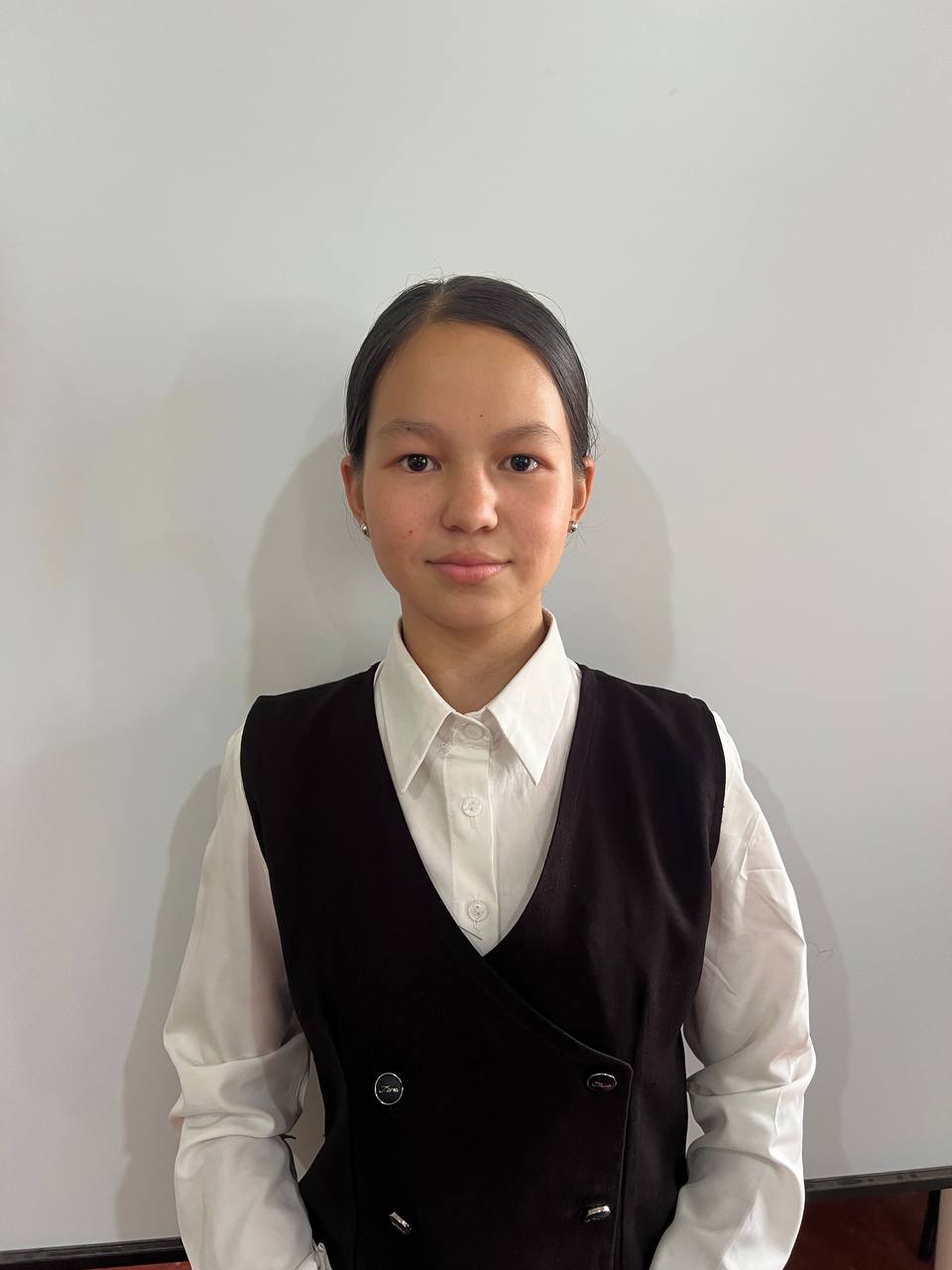
Aytuvova Khurshida was born on June 5, 2002 in Saykhunabad district of Syrdarya region. She graduated from the Faculty of Philology of Gulistan State University, Russian language department. Official delegate of several forums, member of international organizations. Member of the International Writers’ Association “Juntos por las Letras” of Argentina. Her creative works have been published in international newspapers and magazines. Author of her personal book “Stories in Silence” and the international anthology “Miracles of Creativity”. Her stories have also been published in the republican anthology “Mouths of Creativity” and in the republican magazine “Ijodkorlar”
A man is not as strong as you think. A man is not as strong-willed as you think. A man is not as rugged as you think. I would know because people had told me how stubborn and difficult Ibekwe could be, and so they are surprised that I’m able to live with him, despite having had two children with another man, despite not being a fresh leaf.
They said I must have gone somewhere and got some charms with which I held him down, na njipia. You know that sort of stories portrayed in Nollywood movies in the early 2000s, stories of wives or girlfriends holding their partners with charms collected from powerful dibias. I think we Nigerians have consumed so much of those movies that we now think that every successful marriage must be dependent on charms. They said there must be something I did, or I’m doing, that has made it possible for us to live together.
My first husband died of motor accident, God bless his soul, and it wasn’t up to a year before I met Ibekwe. What do you suppose a woman should do? Ibekwe had never married before, but according to the stories I’ve heard, he had cast off some girlfriends, and when he saw me, I was the one he chose to marry. His family were enraged when he took me to them. “Of all women to marry, Ibekwe, you chose a widow with two children. What has come over you?” they asked.
They gave me odd stares which did not really bother me. I knew too well that I wasn’t forcing myself on anybody. I was on my own when Ibekwe came asking to marry me. I had not expected to remarry too soon, but I was a woman. When I saw how genuine he was, how honest he was, how loving he was, and how sexy he was, I decided to accept his proposal. Ibekwe is the sexiest man I ever met. I don’t know if people of today actually use sexy to describe a man, but permit me to use it here, biko. I hope he wouldn’t read this, that I’m calling him sexy. That man is also a reader.
Ibekwe’s people were enraged because Ibekwe should marry a fresh leaf, ọnụ-ugu, not someone who had been used by another man. Ibekwe insisted I was the one he would marry. It was me or no other person. Ibekwe loved me. He knew I had two kids. He knew I had married before. He even knew my husband when he was alive. He heard about the news of his death in a motor accident, but Ibekwe chose to marry me, befuddling many connoisseurs of what a proper wife should be for a man who had not married before. I had mourned my dead husband for eleven months before I met Ibekwe in the new supermarket in town. I had gone to get some bread for I and my children when he walked up to me to help. He asked for my phone number and I gave it to him. He was handsome and charming. There was a soothing effect that his eyes gave.
When he called in the evening I didn’t hesitate to tell him that I was a widow with two kids. I wasn’t ready for any wahala. I wanted to have peace within myself. I wanted to be truthful so that I would be able to sleep in the nights, so that I wouldn’t be worried about covering up lies. I told him my truth, and we started dating. When I went to bed in the night I slept peacefully, knowing fully well that I wasn’t deceiving anyone. I wasn’t lying to anyone. I was surprised that he knew my dead husband. He was a bit popular in Aba, an upcoming singer who would later die in a motor accident on his way to perform in a function in Lagos. “He was the one who performed on my elder brother’s wedding ceremony some years ago. Emenike was his name,” he said.
“Yes,” I said. “Emenike was his name. Emenike Onyeudo.”
That night, after we talked, I cried for a few minutes, because we talked about Emenike in the past tense: was.
.
A man is not difficult to love and please when the man knows your spirit and soul. I’m Ibekwe’s fresh leaf. I’m the perfect ọnụ ugu for him, because we are still living together after a couple of years, because Ibekwe’s love for me is out of this world, because the connoisseurs of what a perfect marriage should entail are not truthful.
Author’s Note:
Among the Igbo people of Nigeria, a fresh leaf or ọnụ ugu is a young woman who had never been married before, and who is probably a virgin.
Isaac Dominion Aju lives in Nigeria where he works as a fashion designer. His literary works encompasses poetry, essays and fiction. He has appeared in Poetry X Hunger, Kalahari Review, Flapper Press, Steel Jackdaw magazine, and Synchronized Chaos Magazine.