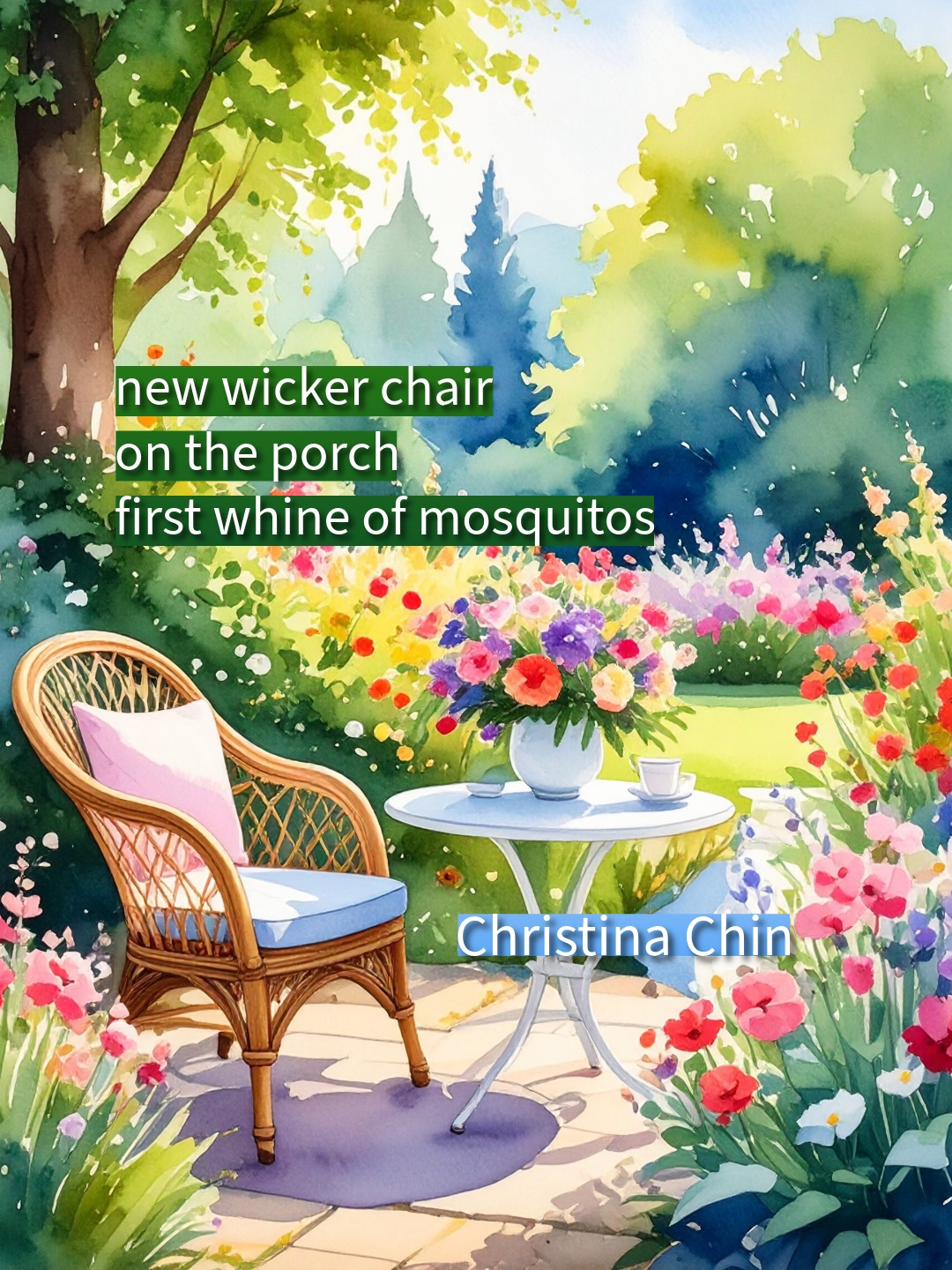
Haiga from Christina Chin

Every girl has a dream in her heart, a goal, and a vision of her future. However, desire alone is not enough to turn a dream into reality. It requires knowledge, opportunities, support, and, most importantly, self-confidence.
Today, the world is developing at a rapid pace. Technology has become an integral part of our lives, creating new professions and areas of activity. This process is also opening new doors of opportunity for girls. Today, girls are no longer limited to traditional professions; they can make their mark in IT, engineering, design, science, business, media, and many other fields.
For this reason, providing girls with access to education, helping them acquire modern skills, and encouraging their interest in entrepreneurship are among the important issues of our time.
Education is one of the greatest and most important doors opening for women and girls. Knowledge teaches people to think independently, make informed decisions, and build their own futures. Today, young girls have many opportunities to expand their knowledge through educational programs, grants, scholarships, online courses, and international projects.
The importance of education lies not only in professional knowledge but also in the way it transforms a person’s worldview. An educated girl understands her rights and opportunities, strives for innovation, and seeks to play an active role in society.
Modern technologies are expanding these opportunities even further. Today, programming, graphic design, digital marketing, artificial intelligence, media, and other digital fields are creating new career opportunities for young people. In these areas, success depends greatly on a person’s abilities, hard work, and willingness to learn.
For example, in the past, promoting a product or service often required significant financial resources and an office. Today, through the internet and social media, even a small project can be introduced to a wide audience. This creates valuable opportunities for young people to test and develop their ideas.
Entrepreneurship is another important area that is opening new doors for girls. For example, a girl may create handmade products and start selling them online. Another may offer services in design, translation, or programming. Although such activities may begin on a small scale, they can gradually develop into larger projects.
Today, there are many examples of girls taking advantage of these opportunities. Young female entrepreneurs are creating their own brands, providing online services, developing new products, and inspiring other young people to follow their example. This demonstrates that girls are capable of transforming not only their own lives but also the environment around them.
However, along with opportunities, certain challenges still exist. Some girls may give up on their dreams because of self-doubt, lack of experience, or outdated beliefs such as “girls cannot do this.” In my opinion, changing such attitudes is very important.
A person’s abilities are determined not by gender, but by knowledge, hard work, determination, and perseverance.
For me, giving girls opportunities is not simply about helping them; it is about building a strong foundation for the future. A girl who receives an education today can become a knowledgeable professional tomorrow, while a young female entrepreneur can create new jobs and contribute to the development of society. Most importantly, she can later play a role in educating and inspiring the next generation.
A confident girl can also inspire other girls. Therefore, giving every girl the opportunity to receive an education, develop her talents, learn modern skills, and turn her ideas into reality is one of the most important investments we can make in the future of society.
After all, education opens new doors, while entrepreneurship gives girls the courage and opportunity to walk through those doors and build their own future.
Farangiz Rakhmonova, 16, is a 10th-grade student at Specialized School No. 2 in Qo‘shrabot District, Samarkand Region. As an avid reader, she is always eager to gain new knowledge and learn new things. She is an active and inquisitive student who has earned several national and international certificates.
A New Intellectual Revolution: Opportunities Created by Artificial Intelligence
Throughout human history, technological progress has repeatedly transformed the way we live—from the steam engine to the Internet. Today, we are once again at such a turning point: the era of artificial intelligence. This technology is no longer a subject of science fiction; it has become a reality that is becoming an integral part of our daily lives, possessing abilities once considered unique to humans, such as understanding language, solving problems, and analyzing information. Artificial intelligence is a modern technology based on algorithms and software systems that is capable of independently performing a number of complex tasks that the human mind can accomplish.
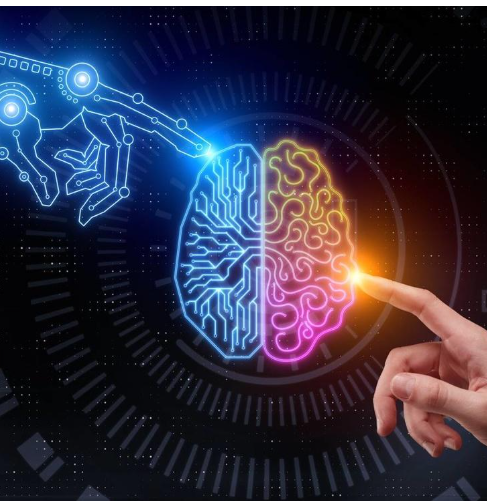
What is Artificial Intelligence? When we hear this phrase, many people imagine assistants that can speak like humans and perform all kinds of tasks on their behalf. However, the concept is much broader. In fact, applications on your mobile device, such as Google Translate, dictionaries, various games, and information-providing applications like ChatGPT and Gemini, can all serve as clear examples of artificial intelligence. Their scope is simply more limited, allowing them to assist users in specific areas. In other words, you use the appropriate application depending on the type of task you want to perform.
The idea of artificial intelligence is not a product of the present day. Its roots go back to the middle of the last century, and it has passed through several important stages of development up to the present. In the 1990s, a new chapter in the development of artificial intelligence began. In 1997, IBM’s Deep Blue computer defeated world chess champion Garry Kasparov.
From that period onward, artificial intelligence began to be applied in various fields and demonstrated its effectiveness in many areas. For example, residents of the city of Yinchuan in China do not need bank cards. All payment-related processes are carried out using artificial intelligence through facial recognition. In addition, the effective results achieved by AI in the medical field in recent years deserve special recognition. Artificial intelligence can analyze X-ray, MRI, and CT images with an extremely high level of accuracy that surpasses what the human eye can detect. For example, in radiology, AI algorithms can help detect cancerous tumors at very early stages. This enables doctors to significantly reduce diagnostic errors and save time. Furthermore, in the past, medical professionals needed 10–15 years and millions of dollars to discover and test new medicines. However, AI technologies have made it possible to model millions of chemical compounds and their interactions with genes within just a few days.
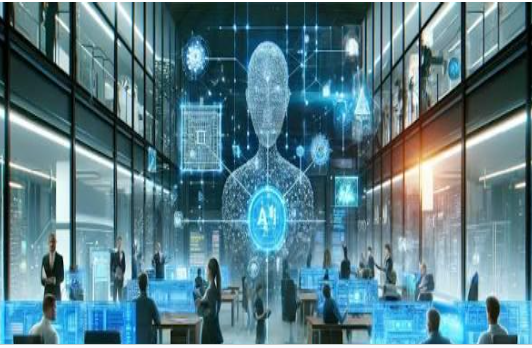
The success of artificial intelligence is not limited to medicine—it has also taken the education system to a new level. Today, every student has the opportunity to have a personalized learning program. AI algorithms can determine a student’s level of knowledge and pace of learning and offer an approach tailored to their individual needs. Intelligent assistants such as ChatGPT have become around-the-clock tutors for millions of students, making the learning process more convenient and faster than ever before.
Artificial intelligence has also brought significant changes to other aspects of our daily lives, particularly in the field of transportation. Today, self-driving cars use sensors and intelligent algorithms to manage road traffic with a high degree of precision, helping to reduce road accidents. In addition, logistics companies use AI to instantly calculate the most efficient delivery routes, significantly saving time and resources.
As we can see, artificial intelligence has entered almost every aspect of human life today—from early disease detection in medicine to personalized approaches in education, from safer transportation to resource-saving solutions in logistics, and many other fields. AI is achieving positive results across these areas. This technology is not intended to replace humans, but rather to expand human capabilities, make everyday problems easier to solve, and improve the quality of life. As artificial intelligence continues to develop, humanity can look forward to an even brighter and more convenient future.
Ochilova Zarnigor Zuhriddin qizi was born on May 11, 2008, in Samarkand Region. She is currently a second-year student at Vocational Polytechnic College No. 1. She holds several national certificates as well as a CEFR English language certificate. She actively participates in various competitions, conferences, events, and volunteer activities. She is an avid reader of fiction.

———————————————
a little more sinister
another day where
i can tell i am not
long for this world
i don’t know if it
will be a natural
death or something
a little more sinister
if my dreams come
true
it will be bloody
and sudden
regardless
it can’t come soon
enough
please disregard this
poem in case someone
actually loves me
enough to save me
from this hell
or loves me enough
to take me out
true love
———————————————————
a car dealership
took the longest piss
of my life in a clean
bathroom at a car
dealership
not sure if it was
from shock at the
amazing cleanliness
or the fact i’ve been
waiting over five hours
for the car to be fixed
had a stranger wish
me good luck
first for everything
i suppose
he was the one that
needed the good luck
car in for a recall
while family is
in the hospital
i could understand
his nervousness
after listening to
his phone calls
as insensitive as
people believe i am
even i don’t wish
that kind of shit
on just anyone
it takes a certain
kind of prick for
me to stoop to
that level
————————————————–
a light fall breeze
a cold front came
through last night
now it feels like
i’m sitting on the
porch with a light
fall breeze chilling
the air
of course, july
isn’t over yet
so the dog days
of hell are still
to come
between the electric
bill going up, just like
everything else, and a
house that retains the
heat in the summer as
well as it does in the
winter
there is no escape
much like life in
the suburbs…
—————————————-
wisdom
she had the most
alluring eyes i had
ever seen
was willing to chase
that devil through
every depth of hell
needed to get a taste
you could say i was
tempted
figured our divorce
would be legendary
our children would
want to kill me and
eventually would
i get it, who wants
the old man at a
parent/teacher
conference
but i would hope
my son, as he gets
older and learns a
few of the secrets
of life
and then finds
himself chasing
a piece of ass
thirty years
younger…
the cyclical nature
of life is never far
from our fingertips
just don’t let the
little brain control
all of your life
——————————————————
on a muggy sunday morning
scattered teeth
broken souls
a wild goose chase
on a muggy sunday
morning
the faint smell of
death is never far
away
tears become laughter
because no one has
enough rope
wishful thinking at
times like these
no one plans on dying
alone
it just sort of happens
make sure your pets
don’t go hungry
hum a song from
your childhood
something calming
it made the beatings
feel more like it was
deserved
imagine your life
if love was actually
meant for someone
like you
now imagine how many
have died on that hill
J.J. Campbell (1976 – ?) is old enough to know better. He’s been widely published over the years, most recently at The Beatnik Cowboy, Drinkers Only, Mad Swirl, Yellow Mama and Night Owl Narrative. His latest book, to live your dreams, published by Whiskey City Press, is available at Amazon by going here: https://a.co/d/0bwkUIkX
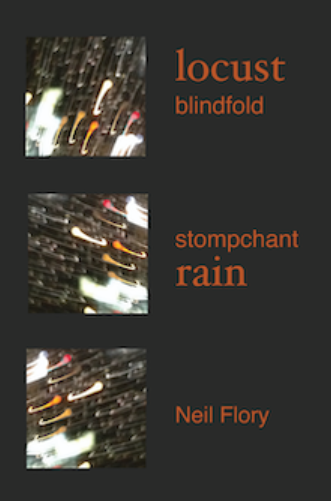
On Neil Flory’s locust blindfold stompchant rain (Arteidolia Press, 2026)
Joshua Martin
(nothin said)
lockedtrunk/ any
every
language flickering floodstage blindfold searing
gelatinous
conceivable/
over plus
Neil Flory takes language to the edge and then pushes it over, crashing down, words splitting into shards and fragments which are reassembled to create the poems that make up locust blindfold stompchant rain, his latest collection released by Arteidolia Press. This is no ordinary assembly, instead Flory shakes and jumbles his broken pieces and recreates language, pulverizing it, smashing words, symbols, phrases, and punctuation together into something entirely unique.
ALASDelphi>basi n’s/motor
METHINKS thetemp.est nightofSP
/ent evi/dent chancely prince>ss>ly Persephone
Flory’s work requires the reader to remain active; his wonderfully dense concoctions forcing us to read closely so as to decipher the gloriously complicated montage-like poems he has created for us to joyfully sink our intellectual teeth into. These pieces soar, swirl, confuse (in the best possible sense!), cajole, misdirect, and flow wildly across the page. There is no sense of grounding here, instead Flory wants us to strap in and hang on for the ride.
variablesCON/VOKE of variegrated
VOXviscerality planked &HALT
Phrases and words are both familiar and unfamiliar at the same time. We can recognize the language and sometimes we can understand it, though oftentimes we don’t even care to because the verbal dexterity, the jarring juxtapositions, the mash-ups, and clever portmanteaus enthrall us. Neil Flory’s poetics is enthralling! A spattering, crowded, endlessly inventive mélange.
his FreeJazz
doublequartet EXPLODING]/(/(/[/[/(
in brasscharging dissona
ncefre[renzy[(/([(
Flory is also a composer and musician and locust blindfold stompchant rain has the quality of musique concrete or free jazz: the polyrhythmic, atonal, cubist style of a Cecil Taylor rendered onto the page. And it’s just as jarring and just as fascinating and demanding and musical. One poem is appropriately titled “listening to Ornette Coleman” and it adequately captures the feel of listening to the great jazz innovator. Flory’s words carry our consciousness along raging rapids of furiously inventive linguistic visions. Flory’s work does what all great experimental work should do: makes us read, see, think, and hopefully understand differently.
(or just how many
frontloaded clusterchords can you
craminto craminto cram 1feeble slimy
silver sli
ver of time anyw
ay just1 )
Language is not static but dynamic. Words are free and malleable. The endless combinations and collisions both reduce language to its most primitive state but also reveal all its complexities and possibilities. Poetics is not a dead form for Flory nor is language. It lives and breathes and transmogrifies relentlessly. Poetry, for Flory, is an art still capable of surprise, still seeking another way, another form. This book demands that its reader surrender to it. This book wants an active reader, someone who doesn’t require sense, logic, easy answers, or other traditional literary forms to spoon feed them more cliched poetics. The ideal reader of locust blindfold stompchant rain will thrive on its convulsions, disruptions, rhythms, and deconstructions.
haggard convulsiontooth jackhammer. concluding paragraph
&all proven theses tossed in a cementmixer.
Flory’s works offers the reader something other than the bland mediocrity and conformity that contemporary literary (all!) culture tries to shove down our throats. locust blindfold stompchant rain gives our eyes, ears, and brains that rarest of things: difficult, innovative, playful, stimulating, provocative work that demands we read and think differently and that’s a beautiful thing!
locust blindfold stompchat rain can be ordered here from Arteidolia Press.
he was ready to believe whatever Kitala's runes said


when they sent children out to gather the shapeliest throwing-stones


the Outer Hebrides of my superstitions,
a cricket behind the couch


listening in on the billionaire's supplicating prayer


the grounds crew moving like impressed sailors in the outfield


resting in the flat-lit meadow
the absolutist and the clouded sulphur butterfly


they were afraid to wake the drunken man on the beach


moving on from fatalistic inevitability
to sharing Dippin' Dots


time traveling on the sun-freckled deer paths of the Shawnee


Bio: Patrick Sweeney is a short-form poet and devotee of the public library.
Journey
I step
one step
and wonder how far
I must walk
before I capture the meaning
of the distance of knowing
sight and sound
feeling in body and mind
a chapter in a story
uncomplicated
deep meaning
layers of land and sky
heavenward peaks
upon the curve of earth
never stuck again
in one place.
Call of the Waterfall
The stillness of the trees
coming after me
my solemn walk away from the world
into the wilderness
on the edge of the great falls
pounding their fury
timeless drums
I stop and stand looking down
the waterfall’s power
filling me
to jump
into a dream
puff of light
upon moist clouds
lifting forever
down the river that never ends.
Climax
And the words
come out
meaning nothing
to some
more to others
until
they find their mark
on the one
who cries
misery
pain
climax of their world
lost
love
into an ending
of sweet heaven.