
I am going to reveal adequate information about program, initiative programs, camps and also volunteering meetings and parties that I have previously participated.

Initially, I was one of the significant part of this kind of field, such as when it comes to programs I have taken part in a global ecological initiative program by United States of America and Illinois university, it was such a mind-blowing and exceedingly beneficial for us how to save the conversation to our ecology and environment and accountable teachers and mentors taught us about how today's detrimental climate change and people's own satisfactions impact on environment so I learned to be an environmentally-friendly.

Moreover, I I have accomplished to be finalist of Climate science Olympiad by united nations, it was the considerable phenomenon for me I will continue with my personal and personable project in the last stage of that Olympiad, additionally I was also the finalist of youth ambassadors of ecology in Uzbekistan, finally, I can tell that you I created my own project at the secondary school of mine to maintain biodiversity and make believable productive and healthy ecology to our society and world, I was the organizer if this small project it is name youth ecology protectors, one of the specific duty is comprised making campaigns about today climate change, set up some donation, volunteering in the field of ecological considerations , and so on. That's all we can believe in that making a big difference is not arcane or complicated.

This 2024 I am the finalist of the Climate Science Olympiad by united Nations. I have passed from qualifier and pre requisite stage of this Olympiad and at the end of June I attend the final stage. Additionally I attended to Valley Mun in Namangan in the field of Food insecurity. Relatively, I established a small ecology organization at my own secondary school which is named "Yosh ekologlar". In order to protect and maintain the environment completely.

Having participated in dozens of courses like world health organization and get certification and by humans right watch. I have accomplished the first honourable stage from Spanish language by Ibrat Farzandlari, Ibrat Academy and Yoshlar ishlar Agentligi and The director of youth embassy who is Alisher Saʼdullayev congratulated me. For the proficiency test if English I took an exam from Cefr Exam with B2 -62 Score  preparing by Ibrat Academy and self study. I am for the time the finalist I'd Education USA Academy by United States Embassy in Tashkent. And I am also the member and participant of Access Microscholarship program sponsored by US Embassy to educate English for the high school students during 2022-2024. I was one of the part of USAID program in the field of "Creative and Critical thinking " for 15 hours course and get the verified certification. I took part in Machine learning course as an extracurricular activity and got a certificate.
Author Archives: Synchronized Chaos
Poetry from Ozodbek Narzullayev
My classmates

We remember to call,
We miss you, but the heart trembles,
I miss you, classmates.
Let's get together, my classmates.

A dream goes to you from afar,
Tomar, thank you for what you said.
Let me ask you how you are doing today.
Let's get together, my classmates.

I know we miss you so much
We remember Shokh Youth with pain,
We didn't forget to call
Let's get together, my classmates.

Don't be fooled by the world
Without imagining the consequences,
I don't feel love in our mold,
Let's get together, my classmates.

Every time we remembered,
I miss you, my friends.
Do not let the consequences disappear,
Let's get together, my classmates.

It's been so long,
How many letters did I say to you?
Just don't forget our friendship
Let's get together, my classmates.

Ozodbek Narzullayev was born on December 20, 2006 in the village of Rahimsofi, Koson District, Kashkadarya Region, in the village of Boston, which belongs to the MFY. He started writing poems since 2023. Currently, his poems are published in international anthologies and magazines.
Essay from Maftuna Yusupboyeva
Karakalpak folk poet Berdak

Through this article, I would like to provide information about the life and work of the great poet of the Karakalpak people. Berdak is a poet, the founder of Karakalpak literature.

First, he studied at a village school, then at a madrasa. Alisher deeply read the works of Navoi, Fuzuli, Makhtumquli and the Karakalpak poet Kunkhoja, and learned from them. He knew history and folklore well. The social life of the Karakalpak people in the 18th and 19th centuries was expressed in Berdak's lyrical poems and epics. He evaluates the events and social relations of his time as an intelligent poet.

The ideas of equality, humanity, justice and patriotism are put forward in his works. In Berdak's works, the condition of the working people is the main theme ("It didn't happen", "Tax", "This year", "My life", etc.). The poet dreams of selfless fighters for the truth, for the happiness and future of the working masses ("For the people", "I need", etc.).

The poet proudly sings about the heroes of the people in his historical works "Avlodlar", "Omongeldi", "Azadosbiy", "Ernazarbiy". Berdak's work "Generations" is a chronicle of historical events, the common events in the lives of the Karakalpak people and other Turkic peoples are recorded, and the legends about the origin of tribes and peoples are described. Berdak exposes the lies of some corrupt clergymen ("Better", "Like", etc.), defends women's rights, calls on young people to love their country, reach the heights of enlightenment ("To my son", "Don't be a fool", etc.).

 In his poetic observations and struggles for life, Berdaq dreamed of a happy life for working people. While thinking about making the people happy, Berdak asks God for help ("Help"), thinks about happiness ("I searched"), dreams of a just king ("Need"), hopes for the construction of a happy society. Berdak's work is close to the traditions of folk literature. He occupies the main position in the history of Karakalpak literature with the richness of his creativity and the ideological and artistic height of his works.

Many of his works have been translated into Uzbek and other languages. The 170th anniversary of Berdak's birth was widely celebrated in Uzbekistan and Karakalpakstan (1998). One of the avenues in the city of Tashkent was named "Berdaq" and a bust was installed. A bust of the poet was also installed in Bozatov, the birthplace of the poet (1998). In the city of Nukus, a statue was dedicated to him, a musical drama theater, a street and a school were named after Berdak.

AUTHOR: MAFTUNA YUSUPBOYEVA, UZBEKISTAN.
Poetry from Sayani Mukherjee
Village

A lonely cottage by the river wall
The sun scooped daisy under my beige wall
A pointed facade a long overturn over there
To mend and bask the town Meadows
As I lay dipping in the river
I hear cascades over my rimmed lens
A lovely blossom it was, it lied open dust
The moonbeamed sun is lowly now
To hung the home grown lilies
The blue painted carpenter singed a choir
A thousand lullabyed biddings
For the village was aglow in the pure love.
Poetry from Marjonabonu Xushvaqtova
I LOVE THE BOOK
A piece of my life

During my graduation, I loved and read the books about my major. My first goal was to become a student as soon as possible. My goal came true in September 2022. I was recommended for studentship on the basis of Grand. This is a gift for my 18th spring! What is the taste? I and my family were very happy. Why, my sister joined me in crying, that is, my sister and I were classmates. But for some reason I stopped crying because I started crying. Because I got a phone and spent a lot of time on social networks. My work and crying decreased significantly. Instead of reading a book, I picked up the phone.

Since the beginning of the session in my studies, I have completed my specialty subjects with excellent grades. I thought that it was definitely my fault that I didn't get a book in my hand soon, and I felt a little depressed. There was no use in thinking about it now. Ehhh... it was all my fault. As they say that the last regret is your enemy, I also regretted my actions, but it was too late. I was slightly behind my peers in terms of crying.

In the summer of 2023, I realized everything about the song. Now I'm in my 2nd year, I'm 19 years old, I've grown up a lot, my thinking and outlook have expanded. Before, I used to save money for this and that, but now, as the amount of money I am saving is enough for how many books, I dream about whether I will be able to get the book I like. My biggest realization in my 19 years of life is this... I LOVE BOOKS! ⁰¹·⁰⁹·²⁰²³·

✍️Ⓜ️ #Marjonabonu Khushvaktova
Poetry from Azemina Krehic
LIVING DEAD TAPESTRY

Bosnian mothers have been giving birth to daughters for generations
which keep away from the lustful and smelly bodies of the enemy.
And they give birth to daughters,
who are thrown away into the swollen waters,
due to fear from the maddened eyes of their fathers.
So again during a lunar eclipse,
in the deepest layers of the night Bosnian daughters,
on the banks of Bukovica,
they weave a handkerchief for a loved one,
while prayers are boiling from the lips:
The stars will write a better destiny for us then when we leave this world.

Azemina Krehić was born on October 14, 1992 in Metković, Republic of Croatia. Winner of several international awards for poetry, including: Award of university professors in Trieste, 2019.,„Mak Dizdar“ award, 2020. Award of the Publishing Foundation of the Federation of Bosnia and Herzegovina, 2021. „Fra Martin Nedić“ Award, 2022. She is represented in several international anthologies of poetry.
Synchronized Chaos Mid-October 2024: The Shared Human Imagination
Judge Santiago Burdon offers his new collection A Charlatan’s Aphorisms for review. Please contact us if you’re interested and we’ll put you in touch with him for a copy.
This is a Best of Collection of both past and new poetry by Judge Santiago Burdon. They were selected by dedicated readers and past publishers. Some have appeared in his books “Not Real Poetry” and “Tequilas Bad Advice Poetry With the Worm.” Judge Santiago Burdon’s poetry is a sophisticated slap in the face. The imagery induces you to clear your throat and shift your weight from one side to the other. Santiago doesn’t waste his words in an attempt to make you comfortable. As a poet he delivers defined grit and structured devastation. He speaks in the language of gasoline fumes and stale cigarette smoke. Always honest and fearless, never apologizing. Know that I am a fan.”
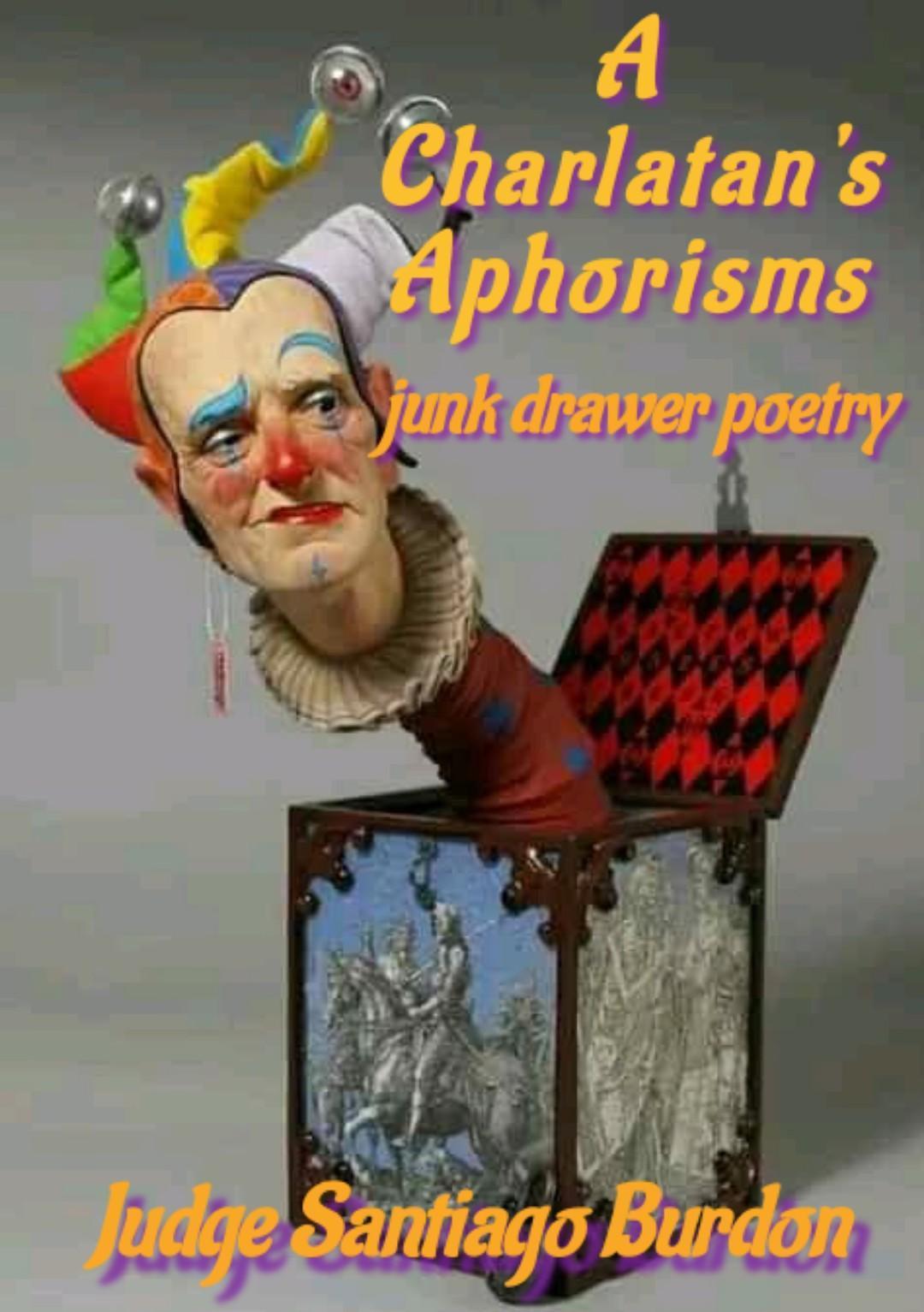
(Jack in the box popping out on the cover of Santiago’s book)
Now for our second October issue, The Shared Human Imagination. In this issue, we look to and draw upon our own creativity and love and that of the many who came before us.
Lilian Dipasupil Kunimasa reflects on life’s complexity and on the overlap between poetry and music. J.J. Campbell’s curmudgeonly poetry explores age, loneliness, music and regret. Murrodillayeva Mohinur mourns her rejection by false friends as Ilhomova Mohichehra celebrates the refuge she finds in her dreams. Umida Jonibekova writes eloquently of clouds and rain.
Diana Magallon crafts visual poetic pieces on the movement of the ocean. Dilnura Qurolova highlights the importance of ecology and environmental awareness. Brian Barbeito probes the worlds within worlds in out-of-the-way corners within nature.
Raquel Barbeito’s visual art stylizes nature-based images. Kylian Cubilla Gomez’ photography presents images of cultivation, humans carefully sharing space with and working with the natural world.
Ilhomova Mohichehra revels in the natural and cultural beauty of her Uzbek homeland and also her native region of Zarafshan. Nodira Jorayeva celebrates Uzbekistan’s rich and noble history as Mahliyo Sunnatullayeva reflects on the cultural heritage of Uzbekistan. Rajarbona Sarvinoz looks to ancient Uzbekistan, outlining Central Asian historical leader Amir Temur’s aqueduct engineering. K.C. Fontaine relishes the rich Latin culture of Chicago’s Logan Square.
Otayeva Dinora highlights the dignity and importance of the teaching profession. Rayhona Sobirjonova offers up praise for a respected teacher as Saydinqulova Elenora Olimovna presents solid life advice in the form of a letter to a friend and classmate. Barnoxon Ruxieva celebrates Uzbekistan’s well-developed education system, in particular its Barkamol Avlod children’s schools.
Bardiyeva Dilnura evokes the poetic beauty of the Uzbek language. Charos Toshpulatova outlines the importance and unique value of sign language. Abduvahidova Farangiz compares and contrasts physical books and e-books. Nathan Anderson describes the finely crafted musical language of Sanjeev Sethi’s poetry collection Legato without a lisp.
In a piece of literary analysis, Z.I. Mahmud discusses how Philip Larkin’s poem Whitsun Weddings depicts social and ecological changes in England after the First World War.
Mark Young probes an imagined world in a fresh set of his “geographies,” digitally altered photos integrated with visual art. J.D. Nelson peers at the edges of his world through a fresh set of monostichs. Jim Meirose sends up a quirky story on pleasure and its aftermath. Jake Cosmos Aller depicts a fanciful wild night whirling and drinking through the solar system.
Fhen M. speculates on how the element of mystery attracts us to Magritte’s paintings. Soren Sorensen shares a sunset image and a metallic melting clock, perhaps Dali-inspired.
Stephen Jarrell Williams sends in gentle vignettes of hope and faith while Mahbub Alam describes love as one of humanity’s lofty aspirations.
Mesfakus Salahin considers his psychological complexity and fallibility in light of a great love that leaves him humbled. Duane Vorhees reflects on memory, love, and the ironies of life. Lan Qyqualla draws on history and memory in his poetic vignettes of love and connection. Ivan Pozzoni orates in English and Italian on human history, love, beauty, and tragedy.
Michael Robinson speaks to the peace he found through a relationship with Jesus.
Xavier Womack offers love and respect to a spiritual mother figure embracing the world. Leslie Lisbona reflects on the death of her mother and the empathy she finds through a classic novel and the broader human imagination.

Rukshona Rasulova celebrates her deceased grandmother’s long and loving life as Murrodillayeva Mohinur contemplates her mother’s steady love. Maknuna Oblaqulova honors her parents and their love. Iroda Abdusamiyeva mourns her deceased grandmother and celebrates her life. Orinbaeva Lalezar Azadbay reflects on losses in her life, especially her dearly departed parents. Taylor Dibbert reflects on his deep love for his departed dog.
Holy Henry Dasere laments some universal struggles of young womanhood as Graciela Noemi Villaverde highlights women’s determined struggle for equality and safety. Hilola Abdullayeva discusses ways to psychologically support people recently released from jail and prison.
A. Iwasa reviews activist and anti-fascist professor Josh Fernandez’ memoir The Hands That Crafted the Bomb as an exploration of how to take youthful brash exuberance into adulthood. Dr. Jernail S. Anand warns us about the danger of words to ignite hatred and violence, how the computer keyboard in the wrong hands can be more dangerous than a bomb.
Ahmad Al-Khatat’s poetry evokes sorrow over the loss of love and human experience as well as life in wartime. David Sapp speaks to how ordinary people react to global tragedies as Alexander Kabishev continues his grisly tales of the brutality Russians suffered during the siege of Leningrad. J.K. Durick explores new poetic ways the world could end.
Eva Petropoulou encourages the world to choose peace and tolerance as Daniel De Culla urges the world’s people to end the shameful tradition of hate. Mykyta Ryzhykh laments environmental destruction, war, and a personal heartbreak in his poetry. Pat Doyne pokes fun at Donald Trump’s style and ethics in her poem of warning.
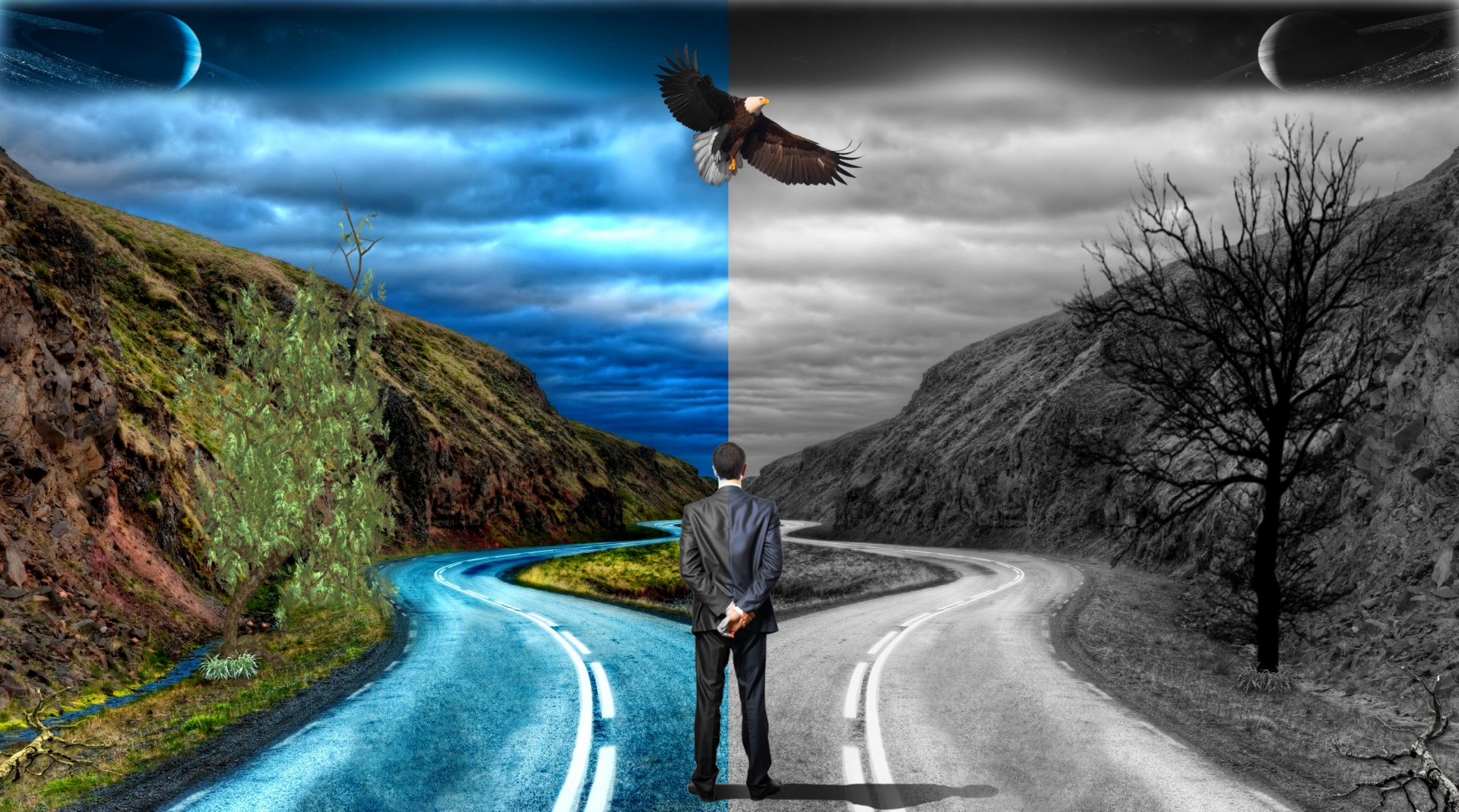
Jacques Fleury urges us to get beyond our fear and welcome the “other,” those unlike us. Bill Tope’s poems highlight the pain children went through before we understood learning disabilities and neurodiversity.
Childhood is a time of adventure and wonderment. Isabel Gomez de Diego’s photos show a small child experiencing new spaces: a ship preserved on land with a carved mermaid on the prow, a park train with a red caboose.
As we grow, we try new things, sometimes get disappointed, learn, and move forward. Panijeva Dilnavo Shukurvna celebrates the youth of Central Asia and expresses her wish for her generation to thrive and triumph. Rukhshona Rasulova urges brave and dedicated work towards our goals. Orzigul Sherova highlights the importance of motivation in reaching one’s goals. Alex Stolis’ poems draw on addiction as a motif and speak to waiting, hoping, and being stuck.
Dilbar Koldoshova Nuraliyevna’s poetic speaker reflects on how her heart and intentions were pure, even if her goals did not work out.
Maja Milojkovic encourages us at any age to embrace blessings in our lives, with the understanding that they are temporary.
We hope that this issue will be thought-provoking and a blessing in your life.