The Britney Box, essay by Teresa Smith

The Britney Box

by Teresa Smith
The Britney Box (excerpt)

By Teresa Smith

The following is an excerpt from a forthcoming essay by Teresa Smith reflecting on the social and political of the suburban United States between the launch of Britney Spears’ first and second albums.

CW: anti-Indigeneity, murder of Indigenous people, racism, colorism

To my knowledge, there was not a single Black, Latino, or Indigenous student in my graduating class (Issaquah High School, class of 2002). We also didn’t have any teachers, local leaders, or town historians who weren’t white.

In 1997, my last year of middle school, around sixty juniors and seniors from my future high school drove to another city to destroy an Indigenous artifact. It was a totem pole created by a member of the Snoqualmie Tribe. The totem pole had only just been finished and it was slated to be the site of an upcoming celebration over the Tribe’s victory in their long battle to win federal recognition. Prior to the planned celebration, a group of sixty or so Issaquah High School students, led by the football team, drove to the freshly carved totem pole in the middle of the night, chopped it down and set it on fire.

In the weeks that followed, the local newspapers tended to use the term “peep rally” to refer to the incident. The local media also liked to emphasize that the man who carved the totem pole had been an “adopted member” of the tribe, as if the Snoqualmie nation didn’t have the sovereignty to welcome new members, as if this made what the high schoolers did not count.

Our high school’s mascot was “The Indians.”

Following regional media coverage of the incident, outsiders began writing angry letters to the editor of the local paper—perhaps the tokenization of Indigenous people and this hate crime were related? That was the general tone of the letters.

“We’ve been the Issaquah Indians since 1917,” a white woman from the historical society said to me one day, in a huff. “What do these out-of-town liberals know? This is our heritage!”

­­­I began volunteering for the local historical society when I was in middle school (it was a good way to get out of the abusive environment at home) and I would sometimes staff the front desk at the old town hall, which had been converted into a museum. The building was named for the white man who is credited with founding Issaquah, and I would eventually that this man was so famous for murdering members of the Snoqualmie and Sammamish people that, according to legend, once he and his family ran out of bullets so they began to pull nails from the walls of their own home so they could load them into shotguns and keep shooting Indigenous people.

The Issaquah High School mascot was changed to the Eagles in 2003, but there are still hundreds of schools around the country with mascots that depict Indigenous people. When Indigenous kids look around in their daily lives for representation, this is what they see: Some high school mascots are wild animals, others are Indigenous people.
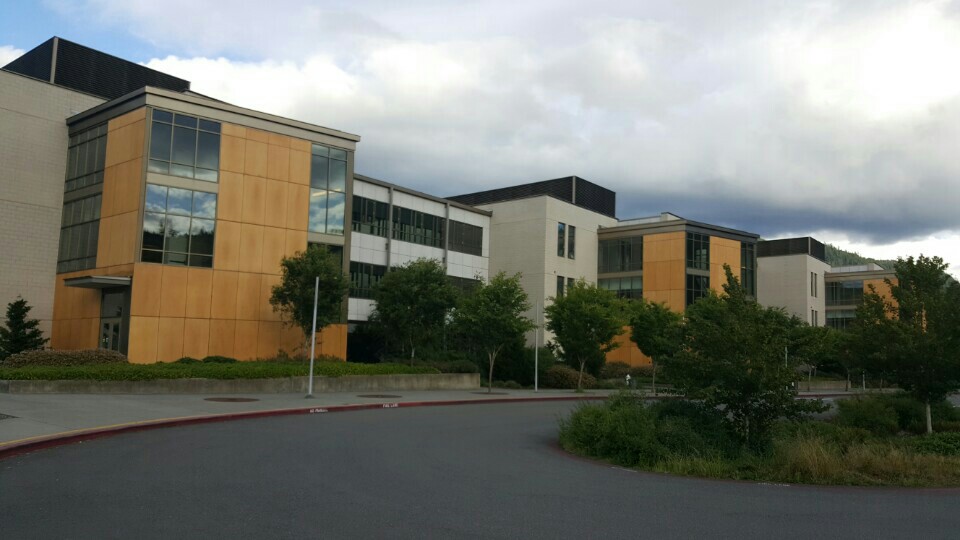
Issaquah High School

In many parts of the country, the White Flight of the 1970s had grafted rather cleanly onto the remnants of earlier white supremacist movements. Our “commuter suburb” had been a known as a Klan haven in the 1930s, and my mom, who was white, didn’t see any problem with this. As for myself, I didn’t pass as white, at least not there, not in Issaquah.

The old ladies at the historical society used to grill me about my origins. They were always smiling, acting cordial as they tried to wrangle the truth from me about “where I was really from,” as if I was intentionally hiding it from them. Their questions didn’t make any sense; I was born in Oregon and had lived in the Pacific Northwest my all my life. Sometimes when I would go to the gas station to buy candy after school, old guys in hunting caps would walk up to me and thrust their big pink noses into my face, demanding to know where my accent was from. Uh…accent?

It wasn’t until I was in my late twenties that I left the Pacific Northwest and learned that in other parts of the country, I read as white. It was like falling into a different universe. I spent so much of my young adult years trying to prove myself to everyone in town—my photo was always being printed in the local paper for things like winning the school walk-a-thon, raising money to rebuild a local playground, running a petition drive to save a nearby wetland. I was just so eager to show that I was that “exceptional person of color.” Even after things fell apart at home and I moved into foster care, I was still actively working on volunteer projects. During my senior year of high school, a plaque was installed at a local mall with my name on it, honoring my service to the community. It was so strange moving to California, and visiting New York, DC, Texas and finding out that in those places, people don’t expect me to constantly prove myself.

Sometimes looking into the mirror feels like gazing at one of those Magic Eye pictures from the early 1990s. If I look at myself one way, all I see is static, whiteness, the markers of colonial privilege. If I turn the other way and squint a bit, this caricature pops out, and I can almost find the features, however faint, that the white supremacists in my hometown used to frame me as an outsider, a sidekick, a suspicious person. Someone always at the periphery, never at the center.

Years later, I would be applying for food stamps in the bigger, safer city of Oakland where I began living in my twenties. I worked full time, but rent was taking up nearly all of my paycheck. The social worker became angry when she found out where I was from. “What are you doing draining our social services here?” she snapped. “Go back home, back to where you belong.”

Just a few months before, I went back to Issaquah for a brief visit and tried to leave a few copies of a brightly colored activist newsletter on a café newsstand. It had become a habit, leaving around little zines and newsletters that my friends and I made in South Berkeley about the dangers of climate change, the 1%.

“Get out of here with that gay trash,” the café owner was suddenly shouting at me. “Go back to Capitol Hill!” At first, I was shocked, indignant. This was my hometown! Didn’t he recognize me? I used to deliver his newspaper. Didn’t he know there is a plaque with my name on it at the mall? I wanted to explain, to make him see who I was, but then I saw him reaching for something and I ran out of there before there was time to see if it was a broom or a gun.

March 2021: Harmonious Ekphrasis

by Synchronized Chaos Co-Editor Kahlil Crawford

This month’s issue of Synchronized Chaos is anchored in ekphrasis.

I first learned of ekphrastic poetry from one of our contributors, Neil Ellman. According to him, “It sounds more intellectual than it is. It is no more than writing a poem expressing one’s reaction to a work of art.” Ekphrasis, however, is not limited to poetry. Often analogous, ekphrasis prompts a painter to interpret a poem, a photographer to portray a song, and so on.  Neil says, “One very common way of explaining it is that ekphrasis involves a “conversation” between two forms of art.” Therefore, it is safe to say that ekphrasis epitomizes the conceptual harmony of “art-on-art”. 

Katya Shubova and Mark Blickley start things off with The Biology of Courage – a self-biographical peek into the grittier aspects of Cartagena life and death while celebrating Colombia’s more heroic moments. A screenplay, adapted from a book by Chimezie Ihekuna, transports us into the depths of crime-filled Santiago; as the protagonist transcends his corrupted lineage through a nature-induced transformation for the better.

Sandra Rogers-Hare channels Black rage and discontent in the wake of the massacre of George Floyd and shooting of Jacob Blake. She gives us people prose – epitomizing Black history and personal anecdotes from a “woke” mixed-race perspective. Michael Robinson traces the roots of white supremacist hatred and violence from Emmett Till’s murder to the recent riots at the U.S. Capitol.

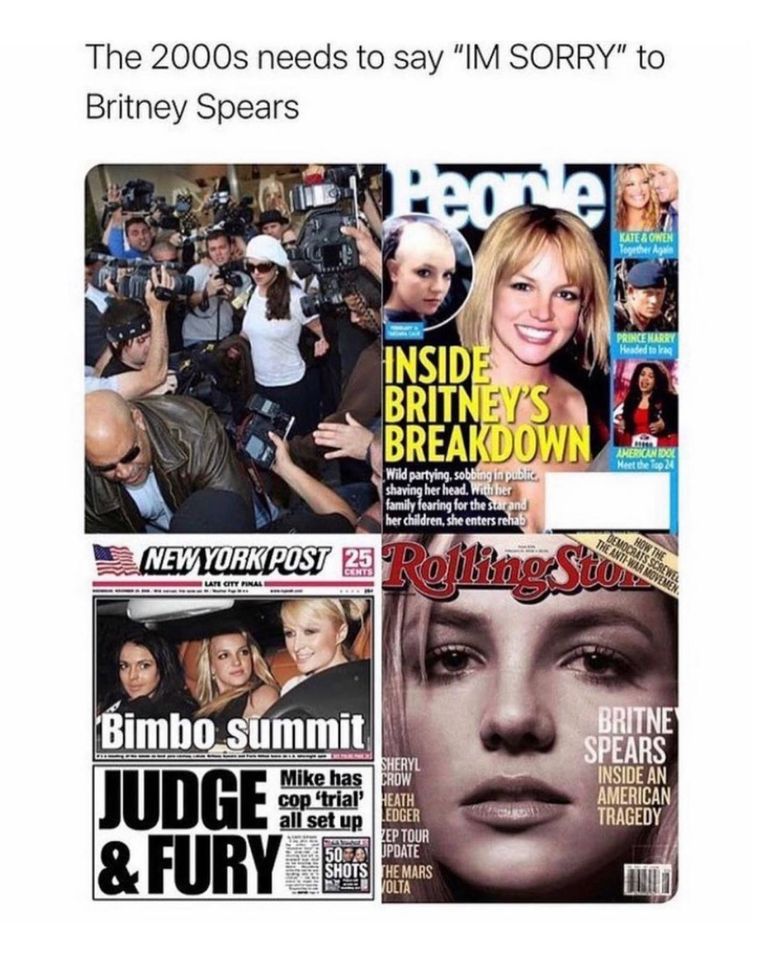
Teresa Smith comments on the resurgence of interest in 1990s pop singer Britney Spears and suggests we turn our attention to other neglected people from the period who continue to experience injustice today.

Egyptian diplomat H.E. Moushira Khattab, interviewed by Federico Wardal, emphasizes education as a means of combating human injustice in the midst of national revolutions. She highlights the importance of her involvement in child welfare organizations as an extension of her human rights initiatives.

Kahlil Crawford considers contemporary design and classical modernism to ponder the true meaning of art. Brenda Clews’ spatialist poetics interpret the classical works of Glenn Gould and Sophia Gubaidulina. She repaints their sonic portraits with abstract lines to form new meanings.

Eva Petropoulou Lianoy examines the meaning of Contact as it relates to a midday coffee, memorial roses, and a Roman candle. As a recovering Roman Catholic, amongst other things, Judge Santiago Burdon narrates his varied existence and motivation for his “retirement”.

John Edward Culp illuminates the power of rest and the subconscious, unforced inspiration that can come when we take the time to wait for it.

Mark Young has the innate ability to guide us through not only the art, but potentially the mind of Magritte. Each detail within every artwork seems to speak to our common human experience. In kind, Patricia Doyne poetically dissects the intentions of da Vinci’s Vitruvian Man and ushers us through the dynamic depths of The Great Wave Of Kanegawa.

Poet Robert Ronnow’s ekphrasis reimagines movies The Shootist starring John Wayne and The Terminator starring Arnold Schwarzenegger. He details the dimensions of human suffering via Old West gunplay as a metaphor for Bronx reality, and laments humanity’s reckless termination of our natural world. Poet John Culp then takes us on a vertical trip through his kite-like mind.

Mahmoud Sami Ramadan’s series of love letters reveals the ebbs, flows, and revelations of his heart; as Jon Bennett’s San Francisco’s street adventures portray a celestial visitation as well as the twin monstrosities of love and loneliness. Meanwhile, Ahmad Al-Khatat imparts serene wisdom and balance to his love interest via meditative thinking and positive support.

Michael Lee Johnston likens coronavirus to the crucifixion – the irony of the crown. He then goes on to examine change and movement through the holiness of the Roman god Mercury. Poet Hongri Yuan expands our worldly awareness with bodily translucence and chronological truth. His multisensory lines heighten our self-understanding and existential potential.

Bangladeshi poet Mahbub offers a sextet of poems that provide a glimpse into the multiple facets of our human journey. From the tomb to the sky, he narrates our innermost thoughts, feelings, and intentions; even as Jack Galmitz envisions and reflects on death to suggest that he might be next.

Thank you very much for reading Synchronized Chaos! We encourage you to leave comments for our contributors, they appreciate feedback and discussion.

Poetry from Ahmad Al-Khatat

Promise  

I will promise you but first, promise yourself  
Be healthy as I promise you 
that nothing can disturb your peace of mind,
but remember to at the sunny horizon 
to breathe optimistically. 

Set your mind to be the best, 
to operate only for the best, 
and except only the best of your -self, 
force your inner self to maintain away   
from the mistakes of the past instead, 
learn! 

Give a bit more time to the improvement of  
yourself, and shut the hours of criticizing  
others, and be the first smile of tomorrow  
and continue to ignore those cloudy souls. 

Each time that you think of me, I promise to you, 
I am here for you, not just a guest. 
Life has given us so much to live for, even  
if my heart is filled with sorrow, 

I'd however prefer to be around your gorgeous eyes, 
hearing your loving accent, and falling in  
love with your delightful scent that will be  
the spring with its colour to sketch my path. 

12/02/2021 © Bleeding Heart Poet

Poetry from Jack Galmitz

I think the dead are singing

or so I gather from their mouths.
I do not like the boat I'm in-
it has no oars
and the big black water has no fish
or prawns so am I wrong?
 
The dead look like angels painted
touching and leaning and grouped
toward some understood truth
that Anonymous knew.
I don't like the car I'm in
it has no horn and the brakes don't work
so what's the use of youth?
 
The dead move like curtains
lifted by the wind. The windows are opened
and let the sun and the snow right in.
The dead seem to have no feet no need
for shoes they drift.
I shuffle along in my orthopedic shoes
poor circulation forcing me to lean on polls
in the street. I think I will join them soon
they are so neat.
 
 
-
 

Shining is asleep now

under the snow
and the plow in the barn
cuts the wind in two.
The tractor is graced
with a glaze of ice
and doesn't move
from its prominent place.
 
The sun is minted.
It does its work
in the subterranean hollows
of the hardened ground deftly.
Stirring deep is summoned growth
an off camera sex scene.
 
And underground in the nether hole
It’s pooling. She's moistening below.
It's a joy to know that out of sight
she's blooming like a nubile girl
bound to be seduced by a vital force
and show her charms
in sons and daughters of light and warmth.
 
It can’t happen soon enough.

Poetry from John Culp

Sorry,
    I'm talking to myself
       It's not polite to talk to myself
          and not invite you
             into the conversation.


When my mind wanders
   think of me as a kite
      high off the ground,


 Distant on a string as
    I trust you with the spool.
 
As clouds get a Bit furious above us
 You know my attentions may
   draw dangers that hopefully
     won't more than tingle your fingertips,
       should a strike find my tail.


And as I exhale
  So does the wind
    Loft my Apparency
     of coherent desertion,
      leaving the
       horizon closer
               than


 the grounds Below.

Ekphrastic Poetry from Brenda Clews

 My heart is playing

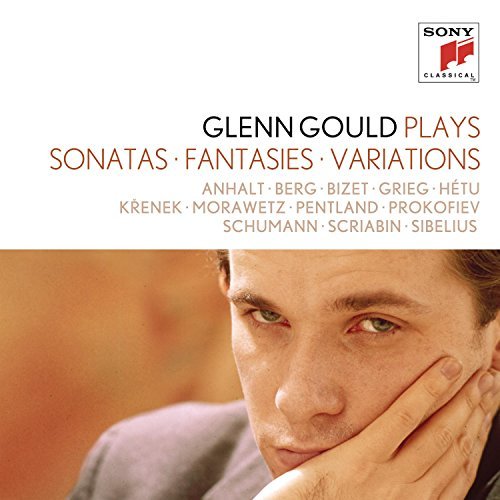
      Glenn Gould’s Sonatas – Fantasies Variations over & over, day after 

           day.    Sublime, tragic, joy-sorrow-

                                         ful, heart-rending, heart-

                       filling. 

      Vibrating strings pull the soul’s sinew, tiptoe over your grave of dreams. Awake to lull 

into neverending sleep. 


       So you dance, a marionette of his fingers, the sensitivity of his touch on your black

& white keys

                     cast 

in sunlight and shadows over the ground outside. 

                     Can your dangling feet dance faster? Slower?

Pitch

                                                                                                      of splintering

                                                                                  glass.

                                         A colossal public square,

                                                   churches and music halls,

                                                                                  crystal panes

          raining.

                               Sharp shards in air.

Empty courtyard,                                                        mist lit by a rising sun,

                                         the silverless mirrors, prismatic—

                                                                        never hit-

                                                                                        ting

                                         the catastrophe of ground.

Intense chromatic moments         of notes                             waver            in-process,

                                                              delicacy & trails & lively crescendos.

                                         Time becomes space.

                                                                                                                 Trill floating

                                                                        Escher glass-stairs of notes.

                               A cathedral of crystalline arrhythmic intervals.

                     Without tonal centres,

                               clusters echo clusters,

          flutes, violin, saxophone,

                                                                        this lullaby of gentle notes,

                                                              that tempest of cymbals drumming a glass-

                               bottomed boat torpedoing

                                                                        a furious ocean.

                     Loneliness, an open-ended disjunctive divine embrace.

                                                                        Fresh, clear

                                                                                             as the thrill of dawn.

Inspired by Tatar-Russian composer, Sophia Gubaidulina’s Modern Classical oeuvre.


Brenda Clews is a poet who dances. She’s had two books published, Tidal Fury (Guernica Editions, 2016) and Fugue in Green (Quattro Books, 2017). She’s also an artist, a video poet, an editor. and runs a quarterly poetry and singer/songwriter event called Minstrels & Bards in Toronto, Canada. Her website is brendaclews.com

Ekphrastic Poetry from Patricia Doyne

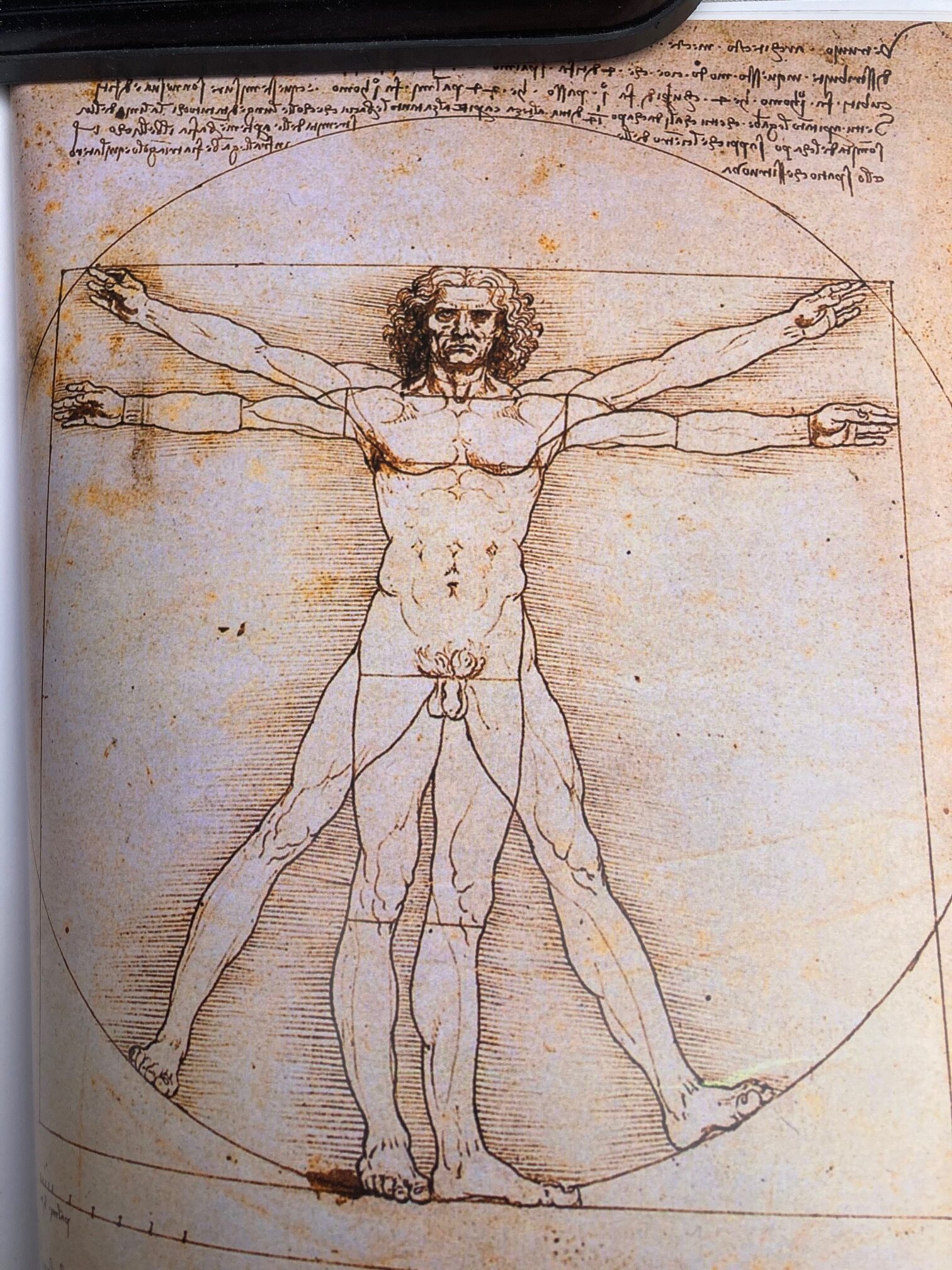
VITRUVIAN   MAN

                        Spread-eagled in your bubble,

                        do you dream of your circle dissolving

                        in a dawn of plain, white paper?

                        Do you long to challenge geometry,

                        to dance with abandon,

                        your limbs scribbling new patterns?

                        Would you like to,  just once,

                        trade the golden mean

                        for a bruised pair of jeans,

                        a haircut,

                        and a girlfriend?

                        Or have those dotted lines across your torso

                        nailed you to perfect proportion for so long

                        that you would not risk a cubit 

                        to lever your circle out of its square

                        and begin to the slow roll out of bounds…?

                        Are you content to be

                        an  eternal outline of a man,

                        an outline devoid of muscle and blood,

                        passion and grief?

                        After all you are a celebrity:

                        a mathematical mannequin,

                        a model of the ideal,

                       human, but unreachable.

                        Do you envy us who live unraveled?

                        Is Leonardo your god?

                        Or your jailer?

© 8/2020  Patricia Doyne


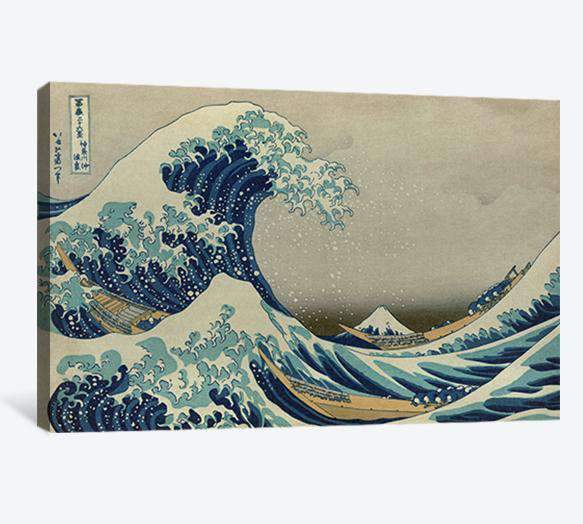
THE GREAT WAVE OF KANEGAWA

                  A huge, blue wave rears up,

                  arches its back,

                  claws at the sky,

                  crests— and freezes!

                  Time stops in that last instant

                  before cataclysmic crash…

                  Framed by the great wave,

                  Mt. Fuji poses:

                  afar,  aloof,  eternal…

                  This snow-capped cone has seen

                  waves come and go,

                  oarsmen come and go,

                  samurai come and go,

                  emperors come and go…

                  In Hokusai’s time,

                  Japan’s shell was cracking open.

                  New ideas.  New neighbors.

                  Imports.  Exports.  Uncharted waters.

                  But even when promise lights up the horizon,

                  even when the odds are in your favor,

                  a sea of Prussian blue can sneak up…

                  Swell.   Rise.  Ambush the unwary.

                  Sink the best-laid plans.

                  Fuji watches with Olympian indifference.

                  Beneath the giant wave,

                  tiny men in a longboat row for their lives.

                  ants beneath a raised foot:

                  But the wave never crashes down.

                  Karma is stalled by pen and ink

                  on a woodblock print.

                  The oarsmen row forever

                  towards a safety forever out of reach.

                  This is the floating world:  ukiyo-e.

                     (Katsushika Hokusai (1760-1849) was a Japanese artist,

                     ukiyo-e painter, and printmaker.  His woodblock print

                     ”The Great Wave of Kanegawa” is from his series

                     Thirty-Six Views of Mr. Fuji.)

© 3/2019  Patricia Doyne