
To Create

by R. Grosvenor

I know that she is near to the End
Each word that comes from her mouth is Sorrow
But when I mention Pride
She is Still
I beg of her, Rise
Be brave, and Create

Her response is not refusal outright, but she repels the plea Create
I draw her, pull her, away from the End
Drag her to her feet and speak the word, Rise
But, the cupboard is empty to her Sorrow
Together, we are Still
 We watch that beast, Pride

Each beat of Pride
Must be a pleasure, impossible for I to Create
My own beat is Still
It had not begun, so there could be no End
I will not be overcome with Sorrow
It is in my nature to Rise

The others around us do it every day, they Rise
They have no issues with who they are, they have filled themselves with Pride
But, they would not tell if they felt Sorrow
It is easy to Create
Not so easy to agree, that this is the End
Easier to pretend, to be Still

I tried to be religious once, I prayed and I sat Still
I agreed with the crowds that someone might Rise
That the earth really could End
But there was too much Pride
Belief and faith were not a part of what I could Create
I believe in myself and Sorrow

If I spent each day as I liked, perhaps I would feel no Sorrow
I could be Still
I could do nothing but Create
I would Rise
My self would be only Pride
My creativity would not have to End

The words are synonymous with each other, Rise and have Pride
Create and be Still
Realise your End and find Sorrow
Category Archives: CHAOS
Poetry from J.K. Durick
Visible Man
I’ve been CAT Scanned, MRI’d, ultra-sounded,
x ray’d here and x ray’d there, lab-tested and
examined till I’ve become the new visible man,
a new video game they’ve played on all their
screens, winners and losers alike adjusting this
prescribing that. I’m the visible man pictured
more for his insides than the out, the subject
of tests and reports, the much prescribed for
victim of our times and the woes of getting old.
I’m the visible man hiding at home waiting for
the next call, the email suggesting another
change in medicine or dosage or both or yet
another test or way of viewing the inner me,
the inner me I tried to hide away, but I have
become the visible man and they are all viewing
waiting to stake another claim, another diagnosis,
another bit of invisibility to expose.


                    On Mornings Like This


There are mornings, like today, when getting out of bed
is a task, a trial, something I would avoid if I could. On
mornings like this I stay under covers, on my side, on my
back, properly pillowed, secure and then I begin to think
about the day to come, I remember all the other days, so
many now, days that were frustrating, even frightening,
other days that hurt, days when I was happy, I was sad.
These memories hold me there, where it seems I almost
have a choice – begin again and let the day come to me,
let it be whatever it will be, or just stay there and let to-
day go on without me, like the elderly recluse I sometimes
imagine I am, bedridden, beyond caring what the day will
bring. It’s like the old one about doing the same thing over
and over and expecting different results – the insanity of
the thing, this getting up expecting something different,
something unexpected. My saner self just stays there, lays
there for a while weighing the possibilities, then he’s up
moving, starts up, feet on the floor, stumbles a bit, and then
sets out on yet another day.


                           Organ Recital
Today it’s my right elbow, feels like my left knee felt
yesterday, pain I can’t shake out today, couldn’t walk
off yesterday. It works like that, mobile, always ready
to relocate. It’s like my body comes up with a new dis-
traction each day; one day it’s my back, my shoulder
my neck, it stays long enough to slow me down, stays
long enough to make an impression but then it moves
on. It’s part of aging I’m sure. I remember as kids my
sister Liz and I used to joke about our old relatives and
called the first part of their/our visits ‘the organ recital.’
They would describe each pain in great detail, locate it
for us and compare it to other pains they knew we needed
to know about. On the way home or after they left we’d
imitate them, voice and all, and have a good laugh. Now
when Liz and I get to talk, by phone these days, we begin
with an inventory of aches and pains, this condition and
that. We get the irony, even call it by the name our joke
used, our organ recital. Today it’s my right elbow and I
feel like someone’s aging relative, feel like mentioning it
to anyone who would listen, knowing they need to know.


J. K. Durick is a retired writing teacher and online writing tutor. His recent poems have appeared in Literary Yard, Vox Poetica, Synchronized Chaos, Madswirl, Pendemic, and Eskimo Pie.
Poetry from Mark Murphy
The Involuntary Side of Living
No! A woman is not property. A woman is a human being.
And as such, she cannot be held by anyone! [1]
1
Eleanor, you must wake up before the past cheats us
and the sand runs out
on your chloroform dreams.
The end of the world is only a stone throw away
and already we are lost
in the bloodline of kings.
No use to repudiate sorrow, or nuance of suspicion
the past is always within us
like the creation of the night.
The most human part of who we are is in the wood
and nails of our undoing –
thanks-given and mercy shown
beyond the sea of bones like shadows orbiting a star
or waves breaking in the open sea.
2
Eleanor, can you hear us through the fog of anesthesia?
Are you still dreaming
the dream other people dream?
We do not speak of what is yours, we speak with our tears
of what’s already dead –
the lover within bargaining
with the lover without,
suspending all sense of disbelief to keep the lid on the broth.
Do not give thought to the hand and glove of your despair.
We shall not speak his name
here anymore.
We speak with our fists of the Cause you fought all your life.
The only question that lingers
is uncertainty
in the unforgiving air.
The rain has become a deluge. The dialectic but a ghost.
The proletariat all but fiction.
3
Eleanor, Eleanor… Get off your knees. The most human part
of who we are is locked
in what we do for others
between your father’s shadow – and your mother’s utter devotion
to everything but herself.
We know that the bit part
was never enough, but the silence you kept cannot save you
or your father’s memory
from phony biographers
and ill-tempered footnotes.
Here’s the room with all your prayers. Open the door and you
will find us waiting
like an expectant lover
compelled by the music of struggle in your eyes, swallows
emerging from your breasts –
waiting as if you had never left.
Au Courant
The sexual embrace can only be compared
with music and with prayer. –
Havelock Ellis
She might’ve said, ‘choose your pleasure well,
the world is a dance of scarves,
a one-way ticket
into the twilight –
a sexual field day for the mind
where the midnight carousel seesaws to the music
of love.’
*
He might’ve said in his seductive French accent,
‘choose between titillate
and intoxicate
and say goodbye
to loneliness, for tonight
our bodies will taste the secrets of our undoing.’
*
And with that man and woman fell together –
complicit in sensation
and cognition
like a blushing amaryllis,
more animated with every kiss,
every thrust of the hip, until bond and bondage
to the soul of each – grounded each in the roar
of rapture.
Ozymandias
The night is running out of hours
to hide in
as the sober mind sifts the dust
thrown up by high desert winds.
And though desolation
and dust is not the whole story
of how we found you –
love alone does not break a heart
nor presume guilt where none is needed.
Once upon a time there was a king
so silly so grand –
we might hardly know he existed
save the mocking hand.
Once upon a time the days
were enemies
conferring misery upon the sands.
Now the sober mind confers poise –
proof of love in place of ruination.
The stars in her eyes betray nothing
of her fascination with Edward
Nonetheless even C19 women
are drawn to sedition and seduction
The forbidden fruit of bourgeois life
as if we needed reminding
What can be said to the errant dreamer
mooning at the munificent wit
Hard to dismiss the gifted orator
The roaring voice of the euphonium
Hard for any man to cry into his cups
Still we look on in disbelief
shrugging our shoulders
and scratching our collective head
Glory O, Glory O, to the bold Fenian men.
Peadar Ó Cearnaígh
i
Always one for the under-dog
our little gymnast
enthuses
with her new-found
affectation, her lionhearted
sympathies
for the Irish cause
despite the ragging from her father.
ii
One cannot help but weep
merciful tears
at the conspicuous injustices
endured by the Manchester Martyrs
at the hands
of the English law courts.
iii
So thought Tussy Marx,
‘the Poor-Neglected-Nation’
as she was now
sardonically called –
tumbling and leaping her way
into adolescence.
Not yet fourteen but already
a trenchant Fenian,
devotee of the Irishman
chanting rebel songs
as if invoking Home Rule
between her acrobatics
and swinging on the garden swing,
she now signs off
her letters to Lizzy Burns
(her devoted auntie and new love
of the General) as ‘Eleanor, F. S.’ [2]
iv
Suffice it to say, cartwheeling,
handstands, headstands
and forward rolling
were always more up Tussy’s street
than the upright
deportment and decorum expected
of the gypsy-spirited girl
at her South Hampstead College
for young ladies. A school
to which she never returned after
the abortive revolt of ‘67
and her very real Fenian awakening.
[1] From the play: Miss Marx: The Involuntary Side Effect of Living by Philip Dawkins
[2] F. S. = Fenian Sister
Mark A. Murphy is the editor of online journal, POETiCA REViEW. His poetry has appeared in over 250 magazines in print and online. He is the author of 6 full-length collections including The Ontological Constant due out in June, 2020 in a bi-lingual German/English edition from Moloko Print in Germany.
Synchronized Chaos July 2020: We Are But Leaves in the Wind
Welcome to July 2020’s issue of Synchronized Chaos International Magazine. For those new to how we work, each month we accept a wide variety of submissions of written and visual pieces from around the world and then we develop our monthly theme around the submissions we have received. We tie the submissions together and mention each of them in our editorial letters.
This month’s theme is Just Leaves in the Wind. As with leaves on a tree, we all exist within the context of larger frameworks. We are all part of human society, human history and the natural world, systems which influence us and over which we often lack control.

Spanish writer Daniel DeCulla brings medieval Western history, our lofty discoveries and our human ego down to earth with his vulgar meditation on astronomy and asteroids.
Mark Murphy, from the UK, underscores our vulnerability through the sense of danger hidden within the fantastical historically-inspired mythos of his poems.
Sheryl Bize-Boutte illustrates the moral and psychological dilemmas racial discrimination and segregation caused for many families, and probes the ethics of ‘passing’ to give a young child a better education.
Ike Boat’s essay outlines the many positive and negative changes that have happened because of coronavirus in his homeland of Ghana.
American writer Christopher Bernard evokes medieval religious ceremonies, tapestries and dances in his pieces on deaths from coronavirus and racial injustice. To him, we may or may not have evolved in our humanity since those days.
Yet, each leaf on a tree plays a role harvesting food for the entire plant. While we only have so much power as individuals, we do have a part to play in our communities, and in history.
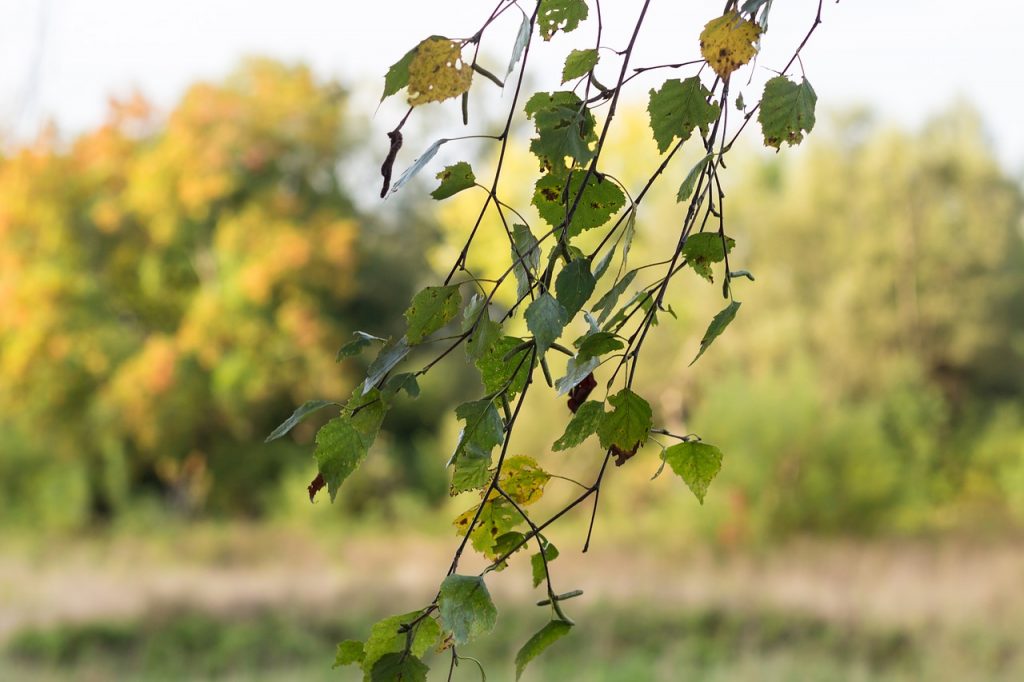
U.S. writer Luis Cuauhtemoc Berriozabal’s poems evoke implacable natural forces: romantic passion, fire, and wind. Still, within the same collection is a piece protesting police brutality, speaking up where he can against injustice.
American artist Patricia Doyne’s pieces illustrate individuals within larger communities and swathes of space and time. They are not entirely powerless, as they choose to wear masks to slow the spread of coronavirus in one piece and, in the other, poke their heads up from under the historical record.
Returning American author and oil painter Norman J. Olson reflects on the work and the closeness to the land he experienced growing up on a struggling Midwestern dairy farm.
Tree rings provide a record of each year’s climate and growing conditions. Trees retain a record of their pasts. Their history stays with them even while they continue to grow. In the same way we’re all part of human history, and we’ve all got pasts, whether personal or societal, that shape us as we move forward.

Doug Hawley reflects on his Portland State college basketball team in a nostalgic piece, remembering the mixture of diversity and uniformity among the group.
Rui Carvalho, poet and artist in Portugal, misses his grandmother in his short poem.
American writer J.J. Campbell’s poetic characters’ worlds are stacked against them, but they hope and try things over again, even when they know they’ll end badly.
Bogdan Dragos, a security guard for casinos in Romania, portrays people trapped in their lives by varying addictions and circumstances.
Returning South African essayist Abigail George describes the lingering effects of growing up with her abusive mother in her call to parents to be less self-involved and more caring, and to people to choose to make something of their lives.
Vegetation, even small leaves, can become fossilized as a record for future generations. Sometimes just simply writing down what we see around us can be crucial, as we become a primary source for historians of the future who may find our work when they research our time and help people understand and learn from it.
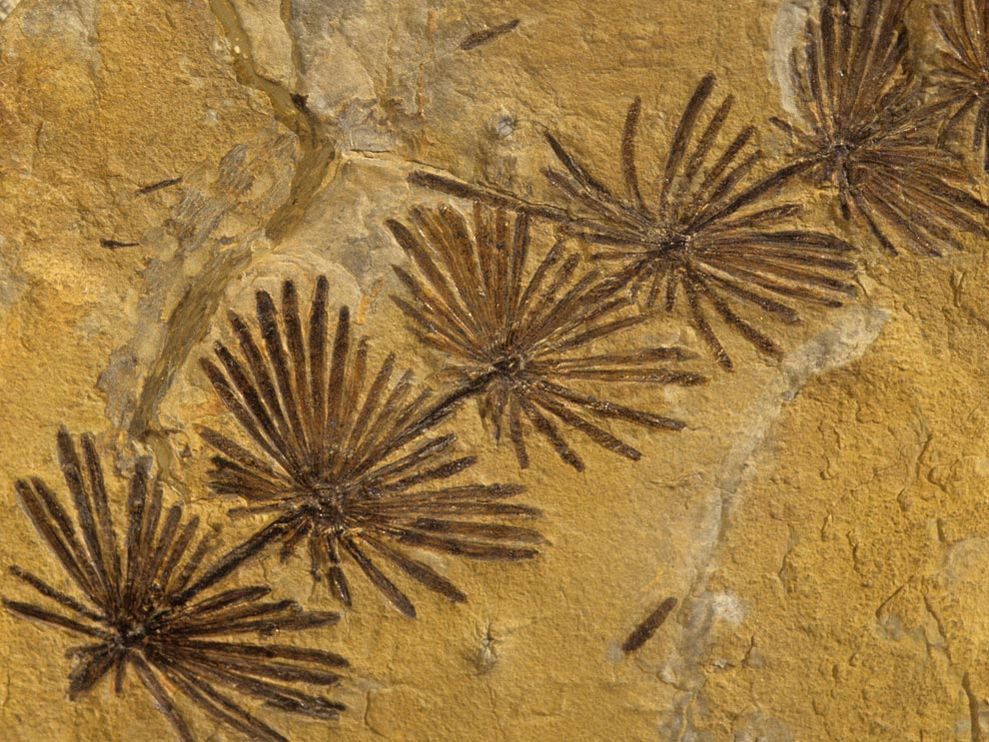
Nigerian writer Chimezie Ihekuna outlines the beginning of his journey as a poet, novelist, sci-fi writer, and essayist.
World traveler Kiran Bhat, currently living in Australia, reviews Behrooz Boochani’s memoir No Friend But the Mountains, which relates Boochani’s story of statelessness as a Kurd fleeing persecution to find himself in immigration detention in Papua New Guinea. The memoir records the sights, sounds, smells and other daily discomforts of the detention center as well as the psychological strain of endless waiting.
Michael Robinson shares his personal memories of the 1968 Washington D.C. riots in an essay illustrated by news photos and links. We see the long shadow of a past of racism and violence, history continuing and repeating itself once again with recent unrest in large American cities.
Nigerian writer Olatomiwa Aina’s poem illustrates how past wrongdoing, especially by societal leaders, can carry over to the present.
Chinese poet Hongri Yuan’s Platinum City, translated from Mandarin to English by Manu Mangattu, looks to mythical past eras for inspiration to build a more welcoming, inclusive civilization today.
American reviewer Elizabeth Hughes discusses Zlaikha Y. Samad and L’Mere Younossi’s visionary fiction title The Unseen Blossom in her Book Periscope column. Afghanistan may be an arid, war-torn country but has life, energy, and hope for peace and unity, especially from the young.
Love, creativity and moments of beauty keep us going. As fragile leaves waving in the wind, these are our ways of staying attached to our ‘trees’ and not getting blown away.
Returning Bangladeshi poet Mahbub brings us pieces that explore the mixture of familiarity and freshness in love. The choice of words in this translation of his work is unusual, but also an invitation to consider the shades of meaning of each word and thus the many aspects of a healthy and growing relationship.
Poet Mark Young, a New Zealander who’s lived for quite some time in Australia, sends us pieces are built around news headlines and quotes from famous people. The first couple pieces comment on the irony of certain dichotomies in human life and in our culture.
Canadian poet Ahmad Al-Khatat, originally from Iraq, writes of the soul-weariness of depression and how he longs to escape by being near a loved one. There’s sadness even in love, though, as he compares that to finding a flower growing near a cemetery.
Syrian poet Susie Gharib shares small moments of sensory and relational beauty: rushing water on bare feet, long-awaited apologies, and forgiveness. Other pieces reflect on what drives lovers apart behind the small matters we think are annoying us, and point out how hoarding power or wealth at the expense of others will end up harming us.
We hope that this issue will bring fresh sunlight, air, water, and healthy soil to your souls and minds and help you to grow.
Story from Doug Hawley
Behind The Undefeated Portland State College Bowl Team
On January 31, 1965 The Portland State College Bowl team went to New York to compete. The GE College Bowl, which started on radio in 1959 and ran until 1970, featured four member teams from colleges across the country. The team captain was Jim Westwood and the other members were Larry Smith, Mike Smith and Robin Freeman. The fiftieth anniversary approaches.
I believe that it was months before the Portland Team went on its record setting undefeated run that I got involved. It may have been because my roommate, Mike Smith, became involved and later made the team.
A bit of context may help. Colleges were involved in cultural upheaval at that time because of the Viet Nam war (for those who don’t know, The Bay Of Tonkin was the 1960s Weapons of Mass Destruction) and the increasing use of drugs (yes I did inhale – legalize it). Of the sex, drugs and rock and roll popular at the time, I was mostly stuck with rock and roll. Portland State was largely four buildings and students mostly either drove from their parents’ homes or lived in run down apartments close to campus. I started at home and later moved to a series of hovels. The gag then was your apartment would be torn down for: Choose one – I-405, Portland State or urban renewal. At the time of the training for the team Mike and I lived in a building run by an old couple within a block of PSC. I think that three lived on the second floor; the couple lived on the ground floor, and as the last one in I got the dungeon in the basement. Chasing the mice at night was entertaining. In those days a bunch of guys would split about $100 in rent. I suppose that it is more expensive now.
Besides Mike, I hung out with the pretend Smith brother Larry. Mike at least appeared straight laced, sort of a Buddy Holly type, whereas Larry was totally camp and bitchy. He was as flaming as his orange hair. An aside – one of the most important learning experiences at Portland State was losing my high school inculcated bias against the sexually different. I didn’t know Robin Freeman too well, but he did hang out with the same underground group that I knew, and was funny and sophisticated. His father was an international banker, I believe. I have never gotten to know the token Republican Jim Westwood well. I didn’t hang out with any of the other alternates at the time.
I was amused by an older guy from Vancouver being excluded because he didn’t fit the image of a college student. Robin, in his twenties, was bald and had a perpetual five o’clock shadow. He looked twenty years older than the guy who was kicked out.
There are at least three reasons that the Portland State team was so successful. Obviously, the team members were well chosen. Because of the strange way teams were queued for their appearance, we had a very long time for training between the time that we were chosen to compete and the time that we went on the air. Possibly most important, was the coach Ben Padrow. He turned the team into a machine.
There was a woman who was friends with a couple of the team members. I have it on good authority that she is still attractive and lives in the area. I’d like to hear from her.
Mr. Padrow was portrayed in the 2007 obscure movie “Music Within” – in which he is played by actor Hector Elizondo – who helps a Viet Nam era vet with hearing problems incurred during the war. It got a fairly high 7.3 on the movie website IMDB. Like so many on the team Mr. Padrow died early.
To over generalize, the team was split 3 to 1 on the cultural and political divide, with Jim being the 1, but I don’t think that there were any personal conflicts. For the last contest, I had been scheduled for flying to New York with the team as the alternate, but Mr. Padrow and perhaps some others thought that a stronger alternate was needed because of the possibility that Mike might not be able to go on. One of the more gratifying moments of my life was when my friends on the team held out for me going.
Flying to New York was my first commercial flight, although when I was very young, I got very sick in a small plane. Ironically, it was one of the accompanying faculty that used up the barf bag on our flight. Once there, we saw the play “Incident At Vichy” by Arthur Miller. Mostly what I remember about it is that you didn’t want to be circumcised in Nazi territory. As a very unsophisticated fellow I was intimidated by the subway and walking around New York in general.
I was present at the run through before the program. I was surprised that the host, Robert Earle, smoked – Salems I think. He had replaced Allen Ludden who had moved to another show, and is mostly known now as the late husband of Betty White.
Much to everyone’s delight, Mike went on and Portland State finished undefeated.
After I graduated in 1965, the only team members I saw were Mike Smith and Jim Westwood. When I visited the campus a year later I ran into Mike. I had never known how serious his illness was. I had thought that cystic fibrosis was similar to asthma and just limited one’s activities. He died shortly thereafter. After I moved back to the Portland area in 1997, I had a College Bowl reunion party with Jim and alternates Al Kotz and Marv Foust.
Larry Smith died as I was trying to get in touch with him.
I emailed Jim after I saw that he was a lawyer in a case in which he wanted to limit sex shows. His reply contained the only reference to “pudenda” that I have ever seen or heard in a written or spoken conversation.
Al, Marv and I make up the Lake Oswego Three alternates on the team. Various sources list different alternates to the team, but other than Al and Marv I’ve had no contact with the others in about fifty years. It is somewhat interesting and different that the Portland team and alternates were made up of a bunch of white guys, unlike most of the teams. We did have sexual orientation diversity.
After our run was complete Governor and Mrs. Hatfield hosted us in Salem. The lucky alternates got to sit with Antoinette, who was much better company than Mark because she didn’t have to be political.
Many, many years later after knocking around the country, I returned to the Portland area and volunteered at Booktique, a non-profit bookstore in Lake Oswego which supports the Lake Oswego library. Mr. Hatfield came into shop from time to time. One time I asked him if the remembered the celebration in Salem. His response was that I had gone gray. I told him he had also. I’m reasonably certain he had no idea who I was, but decided I probably wasn’t gray in college, so it was a safe comment.
As a former actuary, I’m intrigued that the somewhat smart live longer than the very smart. At least based on a very small sample of which only one team members survives, but at least three alternates are above the ground (as this is written).
Although not a team member, my involvement in the GE College Bowl was one of the highlights of my life.
Thanks to Alan Kotz and Jim Westwood for reviewing this article. Want to know more? Do an internet search on “GE College Bowl Portland State College”.
Appeared in Wilderness House
Poetry from Bogdan Dragos
 a distracted dreamer


 what else to do when
 the rain falls so heavy
 against the window
 outside?

 Get melancholic
 get poetic
 have a drink
 have another

 close and then lock the door
 to your room
 and don't listen to
 the voices coming
 from outside
 They want to distract you
 They don't want you
 to be successful
 and make it in
 life

 They're all haters

 He covered his ears
 and squinted his eyes at the
 computer screen
 doing his best to block out
 the negativity that came
 from beyond the door

 “I can't get up!” the voice
 croaked. “Come help me. I can't
 get up.” And then with
 a cry, “Please!”

 “Shut the fuck up, grandma!
 I'm trying to
 write in here. Jesus Christ, I'm
 trying to make
 it big, don't you understand?
 For fuck's sake now.”

 He had also sent a manuscript
 to a potential
 publisher and was waiting for
 a reply. It's been
 two days already.

 peace was never an option


 there have been
 too many fights lately

 she was a
 musician
 and she put it as,
 “Darling, we need to change
 the tune.”

 He was a
 writer
 and he shot her

 and then himself

 king who would go down with honor


 he had no shoes
 and you could hardly call
 his shirt a shirt
 but he
 sat between those two
 trash cans like some king
 on his throne

 holding to a stick
 like a scepter

 He drank from an old
 rusty can of
 beans
 but held it like some golden
 goblet

 Clearly he lost the
 ability to
 taste because in the can
 he mixed all he could
 find in the trash

 Beer with vodka
 with tequila with wine
 and acetone
 and rubbing alcohol

 He had a fearsome guardian
 about him
 A white dog who constantly
 licked his vomit from
 the ground

 It looked black
 and spongy
 like coffee grounds

 Some passersby offered to help him
 and he refused

 This was a king who
 would go down with honor
 after he lost
 his kingdom

 to choose the bottle


 there are many reasons a woman
 can say her final
 goodbye to you

 and somehow they
 all feel
 different

 He supposed the worst of all
 had to be when
 her final goodbye is
 influenced by another man

 made sense

 but that wasn't his case
 Also he was too drunk
 to think
 straight now. And in too much
 pain.

 “It's the final goodbye,” she had
 said. “You chose the bottle
 over me, now live
 with the bottle. Goodbye.”

 Goddammit, this
 really hurt
 His dick was only getting harder
 and more blue
 stuck in the mouth
 of the bottle

 Yet still, through all the
 pain and the
 dizziness he reached for the
 phone and called her.
 He said, “Hey, I just want you
 to know that... It was
 you I had in mind when I did it.
 I did it while thinking
 of you, love.”

 She hung up.

 the female assassin


 the ashtray was looking more
 and more
 like a sick hedgehog

 and her yellowed fingers
 added one more quill to it

 she sat back in her chair

 work wasn't in the best of stages lately and
 her office looked like a junkie's
 trailer. You could
 scrape the nicotine
 off the walls. In fact, she
 would get nicotine under her nails if she
 just scratched her skin
 anywhere

 But otherwise she was
 a beauty
 and that was a problem. Beautiful
 women have the worst
 luck in marriages

 The husband left and the two girls went
 with him
 They were sick and tired of her
 habit to consume more cigarette smoke than
 oxygen

 And drinking was also a problem
 though not nearly
 as big

 The worst drinking has ever done to her
 was to make her lose
 the driving license which she never
 bothered to take back

 The real problem was,
 as always,
 a lack of money. If the damn phone didn't
 ring soon
 she would have to kill someone
 for a pack of cigarettes

 Assuming she could still
 kill
 someone with her body rotting from the
 inside. She was fine with
 breast cancer
 but now lung cancer joined too
 and it was by far nastier

 Still
 that was all right
 It doesn't take a healthy body to pull
 a trigger

 And speaking of triggers
 She opened a drawer in her desk
 took out the gun
 studied it

 Not loaded

 She browsed through the drawer

 Only one bullet left. One single bullet.
 These things cost money
 too

 Damn it

 But it's like they said back in
 the mercenary camp
 The last bullet is always preserved to be
 used on the self

 She loaded the bullet into the
 gun

 A life lived well is one
 lived without regrets and without
 ever asking for mercy
 or feeling sorry for yourself

 At 39
 she had that. There was nothing
 else to be taken
 away from it

 She put the gun to her
 temple

 Smiled

 "Except for a final smoke."
Bogdan Dragos works as a dispatcher for a Romanian gambling company (supervising casinos) and that implies spending twelve hours alone in the office (where he daydreams and writes poetry that he e-mails to himself).
Poetry from Rui Carvalho
My
life is a tape recorder
Someone pressed “stop”
And I can’t hear my melody.
Or she’s there,
“Play” will bring her back.
A Phenomenal wispper…
Was there, as the sun of my smile.
As the blowing wind…
I love you: grandmother hug me!
Yes, hug me asap.
Cause I can’t wait,
Flower so blithe,
as the blue in your tall mountain!
Yes, I love you: this is me without a mask!