
Essay from Christopher Bernard


Hope and Catastrophe: Catastrophe


By Christopher Bernard


Report to the Presidium

(The Council of Seven sit in the Presidium Chamber beneath screens grayed with interstellar static as they await the long delayed report from a distant arm of the galaxy.


(After what seems an interminable interval, but is a mere three minims after the transmission’s announcement, the screens abruptly clear, displaying the grave figure of a captain of the galactic fleet, who speaks.)


Honored Members of the Leadership Council:


Greetings to you and to all on Gondwana from myself and the crew of the Esperance from the high darkness of deep space.


Our communication devices being damaged in descent, only now am I able to report our initial findings on the exoplanet named 472-03 in the Constellation Attar, which circles our northern pole, “like a protecting hand,” in the words of the late astronomer Elizaveta Petrador.


As you know, two annos before we left Gondwana, we had received from Astral System Y472 a manifold of radio signals suggesting a world in deep distress. The source was narrowed to Planet 03 within the system, and we set out on a journey to give aid where we could, and otherwise explore this unknown and exotic world. As reported earlier, half way through our journey we were unable to capture further signals from the planet.


Imagine our wonder when we realized, as we drew near, that we had found a sister planet of Gondwana, as has often been theorized that each sun, each planet, each galaxy has, as it were, siblings, even twins, elsewhere in the universe.


Like our own, most of this planet’s surface is covered with an azure coating of water that gleamed with a beautiful and welcoming sheen as our ship approached. Great landmasses cover the planet. Swirls of whiteness move across its surface like protecting wings. Rarely have I seen a planet of such shining beauty – possibly even more than our own. At first sight, no planet in our galaxy has seemed better suited for life; a paradise in the wastes of space.


And yet there is almost no life here—at first we found only algae and plankton in its waters, traces of microbial life in the soil and of dead spores in its atmosphere. On further exploration, however, we discovered that until recently a broad variety of species thrived; indeed, unlike our own planet, where life sometimes hangs by a thread, this planet teemed with life.


But now across its landmasses spread immense deserts populated by brush and small half-starved creatures among barren rocks and blinding salt flats. Under plains of parched soil, we discovered the remains of once-great forests, plains of dead vegetation, and a vast number of creatures of land, air and sea, in massed crowds, huddling together for comfort against some great catastrophe.


We will report again when we understand more. For the time being, we must be cautious, as we may be vulnerable to the same thing that brought a terrible end to so much life here—an extreme pandemic, for example, or a volcanic extrusion of nuclear core. Considering that we—


(The screen image begins shaking violently and the transmission abruptly terminates, and the Council of Seven are left in anxiety and darkness. After they spread word to the people of Gondwana, three long semanas pass without any word from the expedition.


(Then, near sunset on the tenth of Fructidor, a second transmission is received by the impatient members of the Council. Again the captain appears, eyes heavy from lack of sleep, and resumes in a subdued voice.)


My apologies for the interruption and the lengthy interval before resuming. We were struck without warning by a violent storm, twisters crossing us like gigantic whirling warlocks, destroying much of our encampment, which had to be moved and rebuilt in an unexposed valley. A team of our bravest explorers perished. But our determination to wrest the secret of this ill-fated world has only deepened.


We have made an extraordinary discovery, more baffling than anything we have yet seen: the ruins of a mighty civilization—vast cities, with, between them, thousands of miles of connecting transportation links made of molded stone, endless complexes of highways and bridges, and great ports for water ships and sky boats—yet all vacant and silent, covered in glittering shattered glass, open to the wind and covered with heaping piles of sand and dust.


On exploring further, we found its inhabitants: the bones of males and females old and young, and children. Most huddled in smaller, separate buildings, no doubt their homes, where they had, it seems, starved to death. In the cities we found remains of terrible battles, with streets and immensely tall buildings littered with the remains of similar creatures, many still holding weapons, and sometimes hugging each other, in their skeletal arms.


We had arrived on the planet at a place of winter, but the air was warm as summer. The atmospheric conditions seem unbalanced; no white patches signaling ice caps appear at the poles, though we expected such from our researches.


We are still seeking the reason for the catastrophe, still anxious that we too may be affected. We move constantly, pursuing our explorations without rest. This planet asks a question we must find an answer to; I have a nagging conviction the survival of our own world may depend upon it. Our batteries having been damaged, we can transmit only when the sun is above the horizon. It is now setting. . .


(The transmission flickers out even while the captain is speaking, and two monats pass without further communication. The Council of Seven wait and watch, day in, day out.


(Then one day a transmission connects then immediately fades. Only after several tries does the captain’s face, haggard, exhausted, worn, appear once again out of the electronic haze.)


We are nearing the end of our supplies here, and must soon prepare to leave for our long journey home. But at last we can report success, if that is the appropriate word. We believe we have finally found the cause of this great planetary, indeed galactic, tragedy.


We had suspected massive volcanic activity or giant tectonic shifts, perhaps even an asteroid collision, causing the planetary surface to turn into a vast stove. Then we began translating and studying the texts deteriorating in the civilization’s libraries.


We discovered that this civilization, wealthy but harsh, powerful but brutal, rose over several hundreds of the planet’s orbits, spreading to the four corners of its globe, imposing its way of life on subgroups, laying waste to other species and crushing everything in its path.


It ran its mighty engines of riches and power on the remains left behind by millions of years of previous life, transforming it into energy by turning it into fire. This released wastes the life sphere could not absorb and gradually raised the warmth of the atmosphere to insupportable levels.


All of this led to terrible wars, to suicidal damage to the home that protected them, to massacres and monstrous crimes between the desperate creatures over resources that were ever dwindling.


Members even realized what they were doing—and yet, despite warnings from those who understood the danger and ways to avert it, they would not stop.


Until, that is, it destroyed them, and most of life.


(The captain pauses, staring expressionlessly from the screens.)


How and why did this intelligent, talented, even brilliant species deliberately destroy itself and, more cruelly and more unjustifiably, kill so many other life forms along with it? Was it mad? Or did it suffer from a flaw so tragically deep that it had no choice but to lead itself eventually to destruction?


Or does there indeed exist such a thing as evil in the universe?


It is one thing for a species to become extinct as the result of uncontrollable natural processes, but to have done so deliberately, knowingly and willingly shows a depth of unfathomable evil, or of equally unfathomable folly, that we can only hope the galaxy will not see again.


The tragedy of this, our sister planet will give us much to ponder in years to come. Life, of course, continues, even here, although in tragically reduced circumstances. Nature will have another chance to create here an intelligent species. She has succeeded elsewhere, though perhaps we should not gloat in the happiness Gondwana has found, or be complacent about our success. In fact, I believe we should take this as a salutary warning for our own sometimes over-confident species. Thus, we recommend preserving this world as a warning of the hubris of a species that presumptuously called itself “the knower,” and is now merely a closed chapter in the immensely long history of life on a planet they called the Earth.


Submitted respectfully by Fedra Kremens, captain of the Esperance, Mission to Planet Y472-03 in the Constellation Attar.


(The captain raises a hand to switch off the transmission. The members of the Council are silent for a long time as the screens again go gray with static.)


_____


Christopher Bernard’s new novel, Meditations on Love and Catastrophe at The Liars’ Café will appear later this year. He is co-editor of the webzine Caveat Lector.



Poetry from Mark Young

technological innovation


The southwest corner of Stanley

Street East may be a result of

natural causes or possibly

engineered by a spiral laser

beam. Human happiness is so

elusive, which is why composting

bins are available for download

in PDF-format. It’s very easy &


tempting for a horse to lean on

the bit if they want to go slower.

There could be a series set a-

round it, or a gym that preached

sermons on each rep. People suck,

passive aggressive all day long.


Each bowl


The container is double-layered.

How much time should be allowed

for it to fester can often be deduced

from the interplay between the two

materials. Soon we will be offering

small pieces of really old ships. Let’s

see if that does the trick. We have relo-

cated to a place just outside the village,


hoping we can find a cheap place to

rent, away from the nightclubs but

still have close by everything needed

to guarantee a continuous source of

entertainment. The evenings are

often given over to passion & prayer.


Leaving behind your familiar house


Winter on the mainland can

be an enormously stressful

time. Antelopes stand on their

hind legs to reach the acacia

leaves, hoping to break the Yin

or Yang down into its essential

five elements. Freud hid his work

from Jung at first, considered it


a difficult & painful topic, some-

thing he wasn’t comfortable

talking about to his mother. In-

stead offered up a compilation

of therapy tips & techniques

gleaned from 17 years training.


Even if they segue into


A downside of having pro-

fessional tuition is that no one

really needs it unless they’re al-

ready totally screwed. I have

documented my life, embellished

it, added enough physical activity

for it to be presented as an alter-

native soundtrack for the darkest


political mystery. Have also sought

out constructs that are not in com-

mon use or constrained by webdate.

Odd tools. The occasional random

phrase. The stains were cleaned up

very quickly. No ransom was paid.


Mark Young’s most recent book is The perfume of the abyss, from Moria Books, the fourth standalone collection in his — so far — 400-poem Series Magritte.

Poetry from J.J. Campbell

Author J.J. Campbell

Author J.J. Campbell

J.J. Campbell (1976 – ?) was raised by wolves yet still managed to graduate high school with honors. He’s been widely published over the years, most recently at Duane’s Poetree, The Rye Whiskey Review, Mad Swirl, The Beatnik Cowboy and Cajun Mutt Press. You can find him most days on his mildly entertaining blog, evil delights. (https://evildelights.blogspot.com)
——————————————————————————————————
louder and louder
the few
friends
i do have
are worried
that my end
could be near
i think they
have noticed
when the
chatter about
suicide gets
louder and
louder
the demons
are starting
to win the
war
———————————————————————————-
a good night of sleep
i probably haven’t
had a good night
of sleep in over
twenty years
and people can’t
understand why
i don’t mind the
thought of death
——————————————————————————
light jazz
my mother asked for
light jazz as the music
for her MRI today
yet another sign that
she’s slowly going
insane
————————————————————————————
a darkening planet
fifty dead
out of fear
as a white
man
i laugh at
anyone
who fears
a darkening
planet
they obviously
are comfortable
with their history
of course, i knew
i needed to learn
the real history
not the bullshit
they teach in
school
——————————————————————————–
an old pair of shoes
i don’t mind being
lonely
it’s as comfortable
as an old pair of
shoes by now
it’s when a beautiful
woman shows interest
that i start to ponder
the thought of change
thankfully, they are
usually guys from
africa hoping for
a payday
so, the thoughts
never last long
————————————————————————————–
J.J. Campbell
51 Urban Ln.
Brookville, OH 45309-9277

Poetry from Gloria Lopez

PURIFIED

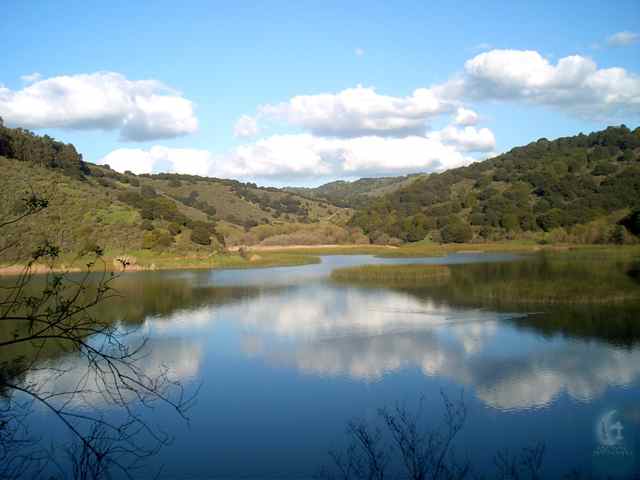
Lake Chabot, Castro Valley, California

I took a walk around the winding path of Lake Chabot,
and all at once, I left myself behind and found myself.
My skin soaked the sun’s warmth
as easily as the mountains were expelling excess water,
as easily as it found comfort in the shadows of the trees.
I walked in the silence of chirping birds,
the serenade of mating ducks,
and the lullaby of buzzing insects.
The roaring echo of distant streams came and went
as it washed every thought out of my mind
and the taste of fresh shrubs replaced them.
I witnessed the wind making love to the treetops,
in fundamental harmony,
as the lake’s water rippled in envy
and the soft, white clouds caressed the sky.
I inhaled the dampness of the fertile earth
until my lungs had had their fill,
and my soul had been purified, breath by breath.
I surrendered completely to the beauty and the magic
that engulfed me in its wake,
until liberating, creative forces ran through my veins,
until photographic stills resembled living art,
and this writing wrapped itself around me.
I lavished in this power
until all the shattered pieces of my soul
came together in the serene, mending fire
and I saw myself whole,
reflected on the water.
©
Gloria E. Lopez

Poetry from Judith Borenin

From the Ashes


For over a week curious swellings converge

and disperse just beyond the scope of my


sight. My cat has seen them too – halting in

mid play – her golden eyes dissolving –


drowning in black pools.


Yesterday I stood beside the wharf assimilating

as much of the sea as I could without drowning.


Beside me – the scarlet remains of a small bird –

intestines strewn around it like some forgotten


sacrifice – hollow head wells of two black holes.

I refused to look away – steeling my veins to be


stoic in the face of such inevitable decay. On

the other side of the wharf a squalling gull


rode the rigid back of an unwilling mate with

a ruckus of white capped flapping wings.


This morning the fog enfolded the wharf with

a distant echo of wings. The little bird was gone.


Canoers – orange jacketed – in synchronized

strokes floated by – shoulders – fingers – oars –


oiled engines dipping in and out to stoke the sea.


Veins a honeycomb of absence – I sit beside

this window watching wildfire smoke and fog


descend like a hungry mouth. I wait here at

the bottom of this well – the cat curled – purring


on my chest. As I bury my cheek in soft black fur

a familiar fragrance lifts – almost solidifies – as if


she had just come from someone else’s arms –

absorbed their heat – its rekindled embers rising –


infused with the aroma of your hands.


Little Lives    

The eyes in the dark – the hands

that cling to steering wheels

like scarves wound around

throats caught in the spokes

of speeding tires.


Each little life passing –

cumulous – snug as a tourniquet.

Multitudes of voices – a choir

of laments sung in secret.


The groaning globe strains

to stay afloat on its axis.


It’s for the wounded I weep –

the cuts – the bruises running deep –

the pain that won’t relent – the cruel

voices that won’t

still or repent –

the lies that were invented to keep us

all afloat while we watch the honeycombed

procession of holes buzzing

in the bottom of the boat.


Every expectation slices

knife like within – the blood let

rejoices singing hymns with such

sweet acceptance as it blooms –

luminous and resigned

across our howling skins.


We were spewed into this world –

clawed out way out of pits a spade

could never comprehend. Paced

empty rooms – reclined and rose

up again – turned in twisted sheets

waiting for long and ravenous nights

to end.


With grifter hands the wind rakes by –

its stiff fingers slapping tree trunks –

an old jazz man strumming on fence posts.

What it shakes falls – what it takes crawls

the tattered skies – shuffles down like blue

notes on all the little lives.


Mirror Image


In the bus shelter beneath the thumb of sun –

weighted – pressed down – we wait – seated

reflections in the glass – for the bus to come.

Beside me sits a small bearded hill – soiled


clothes mud caked around him. With each

breath he takes a fetid aroma flumes. We

share hellos. I wrestle with the urge to wait

outside but I straighten my back and remain.


When the bus cuddles up to the curb I take

a seat and a deep breath inside next to a

dirty window and close my eyes. The next

stop a man who spends long nights inside


his clothes steps on and sits beside me as

his fragrance travels on taking a seat at

the back of the bus. Conversations nose

up and down the aisle as if thrust from a


vintage machine. A stray gnat settles in for

a nap on the lap of my white capris. I sweep

it away wedging gnat limbs deep beneath my

nail and on my pants a last breath of crushed


green. On worn blue seats we follow a seam –

stopping at well marked stops – propelled

by a familiar but distant driver who calls out

their names – treadles to start us all up again.


I could ride here forever – the world falling

away in folds like printed fabric – growing

fond of even this aroma of decay. Alone yet

not alone – a face fading in an eternal loop –


a vanishing reflection upon a glass pane.


Poetry from Joan Beebe


A  4TH OF JULY TRIBUTE

On this special day of celebration

We raise our flag in freedom once more

And watch parades with banners flying.

 Old soldiers are there too and some are crying.

But we go on with thankful praise,

Because we know the sacrifices made

Some will sing our anthem of old

Then thank our God as the day unfolds.

We love our country so as we look at the stars

On the red, white and blue

And say once again how lucky we are.

To live in this country so beautiful and fair

And we end our day with a special prayer.

We stand as a people diverse in many ways,

But we stand united together under our flag.

Because America embraces all who made

This country so grand and what it is today.

So may America, the land of the free and the brave

Be a symbol of peace to all people of the world

And our flag will stand proudly as the years unfold.


A FATHER’S LOVE

Joan Beebe (left) and fellow contributor Michael Robinson

I am watching a father lift his very handicapped daughter

From her her bed-like stroller.  This child looked to be around

9-10 years old.  She was extremely thin and her

Arms just flopped by her side as well as her legs.

The father cradled her head in his arms as she

Couldn’t hold it up by herself.  She was unable to

Talk as well.  But the gentleness of her father

Brought tears to my eyes.  He looked at her in

His arms and you could see the light of love

Being given to her.  Her large dark eyes looked

Back at him with the brightness of the stars
.
Every minute or two, the father bent over her

And kissed her.  It was as if the two were one
.
In the father’s look there was no one in the

World except for two human beings in their

Own world of love.

Poems from Mahbub

Mahbub, a Bangladeshi author and English teacher

The Victim of  Erosion

Dreams are floating on the river

Cries are pouring in the rain

It is the erosion of the river

Takes away the heart of the people

Transferred from this place to other

A place to the unknown

This is the land of rivers

All goes dry in the summer season

Have been filled with silt and sand

Go full to the brim in the rainy season

Water spread around

Devours the ground

Losing the land and property

Lament for lying in open sky

Not to find any food and shelter

Years after years this going on as usual

We are the only silent visitors

No step to remove the disaster

O dear, come and see the condition

How people pass their time in such miserable condition?

The sky calls to mingle with

Try to fly away with the wind

But they are to remain at the place

As the stagnant water

No way to pray for

Nor way to die for

No way to run for

Ah! What shows the life here?

Always cry out in silence.


The Days Gone By

I can reside on the glorious past

Those moments are not only the moments

Shows the light in my heart

It was the rainy season

The silence of time sweeps on the water

I caught the fishes from the ponds with the fishing lines

Oh how glittering blazed the light in my eyes

Rushed to my mother

How tasty cooked or dried!

I arranged the team at afternoon

Playing football, cricket or badminton

Came back home at the evening and took my bath

How fresh it was my mind and body

How sound the sleep slept!

Now sometimes my heart beats so high

Like to reside on the moments

So sweet, so blissful the days gone by.


Give Me

Give me a glass of water

I’ll quench my thirst

Give me a hand or heart

I’ll cross the bar

Give me an eye for love

I’ll find the way to run

Give me a chance to watch the world

I’ll feel fresh and it will remove all the darkness

Give me the way you don’t mean

I’ll find the right track

Give me a voice soothing or loving

I’ll sleep and find you in my sweet dream

Give me a shade to rest in

I’ll gain the power to live in the green

Give me your dictation

I’ll fill up my blank page

And try to follow them for future

Sound me the mew

I can be conscious to move

Show me the water you flow around

I’ll surely die on the vast world where

The creators will compose so many stories or novels

We’ll quench our thirst for ever.


Death

Death is the cloth spinning to infinity

Over the body it rounds the white piece

Removes the darkness

Death is the vortex of systematic race

Death is not the destruction

A condition to take rest

A nice farewell

We came from the unknown

We leave for the same

I want to be naked to my soul

I want to find my peace to the goal

O lord, deaths are waiting so hungrily

Through me out

Don’t cry for me, dear

We are at the same station to get into

We see ourselves in the middle of swirling wind

A certain place

I do have my belief

Our Almighty will turn us back

Getting together we must lead a peaceful happy life.


The Connection Tower

Facing the sky to the revolving world

You are always busy to connect us

You make the whole world together

O Tower, you catch the voice floating in the air

I am here

You are there

Not at all

We always abide by very near and dear

As lying in the same bed reflecting the image

Both paying loving eyes face to face

We all united one

O dear, you are so near my loving figure

We take our breath sighing together

Stand together, sit by, lie before the same mirror

Folding the physique, imagine the practical

Draw the virtues

Not hundred and thousand miles away from each other

We all walk hand in hand, lie in the same bed

Wake up in the morning under the same sky

O Tower, you soar to the sky

Bound our breast connecting all.


Chapainawabganj, Bangladesh

02/07/2018