PEDAGOGICAL ASPECTS OF DEVELOPING PROFESSIONAL CREATIVITY IN FUTURE TEACHERS BASED ON COGNITIVE APPROACH
ABSTRACT
This article analyzes the issues of guiding future teachers to acquire cognitive activity experience, developing their pedagogical thinking and professional creativity, and preparing them to design cognitive education and upbringing processes.
The development of professional creativity in future teachers is directly related to the human cognitive process. The cognitive process reflects the systematic manifestation of mental processes. These are expressed in the future teacher’s perception of professional knowledge, retention in memory, recollection, processing, and interpretation. Methods and techniques that activate these processes in education began to be systematically studied by specialists by the end of the last century.
The formation of professional creativity in future teachers, the use of productive methods and technologies in this process, and ensuring creativity among future teachers have been studied in the works of R.G. Safarova, Kh.I. Ibraimov, B. Adizov, N. Muslimov, B.S. Abdullaeva, O. Tolipov, Sh. Sharipov, B. Mamurov, G. Ibragimova, and G. Nafasov. The technological stage is of great importance in helping future teachers acquire skills to design cognitive education and upbringing processes. At this stage, future teachers must master the principles of student development when designing all stages of the educational process.
It is crucial that future teachers acquire the ability to anticipate pedagogical tools, technologies used, and guaranteed educational outcomes. They should understand the principle of integrating their personal experiences into the content of education and training while designing cognitive education processes. Additionally, they must gain experience in collaborating with their future students through dialogue. The effectiveness of the cognitive education process depends on how accurately the teacher can design and organize it purposefully. For this, future teachers must also master the skill of using varied forms of work. These skills manifest clearly when future teachers select and design educational materials effectively.
Future teachers must also master the skills of monitoring the educational and cognitive activities of their students. Only then can they accurately design assessment materials and scenarios, which enables the efficient organization of the educational process. To equip future teachers with advanced pedagogical technologies, the following steps should be observed:
Analyze the lessons and professional outcomes of subject teachers during pedagogical practice to study their professional skills through mentorship.
Teach future teachers to identify and address potential challenges in cognitive pedagogical creativity and organization during their future professional activity.
Ensure future teachers can analyze and control their professional activities, relying on knowledge about designing and organizing the education process.
Enable future teachers to effectively select educational tools and use them in designing education and upbringing processes.
Allow future teachers to determine ways to improve their pedagogical creativity and organization based on concrete scientific and practical evidence.
To prepare future teachers for designing the education and upbringing process, they must initially:
Conduct regular consultations and discussions with mentor teachers during pedagogical practice.
Attend and analyze lessons of experienced teachers in detail.
Seek guidance from experienced teachers to organize the educational process effectively.
Participate in discussions, seminars, conferences, and training sessions on designing and organizing education and upbringing processes.
The practical training of future teachers in designing educational processes should be regularly analyzed by professors and instructors, highlighting achievements and shortcomings and recommending ways to address them. Future teachers should understand:
The individual characteristics of students in a particular class and the enhanced requirements during lessons.
How the teacher’s behavior in the educational process contributes to the personal development of students.
The structural components of the cognitive education process and what drives it.
The achievements and shortcomings of a specific teacher in organizing education.
To ensure effective design of the education process, the following measures are recommended:
Enrich the content of lesson topics and educational materials, aligning them with students’ personal development.
Create a supportive environment for students’ success and assist them in mastering the material.
Consistently support students’ interests and aspirations.
Future teachers should be able to select and design educational materials in harmony with students’ personal experiences and knowledge. Designing the educational process aligned with learning objectives is essential for its effectiveness. For this:
Educational materials should reflect students’ achievements, creative analysis, potential, experiences, and cognitive development.
Ensure the balance between the educational objectives and students’ abilities to master the material.
In designing educational situations within the cognitive education process, future teachers should consider creative thinking, communication engagement, and activity-oriented approaches, as these require mastery of professional knowledge. They must prioritize students’ personal development, facilitating interaction and dialogue between teacher and students, as well as among peers. The focus is on achieving outcomes important for students’ personal growth. Future teachers should gain experience in developing lesson plans that direct the learning process toward student-centered goals, ensuring lesson effectiveness through appropriate tasks and methods.
Collaboration among professional teachers, sharing and creatively utilizing each other’s experiences, is essential for ensuring the effectiveness of the education process. Future teachers should learn from experienced teachers during pedagogical practice. In addition to studying the conceptual foundations of cognitive education, they should understand methods for continuous educational activity, develop independent organizational skills, and recognize the significance of classroom situations in personal development.
All these requirements for future teachers must be reflected in the curriculum and textbooks designed for higher pedagogical education.
REFERENCES:
Mirziyoyev Sh.M. Strategy for the Development of New Uzbekistan. – Tashkent: Uzbekistan.
Safarova R.G. Theoretical Approaches to Cognitive Pedagogy: Monograph. – Tashkent.
Ibragimov Kh., Abdullayeva Sh. Theory of Pedagogy: Textbook. – Tashkent: Science and Technology, 2008. – 288 p.
Ibraimov Kh.I. Creativity as One of the Characteristics of the Personality of the Future Teacher // Science, Education and Culture. – 2018. – No. 3 (27). – P. 44-46.
Ibraimov Kh.I., Quronov M. General Pedagogy: Textbook. – Tashkent: Shaffof, 2023. – 416 p.
The Drama of the Snow and Sebastian Sumac in that Season
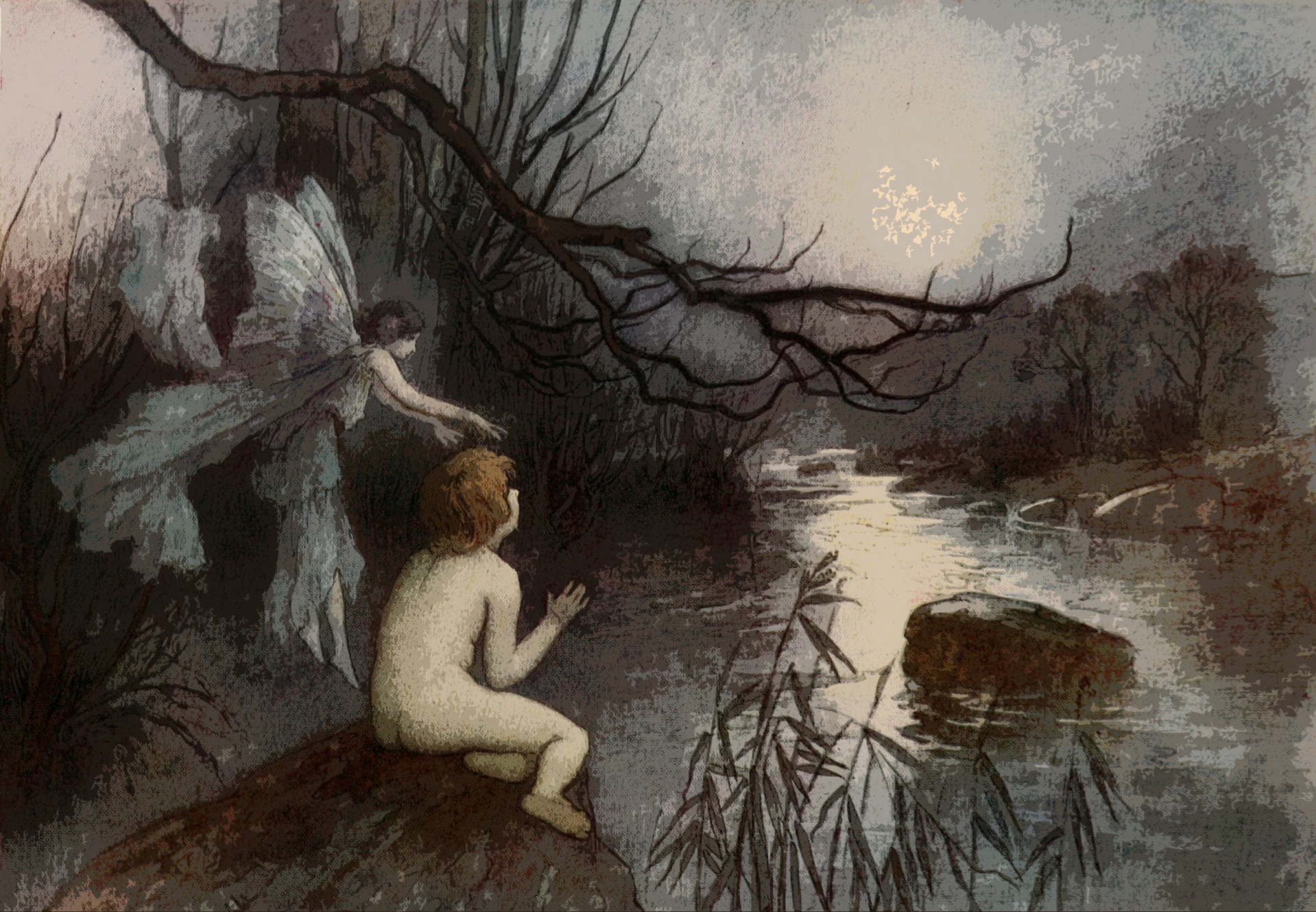
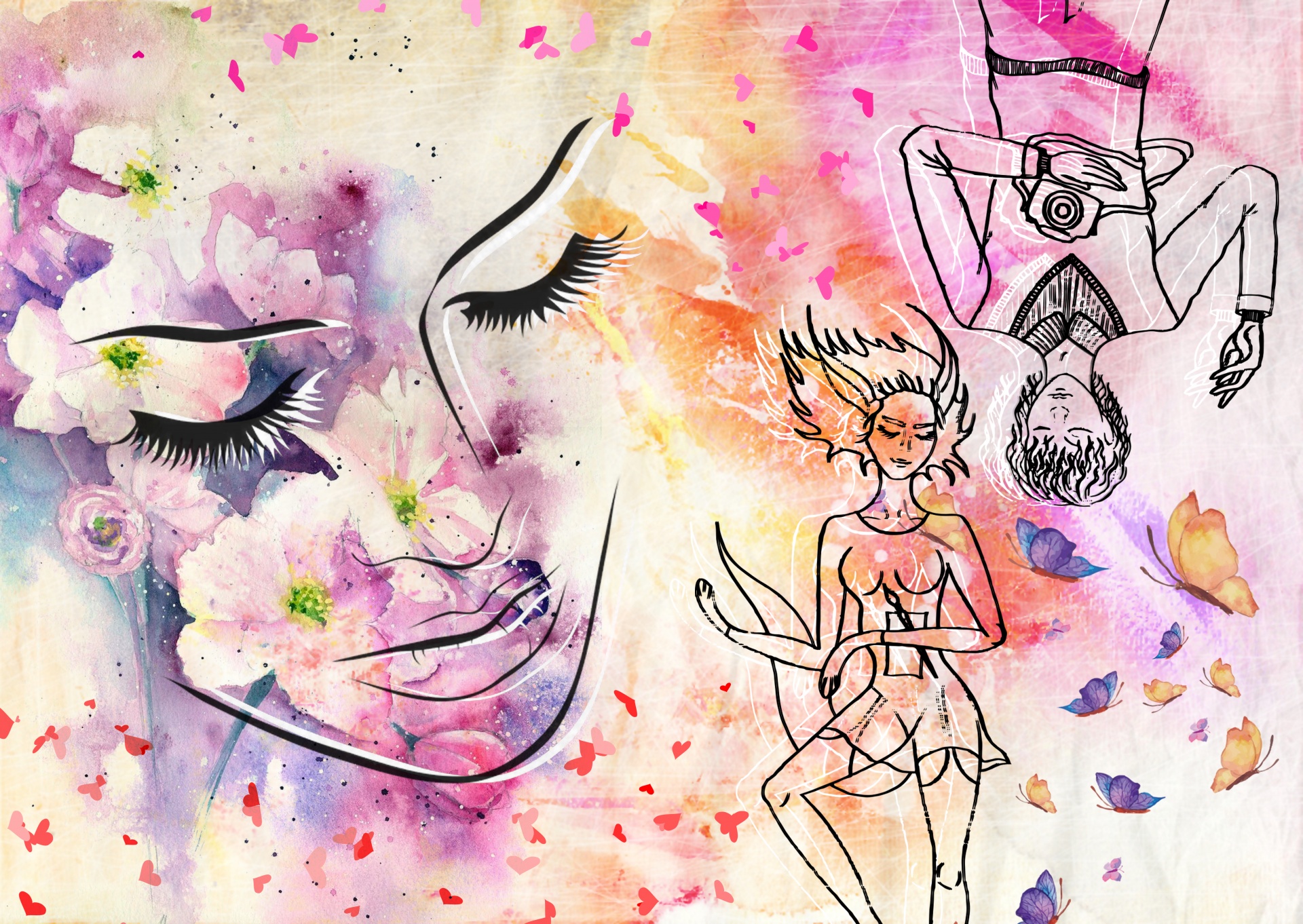
-words and picture by Brian Michael Barbeito
It kept descending in the night, and for the most part, seemed like a wild secret or strange dream. It was pretty, certainly, like silent music orchestras floating around the industrial grade electric lights of town roads curt and organized or the playfully amidst Christmas bulbs residential and red, blue, yellow, green, and even purple.
And there were dreams when Sebastian Sumac did fall asleep amidst his books. A Malcolm Lowry book, a Charlie Brown book called, You’ve Got a Friend Charlie Brown, and a few others. He dreamt of clothing and people that he had outgrown, situations that didn’t fit him anymore. The subconscious was figuring things out. Many of the dreams had him lost in large cities with multitudes around, a populace that he didn’t know or fit into. He tried always to find his way home, or a sympathetic soul, but rarely encountered either.
And out there the winds northern blew the new snow to and from, and made wild crazed drifts across country roads, roads that had white outs for there was nothing to break or block the snow drifts. Finally, if one were travelling from the north to the south, the first structure of the town was an impossibly old church with stained yellow bricks, a marker of another time. It had a graveyard in the back with about thirty or forty souls buried and the stone markers though tall and well built, didn’t have the names any longer as time and seasons had eroded them. Now, each it was just a memory a soul anonymous, as perhaps little, or no other souls knew who the departed were.
Then places where the nocturnal animals travelled widely. Deer. Coyote. Perhaps other things. Their tracks could be seen on the bright of days after the snowstorms and sometimes it seemed they had gone along the very middle of frozen streams, beige reeds, and bushes on the sides very still then in time like artifacts from photographs. Sebastian pictured them, and how beautiful all the creatures looked then, say, under the quiet bright moon and going along more like a painting or dream, a separate and somehow dignified world that little to nobody ever saw.
Then the big box stores, their humungous parking lots, some abandoned vehicles on the edges and the odd large transport truck or trailer. The new world had taken over the old world and was spreading like a wave intent on overcoming coastlines and having the pulse and prowess of a seemingly infinite world behind it. Urban sprawl uniform and intentionally unoriginal, and each set of kilometres displaying a series of the same petrol stations and strip plazas and inhabitants also.
In the days Sebastian, who had shed his old name and named himself after the trees that remained red deeply and always struck his consciousness in faraway meadows and fields in a benevolent manner. He had read that some cultures had even used the sumac for dye in clothing. In an ever changing world all one really had was oneself and oneself in that situation was like the sumac when it succeeded…colourful, upright, a unique phenomenon under the azure sky…all and everything peaceful and unique up the way from labyrinthine paths in the whimsical wondrous woodlands and far enough away from the sky infrastructure of troubled and over populated cities and towns.
He stopped often and sat with a warm coffee. The shops had decorated the windows with stickers of towns themselves, towns decorated with trees and snowflakes. Again, the snow. He watched the sticker snow and the light sprinkles of snow arriving outside. And the patrons often talked of such also. ‘They are calling for more on Tuesday,’ or ‘Soon, like last year, we are going to run out of places to put it all…’ Some people were with friends and others with family, but Sumac was mostly alone. Alone with the vision of the snow, the idea of poems and travel logs or epistolary. And with the nights. The drama of dreams, books, and writing…and that snow…sometimes wafting down easily, like a languid journey being had, but also at moments fast, vexatiously even, in a rush, some gods of the other upper world intent on making winter a true winter certainty.
Brian Michael Barbeito is a Canadian poet, writer, and photographer. His most recent book, a compilation of prose poems and landscape photography, is titled The Book of Love and Mourning.
First, an announcement: published poet and contributor Tao Yucheng would like to host and judge a poetry contest open to all readers of Synchronized Chaos Magazine.
Synchronized Chaos Poetry Contest
We seek short, powerful, imaginative, and strange poetry. While we welcome all forms of free verse and subject matter, we prefer concise work that makes an impact.
Guidelines: Submit up to five poems per person to taoyucheng921129@proton.me. Each poem should not exceed one page (ideally half a page or less). All styles and themes welcome.
Prizes: First Place: $50 Second Place: $10, payable via online transfer. One Honorable Mention. Selected finalists will be published in future issues of Synchronized Chaos
Now, for this month’s issue: The Stories We Tell Ourselves. We explore communication, relationships, myth, history, imagination – different ways of making meaning from life.
Dildora Abdullayeva considers the study of phrases as a part of human language and how phrases have changed over the years. Toychiyeva Madinaxon points out how young people are changing global language through Internet slang. Habibullayeva Lalyokhon Zarifjon kizi explores cultural and linguistic features of phrases in the Uzbek language. Rashidova Shohshanam speaks to the rapid changes in the Uzbek language and the challenges and opportunities that poses for educators. Noah Berlatsky reflects with humor on how our brains’ memory for language might shrink with modernity.
Dildora Qobilova suggests common student grammatical errors and ways to correct them in the classroom. Yarmamatova Sevinch Elyor qizi suggests ways to enhance young children’s speech fluency. Suyarova Gulsanam explicates finer points of Uzbek grammar for audiences speaking all languages. Abulqosimova Bahora highlights the intricacies of the phonetic system of the Uzbek language. Muqaddas Islomova highlights the role of multimedia digital technologies in helping language learners enhance their speech skills. Shamsiddinova Maftuna Hamidjon qizi gives an overview of academic studies into the structure and functions of different parts of speech. Adashaliyeva Durdona Akramjon qizi highlights the central role of linguistics in reinforcing the values of a socialist society. Rukhshona Kamolova Turayeva highlights the importance of studying the history and role of the English language to understanding effective communication. Sharifov Sirojiddin Shavkatovich underscores the critical importance of basic math literacy to social functioning. Satimboyeva Risolet outlines educational benefits of AI technologies in education.
Kucharov Bakhodir outlines principles of written and spoken professional communication. Dilnoza Bekmurodovna Navruzbekovna urges people to carefully consider what career would be right for them, and for schools to facilitate that deliberation. Aslidinova O’giloy highlights the potential of a digital economy and the need to prepare students for that world. Sarvar Eshpulatov also highlights the importance of digital literacy for success in today’s society. Niyozova Shakhnoza Farhod qizi elucidates the potential of digital technologies in education. Iroda Sobirova offers suggestions for fostering entrepreneurship in Central Asia and elsewhere. Choliyev Nurbek Rözimbek ogli highlights the importance of local banks in trusting in the creditworthiness of local entrepreneurs. Eshmurodova Sevinch Bahrom qizi outlines steps credit card bureaus can take to ensure consumer security. Urinova Robiyabonu discusses the use of psychology in professional management. Qarshiboyeva Mavluda Azizbek qizi analyzes the role of international assessment exams in world education. Abduvaliyeva Jasmina Jahongir qizi outlines some upsides and downsides of economic and cultural globalization.
Satimboyeva Rizolat discusses how to develop a social culture of reading and literary appreciation that goes beyond the classroom. Aziza Xasanova highlights the joy and creativity and history of the Uzbek mother tongue. Qudratova Nozima Bahromovna outlines the innovative narrative storytelling techniques of Uzbek author Tog’ay Murod.
Lakshmi Kant Mukul shares some of a people’s history of India through the lens of one architectural landmark, the Qutub Minar. Alan Catlin renders the historical, somnolent, stuck atmosphere of the American Rust Belt into poetry. Xudoyberdiyeva Mohiniso delves into the Islamic Turkish Kara-Khanid state, which reached its height in the 700s. Duane Vorhees traces a variety of Jewish mystical influences on Sigmund Freud. Chimezie Ihekuna relates how the modern Nigerian state came together as a result of colonial powers and bears little relation to cultural realities, causing a legacy of trouble. Jacques Fleury reviews Boston Lyric Stage’s production of a mashup of Sherlock Holmes and A Christmas Carol, providing two different lenses through which to interpret Victorian England. Qulliyeva Feruza Qosimova highlights the role of the Uzbek constitution in guiding contemporary society.
Mahbub Alam reflects with nostalgia on his high school days: friends, teachers, the school environment. Mesfakus Salahin revels in the wonder of childhood and memory. Sobirjonova Rayhona expresses gratitude to a dedicated teacher.
Olga Levadnaya speaks to the ‘halo effect’ of memory, where we remember the best parts of what happened to us. Dr. Jernail S. Anand considers his memories to be friends. Taghrid Bou Merhi holds onto the hazy and charming days of childhood and dreams. Mandy Diamantou Pistikou reminds us of the innocence and joyful curiosity of early childhood. Meanwhile, Luis Cuauhtemoc Berriozabal speaks to the feelings, thoughts, and sensations of middle age.
Taro Hokkyo brings to life a moment of deep soul recognition among two different people. Turkan Ergor wonders at the vast diversity of people’s life experiences, given our common humanity. Dr. Kang Byeong-Cheol reminds us of the ingredients of love: wisdom, compassion, and humility. Mrinal Kanti Ghosh reflects on a love that captures his soul and disrupts his consciousness.
Mohan Maharana also writes of compassion, speaking of his work as a healer and social worker coming alongside people living with mental illness. Juana Del Carmen Soria urges people to make wise and caring choices. Asmonur Rajabboyeva, in a piece translated into English by Shuxratova Nilufar, draws on a chamomile flower as a symbol for innocence and compassion. Eva Petropoulou Lianou puts out an urgent call for global peace. Dianne Reeves Angel looks beyond the commercialism of Christmas to seek out spiritual gifts of peace and love and hope. Brajesh Kumar Gupta affirms that goodness is so much stronger than evil. Zuhra Jumanazarova highlights the critical role of the Uzbek constitution in the country’s governance and respect for internationally recognized human rights. Eva Petropoulou Lianou laments the violence and selfishness of humanity, in poetry translated into Mandarin by Yongbo Ma. Pat Doyne mocks corruption in the United States’ federal government. Bill Tope argues against gambling from a social justice perspective. Yongbo Ma also translates a poem from Ahmed Farooq Baidoon on the weary quest of all too many people for justice. Brendan Dawson sketches some of society’s outsiders – immigrants and poets – and reflects on how society has become less welcoming.
Sayani Mukherjee wishes an old lover well with their new love during the holidays, while still acknowledging her sorrow. Abdulhafiz Iduoze speaks to the cycle of life and death in her imagistic poem. Kemal Berk yearns for a lost loved one through verse. Aisha Al-Maharabi evokes the pain of loss and longing in love. Graciela Noemi Villaverde mourns the loss of her husband of many years through poetry. Abigail George renders cautious and loving care for her father with cancer into thoughtful and slow poetry. Farzaneh Dorri pays tribute to a departed human rights lawyer.
Mirta Liliana Ramirez grieves the loss of someone who suffered much and had a difficult life. Sumaiyya Alessmael mourns the passing of her immortal, fanciful beloved. Milana Momcilovic evokes centuries of timeless longing for a lost love. Salimeh Mousavi probes probes a family’s grief to create a complex and layered character sketch and to mourn for parts of individual personhood severed by culture.
Kavi Nielsen poetically expresses a sense of unity and connection with nature and their loved one. Shawn Schooley celebrates the sensual attraction he feels for his lover. Jamal Garougar speaks to the submergence of egos and unity with a broader whole inherent in love.
Petros Kyriakou Veloudas depicts love, grief, and memory feeding into the artistic process. Ana Elisa Medina encourages someone close to her to sing and share his heart’s journey. Kandy Fontaine reflects on how Motorhead frontman Lemmy inspired her artistically and personally.
Dianne Reeves Angel celebrates the joy of intentional female connection and friendship over many years. Priyanka Neogi reminds women and girls to remember their insight and strength. Amirah al-Wassif’s surreal poetry speaks to womanhood and our relationship with our bodies and minds.
J.J. Campbell shrugs and finds himself in a place of dull resignation, even at the holiday season, and renders his feelings into poems. Alan Hardy speaks to the vulnerability of being alone, whether in the wild or in his own mind, and how he protects himself by letting go of regret. Santiago Burdon depicts some misadventures along the road of guiding an emerging writer towards greater originality.
Mark Young expresses fascination with arbitrary liminality, how we attempt to classify the world. Duane Vorhees reflects on natural and human moments of energy and transition, such as thunderstorms, from a comfortable distance that lets him think and react with wonder.
We hope this issue brings wonder, new thoughts, and empathy to your life.