Under an uncharacteristically clear London sky, I looked behind me as I rode across the playground on a pink scooter that was much too small for me. I was being chased by two three-year-olds, the make-believe cops in rapid pursuit of their robber. They shouted stop, stop! and I slowed down only enough to keep myself a foot ahead of them, mocking fear at my inevitable capture. In this moment, as I smiled broadly at the children chasing me, I realized how much fun I was genuinely having. In this small, enclosed playground in Westminster, everything had changed.
I was intimidated by the families that came to Cardinal Hume at first. They were all impoverished, and many of them recent immigrants. As part of my internship in the day care center, I would be taking care of their small children twice a week. It seemed strange to me that in the heart of Westminster, among the high rises and only blocks from Parliament Square, there could be such poverty. However, maybe it shouldn’t have been. In the past twenty years, the number of immigrants in the UK has doubled to 8 million, with a third of these people living in London. The city is one of the most diverse in the world, and people have come for reasons that are as numerous as their origins- for work, refuge, profit, personal development.
Immigrants have not been received warmly by many native Brits, who feel that they’re losing out in the competition for jobs and housing; politicians have added to the tension. Prime Minister David Cameron pledged in 2010 to pass legislation that would limit the number of annual immigrants to below 100,000; the current number of migrants is three times this. The United Kingdom Independence Party (UKIP) plans to go into the next election with a promise to ban any immigration in Britain for five years, while immigration policy is rethought. While London does hold a great appeal for many foreigners, many of these people struggle with the politics and ethnic tensions of immigration.
Many of the families I met at Cardinal Hume were immigrants from Eastern Europe or the Middle East. Their origins and thick accents, as much as I tried to deny it, did make me uncomfortable in the beginning. Back in Iowa, I had never been around people of a different religion or culture, and I was nervous that I wouldn’t be able to make a connection with the families. I looked through the glass doors that led out to the small playground, and the iron gates that surrounded it. I watched the women in hijabs as they pushed strollers through the gates and down the ramp from outside each morning, small kids teetering behind them. I often wondered what their hair looked like underneath the scarf; was it cut short or long, of a dark chestnut color, curly?
What would these women think of me, a young, foreign girl? Will they hate me because I’m American? I worried that these families had been displaced from their home countries because of political unrest or wars, which the United States may have played a part in. What if they were from Iraq or Afghanistan, had family who became casualties of war? Or the only American they ever saw was dressed in combat gear with a gun in hand, and the images of war would forever smear their perception of the US? However, the women scanned me without recognition; perhaps they saw my blonde hair, blue eyes, and fair skin and thought that I was another one of the Danish students who came to Cardinal Hume for a student teaching opportunity.
For someone who enjoys a great story, is there anything better than a narrative that engages you from the very start? Imagine a world so rich you can almost smell the scents in the air, a delivery so clever it forces you to think in a way you never thought you would. I’m Ryan J. Hodge, author, and I’d like to talk to you about…Video Games.
Yes, Video Games. Those series of ‘bloops’ and blinking lights that –at least a while ago- society had seemed to convince itself had no redeeming qualities whatsoever. In this article series, I’m going to discuss how Donkey Kong, Grand Theft Auto, Call of Duty and even Candy Crush can change the way we tell stories forever.
What Video Games Teach Us About Writing For Addiction
First things first: This article is not about video game addiction; it regards what we can learn about addiction from video games. Okay? Okay.
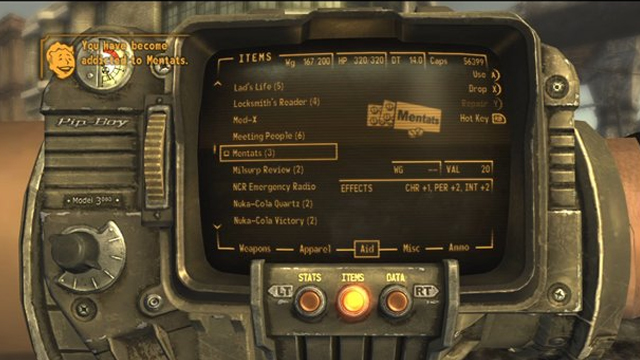
Video games, in general, tend to handle substance abuse rather poorly. “Drugs” (such as they are) will usually have some sort of status bonus in the short term, with a lingering status hit in the long term in what is supposed to be a simulation of “High” and “Withdrawal”.
In real life, however, there’s no handy pop-up alert to inform you when that alcohol you imbibe “only socially” has actually become a problem.
Though I’m sure Google’s on it.
Addiction cannot be adequately simulated with a status effect or a woozy camera; it’s something that gnaws at you constantly. It’s all-consuming, almost impossible to ignore unless you’re actively gratifying it.
So if video games are doing such a bad job, why am I bringing them up as an example of addiction done right? The answer may surprise you.
A Priceless Heart is a story about finding true love and going the distance to keep it. It’s a journey of self-discovery and a tale which illustrates in more ways than one the power of great love. In the musical, Lauren Carter, a 20 year old college undergraduate, is torn between her father’s plans for her and her own plans for herself. As heiress of her father’s billion dollar corporation, everything in Lauren’s life is designed to help her successfully take over from him. But Lauren wants nothing more than to chase her own dreams-to be a musician. Yet, she lives by her father’s every rule until she learns of his plans to exploit her. In a fit of anger, she leaves the house and embarks on her journey of self-discovery. In the process, she gets to know Ife Jacobs, the Nigerian-American bartender at her family’s favorite bar. A mutual attraction ensues and a relationship BEGINS. But they are two worlds apart. He’s from the meagerly hoods of the Marcy Projects and she’s from the wealthy Upper East side of New York. Besides, with her father in the middle, Lauren knows dating Ife would not be a walk in the park. In the end, Lauren is forced to make a decision between her father’s empire and the love of her life.
BRIEF BIO ABOUT LYSIOUS
Lysious Ogolo is a Radio, TV and Film major at Howard UNIVERSITY. A novelist, playwright, screenwriter, actor,director and producer, he has written, co-written, produced, directed and co-directed a series of plays and musicals, including, The Case Against Christmas and Anything Good among others. He currently serves as the Head of Department of FACES, a drama ministry associated with Jesus House, DC, a mission of the Redeemed Christian Church of God.
He currently resides in Maryland. He hopes to tell stories which inspire hope and love in the hearts of his audience, while leaving them entertained and enlightened. In a world filled with many uncertainties and heartaches, Lysious desires to craft stories that will encourage, inspire, challenge, and warm the hearts of people; stories that reflect the reality of society with a promise of hope even in the most dire of circumstances.
A blend of great music and a talented cast, A Priceless Heart is a tale of grace, healing, restoration and the power of true love. It’s a story that’ll take the audience on an unexpected journey filled with warmth and inspiration.
To support Lysious and help him bring this story to this stage click on this link: https://www.indiegogo.com/projects/a-priceless-heart/x/9925242
Welcome readers to May’s issue of Synchronized Chaos Magazine! According to Google’s dictionary, a concoction is a mixture of various ingredients. The term can also refer to a story, sometimes a lie but also just an elaborate invention, a combination of story elements and literary devices.
This month’s contributors bring us a phonetic concoction, a crafty and touching mix of words and thoughts where how things are said and told matters as much as the content.
In her monthly Book Periscope review column, Elizabeth Hughes comments on novels that use suspense, humor, metaphor and other literary techniques to tell stories of war and rebellion, murder and corruption, adventure and rescue, and loving friendships and family relationships. The craft of writing becomes as integral to the story as the plot in Amanda Clay’s Rebel Song, Dale Wiley’s The Intern, Louis Piechota’s A Rose in the Desert and Tracy Ploch’s The Shoebox and enriches these books, making them stand out in their genres.
Laurie Kolp presents an independent female protagonist determined that she will travel the world and will not be treated as a pretty plaything or objectified for someone else’s comfort. Kolp’s other writing evokes the beauty of a listening ear and of martial arts well practiced.
Howie Good brings us the substance and feeling of nightmares, various extreme situations that all end in disaster, and also an instruction for the writing process: hurry towards the end of what we have to say, don’t stop for premature editing or cleaning things up, and one might arrive in time to see our subconscious angels put the piece together by the faint light of imagination.
Merrell Miles uses a more lighthearted approach to comment on the procrastination that plagues many creative artists’ lives. He wishes that we could tackle all of our life issues in one burst of effort when we get to them, as we can sometimes with the dishes, depending on our standards of hygiene. His other pieces touch on self doubt, dissatisfaction and those moments when our lives do not measure up to our ideal self-image. Perhaps he and Howie Good consider desperate urgency to create, and fear of that act of creation, part of the life of the artist.
We hope that reading this issue will be a passion in which you proudly indulge, and that you consider leaving feedback for the many writers included within this month’s work.
He counted again: the numbers added up, beautifully.
His fingers grasped the quill so hard it split.
“I can make more. What if I can make it all?”
It was nearing midnight in Europe.
A messenger was crossing the mountains,
taking an urgent notice between sovereigns
who had never met face to face.
As he neared the summit, he stumbled,
his boot dislodging a stone
that fell, gathering stones as it went
in a wind of rocks, trees, snow,
collapsing across the valley
in an avalanche, burying it all.
_____
Christopher Bernard is a poet and writer living in San Francisco. He is coeditor of the literary and arts webzine Caveat Lector. His poetry can be read at The Bog of St. Philinte.