With a sound resembling the soul’s return to itself.
In the space where time does not exist,
The question walks barefoot,
Searching for a meaning
Like a pulse without a body,
Or a dream
Unsure whether it is seen,
Or merely recalls having seen us before.
There,
Where the beginning meets the end,
Silence rises like an ancient sage,
Smiles at our bewilderment,
And says:
“Everything you lose returns,
But in a form you do not recognize.”
I sit within myself,
As if listening to a breath
The soul retrieves from a depth
Beyond life and death,
And beyond the notion that the universe has a face
We see only when we close our hearts.
And in the moment when thought becomes weightless,
And pain turns transparent,
I understand that presence
Is not what we live,
But what passes through us
And leaves its trace,
As if it were the only truth
That never grows old.
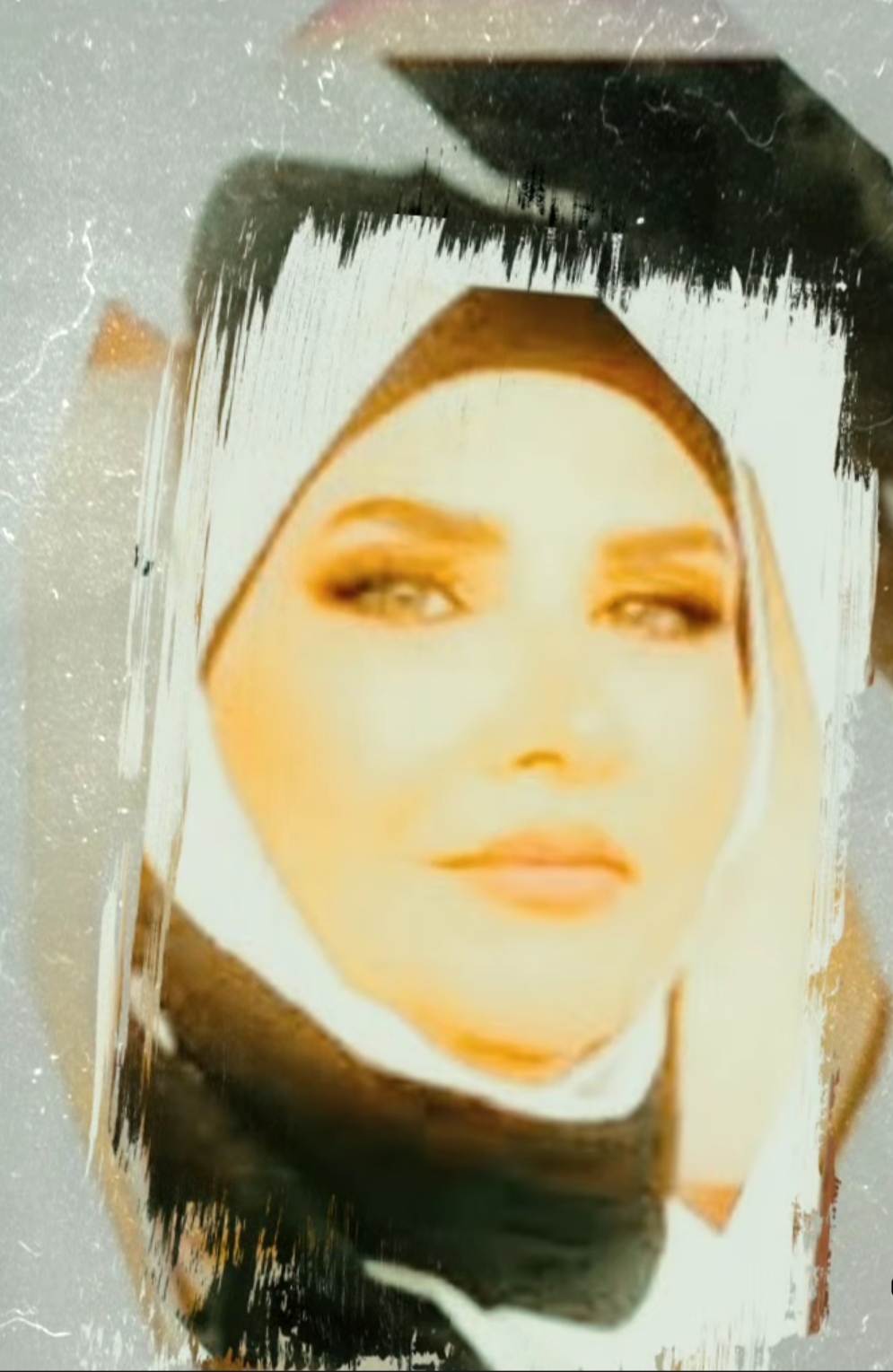
Taghrid Bou Merhi is a Lebanese–Brazilian poet, translator, editor, and literary figure whose voice has become a bridge between cultures across the Arab world, Latin America, Asia, and Europe. Born in Lebanon and residing in Brazil, she has built a distinguished career marked by linguistic mastery, artistic depth, and a commitment to intercultural dialogue. Fluent in multiple languages, she has translated 49 books and more than two thousand poems, articles, interviews, and critical texts, making her one of the most prolific Arab translators of her generation.
Bou Merhi is the author of twenty-three books spanning poetry, short stories, essays, and children’s literature. Her works—known for their lyrical intensity and philosophical resonance—have been translated into forty-seven languages and included in over two hundred international anthologies. She has participated in nearly fifty global anthologies with poems and reviews, and her contributions frequently appear in international magazines, newspapers, and literary platforms.
Her editorial experience is equally extensive. Bou Merhi serves as President of CIESART Lebanon and holds leading positions in several cultural and literary organizations around the world. She has acted as an international judge for the Walt Whitman competition for three consecutive years and is a prominent officer for international cultural relations in multiple global institutions. She has also served as Deputy Editor-in-Chief of Raseef 81 Magazine and currently works as a contributing editor for Pencraft Literary Magazine.
Throughout her career, Taghrid Bou Merhi has received numerous prestigious international awards honoring both her poetry and her translation achievements, including the Naji Naaman Award, the Nizar Sartawi Translation Award, and the Nian Zhang Cup Prize. Her writing is recognized for its emotional richness, philosophical depth, and unwavering commitment to humanistic values. Today, she continues to promote cultural exchange through her poetry, translations, and global literary engagements.
That day evening fell in the midst of the forest Like a bird, I too spread my dreamy wings near distance in the gentle breeze That winding high and low path That shadows of the trees, playing blind-man’s- buff Painted secret kisses in the eyes of the darkness The lorn fascinating oyster separated from water was in the grip of my hand. The unique pearl called Luv Shaped with layers of pain–an expression of pure, sincere love A mind yearning for union wants to be an oyster, sometimes a pearl.
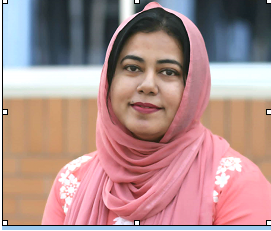
Sejuty Rahman, Assistant Professor, Department of Economics in Soronjay Degree College, Tanore, Rajshahi. She writes poems and short stories. She has published three books of poems in Bangla. At present she is living at Rajshahi town, Bangladesh.
Everyone longs for love, searching far for its radiant flame. But love is not a roadside gem, nor found in sunsets or science’s name.
It hides not in beauty’s shallow face, but calls from deeper, higher grace. A rose blooms when love is near, fed by care, sunlight, and cheer.
Love is compassion, gentle and true, without which no life can renew. Beyond the fence, a rose may say: “I see love, I hear love, I love it each day.”
Its price is not wealth, nor power’s disguise, but pride surrendered, and hearts made wise. Love does not come from law or decree, It blooms within, where the soul is free.
Poet Dr. Kang, Byeong-Cheol is a Korean author and poet, born in Jeju City, South Korea, in 1964. He began writing in 1993, publishing his first short story, “Song of Shuba,” at the age of twenty-nine. He released a collection of short stories in 2005 and has since won eight literature awards and published more than twelve books. From 2009 to 2014, he served as a member of The Writers in Prison Committee (WiPC) of PEN International. Additionally, he worked as an editorial writer for JeminIlbo, a newspaper in Jeju City, Korea. He holds a PhD in Political Science and currently serves as the Vice President of The Korean Institute for Peace and Cooperation and vice president of Jeju PEN. Moreover, he holds the position of founding President of the Korean Association of World Literature.
Methods for Improving the Conceptual Foundations of Speech Act Theory in the Uzbek Language
Shamsiddinova Maftuna Hamidjon qizi
Master’s student in Uzbek Language and Literature
Namangan State Pedagogical Institute
Phone: +998-94-755-00-10
Abstract
This article analyzes the formation, development, and practical application of speech act theory in the Uzbek language. The necessity of improving the conceptual foundations of speech act theory in accordance with modern communicative needs is substantiated. Based on approaches such as intercultural pragmatics, cognitive linguistics, and communicative competence, the article proposes new methodological ways of studying speech acts in the Uzbek language. In addition, the practical application of speech act theory is examined in the context of digital communication and artificial intelligence.
Keywords
Speech act, pragmatics, illocution, perlocution, communicative competence, Uzbek language, cognitive approach, intercultural communication, digital linguistics, context.
Introduction
In the 1950s, the English philosopher J. L. Austin proposed the idea that language is not merely a means of transmitting information, but also a tool for performing actions in real life. He justified this philosophy in his well-known work “How to Do Things with Words.” While the origins of speech act theory are associated with Austin, J. Searle later significantly refined and developed this theory. During the 1960s and 1970s, the American scholar J. Searle strengthened the theory by identifying the structure and types of speech acts.
When discussing speech act theory, it becomes evident that language is not simply a collection of words or a tool for conveying information, but also performs a variety of other functions. These characteristics of language were thoroughly analyzed and studied by J. Austin and J. Searle. According to them, language performs actions in addition to transmitting information. At first glance, this idea may seem unusual, as it raises the question of how something inanimate can perform actions. However, these actions are not physical but cognitive in nature and occur through human consciousness.
A deeper understanding of this phenomenon can be achieved through the analysis of literary texts.
Main Part
According to J. L. Austin, speech acts are divided into three main types: 1. Locutionary act – the literal meaning of an utterance.2. Illocutionary act – the speaker’s intention or purpose in uttering the statement.3. Perlocutionary act – the effect of the utterance on the listener.
As can be seen, all three types of acts are closely interconnected and mutually dependent. Each speech act can be analyzed from all three perspectives. For example, consider the following sentence from Said Ahmad’s short story “Sobiq”:“Hurry up, they are waiting,” said by the chairman to a cotton worker.
From a locutionary perspective, the sentence is grammatically and lexically correct. From an illocutionary perspective, it is not merely a statement but a command requiring action. From a perlocutionary perspective, it implies the listener’s reaction, such as haste or anxiety, following the chairman’s words.
Searle further classified illocutionary acts into several categories:Assertives – statements that convey facts or information.
Example: “The painter is still young and lacks sufficient experience.”
Directives – utterances used to give commands, requests, or advice.
Example: “Control yourself; do not embarrass yourself in front of others.” (command)
Commissives – expressions of promises, obligations, or plans.
Example: “You will go to the meeting. Your train ticket is ready; go home, get dressed, and leave.” (plan)
Expressives – utterances that express emotions such as gratitude, apology, or congratulations.
Example: “I greeted him timidly. When he saw me, his eyes lit up.”
Declaratives – utterances that bring about a change in status or situation through words themselves.
Conclusion
Speech act theory does not limit itself to studying the grammatical structure and semantic content of language, but also explains how communicative goals are achieved through speech. The locutionary act reflects the formation of meaning, the illocutionary act reveals the speaker’s intention, and the perlocutionary act demonstrates the actual effect on the listener. In particular, the classification of illocutionary acts highlights the complex and multifaceted nature of speech functions. Illocutionary types such as commands, requests, promises, advice, and statements help to deeply understand the communicative power of language.
Thus, speech act theory serves as an important methodological foundation for studying the pragmatic aspects of language and reveals the intrinsic relationship between meaning and impact in the speech process.
References
1. Abdulvokhidov, E. Pedagogical concept of writers as a means of enriching the pedagogical process. Oriental Renaissance: Innovative, Educational, Natural and Social Sciences Scientific Journal, Vol. 1, Issue 11, December 2021.2. Ibragimova, N. T. The use of interactive methods and techniques in foreign language teaching. “Ta’lim va taraqqiyot” Scientific-Methodological Journal, 2025, Issue 2.3. Tillayeva, R. The effectiveness of organizing research activities in increasing students’ engagement. Proceedings of the Young Philologists’ Society, Alisher Navoi Tashkent State University of Uzbek Language and Literature.
Shamsiddinova Maftuna Hamidjon qizi was born on April 28, 2003, in Norin District, Namangan Region. She began her education at Secondary School No. 17 in her district, then continued her studies at the Academic Lyceum of Namangan State University (NamDU). After graduating from the lyceum, she was admitted on a state-funded (grant) basis to Namangan State University, majoring in Philology and Language Teaching: Uzbek Language.She successfully completed her undergraduate studies with an honors diploma and is currently a graduating master’s student in Uzbek Language and Literature at Namangan State Pedagogical Institute.
Maftuna’s strong interest in languages, alongside her devotion to her native language, has also led her to study English. At present, she works as a teacher of Uzbek language and literature at a specialized creative school focused on languages.
Maftuna’s goal is to become a highly qualified specialist in her profession and, through her expertise, to share knowledge and contribute to the education of others.
1st-year student, Department of Uzbek Language and Literature,
Denau Teacher Training Institute
Email: qudratovanozima@gmail.com
Annotation
This article explores the linguistic features present in the works of the renowned literary figure Tog‘ay Murod, distinguished for his profound narratives and unique style. Through a comprehensive analysis, the study highlights key linguistic elements that define Murod’s writing, offering insight into his literary techniques and contributions to the cultural and artistic landscape.
Tog‘ay Murod stands as a prominent figure in modern Uzbek literature, celebrated for his captivating storytelling and innovative narrative approach. His works have long fascinated both readers and critics, prompting scholarly interest in the linguistic elements that form the foundation of his distinctive literary voice. This article examines the recurrent linguistic features within Murod’s works, revealing the craftsmanship behind his style and illuminating the essence of his literary genius.
Murod’s literary corpus spans various genres—from prose to poetic narratives—each crafted with its own linguistic precision. His prose is characterized by rich imagery, metaphorical language, and nuanced character development, all of which create immersive storytelling experiences for the reader. Moreover, his use of symbolism, allegory, and intertextuality adds layers of depth, inviting readers to engage with multiple levels of interpretation.
—
Linguistic Characteristics in Murod’s Works
Beyond his narrative mastery, Murod’s poetic works demonstrate exceptional linguistic rhythm and lyrical expression. By artistically arranging words and sounds, he captures the essence of emotion and human experience, creating a deep resonance with readers. His exploration of linguistic ambiguity and semantic complexity contributes to an intellectual dimension that encourages readers to reflect on the subtleties of language and meaning.
A systematic approach—combining close reading, stylistic analysis, and comparative research—was employed to examine Murod’s linguistic techniques. Works representing different periods of his creative activity and covering diverse themes were analyzed. Textual fragments were studied for recurring linguistic patterns, rhetorical devices, and stylistic choices, providing a comprehensive understanding of his unique writing style.
One of Murod’s most notable contributions lies in his transformation of the natural speech of ordinary people from the Surkhan region into a literary stylistic device. He was among the first to elevate this regional vernacular to the level of a refined artistic tool. Following in the footsteps of earlier creators, he developed his own perspective on literary style. Researcher M. Khidirova describes language as the foundation of literary structure, noting:
> “A literary work is like a tower. It has its own foundation. The lifespan of the work depends on this foundation. The foundation of a literary work is language. Life begins with language and ends with language.”
Thus, the linguistic worldview of Tog‘ay Murod embodies a philosophical understanding of language as both an artistic and spiritual necessity. His unique stylistic mastery continues to serve as a school of artistic skill for young writers, especially at a time when the Uzbek language is flourishing as a state language and its preservation and development are of great importance.
—
Theoretical Perspectives on Style
Classical and contemporary scholars alike have offered insights into the formation of literary style. The eminent
scholar Abdurauf Fitrat emphasized that as a writer matures artistically, a distinctive style emerges:
> “As a poet or writer rises in artistic mastery, he begins to create a style peculiar to himself. When his imagination, thought, and understanding reach maturity, a unique style naturally appears.”
Literary critic O. Sharafiddinov likewise described style as an all-encompassing phenomenon permeating every aspect of a writer’s work:
> “A writer’s style is like air—we breathe it without noticing its components. Style is the spirit of creativity, the subtle fragrance present in every work.”
Accordingly, Tog‘ay Murod’s reflections on artistic language and style deserve special attention. Language, artistic vision, and literary technique interact harmoniously in his works, shaping an individual and unrepeatable style formed through philosophical perception, cultural identity, and narrative skill.
—
Tog‘ay Murod’s Creative Language
Tog‘ay Murod is widely recognized for his original and vivid prose, which resembles poetic narrative in both rhythm and imagery. Even casual readers familiar with modern Uzbek literature can easily identify his works by their expressive, colorful, and deeply lyrical language. This distinctive quality sets him apart from other writers.
In works such as Otamdan qolgan dalalar (“Fields Left by My Father”) and Bu dunyoda o‘lib bo‘lmaydi (“One Cannot Die in This World”), Murod won the admiration of readers by portraying the sincere and humble people of the Surkhan region—their hardships, aspirations, and inner worlds. His language is deliberately simple, flowing, and deeply rooted in folk expression.
He skillfully incorporates proverbs, idioms, synonyms, archaic words, and dialectal expressions, enriching the artistic imagery of his narrative. Folk speech enhances the authenticity and emotional connection of his works. For example, dialectal words such as baycha, jigit, bova, iyarmoq, angnib yotmoq, and yonashtirmoq vividly illustrate the regional character of his narratives:
> “I told the boys to lie down by the river and keep watch.”
—
Discussion
The linguistic features identified throughout Murod’s works emphasize his innovative approach to storytelling and his profound connection to language as a tool of artistic expression. By blending imagery, metaphor, symbolism, and intertextual references, he creates multilayered narratives that resonate deeply with readers.
Moreover, his linguistic versatility allows him to traverse different genres and thematic landscapes, demonstrating the breadth and depth of his creative vision.
—
Conclusion and Recommendations
In conclusion, the study of Tog‘ay Murod’s linguistic features reveals a writer of exceptional talent and intellectual depth whose works continue to captivate and inspire audiences worldwide. Future research may further explore specific aspects of his linguistic style—such as dialect usage, narrative voice, or linguistic innovation. Comparative analyses with other literary traditions may also offer valuable insights into the evolution of literary language and expression.
Ultimately, the linguistic richness of Tog‘ay Murod’s works serves as a testament to the enduring power of language to illuminate human experience and provoke thought. As readers engage with his texts, they embark on a journey of linguistic discovery, uncovering layers of meaning and developing a deeper appreciation for the art of storytelling.
—
References
1. Oydinda yurgan odamlar. G‘. G‘ulom Literature and Art Publishing House, Tashkent, 1985.
2. U. Jo‘raqulov. Nazariy poetika masalalari: Muallif, Janr, Xronotop. G‘. G‘ulom Publishing, Tashkent, 2015, pp. 148–150.
3. U. Faulkner. Qora musiqa. Yangi Asr Avlodi Publishing, Tashkent, 2018.
4. A. Fitrat. Adabiyot qoidalari. Tashkent: O‘qituvchi, 1995.
5. O. Sharafiddinov. Iste’dod jilolari. Tashkent.
Qudratova Nozima Bahrom qizi. 2006.11.12.
Surxondaryo viloyati Shurchi tumani Oynako’l mahallasi Amir Temur ko’chasi 160 uy.
+998 90 071 06 11.
Denov Tadbirkorlik va pedagogika instituti 1 kurs talabasi. Filologiya fakulteti o’zbek tili va adabiyoti guruhi.