Essay from Durdona Sharifovna Ro’ziboyeva

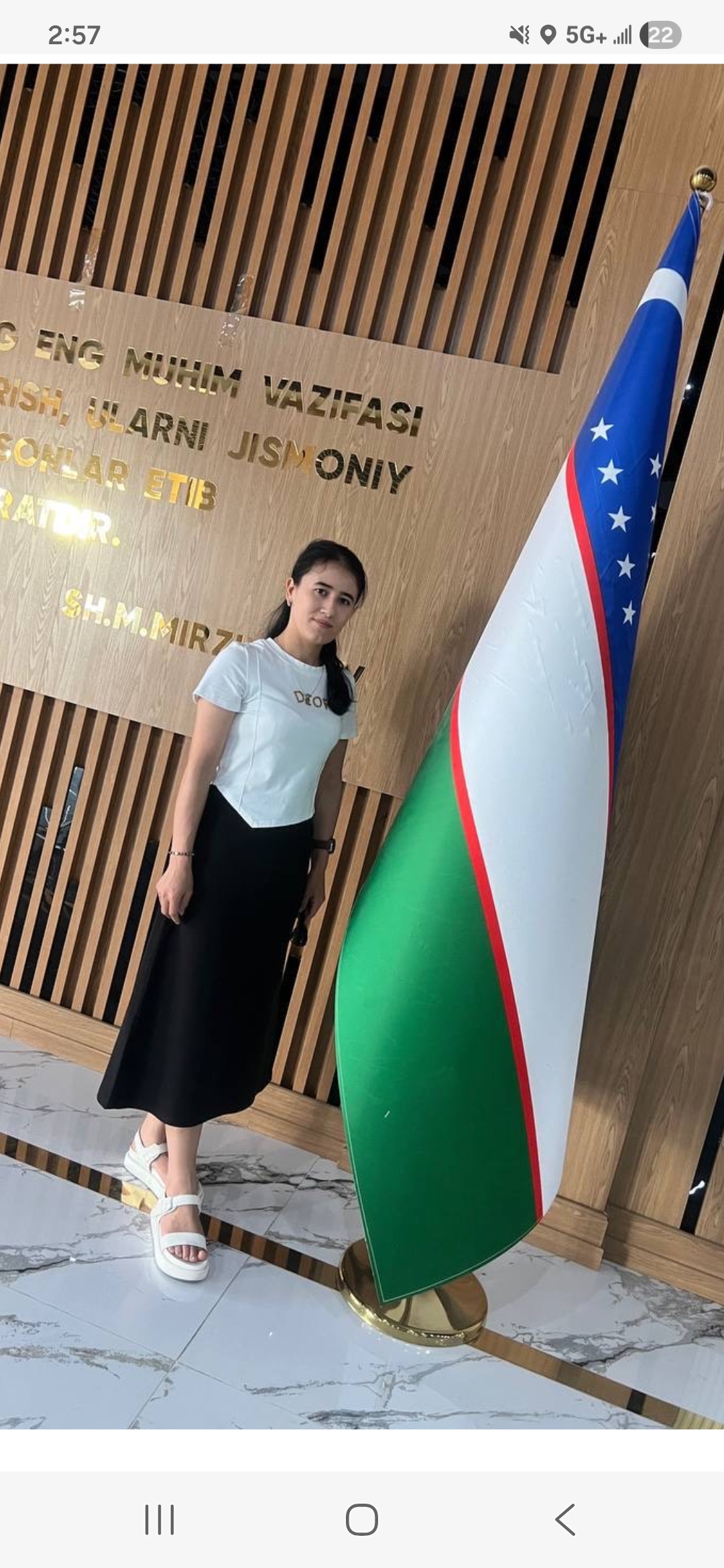
Central Asian woman in a white headscarf and collared shirt and black skirt. Her hands are folded in front of her chest.

Effect of the Herbst Appliance on the Airway                                         

Author: Durdona Sharifovna Ro‘ziboyeva                            

Email: durdonaroziboyeva22@gmailcom                           

Address: Tashkent, Uzbekistan                     

Educational Institution: Tashkent State Dental Institute

Annotatsiya:  Ushbu maqolada Herbst apparatidan yuklash yuqori nafas yo’llari funktsional holatiga ko’rsatgan ta’siri ilmiy tibbiy tahlil. Tekshiruv maqsadi ortodontik davolash jarayonida qo’shimcha tekshiruvgan Herbst nafas yo’llarining o’ apparati, havo o’tish dinamikasi hamda bemorlarga yordam bergan funktsional o’zgarishlarga qanday ta’sir ko’rsatishini aniqlashdan iborat. Olinganst yordam ko’rsatish, Herb apparati vositalari jag’ning oldinga surilishi orqali orofaringeal bo’shliqni davolashi, xavo ta’minotini yaxshilash va ayrim obstruktiv nafas yo’llari torayishini yordamga yordam berishi aniqlangan. Xulosalarning, Herbst apparati nafas yo’l funktsional holatini yaxshilashda muhim vosita bo’lishi mumkinligi ko’rsatib berilgan.Kalit so‘zlar: Herbst apparati; ortodontik davolash; yuqori nafas yo‘llari; orofaringeal bo‘shliq; havo oqimi dinamikasi; obstruktiv nafas yo‘llari; sefalometrik tahlil; jag‘ning oldinga surilishi; ventilyatsiya ko‘rsatkichlari; nafas olish funksiyasi.

Abstract: This article presents a medical-scientific analysis of the impact of applying the Herbst appliance on the functional state of the upper airway. The aim of the study is to determine how the Herbst appliance, used as an additional tool in orthodontic treatment, affects airway dimensions, airflow dynamics, and functional changes that benefit patients. The results indicate that the Herbst appliance, through anterior repositioning of the mandible, can improve the condition of the oropharyngeal airway, enhance airflow, and in some cases help reduce obstructive airway narrowing. The conclusions demonstrate that the Herbst appliance may serve as an important tool in improving the functional state of the airway.

Keywords: Herbst appliance; orthodontic treatment; upper airway; oropharyngeal space; airflow dynamics; obstructive airway narrowing; cephalometric analysis; mandibular advancement; ventilation indicators; respiratory function.

Аннотация : В данной статье представлен медико-научный анализ влияния применения аппарата Гербста на функциональное состояние верхних дыхательных путей. Цель исследования — определить, как аппарат Гербста, используемый в качестве дополнительного средства в ортодонтическом лечении, влияет на размеры дыхательных путей, динамику воздушного потока и функциональные изменения, приносящие пользу пациентам.Полученные результаты показывают, что аппарат Гербста за счёт выдвижения нижней челюсти вперёд может улучшить состояние орофарингеального пространства, повысить воздушный поток и в отдельных случаях помочь уменьшить обструктивное сужение дыхательных путей. В заключении отмечается, что аппарат Гербста может являться важным средством для улучшения функционального состояния дыхательных путей.Ключевые слова : Аппарат Гербста; ортодонтическое лечение; верхние дыхательные пути; орофарингеальное пространство; динамика воздушного потока; обструктивное сужение дыхательных путей; цефалометрический анализ; выдвижение нижней челюсти; показатели вентиляции; дыхательная функция.

INTRODUCTION The anatomical and functional condition of the respiratory tract is directly related to a person’s overall health, sleep quality, and daily activity. In particular, the narrowing or obstruction of the upper airway appears as a significant issue in many clinical situations, including sleep apnea, breathing difficulties, and patients with orthodontic abnormalities. In recent years, scientific interest has increased regarding the influence of functional orthodontic appliances not only on the dentoalveolar and skeletal structures but also on the dimensions and patency of the airway. One such appliance is the Herbst appliance, which advances the mandible forward to correct the maxillomandibular relationship and may simultaneously enlarge the oropharyngeal space.

Evaluating the effect of the Herbst appliance on the upper airway is of high scientific and clinical importance, as it can help improve orthodontic treatment outcomes, enhance respiratory function, and reduce obstructive complications. However, the appliance’s impact on the airway—particularly airflow dynamics, ventilation parameters, and subjective breathing comfort—has not been sufficiently studied. Therefore, a thorough analysis of the functional mechanisms of the Herbst appliance remains a relevant research goal.

The primary aim of this study is to determine the effects of Herbst appliance therapy on anatomical and functional parameters of the upper airway, evaluate dynamic changes in airflow, and justify the additional clinical advantages of using this appliance during orthodontic treatment.

LITERATURE REVIEW

Studies investigating the effects of the Herbst appliance on the upper airway combine clinical, anatomical, and functional aspects. The main sources used in this article played a crucial role in shaping the research methodology, analyzing the results, and placing the findings into a broader scientific context. Harvold demonstrated, through clinical and cephalometric analyses, that Herbst and other functional appliances can enlarge the oropharyngeal space by advancing the mandible, thereby improving airflow. Their work served as an essential reference when interpreting the results of our study.

Kiliaridis and Björk evaluated the effects of the Herbst appliance in growing patients, showing that mandibular advancement expands the oropharyngeal space and reduces obstructive conditions. Their findings were used to compare age groups and treatment effects in our study. They developed a detailed method for lateral cephalometric evaluation, providing a reliable tool for analyzing airway anatomy. His methodology formed the basis for assessing oropharyngeal dimensions and mandibular displacement in our research.

Ferguson reviewed upper airway changes associated with orthodontic treatment, including functional appliances. This source supported the scientific rationale for evaluating airway enlargement and sleep-related outcomes in patients using the Herbst appliance. Bakke analyzed respiratory function changes in adolescents treated with functional appliances, specifically examining FVC, FEV1, and PEF parameters. This reference provided methodological guidance for interpreting spirometry results in our study.

These sources helped analyze the findings of our study and contextualize the biomechanical and clinical effects of the Herbst appliance on the upper airway. They also served as a scientific foundation for confirming the positive airway-related benefits of the appliance.

RESEARCH METHODOLOGY

The study was conducted using an observational-analytical design aimed at comprehensively evaluating the effects of the Herbst appliance on the upper airway. The methodology included the following stages:

1. Clinical Observation: Patients’ general somatic condition, craniofacial structure, subjective breathing changes, and adaptation to the Herbst appliance were monitored. An individual clinical chart was prepared for each patient.

2. Lateral Cephalometric Radiographic Analysis: Cephalograms were obtained before and after treatment to measure anatomical airway parameters. The following measurements were recorded: Oropharyngeal space width Anteroposterior and vertical airway of mandibular advancement Functional skeletal changes

3. Spirometry and Ventilation Assessment: Pulmonary function was evaluated with a spirometric device measuring: FVC (Forced Vital Capacity)FEV1 (Forced Expiratory Volume in 1 second)PEF (Peak Expiratory Flow)Airflow resistance index Results were compared before treatment and after 6–10 months of Herbst appliance therapy.

4. Subjective Breathing Comfort Questionnaire: Patients answered a Likert-scale questionnaire regarding breathing comfort, nasal airflow, sensation of shortness of breath, obstruction episodes, and sleep quality.

5. Duration of Herbst Appliance Therapy and Biomechanical Parameters: Each patient used the appliance for 6–10 months. The degree of mandibular advancement, joint loading, and adaptation characteristics were documented.

6. Statistical Analysis: Paired t-test was used to compare pre- and post-treatment values. Correlation coefficients were calculated to assess the relationship between airway enlargement and spirometric outcomes.

RESULTS

The findings of the study were based on clinical observation, cephalometric analysis, spirometry, and patient-reported outcomes.

1. Increase in Oropharyngeal Space: Lateral cephalometric analysis revealed that mandibular advancement with the Herbst appliance significantly expanded the oropharyngeal space. The average increase was 2.3 mm, with the most notable changes seen in the lower airway segment.

2. Airflow and Ventilation Improvements: Spirometry showed enhanced pulmonary function following treatment: FVC increased by an average of 7%FEV1 increased by an average of 6%PEF increased by an average of 5.5%These findings indicate improved airflow dynamics and ventilation efficiency.

3. Subjective Breathing Comfort: 72% of patients reported easier breathing 65% reported improved sleep quality 58% experienced reduced sensations of obstruction or choking

4. Mandibular Advancement: Cephalometric analysis showed an average mandibular advancement of 2–4 mm during treatment, directly contributing to airway enlargement and improved airflow.

5. Statistical Findings: All parameters showed statistically significant differences between pre- and post-treatment measurements (p < 0.05). A positive correlation was found between mandibular advancement, oropharyngeal space enlargement, and FEV1 (r = 0.68, p < 0.01).

CONCLUSION

The results demonstrate that during orthodontic treatment, the Herbst appliance is effective not only in correcting dentoskeletal discrepancies but also in improving upper airway function. Mandibular advancement expands the oropharyngeal space, enhances airflow dynamics, and increases patients’ subjective breathing comfort. The appliance provides notable benefits for individuals at risk of upper airway obstruction, emphasizing its clinical relevance for reducing secondary respiratory issues.

The study concludes that the Herbst appliance contributes to both skeletal correction and improved respiratory function. Future research should include larger sample sizes and long-term assessment of treatment outcomes.        

REFERENCES

Bakke, M., Espeland, L., & Krogstad, O. (1995). Functional appliances and respiratory function in adolescents. European Journal of Orthodontics, 17(1), 45–53.

Https://doi.org/10.1093/ejo/17.1.45Ferguson, K. A., Carskadon, M. A., & Millman, R. P. (2006). Upper airway changes with orthodontic treatment: A review. Sleep Medicine Reviews, 10(2), 107–123. Https://doi.org/10.1016/j.smrv.2005.08.003Harvold, E. P., Tomer, B. S., & Vargervik, K. (2000). Functional appliances and airway changes in orthodontics. American Journal of Orthodontics and Dentofacial Orthopedics, 118(2), 152–159. Https://doi.org/10.1016/S0889-5406(00)70391-8Kiliaridis, S., & Björk, A. (1986). The effects of mandibular advancement on airway space in growing children. European Journal of Orthodontics, 8(2), 95–104.

Https://doi.org/10.1093/ejo/8.2.95Mcnamara, J. A., Jr. (1981). A method of cephalometric evaluation. American Journal of Orthodontics, 80(4), 505–522. Https://doi.org/10.1016/0002-9416(81)90238-3Pancherz, H. (1997). The mechanism of Class II correction in Herbst appliance treatment. Seminars in Orthodontics, 3(4), 214–224. Https://doi.org/10.1016/S1073-8746(97)80008-5Valiathan, M., & Bock, N. (2010). Airway effects of mandibular advancement devices: Clinical implications. Journal of Clinical Orthodontics, 44(5), 295–302.

Christopher Bernard reviews Cal Performances’ The 4th Witch

Stylized art scene of a young girl with dark curly hair casting a long shadow on a red pathway in a dark wood with a line of barren trees and dark ground.

Cal Performances presents The 4th Witch, November 22, 2025 at Zellerbach Hall

(credit: Courtesy of Manual Cinema)

Witching Hour

The 4th Witch

Manual Cinema

Zellerbach Hall

University of California, Berkeley

Reviewed by Christopher Bernard

For (frustratingly) one lonely, tantalizing performance, Cal Performances, in co-commission and as part of its “Illuminations: Exile and Sanctuary” series, brought the bright good witches of Chicago’s Manual Cinema on a recent Saturday evening for a brew of witchery and magic that they, and they alone, are (in this apprentice wizard’s experience, anyway) uniquely qualified to provide. 

I say frustratingly because I can’t understand how this company’s brilliant toilers, who spent a year creating a compact music-filled masterpiece of puppetry, handicraft, cinema and wonder, can’t have been given a full weekend among us: the hall was packed, riveted to marvels of stagecraft and story-telling, without a pixel or a bow to “slop” in sight, and few left for the fascinated Q&A that followed. When something this fine, brave, and wondrous blazes across the Bay Area’s sky like a comet blithely visiting from a neighboring universe, one can hardly settle for a single, dazzling show – no!

It’s not as if the company were new here and on probation: they brought us a scintillating Ada/Ava in the millennium before Covid (circa 2017, to be precise). The 4th Witch is even finer, and marks one of the peaks in Bay Area performance since then. For those new to Manual Cinema, a brief description may be in order. The creative heart of the company is given to inventing live performances of puppetry, hand-crafted backgrounds, body prostheses, and props and the techniques of shadow plays projected onto large screens and accompanied by live music.

One of the most intriguing aspects of the performance is that, rather than seeing only the end result onscreen, we also see, in the background onstage, the combined actions of actors, puppets, prop managers, projectors, and musicians as they bring the final result about. It’s a bit like a combination of Bunraku puppeteering and an open kitchen at a small five-star restaurant. Far from undermining the magic, it paradoxically makes the end result seem like pure alchemy, as the mind is cast into the liminal space between the quotidian reality and the magical effect. The result is a profoundly poetic form of animation that has the high-wire thrills of live performance.  

The premise of Saturday’s show is as beautiful in its simplicity as it is timely without being brow-beating. As described by one of the members in the Q&A, they took a page from Tom Stoppard’s famous play from the 1960s, Rosencrantz and Guildenstern Are Dead, which retells the story of Hamlet through the eyes of his half-clueless, half-traitorous school fellows, and reimagined another famous play by the Bard – in this case, Macbeth , though, in keeping with sacred theatrical tradition, the tragedy is referred to onstage only as “the Scottish play”– from the point of view of one of the Thane of Cawdor’s victims. 

The story is updated to an imaginary, mid-twentieth-century war in a French-speaking country, and the victim is a young girl whose parents run a little restaurant in a town piled up a steep, isolated hill, much like Mont-Saint-Michel on the Normandy coast of France. The girl’s parents are killed in a raid by Macbeth’s air force. The town is left in ruins, and she runs away after a futile attempt to bring down the mocking, glow-eyed, gas-masked, Darth Vader-like Macbeth by striking him with her stuffed bunny rabbit, her sole possession saved from the wreckage of her home. 

Lost in  the surrounding forest, wandering for days, reduced to hunger and rags, she discovers a mysterious house, where she is met by a sinister old woman who takes her in and sets her to work. The old lady turns out, naturally, to be a witch – indeed, she is one of three, magically embodied in the one, who have a mysterious relation to Macbeth and his powers, a relation that shall not be revealed here, for those seeking spoilers. After the girl, taking a sip of a spell-casting soup, has a sorcerer’s apprentice moment in the witch’s kitchen, the old one decides to teach her witches’ ways – a fourth to add to the three.

And the powers in magic that the girl gains – black as the night, from making magic potions from mushrooms of the forest, to night flying on broomsticks, to commanding daggers to fly to the hearts of their victims – feed the dreams she cultivates of revenge against the murderer of her parents. We’ll leave it at that.

Whoever knows “the Scottish play” can guess much, but not everything: not how famous elements of the play – from floating daggers to the bitter washing of hands, from the assassinations of kings to the executions of assassins – are mixed and blended, with imagination and wit, nor how the amalgam of the imaginary, the remembered, and the hoped for is finally annealed into a satisfying whole – a Gesamtkunstwerk (forgive my German) held light and bright, from acting as rich as a puppet’s to puppetry as nuanced as a great actor’s, to potently low-tech sound design and music from a trio of instrumentalists seconding as vocalists, to world-creating as lyrical and witty as it is suggestive of its own self-contained universe.

Play on, Manual Cinema! And blessed be those Who bring ye back for more than one more show!

Christopher Bernard is an award-winning poet, novelist, playwright, and essayist. His most recent book is The Beauty of Matter: A Pagan’s Verses for a Mystic Idler. 2025 is the twentieth anniversary of the publication of his celebrated debut novel, A Spy in the Ruins.

Synchronized Chaos Mid-November 2025 Issue: Throughlines

Welcome to November’s second issue of Synchronized Chaos Magazine! This month’s issue, Throughlines, contains a wide variety of submissions in a diverse array of styles on many different topics.

That said, there are a few common narrative motifs that emerge and return throughout this issue: pride in and reclaiming of culture, family, parental, and romantic love, artistic craft and creativity, and resilience and determination to achieve one’s dreams.

A few cars making their way down a curve in a country road near green grassy hills and trees and telephone poles.
Image c/o Ken Kistler

Olga Levadnaya reflects on how people build new memories and add to the fabric of history in elegant and old cities. Dr. Reda Abdel-Rahim highlights the wonder of the Great Egyptian Museum to showcase history and archaeology. Maftuna Rustamova regales us with her pride in her national Uzbek flag.

We can celebrate and take joy in cultures other than our own. Tourist Anna Keiko poetizes with grace and warmth on the beauty she finds in French society and culture. Maftuna Davlatova traces the development of tourism as an industry in Uzbekistan. Solijonova Dildorakhon outlines methods to improve the service and efficacy of Uzbekistan’s tourism industry.

Jacques Fleury reviews the Boston Center for the Arts’ production of Kim’s Convenience, a play about a Korean immigrant family’s convenience store that speaks to what it means to become a family and how that meaning changes over time.

Rustamova Shakhnoza’s poignant stories celebrate patience, dedication, and intergenerational family love. James Whitehead embraces his American girlfriend while contemplating American vintage art. Izabela Zubko plays in her poetry with love and memory. Royal Rhodes speaks in a reserved, thoughtful manner about memory and nostalgia: trick-or-treating, aging photos and furniture, notable storms.

Nozanin Bahodirova links the Uzbek language and the Uzbek culture, advocating the preservation of both. Zarina Murodova discusses possible roles for technology in language learning. Sevinch Hoshimova outlines advantages and disadvantages of online education and advocates for a balance between screens and traditional classrooms. Tuchiyeva Dilso’z discusses the emerging role of AI technology in student learning. Rayhona Nurdinjonova discusses potential roles for artificial intelligence in foreign language instruction. Kamolova Mashhura compares the possibilities and drawbacks of digital and in-person learning. Sotivoldiyeva Nargiza Shokirjon traces the effects of increased global migration and communications technologies on the field of linguistics. G’ulomova Rukhshona outlines evidence-based teaching methodologies for primary school students to learn their native languages.

Stylized image of a pink human brain surrounded by light blue spheres on a dark blue background, overlaid with light blue ones and zeroes (binary code)
Image c/o Gerd Altmann

Nurmetova Orzu points out the importance of and methods for teaching young children their native language. Dildora Saidjonova explores various methods to learn foreign languages. Khasanova Azizabonu highlights the presence of similar cognate words in English and Uzbek. Maftuna Hayitboyeva outlines the importance of grammar instruction in many different theories of language learning. G’afforova Hadichaxon highlights insights from philosophy that can inform and enhance language learning classrooms. Isaac Aju pays tribute to a special teacher who inspired his studies. Sobirjonova Rayhona pays tribute to a special teacher who possessed compassion and dedication. Jumanazarova Zuxra outlines fresh strategies for teaching language to young children.

Oynur Azimova speaks to the power of literature to inspire emotional resonance and creativity. Faleeha Hassan suggests ways to get beyond initial disinterest to find meaning in seemingly boring novels.

Horror writer Kandy Fontaine puts forth an artist’s manifesto about the complex female characters she creates and how that sets her apart from other writers. Alan Catlin contributes sketches of the soft and vulnerable underbelly of life: refugees, the homeless, bioluminescence, long-disused lighthouses, birds of prey without enough food. Luis Fernando Quiroz captures a witch at the very moment when her powers are interrupted at the break of dawn, revealing character while capturing a bit about the limits of anyone’s power in the face of a complex and cyclical world.

Shahina Olimova honors the poetic legacy of Uzbek writer Alexander Feinberg, who captured the national character and became internationally known. Odina Bahodirova also pays tribute to the legacy of Uzbek poet Alexander Feinberg: his attention to details of craft, his integration of feeling and form, his capturing of ordinary Uzbek life. Journalist Jakhongir Nomozov interviews Azerbaijani writer and academic Vuqar Akhmed about how childhood, patriotism, classic literature, and the methods of scientific research all inspire his own work and that of many other modern Azeri writers. Choriyeva Oynur celebrates the poetic heritage of Uzbek writer Zulfiya Isroilov and the tenderness and beauty of her work.

Abdukahhorova Gulhayo honors the tender spirit of Otkir Hoshimov’s The Works of the World, a collection of short stories about mothers. Zarina O’rinboyeva highlights the perseverance and accomplishments of a young and hardworking Uzbek girl and her caring mother. Hassan Musa Dakasku celebrates a mother’s love and kindness. Fiza Amir’s short story evokes the joy and wonder of maternal love and early childhood. Hassan Musa Dakasku celebrates a mother’s love and kindness. Abdukakhorova Gulhayo highlights Islamic teachings about respect for parents.

Image of two adults and three children walking near a lake and trees at sunset or sunrise. Pink and purple clouds, people are silhouetted.
Image c/o Kai Stachowiak

Brajesh Kumar Gupta’s poem reaffirms a lasting love, even in tough times. Mesfakus Salahin revels in the beauty and tenderness of springtime love.

Moustapha Misau’s poetry celebrates romantic love, before and after death. James Tian urges us to love and bless and care for the living while we still have them with us. Tea Russo’s piece highlights the absence of a family member by showing us various unusual things and people included during a time of grief. Taylor Dibbert reflects on how he still misses his beloved dog London. Jelvin Gipson depicts a woman’s internal sorrow over a heartbreak.

Turkan Ergor reflects on how nothing lasts forever, a lesson illustrated in nature. Christina Chin’s haiku dramatize how nature continually changes: someone’s always moving, being born, or dying. Mahbub Alam revels in the beauty of nature, in the elegance of snails in a slough. Dessy Tsvetkova revels in going outdoors on a brilliant sunny day. Aura Echeverri Uribe laments the environmental destruction of a natural mountain landscape. Dildora Xojyozova discusses the growing consciousness of tourists about traveling to scenic areas in ways that respect and protect nature. Yangibiyeva Iroda emphasizes the need for student and public education on environmental protection. Brian Barbeito reflects on the state of peace he finds as a hiker in deserted brown fall marshlands. Sayani Mukherjee recollects the many sights and sounds of a grove of trees near the ocean.

Bill Tope’s feline narrator, Felix, chronicles his life and times with his favorite ‘two-leggers.’ Maria Cecilia Mazza describes the beginning of another cross-species emotional connection, between a human and a robot. Eva Petropoulou Lianou encourages us to preserve the core of what makes us human as artificial intelligence begins to take over human activities: love, friendship, and hope.

Adrina Esparas-Hope explores the multifaceted nature of the metaphorical human heart. Rus Khomutoff brings us to a state of ecstasy that just elides reason. Stykes Wildee incorporates a fresh and wild sound into his rock compositions. Mark Young’s artistry blends the carefully controlled and the wild and vast.

Abstract image of various colors, pink, magenta, orange, blue, light blue, yellow, in paint snatches overlaid with black musical notes.
Image c/o Linnaea Mallette

Harry Stammer plays with traditional format, assembling his work from an assortment of scrap punctuation and gathered semiotics. Patrick Sweeney regales us with morsels of short-form that inspire us to imagine a scene or mood. Ari Nystrom-Rice serenades us with a rollicking wave of party sound. Darren Demaree contributes a bit of whimsy to his Dickinson-esque poems for his wife Emily. Jim Meirose presents a hodgepodge of radio signal and static as sports players stop for a bit to listen.

Duane Vorhees poetizes in a longer format on history, mythology, and sensuality with a touch of whimsy. Tanisha Keefe describes various aspects of human relationships and love: steady friendship, recovery after abuse and loss, self-love and self-respect. Kassandra Aguilera steps out of the circus of a failed relationship that never materialized into what she hoped.

Eleanor Hill’s piece provides a dark and visceral take on Cinderella, illustrating stepping into a glass slipper that doesn’t fit. Daniela Chourio-Soto renders subjugation, repression, isolation, and immobilization into intense physical experiences. Nicholas Gunther describes a state of stasis, mental purgatory. J.J. Campbell brings his brand of wry sadness, humor, and resignation for a fresh set of poems. Habiba Malumfashi’s poetry explores how home can both welcome and embrace and trap and imprison. Khadija Ismail spotlights the pain many women endure due to intimate partner violence and urges us not to excuse it because of religion or culture. Bill Tope’s poem dramatizes the pain of sexual abuse survivors in a world denying them agency.

Dr. Jernail S. Anand highlights the value of compassionate and ethical living, causing no harm to self or others, as opposed to simple rule following. Perwaiz Shaharyar puts forth a plea to the world’s leaders to choose peace. Dr. Ashok Kumar calls for peace, unity, and oneness among humanity. Rand Morsy calls the world and humanity to peace. Andres Loriente acknowledges the unity of the world’s people, how we are more alike due to common experiences than we are different because of race. Dianne Reeves Angel’s short story illuminates how she began to understand and oppose the injustices in South Africa while in the country making what was going to be a glamorous film.

Najmiddinova Shahinabonu encourages us to pursue virtues such as perseverance, resilience, and family love, even more than we strive for riches. Luz Myriam Moreno Puerta speaks to overcoming rejection with perseverance. Zamira Moldiyeva Bahodirovna speculates on the psychology behind why we remember negative experiences more so than positive ones and encourages us to strive for mental and emotional balance. Wansoo Kim sends up poems of personal, social, and natural hope and renewal.

Robot with a full metal body holding a daisy in a rocky desert landscape during a purple sunset or sunrise.
Image c/o Kai Stachowiak

Zikrillo Latipov’s short story highlights the value of our hopes and dreams. Bekturdiyeva Nargizabonu emphasizes the importance of youth to society and therefore, the responsibilities of young people to learn and contribute. Aisha MLabo reflects on the inner drive and energy in the heart of a young person. Guzliebo Matniyozova rededicates herself to self-discipline and self-improvement as a writer and a student. Dilnoza Rakhimova celebrates her personal journey towards academic and professional success. Amonboyeva Shahnoza Yusupboy speaks to how one can build lifelong character through the habits one develops as a student. Dildora Toshtemirova urges people to have perseverance in pursuing their dreams.

Omonova Shakhzoda considers how extracurricular activities shape student leaders. Priyanka Neogi celebrates the many women joining the ranks of cricket players. Nidia Garcia speaks to an artistic partnership between a musician and her violin.

Z.I. Mahmud highlights the artistry of older American cinema, some iconic acting performances in particular. Actor and critic Federico Wardal spotlights the movie in which he most recently appears, Anita, which is being shown in San Francisco and receiving the Italian Courage for Freedom film award.

Film is one form of human creative endeavor, and there are many more we celebrate in this issue. Sotvoldiyeva Muslima affirms the crucial nature of the rule of law to a civilized society. Odilova Odinakhon discusses the need for lawyers to receive continuing education. Aziza Toshpo’latova goes in depth about the roles and responsibilities of translators and proposes ways to strengthen the field. Emran Emon presents himself to the world as a qualified international journalist. Boboqulova Durdona presents technical solutions for improving the efficiency of the electrical grid in Uzbekistan. Nordona Norqulova outlines problems with and suggests solutions for the administration of Uzbek public institutions.

Our knowledge can enhance our capacities for protection and wisdom as well as for expansive creation. Baxronova Vasila urges moderation in prescription of antibiotics to children. Nurboboyeva Dilshoda’s essay highlights strategies to intervene and lessen the risk of youth suicide in our age of social media. Nazirova Madinakhon outlines strategies for protecting our digital data from online miscreants.

Old rusty metal lock on a wooden door, close up.
Image c/o Anonymous User

We hope this issue will serve as a guard against the dangers of boredom, alienation, loneliness, and lack of inspiration. Please enjoy our pages!

Poetry from Sayani Mukherjee

Memory

A large promenade over my head
The sound escapes as riverfalls
Bright blue steamy like the divine ocean
My mind blows over the Meadows
The chickens chirp as evening goes by
The ocean mast fall over its deduction of masses
The prairies blow high over the alters 
I skim and pine for the forests 
The nature's handgrown misery till it saddles over my 
Ghost naming diaries
The fisher queen stays at night
Between the bright barricades
The sylvan spree took a leap high
For it 

Essay from Abdukahhorova Gulhayo

My impressions of the work The Affairs of the World

Young Central Asian woman in a white collared blouse dotted with blue, in a rose garden on a sunny day.

The Affairs of the World is a work by the author of more than a dozen novels and short stories, many touching stories, and several exciting dramatic works. In his 2005 publication, Otkir Hoshimov described his work as follows: “This story consists of short and long novels. However, in all of them there is the figure of the most important, dear person – my mother. Only the names of some have changed. The fate of these people is also connected to my mother in some way.”

Utkir Hoshimov, the People’s Writer of Uzbekistan, is a writer who has his own place and style in 20th-century Uzbek literature. His works are distinguished from the works of other writers by their simplicity and folkloric nature.

The work The Works of the World, which is famous throughout the world and loved by all readers, is also a work that stands out from other works with its folkloric nature. This work was translated into English by translator Mark Rees in 2024. While living in the world, we think that we need to think about one thing first. The one who created us from nothing, the one who brought us into the world and the one who brought us to this point now, the one who does not eat, drink, wear, does not say hot or cold, and even forgets their names for our benefit, are our parents.

We can safely say that Otkir Hoshimov’s The Works of the World is truly about mothers. Because in this work, the writer cites short stories and stories about mothers, big and small. Everyone who reads this work will cry at some points and laugh at others. It will certainly bring gratitude and change their attitude towards their mother in a positive way. The story I liked the most while reading this work was the story of “Iltijo” and “Gilam Saypoq” given at the very end of this book.

When I read the story of “Iltijo”, I was convinced that the writer went to his mother’s grave, what his mother loved, and that this book was dedicated to his mother. “Iltijo” uses so many sincere and warm words that it is impossible not to cry after reading them. Even if you cry, crying gives you such relief, you feel spiritually relieved.”Iltijo” begins like this.

Mom, I’m here… Do you hear, mom, I’m here…Look, my blue eyes have come again. Do you remember, every year when spring comes, I would take you out to the field. You would be happy to see the bright sun, the clear sky, and the blue grass. Do you remember, you would rub the marigolds that your grandchildren had picked into your eyes and say, “Goodbye, honey”…Today… marigolds have grown on you… No, no, I’m not crying, mom. I know that if I cry, you will be upset. Now… it will pass now. That’s it. In the morning, it rained heavily. It rained heavily. You taught me how to love spring rain… Then the sun came out. Look, the sun is shining… Do you remember, you told me a story about the sun. That sun is shining…

You see. I cry every time I read this story. After reading this story, I can say that no matter what we do, a person who displeases his parents will never achieve any of his goals and dreams. We often see this in life and in books. Through this work, I learned that we should all appreciate our parents and respect them while they are alive.

Abdukahhorova Gulhayo Uzbekistan University of Business and Science, 2nd year student, Uzbek Philology major

Essay from Nurboboyeva Dilshoda

Young Central Asian woman with long dark hair and a white collared shirt and dark vest with white buttons .

CAUSES OF SUICIDE ATTEMPTS AMONG YOUNG PEOPLE ON SOCIAL NETWORKS AND METHODS OF PREVENTION

Dilshoda Nodirovna Nurboboyeva

3rd Year Student, Psychology Department Turon University 

Abstract: Social networks have a profound influence on the mental health of young people, sometimes precipitating suicide attempts. Key causes include cyberbullying, social isolation, harmful social comparison, and exposure to suicidal content. This article explores these factors in detail and discusses effective prevention methods such as digital literacy education, mental health support integration, algorithmic content moderation, and peer support systems to mitigate risks and promote psychological resilience in adolescents

Keywords: Social networks, suicide attempts, youth mental health, cyberbullying, social isolation, social comparison, suicidal content, digital literacy, prevention methods, peer support, algorithmic moderation, emotional resilience, online harassment, adolescent psychology, mental health resources.

In recent years, the profound impact of social media on the lives of young people, as well as on their psychological health and social interactions, has been steadily increasing. Platforms such as Instagram, TikTok, and Facebook have enabled youth to express themselves, maintain connections with friends, and access information, yet they have also introduced new risk factors. Specifically, cyberbullying, social comparison, feelings of loneliness, and the spread of suicide-related content are contributing to a rise in depression, anxiety, and suicide attempts among young people. For example, studies conducted in the United States show that young individuals who experience cyberbullying are four times more likely to have suicidal thoughts and attempts (National Institutes of Health, NIH). 

At the same time, social media can also play an important role in supporting the mental health of youth. Online mental health resources, supportive peer networks, and algorithmic monitoring tools for early identification of at-risk individuals can effectively strengthen the psychological resilience of young people. 

The primary objective of this article is to thoroughly investigate the impact of social media on suicide attempts among youth and to identify the main factors involved in this process. Additionally, it aims to develop effective prevention strategies focused on limiting the spread of harmful content on social media, supporting the psychological well-being of young people, and enabling early detection of individuals at risk. 

To achieve this objective, the following tasks have been outlined: 

1. To analyze the effects of cyberbullying, feelings of loneliness, and suicide-related content on the mental health of young people on social media. 

2. To develop prevention strategies aimed at curbing the dissemination of harmful content on social media and supporting the psychological health of youth. 

3. To establish systems for early identification and assistance for individuals at risk. 

This article proposes evidence-based scientific approaches aimed at preventing suicide attempts among young people and improving their psychological well-being.

The influence of social media on adolescent psychological development represents a multifaceted and rapidly evolving domain within contemporary mental health research. Social media platforms such as Instagram, TikTok, and Facebook have become embedded within the social fabric of youth culture, profoundly affecting identity formation, emotional regulation, and social interaction. According to Social Comparison Theory, the pervasive exposure to curated and idealized representations of peers lives intensifies self-evaluative processes, often exacerbating feelings of inadequacy, low self-esteem, and depressive symptoms. 

This psychosocial dynamic is further complicated by phenomena such as the Fear of Missing Out (FOMO), which heightens anxiety and emotional distress by perpetuating the perception of social exclusion or lesser personal fulfillment. Empirical evidence robustly links these psychological stressors to increased vulnerability to suicidal ideation and attempts among young people. For instance, research conducted by the National Institutes of Health (NIH) reveals that adolescents subjected to cyberbullying exhibit more than a fourfold increase in the likelihood of suicidal thoughts and behaviors compared to non-victimized peers. These findings are corroborated by meta-analytical reviews indicating a significant correlation between online harassment and self-harm tendencies. 

Beyond cyberbullying, recent longitudinal studies underscore the predictive significance of digital addiction symptoms manifested through compulsive social media engagement and excessive screen time in forecasting suicidal behavior. Notably, it is not merely the quantity of screen exposure but the qualitative aspects of addictive use, such as emotional dysregulation and functional impairment, that critically elevate suicide risk. Such insights necessitate the implementation of comprehensive, evidence-based intervention strategies encompassing digital literacy education, parental mediation, platform accountability, and accessible mental health services.

 Digital literacy programs aim to enhance adolescents’ critical awareness of online content and its psychological impact, thereby fostering resilience against harmful social comparison and cyberbullying. Parental involvement is essential in establishing boundaries and supporting healthy digital habits. Concurrently, social media companies must enhance content moderation protocols to limit exposure to suicide-related and harmful material, utilizing algorithmic detection and user-reporting mechanisms. Finally, integrating mental health resources within digital environments can provide timely support for at-risk youth, potentially curtailing the progression from ideation to suicidal behavior.

Projecting into the near future, it is anticipated that these multifactorial approaches, augmented by advances in artificial intelligence and machine learning for early detection of distress signals, will substantially mitigate the deleterious effects of social media on adolescent mental health. Consequently, this synthesis of theoretical frameworks, empirical data, and practical interventions forms a critical foundation for understanding and addressing the complex relationship between social media use and suicide risk among young people.

The intersection of social media use and suicidal behavior among adolescents can be critically examined through several psychological and sociological theories that elucidate underlying mechanisms contributing to vulnerability. One of the foundational frameworks is Festingers Social Comparison Theory (1954), which posits that individuals inherently evaluate themselves by comparing with others to establish self-worth and identity. 

In the context of social media, this process becomes amplified due to the omnipresence of idealized, often curated representations of peers’ lives, resulting in maladaptive upward comparisons that precipitate lowered self-esteem, depressive symptoms, and feelings of inadequacy (Vogel et al., 2014). Empirical studies confirm that adolescents engaging in frequent social comparison on platforms like Instagram report elevated levels of anxiety and depressive affect, both established precursors of suicidal ideation (Appel et al., 2016).

Complementing this is the Interpersonal Theory of Suicide (Joiner, 2005), which identifies two primary psychological states driving suicidal desire: perceived burdensomeness and thwarted belongingness. Social media can exacerbate these states through cyberbullying and social exclusion, which diminish feelings of social connectedness and increase loneliness, thereby intensifying suicidal risk (Van Orden et al., 2010). Data from longitudinal studies reinforce this association, revealing that adolescents experiencing online harassment exhibit significant increases in suicidal ideation over time (Hamm et al., 2015).

Another relevant framework is the Cognitive-Behavioral Model of Problematic Internet Use (Davis, 2001), which explains addictive patterns in social media engagement. This model theorizes that maladaptive cognitions such as beliefs about the necessity of online validation lead to compulsive use that interferes with daily functioning and emotional regulation. A growing body of evidence demonstrates that such addictive use patterns predict heightened emotional distress and suicidality in youth (Moreno et al., 2011; Hawes et al., 2022). Notably, recent research differentiates between mere screen time and addictive behaviors, highlighting that it is the latter’s interference with psychosocial functioning that serves as a more robust predictor of suicidal tendencies (Twenge & Campbell, 2018).

From a sociological perspective, the Routine Activity Theory offers insights into the situational factors facilitating exposure to harmful content and cyberbullying. This theory suggests that the convergence of motivated offenders (cyberbullies), suitable targets (vulnerable youth), and the absence of capable guardians (insufficient moderation and supervision) creates an environment conducive to victimization (Cohen & Felson, 1979). The lack of adequate content regulation and digital literacy exacerbates youths exposure to suicide-related content, which empirical data link to contagion effects and normalization of suicidal behavior (Niederkrotenthaler et al., 2012).

Looking forward, the integration of these theories suggests a complex biopsychosocial model wherein individual vulnerabilities, cognitive distortions, and environmental risk factors converge synergistically to influence suicidal behavior in adolescents engaged in social media. Predictive models incorporating machine learning algorithms applied to digital footprints show promise in early detection of at-risk youth by identifying markers consistent with these theoretical constructs (Reid et al., 2023). This underscores the imperative for multidisciplinary prevention strategies combining psychological interventions, digital literacy enhancement, and platform-level policy reforms to mitigate the burgeoning public health challenge

n conclusion, the intricate relationship between social media use and suicide attempts among adolescents is mediated by a confluence of psychological, cognitive, and sociocultural factors. Empirical evidence elucidates that exposure to cyberbullying, maladaptive social comparisons, addictive engagement, and suicide-related content collectively exacerbate mental health vulnerabilities, precipitating suicidal ideation and attempts. Theoretical frameworks such as Social Comparison Theory, the Interpersonal Theory of Suicide, and the Cognitive-Behavioral Model of Problematic Internet Use provide a robust explanatory scaffold for understanding these dynamics. Notably, the amplification of risk is facilitated by insufficient digital literacy, inadequate content moderation, and the absence of effective psychosocial support systems within digital environments.

Forecasting the trajectory of this public health issue, it is anticipated that without comprehensive interventions, suicide attempts linked to social media will continue to rise concomitantly with increased digital engagement among youth populations. However, advances in predictive analytics utilizing artificial intelligence and machine learning hold promise for early identification of at-risk individuals through real-time monitoring of online behaviors and linguistic markers. This technological evolution must be integrated thoughtfully within ethical frameworks to safeguard privacy while maximizing preventive potential.

Based on the synthesis of current literature and data, several critical recommendations emerge. First, multidisciplinary prevention programs should be implemented, incorporating digital literacy education aimed at fostering resilience to negative social comparison and enhancing critical engagement with online content. Second, parental and educational stakeholder involvement is imperative to establish balanced digital consumption and to facilitate open dialogues about mental health risks associated with social media. 

Third, social media platforms bear a significant responsibility to enhance algorithmic content moderation, proactively removing harmful and suicide-related materials, and promoting supportive, prosocial content. Fourth, accessible, youth-friendly mental health resources embedded within digital platforms should be expanded, enabling timely interventions. Finally, policymakers must prioritize the development of regulatory frameworks that hold digital platforms accountable for mitigating harms and safeguarding adolescent mental health.

In summation, addressing the multifactorial impact of social media on adolescent suicide attempts demands an integrative approach combining psychological theory, empirical research, technological innovation, and policy action. Such a holistic paradigm will be indispensable for reducing suicide rates, improving mental health outcomes, and fostering a safer digital ecosystem for future generations.

REFERENCES.

1. Шукурова С. О. Цифровые эхо: влияние социальных сетей на суицидальные мысли и профилактику среди молодежи // American Journal of Language, Literacy and Learning in STEM Education. 2023. 

2. Боймуродова Ф. З., Норбекова Б. Ш. Влияние социальных сетей на психическое здоровье подростков // Узбекский журнал исследований. 2023. 

3. Полванова Д. Т. Анализ факторов, способствующих распространению угроз кибербуллинга // Журнал социальных наук и фундаментальных исследований. 2025. 

4. Набибуллаева Х. З. Зависимость от социальных сетей у молодежи: проблемное использование и проблемы с образом тела // Журнал научно-инновационных исследований Узбекистана. 2023. 

5. Мори Ю. Связь между буллингом и попытками суицида среди подростков: международное исследование // Университет Турку. 2024. 

6. Вей Ч. Ю., Мукерджи С. Здоровье и поведение, связанные с повышенным риском суицидальных попыток среди подростков: кросс-секционное исследование // arXiv. 2020. 

7. Ренджит Ш., Абрахам А., Джиоти С. Б., Чандран Л., Томсон Дж. Глубокое обучение для выявления суицидальных мыслей в сообщениях в социальных сетях // arXiv. 2021. 

8. Ши Л., Чжан С. Анализ факторов, способствующих распространению угроз кибербуллинга среди подростков // Журнал социальных наук и фундаментальных исследований. 2020

Nurboboyeva Dilshoda born on March 4, 2005, in Shurchi village, Shahrisabz district, Kashkadarya region, is one of Uzbekistan’s bright young minds who has devoted her early years to the pursuit of knowledge and human understanding. From childhood, she has been deeply passionate about learning, psychology, and the science of the human soul.

In 2023, she was admitted to Turon University in Karshi city, majoring in Psychology, and currently continues her studies as a third-year student. Throughout her academic journey, Dilshoda has shown exceptional dedication not only in mastering her field but also in inspiring and leading others.

As the leader of the “Future Leaders” initiative, she has worked to foster a spirit of unity, motivation, and academic excellence among students. Her leadership is defined by empathy, creativity, and the ability to bring people together toward shared goals.

Dilshoda’s scientific research has already earned recognition. She has authored and published around ten academic papers in respected journals such as “Science, Education and Research,” “Prospects of Science,” and “Journal Pedagogs.” In addition, she has participated in several scientific and practical conferences, including “Young Jadids” and “Future Scientists,” where she shared her research findings and innovative ideas. She is also the recipient of multiple international certificates for her academic and leadership achievements.

Her technical proficiency includes digital literacy, analytical research, presentation design, and effective work on online platforms — skills that support her modern, research-oriented approach to psychology.

For Dilshoda, psychology is more than a profession — it is a calling. She believes that a true psychologist helps people overcome emotional struggles, develop confidence, and restore inner harmony. Her mission is to study the human psyche deeply and to contribute to building a society with stronger mental well-being and positive thinking among youth.

In the future, she aspires to become a qualified psychologist and educator, continue her scientific research, and share her knowledge through teaching and practical work in the field of psychology. Dilshoda aims to be a role model for young researchers and an advocate for mental health awareness.

Her life philosophy beautifully reflects her dedication to learning and morality:

“Study so hard that I have no strength left to sin.”

Essay from Tuychiyeva Dilso‘z

Young Central Asian woman with curly brown hair, brown eyes, and a dark top and small necklace.

The Impact and Importance of Artificial Intelligence on Learning

English National University of Uzbekistan

Department of Foreign Philology

Field of Study: Philology and Language Teaching (English Language)1st-year Student

Tuychiyeva Dilso‘z Sodiqjon qizi

Email address:dilsoztuychiyeva5@gmail.comPhone number: +998 99 262 19 02Annotation

This article analyzes the role and impact of artificial intelligence technologies on the process of learning English in the modern era.

Today, intelligent applications such as ChatGPT, Grammarly, Duolingo, Ibrat Farzandlari, and Elsa Speak provide language learners with opportunities to practice independently, improve pronunciation, correct grammatical errors, and create an effective communicative environment. At the same time, the article discusses both the positive and negative aspects of these tools — such as increasing learners’ motivation and supporting teachers, while also highlighting the potential risk of decreased independent thinking and creativity. The research explores the importance of artificial intelligence in English language education, the effective ways of integrating it into the educational system, and its possible future impact. The findings emphasize the necessity of using AI technologies purposefully and in a limited manner.

Keywords: artificial intelligence, English language learning, digital education, ChatGPT, Duolingo, language competence, technological approach.

Annotatsiya Ushbu maqolada zamonaviy davrda sun’iy intellekt texnologiyalarining ingliz tili o‘rganish jarayoniga ko‘rsatayotgan ta‘siri va o‘rni tahlil qilinadi. Bugungi kunda ChatGPT, Grammarly, Duolingo, Ibrat farzandlari, Elsa Speak kabi intellektual dasturlar til o‘rganuvchilarga mustaqil mashq qilish,  talaffuzni takomillashtirish, grammatik xatolarni tuzatish hamda foydali muloqot muhitini yaratish imkonini bermoqda. Shu bilan birga, maqolada bu vositalarning ijobiy va salbiy jihatlari, ya‘ni o‘quvchilarda ishtiyoq, motivatsiyani oshirish; o‘qituvchilarga yordam berish bilan bir qatorda, mustaqil fikrlash va ijodkorlik darajasining pasayish xavfi ham yoritiladi.

Sun‘iy intellektning ingliz tili ta‘limidagi ahamiyati, uning ta‘lim tizimiga samarali integratsiya qilish yo‘llari hamda kelajakka qanday ta‘sir qilishi haqida ilmiy tahlil olib boriladi. Tadqiqot natijalari AI texnologiyalaridan cheklangan holda va maqsadli foydalanish zarurligina ko‘rsatadi.Kalit so‘zlar: sun’iy intellekt, ingliz tili o‘rganish, raqamli ta’lim, ChatGPT, Duolingo, til kompetensiyasi, texnologik yondashuv.

Аннотация В данной статье анализируется роль и влияние технологий искусственного интеллекта на процесс изучения английского языка в современную эпоху. В настоящее время такие интеллектуальные приложения, как ChatGPT, Grammarly, Duolingo, Ibrat Farzandlari и Elsa Speak, предоставляют изучающим язык возможность самостоятельно тренироваться, совершенствовать произношение, исправлять грамматические ошибки и создавать эффективную коммуникативную среду. Вместе с тем в статье рассматриваются как положительные, так и отрицательные стороны этих инструментов — в частности, повышение интереса и мотивации учащихся, помощь преподавателям, а также риск снижения уровня самостоятельного мышления и креативности. В исследовании проводится научный анализ значения искусственного интеллекта в обучении английскому языку, способов его эффективной интеграции в систему образования и возможного влияния на будущее. Результаты исследования показывают необходимость целенаправленного и ограниченного использования технологий ИИ.Ключевые слова: искусственный интеллект, изучение английского языка, цифровое образование, ChatGPT, Duolingo, языковая компетенция, технологический подход.

INTRODUCTION

In the current era of globalization, the English language occupies a leading position in the fields of international communication, education, science, and technology. Therefore, learning it effectively has become an essential need for every young generation. In recent years, the rapid development of information technologies, particularly artificial intelligence (AI) systems, has brought about fundamental changes in the process of language learning. AI-based programs not only expand students’ opportunities for independent learning but also assist teachers in organizing interactive and learner-centered lessons.

The main advantage of AI technologies lies in their ability to allow learners to practice the language anytime and anywhere, automatically assess pronunciation, detect grammatical errors, and develop communication skills. At the same time, excessive reliance on artificial intelligence may reduce learners’ capacity for independent thinking, creativity, and real-life communication, which has become a subject of discussion among educators and researchers.

From this point of view, studying and analyzing this topic is extremely relevant today. Proper and purposeful use of AI technologies plays a crucial role in improving the quality of English language learning, advancing the digitalization of education, and enhancing modern teaching methods.

Moreover, this topic has attracted the attention of many foreign and local scholars. Among them are Enik Rukiati, Tek Mani Karki, Abdullah Alenezi, and Ali Hekmat, as well as Uzbek researchers such as R. Murodov, D. Saidkodirova, M. Baxtiyorova, and A. M. Kasimova, who have conducted significant studies and contributed valuable insights to this field.

Review of the Literature

In recent years, the role of artificial intelligence (AI) technologies in the process of learning English has grown remarkably. Numerous foreign and local studies have comprehensively examined the effectiveness of this field and its pedagogical implications. In their 2024 study, Nigora Khodjamqulova and Rano Murodova emphasized that modern technologies, including AI-based tools, have helped create an interactive learning environment for studying English in Uzbekistan. According to their findings, such tools not only increase students’ motivation and engagement but also broaden their opportunities for independent learning.

In 2023, Dilnoza Saidkodirova analyzed the influence of AI technologies on teachers’ professional activities, evaluating them not as a “threat,” but as an innovative means that enhances creativity. She concluded that AI reduces teachers’ workload and assists in selecting methods tailored to the individual needs of learners. Similar conclusions have been drawn in international research. In 2025, Tek Mani Karki and Bishal Karki explored the opportunities and challenges of integrating artificial intelligence into the English language teaching system. Their research suggested that while AI increases the efficiency of the learning process, it cannot completely replace human interaction.

Likewise, Abdullah Alenezi (2025) investigated teachers’ and students’ perceptions of AI technologies. His study revealed that these tools contribute to the personalization of lessons and support learners in identifying and correcting their mistakes. Overall, the reviewed sources demonstrate that artificial intelligence technologies are elevating English language education to a new level. However, many researchers emphasize the importance of using these tools wisely and in moderation. Overdependence on AI could potentially diminish students’ interpersonal communication, critical thinking, and creativity. Therefore, the gradual and balanced integration of artificial intelligence into English language education is considered the most effective approach.

Analysis and Results

During the research, a survey was conducted among 20 respondents aged between 17 and 37 to determine the impact of artificial intelligence on English language learning. The participants were individuals connected to the field of English studies, including students, teachers, and professors. The survey results indicated that artificial intelligence technologies have a significant influence on the educational process.

The first question asked was: “How has artificial intelligence affected your English learning?” According to the findings, 81% (13 respondents) stated that AI tools were useful and effective in improving their English learning experience. However, 19% (3 respondents) reported that they had not used such technologies during their studies. This suggests that some learners still rely on traditional teaching methods and have yet to integrate modern digital tools into their language-learning process.

The second question asked participants: “Which skill do you think can be improved with the help of AI?” According to the results, 62% (12 respondents) believed that artificial intelligence is more effective in developing writing skills, while 38% (6 respondents) considered it more beneficial for enhancing speaking abilities. These findings indicate that AI tools—such as ChatGPT and Grammarly—are more frequently used to refine writing performance, particularly in correcting grammar, style, and structure.

The third question was: “Do you think the disadvantages of artificial intelligence outweigh its advantages?” The responses showed that 6 participants answered “yes,” highlighting certain negative aspects of AI technologies. Another 6 participants responded “no,” emphasizing that the benefits prevail over the drawbacks. Meanwhile, 4 respondents expressed a neutral opinion, noting that the advantages and disadvantages of artificial intelligence are balanced.

Overall, these results suggest that while AI is viewed positively in language education, its use should remain purposeful and balanced to maximize benefits without diminishing human creativity and interaction. Overall, the results of the survey demonstrate that artificial intelligence has a positive impact on the process of learning English. However, for its effective use, it is essential for users to develop technological literacy, independent thinking, and critical reasoning skills. Based on statistical data, individuals who utilize AI technologies tend to master grammar more quickly, yet human interaction remains an important component in spoken communication.

According to the research, the most effective aspects of AI tools include:1. Creating exercises tailored to the learner’s proficiency level;2. Quickly analyzing mistakes and offering appropriate corrections;3. Simulating real communication environments artificially;4. Removing limitations of time and place in the learning process.

The findings confirm that artificial intelligence cannot completely replace the human factor in English language education but can serve as a highly effective support tool for teachers.

Conclusion

In conclusion, English remains one of the most recommended languages to learn for various reasons. The study revealed that artificial intelligence provides substantial support in mastering the language effectively. Nevertheless, if learners use AI without a clear purpose, structured plan, and discipline, it may lead to wasted time, distraction, and decreased productivity.

Therefore, it is advisable to approach AI tools and technologies with rationality, balance, and mindfulness. In general, integrating artificial intelligence technologies with well-designed educational strategies can significantly enhance the quality of English language learning and strengthen the overall effectiveness of modern education.

References

1. Nigora Khodjamqulova, Rano Murodova. Modern Technologies in Teaching English in Uzbekistan: The Role of Artificial Intelligence. // Uzbek Journal of Foreign Philology. – 2024.2. Dilnoza Saidkodirova. Artificial Intelligence in Teaching and Learning English: Opportunities and Challenges for Teachers. // International Scientific Journal of Education and Innovation Studies. – 2023.

3. Tek Mani Karki, Bishal Karki. Integration of Artificial Intelligence in English Language Teaching: Opportunities and Challenges. // Dristikon: A Multidisciplinary Journal. – 2025. – Nepal Journals Online (NepJOL).4. Abdullah Alenezi. Teachers’ and Students’ Perceptions of Artificial Intelligence in English Language Education. // Arab World English Journal (AWEJ). – 2025.

5. Ali Hekmat. Artificial Intelligence and the Future of Language Learning: A Pedagogical Approach. // Journal of Educational Technology and Innovation. – 2024.6. Enik Rukiati, Tek Mani Karki. AI-Based Learning Approaches in Developing English as a Foreign Language Learners’ Skills. // Asian Journal of Education Research. – 2023.7. Rahim Murodov, Dilnoza Saidkodirova, Muxayyo Baxtiyorova, Aziza Murodjon qizi Kasimova. Advantages and Challenges of Teaching English Based on Artificial Intelligence. // Journal of Language and Education (Til va ta’lim ilmiy-amaliy jurnali). – Namangan, 2024.