Word Formation in English and Uzbek: An Analysis of Common Suffixes
Olimboyeva Dilaferuz Azamat qizi
Uzbekistan State World Languages University
alijonolimbayev99@gmail.com
Abstract
This article presents a comparative linguistic analysis of word formation in English and Uzbek, with a focus on the role of suffixes in both languages. While English demonstrates a blend of Germanic and Romance derivational strategies, Uzbek, as an agglutinative language, relies heavily on regular suffixation patterns. The study explores the typological, semantic, and functional aspects of suffixation in both languages. Particular attention is paid to how suffixes contribute to lexical expansion, grammatical categorization, and stylistic variation. The findings are relevant for translation studies, language acquisition, and bilingual lexicography.
Keywords
Word formation, suffixation, morphology, English, Uzbek, derivational processes, language typology, translation, affixation, comparative linguistics. Word formation is a fundamental aspect of language development and linguistic creativity. It encompasses the methods by which new lexical items are produced from existing morphemes. One of the most prominent and productive methods of word formation in both English and Uzbek is suffixation—the process of adding morphemes to the end of a root word to create new meanings or grammatical categories.
Despite significant typological differences between English and Uzbek, both languages extensively employ suffixes to expand their lexicon. English, being a morphologically simpler and more analytic language, uses suffixes that are often derived from Latin, Greek, and French. Uzbek, on the other hand, belongs to the Turkic language family and follows an agglutinative structure, where suffixes are attached in a regular and transparent manner.
This paper investigates the types, functions, and productivity of common suffixes in English and Uzbek, and evaluates their roles in word formation, translation, and second language learning. Suffixes in English are divided into two primary types: inflectional and derivational. While inflectional suffixes modify a word’s grammatical function (such as -s for plurals or -ed for past tense), derivational suffixes create entirely new words by changing their lexical category or meaning.
Among the most productive derivational suffixes in English are:-ness, which converts adjectives to nouns (e.g., happy → happiness);-tion, which forms abstract nouns from verbs (e.g., inform → information);-er, which often denotes agents or instruments (e.g., teach → teacher);-ly, which typically turns adjectives into adverbs (e.g., quick → quickly);-less and -ful, which express the presence or absence of a quality (e.g., hopeful, hopeless).
These suffixes serve both grammatical and semantic purposes. For instance, the suffix -tion adds an abstract, nominal quality to a verbal root, making it suitable for formal, academic contexts. The productivity of suffixes like -ness and -er is evident in neologisms and in creative language use, particularly in media, advertising, and literature. However, some suffixes in English present phonological or orthographic challenges. The addition of a suffix may lead to stress shifts (e.g., photograph vs photography) or spelling changes (e.g., happy → happiness).In Uzbek, suffixation is highly regular and is a dominant mechanism in word formation.
Unlike English, which incorporates many borrowed affixes, Uzbek suffixes are largely native and function within a transparent system governed by vowel harmony and phonological rules. Common noun-forming suffixes in Uzbek include -chi (used for agents or professionals), -lik (denoting abstractness or collectivity), -kor (indicating a person inclined to a particular action or value), and -garchilik (which often adds a sense of intensity or continuity).Examples include:o‘qituvchi (from o‘qit – “to teach”) with the suffix -uvchi indicating agency;do‘stlik (from do‘st – “friend”) with -lik denoting a state or condition;ilmiy (from ilm – “science”) with the suffix -iy used to create adjectives.
Uzbek also employs suffixes to form adjectives and verbs. Adjective-forming suffixes such as -li, -siz, and -iy express possession or lack of qualities (e.g., yurakli – “brave,” umidsiz – “hopeless”). Verb-forming suffixes like -lash, -lan, and -ish allow for the creation of causative, reflexive, or reciprocal verbs (e.g., tozalash – “to clean”).One of the key characteristics of Uzbek morphology is the ability to stack multiple suffixes sequentially. For example, a single root may take on several suffixes to produce complex word forms, such as o‘qituvchilikdagi (“in the teaching profession”), which incorporates suffixes for agent, abstract noun, and locative case.
Despite structural differences, suffixes in both languages serve similar semantic and grammatical functions. Both languages use suffixes to form agentive nouns, abstract concepts, and adjectives, although the morphological processes and frequency of use differ significantly. In English, suffixation is often influenced by borrowed forms, and productivity varies by register and context. For example, academic language frequently employs Latinate suffixes like -tion and -ity, while colloquial language may favor -er and -ness.
Uzbek suffixation, by contrast, is grounded in native morphological rules and exhibits high regularity. The meanings of Uzbek suffixes are typically more predictable, and their usage is closely tied to the phonological structure of the language. Another key difference lies in the complexity of suffix chaining. English words typically contain a single derivational suffix, whereas Uzbek words can include multiple suffixes in a chain, with each adding a specific grammatical or semantic layer.
In terms of second language acquisition, Uzbek learners of English may find the irregularity and etymological opacity of English suffixes challenging. Conversely, English speakers learning Uzbek may struggle with the rules of vowel harmony and the extensive use of affixes in expressing grammatical relations.
Understanding the function and scope of suffixation in both languages is essential for accurate translation and effective bilingual dictionary compilation. In many cases, there is no direct formal equivalence between suffixes. For example, the English suffix -ism may require a descriptive paraphrase in Uzbek depending on the context, as in individualism → shaxsga asoslangan qarashlar.
Moreover, suffixes carry stylistic and cultural connotations. Some Uzbek suffixes, such as -garchilik, may sound overly formal or archaic in certain contexts, while their English equivalents might be more neutral. Thus, translators must not only match grammatical categories but also register, tone, and communicative intent.
For language learners and educators, emphasizing high-frequency, productive suffixes and illustrating their function in context can greatly facilitate vocabulary acquisition and comprehension. Suffixation plays a vital role in the lexicon-building systems of both English and Uzbek. While the morphological structures differ—English being more analytic and Uzbek agglutinative—the underlying linguistic functions of suffixes show striking similarities. Both languages utilize suffixes to form nouns, adjectives, and verbs, as well as to express abstract meanings and agentivity.
Through this comparative study, we observe that suffixation reflects not only grammatical processes but also cultural and cognitive patterns in language use. Further research might focus on corpus-based frequency analysis, suffix productivity in contemporary media, and the role of suffixes in the development of academic and technical vocabulary. Understanding suffixation in a cross-linguistic context enhances our ability to translate, teach, and learn languages more effectively, while also deepening our appreciation of the structural richness and expressive capacity of human language.
References
1. Crystal, D. (2003). The Cambridge Encyclopedia of the English Language. Cambridge University Press.
2. Plag, I. (2003). Word-Formation in English. Cambridge University Press.
3. Bozorov, O. (2008). Hozirgi o‘zbek adabiy tili morfologiyasi. Toshkent: O‘zMU nashriyoti.
4. Nurmonov, A. (2010). O‘zbek tilida so‘z yasash. Toshkent: Fan nashriyoti.
5. Aronoff, M., & Fudeman, K. (2011). What is Morphology? Wiley-Blackwell.
6. Bauer, L. (1983). English Word-Formation. Cambridge University Press.
7. Hudoyberganova, D. (2016). Ingliz va o‘zbek tillarida affiksal so‘z yasalishi. Toshkent: TDPU.
Interviewee:Deborah Bogen’s volumes of poetry include Speak Now This Charm, from Jacar Press, In Case of Sudden Free Fall, winner of the Jacar Poetry Prize, Landscape with Silos, winner of the XJ Kennedy Poetry Prize from Texas University Press, Let Me Open You a Swan, winner of the Elixir Press Antivenom Award, and a chapbook titled Living by the Children’s Cemetery. She has a long history of leading free creative writing workshops in her home and teaching young writers in Pittsburgh’s many public schools. Her two historical novels, The Witch of Leper Cove and The Hounds of God, are available on Amazon.
She lives in Pittsburgh, Pennsylvania, USA where she balances the poet’s life with painting, playing music with family and friends, and grassroots political work.
Interviewer:Ma Yongbo was born in 1964, Ph.D, representative of Chinese avant-garde poetry, and a leading scholar in Anglo-American poetry. He is the founder of polyphonic writing and objectified poetics. He is also the first translator to introduce British and American postmodern poetry into Chinese, making contributions that fill gaps, the various postmodern poetry schools in Chinese are mostly guided by his poetics and translation.
He has published over eighty original works and translations since 1986 included 9 poetry collections. He focused on translating and teaching Anglo-American poetry and prose including the work of Dickinson, Whitman, Stevens, Pound, Williams and Ashbery. He recently published a complete translation of Moby Dick, which has sold over 600,000 copies. He teaches at Nanjing University of Science and Technology. The Collected Poems of Ma Yongbo (four volumes, Eastern Publishing Centre, 2024) comprising 1178 poems, celebrate 40 years of writing poetry.
Deborah Bogen’s responses to Ma Yongbo’s questions
In what aspects do you feel yourself as an American writer? Please discuss the indigenous characteristics of your poetry.
I went to college in turbulent times in America. It was 1968. We were occupied with ending the Vietnam War and promoting racial justice. Coincidentally the Beat poetry generation was in full-swing. Allen Ginsberg, Gary Snyder, Gregory Corso and Robert Bly were poetry heroes to young poets. Politics was very much a part of poetry, as was the development of rock music. A general air of questioning fed our activities, and in the San Francisco Bay area there seemed to be a poet on every corner. Young people read their work in basement coffee bars where singer/songwriters also shared their art. Political activism was ardent. It was a confusing, loud, exciting, over-powering time. In some ways it was effective, but in significant long-term ways, our efforts were ineffective both in our culture and in ourselves. The progress we made in civil rights did not become integral to our nation. Race as a foundation for bias remains a central problem in America and war in distant countries has become our norm.
So, what are indigenous aspects of my work? Certainly, the sense that I am allowed to question poetic precedent is one, as is a sense of obligation to throw light on injustice and areas of human experience that are considered outside the realm of polite conversation. The title of my first book, Landscape with Silos, references the nuclear weapon silos that lay beneath the soil of North Dakota, the state where my family is from.
+++++++++++++++++++++++++++++++++
Landscape with Silos
One nail sticking up in a pile of boards,
air bladders from fish brought home for supper,
sugar in green glass bowls,
glittering rattlesnakes.
The palsied ghosts of cloud-stained women,
shadows of railroad men far from their homes,
a deep-freeze filled with molasses cookies,
broken concrete, lilacs, thunder.
We drank water from old pipes,
picnicked under windbreaks, there were peach
pits and eggshells, and in the glovebox
roadmaps to the river, to the reservation,
to Fargo and Minot. But no maps
to the silos where men tended missiles so big
we didn’t even think about them.
They didn’t scare us, those missiles,
not the men either who rose like bankers,
sat calmly at counters, starched and pressed.
Keys jingles on their belts.
They ordered root beer and black-bottom pie.
+++++++++++++++++++++++++++++++++++
In this poem, the political literally underwrites the lives of my family. Nuclear weapons were so close we didn’t even think about them.
Another poem shines light on the normally unspoken, that is, on something I felt unable to speak about in other settings.
+++++++++++++++++++++++++++++++++
I work at the Community Center
On Thursdays we have art class. Kids
make paintings for their dads, and a lady comes
to explain what a stranger is.
When I asked for a dream of my father
I had night sweats three times in a row.
I tell the children if you love your paintings
they’ll love you back, but it’s a kind of sickness
when you can’t dream of your father.
Some nights we have TV. Body counts
are back. The reporter says they’ve asked for
a ceasefire to bury their dead. I sit in the dark
and think of the names of exotic grasses:
love in a mist and love lies bleeding.
++++++++++++++++++++++++++++++++++++
This poem allowed me to use real names of grasses to speak about things that were not acknowledged when I was growing up. Americans have many rules about what may be addressed publicly and it falls to our poetry to break those rules.
It’s also American that this poem refuses to explain itself or to go in a logical order. The poem wants to hit the reader emotionally before the rational brain interprets the message.
What has been the most influential life experience on your poetry? I notice that many of your poems are written with extreme pain and sincerity, filled with intense personal experiences.
The central force that brought me to poetry was the early and constant experience of serious illness and death. I was the middle of three sisters. My older sister died when she was 8 and I was nearly 6. My younger sister died when she was 12 and I was 13. Their health problems could be addressed with today’s medicine, but in 1950 the resources and knowledge were not there to save them.
A house with dying children is a quiet dark place. Unlike my sisters, I was healthy, loud and of course not the focus of my parents’ attention as they were busy caring for my sisters and trying to be “normal.” Unspoken pain will eventually seek release somewhere, and poetry is among the places that allows the expression of these difficult truths. Many American poets begin their work in an attempt to discuss the disallowed or name the un-nameable. So, my first two books were therapeutic for me.
++++++++++++++++++++++++
Visitation
Small knots of form, grey against
grey,
an unnerving calm at the window,
long crows
not going anywhere.
Everything concentrated, like
metal in the blood.
The dead lose their ages,
their eyelashes.
their bright ideas.
Shiny fingers curl
as if they want me to hear something.
Maybe a joke.
++++++++++++++++++++++++++++
This is a short enigmatic poem that talks about a creepy side of death. In this poem death isn’t some grand entrance to Heaven or Valhalla. It’s a disquieting falling apart where entropy wins and even our bright ideas fade. Since my parents posited heaven as the place their children now lived, I was unable to voice my own doubts about their assumptions, until I could do so in a poem. Art, at least in America, gives the artist a certain permission. This artistic freedom can result in silly or even offensive “art,” but it also allows real human experience to be reflected publicly.
I stopped writing after my first two books. I felt I had said what I needed to say. But I kept reading and that eventually led me back to writing a totally different kind of poem. In my last two books I have embraced the prose poem as a place where compression and the absence of line breaks builds a different kind of artistic experience both for the writer and for the reader.
If your poetry is closely related to your personal experiences, please discuss how you elevate these private experiences to have universal significance. In other words, how do you balance personalization and depersonalization?
As a writer I do not seek to elevate my private experience to any kind of universal experience. Although it’s lovely if readers find something in my work that makes it significant for them, I am unable to write with anything like that in mind. In many ways we are alike as humans, and I am quite an ordinary version of human, so it doesn’t surprise me when people find in my poems something they relate to, but that’s a happy accident, never a goal. One of the joys of art is that if someone doesn’t like what I do they can turn their attention elsewhere. For me that’s a freeing thought.
I’m not a professional poet, nor have I ever expected money or status from the enterprise. When I started writing at the age of 47, I made my living working for lawyers. There probably is an argument for something called “universal significance” but I’m not interested in that. I had to look up Eliot’s “depersonalization” concept to think about this and I would say I am in exact opposition to the view that the poet must depersonalize her work to make it significant to others. When poets are deeply personal, even with regard to intellectual ideas and concepts, I find myself drawn to their work.
A significant tenet of modernism is the search for metaphors. However, setting aside metaphor, can we still write poetry? How do you think about this issue? In contemporary Chinese poetry, many poets have grown weary of metaphors and symbols, leaning more towards a phenomenological reduction of things, attempting to present the true state of things. Is there a similar exploration on the United States?
I am not an authority about what is current in American poetry. For one thing, I’m an amateur. For another there is a lot going on. A huge amount of variety is the main characteristic of modern American poetry, as well as American art, American fashion, American music. There are new books daily by new poets, often young, a generation that is having a totally different life experience than I am. They are used to varied forms of culture and entertainment, with new ones coming at them every hour. This sounds like an exaggeration, but it is not. With multiple electronic devices at hand during all waking hours, new content is constant (and for me an unnerving interruption of daily thought.) So, for some the importance of metaphor may be waning, but I doubt it will disappear. Metaphor is not foreign to the presentation of the true state of things. It is a mechanism for noticing and understanding the true state of things.
Metaphors are built on relationships between things as we can see them easily in our minds, and things as they are. The image of birds in flight corresponds to real human experiences – that of a sense of freedom and a new perspective to name two. When snow rounds the edges of sharp rooftops we are reminded of, and able to think about, a quieting, a softening, perhaps a dream state or a throwback to childhood and fairytales (which are themselves largely metaphor.) I believe creating metaphors is part of how I think about the world, about what I am experiencing. I am connecting two things to more clearly grasp the less obvious one. Metaphors can concretize more abstract concepts like love and peace.
Please talk about the various stages of development in your poetry, along with your main poetic goals and achievements.
I never planned on being a poet. I was a reader from an early age, and was perhaps seven when someone gave me “A Child’s Garden of Verses.” My memories of those early books are ones of freedom from boredom in the classroom. I flew away with the Owl and the Pussycat in their pea green boat. Although I am not now a religious person, I was raised in the Congregational Church, a very boring church indeed. The music of the language used in the King James Bible made the church hours bearable (and the music of the organ and the gorgeous colored light of the windows.) In a way that was my introduction to the world of art, of gorgeous language used to persuade the reader or listener to a certain state of mind.
I was a philosophy major in college, but by my third year I realized I was more interested in poetry than philosophical arguments. I spent one semester at Oberlin College which had a stellar creative writing program. Under the tutelage of Stuart Friebert (a poet and translator of renown here) I began to write in earnest. He was a mentor to me (and finally a dear, dear friend) until he died a few years ago. He co-edited a journal called Field which published many of the best poets in America along with translations of non-English speaking great writers. Through Field I was exposed to the work of Miroslav Holub, Czeslaw Milosz, Rilke, Montale, Max Jacob, Catullus, Horace and so many more.
For me Francis Ponge was particularly important. His state of mind still fascinates me!
I dropped out of college before I graduated (due to the American political scene) and did not resume college till I was in my forties. I was 47 when I started writing. It just happened. I was reading so much and eventually the writing was necessary to move forward with reading and with life. I did not enroll in a Master of Fine Arts program as I was the mother to two daughters and I needed to work to pay for their college educations. So, I wrote, sent work out and was lucky enough to have work accepted by some good journals. I was part of a writing group in my town, led by the poet Doug Anderson. Doug is a gifted poet and writing group reader. He taught me to lead productive writing workshops. I did that here in Pittsburgh for 10 years. That was a wonderful way to learn writing since the workshops were built around noticing what was good in each other’s writing – not in critique of what was not good. If you have to listen for what is good in someone else’s emerging work, you learn to listen well. Noting what is bad is easy. Noticing what is good requires full attention and a certain artful way of taking in the other’s ideas.
I did attend summer workshops that generally lasted a week. At these workshops I was able to meet and study with writers I admired. I got their feedback on my new work and tips on staying with it. These were very helpful and also a lot of fun. Fun can be neglected in the competitive world of American poetry, where the space for publication is always smaller than the poets who want publication would wish.
As for poetic achievements, I started winning contests which was a way to get my book into print. My last book, Speak Now This Charm, was the first book I was able to publish without relying on a contest win. My publisher just took it. I am still grateful. When I first started publishing often, and getting noticed, it was fun, but I realized if I wanted to be “famous” in American poetry I would have to work at it all the time, to the exclusion of other things I like to do. That was a price I was unwilling to pay (and of course, I might not have been successful had I tried.) I have found a rich contentment in sharing my work with a circle of readers and writers who I know well, and not worrying about national poetry fame.
Your prose poetry is distinctive; is there a tradition of prose poetry in the United States, and how do you express your innovations?
My prose poetry style developed after I read American poets who just wrote as they saw fit. Ted Berrigan’s sonnets were instructive in that regard. They break all the rules, but remain effective – and frankly, to this day I can’t articulate why they mean so much to me. The prose poem that fits in the box shape emerged as I studied the visual art of Josef Albers (see his square color paintings) and Joseph Cornell whose imaginative “boxes” bridge the sculpture/poetry gap. I wanted a form for my work that did not depend on line breaks. The small size of the box is also part of the discipline.
The question that I ask about each box poem is “what belongs in this box?” You have to edit out a lot to get it down to 120 words so each word really counts. The box poem is only one way I write, but I do like it. Also, the box poems focus on the “closer”, the last line that sends the poem like a dart into the unsuspecting reader (I hope!) Currently I am writing in a more expansive way – using more of the page and exploring spacing to see if what looks arbitrary can also feel essential. But there are, and have been, many American poets who champion the prose poem. Russell Edson and Peter Johnson come immediately to mind, but I also learned from Charles Simic’s book, “Dime Store Alchemy” and David Young’s “Work Lights.”
You are also an excellent novelist; discuss the use of narrative in poetry. In classical Chinese poetic traditions, poetry is primarily used for expressing emotions. Still, in contemporary Chinese poetry there is a resistance against this emotional tradition, attempting to touch reality through narration and presenting an objective tendency. Are you familiar with the “New Narrative” poetry genre in the United States?
I am not an excellent novelist, I am an adequate one. If I wanted to become an excellent novelist, I would have to write about 10 more novels. Each book teaches something to the writer. I don’t think I have enough time left to explore that form. Right now, I intend to paint and write poems until I die. As I understand the new narrative genre it includes not only different forms, but also identifying real people (the poet perhaps, but also others) and telling a deep truth about them by inventing some of what happens in the book. I find that I am unable to write without revealing a great deal about myself, even when making up situations, so perhaps I write in a way related to the new narrative genre, but I do not plan that out. In the novels I wrote, my relationship with my mother is told allegorically. I didn’t think about it as I wrote it. I did not intend it, but when I read it a year after I wrote it, I could see it clearly. I think of emotion and feeling as two different things. A writer or a character can be unaware of the emotion behind their actions, but they are aware of their feelings – which I think of as more superficial. But, basically, I write instinctively. I don’t think about theory when I write.
Does your poetry have postmodern characteristics? How do you view postmodernism in contemporary American poetry? Is it currently dominant or is it in decline?
Postmodern poetry is still alive and well, as it is officially described (playful, strange, dark humor, unexpected changes etc. that leave the reader always aware they are reading a poem,) but I don’t know if it is “dominant or in decline” mostly because there are so many poets doing so many things that those kinds of quantifications are not actually meaningful. My basic rule about writing (and painting) is “don’t be boring.” You can write a formal poem or a straightforward narrative and I will be happy to read it if it is not boring. But it needs to bring something new to the table – maybe language play, maybe significant depth of understanding, even a sense of significant confusion about our crazy world. Donald Hall wrote a series of sonnets about baseball that I think is genius and I am not even a baseball fan. Donald was never boring.
Today I will probably see Face Book announcements for 6 new poetry books. Every day, 6 or 8 or 10 more. I can’t read much of what is available, so to opine on America’s status is not possible. I’m not an academic so I don’t even know who is being taught as the important poet of the day. This is not meant to brag about my ignorance, just to highlight my own limitations. A university person could tell you more.
Do you belong to any particular school or group?
Not that I know of. The one factor I have in common with some poets and artists is that I came to this activity late in life. I was always a reader of poetry but I did not start writing seriously until I was 47. I was fortunate to have the financial support to allow me to do this. There are a number of artists and writers who became able, through financial good fortune, to direct their energies to making art, word or otherwise. We consider ourselves enormously lucky. Time and energy to write are a rare commodity – much rarer than talent, which is actually very widespread. And having said I’m not a member of any school – I will add that the poets who seriously influenced me include Gary Snyder, Charles Simic, Elizabeth Bishop, and Anne Carson.
How do you perceive the current state of contemporary American poetry? How do you see your position in American poetry and how do other poets and scholars evaluate your poetry?
I consider the current state of American poetry in the way a farmer in a small province might consider an empire. I’m what English speakers call “small potatoes.” Some people know my work – but certainly I have no status that relates to “fame.” And I read less now than in my middle years. A good deal of newer work I read is in a vernacular that I do not share, and concerns issues that are either entirely foreign or are issues I laid to rest many years ago. This is due in part to age – and is not a judgement on the work of these younger poets. Young writers (and young people in general) have so much to contend with that I did not have to consider. On one hand it is easier to be published today because there are so many small publishers, and because the cost of making a book is much smaller (think about print-on-demand, self-publishing, etc. ) But that ease actually creates a sort of problem – because it makes it harder to be read.
I get new books, many good books, all the time but I do not find the time and energy to invest in them that a good book of poems deserves. Sometimes it feels like a flood I cannot consume. And frankly the ease of publication also means more bad books are published. If a poet is generating really good work constantly perhaps frequent books are worth publication, but most often it is useful and worthy to discipline the desire for publication. And it’s probably worth adding that as an old woman I have returned to many books, many poets, that I read over the years. These books are like old friends and I love spending time with them again. For me Philip Levine, Peter Everwine, Pablo Neruda, Walt Whitman, Wallace Stevens, William Stafford, Ginsberg and all the American Beats, Stanley Kunitz, Gerald Stern – all of these poets feel current and alive. Also, the cadre of older current poets, poets like Carol Frost and Lynn Emanuel mean a great deal to me. Their work shines. My small office is lined with all these books and they comfort me the way only a lifelong companion does. They also manage to draw me in with their aesthetic, and stimulate me. They make me fall in love with poetry again.
As for how I am evaluated – few major poets would read me. I do feel very appreciated and well-read by many people whose opinion I value and whose aesthetic I admire. Like many poets I have a lovely file full of letters from smart and generous readers – but I am more of what we call “a local poet.”
As a musician, how does music specifically influence your poetry?
Music/ poetry. I am a folk musician and I’m not sure there is much to say about this. Perhaps my poetry and my singing share the common ground of a desire for musicality in the word-burdened presentation of poems. I always read aloud as I write and the musical movement in the poem matters as much to me as the words themselves. Part of this stems from my early exposure to the King James Bible – my first experience of a grownup beauty in language. Although I left the organized church as an adult, I never left behind the verses that made music for me as I listened to the readings. They made the services bearable, not based on the content of the text but because the language itself was a draw. That love of sound art is essential for what I am trying to do now with painting, which is to escape narrative work and enter into an abstract practice that I think best represents our deepest experience of being conscious, or perhaps I should say semi-conscious beings on this planet. What is important to us as individuals is so often liminal, and I believe we seek, in art, to express it — that thing that is nearly inexpressible.
One of the concerns translation brings is that it would seem impossible to translate assonance, or syllabic qualities that make a poem breathe. What do you think?
Talk about your literary influences. Who are your favorite American poets, and why do you like them?
In question 10 I mentioned many poets who influenced me. Let me say a bit more here about a few. Gary Snyder taught me that the word-life of a poet is not separate from any aspect of the poet’s life. The way we choose to organize our world, earn our living, participate (or not) in aspects of a public poetry life, care for the world around us – these all matter in our art. The tone of the life gets into the work. At 94 Snyder is still teaching me this. Lynn Emanuel’s work taught me that you can be poetically successful without being deeply understood by many. Emanuel’s work is widely praised for its magical facility with metaphor and simile. She’s inventive and wildly funny and dark and fabulous. What is often overlooked in her work is the deeply elegiac quality of her poems. She uses art to examine art’s limitations in the face of death. Lynn’s intelligence is what drives her art. I love that. Carol Frost taught me that following your own interests, your bent, will lead to your best work. Frost writes about animals and nature in a way that illuminates many human experiences. She can make any animal compelling! I admire her tenacity in the face of the men who told her women shouldn’t write about fishing.
Must the end of the poem be unexpected? Isn’t simplicity and straightforwardness also a form of beauty? Chinese people appreciate subtlety and restraint; sometimes I feel unexpected sentences, metaphors, analogies or conclusions are somewhat artificial. I prefer something more natural.
Ah! Must the end of the poem be unexpected. Here is where you and I may disagree. And we are both right. There is not one correct style of ending to a poem that is correct or mandatory. For me the surprise ending is a delight when it feels both necessary and unexpected. That’s an art, ending a poem that way. It can also make a poem more memorable, I think, and may even allow the poet to corral the reader into considering a notion that they may otherwise wish to ignore.
In my poem, “Atheist” I explore ways the world wants to approach belief. We want to categorize people (hence ‘atheist”) to finalize or put away the problem(s) related to a particular view. What I try to do at the end of the poem, “or to put it another way – what is this place?” is to escape the fences we put around ideas and experience, and expose and revel in the wonder of existence. I want the reader to consider that we don’t know much about what’s actually going on. This is unpalatable to many who subscribe to organized religion, I know, but I think considering the hubris of our assumptions is worth the risk. Your poems have taught me a great deal about the pleasure of a poem that does not use this technique, but instead quietly illuminates them many personal, liminal moments we often experience. These are experiences we can’t marshal to win and argument. They preclude argument. That’s powerful and rich. I think we need many approaches to poetry to keep it alive. It has to breathe, change, evolve and even fail to continue to matter.
As to the claim that the unexpected often feels artificial, I would answer that my natural life is a constant management of the unexpected. Disorder, at least disorder on the level we perceive, is absolutely natural. Entropy and unexpected consequences are everywhere. If a poem relates, e.g., the sudden death of a parent or sibling – the natural state of mind that goes with that experience will include a lot of unexpected psychic experience.
Reading the question “discuss your understanding of world poetry” I thought – “I have none.” But I have been enriched by the poetry of many non-English poets through translation. There was a wonderful journal here called “Field” that included many translations with commentary. Field introduced to poets I learned to love – Miroslav Holub, Gunter Eich, Rilke, Montale, and so many more. I learned that poetry matters across cultural borders, but that there is a very real random quality about the poets that one is exposed to. I imagine “world poetry” as a huge party attended by hundreds of thousands of interesting people, and I know I will not get to know, or even meet, most of them. I also think of all the poets who are never translated, or even published, but who are writing good poems. They will not be read.
Time and attention limit my reading and hence my exposure. But that leads me to an idea that interests me – does it matter if one is read? Emily Dickinson wrote without an audience. I have also wondered what Chinese readers make of my poems. Right now, I have not thoughts about the future of poetry except that as long as we survive – poetry will. However, I do feel human survival is not assured.
How has the I Ching inspired you and how do you apply it to your poetry writing? Or in other words, how has Chinese culture influenced your poetry?
When did I first begin reading the I Ching? Maybe as a college student. I was considering various belief systems, especially those that differed so completely from my Christian upbringing. The imagery and mystery in the I Ching attracted me. The idea of throwing sticks and using numerical values to interpret things also appealed. Basically, I used it to get past barriers in my own psyche that kept some things hidden that I thought deserved the light. In the poem “Six in the Place,” the I Ching reading “Horse and wagon part. Strive for Union. To go on brings humiliation.” introduces a poem about a girl at a piano lesson. She is not able to keep her mind on her lesson. Her imagination is captured by a carpet that shows a violent slave market scene.
She is not really a musician, she’s already a writer in love with story, with narrative, and she’s already a painter in love with the strange beauty of the pale green sky and the lapis-colored slaves.” However, that identity, that real work is precluded by the Queen, the mother who does not approve of her real artistic impulses. The brief I Ching reading got me there. In “The Book of Changes” I am exploring, not successfully actually, why the poet, Ted Berrigan, has always mattered so much to me. I still can’t explain it. Berrigan’s work is weird, constructive, random, irrational and for me – entirely engaging. I just don’t get it. Why do I love this work? I’m pretty sure I would not have liked Berrigan as a man. He was abusive and self-destructive and gluttonous. But his work freed my mine to write my own poems. I loved using some of Ted’s lines in this poem to honor him. As for Chinese poetry – another huge category – my exposure began with Snyder’s reliance on an eastern aesthetic in his very American poems, as well as the classic Chinese poets, students here encounter. Du Fu, Li Bai (and Japanese poets like Basho) are a part of most creative writing curricula.
As a student I was impressed by the perspective a lot of Chinese poems embodied. Perhaps it was the view of the “exiled to the provinces” that most impressed me, the idea that a mature person might put away striving for place and power and consider life from a different point of view. But I am not well-educated and my exposure has been small. I do love reading your work, the way you create mood deftly and surely. It has helped me realize and feel a universal quality about human experience – when snow, or a sudden upward flight of birds lights up the page. You are now the Chinese poet I read!
The last thing I would say here is how much I admire your project – the crossing of cultural borders through poetry. You are introducing a lot America and English writers to a huge Chinese readership and we are grateful. Sharing your own work via translation is a real gift. Thank you for including me in this conversation. I am honored to know you.
Those who lie awake at night and say Those who put aside the affairs of the world Those who sacrificed their lives for their children Mothers are great, my mother is great. They cry when we cry, they laugh when we laugh. May your kindness be the same for us. They give knowledge to this tiny heart Mothers are great, my mother is great. Today, he did not turn away from giving love. Mehrin didn’t fake poison. May you live long. Mothers are great, my mother is great.
The Remarkable Journey of an Aspiring Uzbek Youth: G’ayratbek Toshmuxamedov
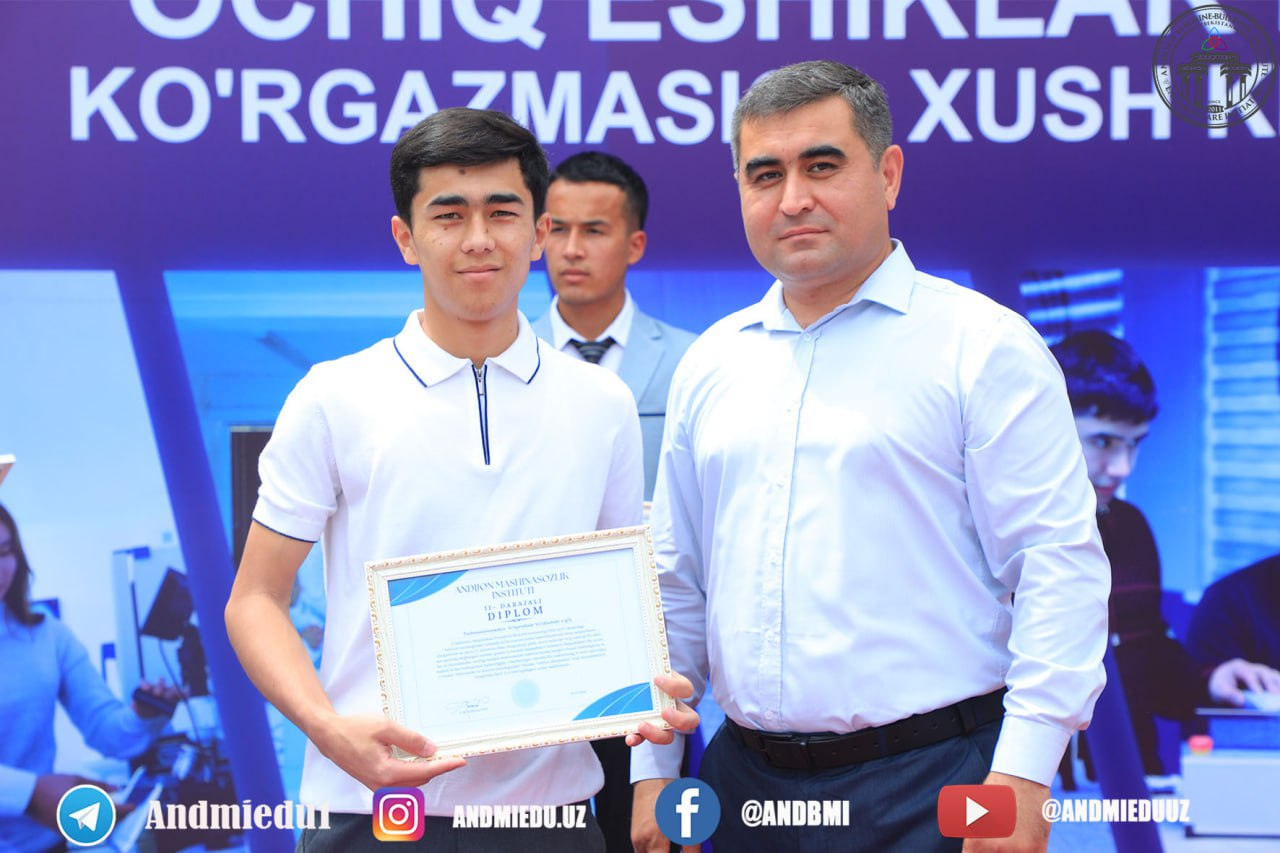
G’ayratbek Toshmuxamedov, born on September 27, 2006, in Uzbekistan, is a talented and ambitious individual who has demonstrated excellence in both academics and athletics from a young age. His story reflects the spirit of the emerging generation of Uzbekistan—resilient, goal-oriented, and deeply committed to personal and national development.
From his early years, G’ayratbek showed great interest in sports and learning. His determination and hard work led him to achieve high honors in academic Olympiads, particularly in mathematics, physics, and information technology. He actively participated in numerous competitions and became a multiple-time winner, including twice securing first place in district-level IT Olympiads and once at the Andijan regional level.
His achievements in sports are equally impressive. G’ayratbek specialized in freestyle wrestling, where he earned several prestigious titles, including being a seven-time champion of the Andijan region, two-time champion of the Fergana Valley, and a national champion of the Republic of Uzbekistan. Additionally, he claimed multiple bronze medals at both regional and national levels. Expanding his athletic pursuits, he also trained in boxing and became the Uzbekistan boxing champion, while actively competing in tournaments held in Andijan.
However, in 2021, G’ayratbek faced a significant setback due to a physical injury, which forced him to temporarily step away from professional sports. Rather than allowing this challenge to halt his progress, he redirected his energy toward academics with even greater enthusiasm. This pivotal moment became a turning point in his life.
His academic journey is both rich and diverse. He began in a Russian-language school, later enrolling in a specialized institution focused on mathematics and physics. Eventually, he graduated from the Marhamat Specialized School under the Presidential Agency for Educational Institutions, an elite school dedicated to nurturing gifted students in Uzbekistan.
Currently, G’ayratbek is pursuing his undergraduate studies at Andijan State Institute of Technology, specializing in Information Systems and Technologies within the Faculty of Intelligent Control and Computer Systems. In addition to excelling in his studies, he actively engages in university life by organizing various events and intellectual competitions, demonstrating leadership and teamwork.
Despite his young age, G’ayratbek Toshmuxamedov embodies the qualities of a gifted programmer, a dedicated athlete, and a promising youth leader. His journey illustrates not only personal ambition but also the broader progress and aspirations of modern Uzbekistan. As he continues to grow and contribute to his community, his story serves as an inspiring example for other young people across the nation and beyond.
His academic interests, coupled with his discipline from sports, position him well for future achievements in both national and international arenas. G’ayratbek’s story is far from over—he is only at the beginning of a journey filled with potential and promise.
As the human body the body of the earth is burning
It shrinks the atmosphere to lead
What does it mean the outer beauty of rain?
When the people of Gaza are falling in hunger
Fire snatches away the lives
As the little animals are crushed to the ground
In one part we sleep with sweet dreams
The other section is trapped in flame.
Chapainawabganj, Bangladesh
25 July, 2025.
Md. Mahbubul Alam is from Bangladesh. His writer name is Mahbub John in Bangladesh. He is a Senior Teacher (English) of Harimohan Government High School, Chapainawabganj, Bangladesh. Chapainawabganj is a district town of Bangladesh. He is an MA in English Literature from Rajshahi College under National University. He has published three books of poems in Bangla. He writes mainly poems but other branches of literature such as prose, article, essay etc. also have been published in national and local newspapers, magazines, little magazines. He has achieved three times the Best Teacher Certificate and Crest in National Education Week in the District Wise Competition in Chapainawabganj District. He has gained many literary awards from home and abroad. His English writings have been published in Synchronized Chaos for seven years.