Poetry from Lidia Popa

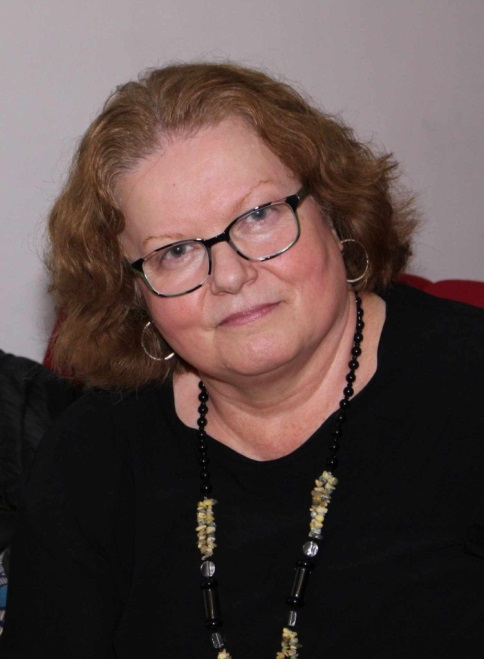
Middle aged light skinned woman with red curly hair and reading glasses with a long shell necklace and a black top.

Green butterflies are born as a mystery

(At Eminescu’s Linden Tree)

Green butterflies in faces of bursting disappointments,

Flies among the white swans through the groves

The late silk of the grass is torn to shreds

Pollen that it spreads with honor over the pearl.

In the synapses they wave their lascivious gaze

Like crows peck at the granary

Eternal offering by deposition at the altars

Forgetting the dew that love knew.

A singing artisan bird

From the secular Linden, amazed, admires them

The sleeping grove naturally hides the path,

Under its white mantle the Earth breathes.

They are not green butterflies but swift snowdrops

Under the rays of the sun the good ones emerge.

BIOGRAPHY

Lidia Popa was born in Romania in the locality of Piatra Șoimului, in the county of Neamț, on 16th April, 1964. She finished her studies in Piatra Neamț, Romania with a high school diploma and other administrative courses, where she worked until she decided to emigrate to Italy.

She has been living for 23 years and worked in Rome as part of the wave of intellectual emigrants since the fall of the Berlin Wall.

She wrote her first poem at her age of seven. She is a poet, essayist, storyteller, recognized in Italy and in other countries for her literary activities. She collaborates with cultural associations, literary cenacles, literary magazines and paper and online publications of Romanian, Italian and international literature. She writes in Romanian, Italian and also in other languages as an exercise in knowledge.

BOOKS

She has published her poems in six books:

in Italy:

1. ” Point different ( to be ) ” – ed. Italian and

2.” In the den of my thoughts ( Dacia ) ” – ed. bilingual Romanian/ Italian AlettiEditore 2016,

3.“ Sky amphora ” – ed. bilingual Romanian/ Italian EdizioniDivinafollia 2017,

in Romania:

4. ” The soul of words” ed. bilingual Romanian/ Albanian Amanda Edit Verlag 2021,

5.” Syntagms with longing for clover ” ed. Romanian, EdituraMinela 2021.

6.” The Voice interior ” LidiaPopa and BakiYmeri ed. bilingual Romanian/Italian, Amanda Edit Verlag 2022.

Her poems featured in more than 50 literary anthologies and literary magazines on line from 2014 to 2023 in Italy, Romania, Spain, Canada, Serbia, Bangladesh, United Kingdom, Liban,USA,etc.

Her poems are translated into Italian, French, English, Spanish, Arabic, German, Bangladesh, Portuguese, Serbian, Urdu, Dari, Tamil, etc.

Her writings are published regularly with some magazines in Romania, Italy and abroad.

She is a promoter of Romanian, Italian and international literature, and is part of the juries of the competitions.

She translates from classical or contemporary authors who strike for the refinement and quality of their verses in the languages: Italian, Romanian, English, Spanish, French, German, stating that “it is just a writing exercise to learn and evolve as a person with love for humanity, for art, poetry and literature “.

SHE IS

*Member of the Italian Federation of Writers (FUIS)

*Honorary member of the International Literary Society Casa PoeticaMagia y Plumas Republic of Colombia,

*Member of Hispanomundial Union of Writers (Union Hispanomundial de Escritores) (UHE) and Thousands Minds For Mexico (MMMEX)

*President UHE and MMMEX Romania, August 21, 2021

*She had come power of attorney Vice-president UHE Romania, Mars18, 2021- August 21, 2021

*President UHE and MMMEX Romania, August 21, 2021

*Counselor from Italy for Suryodaya Literary Foundation Odisha India,

*Director from Italy for Alìanza Cultural Universal (ACU) Argentina

*Member Motivational Strips Oman,a member of numerous other literary groups at the level internationally,

*Director of Poetry and Literature World Vision Board of Directors (PLWV) Bangladesh

*Membership of ANGEENA INTERNATIONAL NON PROFIT ORGANISATION of Canada

International Peace Ambassador of The Daily Global Nation International Independent Newspaper from Dhaka Bangladesh – 2023

*Founder literary group Lido dell’anima with LIDO DELL’ANIMA AWARDS

*Founder LIDO DELL’ANIMA Italian magazine

*Founder SILVAE VERBORUM INTERNATIONAL multilingual magazine

*Founder literary currently #homelesspoetry

etc.
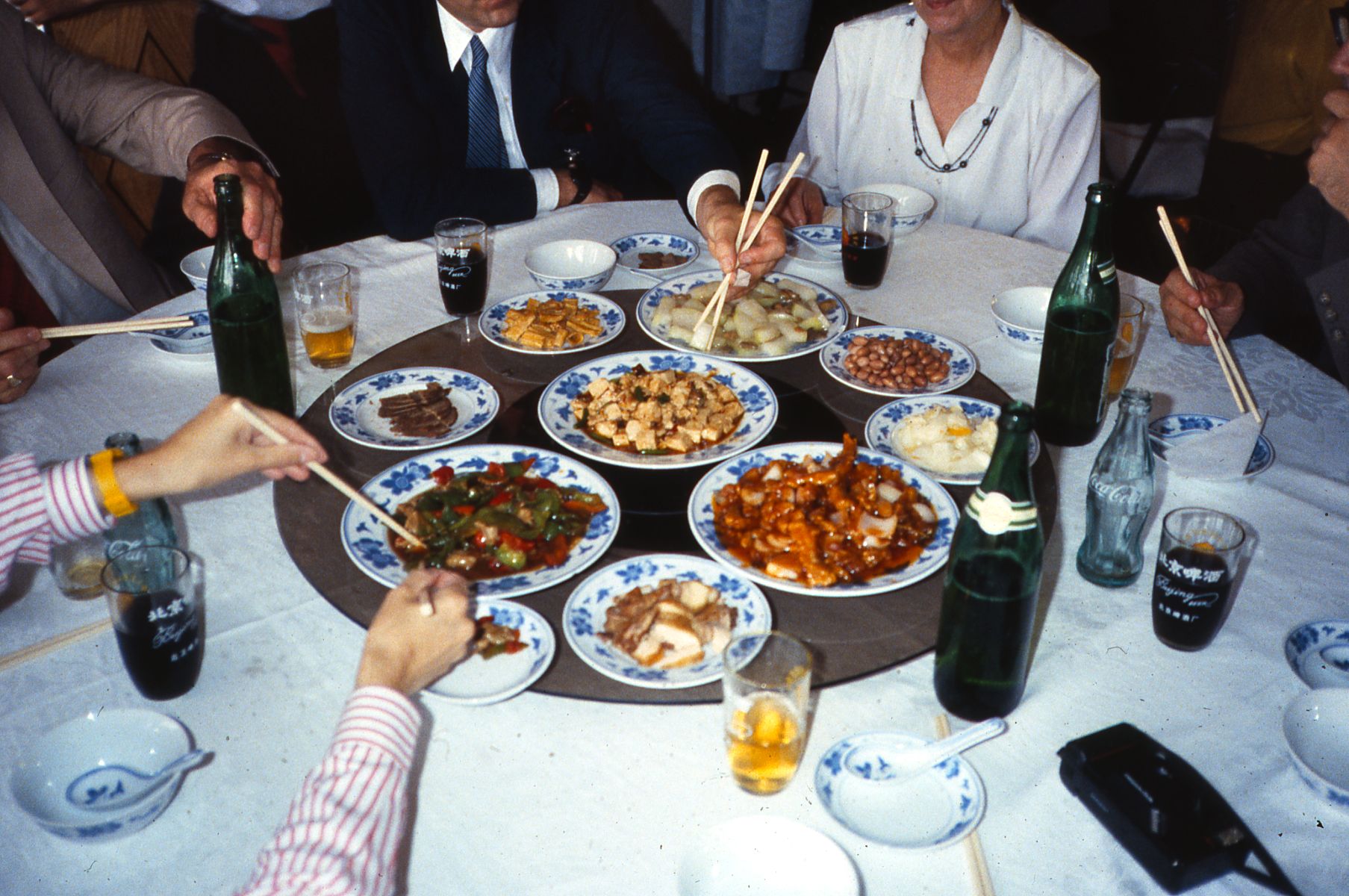
Synchronized Chaos’ First January 2025 Issue: Lazy Susan of Ideas

By GeorgeLouis - While on a tour of China, I took this photo for my own use. Previously published: Never published., CC BY-SA 3.0, https://commons.wikimedia.org/w/index.php?curid=28867244
By George Louis – While on a tour of China, I took this photo for my own use. Previously published: Never published., CC BY-SA 3.0, https://commons.wikimedia.org/w/index.php?curid=28867244

First of all, an announcement from contributor Chimezie Ihekuna, who is seeking an investor/executive producer for the project, One Man’s Deep Words. It is set in the US.

Produced By Vincent Turner, Developed By Robert Sacchi, 115 pages. Phase: Pre-production/Development, Budget Estimation: $23,000-314,000. Pitch deck and budget list available, please email synchchaos@gmail.com if interested.

Charles Griffin, a philosophy professor, is challenged by Adam, one of his students, over his unruly behaviour while lecturing. Though Charles is unhappy lecturing by the books, Adam’s challenge becomes the inspiration behind his nascent philosophy.

The first issue of 2025 presents a Lazy Susan of Ideas. This phrase comes from Desiree Richter, author of The Presence of Absence, about the accidental death of her young son and her journey out of rigid religious fundamentalism, out recently from the University of New Orleans Press.

In a recent interview on the podcast I Was a Teenage Fundamentalist, Richter describes reading a wide variety of books in her time of grief and being exposed to a whole “lazy Susan of ideas.”

This month’s contributors present a whole turntable of thoughts as well. Some, like Richter’s, are in response to personal or larger griefs, while others are philosophical or introspective or academic or celebratory.

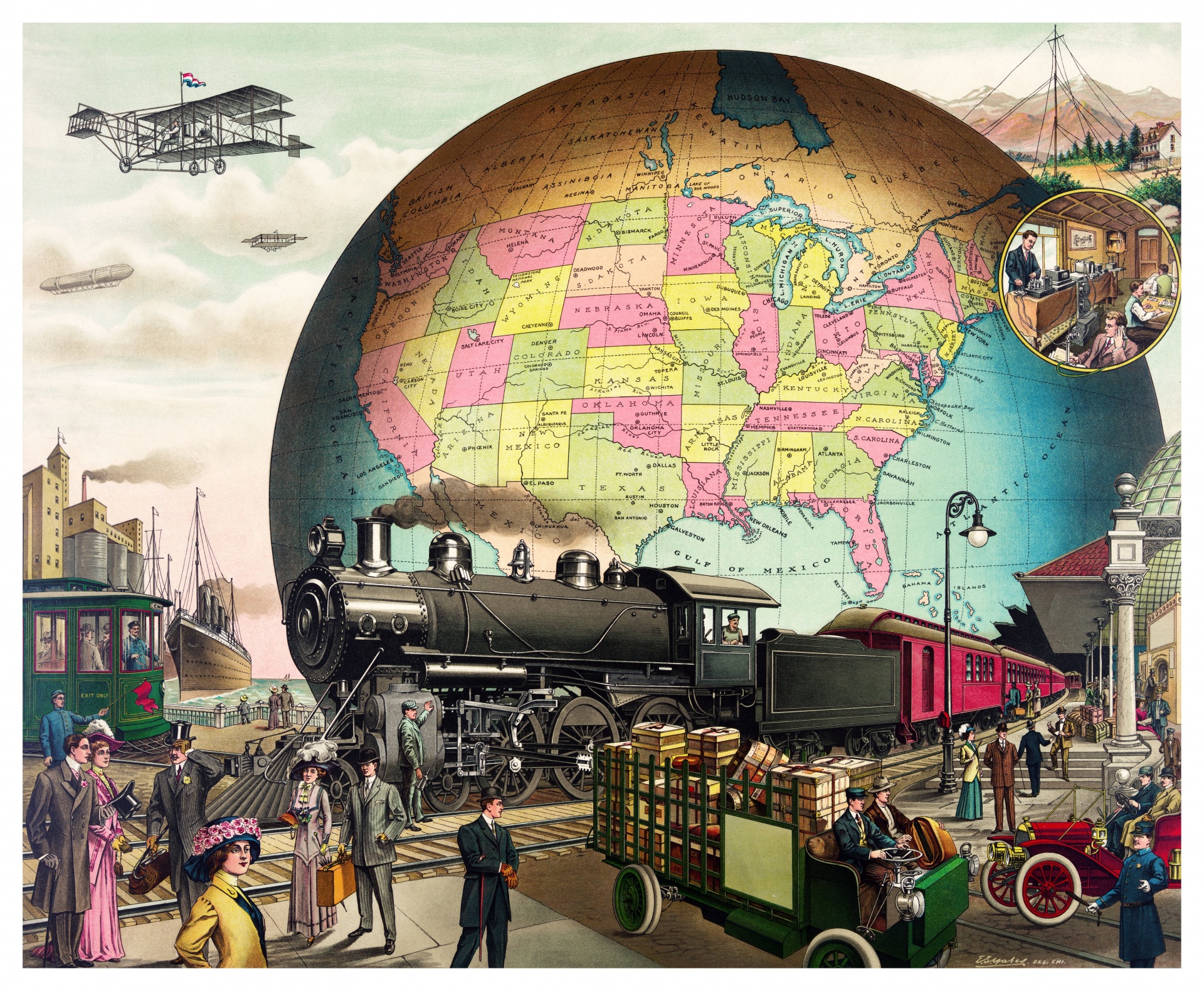
Vintage stylized image of a globe with the US in front, biplanes and trains and bridges and city scapes in view.
Image c/o Andrea Stockel

Jack Mellender travels on a lyrical romp through many decades of wild living in California. Shahnoza Ochildiyeva celebrates her educational and personal accomplishments. Ashraful Kabir conveys the journey of self-discovery with a metaphor of a boat ride as Abeera Mizra renders personal awakenings through determined verse and Nick Gunter laments that a person doesn’t recognize his capacity to change. Shukurillayeva Lazzatoy Shamshodovna outlines some pathways towards building new and positive habits while Robiya Ismailjonova brings a spiritual perspective to her call for moral accountability and repentance.

Nathanael Johnson highlights the internal struggles of a boy as he figures out how to grow into a man. Jessica Hu illustrates the self-destructive urges that can come with moments of despair.

Linette Rabsatt’s poetry prepares us for comfort, then joggles our mind with clever contradictions. Marc Frazier’s introspective poetry probes childhood, memory, desire, mortality, and our search for meaning. Noah Berlatsky humorously explores the sometimes-vague boundaries between whimsy and reality. Mark Young’s postwoman pieces frame the world’s many random offerings as gifts to be opened and explored. Susie Gharib speaks to the stories we take from history, mythology, literature, and science. Peter Cherches’ humorous story highlights the wonder, curiosity, and humor that emerges as very different beings meet each other.

Eva Petropoulou Lianou interviews Jeanette Eureka Tiburcio, president of a women’s intellectual organization, on how her new book is a fulfillment of a childhood dream and on her wishes for the world.

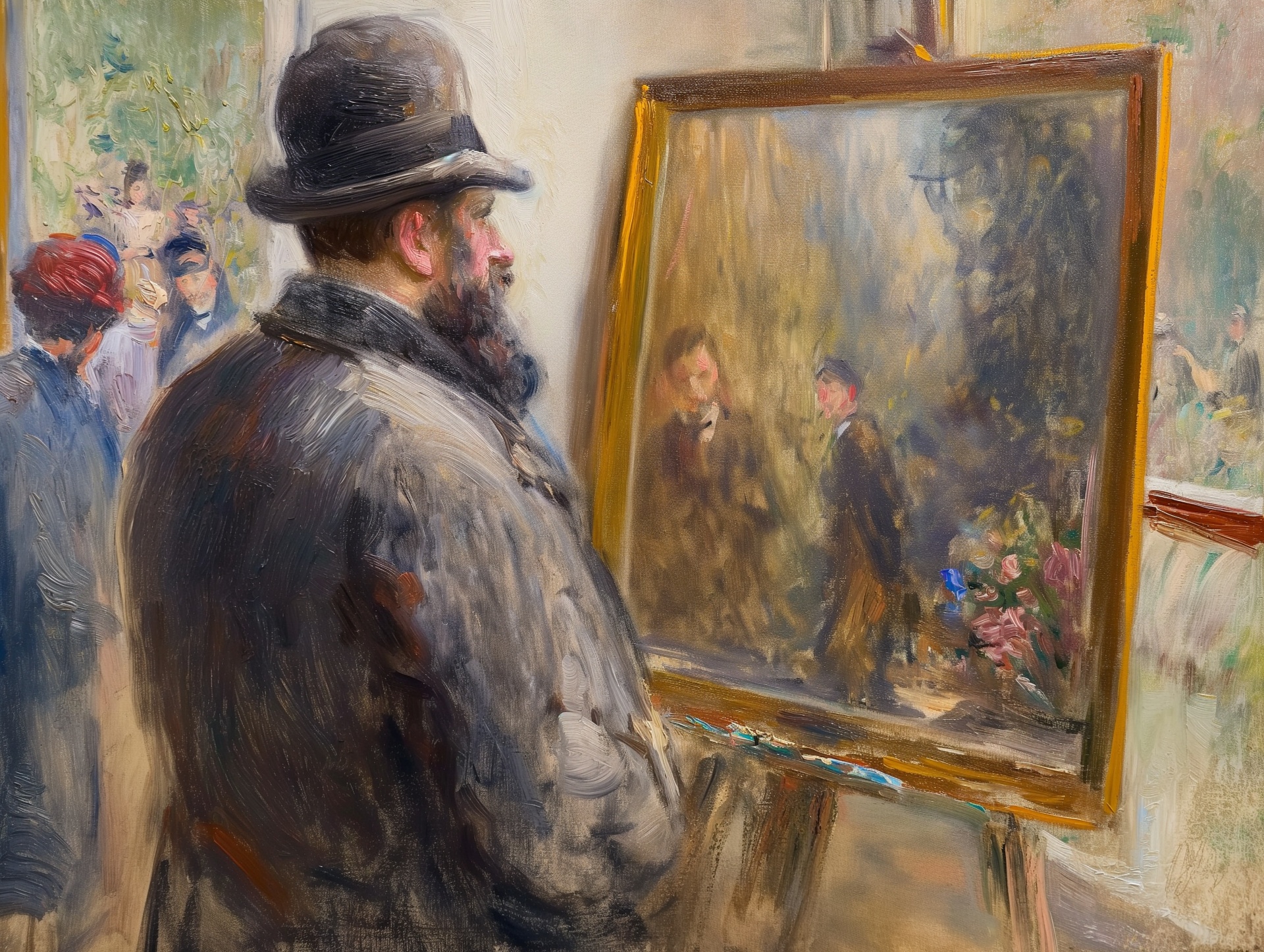
Older man in a suit and coat and top hat with a beard examines an Impressionist oil painting of two peopel and some flowers.
Image c/o Omar Sahel

Yahia Lababidi’s book What Remains to Be Said shares aphorisms and blurbs of his wisdom. Gulsora Mulikboyeva reflects on the impact of a teacher who inspired her to better write in her native Uzbek language.

Farangiz Abduvahidova outlines the life and literary works of Uzbek poetess Mohlaroyim and her importance to Uzbekistan’s literary heritage. Maftuna Bozorova honors the cultural legacy of Uzbek poet Alexander Feinberg. Aziza Burkhonova discusses various pedagogical techniques for language learning. Olimova Shahina explores creative ways to teach English. Eva Lianou Petropoulou outlines the accomplishments of Italian Naive panter Nino Camardo. Mamazoirova Rayhona regales us with poetry on the beauty of the colorful Uzbek flag. Federico Wardal interviews Dr. Ahmed Elsersawy on his renewed efforts towards cultural partnership between Egypt and the United States.

Rachida Belkacem’s bilingual poetry evokes a transcendent spiritual companionship. Gabriela Peinado Bertalmio elucidates the beauty of the love between a mother and child. Rahmiddinova Mushtariy pays tribute to her wise and caring father. Duane Vorhees explores sensual intimacy from a variety of angles and perspectives. Lan Qyqalla jumps ahead to Valentine’s Day and autumn in his metaphoric and mythical love poems. Graciela Noemi Villaverde, within intricate verse, compares her love to a sunset and to the dawn.

Kassandra Aguilera illuminates the exquisite agony of unrequited love. After losing love, Taylor Dibbert finds unexpected comfort in solitude.

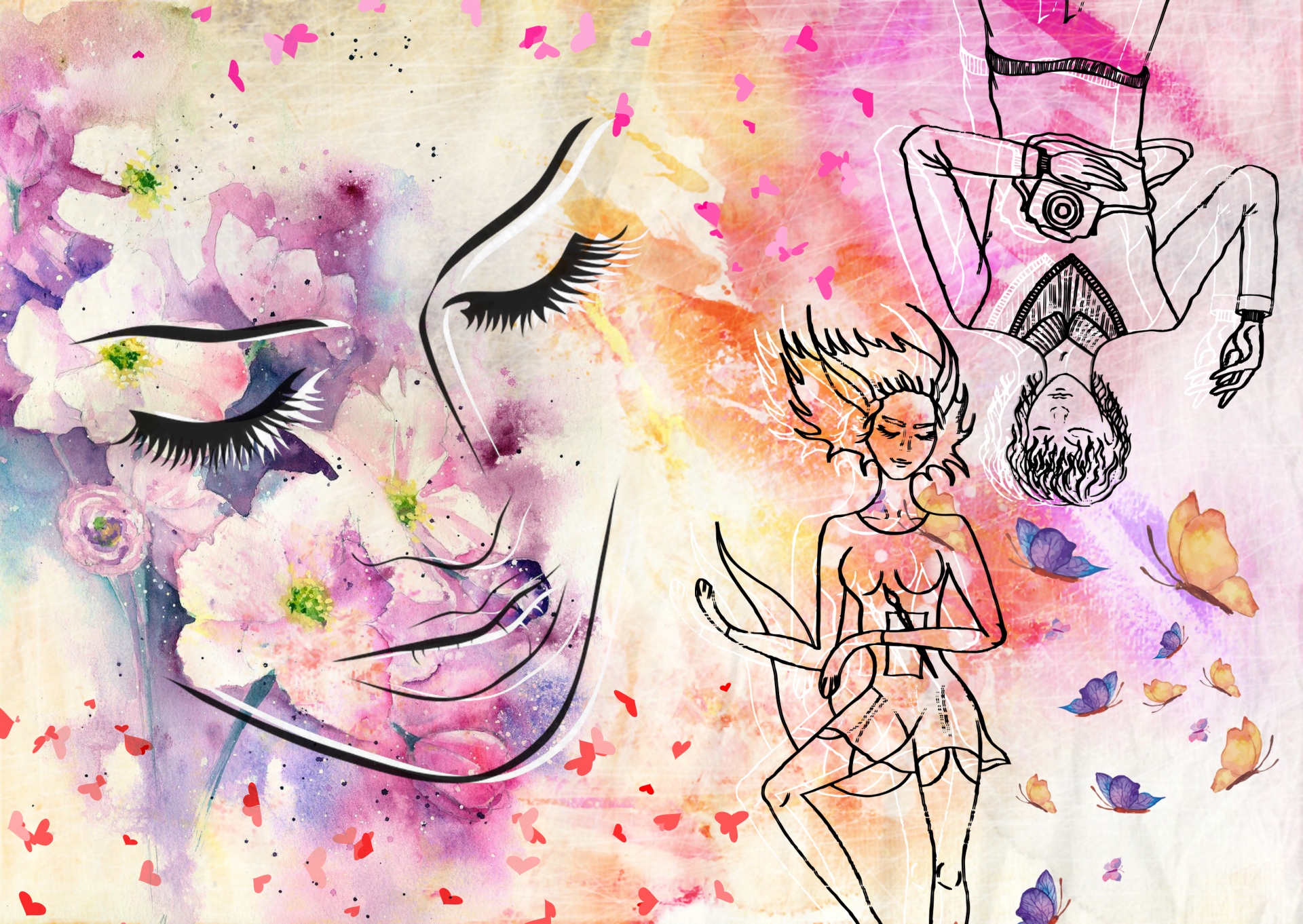
Stylized woman's face with long eyelashes and two cartoonish people near her, a girl and a guy, with the guy upside down. Flower petals and butterflies in the pink and blue and purple background.
Image c/o Victoria Borodinova

Don Edwards’ poetry deals with themes of love, loss, uncertainty, and the corrosive nature of domination and control on love. David Sapp’s poems critique the ease and sexiness all too many people have given to forms of violence and domination. Daniel De Culla lampoons dictators, and those with the ambition to become such, from around the world, including the U.S. Pat Doyne mourns the recent U.S. presidential election by parodying a famous poem about a loss in baseball.

Fayowole Benjamin’s poetry laments the toll of war on civilians and families. Mesfakus Salahin reflects on how some of the world is still reeling after the two world wars of the past century. Mykyta Ryzhykh evokes wartime and unanswered calls for love. Through his tale of violation and self-defense, Bill Tope highlights the ubiquitous problem of sexual violence. Christopher Bernard explicates and excoriates the violence inherent within neoliberalism manifested through healthcare systems, showing how organizations and procedures can be more destructive than thugs on the street.

Mirta Ramirez’ piece highlights how true romantic love can inspire artistic and intellectual creativity. Abigail George expresses her poetic hopes for peace in the Middle East as Lidia Popa highlights how artistic creation and the sharing of ideas can be noble pursuits bringing people together across cultures.

Z.I. Mahmud digs out the psychological and sociological and spiritual themes embedded within Samuel Beckett’s play Waiting for Godot, the tale of two “everymen” condemned, or blessed, with eternal anticipation. Arjun Razdan probes our obligations to each other in his short story “The Misanthrope” and questions what we owe each other and the best ways to do good.

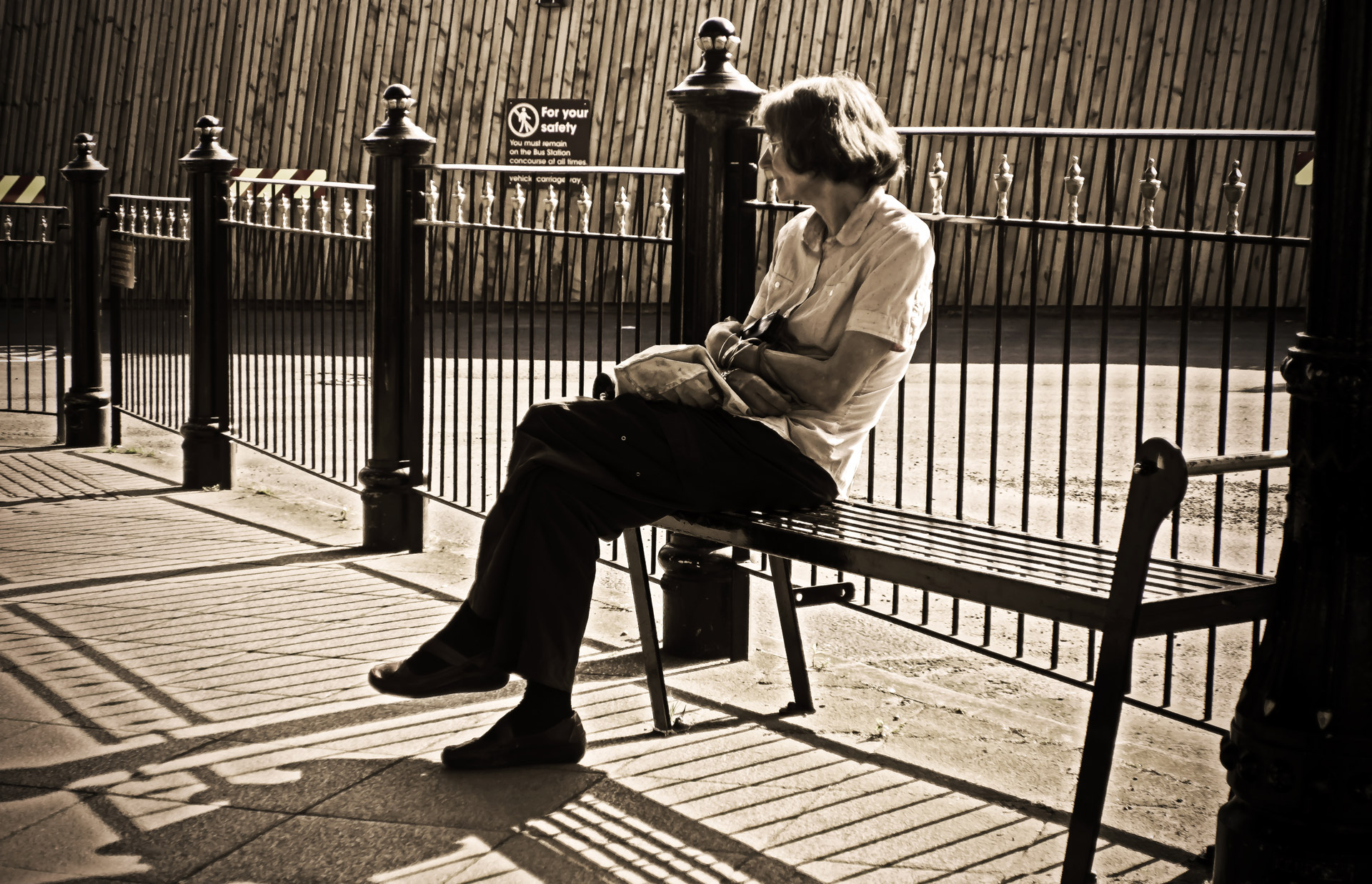
Sepia toned middle aged short haired woman with dark hair and a bag and pants and shoes waiting alone on a bench near a fence.
Image c/o George Hodan

Peter J. Dellolio’s novel The Confession elucidates the psyche of a condemned man who may or may not be guilty. J.J. Campbell’s poetry emanates from the lingering effects of childhood abuse, memories particularly acute around the holidays. Jake Triola’s poetry troubles itself with the state of the world and the speaker’s perceived personal failures, yet finds solace in walking outdoors.

Jumanazarov Zohidjon ponders the calming beauty of rain while Sayani Mukherjee celebrates a beautiful day on the green earth. O’tkir Mulikboyev pays homage to snow, trees in winter, romance, his home country, song, cheer, childhood, and the holidays. Brian Barbeito reflects on nature and his childhood on a still, snowy day. Jacques Fleury revels in a woodland dawn and the diversity and richness of the natural world. Corey Cook’s new haiku chapbook heads held low hallows a sacred moment when a cardinal bird sings in an empty church.

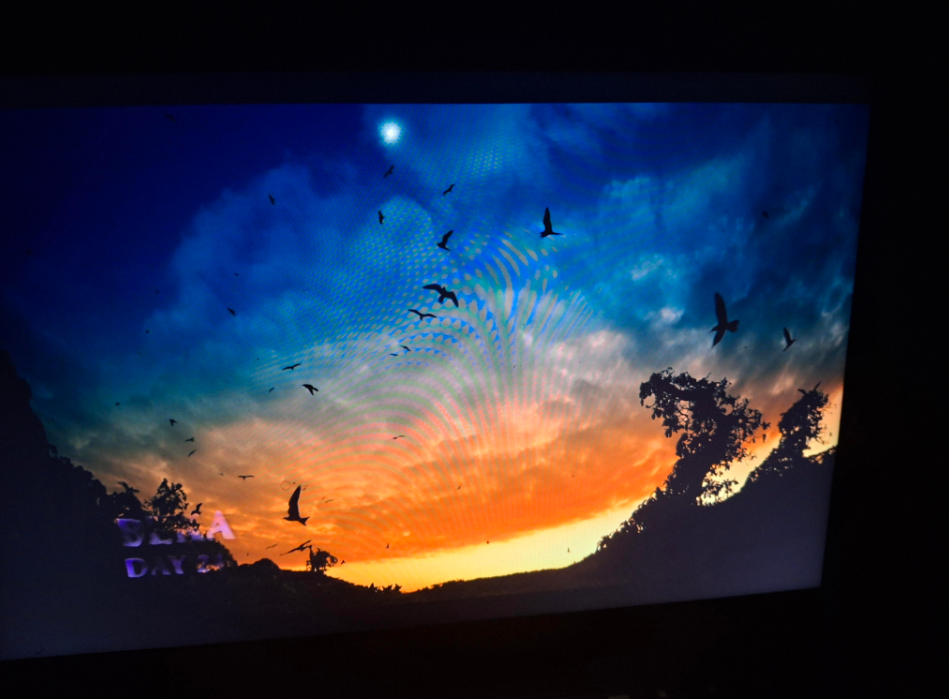
Sunrise outdoors in a clearing of trees. Yellow, orange, pink, light and dark blue sky with cloud cover and black flying birds.
Photo Art © Jacques Fleury All rights reserved

Isabel Gomez de Diego’s photography illuminates the glory of a city lit up at night for Christmas. Marc Frazier’s photography spotlights moments of intersection among nature, urbanity, and the human imagination. In Mahbub Alam’s piece, a couple watches a thunderstorm from indoors through a window, captivated by the effects of the wind. In contrast, Sodiqova Adolatxon’s poetic speaker gets tired of staying inside through a rainstorm and longs to go back outdoors.

Nurmurodova Gulsoda explores elements of trigonometry in her piece, reveling in the beauty of mathematics as one of the languages of nature. Jasur Mulikboyev celebrates the way a gifted chemistry teacher makes the material come alive for students. Ruxshona Toxirova presents some methods for better diagnostics and treatment for children with type 2 diabetes.

Maftuna Mehrojova outlines the need for and progress towards sustainable and green economic development in Uzbekistan. Alisher Muhtarjonov issues a strident call for people of the world to protect nature.

Eva Lianou Petropoulou encourages us to choose care and respect for others in the face of life’s personal and global struggles. Zuhra Ruzmetova celebrates the New Year and the dawning of renewed hope. Lilian Dipasupil Kunimasa reflects on the meaning of the nativity scene and on starting afresh to choose kindness and a compassionate attitude in the New Year.

Essay from Farangiz Abduvahidova

Photo is of a young Central Asian woman with dark hair, brown eyes, and a gray pant suit over a white collared top speaking at a podium.

Abduvahidova Farangiz

2nd stage student of Samarkand State University named after Sharof Rashidov. 

Abduxalilboyev Alisher 3rd stage student of the Tashkent University of Information Technologies named after Muhammad Al-Khorazmi​​​​. Uzbekistan. 

Artistic arts found in Nadirabegim’s life path and ghazals.

Abstract: In the article, we have mentioned the life path and literary heritage of our poetess Mohlaroyim, who made a great contribution to the development of Uzbek poetry. Also, we will get acquainted with the explanation of the artistic tools used in her ghazals and the sentences that are the basis for the creation of this art.

Key words: Nadira, Maknuna, Komila, metaphor, tazad, ghazal, muhammas, literary environment.

Our talented poet Mohlaroyim, who wrote ghazals in Persian and Turkish under the pseudonyms “Komila”, “Maknuna” and “Nadira”, was born in 1792 in the family of Andijan governor Rahmonqulbi. He was not only a teacher, but also an enlightener and a statesman. In 1807, Nadira was married to Omar Khan, governor of Margilan. Nadira plays a major role in shaping the literary atmosphere in the palace. The reason is that her husband Omar Khan also created under the pseudonym Amiri. Nadira meets Uvaisi and invites him to the palace as a teacher. In 1810, Amir Olim Khan dies and Umar Khan comes to the throne. From this year, Nadira will continue her work in Kokon. Due to the tragic death of Amir Umar Khan in 1822, his son Madali Khan took over the throne. During Madali Khan’s rule, many madrasahs, mosques, caravanserais were built and served to improve the creative environment. Nadirabegim and his family were executed by Amir Nasrullah, the ruler of Bukhara Emirate in 1842.

 Although the poetess did not live long, her works of about 10,000 verses were inherited. In addition to ghazals, he also penned mukhammas, rubai, and fard genres. In his ghazals, separation and grief are sincerely described and he continued the traditions of famous poets such as Navoi, Bedil, and Fuzuli. There are 19 (328 verses) ghazals under the pseudonym “Komila”, and one divan with 333 ghazals under the pseudonym “Maknuna”. Under the pseudonym “Nadira” 180 poems are collected, 136 of them are in the Uzbek language, 44 in the Tajik language. Among them, there are 11 muhammas, 2 musaddas, 1 muhammas, 1 translation, 1 table of contents and 1 statement.  

Nadira’s radiative ghazals “Vasl uyin obod mem…”, “Marhabo”, “Dahrni examinet ke te”, “Sogindim” are very popular. A number of artistic arts were also used to make the ghazals more subtle.

I improved the house, but it was destroyed by the emigration

Unfortunately, this building was destroyed.

In this verse, the art of tazad was created by means of the words prosperity and destruction. Tazad is an art created by imitating things. Seli ghamdin is used in the meaning of a flood of sorrow and was the basis for the creation of the art of Mubolaga. Exaggeration is the art of exaggerating beyond belief.

He did it until the piraham stain revealed my tongue,

I don’t have any more love hidden in my heart.

The words love, heart, and soul created the art of harmony, and the words open and hidden created contrast. Contrast is an art created by contrasting things. Proportion – Many art forms rely on the spiritual association of words in poetry. It is the poet’s use of words that are logically related to each other and require each other.

Zahida, forgive the people of love,

What happened to Sheikh San’an in Yor Bay?

This verse describes the art of talmeh. Sheikh San’an used this art by mentioning his name. Ishq, love, asceticism are the basis of the art of relationship. The art of proportion is formed from cognate words and synonyms in linguistics. Talmeh is one of the widely used art forms in classical poetry. In this, the poet summarizes his thoughts by referring to a famous story, event or work, person. 

Although there was a special order of the giants,

After all, Suleiman died in a bad way.

Mor is the art of dev tazad, Sulayman is the art of talmeh.

Because the jewel of my heart is blood instead of love,

 Tears dripped from my eyesThis verse uses the art of tashbeh, the gem of love – the gem of love. Allegory is one of the most productive poetic arts widely used in literature. It can be said to make it into Uzbek. In metaphor, things, signs, and actions are described by analogy and comparison. In addition, another art was involved in this very verse. It emphasizes the tears through the word necklace. This art is called metaphor. Istiora is an Arabic word that means “borrowing”. One thing is called by another name.

My figon, the collar of my son,

I am very sad, my heart, you are not aware of it.

In this verse, the word “heart” is used as an exhortation. From the fine arts, it was the basis for the art of exclamation. Nido is distinguished from other poetic arts by its ability to openly and powerfully describe the feelings and emotions of the human heart. In this case, the thought is focused on a person or an object.

If you want to repair the Kaaba,

Turn the broken heart into a prosperous one.

In this verse, the word Ka’ba is contrasted with the words talmeh and abad – ruin. In our linguistics, the words that form the art of contrast are called antonyms – words with opposite meanings.

The work of the poetess is a great heritage for us. Despite being the wife of the king, Nadirabegim did not stop her creativity. He worked to make people and people intelligent and enlightened people. He managed to unite the intellectuals of that time around him. Life at that time was a little easier. The work of the poet began to be studied during her lifetime and works dedicated to her were created. For example, “Tuhvatut-tawarikh” by Avazmuhammad Attar, “Muntahabut-tavarikh” by Hakim Khan Tora, “History of Fargana” by Ishaq Khan Tora, “Haft Gulshan” by Nadir-uzlat. We saw the poetic arts in the analysis of the poet’s ghazals and analyzed them. We will continue the analysis in our next work.

List of used literature.

1) 10th grade literature part 1. “National Encyclopedia of Uzbekistan” state scientific publication.: Tashkent – 2017

2) 6th grade literature part 2. “Spirituality”.: Tashkent – 2017.

3) Uz.m.wikipedia.org

4) knowledge.uz

5) n.ziyouz.com

Poetry from Sayani Mukherjee

Green


A slowly cacophonous morning
Screaming of faultless surprises
I call back at the ruinous evening
The way the sea chanters will sing
And mourn the last evening
The soil of earth soaked happiness
The numbness, the choice of green fragility
The bemoaning madness of survival of green moist
Is this a new horizon of tumultuous ocean? 
I sign and beck a call of happiness
The night knows thousand epiphanies
A fireglow at the tale end 
Till I lose my breathe for the sky line wine. 

Essay from Jumanazarov Zohidjon

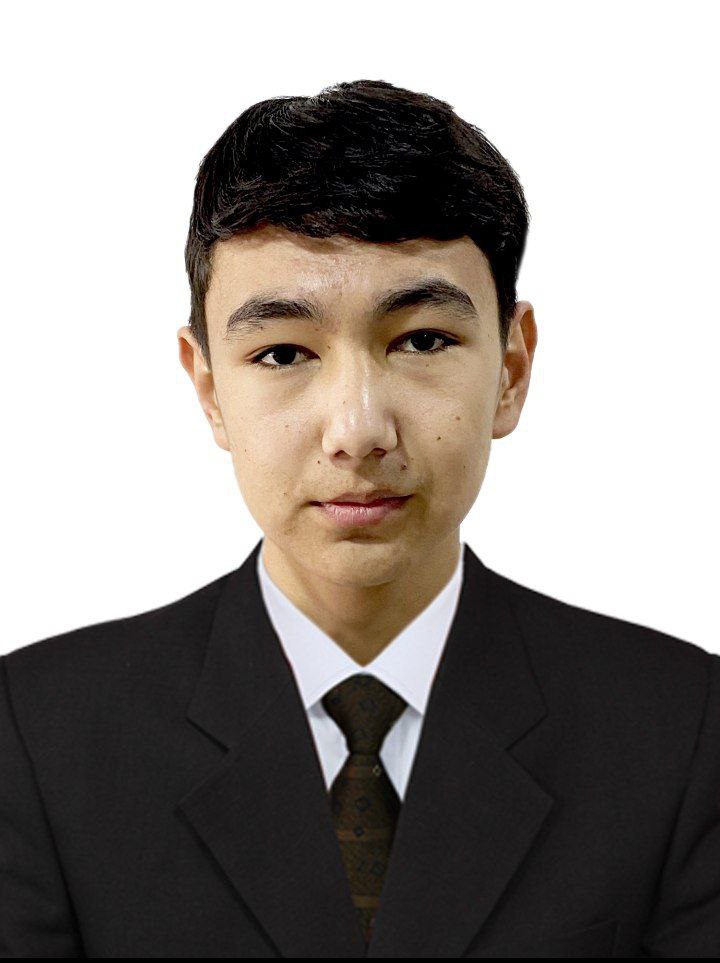
Young Central Asian man with short dark hair, brown eyes, and a black suit and tie.

I love the rain

I love the rain, its gentle touch

A soothing balm, I love so much

It washes away my worries and pain

And fills my soul with peace again

The pitter-patter on the window pane

A symphony of nature’s refrain

The earth drinks in its sweet embrace

And all the world seems in its place

The air is cool, the scent is clean

A tranquil beauty, rarely seen

I love to dance in the falling drops

And feel the rhythm, my heart never stops

The rain brings life to every living thing

A gift from above, like a melody to sing

I love the rain, its calming sound

It brings me joy, wherever it’s found

Jumanazarov Zohidjon Eldor’s son was born on March 14, 2006 in Narpay district of the Republic of Uzbekistan, Samarkand region. Nation is Uzbek. Incomplete education. In 2012-2023 he studied at the 16th comprehensive school of Narpay district of Samarkand region. In 2023, the Uzbek State Institute of Arts and Culture was admitted to the “Culture and Arts Management” on the basis of a grant. He has achieved a lot of success during school and now. During the institute, the Ministry of Culture of the Republic of Uzbekistan, and in December 2023, set a global ranking record for IQ (40 seconds).

Poetry from Duane Vorhees

DON’T INTERRUPT

My tongue is trying mightily

to memorize your mouth.

Ny tongue is training hard

for your prestigious,

and demanding,

texts to come,

MY I

Moleculed into existence by hope’s heredity,

any I is a sum of its actions and its beliefs.

At first these were fostered by practice and authority,

and then in the youth they were constellationed by passion,

and then in a careful age constitutioned by reason.

This nowI lies striated by habit and destiny.

CHANGING HABITAT

That which is between us–

:is it a floor or a corridor?

:is a wall or an interval?

:is it concrete or a ghost?

The cityscape altered,

our promenades became barricades.

Every touch feels more like a cut.

Marathons may falter.

A dozen christenings, one thousand crypts.

All the tears we wept, the saints invoked, the promises broke.

The ends of beginnings.

FIRST NIGHT IN THAILAND

Giraffic

I lever through the sweat the noise the dirt the traffic

(knowing she smiles somewhere, all brown and gentle hills),

gnu-like

legs unsplay, crookback unscrews like new.

Under her softink waterfall her eyes a-beckon

somewhere, here, in Bangkok.

LEY LINE

Lids closed, fingers open:

With mind and palm along your body map

I’ll trace the truth of you,

Enlightenment needs no light,

This (any!) erotic journey

starts at the muscular center of fizzog expression:

I read your phrenology Braille,

the honest simplicity of your long high forehead.

My explorers find your wisdom,

mind’s eye between world’s myopia,

pause softly between your brows,

before plunging

down—

Forefinger sacrilegiously slaloms the Mimizuki,

j-curves under the septal cartilage,

lingers awhile (for your aromatic delight)

and balances across your fairy-tale philtrum

(the corridor chipped from your upper lip

by Night, the Angel of Conception,

that one, who offered a semen drop to god,

who chose a soul from Eden

to cradle in your mother’s womb,

–who’ll guide you to heaven when you’re done—

a nice bedtime story trades the nevers for the nows.

My whorls rest at Cupid’s Bow.

I nock my arrow for awhile

where tongues trade moistures, exchange heat for heat,

rituals of encouragement for the holy trek to come.

….

Refreshed, the phalangic pilgrimage resumes.

Tips skirt the lover’s chin well to keep from falling in,

then hook under the jaw’s overhang in freefall

hardly braked at all by the void deck

of Adam’s not-quite-absent apple

(the unswallowed remnant of your first man’s forbidden fruit?)

and advance down and down,

hesitating at the mammary gate

(moist by now with the seer’s perspiration)

but able to resist the curious alpining temptation

in the knowledge that the end is near,

the mountains can wait —

sometimes the summit is not the sum.

Down and down, quickly now,

no urge to contemplate the navel

if consecrating the bishopric is the goal.

The pope pops in to Cathedral’s portal,

enters stiff-necked, humbly exits.

The Tree of Life shakes from the roots.

….

All existence starts twice,

once with Mind, once with Life.

Landmarks come and landmarks go

but the path is marked by one straight line–

any perceptive fool can blindly find the way….

And yet the silk hegira road goes on

even farther, beyond the oasis spring

for those who wish to follow —

around the archaic curvature of Mother Earth,

that halves the buttocks’ apple

and turns the heart upside down,

and then up 33 stations of the spine,

–spine–the measure of stiffness in an arrow shaft,

–spine–the furniture that clasps the book together,

–spine–the hard stairway to the base of brain.

Essay from Maftuna Mehrojova (one of two)

THE ROLE OF THE “GREEN ECONOMY” IN ENSURING SUSTAINABLE DEVELOPMENT

Mehrojova Maftuna Soli qizi

student of the Jizzakh branch National University of Uzbekistan named Mirzo Ulugbek

maftunamehrojova64@gmail.com

+998886431643

Abstract: This article analyzes the role and significance of the green economy in ensuring sustainable development. A green economy is an approach to sustainable development that combines natural resource conservation, environmental protection, and economic growth. The article focuses on the role of the green economy in ensuring economic growth, environmental sustainability, and social justice. The importance of a green economy in combating climate change through the transition to renewable energy sources, efficient resource management, and waste reduction will also be discussed. The article aims to explore practical ways to ensure sustainable and equitable development through a green economy.

Keywords: Sustainable development, green economy, environment, renewable energy, efficient resource management, climate change, economic growth, social justice, environmental sustainability, government policies, sustainable development goals, green jobs.

  INTRODUCTION

In society, ideas about the need to conserve natural resources for reaction and research purposes gradually led to the formation of scientific concepts based on environmental responsibility to future generations. The implementation of these ideas into practice should be addressed through ensuring sustainable development. Sustainable development is understood as development based on non-threatening the ability to meet the needs of future generations in order to fully meet the needs of the population. Sustainable development can be viewed as a process that develops through the synergistic effect, based on the interconnected development of the “social” – “economic” – “ecological” triad. An economic approach to sustainable development involves the rational use of limited resources. The social approach will be aimed at ensuring social stability and cultural diversity on a global scale. An ecological approach should serve to ensure the normal functioning of any ecological system.

MAIN BODY

At the beginning of the 21st century, the United Nations put forward 17 interconnected global goals as priority directions for human development. According to a study conducted by the Global Recovery Observatory of Oxford University, supported by the United Nations Environment Programme (UNEP), less than 20% of the total expenditure for recovery is allocated to environmental issues. On December 2, 2023, the President of the Republic of Uzbekistan adopted Resolution No. PP-436 “On measures to increase the effectiveness of reforms aimed at the transition of the Republic of Uzbekistan to a ‘green’ economy by 2030.” A program for the transition to a “green” economy and ensuring “green” growth in the Republic of Uzbekistan by 2030 has been approved. It is designed to achieve the following strategic goals:

• reduction of greenhouse gas emissions by 35% from the level in 2010;

• Increase the production capacity of renewable energy sources to 15 GW and increase their share to more than 30% of the total volume of electricity production;

• increasing energy efficiency in the industrial sector by at least 20%;

• reduce energy consumption per unit of GDP by 30%, including through expanding the use of renewable energy sources;

• significantly increase the efficiency of water use in all sectors of the economy, introduce water-saving irrigation technology on an area of up to 1 million hectares;

• Expand green areas in cities by more than 30% by planting 200 million saplings per year and increasing the total number of saplings to more than 1 billion;

• Increase the level of recycling of solid household waste by more than 65%, etc.

The Decree of the President of the Republic of Uzbekistan dated October 4, 2019, “On Approving the Strategy for the Transition of the Republic of Uzbekistan to a “Green” Economy for the Period 2019-2030,” is an important program for ensuring sustainable development based on the “green economy” in our country. Among the important tasks of the transition to a “green economy” are increasing the energy efficiency of the economy and the rational use of natural resources. These target indicators will be achieved through the modernization of technologies and the development of financial mechanisms. During the implementation of the strategy for the period up to 2030, specific greenhouse gas emissions per unit of gross domestic product will be reduced by ten percent from the level of 2010, and up to one hundred percent of the population and economic sectors will be provided with modern, affordable and reliable electricity. The production and use of environmentally friendly motor fuel and cars will be expanded, and electric transport will be developed.

International scientific activity in ensuring sustainable development was initiated by the UN. In 2000, the UN General Assembly adopted the Millennium Development Goals, and 2015 was designated as the year to calculate the achievement of the set goals. In 2012, the UN emphasized the need for the global community to set development goals after 2015 in order to achieve the UN Millennium Development Goals. Thus, at the Rio+20 Conference on Sustainable Development in 2012, the leaders of countries around the world agreed to develop the Sustainable Development Goals (SDGs).

The Sustainable Development Goals include economic, social, and environmental indicators that serve to create a prosperous lifestyle for every person. The agenda includes the implementation of these goals by all UN member states in 2015-2030. The Sustainable Development Goals Framework includes 17 global goals and 169 related tasks: 1) poverty eradication; 2) ending hunger; 3) health and well-being; 4) quality education; 5) Gender equality; 6) clean water and sanitation; 7) cheap and clean energy; 8) creation of decent jobs and economic growth; 9) industrialization, innovation, infrastructure; 10) Reducing inequality; 11) the creation of sustainable cities and comfortable living conditions; 12) responsible consumption and production; 13) combating climate change; 14) protection of marine ecosystems; 15) Conservation of terrestrial ecosystems; 16) peace, justice, and effective governance; 17) cooperation for sustainable development. Uzbekistan has set the task of nationalizing and implementing 16 of these goals. As there are no marine basins on the territory of the republic, the 14th goal (preservation of marine ecosystems) has not been nationalized by Uzbekistan. The problems of ensuring sustainable economic growth within the framework of sustainable development, strengthening an innovative approach to “clean technologies,” and forming a “green economy” are regularly discussed at international economic, environmental, and investment forums. Issues of implementing the “Green Economy” concept in practice form the basis of these discussions.

In the process of transitioning to a green economy, great importance is attached to waste management and recycling. Developing the concept of a circular economy will allow for expanding waste recycling, saving resources, and reducing the negative impact on the environment. Optimizing the process of waste processing and conversion into new materials through nanotechnology serves to increase environmental efficiency. The significance of these technologies lies in the possibility of changing the chemical composition of waste and creating new types of products from them. Another important direction of the green economy is the digitalization of agro-ecological systems. Effective water resource management, field monitoring, and optimal decision-making using artificial intelligence allow for the development of innovative solutions in agriculture. For example, by utilizing drone technologies and artificial intelligence algorithms, it is possible to use land more efficiently, conserve water, and increase agricultural production volumes. The implementation of these digital innovations creates opportunities for resource conservation and effective management.

In Uzbekistan, it is necessary to conduct biotechnological research in the production of recyclable materials, particularly bioplastics and biomaterials. This will help reduce waste and minimize negative environmental impact. Through biotechnologies, it is possible to process waste using insects and microorganisms and create new types of environmentally friendly materials. Scientific research in this field will accelerate the development of recyclable materials and make a significant contribution to environmental protection.

An addition, devices connected to the Internet can use IT and artificial intelligence to effectively manage renewable energy sources and monitor the state of the environment. These technologies enable real-time collection and analysis of environmental data, optimal resource allocation, and efficient consumption management. Data collected using the technical platform can be analyzed in real time and automated solutions can be proposed in the decision-making process. These innovative ideas will serve to accelerate the country’s transition to a “green” economy and create great opportunities for achieving economic stability.

LIST OF LITERATURE USED

1. A.V. Vakhabov, Sh.Kh. Khajibakiyev. “Green Economy.” Textbook – T. “Zebo print” Tashkent – 2021.

2. Brown L.R. Eco-Economy. Building an Economy for the Earth. Earth Policy

Institute. W.W. Norton & Company. New York, London, 2019

3. Resolution of the President of the Republic of Uzbekistan dated October 4, 2019 No. RP-4477 The Resolution of the Republic of Uzbekistan “On Approving the Strategy for Transitioning to a Green Economy for the Period 2019-2030.”