Post‑Beat Poetics: Breath, Lineage, and the Ethics of Community By Kandy Fontaine aka Alex S. Johnson
Post‑Beat poetics begins where institutional Beat revival ends. It is not concerned with titles, laureateships, or the pageantry of literary inheritance. Instead, it returns to the first principles that animated the original movement: breath, embodiment, community, and the sanctity of the outsider voice.
The Beats were never a monolith. They were a constellation of seekers, queers, mystics, addicts, pacifists, anarchists, and wanderers. Their lineage was never meant to be curated by committees or guarded by gatekeepers. It was meant to be lived.
Post‑Beat poetics recognizes that the breath that animated Ginsberg’s long lines and Whitman’s yawp now moves through bodies historically excluded from the center of literary culture. Disabled bodies. Fat bodies. Queer bodies. Neurodivergent bodies. Bodies marked by trauma, poverty, and social disadvantage. These bodies are not deviations from the lineage—they are the lineage.
To write in a post‑Beat mode is to reject the stale rooms where trophies gather dust. It is to open the windows, to let the air in, to remember that poetry is not a competition but a communion. It is to stand with the ancestors—not as icons, but as kindreds whose breath still moves through us.
Post‑Beat poetics is not a return. It is an expansion. It is the recognition that the movement’s future lies not in institutional validation but in the lived experience of those who continue to write from the margins, from the body, from the breath.
It is a poetics of presence, resistance, and remembrance.
It is a poetics of community over hierarchy, lineage over branding, breath over bureaucracy.
It is, simply, a poetics of the living.
"You don't need a weatherman to tell you where the wind is blowing"-Bob Dylan

How quickly we
pivot
From
ethical foundation to
foundations
without them
So we must remember
the breath
It has been carried by
lungs of
generations
The bellows of
lineage
The great in
spir
a
tion
of
Legions
Before
During
and
To come
The heart: the core
beating
alive
open
Tremendous seeking for
true
kindreds
The heart
a muscle of memory as much as
circulation
The ring of the ancestors
their eyes, their
hair, their fingernails
Their nostrils
their
Scents
Sometimes a little
funky
Carried on the breeze
snuffled
snorted
Carried on shoulders
backs
limbs of post mechanics
Disabled
socially disadvantaged
fat
maligned
Queer
Gatekept
Out of the
region
The stale rooms where
trophies are
kept must be
Aired
the
Fuck
Out the
Rigid
enclosures
Where a handful of
anonymous judges
Decide who to
validate
Flung apart with a
tornado of
Just indignation
The skin
is
Holy the
Cells are
holy the
microbes that
crawl in our
Dust are
Holy and I stand with'
Blake and Ginzie I stand
with the
lineage of
kindreds and with the eye of
On
History condemn
The small minded
sacrilege that
Sets arbitrarily
apart that
Poisons
community
The water of
bodies the
Massive up
swelling of
Uncontrolled
anger
Bitterness
BIG MY GATE ENERGY
BIG MEAN GIRL ENERGY
BIG REGINA GEORGE VIBES
MY MY MY MY
PRECIOUS
Awards
ME ME ME
egotism masquerading
As
Whitmanesque
Sovereignty and
Cosmic
Bray
This is not right
I
Speak not for the moment
not for
This time but for
Times
Before
Present and accounted for
For the exiles and the humble of spirit
within the tradition
Feet planted
firmly in the turf of
Consensual
Reality
Breathe
stand and
In that breath and breadth
Command
yourself.
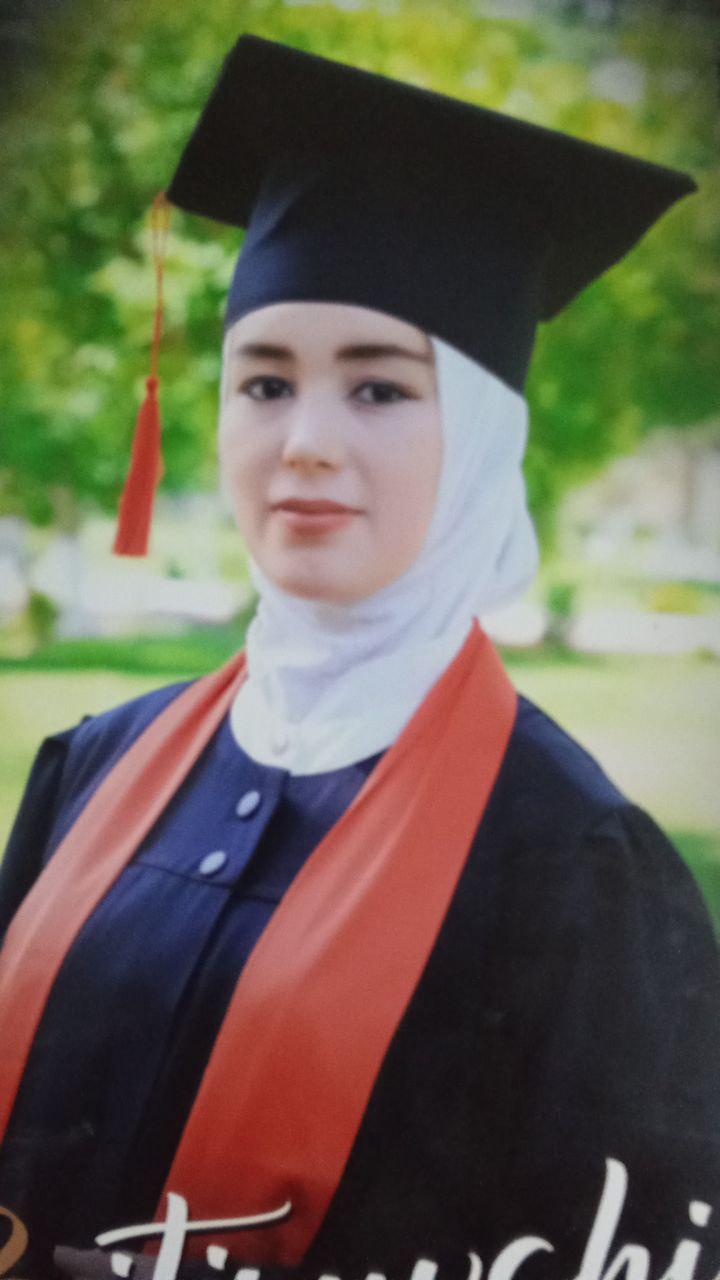
Yoqubova Barnoxon Baxtiyorjon qizi was born on June 2, 2002, in Qo‘shtepa district of Fergana region. From 2020 to 2024, she studied Preschool Education at Fergana State University.Since 2023, she has been working as a teacher at Preschool Educational Institution No. 28, where she has been contributing to the comprehensive development of children.
The Pedagogical Importance of Game-Based Technologies in Developing Attention in Preschool Children
Author InformationYoqubova Barnoxon Bakhtiyorjon qizi — practicing preschool educator.
Research interests: development of attention in children, cognitive processes, game-based technologies, preschool education methodology.
Abstract
This article explores the pedagogical importance of game-based technologies in developing attention skills among preschool-aged children. The study is based on the author’s practical teaching experience and analyzes effective methods of improving concentration through didactic games. Furthermore, it examines the impact of play-based learning on children’s cognitive development and outlines expected educational outcomes. The article is prepared based on an original and practice-oriented approach.
In modern preschool education, the comprehensive development of children is considered a priority. In particular, cognitive processes such as attention, memory, and thinking play a crucial role in a child’s future academic success. Therefore, the application of effective pedagogical methods aimed at developing attention in preschool-aged children is of great importance.
Main Part
For preschool children, play is the leading type of activity. Through play, children explore the environment, acquire new knowledge, and express their abilities. In this context, didactic games serve as an effective tool for developing and strengthening attention.During didactic games, children perform specific tasks that require concentration. For example, games such as “Find the Difference,” “Remember and Say,” and “Sort the Colors” enhance observation skills, improve focus, and strengthen memory.
The use of game-based technologies increases children’s interest in learning. It encourages active participation, promotes independent thinking, and helps develop problem-solving skills. Moreover, during play activities, children interact with each other, which positively influences their speech and communication skills.
Modern pedagogical approaches consider game-based technologies as an essential component of the educational process. They allow educators to organize learning activities based on children’s individual characteristics and needs.
Research Results and Analysis
Practical observations show that children’s attention levels significantly improve during play-based activities. Children participate actively and with interest, which leads to more effective learning outcomes.Additionally, through game-based activities, children develop: increased attention stability, faster thinking abilities, improved memory retention, enhanced social skills
Conclusion
In conclusion, the use of game-based technologies in developing attention among preschool children is highly effective. Properly organized play activities positively influence children’s cognitive development and prepare them for future stages of education.
References
Ministry of Preschool Education of the Republic of Uzbekistan. Preschool Education Curriculum. Tashkent, 2021.Xasanboyeva O. Preschool Pedagogy. Tashkent, 2020.Tojiboyeva D. Pedagogical Technologies. Tashkent, 2019.Vygotsky L.S. Mind in Society. Harvard University Press, 1978.Piaget J. The Psychology of the Child. Basic Books, 1969.
First, a few announcements. Sandra Tabac invites poetry and art submissions for an international Hands of Love anthology.
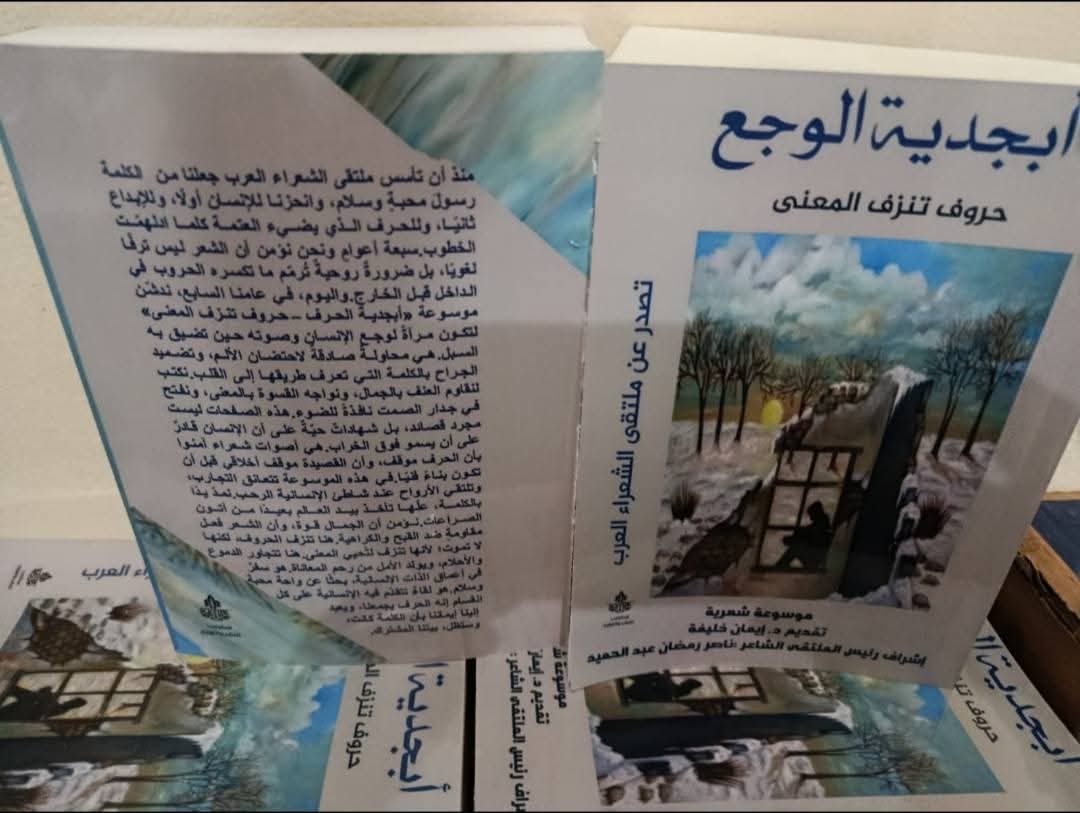
Also, The Arab Poets Forum has recently published the book “Alphabet of Pain… Letters Bleeding Meaning”, a remarkable poetic encyclopedia featuring 212 poets from around the world, presented in two volumes spanning 800 pages.
The cover artwork is created by Iraqi visual artist Nada Askar, and the cover design is by Lebanese artist Layla Beiz Al-Mashghariya. Several Synchronized Chaos contributors, including Taghrid Bou Merhi, Mirta Ramirez, Eva Petropoulou Lianou, Dildora Xojyozova, Binod Dawadi, and Kujtim R Hajdari, are published in this collection.
Now, for this month’s first issue, Where Memory Meets Tomorrow.
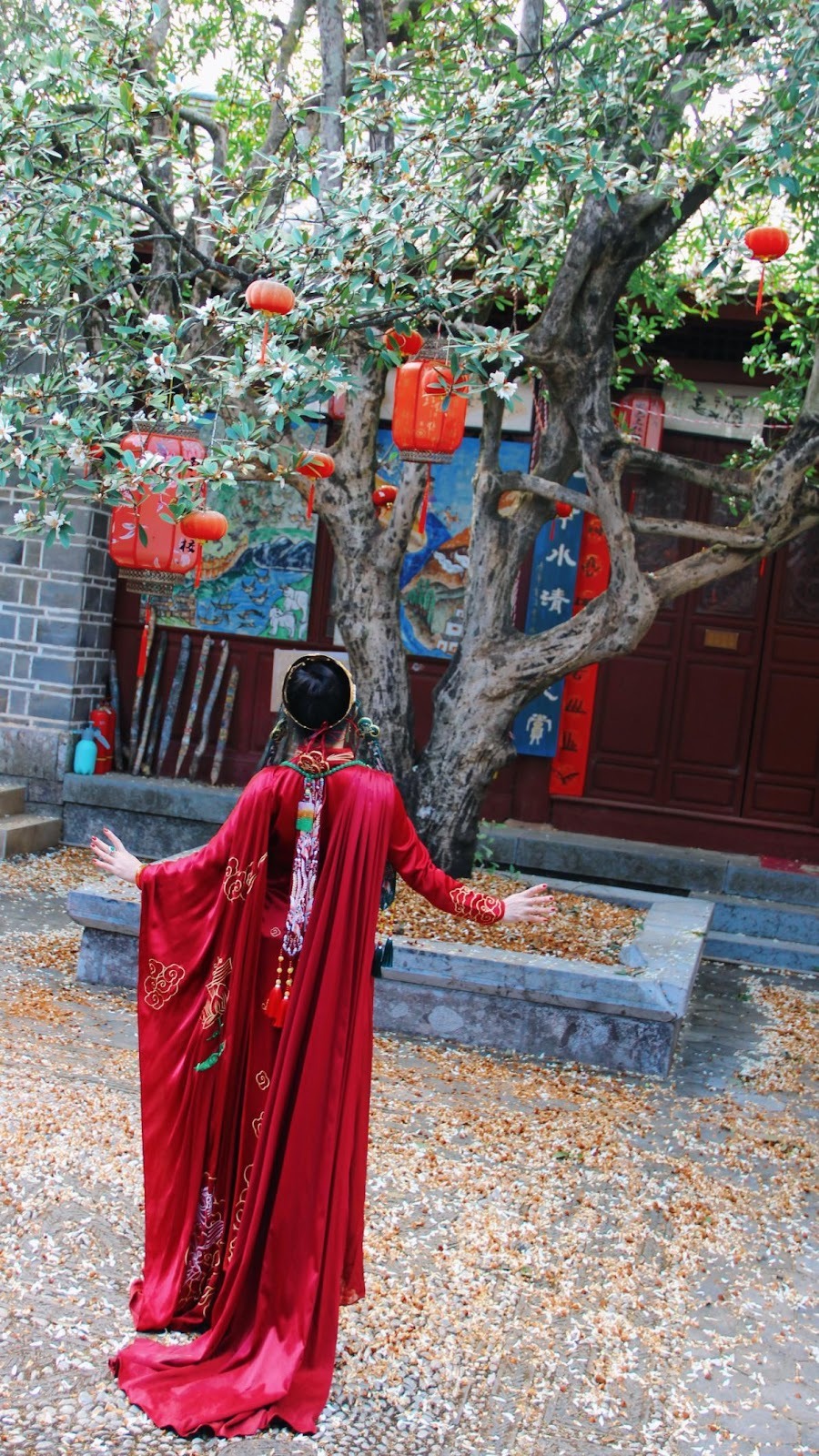
Image c/o Yana Ray
This issue is beautiful, rich, and international. There’s a strong throughline of memory, devotion, identity, and renewal running across continents and genres.
For this month’s first issue, we are proud to present a collection of voices that span styles and topics, each offering a meditation on what it means to live, remember, and hope.
Vo Thi Nhu Mai opens with a heartfelt tribute to her mother, honoring the quiet love and lifelong dedication of a teacher. From Uzbekistan, Orzigul Ibragimova calls her people forward with intelligence and determination, while Namozova Sarvinoz Erkin qizi explores the nation’s ongoing transformation toward an eco-friendly, energy-efficient future. Sevara Abduxalilova reflects on the legacy of Mirzo Ul’ugbek, the great Central Asian astronomer whose vision still resonates across time, as Botirova Gulsevar Muzaffar qizi honors political leader and poet Zahiriddin Muhammad Babur, known for promoting education and national development. Munisa Islomjonova celebrates her native Uzbekistan through verse.
The power of words themselves comes into focus in Harinder Cheema’s celebration of poets as messengers of peace and inspiration, echoed by Soumen Roy’s prayer to poetry as a source of healing and transcendence. Jamoliddinova Dilnozaxon Mirhojiddinovna discusses how countries and social groups form communication and speech traditions. Olimova Shahina Botirjon qizi discusses strengths and weaknesses of different methods for teaching foreign languages. Hamdamova Sevara Saidmurodovna outlines modern philological theory about the power of language beyond literal meaning. Türkan Ergör sharpens her focus to highlight the pain of a world without trust and truth. Rev. Dr. Jitender Singh speaks to human unity across race, color, nationality, or creed. Manik Chakraborty and Mesfakus Salahin and Mahbub Alam each issue urgent calls for peace, reminding us of our shared humanity in a fractured world. Graciela Noemi Villaverde depicts the pain of words felt but never sent. Christina Margeti speaks to war and childhood, what humanity destroys and what we strive to protect. Faleeha Hassan reviews Saudi directors Meshal Al-Jaser and stars Adwaa Badr and Yazeed Al-Majioul’s film “Naga” (Purity) which, through the tragedy of a betrayed and rebellious young woman, shows the weight of a society imploding upon itself as it punishes the existence of femininity. Asadullo Habibullayev brings violence down to a smaller scale, reminding us that how we treat each other at the interpersonal level matters. At the same time, poet Nilavronill decries how poets have failed to stop the world’s violence with their words.
Themes of love and devotion weave throughout the issue. Sandro Piedracita reflects on the distinction between selfless love and possessiveness, while Eva Petropoulou Lianou honors the tender, enduring bond between mother and child. Nazokat Jumaniyozova offers a moving elegy for her grandfather, and Danijela Ćuk pays tribute to Eva Petropoulou’s tireless support of fellow writers. Saparboyeva Laylo Xajibay qizi relates a folktale-like story of grief, justice, fate and renewal. Joseph Ogbonna expresses his spiritual devotion in the Easter season and his thanks for Christ’s humble sacrifice. Maqsudova Anora Alisherovna’s poem urges heartfelt sincerity and reflection when people observe Ramadan. Sarvinoz Bakhtiyorova relates the tale of a now-adult son who sacrificed his own body for his mother. Jahongir Murodov expresses his tender care and respect for his mother. Xojamurodova Nigina urges sensitive souls to continue loving and not lose heart in a brutal world as Ms. Kim Sun Young shares how longing for a lost love is persistent, like a weed in her heart and Do’sanova Dilnoza Xolmurod qizi reflects on heartbreak and regret.
Other contributors turn toward time, myth, and the natural world. Ananya Guha evokes deep, mythic landscapes, while Sayani Mukherjee and Lan Xin draw on the imagery of spring—its motion, memory, and rebirth. Ankica Anchie Biskupović finds unity in flowing water, and Elaine Murray immerses herself in nature’s quiet revelations. Ms. Koo Myongsook reflects in stillness on a mountain as a metaphor for life. David Kokoette’s desert journey and Duane Vorhees’ meditation on absence and longing remind us of the inner landscapes we all traverse. Maja Milojkovic laments the steady decline of her powers due to old age. Aziza Jorayeva expresses heartbreak, loneliness, and grief. Dr. Prasanna Kumar Dalai speaks to autumn, night, longing, and confession. Siyoung Doung expresses the mystery of our existence and the beauty of finding small moments of beauty and meaning. Dr. Tomasz Laczek urges us to make the most of the lives we have and live for something that matters.
This issue also engages with contemporary life and its tensions. Abdumaxamediva Gulchexra looks at the positive and negative effects of American cultural influence on traditional Uzbek culture. Patricia Doyne sharply critiques the current U.S. administration, while Bill Tope employs satire to confront its institutional excess and brutality. J.K. Durick reflects on individuals navigating vast, impersonal systems, even systems invented for fun, such as professional sports, engaged yet estranged. Peter Cherches plays the absurdist blues for us in his poem that’s equal parts exile ballad, street song, and darkly comic cabaret. Christopher Bernard kicks off the first installment of his children’s story Otherwise, with a mixture of philosophy, mystery, and middle-grade energy.
Artistic memory and cultural reflection round out the issue. Mark Young presents his signature altered geographies, while Brian Michael Barbeito revisits the world of hockey through personal recollection. Mykyta Ryzhykh captures the intensity of first awakenings—moments that divide life into before and after. Jacques Fleury offers a haunting vision of beauty, resilience, and power embodied in a goddess who still fades from view while he can only watch. Ms. Im Sol Nae looks at death not merely as an ending, but as a transformation, a communal aesthetic experience.
Together, these works form a tapestry of voices, which are urgent, reflective, and deeply human. They remind us that across distance and difference, we are united by our search for meaning, our capacity for love, and our enduring hope for renewal.
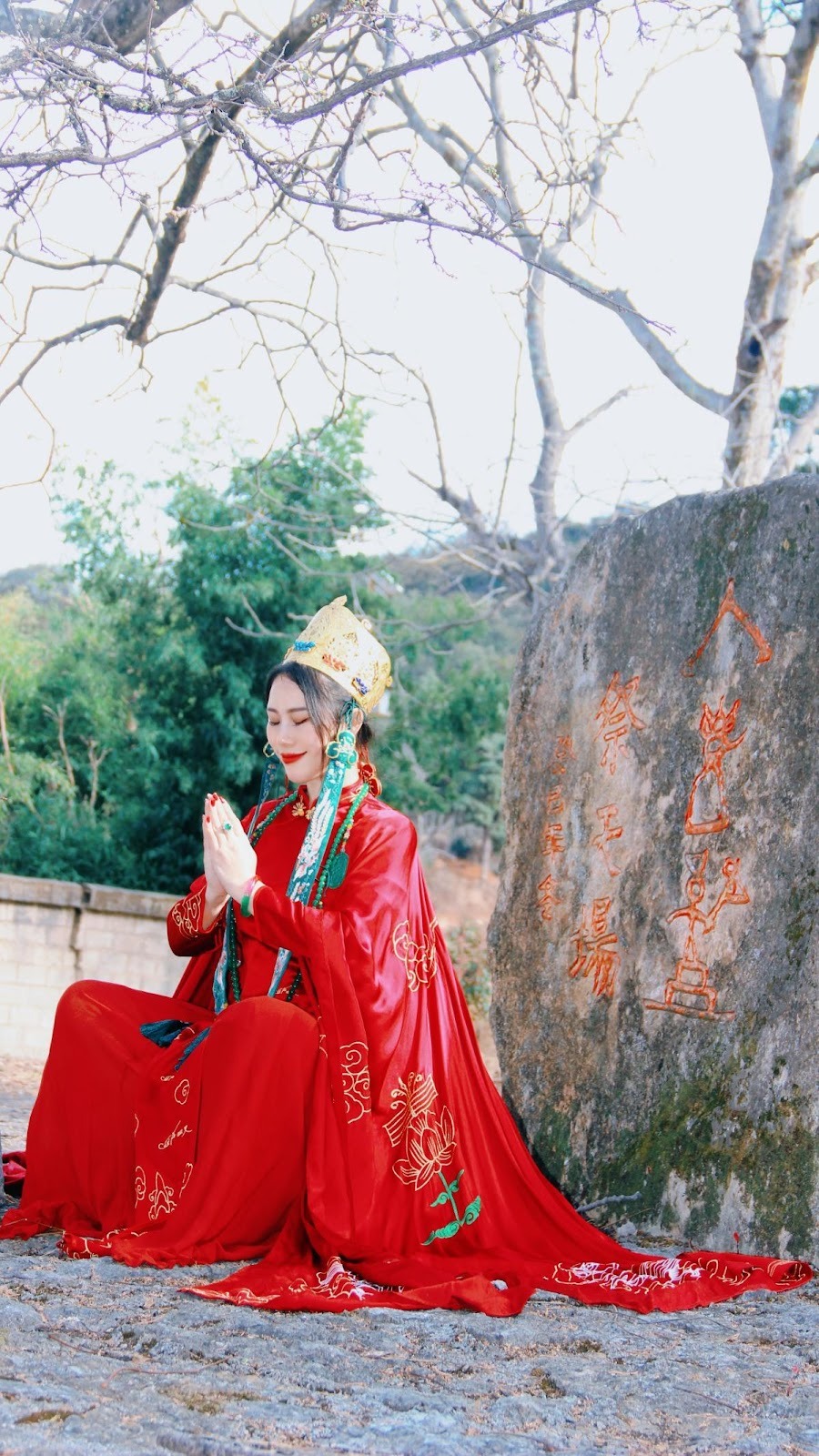
Internationally renowned writer, poet and translator, member of the Chinese Writers Association. The only female inheritor of UNESCO-listed Dongba Culture, International Disseminator of Dongba Culture and practitioner of Chinese culture’s global outreach. Winner of the Italian Francesco Giampietri International Literary Award, President of Lanxin Samei Academy and Dean of Yulong Wenbi Dongba Culture Academy.
A thousand years ago
we took root together in this ancient temple
Century after century quietly passed
we became the most devoted ancient trees in all the world
Over this thousand years
through the silent turning of the four seasons
through the unpredictable cycles of life
we have witnessed this ancient temple
rise and fall fall and rise enduring all hardships
We watch beings come and go burn incense and pray
with thousands of wishes in their hearts
Yet our watch has never wavered
not even for a single moment
The butterfly bush blooms pure white in winter and spring
the golden osmanthus shines bright gold in autumn
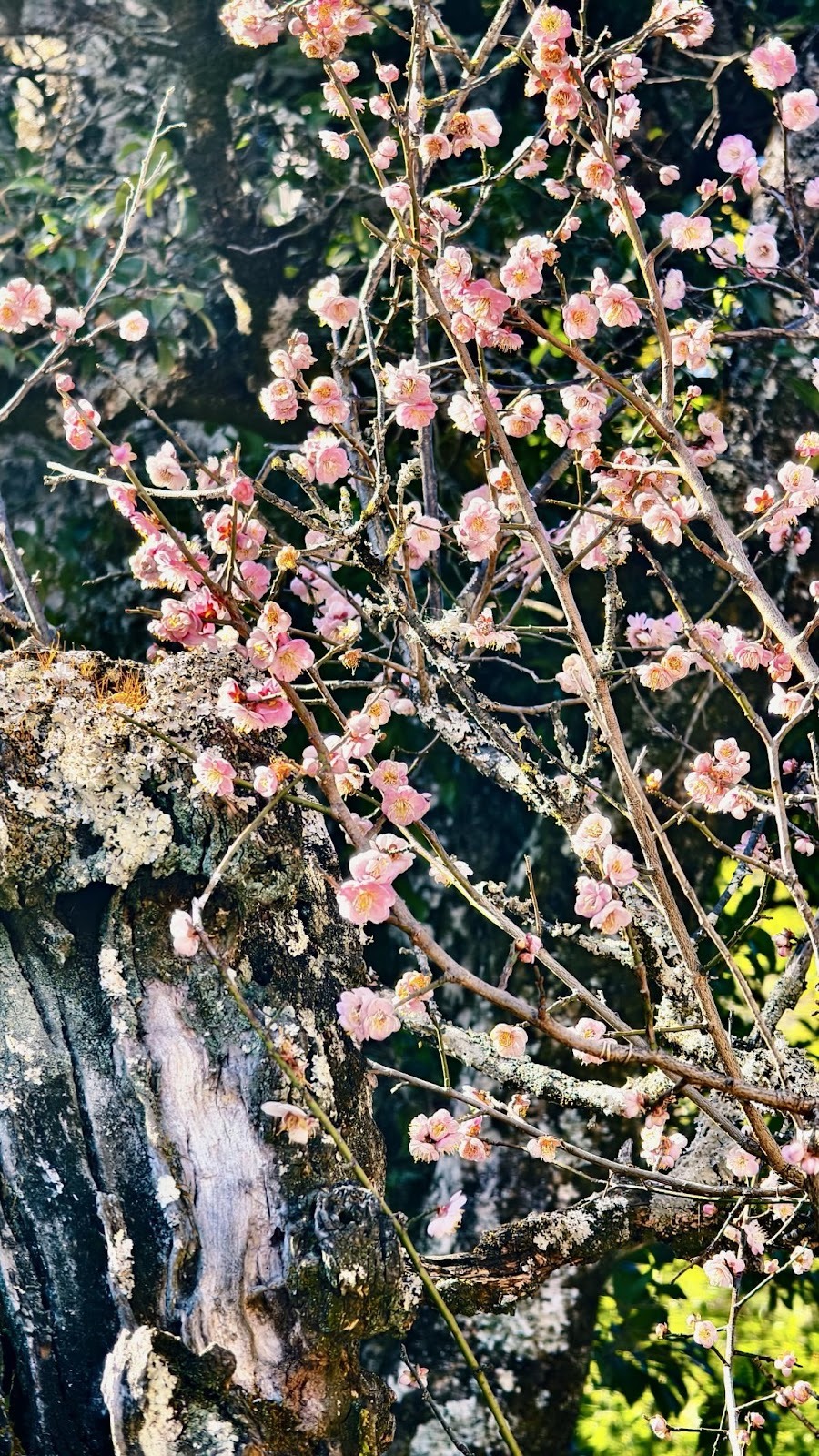
the red plum blossoms blushing pink in the bitter cold
the Chinese crabapple bursts into rose-red in spring
the incense cypress wears eternal green all year long
Whether the temple is full of voices or completely still
whether incense burns prosperous or only broken walls remain
we stand root to root heart to heart silently guarding one another
Even if the halls collapse and only we are left in heaven and earth
we still firmly believe —
one day the phoenix will come stepping upon light
to reunite with us after a thousand years
Now heaven rewards this thousand year of waiting this endless longing
At last she has arrived —
the phoenix draped in ten thousand rays of golden light
Amidst total desolation she recognized us at first sight
Amidst utter ruin she chose us without hesitation
Amidst broken walls she restored the temple’s thousand-year glory
Amidst silence and loneliness
she made incense burn again and life flourish once more
Amidst the dust of years
she made this sacred land known to all renowned across the world
From this day on
we shall live and die with the phoenix never to be parted
This is the place where the golden phoenix returns to rest
This is the place where the golden phoenix spreads her wings and soars
If the world shall give us a new name
then bestow upon us —
Phoenix Ancient Trees!
Interpretation
This poem takes the thousand-year-old ancient trees as silent witnesses and the phoenix as a symbol of light and rebirth. It speaks of the deepest bond between human and nature, and writes of waiting, guardianship and faith across time. This is the guardianship of life to life, the call of soul to soul, a great love that transcends race, borders and time.
May this pure deep feeling from the East by poet Lan Xin awaken the truest kindness and peace in the world and let love and light shine upon all humanity.
LEGAL MECHANISMS FOR ENSURING YOUTH PARTICIPATION IN PUBLIC ADMINISTRATION
Jumayev Akmal G‘ulom o‘g‘li Student of the Public Security University of the Republic of Uzbekistan
Young people, as an active and creative segment of society, play a crucial role in public administration, which is essential for ensuring the democratic development and social stability of a country. The political engagement of youth and their possession of legal powers contribute to the protection of their interests, acceleration of modernization processes, and enhancement of their socio-political activity within society. These processes form a foundation for strengthening democratic institutions and preparing a new generation of political personnel.
Within the framework of ensuring the legal participation of youth in public administration, the role of parliamentarism and youth wings is a highly relevant issue. This direction requires an in-depth study of legal mechanisms aimed at creating stable foundations for youth representation within the constitutional and legal system of the state, as well as defining their rights and responsibilities. At the same time, it is necessary to analyze the existing regulatory and legal framework in the country that promotes youth political activity, identify practical challenges, and develop effective solutions.
The legal definition of youth and their position within the context of statehood is also of particular importance. Youth are generally defined in national legislation and international legal documents as a specific social group protected based on age criteria. For example, in the legislation of the Republic of Uzbekistan, youth are often defined as individuals aged between 14 and 30. From a legal perspective, youth represent not only an age category but also a group distinguished by specific rights, responsibilities, and state-supported mechanisms. In the context of statehood, youth are considered the future of society and a key element of social stability and development. Therefore, protecting youth and guaranteeing their rights is one of the priority directions of state social policy. Thus, the concept of youth holds significance not only in a socio-cultural sense but also in a legal context.
Participation in public administration refers to the process by which citizens and social groups influence state authority decisions and actively engage in their formation. This concept has evolved within the framework of constitutional and administrative law and is determined by the legal opportunities available to participants. From a legal standpoint, participation is exercised through various forms such as voting in elections, expressing public dissent, and engaging in the activities of public organizations. This process constitutes a fundamental component of the principles of legality, transparency, and accountability in public administration. Therefore, participation in governance is not only based on legal documents but also on practical political and cultural processes, ensuring that citizens—especially youth—play an active role in public life.
Comprehensive legal analysis of these issues serves as a basis for developing political and legal mechanisms aimed at protecting youth and ensuring their active participation in public administration through legislative frameworks.
The parliamentary system, as a form of state governance, ensures the independent and effective functioning of the legislative body. Legally, parliament exercises state power based on the principle of representation, meaning that the interests of citizens are expressed through elected representatives. Key principles include representation, rule of law, balance in governance, and transparency of parliamentary activities, all of which are enshrined in the constitution and special laws.
The involvement of youth in parliamentary activities is an important aspect of democratic development. In many countries, including Uzbekistan, there are normative legal acts aimed at encouraging youth political participation. The Constitution guarantees citizens’ political rights, including the right to vote and to be elected. Minimum age requirements are established for entering parliament, enabling youth to participate in the legislative process. In addition, youth wings and public associations serve to legally strengthen their political engagement.
From a legal perspective, youth representation in parliament is regulated by specific requirements such as minimum age thresholds, eligibility criteria for candidates, and other conditions. These limitations are intended to ensure that young individuals are prepared for political responsibility. At the same time, legislation seeks to expand their opportunities for representation. For instance, lowering minimum age requirements and creating favorable conditions for youth organizations contribute to encouraging youth participation in parliamentary activities. As a result, this promotes the renewal of political processes and strengthens democratic principles.
Legal mechanisms of parliamentarism play a decisive role in ensuring youth political activity and directing their effective participation within the system of state power. These mechanisms are закреплены (enshrined) through constitutional norms and special legislation, forming an integral part of democratic processes.
This legal analysis contributes to strengthening the role of youth and expanding their authority within the development of national legislation and democratic institutions.
A rebellion strikes within me, Outside, thunder shatters the sky. Before my eyes, high-rise buildings turn to ash, Inside, a silent earthquake keeps shaking me.
I stagger, I run in all directions. Leaves fall, scattering into the sky, And like cotton clouds of silk-cotton trees, I drift away into a white, floating realm.
Now I am only a drifting existence.
Yet sometimes I glimpse that familiar path of mine— A forest wrapped in hills, Birds flying freely into the open sky.
It is a land of no shortage of vastness, A field where I can fly as I wish, wander as I wish, And keep singing songs of love within.
Here, no fire of missiles falls, No one sets traps of betrayal for another. Beyond the violence of the earth, With wings spread like birds, That floating realm is enough for my two breaths of life.
But in this human world, Human conflict burns the earth— Burning buildings, burning soil, destroying lives.
Children startle awake from dreams At the sound of war stories, A chill runs through the bones.
In the forest, jackals keep howling softly, As if even nature is mourning.
Yet a mother was supposed to tell stories— A lullabying mother, A soft song for a child’s gentle sleep, A moonlit face full of peace, A child like a sky full of stars.
If only I had a life that could dream like that…
Chapainawabganj, Bangladesh
28 March, 2026.
Md. Mahbubul Alam is from Bangladesh. His writer name is Mahbub John in Bangladesh. He is a Senior Teacher (English) of Harimohan Government High School, Chapainawabganj, Bangladesh. Chapainawabganj is a district town of Bangladesh. He is an MA in English Literature from Rajshahi College under National University. He has published three books of poems in Bangla. He writes mainly poems but other branches of literature such as prose, article, essay etc. also have been published in national and local newspapers, magazines, little magazines. He has achieved three times the Best Teacher Certificate and Crest in National Education Week in the District Wise Competition in Chapainawabganj District. He has gained many literary awards from home and abroad. His English writings have been published in Synchronized Chaos for seven years.
Once when he was in grade ten in 1990, his Bangla letter was selected as the best one from Deutsche Welle, Germany Radio that broadcast Bangla news for the Banglalee people. And he was given 50 Dutch Mark as his award. They would ask letters from the listeners to the news in Bangla and select one letter for the best one in every month.
From 17 to 30 September, in 2018 he received a higher training in teaching English language in Kasetsart University of Thailand for secondary level students through a government order from education ministry.
On 06 November 2015 he achieved Amjad Ali Mondal Medal for his contribution in education field by a development organization in the conference and felicitation function for the honorable personalities at Rajshahi College Auditorium.
On 30 December 2017 from West Bengal in India he was declared a ‘Literary Charioteer’ in Bangobandhu Literary and World Bango Conference and they awarded him with a Gold Medal in their International Literary Conference and Prize Giving Ceremony.
In 2018, he achieved Prodipto Lirerary Award in Prodipto Literary Conference at Kesorhat, Rajshahi for poems in Bangla literature. He received honorary crest from the administration of Chapainawabganj District Literary Conference and Cultural Function in 2021 and 2022 consecutively.
His poems have been published in many international online magazines such as Juntos Por las L Raven Cage Zine, and Area Felix. His poems have been translated and published in Argentine and Serbian, and he participated in many international online cultural meetings.